Tag: visualpath blogs

  • Advanced Setup for General Ledger (GL) and Transaction Entry in D365 Finance and Operations

    Advanced Setup for General Ledger (GL) and Transaction Entry in D365 Finance and Operations

    Microsoft Dynamics 365 Finance and Operations (D365 F&O) offers powerful tools to manage financial processes efficiently. Understanding advanced setups for General Ledger (GL) and transaction entry is crucial for organizations aiming to streamline financial operations. This guide highlights key configurations and processes to optimize financial management, making it invaluable for professionals pursuing Microsoft Dynamics 365 Training in Hyderabad or looking to advance through a D365 Training program.

    Setting Up General Ledger in D365 F&O

    The General Ledger is the foundation of financial operations in D365 F&O. Its advanced setup ensures accurate financial reporting and compliance. Below are the key steps:

    1. Chart of Accounts
      • Define the structure of financial accounts.
      • Organize accounts into categories such as assets, liabilities, revenue, and expenses.
      • Use account structures to define rules for account combinations.
    2. Fiscal Calendars
      • Create fiscal calendars to reflect the organization’s reporting periods.
      • Assign these to legal entities and financial dimensions for seamless reporting.
    3. Financial Dimensions and Dimension Sets
      • Use financial dimensions to capture detailed transactional data.
      • Configure dimension sets to simplify reporting and analysis.
    4. Posting Layers
      • Utilize posting layers for parallel reporting.
      • Separate operational, tax, and simulation layers to meet various accounting needs.

    Advanced Transaction Entry

    D365 F&O simplifies transaction entry with features that ensure accuracy and efficiency. These steps are essential for advanced users or those enrolled in a Dynamics 365 Course:

    1. Journal Setup
      • Create journal names for specific transaction types, such as general journals, vendor invoices, or accruals.
      • Assign approval workflows to control journal postings.
    2. Default Account Settings
      • Define default accounts for transactions to minimize manual entry errors.
      • Automate processes like intercompany postings and tax calculations.
    3. Recurring Journal Entries
      • Automate repetitive transactions by setting up recurring journals.
      • Customize recurrence patterns for monthly expenses or periodic adjustments.
    4. Advanced Validation Rules
      • Use journal control rules to restrict incorrect combinations of accounts and dimensions.
      • Implement approval hierarchies for financial control.

    Benefits of Advanced GL Setup

    1. Enhanced Financial Reporting
      • Accurate and real-time insights into organizational finances.
    2. Regulatory Compliance
      • Meets diverse reporting standards across regions.
    3. Process Automation
      • Reduces manual effort and minimizes errors.

    Role of Training in Mastering Advanced GL Features

    For professionals in finance and operations, advanced GL setup is essential. Opting for Microsoft Dynamics 365 Training in Hyderabad ensures exposure to real-world scenarios. Such training programs focus on hands-on learning, offering insights into advanced tools, configuration, and best practices. A D365 Training program is an excellent way to deepen your knowledge and build expertise in the platform.

    By enrolling in a Dynamics 365 Course, learners can stay updated with the latest features and best practices, making them proficient in handling complex financial operations. Advanced GL setup in D365 F&O not only boosts operational efficiency but also enhances your professional skill set in this dynamic field.

    Visualpath is the Leading and Best Software Online Training Institute in Hyderabad. Avail complete D365 Functional institute in Hyderabad D365 Training Worldwide. You will get the best course at an affordable cost.

    WhatsApp: https://www.whatsapp.com/catalog/919989971070

    Visit:   https://www.visualpath.in/online-microsoft-dynamics-365-training-in-hyderabad.html

  • Installing Playwright: Which command is used to install Playwright?

    Installing Playwright: Which command is used to install Playwright?

    Playwright is a cutting-edge automation framework favored for cross-browser testing, supporting Chrome, Firefox, Safari, and Microsoft Edge. Whether you’re a developer or a QA specialist, Playwright makes web automation smooth and efficient. One of the first steps in any Playwright Automation Training program is learning how to install Playwright. This article covers the installation process, including the specific commands you need, and highlights what you can expect to learn in a Playwright Course Online and Playwright Training.

    Getting Started with Playwright Installation

    Before installing Playwright, ensure your system meets the basic requirements. Here’s a quick checklist:

    • Node.js: Playwright relies on Node.js, so ensure it’s installed. If not, download it from Node.js’s official website.
    • NPM or Yarn: Playwright uses Node Package Manager (NPM) or Yarn for installation. NPM comes with Node.js by default, or you can install Yarn as an alternative package manager.

    Basic Command for Installing Playwright

    The simplest way to install Playwright is by using the following command:

    bash

    Copy code

    npm install @playwright/test

    This command installs the Playwright testing framework, along with the test runner and browser binaries for Chromium, WebKit, and Firefox. This setup allows you to test your applications across different browsers and operating systems using a single, versatile tool.

    Once installed, you can verify the Playwright version by running:

    bash

    Copy code

    npx playwright –version

    This command confirms that Playwright has been successfully installed and is ready to use.

    Running Your First Test

    After installing Playwright, you’re ready to create and run your first test script. Here’s how to get started:

    1. Create a Project Directory: Open a terminal and create a new project directory for your tests.

    bash

    Copy code

    mkdir playwright-project

    cd playwright-project

    1. Initialize Playwright: To create a sample configuration and test files, run:

    bash

    Copy code

    npx playwright install

    1. Run Codegen: Use Playwright’s codegen feature to record actions and generate scripts automatically as you interact with a browser.

    bash

    Copy code

    npx playwright codegen

    This command opens a browser where you can perform actions, and Playwright will automatically generate test scripts, making it ideal for beginners in Playwright Course Online sessions.

    Benefits of Installing Playwright for Automation

    In Playwright Training, participants explore Playwright’s advanced functionality, including:

    • Cross-Browser Compatibility: With built-in support for Chrome, Firefox, and Safari, Playwright provides the flexibility to test applications across various browsers.
    • API Testing: Playwright is not limited to web UI testing; it also supports RESTful API testing, making it a single framework for both UI and backend testing.
    • Locators and Selectors: Playwright offers a wide range of element selectors, from CSS and XPath to text and role-based locators, simplifying interactions with different types of elements on a page.
    • Automatic Waiting Mechanisms: Playwright’s built-in waits make it highly reliable for testing dynamic web pages, which load and render content progressively.

    Advanced Topics Covered in Playwright Automation Training

    Advanced Playwright Training programs delve deeper, covering CI/CD integration, test parallelization, custom configurations, and handling multiple tabs and sessions. These skills are essential for building a complete test suite that fits seamlessly into an automated pipeline.

    Conclusion

    Installing Playwright is straightforward with the npm install @playwright/test command, but understanding the framework’s full potential takes practice. By enrolling in a Playwright Course Online or Playwright Training program, you can master the features and techniques that make Playwright a powerful tool in the automation landscape. From basic installation to executing complex test suites, Playwright offers an efficient, all-in-one solution for modern web automation and RESTful API testing.

    Visualpath is the Leading and Best Software Online Training Institute in Hyderabad. Avail complete PlayWright Automation institute in Hyderabad PlayWright Automation  Training Worldwide. You will get the best course at an affordable cost.

    WhatsApp:  https://www.whatsapp.com/catalog/919989971070

    Visit:   https://www.visualpath.in/online-playwright-automation-training.html

  • GCP Data Engineer Course for Beginners | 2025

    GCP Data Engineer Course for Beginners | 2025

    GCP Data Engineer Overview

    The GCP Data Engineer Course is a comprehensive program designed to equip professionals with the skills to build, manage, and optimize data solutions on the Google Cloud Platform (GCP). With the rise of cloud technologies, the demand for certified data engineers who can handle vast amounts of data effectively is higher than ever. Whether you’re a beginner or an experienced professional, understanding GCP’s capabilities is crucial to staying competitive in today’s data-driven market.

    GCP Data Engineer Course for Beginners

    The GCP Data Engineer Course provides an excellent starting point for those new to data engineering. Beginners learn foundational concepts like data processing, storage, and analysis, all tailored to GCP’s ecosystem. From understanding how Google BigQuery works to mastering data pipelines with Google Cloud Dataflow, this course lays the groundwork for a successful career in data engineering.

    Furthermore, enrolling in GCP Cloud Data Engineer Training allows you to practice hands-on labs and real-world scenarios. These practical exercises ensure that you understand theoretical concepts and gain the confidence to implement them in professional environments. By the end of this course, beginners are well-prepared to tackle more advanced topics in data engineering.

    Advanced Skills with GCP Cloud Data Engineer Training

    The next step in mastering GCP data engineering involves delving into advanced tools and techniques. GCP Cloud Data Engineer Training is tailored for professionals who wish to enhance their expertise in managing large-scale data solutions. Key topics covered include building robust data pipelines, optimizing performance in BigQuery, and leveraging Google Kubernetes Engine (GKE) for data orchestration.

    One of the highlights of this training is its focus on preparing candidates for the GCP Data Engineer Certification exam. This globally recognized certification validates your ability to design and maintain data processing systems and to analyze and process data using GCP services effectively. Achieving this certification not only boosts your career prospects but also demonstrates your proficiency in GCP’s powerful data engineering capabilities.

    Why Pursue a GCP Data Engineer Certification?

    Earning a GCP Data Engineer Certification can significantly impact your professional growth. This certification proves your expertise in building and managing data solutions in one of the most widely used cloud platforms. Whether you are looking for a career shift or aiming for a promotion, this certification is a valuable asset.

    Moreover, the GCP Cloud Data Engineer Training provides in-depth preparation for the certification exam. It focuses on critical skills such as designing scalable systems, securing data, and integrating various GCP services to solve real-world data problems. By earning this certification, you demonstrate your readiness to tackle complex data engineering tasks, making you a sought-after professional in the industry.

    Conclusion:

    The GCP Data Engineer Course is the ideal pathway for anyone looking to excel in the field of data engineering. From beginners to seasoned professionals, this course covers essential concepts and provides practical experience with GCP’s data tools. The accompanying GCP Cloud Data Engineer Training ensures that you are well-prepared for the industry-leading GCP Data Engineer Certification, enabling you to stand out in the competitive job market.

    By investing in your skills with GCP, you position yourself at the forefront of modern data engineering, ready to harness the power of the cloud to drive innovation and success. Whether you’re managing data pipelines, analyzing massive datasets, or optimizing cloud solutions, GCP equips you with the tools to excel in any data-driven role.

    Visualpath is the Best Software Online Training Institute in Hyderabad. Avail complete GCP Data Engineering worldwide. You will get the best course at an affordable cost.

    Attend Free Demo

    Call on – +91-9989971070.

    WhatsApp: https://www.whatsapp.com/catalog/919989971070/

    Visit  https://www.visualpath.in/online-gcp-data-engineer-training-in-hyderabad.html

    Visit our new course: https://www.visualpath.in/online-best-cyber-security-courses.html

  • Key Benefits of Multi-Cloud DevSecOps Training Online

    Key Benefits of Multi-Cloud DevSecOps Training Online

    Multi-Cloud DevSecOps Training Online has become a vital stepping stone for IT professionals aiming to enhance their expertise in cloud security. By integrating development, security, and operations, this training equips learners with the skills necessary to secure applications and workflows across multiple cloud platforms. With the rise of multi-cloud strategies, organizations are seeking professionals who can seamlessly embed security into their CI/CD pipelines. Here’s a look at the key benefits of enrolling in a DevSecOps Online Course and how it can propel your career forward.

    1. Comprehensive Security for Multi-Cloud Environments

    The primary advantage of Multi-Cloud DevSecOps Training Online is its focus on securing applications across diverse cloud platforms like AWS, Azure, and Google Cloud. Multi-cloud environments often introduce complexities due to varying security protocols and configurations. This training provides in-depth knowledge on standardizing security practices across all platforms, ensuring robust protection regardless of the cloud provider.

    By the end of a DevSecOps Online Course, you’ll be able to implement scalable security solutions tailored to the unique requirements of multi-cloud ecosystems.

    2. Seamless Integration of Security into CI/CD Pipelines

    DevSecOps emphasizes embedding security throughout the software development lifecycle, rather than treating it as an afterthought. Through Multi-Cloud DevSecOps Training, you’ll learn how to integrate automated security checks and vulnerability assessments into CI/CD workflows.

    With these skills, you’ll not only improve security but also enhance the efficiency and speed of application deployment. A DevSecOps Online Course provides practical exposure to tools like Jenkins, GitLab, and Terraform, empowering you to build secure, automated pipelines in a multi-cloud setup.

    3. Enhanced Knowledge of Compliance and Governance

    Multi-cloud environments are often subject to stringent regulatory requirements. Multi-Cloud DevSecOps Training Online equips learners with the expertise to navigate compliance standards like GDPR, HIPAA, and SOC 2. The training covers automated governance techniques that ensure continuous compliance without slowing down development processes.

    By mastering compliance automation, you’ll be better positioned to meet both organizational and legal requirements, a skill highly valued in the industry.

    4. Real-World Problem Solving in Multi-Cloud Security

    A DevSecOps Online Course emphasizes hands-on training, helping participants tackle real-world challenges. From mitigating cross-platform vulnerabilities to responding to security incidents in real-time, you’ll gain practical experience that prepares you for the dynamic demands of a multi-cloud environment.

    Additionally, the training dives into advanced topics like monitoring and incident response, equipping you to manage threats proactively across multiple cloud providers.

    5. Career Advancement Opportunities

    With multi-cloud adoption on the rise, professionals with expertise in Multi-CloudDevSecOps Training Online are in high demand. Organizations need skilled individuals who can secure their operations while ensuring seamless functionality across cloud platforms. This training not only builds technical skills but also boosts your credentials, making you a sought-after candidate for roles in cloud security and DevSecOps.

    Conclusion

    Enrolling in Multi-Cloud DevSecOps Training Online is a strategic move for anyone looking to thrive in the rapidly evolving field of cloud security. From mastering CI/CD security integration to gaining insights into compliance and real-world problem-solving, this training covers all essential aspects of multi-cloud security. A DevSecOps Online Course equips you with the tools and knowledge needed to stay ahead in your career, making you a valuable asset to any organization adopting multi-cloud strategies.

    Visualpath is the Leading and Best Software Online Training Institute in Hyderabad. Avail complete Multi-Cloud DevSecOps Training Worldwide. You will get the best course at an affordable cost.

    Attend Free Demo

    Call on – +91-9989971070.

    WhatsApp: https://www.whatsapp.com/catalog/919989971070/

    Visit: https://www.visualpath.in/multi-cloud-devsecops-online-training.html

  • D365 Finance & Operations: Essential X++ Coding Practices

    D365 Finance & Operations: Essential X++ Coding Practices

    Microsoft Dynamics 365 Finance & Operations is a robust ERP solution that relies heavily on X++, a powerful object-oriented programming language. Mastering X++ is vital for developers aiming to customize and enhance the platform to meet business needs effectively. Whether you’re a beginner or experienced developer, following essential coding practices ensures optimized and maintainable solutions. This article highlights best practices while incorporating training opportunities like the Microsoft Dynamics AX Technical Training, Dynamics 365 Online Course, and Microsoft Dynamics AX Course to strengthen your expertise.

    1. Follow Modular Design Principles

    One of the critical aspects of X++ programming is creating modular and reusable code. Divide large blocks of code into smaller methods or classes that perform specific tasks. This improves readability and makes debugging easier. Through a Dynamics 365 Online Course, you can learn advanced techniques for creating modular solutions while adhering to Dynamics AX standards.

    2. Use Event-Driven Programming

    Event handlers are a preferred way to customize Dynamics 365 Finance & Operations over direct code changes. They allow you to extend functionality without altering base objects, making your solution upgrade-friendly. Enroll in a Microsoft Dynamics AX Technical Training program to understand event handlers and their practical implementation.

    3. Implement Best Practices for Performance Optimization

    Performance is critical in enterprise applications. Use set-based operations for database queries, minimize client/server calls, and optimize loops to avoid performance bottlenecks. A Microsoft Dynamics AX Course typically covers performance tuning techniques that align with industry standards.

    4. Follow Coding Standards and Naming Conventions

    Adhering to consistent naming conventions ensures that your code is understandable and maintainable by other developers. Use meaningful names for variables, methods, and classes, and follow Dynamics 365’s established guidelines. Courses like the Dynamics 365 Online Course often provide insights into best practices for naming conventions.

    5. Leverage the SysOperation Framework

    The SysOperation framework is a powerful tool for handling batch jobs in Dynamics 365. It separates logic, data, and execution layers, promoting a clean and efficient coding structure. A Microsoft Dynamics AX Technical Training course will often include in-depth modules on the SysOperation framework, ensuring you master its use.

    6. Practice Secure Coding

    Security is paramount in any ERP system. Always validate user input, protect sensitive data, and follow proper authentication methods. The Microsoft Dynamics AX Course teaches security principles specific to the Dynamics environment, enabling developers to build secure applications.

    7. Utilize Unit Testing

    Testing ensures that your code functions as intended and prevents future issues. Develop unit tests for all customizations and automate testing whenever possible. A Dynamics 365 Online Course often introduces automated testing tools and techniques for X++.

    Conclusion

    Developing in Dynamics 365 Finance & Operations requires a strong foundation in X++ coding practices. By enrolling in programs like Microsoft Dynamics AX Technical Training, Dynamics 365 Online Course, or a Microsoft Dynamics AX Course, developers can gain practical skills and in-depth knowledge. These courses prepare you to write efficient, secure, and maintainable code, ensuring your customizations enhance the platform without compromising its performance or upgradability.

    Visualpath is the Leading and Best Software Online Training Institute in Hyderabad. Avail complete D365 Technical institute in Hyderabad Microsoft Dynamics Ax Technical Training Worldwide. You will get the best course at an affordable cost.

    WhatsApp: https://www.whatsapp.com/catalog/919989971070

    Visit:   https://www.visualpath.in/online-microsoft-dynamics-ax-technical-training.html

  • Why MERN Stack Course is the Best Choice for Modern Web Development?

    Why MERN Stack Course is the Best Choice for Modern Web Development?

    MERN Stack Full Course In the rapidly evolving world of web development, professionals and learners alike are always on the lookout for the most efficient and versatile technologies. MERN Stack Training has become a game-changer, offering a streamlined way to develop full-stack applications using JavaScript across the entire stack. Whether you’re building a simple blog or a complex enterprise solution, the MERN stack—comprising MongoDB, Express.js, React.js, and Node.js—provides a powerful toolkit. For those aspiring to become full-stack developers, enrolling in a MERN Stack Full Course is an excellent step forward to mastering this framework. 

    What Makes MERN Stack Ideal for Web Development? 

    The MERN stack stands out for its end-to-end use of JavaScript, which simplifies development and reduces the need to switch between different programming languages. MongoDB, the database layer, provides a flexible, document-oriented structure ideal for modern applications. Express.js ensures a smooth server-side experience, while React.js shines on the front end, offering dynamic and responsive interfaces. Finally, Node.js powers the backend with its high performance and scalability. 

    A MERN Stack Online Course equips developers with the knowledge to integrate these technologies seamlessly. From building RESTful APIs to designing interactive user interfaces, this course covers every critical aspect. Moreover, the community support for the MERN stack is vast, with developer’s worldwide contributing solutions, libraries, and frameworks that speed up development cycles. This collaboration ensures that even beginners can quickly find resources to solve challenges, making a MERN Stack Training program even more appealing. 

    The Benefits of Enrolling in a MERN Stack Full Course 

    Learning the MERN stack through a structured course provides hands-on experience with real-world projects, ensuring that learners can apply theoretical knowledge practically. A MERN Stack Full Course is designed to cater to developers at different levels, whether they’re complete novices or professionals looking to upskill. The curriculum typically includes everything from setting up a development environment to deploying applications on cloud platforms. 

    One of the key highlights of a Mern Stack Online Training is the flexibility it offers. Learners can study at their own pace, revisit complex topics, and practice coding through assignments. Online platforms often provide access to expert instructors who guide students through each module, ensuring clarity and confidence. Furthermore, these courses often include insights into industry best practices, preparing developers to tackle real-world challenges effectively. 

    Conclusion 

    In conclusion, the MERN stack’s versatility, scalability, and all-JavaScript architecture make it a go-to choice for modern web development. Whether you’re a budding developer or a seasoned professional, enrolling in a MERN Stack Full Course or a MERN Stack Online Course is a surefire way to boost your career prospects. The hands-on training and practical knowledge you gain through a MERN Stack Training program can transform you into a proficient full-stack developer capable of creating cutting-edge web applications. 

    Investing in your skills today can open up a world of opportunities tomorrow. So why wait? Embark on your MERN stack journey and shape the future of web development.

    Visualpath is Leading Best Mern Stack Course.offering Mern Stack Online Training.With experienced, real-time trainers.And real-time projects to help students gain practical skills and interview skills.We are providing to Individuals Globally Demanded in the USA, UK, Canada, India, and Australia,For more information, call on+91-9989971070.

    WhatsApp: https://www.whatsapp.com/catalog/919989971070/

    Visit: https://www.visualpath.in/full-stack-mern-online.html

  • Scrum Master Course: Top 10 Qualities Every Scrum Master Should Cultivate

    Scrum Master Course: Top 10 Qualities Every Scrum Master Should Cultivate

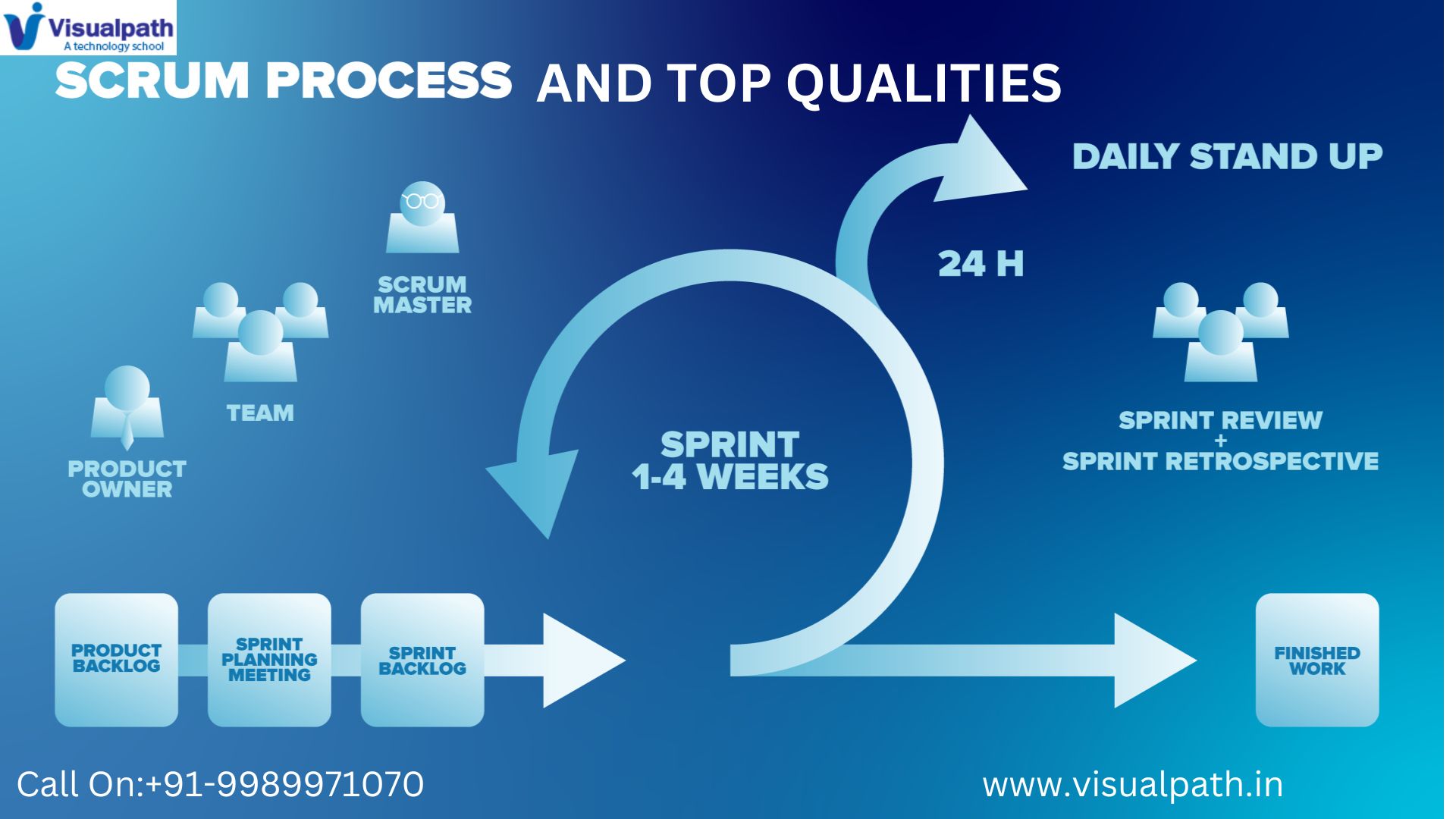
    Scrum Master is critical to the success of agile teams and the projects they undertake. If you’re considering enrolling in a Scrum Master Course, it’s essential to understand the key qualities that make an exceptional Scrum Master. Developing these qualities not only helps in managing teams effectively but also enables seamless project execution in an agile environment. This article explores the top 10 qualities every Scrum Master should cultivate, offering insights for those pursuing Scrum Master Training or Scrum Master Certification Training. 

    1. Exceptional Communication Skills 

    A Scrum Master acts as a bridge between the product owner, development team, and stakeholders. Clear and effective communication is essential to ensure everyone is aligned. During a Scrum Master Course, you’ll learn how to facilitate discussions, resolve conflicts, and maintain transparency within the team. 

    2. Leadership Without Authority

    Unlike traditional managers, Scrum Masters don’t wield direct authority. They lead by influence, ensuring the team adheres to Scrum principles. Leadership skills are a focus of Scrum Master Training, helping participants learn how to inspire and motivate their teams. 

     3. A Deep Understanding of Scrum Principles

    Mastering Scrum fundamentals is non-negotiable for any Scrum Master. Enrolling in a Scrum Master Certification Training equips professionals with in-depth knowledge of Scrum methodologies, ensuring they can guide teams effectively. 

    4. Adaptability 

    Agile environments are inherently dynamic, with priorities and requirements often changing. A successful Scrum Master remains flexible and adjusts strategies as needed. This adaptability is often emphasized in a Scrum Master Course to help professionals handle unexpected challenges. 

    5. Conflict Resolution Expertise 

    Teams working closely together may encounter conflicts. A Scrum Master must mediate disputes and ensure healthy team dynamics. Through scrum Master Training, participants learn practical techniques to handle conflicts constructively. 

    6. Facilitation Skills

    Scrum Masters are facilitators of ceremonies like daily stand-ups, sprint planning, and retrospectives. Good facilitation ensures these events are productive and time-efficient. A Scrum Master Certification Training often includes modules on effective meeting facilitation. 

    7. Empathy and Emotional Intelligence

    Understanding team members’ perspectives and fostering a supportive environment is crucial. Scrum Masters with high emotional intelligence can better address team concerns and create a culture of trust. Empathy is often a soft skill developed during a Scrum Master Course. 

    8. Problem-Solving Abilities

    Obstacles and impediments are common in agile workflows. A Scrum Master needs sharp problem-solving skills to identify and remove roadblocks quickly. Many Scrum Master Training programs include scenarios and exercises that enhance this capability. 

    9. Focus on Continuous Improvement

    Scrum Masters drive the philosophy of kaizen, or continuous improvement, within their teams. They ensure retrospectives lead to actionable steps that enhance team efficiency. This mindset is a core component of most Scrum Master Certification Training programs. 

    10. Commitment to Team Success

    A great Scrum Master is genuinely invested in the success of their team. This commitment often translates into proactive efforts to address challenges, support team members, and ensure project goals are met. This sense of ownership is instilled during a Scrum Master Course. 

    Why Developing These Qualities Matters 

    The journey to becoming a successful Scrum Master involves more than just learning frameworks and methodologies. It’s about embodying the values of collaboration, adaptability, and servant leadership. Enrolling in a Scrum Master Certification Training is an excellent first step to developing these qualities, offering both theoretical knowledge and practical skills. 

    The Role of Training in Cultivating Key Qualities 

    A well-designed Scrum Master Course goes beyond teaching the mechanics of Scrum. It focuses on real-world applications, role-playing exercises, and case studies that simulate challenges faced by Scrum Masters. Whether you’re new to Scrum or looking to refine your skills, Scrum Master Training can help you unlock your potential and lead teams effectively. 

    Conclusion

    The qualities outlined above are essential for any Scrum Master aspiring to excel in their role. While some of these traits may come naturally, others require deliberate effort and training. A scrum Master Course is an invaluable resource for developing these skills, ensuring you’re equipped to guide agile teams successfully. By investing in Scrum Master Training or Scrum Master Certification Training, you’ll not only enhance your career prospects but also contribute meaningfully to the success of your team and organization. With the right mindset and tools, you can become a Scrum Master who drives innovation, fosters collaboration, and delivers outstanding results. 

    Visualpath offering a Scrum Master Course with real-time expert instructors and hands-on projects. Our Scrum Master Training, from industry experts and gain hands-on experience. We provide to individuals globally in the USA, UK, etc. To schedule a demo, call +91-9989971070. 

    Course Covered: Jira, Scrumwise, VivifyScrum, Quickscrum, Trello, Asana, Collaboration, Axosoft, Nutcache,

    Whatsapp:  https://www.whatsapp.com/catalog/919989971070

    Visit: https://www.visualpath.in/online-scrum-master-course.html

  • Why Every Business Needs Dynamics 365 Supply Chain Management

    Why Every Business Needs Dynamics 365 Supply Chain Management

    Why Every Business Needs Dynamics 365 Supply Chain Management

    Supply chain system is critical for business success. Dynamics 365 Supply Chain Management (SCM) is a comprehensive solution from Microsoft designed to help companies optimize their supply chains, enhance productivity, and adapt to rapidly changing demands. Dynamics 365 Supply Chain Management provides companies with the tools they need to stay agile and manage every aspect of their supply chain, from sourcing and procurement to manufacturing and distribution business needs Dynamics 365 SCM.

    Understanding Dynamics 365 Supply Chain Management

    Dynamics 365 Supply Chain Management is a powerful tool that integrates all areas of the supply chain into a single platform, making it easier for businesses to manage operations and streamline processes. It offers real-time visibility into supply chain functions, which helps decision-makers spot trends, identify bottlenecks, and business needs Dynamics 365 SCM make data-driven improvements. With tools for inventory management, production planning, warehouse operations, transportation, and demand forecasting, Dynamics 365 Supply Chain Management provides an end-to-end solution that brings together critical information and automates processes to help businesses thrive in a competitive market.

    By using D365 Supply Chain Management, companies can avoid issues like stockouts, overstocking, and production delays, which often result in lost revenue and customer dissatisfaction. This solution is particularly valuable in industries with complex supply chains, such as manufacturing, retail, and logistics. Dynamics Supply Chain allows for better demand planning and predictive analytics, which help companies anticipate and respond to changes in the market and in customer preferences. This level of responsiveness is crucial for companies looking to gain a competitive edge.

    Key Benefits of Dynamics Supply Chain for Businesses

    One of the main advantages of Dynamics 365 Supply Chain Management is its ability to provide real-time insights and reporting. These features allow businesses to make informed decisions quickly, which is essential for keeping pace with dynamic market conditions. For example, if there is a disruption in the supply chain—such as a business needs Dynamics 365 SCM delay from a supplier—Dynamics Supply Chain provides the data needed to make fast adjustments and find alternative sources. This level of agility reduces downtime, minimizes costs, and helps maintain customer satisfaction by ensuring timely delivery of products.

    Another benefit of D365 Supply Chain Management is improved inventory management. With accurate inventory tracking and predictive analysis, companies can reduce the risk of overstocking or understocking products. Dynamics 365 Supply Chain Management uses intelligent tools to forecast demand, optimize stock levels, and automate reorder processes. By having the right inventory at the right time, businesses can reduce storage costs and improve cash flow.

    Furthermore, Dynamics 365 Supply Chain Management streamlines warehouse operations by automating tasks, improving resource allocation, and tracking materials in real-time. Warehouse managers can see where each product is located, how long it’s been in storage, and when it’s scheduled for distribution. With this information, managers can reduce waste, improve order accuracy, and enhance the overall efficiency of the warehouse. Additionally, Dynamics Supply Chain supports workforce management, ensuring that staff is deployed where they’re needed most, leading to more efficient operations.

    Enhancing Operational Efficiency with Dynamics 365 Supply Chain Management

    Beyond inventory and warehouse management, Dynamics 365 Supply Chain Management also strengthens production and manufacturing processes. By integrating with manufacturing equipment and processes, this solution can track production cycles, monitor machinery health, and schedule preventive maintenance. This capability minimizes equipment downtime and reduces the risk of unplanned maintenance, which can be costly and disruptive. Manufacturing operations become more efficient as D365 Supply Chain Management aligns production schedules with demand, reducing overproduction and underutilization of resources.

    In addition, Dynamics 365 Supply Chain Management facilitates improved supplier relationship management. By having visibility into supplier performance, order history, and quality metrics, businesses can business needs Dynamics 365 SCM make informed choices about which suppliers to work with. The system allows companies to assess and compare suppliers, track delivery times, and evaluate product quality. Strong supplier relationships are essential for maintaining a smooth and reliable supply chain, especially when sourcing raw materials or components from multiple vendors.

    Integrating Technology for a Smarter Supply Chain

    The integration of advanced technologies like artificial intelligence (AI), machine learning, and IoT (Internet of Things) into Dynamics 365 Supply Chain Management makes it a future-ready solution for supply chain professionals. For instance, IoT sensors can be used to monitor the condition of goods in transit, track temperature-sensitive items, and ensure compliance with regulatory standards. Machine learning algorithms analyze historical data to provide more accurate demand forecasts, and AI-powered insights help businesses identify patterns and trends that may not be immediately visible to human analysts.

    Conclusion: Why Every Business Should Embrace Dynamics 365 Supply Chain Management

    In conclusion, Dynamics 365 Supply Chain Management is a critical asset for businesses aiming to enhance their supply chain operations, improve customer satisfaction, and stay competitive in a fast-paced market. The platform’s real-time insights, advanced analytics, and automation capabilities enable companies to optimize every aspect of their supply chain. By adopting Dynamics 365 Supply Chain Management, businesses can improve their inventory management, streamline warehouse operations, enhance production processes, and build stronger relationships with suppliers.

    For organizations looking to navigate supply chain challenges effectively and position themselves for future growth, Dynamics 365 Supply Chain Management offers the flexibility, power, and scalability needed to succeed. Embracing this solution not only equips businesses with cutting-edge tools for today but also prepares them for the technological advancements of tomorrow, ensuring they remain at the forefront of innovation in supply chain management.

    Visualpath provides the best  Dynamics Supply Chain  with real-time expert instructors and hands-on projects. Our D365 Supply Chain Management , from industry experts and gain hands-on experience We provide to individuals globally in the USA, UK, etc. To schedule a demo, call +91-9989971070.

    Key Points: Financial control, Worker control, Deliver chain management.

    Whatsapp:  https://www.whatsapp.com/catalog/919989971070

    Visit: https://www.visualpath.in/online-dynamics-365-supply-chain-management.html

  • MLOps Course for AI Engineers: Key Skills Explained

    MLOps Course for AI Engineers: Key Skills Explained

    An MLOps Course is essential for AI engineers who want to build, deploy, and monitor machine learning models in a streamlined, efficient way. This course combines data science with operations, providing a strong foundation for AI engineers looking to manage the end-to-end lifecycle of machine learning models. MLOps Online Training equips learners with crucial skills in model deployment, monitoring, automation, and scalability, all essential to maximizing the value of AI applications. With the growing demand for seamless Machine Learning Operations Training, professionals with MLOps skills are becoming indispensable to AI-driven companies.

    Why MLOps Matters for AI Engineers

    AI engineers face a variety of challenges when managing machine learning projects at scale. Traditional approaches to deploying and maintaining ML models are often resource-intensive and can result in frequent manual errors. Machine Learning Operations Training is designed to address these issues by implementing DevOps principles tailored for machine learning. This approach allows AI engineers to deploy models faster, reduce operational overhead, and ensure consistent performance across different environments.

    Key Skills Covered in MLOps Online Training

    1. Model Deployment and Monitoring: One of the primary focuses of an MLOps Online Training program is to equip AI engineers with skills in deploying models reliably and monitoring them for performance. Engineers learn various deployment strategies, including batch, real-time, and hybrid deployment, allowing them to choose the best approach for different applications.
    2. Automation of Machine Learning Pipelines: Manual processes can slow down the deployment and updating of machine learning models. This training emphasizes automation tools that streamline data ingestion, feature engineering, model training, and deployment. Automated pipelines not only reduce errors but also make the ML lifecycle more efficient and scalable.
    3. Data and Model Versioning: In an environment where data and models are constantly evolving, versioning is essential. AI engineers learn how to use tools like Git, DVC, and ModelDB to track changes in both datasets and model versions. Machine Learning Operations Training ensures that every change is tracked and reproducible, enhancing model reliability.
    4. Collaboration and Cross-Functional Communication: MLOps requires seamless collaboration between data scientists, developers, and operations teams. The course highlights best practices for fostering communication and collaboration, ensuring that all stakeholders are aligned and working towards the same goals.
    5. Performance Monitoring and Feedback Loops: A model’s accuracy can drift over time due to changes in data. MLOps Online Training teaches methods for setting up real-time monitoring and feedback loops that track model performance. This helps AI engineers detect and address issues early, keeping models reliable and up-to-date.
    6. Scalability and Resource Optimization: AI models often need to scale up as data volume and user demands increase. This training provides strategies for optimizing computational resources, ensuring that models remain cost-effective and perform well, even as they scale.

    Benefits of Machine Learning Operations Training for AI Engineers

    Enrolling in a comprehensive MLOps Online Training course offers AI engineers numerous advantages in their careers. The skills gained from Machine Learning Operations Training enable engineers to manage complex workflows, improve productivity, and ensure that machine learning models perform optimally. With these skills, engineers are well-equipped to meet the growing demand for efficient and scalable AI solutions in industries like finance, healthcare, e-commerce, and more.

    Conclusion

    In an AI-driven world, AI engineers with MLOps skills have a distinct advantage. This MLOps Course provides essential training for deploying, monitoring, and scaling machine learning models efficiently. As AI continues to evolve, the knowledge gained through MLOps Online Training ensures that AI engineers can keep up with the demands of machine learning operations, fostering innovation and efficiency within their organizations. By investing in Machine Learning Operations Training, AI professionals gain the expertise needed to drive impactful AI solutions, making it a valuable asset for anyone in the field.

    VISUALPATH is the Best Software Online Training Institute in Ameerpet, Hyderabad. Enroll in our institute to complete Machine Learning Operations Training. You will get the best course at an affordable cost.

    Attend Free Demo

    Call on – +91-9989971070.

    WhatsApp: https://www.whatsapp.com/catalog/919989971070/

    Visit: https://www.visualpath.in/online-mlops-training.html

  • How to Use Dynamics 365 Business Central for Financial Reporting

    How to Use Dynamics 365 Business Central for Financial Reporting

    Dynamics 365 Business Central Course offers professionals the essential skills to harness this ERP tool’s financial reporting capabilities. Financial reporting is vital for tracking, analyzing, and making informed decisions about a company’s economic health. Dynamics 365 Business Central, with its robust features, allows companies to streamline their financial processes, consolidate data, and produce insightful reports that support strategic planning. This article explores how to leverage Dynamics 365 Business Central for financial reporting, emphasizing how Business Central Training Courses can equip you to master these tools for optimal results.

    For those aiming to excel in financial management, Business Central Training Courses cover a variety of financial reporting tools, enabling users to design tailored reports for specific business requirements. From data collection to advanced analytics, Dynamics 365 Business Central’s financial reporting tools provide businesses with the means to ensure accuracy and efficiency in their financial workflows.

    Why Use Dynamics 365 Business Central for Financial Reporting?

    The Dynamics 365 Business Central platform is uniquely positioned to support financial reporting because of its integration capabilities and powerful reporting tools. A Dynamics 365 Business Central Course teaches users how to utilize these functions to create insightful and actionable financial reports. Key benefits of using Business Central for financial reporting include:

    Unified Financial Data: Business Central consolidates data from different departments, providing a unified financial overview. This makes it easier to create comprehensive reports that accurately reflect the company’s overall performance.

    Automation of Financial Processes: Automating repetitive tasks like consolidations, eliminations, and currency adjustments reduces manual work, minimizes errors, and accelerates the reporting process, ensuring more timely reports.

    Customizable Reporting Options: Business Central’s customizable reporting capabilities allow companies to tailor financial reports to meet specific internal or regulatory requirements, giving a clearer view of metrics that matter.

    Learning these core functionalities through a Business Central Training Course can transform the way companies manage financial data, enabling more accurate reporting and efficient processes.

    Steps to Effective Financial Reporting in Dynamics 365 Business Central

    To use Dynamics 365 Business Central effectively for financial reporting, understanding the setup and customization options available is crucial. A Dynamics 365 Business Central Course can provide in-depth guidance on these processes, ensuring users are well-prepared to handle financial data professionally. Below are key steps involved in setting up financial reporting in Business Central.

    1. Setting up Financial Dimensions

    Financial dimensions in Dynamics 365 Business Central allow users to segment financial data by department, location, product line, or other categories, helping to create more granular reports. Business Central Training Courses teach users to configure and apply these dimensions accurately, ensuring that financial information is organized according to company requirements.

    Understanding Financial Dimensions: Using dimensions simplifies the customization of financial reports, as data can be filtered, sorted, and analyzed by the various categories that are important to the business.

    2. Customizing Financial Reports

    Dynamics 365 Business Central provides pre-built financial report templates for basic reporting but also allows for extensive customization. Customizing reports is crucial for businesses that need to focus on specific performance indicators. In a Dynamics 365 Business Central Course, users learn to create custom financial reports, including income statements, balance sheets, and cash flow statements that meet unique business needs.

    Report Designer Tools: Business Central includes various design tools, such as financial report layouts and account schedules, which allow users to tailor reports and apply filters for more specific insights.

    3. Leveraging Power BI for Advanced Financial Analysis

    Integrating Dynamics 365 Business Central with Power BI can greatly enhance the reporting process. Power BI enables the creation of visual dashboards, trend analyses, and KPI tracking, providing a more interactive view of financial data. Learning how to integrate and use Power BI through Business Central Training Courses empowers users to develop dynamic and visually appealing reports.

    Advanced Analysis and Visualizations: Through training, users can learn how to utilize Power BI templates, create custom dashboards, and set up visual representations of critical financial metrics, aiding in quicker and more insightful decision-making.

    4. Automating Report Schedules and Notifications

    Setting up automated reports in Business Central ensures that stakeholders receive regular financial updates without needing to run reports manually. This feature is especially helpful for businesses with recurring reporting requirements, such as monthly or quarterly financial updates. By automating report schedules, Business Central can save significant time and reduce the chance of missed reporting deadlines.

    Configuring Report Automation: With guidance from Business Central Training Courses, users can learn to schedule automated financial reports, ensuring reports are ready for review at predetermined intervals.

    Key Benefits of Using Dynamics 365 Business Central for Financial Reporting

    Mastering financial reporting with Dynamics 365 Business Central offers multiple advantages. By completing a Dynamics 365 Business Central Course, users can gain valuable insights into improving the accuracy, efficiency, and relevance of financial reporting within their organization.

    Real-Time Access to Financial Data: Dynamics 365 Business Central provides real-time access to financial reports, enabling managers to respond quickly to performance changes or business demands. This is especially critical for businesses that rely on accurate, up-to-date information to make informed decisions.

    Enhanced Compliance and Accuracy: Automated processes minimize human error, ensuring reports are more accurate and compliant with regulatory requirements. Business Central’s audit trail features also enable businesses to track report changes for transparency.

    Informed Decision-Making: With customizable and automated reports, companies can tailor insights to their specific business objectives, enabling them to make data-driven decisions with greater confidence.

    Advanced Reporting Techniques for Comprehensive Insights

    For companies seeking more advanced reporting options, Business Central offers additional tools and integrations. A Business Central Training Course can familiarize users with these techniques, further enhancing the company’s financial analysis capabilities.

    1. Excel Integration for Advanced Analysis

    Dynamics 365 Business Central seamlessly integrates with Excel, allowing users to export reports for further customization and data manipulation. Users can apply complex formulas, create pivot tables, and develop advanced charts, facilitating more in-depth analysis.

    2. Drill-Down Capabilities for Detailed Insights

    Business Central’s drill-down feature allows users to examine specific details within a report. For instance, if an unexpected expense appears, users can drill down into the expense to understand its components. Business Central Training Courses cover these features, enabling users to make full use of drill-down analysis.

    Conclusion

    A Dynamics 365 Business Central Course is essential for business professionals looking to elevate their financial reporting skills. Dynamics 365 Business Central offers a comprehensive set of features that streamline financial reporting, reduce errors, and provide accurate insights crucial for business management. Through Business Central Training Courses, users can gain in-depth knowledge of these tools, allowing them to harness Business Central’s full potential for financial analysis and data-driven decision-making.

    By mastering the financial reporting features of Dynamics 365 Business Central, businesses can improve efficiency, ensure compliance, and make proactive, strategic financial decisions. Investing time in learning Business Central’s reporting capabilities will equip you with the skills needed to stay competitive and adaptive in today’s data-driven business environment. Whether your goal is to automate financial workflows, enhance report accuracy, or gain a clearer financial perspective, Dynamics 365 Business Central is a reliable and powerful tool to support your financial reporting needs.

    Visualpath is the Leading and Best Institute for learning in Hyderabad. We provide Microsoft Dynamics 365 Business Central Training online. You will get the best course at an affordable cost.

    Attend Free Demo

    Call on – +91-9989971070

    Blog: https://visualpathblogs.com/

    What’s App: https://www.whatsapp.com/catalog/919989971070/

    Visit: https://www.visualpath.in/microsoft-dynamics-365-business-central-training.html

  • What Is the Best Way to Implement Dynamics 365 Business Central?

    What Is the Best Way to Implement Dynamics 365 Business Central?

    Dynamics 365 Business Central Training is essential for organizations planning a successful implementation of this robust ERP solution. Effective training helps employees understand the system’s features and functions, empowering them to utilize Dynamics 365 Business Central to its full potential. By starting with comprehensive Business Central Training Courses and following a structured approach to implementation, companies can streamline operations, enhance productivity, and ensure that the ERP aligns with business objectives. The following steps outline the best practices for implementing Dynamics 365 Business Central, focusing on planning, training, and strategic deployment.

    Conduct a Thorough Needs Assessment

    The first step in any successful ERP implementation is a thorough needs assessment. By evaluating the current processes, goals, and pain points of your organization, you can identify which features of Dynamics 365 Business Central will be most beneficial. During this phase, Microsoft Dynamics 365 Business Central Training provides valuable insights that help in understanding the system’s customization options, modules, and features specific to your industry. Needs assessment also involves gathering input from different departments to understand their unique requirements, which will guide decisions about which functionalities to prioritize and customize.

    Assessing organizational needs early on ensures that your setup is tailored to the company’s specific workflows and challenges. Engaging employees in Dynamics 365 Business Central Online Training at this stage prepares them for the changes ahead and ensures they understand the advantages of the new system. This early involvement fosters a positive attitude toward the implementation, making users feel engaged and ready to adopt the new technology.

    Develop a Detailed Implementation Roadmap

    A carefully planned implementation roadmap is vital for a successful rollout. This roadmap should define the project’s phases, from initial setup and data migration to testing and final deployment. Clear milestones, roles, and timelines keep the project on track and ensure that all team members understand their responsibilities. Dynamics 365 Business Central Training sessions can be integrated into each phase of the roadmap, ensuring that employees are trained progressively as new functions are introduced.

    The roadmap should include a risk management plan that addresses potential roadblocks, such as data migration issues, integration challenges, or user resistance. Proactively managing these risks reduces the likelihood of delays and costly setbacks. Moreover, Business Central Training Courses can include customized sessions focused on risk management and problem-solving, preparing your team to handle any obstacles they may encounter. This structured approach minimizes disruptions and creates a smoother transition to Dynamics 365 Business Central, reducing downtime and ensuring an efficient rollout.

    Invest in Comprehensive User Training

    One of the most critical factors in the successful implementation of Dynamics 365 Business Central is user adoption. A new ERP system can only be effective if users know how to navigate it confidently and efficiently. Providing Dynamics 365 Business Central Training tailored to specific roles and responsibilities is essential for encouraging user engagement. Employees should be trained on both core features and any customizations that have been implemented. Comprehensive training covers tasks such as data entry, report generation, workflow management, and advanced functionality that can optimize their daily work.

    In addition to group training sessions, consider offering Business Central Training Courses that focus on role-specific applications. For instance, finance teams may need advanced training on budgeting and financial reporting, while sales teams may require instruction on CRM features. By making training relevant to each department’s unique needs, employees are more likely to retain information and feel confident in their new workflows. Hands-on training sessions, simulations, and guided practice exercises allow users to gain experience with the system before it goes live, making the transition much smoother.

    Conduct Pilot Testing and Gather Feedback

    Once the primary configuration and training are in place, conducting a pilot test is essential to ensure that the system is ready for full deployment. This phase allows organizations to identify any issues, make necessary adjustments, and gather valuable feedback from users. Microsoft Dynamics 365 Business Central Training can be extended during this pilot phase to address any additional questions or concerns that users may have. The feedback collected will reveal any areas where users may need additional support or clarification, helping to refine training materials and tailor support resources.

    During the pilot phase, monitor user engagement and collect detailed feedback on system performance, usability, and any challenges encountered. This feedback helps fine-tune customizations and optimize the configuration to better meet users’ needs. Additionally, targeted Dynamics 365 Business Central Online Training sessions can be scheduled to address specific issues highlighted in the pilot phase. Implementing these refinements before the full rollout increases the likelihood of a smooth launch and fosters user confidence in the new ERP system.

    Launch the System and Provide Ongoing Support

    After successfully completing the pilot phase, you’re ready to launch Dynamics 365 Business Central across the organization. A gradual rollout, starting with specific departments and expanding to other areas, can help manage the transition effectively. During this rollout, provide users with access to ongoing support resources, including help desks, training refreshers, and a dedicated support team for troubleshooting issues. Dynamics 365 Business Central Training doesn’t end at launch; ongoing training keeps users updated on new features, system upgrades, and best practices.

    Continuous training and support are essential for maintaining high user engagement and long-term productivity gains. Over time, as employees become more comfortable with the ERP, additional Business Central Training Courses can be introduced to teach advanced features, reporting tools, and integration options that further enhance operational efficiency. Regularly scheduled training sessions and open forums for addressing user questions also ensure that employees remain confident and capable in their use of Dynamics 365 Business Central.

    Conclusion

    The best way to implement Dynamics 365 Business Central is through a well-planned and user-focused approach. Starting with a thorough needs assessment, organizations can create a tailored solution that aligns with their operational goals. A structured roadmap, coupled with comprehensive Dynamics 365 Business Central Training and Business Central Training Courses, prepares employees for success at every stage of the implementation. The pilot phase offers a chance to refine configurations and address user feedback, ensuring that the full launch is as smooth as possible. By providing continuous training and support after deployment, companies can maximize their investment in Dynamics 365 Business Central, driving efficiency, productivity, and sustainable growth.

    In today’s competitive business environment, a carefully managed ERP implementation backed by effective Microsoft Dynamics 365 Business Central Training can transform an organization’s capabilities. By investing in proper training and following a structured rollout process, businesses can achieve the full benefits of Dynamics 365 Business Central and position themselves for long-term success.

    Visualpath is the Leading and Best Institute for learning in Hyderabad. We provide Microsoft Dynamics 365 Business Central Training Online. You will get the best course at an affordable cost.

    Attend Free Demo

    Call on – +91-9989971070

    What’s App: https://www.whatsapp.com/catalog/919989971070/

    Visit: https://www.visualpath.in/microsoft-dynamics-365-business-central-training.html
  • Cyber security training basics: start your journey today

    Cyber security training basics: start your journey today

    Cyber Security Training is essential for anyone looking to embark on a rewarding career in the ever-evolving world of cybersecurity. With the rise in cyber threats, data breaches, and the growing sophistication of cybercriminals, organizations across the globe are prioritizing cybersecurity. Consequently, there is an increasing demand for skilled professionals equipped to safeguard digital assets. Whether you’re a beginner looking to get started or an experienced tech enthusiast exploring a new field, Cyber Security Online Training provides you with the skills, knowledge, and practical experience needed to excel. This article explores the basics of cybersecurity training, the benefits of Cyber Security Course Online, and the key steps to building a successful career in this dynamic field.

    Why Cyber Security Training is Important

    In today’s digital age, almost every aspect of business and personal life involves technology. From banking to healthcare, most industries rely on digital platforms, cloud storage, and online transactions. However, with this digital transformation comes the risk of cyber threats. Cybercriminals are constantly evolving their tactics, targeting sensitive data and vulnerable systems. As a result, organizations need trained cybersecurity professionals to counter these threats.

    Cyber Security Training introduces learners to the essential concepts of cybersecurity, such as data protection, risk assessment, threat mitigation, and ethical hacking. By understanding these principles, students can recognize potential vulnerabilities in systems and networks. Through Cyber Security Online Training, you gain a foundation in network security, cryptography, penetration testing, and incident response—all crucial skills for a cybersecurity professional.

    The Benefits of Cyber Security Online Training

    Opting for Cyber Security Course Online offers several advantages, especially for those who need flexibility in their learning. Online training allows you to study at your own pace, making it easier to balance learning with other commitments. Moreover, many online courses provide access to virtual labs, real-world scenarios, and simulated security challenges, allowing you to apply theoretical knowledge in practical settings. Here are some key benefits:

    • Flexible Learning: Cyber Security Online Training enables you to learn at your convenience, making it ideal for working professionals or students balancing multiple responsibilities.
    • Hands-on Practice: Many online cybersecurity courses include labs and simulations that mirror real-world situations, helping you to apply skills in a controlled environment.
    • Expert-Led Content: Online courses are often taught by industry experts who bring valuable insights from their field experience, providing students with relevant and up-to-date knowledge.
    • Cost-Effective: Online courses are often more affordable than traditional classroom training, making cybersecurity education more accessible to a wider range of learners.

    Core Concepts Covered in Cyber Security Training

    Whether you’re new to the field or want to solidify your foundational skills, understanding core cybersecurity concepts is essential. Cyber Security Course Online typically covers a wide range of topics that introduce students to critical aspects of cybersecurity. Here are some of the fundamental areas included in most cybersecurity training programs:

    1. Network Security: Protecting a computer network from threats such as unauthorized access, cyberattacks, and data theft. Network security forms the backbone of cybersecurity, as it safeguards sensitive information and systems within an organization.
    2. Threat and Vulnerability Assessment: Identifying potential vulnerabilities within systems, applications, and networks, and assessing the likelihood of exploitation by cybercriminals. This knowledge helps in designing secure systems and identifying possible risks.
    3. Cryptography: Learning encryption and decryption techniques to secure data and communications. Cryptography ensures that information is only accessible to authorized users.
    4. Penetration Testing: Ethical hacking involves testing the security of systems by attempting to exploit vulnerabilities in a controlled and ethical manner. This approach helps organizations find and fix weaknesses before cybercriminals can exploit them.
    5. Incident Response: Developing and implementing a plan for responding to cyber incidents, such as data breaches or system compromises. Incident response is crucial in minimizing damage, restoring operations, and learning from the incident to improve future security.

    Conclusion

    In conclusion, Cyber Security Training is the foundation for a promising and impactful career in the digital age. With the increasing prevalence of cyber threats, there is a high demand for trained professionals who can protect organizations from attacks and safeguard sensitive information. Through Cyber Security Online Training, you can learn fundamental concepts, build practical skills, and earn certifications that demonstrate your expertise.

    Investing in a Cyber Security Course Online is an excellent way to begin your journey in this field, whether you’re new to cybersecurity or looking to advance your skills. With online training, you gain the flexibility, practical knowledge, and industry insights needed to build a successful career. Start your journey today and make a meaningful impact in the world of cybersecurity.

    Visualpath is the Leading and Best Institute for learning Cyber Security Online in Ameerpet, Hyderabad. We provide Best Cyber Security Trainingand you will get the best course at an affordable cost.

    Attend Free Demo

    Call on – +91-9989971070.

    WhatsApp: https://www.whatsapp.com/catalog/919989971070/

    Visithttps://www.visualpath.in/online-best-cyber-security-courses.html 

  • AWS DevOps Training: Key Tools and Techniques for Success

    AWS DevOps Training: Key Tools and Techniques for Success

    AWS DevOps Training is essential for any aspiring DevOps professional seeking to gain proficiency in cloud infrastructure management and automation. AWS, being one of the leading cloud platforms, provides a range of tools and services that help streamline the development, deployment, and maintenance of applications. Through structured DevOps Online Training and hands-on experience in a DevOps Course, participants can master the skills and techniques necessary to excel in AWS DevOps, from managing cloud resources to automating complex workflows.

    Key AWS DevOps Tools for Success

    One of the main objectives of AWS DevOps Training is to introduce learners to the tools and services that make AWS such a powerful platform for DevOps. Tools like AWS CodePipeline and AWS CodeBuild are crucial components in establishing a Continuous Integration and Continuous Deployment (CI/CD) pipeline. AWS CodePipeline automates the release processes, enabling teams to deliver features and updates faster and with greater efficiency. Similarly, AWS CodeBuild offers scalable build environments, allowing teams to compile and test code without managing physical infrastructure.

    For effective infrastructure management, AWS CloudFormation and AWS Elastic Beanstalk are two other invaluable tools covered in AWS DevOps courses. AWS CloudFormation lets users define and provision cloud resources using a template, which is an essential skill for any DevOps practitioner. With AWS Elastic Beanstalk, learners can deploy and manage applications without needing to handle the underlying infrastructure. Both tools simplify complex tasks, enabling DevOps professionals to focus on optimizing applications rather than managing resources manually.

    Furthermore, an AWSDevOpsTraining program often covers tools like AWS X-Ray and Amazon CloudWatch, which are instrumental in monitoring application performance. AWS X-Ray allows you to trace requests made to applications and identify bottlenecks, while Amazon CloudWatch provides real-time monitoring, metrics, and logs to assess the health and performance of AWS resources. These tools are essential for maintaining reliability and stability in production environments, making them integral to any comprehensive DevOps Online Training program.

    Core Techniques for Effective DevOps on AWS

    While tools are essential, mastering DevOps techniques is equally critical for success. A DevOps Course emphasizes the principles of continuous integration, continuous delivery, and infrastructure as code. In AWS DevOps Training, participants learn how to build a CI/CD pipeline from scratch, creating an automated workflow that reduces the chances of human error, improves code quality, and ensures rapid delivery of new features and bug fixes.

    Another crucial technique taught in AWSDevOps Training is infrastructure as code (IaC), a method that allows for automated management and provisioning of cloud resources. AWS CloudFormation is commonly used for IaC, helping DevOps engineers to automate infrastructure changes. This method improves consistency, as it enables teams to version-control their infrastructure and roll back changes as needed.

    Conclusion

    In conclusion, AWS DevOps Training equips professionals with the tools and techniques needed to succeed in today’s competitive cloud landscape. From core tools like AWS CodePipeline and AWS CloudFormation to critical techniques such as CI/CD and infrastructure as code, AWS DevOps training offers a well-rounded approach to cloud-based DevOps. For those seeking to advance their careers, enrolling in a comprehensive DevOps Course or DevOps Online Training can pave the way for greater opportunities in cloud automation and infrastructure management.

    Visualpath is the leading software online training institute in Hyderabad. Avail complete AWS DevOps Training Worldwide. You will get the best course at an affordable cost.

    Attend Free Demo

    Call on – +91-9989971070.

    WhatsApp: https://www.whatsapp.com/catalog/919989971070/

    Visit   https://www.visualpath.in/online-aws-devops-training.html

  • Step-by-Step Guide to Terraform Course Online Import

    Step-by-Step Guide to Terraform Course Online Import


    Terraform Course Training in Hyderabad: A Comprehensive Guide to Terraform for Beginners

    If you’re interested in managing infrastructure as code, Terraform Training in Hyderabad offers an excellent pathway into this dynamic field. Terraform, an open-source tool by HashiCorp, allows users to define and provision infrastructure across multiple environments in a simple, efficient, and scalable way. In this guide, we’ll cover the essentials of Terraform Course , key concepts, and a step-by-step guide to using Terraform for importing existing infrastructure. Whether you’re looking for a Terraform Course Online or Terraform Online Training, this content provides a solid foundation to get started.


    What is Terraform?

    Terraform is an Infrastructure as Code (IaC) tool that automates the process of building, changing, and versioning infrastructure. By using declarative code written in HashiCorp Configuration Language (HCL), users can describe the desired state of resources, while Terraform Course manages the underlying provisioning and updates. This approach makes Terraform invaluable for organizations managing hybrid or multi-cloud setups, as it integrates with all major providers, such as AWS, Azure, Google Cloud, and on-premises environments.

    Through a Terraform Course Online, you’ll learn how HCL’s simplicity enables new users to set up resources quickly, while its flexibility allows experienced users to manage large-scale infrastructure. In most Terraform Course Online Training sessions, you’ll explore how HCL enables configuration reuse and infrastructure versioning, ensuring consistency across different environments.


    Key Features of Terraform

    1. Provider Agnostic: Terraform is compatible with over 100 providers, allowing you to manage various infrastructure components from a single interface. With Terraform Online Training, you’ll learn how to use modules for each provider to create seamless configurations.

    2. Modular and Scalable Design: Terraform promotes a modular approach that divides infrastructure configurations into reusable components, making it easy to scale. For example, you can create a network module and reuse it in multiple configurations, streamlining processes and minimizing errors. This modularity is emphasized in most Terraform Course Online offerings.

    3. Execution Plan and Resource Graph: Terraform’s resource dependency graph efficiently manages infrastructure changes by determining the sequence of tasks. Execution plans, on the other hand, provide a preview of changes before they’re applied, enabling users to assess their impact beforehand. These features are covered in depth in Terraform Online Training courses, as they form the backbone of Terraform’s secure and reliable automation.


    Step-by-Step Guide to Terraform Import

    One of the advanced features of Terraform is the import function, which lets you integrate existing infrastructure into Terraform without modifying it. This is especially useful for organizations transitioning from manual provisioning to automated infrastructure-as-code. Let’s go through a basic Terraform import process:

    1. Identify the Resource to Import: The first step is identifying the resource to import, such as a virtual machine, database, or network element.
    2. Initialize Terraform Directory: Open your terminal, navigate to the directory where you want to work, and run terraform init. This step configures the directory and downloads any required plugins.
    3. Define the Resource in Configuration: Write HCL code that describes the resource, ensuring it matches the resource type and naming convention.
    4. Run the Import Command: Use the terraform import command, specifying the resource type, name, and ID. This command integrates the resource into the Terraform state file.
    5. Verify the Import: To ensure successful import, run terraform plan and check for consistency between the existing resource and your configuration.

    Mastering the import feature is crucial for anyone serious about Terraform, as it bridges legacy infrastructure and Terraform’s infrastructure-as-code capabilities. Terraform Online Training modules often cover importing with hands-on exercises, giving you the confidence to manage existing resources within Terraform.

    Best Practices for Terraform

    Implementing Terraform effectively requires adhering to several best practices. Enrolling in a Terraform Course Online or Terraform Training in Hyderabad will expose you to these techniques in greater detail.

    • Use Modules for Consistency: By creating modules for commonly used components, you can ensure a standardized infrastructure across environments. This approach also helps in scaling configurations.
    • Manage State Properly: Terraform’s state file keeps track of resource changes and the current setup. Storing state in a remote backend, especially in a team setting, is essential to avoid version conflicts.
    • Version Control: Tracking your configurations in a system like Git enables easy rollbacks and collaboration, ensuring smooth infrastructure updates without the risk of losing valuable changes.

    Conclusion:

    Terraform is a highly versatile tool for automating, consistent, and scalable management of cloud and on-premises infrastructure. Learning Terraform through programs like Terraform Course Online or Terraform Online Training provides in-depth, practical knowledge essential for managing today’s complex infrastructures. For individuals in India, Terraform Training in Hyderabad offers additional benefits, like localized instruction and region-specific insights.

    Whether you’re new to infrastructure-as-code or seeking to deepen your automation knowledge, Terraform provides robust capabilities through its modular design, extensive provider support, and efficient resource planning. Following best practices, such as using modules and managing state files effectively, will further enhance your Terraform proficiency. With continuous learning and hands-on practice, you’ll be well-equipped to leverage Terraform to optimize infrastructure management and streamline deployments in any environment.

    Visualpath is the Best Software Online Training Institute in Hyderabad. Avail complete Terraform Automation in Azure Online Training worldwide. You will get the best course at an affordable cost.

    Attend Free Demo

    Call on – +91-9989971070.

    WhatsApp: https://www.whatsapp.com/catalog/919989971070/

    Visit  https://www.visualpath.in/terraform-online-training.html

    Visit our new course: https://www.visualpath.in/online-best-cyber-security-courses.html

  • What are the Ethical Considerations for Building & Deploying Azure AI Solutions?

    What are the Ethical Considerations for Building & Deploying Azure AI Solutions?

    Introduction:

    Azure AI Engineer Training emphasizes the importance of ethical considerations when building and deploying AI solutions. Key concerns include data privacy, ensuring that sensitive information is protected, and compliance with regulations like GDPR. Addressing bias in AI models is crucial to prevent discrimination, while transparency and explain ability help users trust AI decisions. Furthermore, accountability is essential, ensuring responsibility for AI outcomes. By focusing on these ethical principles, Azure AI engineers can create fair, transparent, and reliable AI systems that positively impact society. Ethics are central to responsible AI deployment in today’s rapidly evolving technological landscape.

    For professionals looking to gain expertise in this domain, programs such as AI 102 Certification are instrumental in providing a comprehensive understanding of both the technological and ethical aspects of AI. Ethical considerations in AI are essential to prevent unintended consequences, protect user privacy, avoid bias, and ensure AI systems are transparent and accountable. These considerations are especially important when leveraging powerful tools like those provided by Microsoft Azure, which plays a leading role in the AI space.

    Data Privacy and Protection in AI

    One of the core ethical considerations in AI is data privacy. AI systems are built on vast datasets, which often contain sensitive and personal information. During Azure AI Engineer Training, students learn that compliance with regulations like the General Data Protection Regulation (GDPR) and the California Consumer Privacy Act (CCPA) is critical when developing AI models. Azure provides various privacy tools, such as differential privacy and encryption protocols, to ensure that personal data is protected at all stages of AI development.

    Ethically, AI developers need to handle data with care, ensuring it is anonymized and encrypted when necessary. This prevents unauthorized access and misuse of personal information. Privacy safeguards are an integral part of responsible AI deployment, and this is a key topic covered in the AI 102 Certification, where aspiring AI professionals learn how to navigate these challenges using Azure’s built-in capabilities.

    Addressing Bias and Fairness in AI Models

    Bias in AI is a significant ethical challenge that can lead to unfair outcomes. AI models can unintentionally reinforce existing societal biases if they are trained on biased data. For example, facial recognition technologies have been criticized for their lack of accuracy across different demographic groups. In the Azure AI Engineer Training, participants are introduced to tools such as Fair learn, an Azure Machine Learning tool that helps detect and mitigate bias in models.

    Ethically, it is crucial to ensure that AI models are fair and do not discriminate against any group. Azure provides extensive documentation and resources to guide developers in building fair AI systems. These considerations are emphasized in the AI 102 Certification curriculum, helping professionals understand the importance of fairness and inclusivity in AI solutions. Addressing bias is not just a technical challenge; it is an ethical imperative that shapes how society interacts with AI-powered technologies.

    Transparency and Explain ability in AI

    Another critical ethical consideration is the transparency and explain ability of AI models. Users and stakeholders need to understand how AI systems arrive at decisions, especially in high-stakes environments like healthcare, finance, and criminal justice. Black-box models, where decisions are made without clear reasoning, can erode trust in AI. Azure AI Engineer Training emphasizes the importance of model interpretability, offering tools such as Interpret, which provides insights into how AI models make predictions.

    Ethical AI development involves creating systems that are explainable and transparent to all stakeholders. The AI 102 Certification ensures that professionals are well-equipped to use Azure tools for building AI models that offer clear explanations for their outputs. By focusing on transparency, developers can help build trust between AI systems and their users, ultimately leading to more responsible and accepted AI deployments.

    Accountability in AI Systems

    Accountability is another vital ethical concern. When AI systems make mistakes or produce harmful outcomes, it is essential to determine who is responsible. This accountability becomes especially complex in automated systems where human oversight is minimal. In Azure AI Engineer Training, developers are taught to integrate human-in-the-loop (HITL) processes, where humans remain involved in critical decision-making stages.

    In the AI 102 Certification course, the focus on accountability ensures that AI engineers are equipped to implement systems where errors can be traced back, and corrective actions can be taken. This accountability framework also extends to maintaining audit trails, which are crucial for understanding the life cycle of an AI model and any decisions it has influenced. In this way, AI developers are held responsible for the outcomes of their systems, ensuring they adhere to ethical standards.

    Ensuring Ethical Use of AI in Azure

    Microsoft Azure promotes the responsible use of AI through its guidelines and tools that help developers design ethical solutions. The AI 102 Certification dives deep into these aspects, equipping AI engineers with the knowledge to apply Microsoft’s Responsible AI principles—fairness, inclusiveness, reliability and safety, privacy and security, transparency, and accountability—when building solutions on the Azure platform.

    Throughout the Azure AI Engineer Training, students learn how to navigate the various challenges that come with AI development, including managing unintended consequences. Ethical AI also involves continuous monitoring and improvement, ensuring that AI systems evolve responsibly over time. This approach not only builds trust in AI technologies but also ensures that developers are equipped to handle future ethical challenges that may arise as AI becomes more sophisticated.

    Conclusion

    Ethical considerations are at the heart of building and deploying AI solutions on Microsoft Azure. Whether it is safeguarding data privacy, ensuring fairness, promoting transparency, or maintaining accountability, these principles are integral to developing responsible AI systems. The AI 102 Certification prepares professionals to navigate these ethical challenges by equipping them with the necessary tools and knowledge to create solutions that are both innovative and ethical. Through Azure AI Engineer Training, individuals gain the skills to build AI systems that not only meet business goals but also adhere to ethical standards, ensuring AI’s positive impact on society. As AI continues to shape the future, it is the responsibility of AI professionals to ensure that these technologies are built with ethics in mind.

    Visualpath is the Best Software Online Training Institute in Hyderabad. Avail complete Azure AI (AI-102) worldwide. You will get the best course at an affordable cost.

    Attend Free Demo

    Call on – +91-9989971070.

    WhatsApp: https://www.whatsapp.com/catalog/919989971070/

    Visit: https://www.visualpath.in/online-ai-102-certification.html