Tag: online training

  • What is the Use of a Docker Network plugin?

    What is the Use of a Docker Network plugin?

    Introduction:

    Docker has become a leading platform for developing, shipping, and running applications. Containers are lightweight, portable, and consistent across different environments, making them ideal for modern application development. Docker and Kubernetes Training

    What is a Docker Network Plugin?

    A Docker Network plugin is an extension that enhances Docker’s native networking capabilities. By default, Docker provides basic networking options, such as bridge networks, host networks, and overlay networks. While these built-in options are sufficient for many use cases, they may not meet the requirements of more complex, multi-host, or cloud-native applications.

    Types of Docker Network Plugins:

    Docker Network plugins come in various forms, catering to different networking needs.

    Some common types include:

    Bridge Plugins: Extend the default bridge network functionality, enabling more advanced configurations like multi-host networking.

    Overlay Plugins: Enhance overlay networks to support cross-host communication in distributed environments. Kubernetes Online Training

    SDN (Software-Defined Networking) Plugins: Integrate with SDN solutions to manage network policies, security, and segmentation across containers.

    Cloud-Native Plugins: Designed for cloud environments, these plugins allow seamless integration with cloud provider networks, making it easier to deploy and manage containers in multi-cloud setups.

    Key Benefits of Docker Network Plugins:

    Enhanced Flexibility and Customization:

    Docker Network plugins allow for a high degree of customization, enabling users to tailor their networking setup to specific application requirements. Whether it’s integrating with a corporate network, implementing a custom routing scheme, or adopting a specific security protocol, network plugins provide the flexibility to achieve these goals.

    Improved Scalability:

    As applications scale, so does the complexity of their networking needs. Docker Network plugins facilitate scalable networking solutions that can handle large-scale deployments across multiple hosts or even different data centers. For example, plugins like Calico or Weave provide scalable networking with built-in support for advanced features like IP address management, load balancing, and network segmentation. Docker Online Training

    Integration with Existing Infrastructure:

    For organizations with existing network infrastructure, Docker Network plugins enable seamless integration without disrupting current operations. Plugins can connect Docker containers to VLANs, SDN controllers, or cloud provider networks, ensuring that containerized applications can coexist with traditional workloads.

    Enhanced Security:

    Security is a paramount concern in any networked environment. Docker Network plugins often come with advanced security features, such as network segmentation, encryption, and policy enforcement. These features help protect containerized applications from threats and ensure compliance with organizational security standards.

    Simplified Multi-Cloud and Hybrid Cloud Networking:

    In today’s cloud-centric world, applications are often deployed across multiple clouds or hybrid environments. Docker Network plugins designed for cloud-native applications simplify the process of connecting containers across different cloud providers.

    Conclusion:

    Docker Network plugins are indispensable tools for anyone looking to extend and customize Docker’s networking capabilities. By enabling advanced networking features, integrating with existing infrastructure, and providing enhanced security and scalability, these plugins empower developers and operators to build more robust, flexible, and secure containerized environments.

    Visualpath is the Leading and Best Institute for learning Docker and Kubernetes Online in Ameerpet, Hyderabad. We provide Docker Online Training Course, you will get the best course at an affordable cost.

    Visit : https://www.visualpath.in/DevOps-docker-kubernetes-training.html
    WhatsApp : https://www.whatsapp.com/catalog/919989971070/

  • Terraform vs. AWS CloudFormation: A Comprehensive Comparison

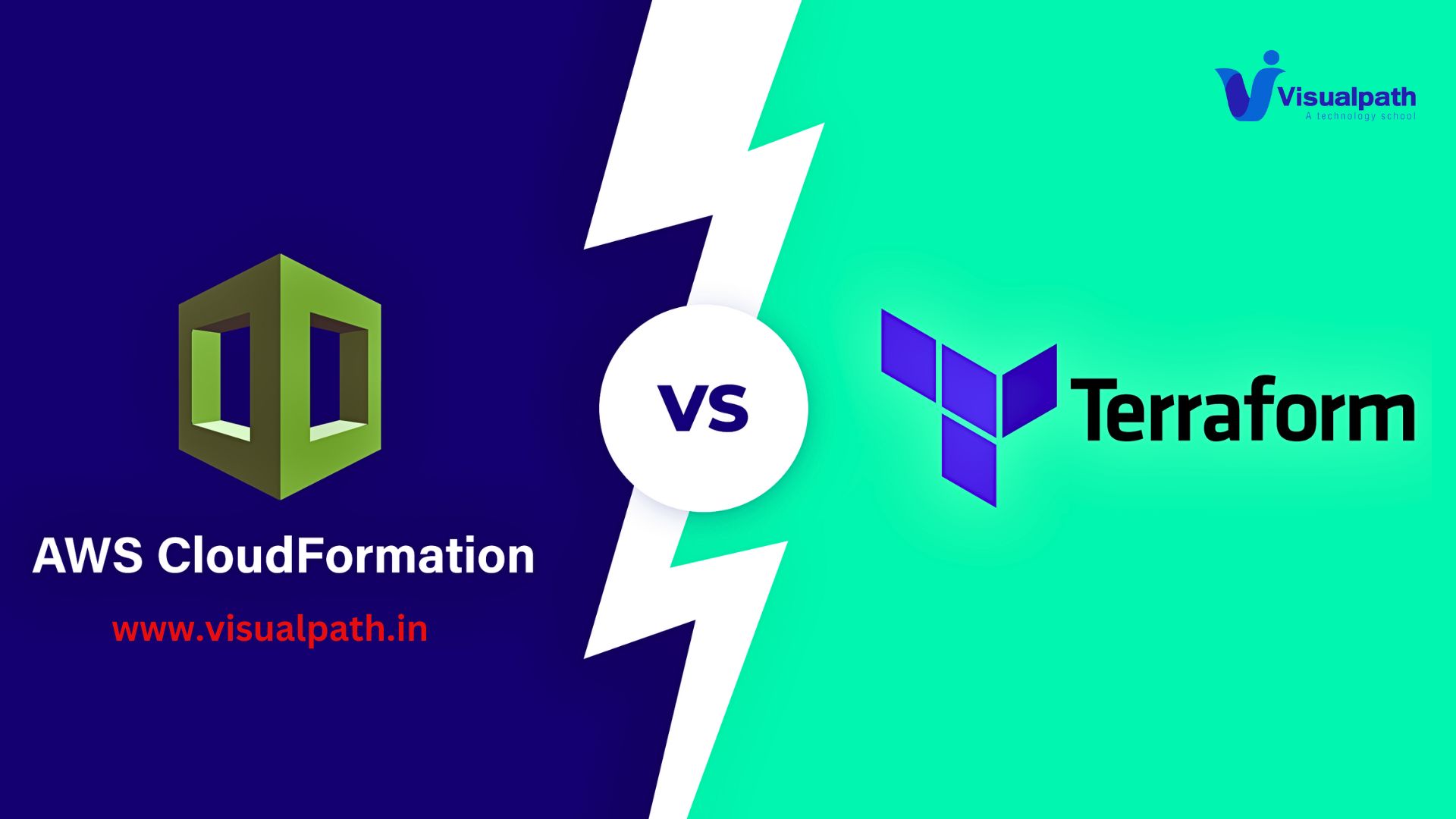
    Terraform vs. AWS CloudFormation: A Comprehensive Comparison

    When it comes to automating infrastructure deployment, Terraform and AWS CloudFormation are two of the most prominent Infrastructure as Code (IaC) tools available. Both tools allow users to define, provision, and manage cloud resources using code, but they differ significantly in their approach, flexibility, and capabilities. Terraform Automation Online Training

    1. Platform Support

    Terraform:

    Multi-Cloud Capability: Terraform is designed to work across multiple cloud providers like AWS, Azure, Google Cloud, and others. It’s an ideal choice for organizations using a multi-cloud strategy or planning to do so.

    AWS Cloud Formation:

    AWS-Centric: CloudFormation is native to AWS and only supports AWS resources. It’s deeply integrated with AWS services, making it the go-to choice for AWS-centric environments.

     Configuration Language

    Terraform:

    HCL (HashiCorp Configuration Language): Terraform uses HCL, which is specifically designed to be both human-readable and easy to write. It also supports JSON. Terraform Automation in Azure Online Training

    AWS Cloud Formation:

    YAML/JSON: CloudFormation templates are written in YAML or JSON. While powerful, these languages can be verbose and may become complex as your infrastructure grows.

    State Management

    Terraform:

    Remote State Storage: Terraform maintains the state of your infrastructure in a remote backend, such as AWS S3 or Terraform Cloud. This allows for consistent infrastructure management and team collaboration.

    AWS CloudFormation:

    Implicit State Management: CloudFormation manages the state of resources automatically, removing the need for separate state management. However, it provides less flexibility compared to Terraform’s approach.

    4. Modularity and Reusability

    Terraform:

    Modules: Terraform supports modules, allowing you to encapsulate and reuse parts of your infrastructure code across multiple projects. This promotes consistency and reduces duplication.

    AWS Cloud Formation:

    Nested Stacks: Cloud Formation supports nested stacks, which allow you to reuse and organize your templates. While effective, they can be more complex to manage compared to Terraform modules.

    Dependency Management

    Terraform:

    Automatic Dependency Handling: Terraform automatically manages resource dependencies using a directed acyclic graph (DAG). This ensures that resources are created and destroyed in the correct order.

    AWS Cloud Formation:

    Explicit Dependencies: Cloud Formation requires you to manually define dependencies between resources, which can add complexity to your templates but provide precise control. Terraform Online Training

     Ecosystem and Extensibility

    Terraform:

    Broad Ecosystem: Terraforms open-source nature has led to a vibrant ecosystem with a wide range of providers and modules available through the Terraform Registry. It also supports custom providers, enabling you to extend its functionality.

    AWS Cloud Formation:

    AWS-Specific: Cloud Formation is tightly integrated with AWS services. While it supports custom resources, the process of creating them is generally more complex compared to Terraform’s extensibility options.

    7. Learning Curve

    Terraform:

    User-Friendly: Terraforms HCL is generally considered easier to learn, especially for those new to IaC. The multi-cloud capability also offers a consistent learning experience across different platforms.

    AWS Cloud Formation:

    Steeper Learning Curve: The combination of YAML/JSON syntax and the need to understand AWS-specific concepts can make CloudFormation more challenging to learn.

    8. Community and Support

    Terraform:

    Active Community: Terraform has a large and active community that contributes to a rich ecosystem of tools, modules, and providers. This community-driven approach fosters innovation and provides extensive support resources.

    AWS Cloud Formation:

    AWS Support: As a first-party AWS service, CloudFormation benefits from comprehensive AWS support and documentation. However, its community is more niche compared to Terraform’s broader user base.

    Conclusion

    Terraform is the best choice if you need a versatile tool that works across multiple cloud providers, offers greater flexibility, and benefits from a strong community-driven ecosystem.

    AWS CloudFormation is ideal for organizations that are fully committed to AWS and prefer a tightly integrated tool that simplifies the management of AWS resources. Terraform Automation in Azure Cloud Training

    Visualpath is the Best Software Online Training Institute in Hyderabad. Avail complete Terraform Automation in Azure Online Training worldwide. You will get the best course at an affordable cost.

    WhatsApp: https://www.whatsapp.com/catalog/919989971070

    Visit  https://www.visualpath.in/terraform-online-training-in-hyderabad.html

  • What are the 4 Pillars of Microsoft 365 Integrated Security?

    What are the 4 Pillars of Microsoft 365 Integrated Security?

    Introduction:

    Microsoft 365 has emerged as one of the leading solutions, offering a suite of tools that enable productivity, collaboration, and communication. However, with the rise of cyber threats, ensuring the security of these platforms is paramount. Microsoft Dynamics CRM Training

    Identity and Access Management:

    The first pillar of Microsoft 365 integrated security is Identity and Access Management (IAM). In a digital ecosystem, identities are the new security perimeter. Managing who has access to what resources and ensuring that only the right people have access to the right data at the right time is crucial.

    Tools like Azure Active Directory (Azure AD) enable organizations to manage user identities and control access to applications, devices, and data. Multi-Factor Authentication (MFA) adds an extra layer of security by requiring users to verify their identity through additional means, such as a phone number or biometric scan, in addition to a password.

    Threat Protection:

    The second pillar, Threat Protection, focuses on identifying, detecting, and mitigating threats before they can cause harm. With the ever-evolving landscape of cyber threats, businesses need a proactive approach to threat management.

    Microsoft 365 offers advanced threat protection tools like Microsoft Defender for Office 365, which provides protection against phishing, malware, and other sophisticated threats. By leveraging machine learning and AI, Defender can detect and block threats in real-time, providing organizations with a robust defense mechanism. Dynamics 365 CRM Training Course

    Information Protection:

    The third pillar, Information Protection, revolves around safeguarding sensitive data. In an age where data is a valuable asset, protecting it from unauthorized access and leakage is crucial.

    Microsoft 365’s information protection framework includes tools like Azure Information Protection (AIP) and Microsoft Purview (formerly known as Microsoft Information Protection). These tools enable organizations to classify, label, and protect sensitive data. Labels can be applied manually or automatically based on predefined policies, ensuring that sensitive information is always protected, regardless of where it is stored or shared.

    Data Loss Prevention (DLP) policies further help by preventing the accidental sharing of sensitive information. DLP policies can be applied across Microsoft 365 applications, ensuring consistent protection of data across the platform.

    Security Management:

    The final pillar is Security Management. This pillar ensures that security policies are effectively managed, monitored, and continuously improved. Security management is the backbone of a robust security posture, providing organizations with the tools and insights needed to maintain a secure environment. Dynamics 365 Online Training

    Microsoft 365 Security Center and Microsoft 365 Compliance Center offer centralized dashboards for monitoring security and compliance across the organization. These tools provide actionable insights, enabling security teams to identify vulnerabilities, monitor security activities, and respond to incidents in real-time.

    Conclusion:

    In conclusion, Microsoft 365’s integrated security approach is built on four fundamental pillars: Identity and Access Management, Threat Protection, Information Protection, and Security Management. Together, these pillars provide a comprehensive security framework that helps organizations safeguard their digital environments.

    Visualpath is the Leading and Best Institute for learning MS Dynamics CRM Online in Ameerpet, Hyderabad. We provide Microsoft Dynamics CRM Online Training Course, you will get the best course at an affordable cost.

    Visit : https://www.visualpath.in/microsoft-dynamics-crm-training.html

    WhatsApp : https://www.whatsapp.com/catalog/919989971070/

  • Microsoft Fabric-Working with Delta Lake Tables

    Microsoft Fabric-Working with Delta Lake Tables

    Introduction to Delta Lake in Microsoft Fabric

    Microsoft Fabric– Delta Lake is an open-source storage layer that brings reliability, performance, and manageability to data lakes. It provides ACID (Atomicity, Consistency, Isolation, Durability) transactions, scalable metadata handling, and unifies streaming and batch data processing. In the context of Microsoft Fabric, Delta Lake plays a crucial role in enabling organizations to manage their data efficiently and derive insights from vast datasets. Microsoft Azure Fabric Training

    Key Features of Delta Lake in Microsoft Fabric

    1. ACID Transactions:
      1. Delta Lake ensures that all operations on data are atomic, consistent, isolated, and durable. This means that even in the event of a failure, the integrity of your data remains intact. This is particularly important in large-scale data processing environments where concurrent operations are common. Microsoft Fabric Training
    2. Scalable Metadata Handling:
      1. One of the challenges in big data environments is managing metadata. Delta Lake in Microsoft Fabric addresses this by offering scalable metadata handling, which allows for efficient querying and management of large datasets without performance degradation.
    3. Unified Batch and Streaming Data:
      1. Delta Lake tables allow users to combine both batch and streaming data, providing a unified view of their data. This feature is especially useful in scenarios where real-time analytics are needed alongside historical data processing. Microsoft Fabric Online Training Course
    4. Time Travel:
      1. Delta Lake enables time travel, allowing users to access and query previous versions of their data. This feature is invaluable for debugging, auditing, and comparing changes over time.

    Working with Delta Lake Tables in Microsoft Fabric

    1. Creating Delta Lake Tables:
      1. In Microsoft Fabric, creating a Delta Lake table is straightforward. Users can define Delta tables as part of their data pipelines using Azure Data Factory or Azure Synapse Analytics. These tables can be created from scratch or by converting existing Parquet tables into Delta format. Microsoft Fabric Online Training
    2. Data Ingestion and Transformation:
      1. Delta Lake supports seamless data ingestion from various sources. Once ingested, data can be transformed using Delta Lake’s rich SQL-based syntax or integrated tools like Power Query in Microsoft Fabric. Microsoft Fabric Certification Course
    3. Querying and Analyzing Data:
      1. With Delta Lake tables, users can perform complex queries and analytics using tools like Azure Synapse or Power BI. The ACID properties of Delta Lake ensure that the data remains consistent and reliable throughout the analysis process.

    Conclusion

    Delta Lake within Microsoft Fabric enhances data management by providing robust features like ACID transactions, scalable metadata handling, and unified processing of batch and streaming data. By working with Delta Lake tables, organizations can ensure data integrity, improve query performance, and gain the flexibility needed for comprehensive data analytics. Microsoft Fabric Online Training Institute     

    Visualpath is the Leading and Best Software Online Training Institute in Hyderabad. Avail complete Microsoft Fabric Online Training Worldwide. You will get the best course at an affordable cost.

    WhatsApp: https://www.whatsapp.com/catalog/919989971070

    Visit   https:/www.visualpath.in/microsoft-fabric-online-training-hyderabad.html

  • How to Build Scalable Solutions with Power Apps and Power Automate?

    How to Build Scalable Solutions with Power Apps and Power Automate?

    Introduction

    Power Apps Online Training, In today’s fast-paced business environment, scalability is crucial for sustaining growth and maintaining efficiency. Microsoft Power Apps and Power Automate offer powerful tools to build scalable solutions that adapt to evolving business needs. Whether you’re looking to automate workflows or create custom applications, these platforms enable businesses to scale without compromising performance or flexibility. Microsoft Power Platform Online Training

    Understand Your Business Requirements

    • Begin by thoroughly analyzing your current processes and identifying areas where automation or custom applications could add value.
    • Engage stakeholders across departments to gather input on their needs and expectations from the solution.
    • Define clear goals and KPIs to measure the success of the solution.

    Leverage the Power of Data verse

    • Use Microsoft Dataverse to create a centralized data platform that supports scalability.
    • Dataverse allows you to manage data securely and efficiently, ensuring seamless integration across different applications.
    • Take advantage of its built-in security features to control access and maintain data integrity.

    Design with Reusability in Mind

    • When building Power Apps, focus on creating modular components that can be reused across multiple apps.
    • Implement standardized templates and connectors that can be easily adapted to different use cases.
    • Reusability reduces development time and ensures consistency across your solutions.

    Automate Complex Workflows

    • Use Power Automate to design and automate workflows that handle repetitive tasks and complex processes.
    • Break down large workflows into smaller, manageable components that can be easily maintained and updated as the business grows.
    • Automating these processes ensures efficiency and reduces the risk of human error.

    Implement Scalable Infrastructure

    • Ensure that your Power Apps and Power Automate solutions are built on scalable infrastructure, such as Azure, to handle increased loads.
    • Regularly monitor performance and adjust resources as needed to prevent bottlenecks.
    • Consider integrating AI and machine learning capabilities to enhance the scalability and intelligence of your solutions.

    Continuous Monitoring and Optimization

    • Establish a monitoring system to track the performance of your solutions and identify areas for improvement.
    • Regularly update and optimize your Power Apps and Power Automate workflows to accommodate changes in business requirements.
    • Solicit feedback from users to make necessary adjustments that enhance the user experience and scalability.

    Conclusion

    Building scalable solutions with Power Apps and Power Automate requires a strategic approach that focuses on flexibility, efficiency, and reusability. By understanding your business needs, leveraging robust platforms like Dataverse, and continuously optimizing your solutions, you can ensure that your organization is well-equipped to handle growth and adapt to future challenges. Scalability isn’t just about handling more; it’s about doing so intelligently and efficiently, and these tools provide the foundation for that success.

    Visualpath is the Leading and Best Institute for learning in Hyderabad. We provide Microsoft Power Automate Training Course you will get the best course at an affordable cost.

    What’s App: https://www.whatsapp.com/catalog/919989971070/

    Visit:  https://visualpath.in/microsoft-powerapps-training.html

  • Azure DevOps- CI/CD Integration: Streamlining Software Delivery

    Azure DevOps- CI/CD Integration: Streamlining Software Delivery

    Introduction to CI/CD in Azure DevOps

    Azure DevOps– Continuous Integration and Continuous Deployment (CI/CD) are fundamental practices in modern software development, enabling teams to deliver high-quality software faster and more efficiently. Azure DevOps offers a comprehensive suite of tools to implement CI/CD pipelines, automating the process of building, testing, and deploying applications. By integrating CI/CD in Azure DevOps, organizations can streamline their software delivery, reduce errors, and ensure faster time-to-market. Microsoft Azure DevOps Online Training

    What is CI/CD?

    Continuous Integration (CI): CI involves automatically integrating code changes from multiple contributors into a shared repository. Each code commit triggers automated builds and tests, ensuring that any issues are detected early in the development process. Azure DevSecOps Online Training

    Continuous Deployment (CD): CD automates the deployment of applications to production environments. After a successful build and test, the application is automatically deployed, minimizing manual intervention and the risk of errors. Azure DevOps Training

    Implementing CI/CD in Azure DevOps

    1. Azure Repos for Version Control:
      1. Azure Repos provides Git repositories to manage and track code changes. Developers can collaborate on code, and every commit to the repository triggers the CI pipeline. Azure DevOps Training Online
    2. Azure Pipelines for Automation:
      1. Azure Pipelines is the heart of CI/CD in Azure DevOps. It allows you to define pipelines using YAML files or a visual editor. The pipeline automates the process of building, testing, and deploying code. For CI, Azure Pipelines automates tasks like compiling code, running unit tests, and packaging applications. For CD, it automates the deployment to various environments, such as development, staging, and production.  Azure DevOps Course Online

    3. Integration with Testing Frameworks:
    4. Azure DevOps integrates seamlessly with various testing frameworks. Automated tests are run as part of the CI process, ensuring that only code that passes these tests is deployed to production. Azure DevSecOps Online Training
    5. Monitoring and Feedback:
    6. After deployment, Azure DevOps provides tools like Azure Monitor and Application Insights to track the performance and reliability of the application. This feedback loop allows teams to continuously improve their processes and the quality of their software.

    Benefits of CI/CD in Azure DevOps

    • Speed: Automating the build, test, and deploy process speeds up the software delivery lifecycle.
    • Reliability: Automated testing and deployment reduce human errors, leading to more reliable releases. Azure DevOps Certification Online Training
    • Scalability: Azure DevOps supports scaling your CI/CD pipelines to accommodate growing teams and complex projects.

    Conclusion

    CI/CD integration in Azure DevOps is a powerful approach to modern software development. By automating and streamlining the entire software delivery process, organizations can achieve faster releases, higher quality software, and more efficient workflows. Azure DevOps provides all the tools needed to implement robust CI/CD pipelines, making it an essential platform for development teams aiming for agility and excellence. Azure DevOps Online Training in Hyderabad

    Visualpath is the Best Software Online Training Institute in Hyderabad. Avail complete Azure DevOps Online Training worldwide. You will get the best course at an affordable cost.

    WhatsApp: https://www.whatsapp.com/catalog/919989971070

    Visit   https://visualpath.in/Microsoft-Azure-DevOps-online-Training.html

  • AX 2012 D365FO:  X++ code how to get inner exception or error

    AX 2012 D365FO:  X++ code how to get inner exception or error

    Dynamics 365 Finance & Operations (D365FO) and AX 2012, handling exceptions and retrieving the inner exception details is crucial for debugging and troubleshooting. X++ provides mechanisms to catch exceptions and dig deeper into nested errors.  Microsoft Dynamics 365 Online Training

    Understanding Exceptions in X++

    When an error occurs, it is often wrapped in an exception object. In many cases, exceptions are nested, with the actual root cause being buried inside an inner exception. Extracting the inner exception helps developers identify the core issue quickly.   Microsoft Dynamics AX Technical Training

    Example: Catching and Retrieving Inner Exception in AX 2012 / D365FO

    Here’s a sample X++ code to catch exceptions and retrieve the inner exception details:  Microsoft Dynamics AX Training

    xpp

    Copy code

    try

    {

        // Code that might throw an exception

        MyClass myClass = new MyClass();

        myClass.someMethod(); // This method could throw an error

    }

    catch (Exception::CLRError)

    {

        // Handling CLR errors, often coming from .NET interop

        CLRObject clrEx = CLRInterop::getLastException();

        str errorMessage = CLRInterop::getClrErrorMessage(clrEx);

        info(strFmt(“CLR Exception: %1”, errorMessage));

    }

    catch (Exception::Error)

    {

        // Handling X++ errors

        Exception e = Exception::Error;

        str innerException = e.getMessage(); // Getting the message of the exception

        info(strFmt(“X++ Exception: %1”, innerException));

        // Loop to retrieve deeper inner exceptions

        while (e != null && e.getNext() != null)

        {

            e = e.getNext();

            info(strFmt(“Inner Exception: %1”, e.getMessage()));

        }

    }

    catch

    {

        // Handling any other unexpected errors

        error(“An unknown error occurred.”);

    }

    Explanation

    1. Exception::CLRError: Handles .NET-related exceptions when using CLR interop.
    2. Exception::Error: Handles standard X++ exceptions.
    3. getNext(): Retrieves nested exceptions, allowing you to loop and access deeper errors.   Dynamics 365 Online Training

    Best Practices

    • Always catch specific exceptions before generic ones.
    • Log inner exception details for better traceability.
    • Ensure exception handling doesn’t mask the root issue.

    This approach helps developers manage exceptions effectively, leading to smoother debugging and more reliable applications.  D365 Finance and Operations Online Training

    Visualpath is the Leading and Best Software Online Training Institute in Hyderabad. Avail complete D365 Technical institute in Hyderabad D365 Ax Technical Online Training Worldwide. You will get the best course at an affordable cost.

    Attend Free Demo

    Call on – +91-9989971070

    WhatsApp: https://www.whatsapp.com/catalog/919989971070

    Visit:   https://visualpath.in/microsoft-dynamics-ax-online-training.html

  • When to Implement PowerApps in Your Digital Transformation

    When to Implement PowerApps in Your Digital Transformation

    Introduction

    Microsoft Power Apps Online Training, In today’s fast-paced digital landscape, businesses are constantly seeking ways to enhance efficiency, streamline processes, and foster innovation. PowerApps, a low-code platform by Microsoft, enables organizations to develop custom applications with minimal coding efforts. But when is the right time to integrate PowerApps into your digital transformation strategy? Here are key scenarios where implementing PowerApps can drive significant value. Power Automate Online Training

    Process Automation

    • If your organization relies heavily on manual processes that consume time and resources, it’s time to consider PowerApps.
    • The platform allows you to automate repetitive tasks, reducing human error and freeing up your team to focus on more strategic activities.
    • Whether it’s automating approval workflows or data collection processes, PowerApps can significantly improve operational efficiency.

    Legacy System Integration

    • Organizations often struggle with outdated systems that don’t communicate well with modern software.
    • PowerApps can bridge this gap by connecting legacy systems to new digital tools. If your business is undergoing a digital transformation and needs to integrate legacy applications.
    • PowerApps offers a seamless solution that extends the life of existing investments while enabling modernization.

    Need for Custom Solutions

    • When off-the-shelf solutions don’t fully meet your business needs, PowerApps provides the flexibility to create tailored applications.
    • This is especially valuable when your organization requires niche functionalities that generic software can’t offer. Power Apps Training
    • If you find yourself constantly adapting your processes to fit standard tools, it’s time to consider building custom solutions with PowerApps.

    Enhancing Collaboration

    • PowerApps can enhance collaboration across departments by creating shared tools that everyone can access.
    • If your teams are struggling with siloed information or disjointed processes, implementing PowerApps can unify workflows and improve communication. Microsoft Power Platform
    • This is particularly beneficial for businesses aiming to foster a collaborative environment.

    Scalability Needs

    • As your business grows, so do your technology needs. PowerApps allows for scalable solutions that can evolve alongside your business.
    • If you’re planning for future growth, it’s wise to implement PowerApps early in your digital transformation.
    • This ensures that your technology infrastructure can expand to meet increasing demands without significant overhauls.

    Conclusion

    PowerApps is a powerful tool that can play a crucial role in your digital transformation journey. By recognizing the right moments to implement this platform—such as when you need process automation, legacy system integration, custom solutions, enhanced collaboration, or scalability—you can maximize its benefits and drive your organization toward greater innovation and efficiency.

    Visualpath is the Leading and Best Institute for learning in Hyderabad. We provide Power Apps and Power Automate Training you will get the best course at an affordable cost.

    What’s App: https://www.whatsapp.com/catalog/919989971070/

    Visit: https://visualpath.in/microsoft-powerapps-training.html

  • What Makes Dynamics 365 Business Central a Top Choice for Project Management?

    What Makes Dynamics 365 Business Central a Top Choice for Project Management?

    Introduction

    Microsoft Dynamics 365 Business Central Training, In today’s fast-paced business environment, effective project management is crucial for ensuring success. Companies need tools that not only streamline project workflows but also integrate seamlessly with other business operations. Microsoft Dynamics 365 Business Central has emerged as a leading choice for project managers seeking a comprehensive solution. Dynamics 365 Business Central Certification Course

    Here’s why:

    Unified Project Management Platform

    • Dynamics 365 Business Central provides an all-in-one platform that consolidates various project management tools.
    • From task scheduling and resource allocation to time tracking and budget management, everything is accessible in a single interface.
    • This unification eliminates the need for multiple disparate systems, making project management more efficient and less prone to errors.

    Real-Time Insights and Data Analytics

    • With Dynamics 365 Business Central, project managers have access to real-time data and analytics.
    • This feature enables the monitoring of project progress, tracking of key performance indicators (KPIs), and generation of instant reports.
    • The ability to make data-driven decisions on the fly helps keep projects on schedule and within budget, reducing the likelihood of unforeseen issues.

    Enhanced Team Collaboration

    • Collaboration is key to any successful project, and Dynamics 365 Business Central excels in facilitating teamwork.
    • Its integration with Microsoft Teams and other Office 365 applications allows team members to communicate, share documents, and collaborate directly within the platform.
    • This interconnected environment fosters better communication, reduces misunderstandings, and improves overall project outcomes.

    Customizable and Scalable Solution

    • One of the standout features of Dynamics 365 Business Central is its scalability and customization options.
    • Whether you’re managing a small project or a large-scale initiative, the platform can be tailored to meet your specific needs.
    • Customizable dashboards, workflows, and reporting features ensure that the software adapts to your project management style, providing a personalized experience.

    Seamless Financial Management Integration

    • Dynamics 365 Business Central’s integration with financial management tools makes it easy to track project costs, manage budgets, and forecast financial outcomes.
    • This seamless connection between project management and financial operations helps prevent cost overruns and ensures that projects are financially viable from start to finish. MS Dynamics 365 Business Central Training Hyderabad

    Optimized Resource Management

    • Effective resource management is crucial for project success, and Dynamics 365 Business Central delivers advanced tools to help.
    • The platform allows for precise resource allocation based on availability, skills, and workload, ensuring that your team is optimally utilized.
    • This helps to avoid bottlenecks and keeps projects moving forward smoothly.

    Comprehensive Reporting and Compliance Features

    • Dynamics 365 Business Central simplifies the reporting process with its robust reporting tools.
    • Project managers can easily generate detailed reports on project status, resource usage, and financial performance.
    • Additionally, the platform ensures compliance with industry standards and regulations, mitigating the risk of non-compliance and associated penalties.

    Anywhere, Anytime Access

    • As a cloud-based solution, Dynamics 365 Business Central offers unparalleled flexibilitywith its accessibility from any location.
    • This feature is especially beneficial for teams working remotely or across multiple locations.

    Conclusion

    In summary, Dynamics 365 Business Central is a powerful tool for project management, offering a unified platform, real-time insights, enhanced collaboration, and seamless financial integration. Its customization options, optimized resource management, comprehensive reporting, and cloud-based accessibility make it an ideal choice for businesses looking to excel in project management.

    Visualpath is the Leading and Best Institute for learning in Hyderabad. We provide D365 Business Central Online Training you will get the best course at an affordable cost.

    What’s App: https://www.whatsapp.com/catalog/919989971070/

    Visit: https://visualpath.in/microsoft-dynamics-365-business-central-training.html

  • Azure Data Engineering? Data Lakes vs Data Warehouses

    Azure Data Engineering? Data Lakes vs Data Warehouses

    Introduction

    Azure Data Engineering Certification Course In the evolving landscape of data engineering, two prominent data storage solutions are leading the way: Data Lakes and Data Warehouses. Both are integral to the Azure ecosystem and serve as foundational components for managing, storing, and analyzing massive amounts of data. This article will explore the differences between data lakes and data warehouses in the context of Azure Data Engineering, helping you choose the best solution for your needs. MS Azure Data Engineer Online Training

    What Is a Data Lake?

    This means data of all types, structured, semi-structured, or unstructured, can be stored as-is without requiring transformation.

    • Flexibility: Data lakes are designed to accommodate any type of data, from raw logs to images, without the need for strict schema enforcement.
    • Scalability: Azure Data Lake Storage (ADLS) provides virtually unlimited scalability, making it an excellent choice for managing big data workloads.

    Use Cases for Data Lakes

    • Big Data Analytics: Ideal for storing and processing large volumes of data from IoT devices, sensors, and social media platforms.
    • Data Science & Machine Learning: Data lakes enable data scientists to access raw data directly, making it easier to experiment with AI models.

    What Is a Data Warehouse?

    • Structured Data Storage: Data in a warehouse is cleaned, transformed, and structured, making it easier to perform complex queries and analysis.
    • Performance: Azure Synapse Analytics (formerly Azure SQL Data Warehouse) offers high-performance data processing, making it ideal for large-scale, business-critical queries.
    • Integration with BI Tools: Data warehouses integrate seamlessly with business intelligence (BI) tools like Power BI, allowing businesses to generate real-time reports and insights.

    Use Cases for Data Warehouses

    • Business Intelligence: Ideal for performing analytics on historical data, customer trends, or financial data, enabling better decision-making.
    • Reporting: Data warehouses are optimized for producing reports and dashboards that can be shared across departments. Azure Data Engineering Training in Ameerpet

    Key Differences Between Data Lakes and Data Warehouses

    Data Structure:

    • Data Lakes: Store raw, unprocessed data of all formats.
    • Data Warehouses: Store processed; structured data designed for specific queries.

    Schema:

    • Data Lakes: Schema-on-read approach (applied when data is retrieved).
    • Data Warehouses: Schema-on-write approach (applied when data is ingested).

    Cost:

    • Data Lakes: Generally lower cost due to the ability to store raw data.
    • Data Warehouses: More expensive due to the processing and structuring required.

    Conclusion

    When choosing between Azure Data Lakes and Data Warehouses, the decision largely depends on the specific needs of your business. If you’re working with unstructured data and require flexibility, data lakes are ideal. On the other hand, for structured data and high-performance analytics, data warehouses are the better choice. Both solutions have their strengths, and understanding these differences can help you architect the most effective data solution for your organization.

    Visualpath is the Leading and Best Software Online Training Institute in Hyderabad. Avail complete Microsoft Azure Data Engineer Training Worldwide You will get the best course at an affordable cost.

    WhatsApp: https://www.whatsapp.com/catalog/919989971070

    Visit: https://visualpath.in/azure-data-engineer-online-training.html

  • SailPoint IdentityIQ: Comprehensive Identity Security

    SailPoint IdentityIQ: Comprehensive Identity Security

    In the increasingly complex digital world, identity security has become a cornerstone for businesses aiming to safeguard data, maintain compliance, and prevent security breaches. SailPoint Identity IQ is an industry-leading identity governance solution designed to provide comprehensive identity security by offering powerful tools to manage and govern user access across various systems and applications. SailPoint Online Training

    Key Features of SailPoint IdentityIQ

    1. Access Control: At the heart of SailPoint IdentityIQ is its robust access control capabilities. It ensures that only authorized users have access to specific systems or data, based on their roles within the organization. By enforcing least privilege access, IdentityIQ minimizes the risk of insider threats and ensures that users only have access to what they need.

    2. Automated User Lifecycle Management: IdentityIQ automates the user lifecycle processes, such as provisioning, DE provisioning, and role changes. This not only reduces the burden on IT teams but also mitigates risks associated with manual processes by ensuring that user access rights are updated in real-time when there are changes in job roles or employment status.

    3. Policy and Compliance Management: IdentityIQ helps organizations meet regulatory requirements like GDPR, HIPAA, and SOX by providing comprehensive policy and compliance management capabilities. With built-in compliance reporting and certification processes, it simplifies the tracking of user access and ensures that organizations can demonstrate adherence to relevant regulations during audits. SailPoint Identity IQ Training Course in Hyderabad

    4. Risk-Based Analytics: By incorporating AI and machine learning, IdentityIQ offers intelligent analytics that can identify risky behaviours and anomalous access patterns. This enables organizations to proactively address potential threats before they escalate into serious incidents.

    5. Seamless Integration: SailPoint IdentityIQ is known for its ability to integrate with a wide range of systems, both on-premises and in the cloud. Whether managing access to enterprise applications, cloud platforms, or legacy systems, IdentityIQ supports seamless integration, allowing for comprehensive identity security across all environments. SailPoint Identity IQ Online Training

    Why Choose SailPoint IdentityIQ?

    SailPoint IdentityIQ is a comprehensive solution for organizations seeking a balance between strong security, user convenience, and operational efficiency. Its automation capabilities reduce manual workloads while enhancing security, and its compliance tools simplify regulatory adherence. With intelligent analytics and seamless integration, IdentityIQ is the optimal choice for enterprises that need to manage complex identity environments securely.

    Visualpath provides the Best SailPoint Identity IQ Training. Live Instructor-Led Online Classes delivered by experts from Our Industry. Get Real-time exposure of the SailPoint Identity IQ Course Online. All the class recordings, presentations will be shared with you for reference. Call & WhatsApp +-91-9989971070.

    WhatsApp: https://www.whatsapp.com/catalog/919989971070/

    Visit: https://visualpath.in/sailpoint-Identity-IQ-online-training.html

  • Generative AI: Introduction to ChatGPT & its Capabilities

    Generative AI: Introduction to ChatGPT & its Capabilities

    Introduction:

    ChatGPT is a prominent example of generative AI, a branch of artificial intelligence that focuses on generating new content from existing data. Developed by OpenAI, ChatGPT is based on the GPT (Generative Pre-trained Transformer) architecture, which enables it to understand and produce human-like text. Its capabilities range from answering questions and engaging in conversations to generating creative content and providing detailed explanations. Generative AI (GenAI) Courses Online

    How ChatGPT Works

    ChatGPT is powered by deep learning models, particularly transformers, that have been trained on vast datasets of text from the internet. This training allows ChatGPT to learn the patterns, structures, and nuances of human language. When a user inputs a query or prompt, the model processes the text, understands the context, and generates a coherent and contextually relevant response.  Generative AI Training

    Capabilities of ChatGPT

    1. Conversational AI:

    ChatGPT excels at engaging in natural language conversations. It can answer questions, provide explanations, and hold discussions on a wide range of topics, making it a valuable tool for customer support, virtual assistants, and interactive applications. Gen AI Course in Hyderabad

    • Content Creation:

    One of ChatGPT’s most powerful capabilities is its ability to generate content. Whether it’s writing articles, creating marketing copy, drafting emails, or brainstorming ideas, ChatGPT can produce human-like text that meets various creative needs. Gen AI Training in Hyderabad

    • Code Generation and Assistance:

    ChatGPT is also proficient in understanding and generating code. Developers can use it to write code snippets, debug issues, and even learn new programming languages. This makes it an invaluable resource for both novice and experienced programmers. Generative AI Online Training

    • Language Translation and Summarization:

    ChatGPT can translate text between languages and summarize long documents, providing quick and accurate insights. This is useful for global communication and making large amounts of information more digestible.  Generative AI Online Training Courses

    Conclusion

    ChatGPT is a versatile and powerful tool in the field of generative AI, with capabilities that extend across conversational AI, content creation, coding, translation, and summarization. Its ability to generate coherent and contextually relevant text makes it an essential asset for businesses, educators, developers, and creative professionals. As generative AI continues to evolve, ChatGPT’s capabilities are likely to expand, offering even more innovative solutions to everyday challenges. Gen AI Online Training Institute

    Visualpath is the Leading and Best Software Online Training Institute in Hyderabad. Avail complete Gen AI Online Training Institute Worldwide. You will get the best course at an affordable cost.

    WhatsApp: https://www.whatsapp.com/catalog/919989971070

    Visit   https://visualpath.in/generative-ai-course-online-training.html

  • Azure Networking in Azure DevOps: Ensuring Seamless Connectivity

    Azure Networking in Azure DevOps: Ensuring Seamless Connectivity

    Introduction to Azure Networking in DevOps

    In the world of DevOps, efficient networking is essential to ensure seamless communication between different components of an application, especially in cloud environments. Azure Networking provides a robust set of tools and services that integrate with Azure DevOps, enabling teams to build, deploy, and manage applications with high availability, security, and performance. Microsoft Azure DevOps Online Training

    Key Azure Networking Components for DevOps

    1. Azure Virtual Network (VNet): Azure Virtual Networks (VNet) are the backbone of Azure networking. VNets enable Azure resources like virtual machines (VMs) and services to securely communicate with each other, the internet, and on-premises networks. For DevOps teams, VNets provide isolation and security for application environments while ensuring secure access to required resources. Azure DevOps Training
    2. Azure Load Balancer: To ensure high availability, Azure Load Balancer distributes incoming traffic across multiple servers. This ensures that workloads in Azure DevOps pipelines can scale as demand increases, improving the reliability and performance of applications during deployment and in production environments. Azure DevOps Training in Hyderabad
    3. Azure Application Gateway: Azure Application Gateway serves as a Layer 7 load balancer, optimizing traffic routing and offering security features like web application firewall (WAF). It ensures that applications deployed via Azure DevOps are protected against common vulnerabilities, such as SQL injection and cross-site scripting, while delivering smooth traffic distribution.    Azure DevOps Training In Ameerpet
    4. Azure Traffic Manager: Azure Traffic Manager provides DNS-level traffic distribution across multiple Azure regions. For applications deployed using Azure DevOps, Traffic Manager enhances performance and availability by routing users to the best-performing or nearest region. Azure DevOps Certification Online Training
    5. Azure VPN Gateway: For hybrid cloud environments, Azure VPN Gateway allows secure communication between on-premises networks and Azure resources. This enables DevOps teams to connect to legacy systems or protected resources during deployment. Azure DevSecOps Online Training

    Conclusion

    Azure Networking plays a vital role in Azure DevOps, providing secure, scalable, and reliable connectivity for applications. By leveraging services like VNets, Load Balancer, and Traffic Manager, DevOps teams can ensure that applications perform optimally while maintaining high security and availability. Azure DevOps Online Training in Hyderabad

    Visualpath is the Best Software Online Training Institute in Hyderabad. Avail complete Azure DevOps Online Training worldwide. You will get the best course at an affordable cost.

    WhatsApp: https://www.whatsapp.com/catalog/919989971070

    Visit   https://visualpath.in/Microsoft-Azure-DevOps-online-Training.html

  • Salesforce DevOps? Advanced Techniques for Experts

    Salesforce DevOps? Advanced Techniques for Experts

    Introduction

    Salesforce DevOps Online Training has evolved from simple automation and continuous delivery practices into a sophisticated discipline requiring advanced techniques to handle complex workflows, large teams, and highly customized Salesforce environments. For experts looking to push their Salesforce DevOps to the next level, leveraging advanced techniques can enhance productivity, minimize risks, and streamline the entire development lifecycle. This article explores several advanced techniques that Salesforce DevOps experts can implement to optimize performance and ensure seamless releases.  Salesforce DevOps Online Courses

    Adopting Trunk-Based Development

    • Streamlined Workflow: In Salesforce Trunk-based development is an advanced branching strategy where developers integrate code into a single branch (the trunk) instead of working in long-lived feature branches. This reduces merge conflicts and accelerates the release cycle.
    • Frequent Integration: Regularly merging changes into the trunk encourages frequent integration, minimizing the risk of integration issues and allowing for faster feedback. This technique is particularly useful for large teams working in a complex Salesforce environment.

    Automated Compliance and Governance

    • Ensuring Adherence to Standards: In highly regulated industries, maintaining compliance is crucial. Implement automated compliance checks within your CI/CD pipeline to ensure that all changes meet regulatory standards before deployment.
    • Security and Governance: Automate security scans and governance policies to identify vulnerabilities, detect potential misconfigurations, and enforce data protection standards without manual intervention.

    End-to-End Release Management Automation

    • Unified Pipeline: Advanced DevOps teams benefit from automating the entire release management process, including version control, testing, deployment, and post-deployment monitoring. By using tools that integrate every aspect of the DevOps lifecycle, teams can ensure consistency across environments and reduce human error.
    • Automated Change Monitoring: Implement real-time monitoring of changes across environments, enabling faster detection and resolution of issues during and after deployments. Automation reduces downtime and ensures a smoother release process.

    Leveraging Blue-Green Deployment

    • Seamless Deployment with Minimal Downtime: Blue-green deployment is an advanced technique where two identical production environments, Blue and Green, are used to deploy new releases. Users are directed to the active environment (e.g., Blue) while the new release is deployed to the inactive one (e.g., Green). Once the deployment is successful, the traffic is switched to the new environment.
    • Rollback Flexibility: If issues arise with the new release, traffic can quickly be redirected back to the previous environment, minimizing downtime and risk.

    Integrating AI and Machine Learning in DevOps

    • AI-Driven Insights: AI and machine learning (ML) can analyze historical data to identify patterns, predict potential failures, and optimize workflows. By integrating AI/ML into Salesforce DevOps, teams can proactively address issues and continuously improve the development process.  Salesforce DevOps Training 
    • Self-Healing Pipelines: AI-powered self-healing pipelines can automatically detect and resolve issues, reducing the need for manual intervention and improving the resilience of the CI/CD pipeline.

    Conclusion

    As Salesforce DevOps continues to evolve, advanced techniques are becoming essential for experts to maintain efficiency, security, and speed in complex environments. Trunk-based development, automated compliance checks, end-to-end release management, blue-green deployment, and AI/ML integration are just a few of the methods that experts can adopt to stay ahead of the curve. By implementing these advanced techniques, Salesforce DevOps teams can enhance their workflows, reduce risk, and achieve higher levels of productivity and agility.

    Visualpath is the Leading and Best Institute for learning in Hyderabad. We provide Salesforce DevOps Training in Ameerpet you will get the best course at an affordable cost.

    WhatsApp: https://www.whatsapp.com/catalog/919989971070/

    Visit : https://visualpath.in/salesforce-devops-online-training.html

  • A Comprehensive Guide to Terraform Functions

    A Comprehensive Guide to Terraform Functions

    Terraform functions are integral components of Terraforms infrastructure-as-code toolset, offering a range of utilities to transform and manage data within your configurations. These functions enable users to perform various operations that facilitate dynamic and adaptable infrastructure setups. Let’s explore the essential aspects of Terraform functions to understand their significance and application. Terraform Automation Online Training

    What Are Terraform Functions?

    In the context of Terraform, functions are built-in tools that execute specific tasks to process and manipulate data. They provide a way to perform computations, transform data, and simplify configuration management. Functions can handle a wide array of tasks, including mathematical calculations, string operations, and data structure manipulations, among others.

    Key Categories of Functions

    1. String Functions: String functions allow users to manipulate and format text data. For instance, functions like trimspace() can remove unwanted whitespace, while replace() can substitute one substring for another. These functions are particularly useful for formatting configuration values or constructing dynamic strings based on variable inputs. Terraform Automation in Azure Online Training
    2. Numeric Functions: Numeric functions deal with mathematical operations. Functions such as max(), min(), and abs() help perform calculations and comparisons on numerical data. These functions are essential for scenarios where numerical values need to be dynamically adjusted or compared based on certain conditions.
    3. Collection Functions: Collection functions operate on lists, maps, and sets—data structures that group multiple items together. Functions like length() provide the number of elements in a collection, while flatten() can combine nested lists into a single list. These functions are crucial for managing and transforming complex data structures in configurations.
    4. Type Conversion Functions: Type conversion functions are used to transform data from one type to another. For example, tolist() converts a set to a list, and tonumber() changes a string representation of a number into an actual numeric value. These conversions ensure that data types align with the requirements of different Terraform resources and modules.
    5. Encoding Functions: Encoding functions handle the encoding and decoding of data. Functions such as base64encode() and jsonencode() convert data into base64 or JSON formats, respectively. This functionality is useful for managing sensitive information or integrating with systems that require specific data formats. Terraform Online Training
    6. File Functions: File functions are designeJSON encode d to read and manipulate data from external files. Functions like file() read the contents of a file into a string, while filebase64() retrieves the file contents in base64-encoded format. These functions are useful for incorporating external configuration files or assets into your Terraform setup.

    Practical Applications

    Terraform functions significantly enhance the flexibility and efficiency of infrastructure management. For example, they enable users to create dynamic configurations that adjust based on input variables, making it easier to handle different environments or scaling needs. Functions also help reduce redundancy by allowing repetitive tasks to be encapsulated in reusable expressions, thereby improving code maintainability.

    By leveraging Terraform functions, users can streamline the configuration process, ensure consistency across deployments, and better manage complex infrastructure setups. They serve as powerful tools that enhance the capability of Terraform to automate and orchestrate infrastructure provisioning effectively.

    In summary, Terraform functions are essential for optimizing and customizing infrastructure-as-code configurations. They offer a range of utilities for data manipulation, allowing users to create more dynamic, efficient, and manageable Terraform setups. Understanding and utilizing these functions effectively can lead to more robust and adaptable infrastructure solutions. Terraform Automation in Azure Cloud Training

    Visualpath is the Best Software Online Training Institute in Hyderabad. Avail complete Terraform Automation in Azure Online Training worldwide. You will get the best course at an affordable cost.

    WhatsApp: https://www.whatsapp.com/catalog/919989971070

    Visit  https://www.visualpath.in/terraform-online-training-in-hyderabad.html