Tag: Terraform Automation in Azure Cloud Training

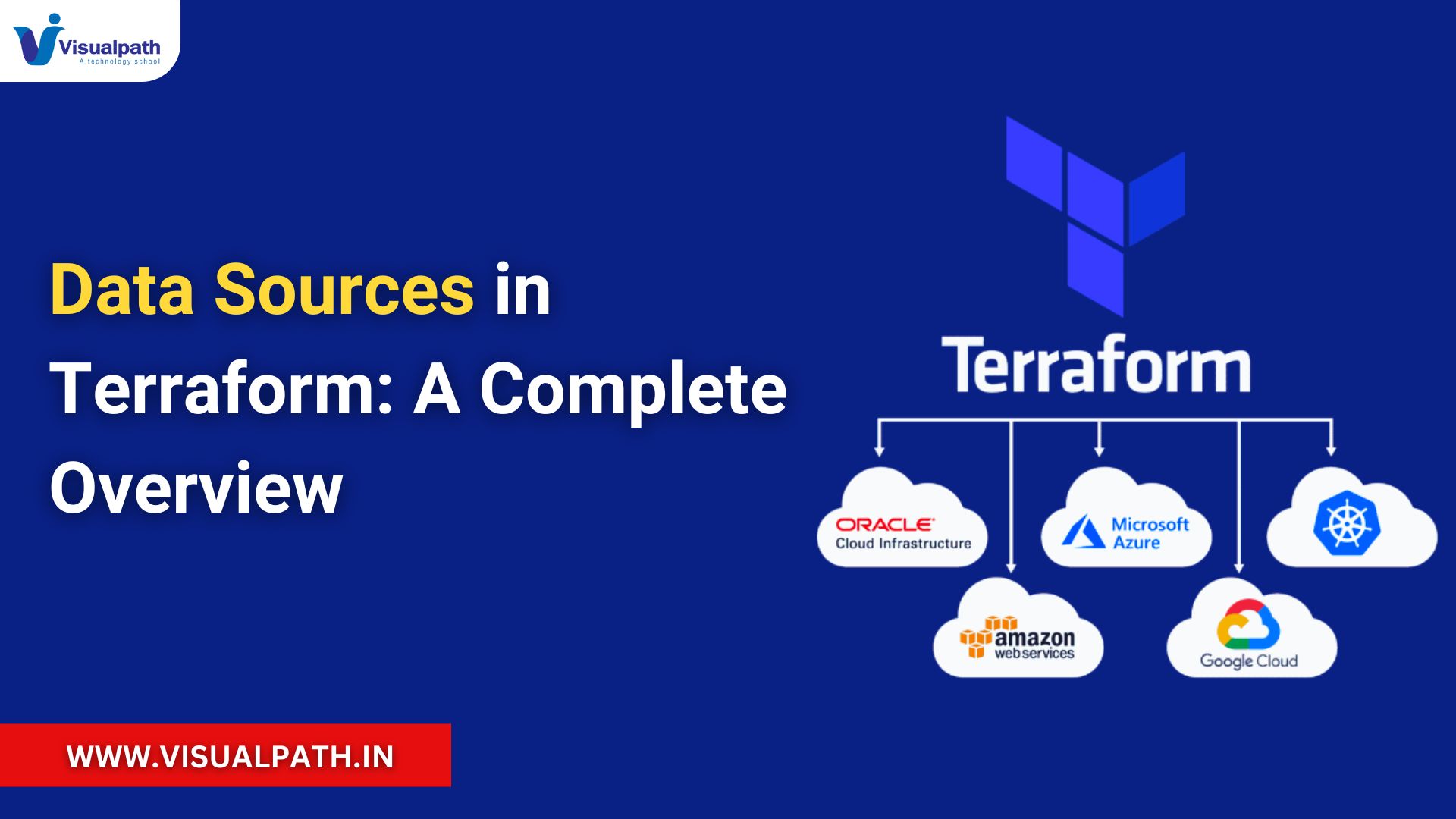
  • Data Sources in Terraform: A Complete Guide (2025)

    Data Sources in Terraform: A Complete Guide (2025)

    Introduction

    Terraform is a popular Infrastructure-as-Code (IaC) tool that helps manage and provision infrastructure efficiently. Among its many features, data sources are a powerful tool that enables users to retrieve information about existing resources. Instead of creating new infrastructure, data sources allow Terraform to interact with and utilize existing setups.

    This guide explores the concept of data sources, their types, use cases, and benefits in non-technical terms, making it easy for anyone to understand their importance in Terraform workflows. Terraform Course Online


    What Are Data Sources?

    Data sources in Terraform allow you to access information from your existing infrastructure. For instance:

    • You can retrieve a list of servers that already exist in your environment.
    • You can check details about a storage bucket without modifying it.
    • You can use this information to reference or validate existing configurations.

    Think of data sources as tools that give you read-only access to your resources, ensuring that Terraform knows what is already available without making unnecessary changes.


    Types of Data Sources

    1. Cloud-Specific Data Sources

    These are designed to fetch information from cloud platforms like AWS, Azure, or Google Cloud Platform (GCP).

    2. Networking and Storage Data Sources

    These data sources help access information about existing networks, subnets, storage buckets, or databases.

    • Example: Retrieving a storage bucket’s location or a network’s IP range.

    3. Local and File-Based Data Sources

    You can also retrieve information from local files or external configurations stored in formats like JSON or YAML.

    • Example: Referencing a configuration file for consistent settings.

    4. Custom or Third-Party Data Sources

    These are specialized data sources provided by custom plugins or modules. They enable interaction with unique tools or systems outside standard cloud providers.


    Why Are Data Sources Important?

    1. Efficiency in Resource Management
      Data sources allow you to use existing resources without recreating them. For example, if your company already has a shared network, you can fetch its details and integrate it into your setup.
    2. Consistency Across Environments
      In multi-environment setups like development, testing, and production, data sources help ensure consistent configurations by referencing shared resources.
    3. Better Collaboration
      Teams working on different parts of the infrastructure can rely on data sources to understand and use shared components.
    4. Cost Savings
      By reusing existing resources, data sources help reduce the cost and effort of setting up infrastructure from scratch. Terraform Training in Hyderabad

    Examples of Common Use Cases

    1. Identifying Server Images
      Before launching a virtual machine, you can find the most recent operating system version available in the cloud.
    2. Connecting to Existing Databases
      Instead of creating a new database, data sources can fetch information about an existing database, allowing teams to connect seamlessly.
    3. Checking Security Settings
      Data sources can verify existing firewall rules or security group configurations to ensure compliance.
    4. Validating Resource Availability
      You can check if a storage bucket or network exists before using it in your setup.

    Advantages of Using Data Sources

    1. Improved Automation
      By using data sources, Terraform automates the process of identifying existing resources, reducing manual effort.
    2. Flexibility
      You can adapt to changes in your infrastructure dynamically since data sources always reference the latest configurations.
    3. Simplicity
      Using existing resources instead of duplicating them makes the infrastructure easier to manage.

    Challenges to Keep in Mind

    • Resource Changes: If existing infrastructure changes outside Terraform, it may affect data source outputs. Regular updates are essential.
    • Performance Issues: Fetching large amounts of data can slow down processes, so it’s best to limit the scope of queries.
    • Dependency Management: Relying heavily on external resources requires careful planning to avoid conflicts. Automation with Terraform on Azure Cloud

    Conclusion:

    In Terraform, data sources play a crucial role in managing existing infrastructure efficiently. They provide a simple way to reference and reuse resources, enabling organizations to save time, reduce costs, and maintain consistent configurations.

    By incorporating data sources into your Terraform workflows, you can achieve better automation, adaptability, and collaboration across your infrastructure projects. Whether you are managing a small setup or a large-scale cloud environment, understanding and utilizing data sources will elevate your Infrastructure-as-Code practices in 2025.

    Visualpath is the Best Software Online Training Institute in Hyderabad. Avail complete Terraform Automation in Azure Online Training worldwide. You will get the best course at an affordable cost.

    Attend Free Demo

    Call on – +91-9989971070.

    WhatsApp: https://www.whatsapp.com/catalog/919989971070/

    Visit  https://www.visualpath.in/terraform-online-training.html

    Visit our new course: https://www.visualpath.in/oracle-cloud-infrastructure-online-training.html
  • Automation in Terraform: A Comprehensive Guide for 2025

    Automation in Terraform: A Comprehensive Guide for 2025

    Introduction to Terraform Automation

    Terraform automation refers to the process of using scripts, tools, or workflows to manage infrastructure resources more efficiently and with minimal manual intervention. As an Infrastructure as Code (IaC) tool, Terraform enables developers and DevOps teams to define, provision, and manage cloud and on-premises resources declaratively. Automation takes this capability a step further, streamlining repetitive tasks and ensuring consistency across environments.

    In 2025, with the rise of hybrid and multi-cloud environments, Terraform automation is more critical than ever. Automating Terraform workflows ensures scalability, reduces errors, and enhances operational efficiency. Terraform Course Online


    Key Aspects of Terraform Automation

    1. Infrastructure Provisioning

    Terraform automation simplifies the provisioning process by eliminating manual steps. By running predefined scripts, teams can spin up entire environments—like virtual machines, databases, and networks—seamlessly. Automation ensures that infrastructure is deployed quickly and accurately, following best practices.

    2. Continuous Integration and Continuous Deployment (CI/CD)

    Automation integrates Terraform with CI/CD pipelines, enabling automatic validation and deployment of infrastructure changes. Tools like Jenkins, GitLab, and GitHub Actions are commonly used to trigger Terraform scripts upon code commits, ensuring a streamlined deployment process.

    3. State Management

    Terraform maintains a state file that tracks the current infrastructure. Automating state management ensures that updates, rollbacks, and modifications are applied consistently across environments. Remote state storage solutions like Terraform Cloud or AWS S3 enhance collaboration and prevent state file conflicts. Terraform Automation in Azure Cloud Training

    4. Multi-Environment Support

    Automation allows teams to manage multiple environments—such as development, staging, and production—effortlessly. Automation scripts can replicate consistent configurations across all environments using workspaces and modular structures in Terraform.

    5. Error Handling and Rollbacks

    With automation, errors during deployment are detected and addressed in real-time. Terraform automation can roll back changes if a configuration fails, ensuring system stability and avoiding manual troubleshooting.


    Best Practices for Terraform Automation

    1. Use Version Control

    Store your Terraform scripts in repositories like Git to track changes, collaborate with teams, and revert to earlier configurations when necessary.

    2. Modularize Code

    Divide your Terraform configurations into reusable modules. Modularization improves code readability, reduces redundancy, and enhances scalability.

    3. Implement Security Measures

    Protect sensitive information such as credentials and API keys using Terraform’s built-in secrets management features or external tools like HashiCorp Vault.

    4. Regular Testing

    Incorporate automated testing frameworks like Terratest to validate Terraform configurations and identify potential issues before deployment. Terraform Training in Hyderabad

    5. Adopt Policy as Code

    Ensure compliance and governance by defining policies as code. Tools like Sentinel or Open Policy Agent (OPA) can enforce security and operational standards.


    Emerging Trends in Terraform Automation (2025)

    1. Integration with AI and ML: AI-driven tools analyze Terraform configurations to suggest optimizations and predict potential deployment issues.
    2. Serverless Automation: Automating infrastructure provisioning for serverless platforms like AWS Lambda and Azure Functions is becoming increasingly prevalent.
    3. Edge Computing Integration: Automating edge infrastructure deployments to support latency-sensitive applications.

    Benefits of Terraform Automation

    • Consistency: Eliminates discrepancies between environments by ensuring standardized configurations.
    • Scalability: Facilitates the provisioning of infrastructure at scale.
    • Time-Saving: Reduces time spent on repetitive tasks, allowing teams to focus on innovation.
    • Reduced Errors: Minimizes human intervention, reducing configuration errors.
    • Cost Efficiency: Optimizes resource allocation, preventing over-provisioning or resource wastage.

    Conclusion:

    Terraform automation has revolutionized infrastructure management, especially in 2025, as organizations embrace complex multi-cloud architectures. By automating infrastructure provisioning, state management, and CI/CD workflows, Terraform ensures agility, consistency, and efficiency. Following best practices like modularization, security enhancements, and regular testing, teams can unlock the full potential of Terraform automation. Automation with Terraform on Azure Cloud

    In the ever-evolving tech landscape, adopting automation in Terraform is not just a choice but a necessity. It empowers organizations to meet the demands of modern applications and achieve operational excellence. Start automating today to stay ahead in the race for innovation!

    Visualpath is the Best Software Online Training Institute in Hyderabad. Avail complete Terraform Automation in Azure Online Training worldwide. You will get the best course at an affordable cost.

    Attend Free Demo

    Call on – +91-9989971070.

    WhatsApp: https://www.whatsapp.com/catalog/919989971070/

    Visit  https://www.visualpath.in/terraform-online-training.html

    Visit our new course: https://www.visualpath.in/oracle-cloud-infrastructure-online-training.html
  • What is Terraform Automation in Azure Cloud? – 2025

    What is Terraform Automation in Azure Cloud? – 2025

    Terraform Automation in Azure Cloud refers to the use of Terraform, an open-source Infrastructure as Code (IaC) tool, to automate the creation, modification, and management of Azure resources. Developed by HashiCorp, Terraform enables developers and IT teams to define cloud infrastructure in a declarative configuration language and deploy it automatically across environments. This approach eliminates manual processes, enhances scalability, and ensures consistent resource management.

    By automating infrastructure tasks, Terraform in Azure Cloud helps organizations streamline their operations, improve efficiency, and maintain a predictable infrastructure lifecycle. Whether provisioning virtual machines, configuring networking, or integrating services, Terraform handles it all with precision and minimal human intervention. Terraform Course Online


    Introduction

    Managing cloud infrastructure manually is a time-intensive and error-prone process, especially in dynamic environments like Microsoft Azure. Terraform Automation revolutionizes how organizations manage their infrastructure by enabling them to define, deploy, and maintain it as code. This shift from manual to automated infrastructure management is essential for modern businesses that aim to stay competitive and agile.

    Using Terraform in Azure Cloud provides a unified approach to managing diverse resources, allowing teams to collaborate effectively while ensuring consistent deployments. This automation framework simplifies the provisioning of infrastructure and enhances operational efficiency, making it a preferred choice for businesses of all sizes. Terraform Automation in Azure Cloud Training


    Key Features of Terraform Automation in Azure Cloud

    1. Declarative Syntax

    Terraform uses a declarative language, allowing users to specify the desired state of their infrastructure. This eliminates the need to define step-by-step instructions, making the configuration process simpler and more intuitive.

    2. Azure Integration

    Terraform integrates seamlessly with Azure Resource Manager (ARM), offering robust support for a wide range of Azure services. This enables efficient management of resources like virtual machines, storage, and networking components.

    3. State Management

    Terraform maintains a state file that records information about the current infrastructure. This file ensures that updates are applied accurately, preventing resource drift.

    4. Reusable Modules

    Modules in Terraform allow you to reuse configurations across multiple projects, reducing redundancy and improving scalability. These modules enable the standardization of infrastructure practices within an organization.

    5. Cross-Cloud Compatibility

    While Terraform is extensively used for Azure, it supports multiple cloud platforms, making it a versatile tool for hybrid and multi-cloud strategies.


    Benefits of Terraform Automation in Azure Cloud

    1. Enhanced Efficiency

    Automating resource provisioning saves significant time and effort. Terraform scripts can be executed repeatedly to deploy infrastructure, removing manual interventions and accelerating development cycles. Terraform Training in Hyderabad

    2. Consistency and Accuracy

    Infrastructure as Code ensures that deployments are consistent across environments. This consistency reduces the risk of misconfigurations and deployment errors.

    3. Scalability

    Terraform Automation supports scaling up or down based on demand. This flexibility is vital for businesses with fluctuating workloads, ensuring optimal resource utilization.

    4. Cost Optimization

    With Terraform, you can automate resource cleanup and prevent over-provisioning. This results in significant cost savings by ensuring that resources are used efficiently.

    5. Collaboration and Version Control

    Storing Terraform configurations in version control systems like Git fosters collaboration among teams. Developers can track changes, rollback configurations, and ensure accountability in infrastructure management.

    6. Enhanced Security

    Terraform integrates with Azure Key Vault to manage sensitive information like credentials and API keys securely. This ensures that critical data remains protected during deployments.


    Conclusion:                                         

    Terraform Automation in Azure Cloud is a game-changer for managing modern cloud environments. By automating the provisioning and maintenance of resources, it reduces operational complexities, enhances scalability, and ensures cost efficiency. Businesses that adopt Terraform Automation can achieve greater agility, faster deployments, and a higher level of control over their infrastructure.

    Whether you are a small startup or a large enterprise, Terraform in Azure Cloudempowers your organization to embrace automation and stay ahead in the competitive cloud landscape. Start your Terraform journey today to unlock the full potential of Azure and drive innovation with confidence.

    Visualpath is the Best Software Online Training Institute in Hyderabad. Avail complete Terraform Automation in Azure Online Training worldwide. You will get the best course at an affordable cost.

    WhatsApp: https://www.whatsapp.com/catalog/919989971070/

    Visit  https://www.visualpath.in/terraform-online-training.html

    Visit our new course: https://www.visualpath.in/oracle-cloud-infrastructure-online-training.html
  • Step-by-Step Azure Automation with Terraform

    Step-by-Step Azure Automation with Terraform

    Automation with Terraform on Azure Cloud: A Beginner-Friendly Overview

    Automation with Terraform on Azure Cloud is transforming the way businesses manage cloud infrastructure. With Terraform, you can automate resource provisioning, scaling, and configuration while maintaining consistency and efficiency. This approach saves time, reduces errors, and enhances operational agility. Whether you’re new to Infrastructure as Code (IaC) or looking to refine your automation skills, this guide introduces you to the key concepts and benefits of using Terraform on Azure.

    Why Choose Terraform for Azure Automation?

    Terraform is an open-source tool developed by HashiCorp that is designed to simplify cloud infrastructure management. Unlike manual provisioning, Terraform allows you to define your infrastructure as code. This declarative approach lets you specify your desired outcomes, and Terraform executes the steps to achieve them.

    Azure users particularly benefit from Terraform’s ability to manage resources like virtual machines, storage accounts, and networks efficiently. By automating these tasks, Terraform eliminates manual configurations, ensuring consistency across multiple environments.

    To gain deeper insights into Terraform’s capabilities, you can explore a Terraform Course Online for structured learning. Additionally, hands-on learning through Terraform Training in Hyderabad offers localized, practical expertise tailored to the Indian market.


    Key Steps to Automate Azure Cloud with Terraform

    1. Understand the Basics

    Before starting, it’s important to grasp Terraform’s core concepts:

    • Providers: These are plugins that enable Terraform to interact with specific platforms like Azure.
    • State Files: Terraform uses state files to track infrastructure changes.
    • Modules: Reusable components that simplify resource configurations.

    2. Set Up Your Azure Environment

    The first step in automation is connecting Terraform to your Azure account. You can authenticate your Azure credentials using tools like the Azure CLI. This connection ensures that Terraform can manage and provision Azure resources seamlessly.

    3. Implement Best Practices

    Automation works best when aligned with robust practices:

    • Use remote state storage (e.g., Azure Blob Storage) to secure and share Terraform state files.
    • Apply role-based access controls (RBAC) to ensure that only authorized users can modify configurations.
    • Modularize your configurations to make them reusable and scalable.

    By following these practices, businesses can maximize the efficiency of Automation with Terraform on Azure Cloud while maintaining security and scalability.


    Advantages of Automating Azure with Terraform

    1. Improved Efficiency

    Automation minimizes the need for repetitive manual tasks, allowing teams to focus on innovation rather than maintenance.

    2. Infrastructure Consistency

    Terraform ensures that configurations remain uniform across development, staging, and production environments, reducing deployment errors.

    3. Scalability

    As your business grows, Terraform’s modular design makes it easier to scale resources without additional effort.

    4. Cost Savings

    By optimizing resource provisioning and minimizing human error, Terraform reduces costs associated with downtime and inefficient infrastructure management.


    Learn and Master Terraform

    If you’re eager to leverage Terraform for Azure automation, professional training is the best way to build expertise. A Terraform Course Online provides flexibility, enabling you to learn at your own pace and cover essential topics like state management and CI/CD integrations. Alternatively, Terraform Training in Hyderabad offers practical sessions tailored to real-world scenarios, helping learners gain hands-on experience in Azure environments.

    Both options are excellent for mastering Automation with Terraform on Azure Cloud and can help professionals stay competitive in today’s job market.


    Conclusion:

    Automation with Terraform on Azure Cloud is a powerful approach for managing infrastructure efficiently. It ensures faster deployments, reduced errors, and consistent configurations, making it an invaluable tool for modern IT operations. Whether you are a beginner or an experienced professional, Terraform provides the tools to transform the way you handle Azure resources.

    Enrolling in a Terraform Course Online or attending Terraform Training in Hyderabad is a great way to deepen your knowledge and enhance your career prospects. Start your journey today and unlock the full potential of automated Azure cloud management with Terraform!

    Visualpath is the Best Software Online Training Institute in Hyderabad. Avail complete Terraform Automation in Azure Online Training worldwide. You will get the best course at an affordable cost.

    WhatsApp: https://www.whatsapp.com/catalog/919989971070/

    Visit  https://www.visualpath.in/terraform-online-training.html

    Visit our new course: https://www.visualpath.in/online-best-cyber-security-courses.html

  • Step-by-Step Guide to Terraform Course Online Import

    Step-by-Step Guide to Terraform Course Online Import


    Terraform Course Training in Hyderabad: A Comprehensive Guide to Terraform for Beginners

    If you’re interested in managing infrastructure as code, Terraform Course Training in Hyderabad offers an excellent pathway into this dynamic field. Terraform, an open-source tool by HashiCorp, allows users to define and provision infrastructure across multiple environments in a simple, efficient, and scalable way. In this guide, we’ll cover the essentials of Terraform, key concepts, and a step-by-step guide to using Terraform for importing existing infrastructure. Whether you’re looking for a Terraform Course Online or Terraform Online Training, this content provides a solid foundation to get started.


    What is Terraform?

    Terraform is an Infrastructure as Code (IaC) tool that automates the process of building, changing, and versioning infrastructure. By using declarative code written in HashiCorp Configuration Language (HCL), users can describe the desired state of resources, while Terraform manages the underlying provisioning and updates. This approach makes Terraform invaluable for organizations managing hybrid or multi-cloud setups, as it integrates with all major providers, such as AWS, Azure, Google Cloud, and on-premises environments.

    Through a Terraform Course Online, you’ll learn how HCL’s simplicity enables new users to set up resources quickly, while its flexibility allows experienced users to manage large-scale infrastructure. In most Terraform Online Training sessions, you’ll explore how HCL enables configuration reuse and infrastructure versioning, ensuring consistency across different environments.


    Key Features of Terraform

    1. Provider Agnostic: Terraform is compatible with over 100 providers, allowing you to manage various infrastructure components from a single interface. With Terraform Online Training, you’ll learn how to use modules for each provider to create seamless configurations.

    2. Modular and Scalable Design: Terraform promotes a modular approach that divides infrastructure configurations into reusable components, making it easy to scale. For example, you can create a network module and reuse it in multiple configurations, streamlining processes and minimizing errors. This modularity is emphasized in most Terraform Course Online offerings.

    3. Execution Plan and Resource Graph: Terraform’s resource dependency graph efficiently manages infrastructure changes by determining the sequence of tasks. Execution plans, on the other hand, provide a preview of changes before they’re applied, enabling users to assess their impact beforehand. These features are covered in depth in Terraform Online Training courses, as they form the backbone of Terraform’s secure and reliable automation.


    Step-by-Step Guide to Terraform Import

    One of the advanced features of Terraform is the import function, which lets you integrate existing infrastructure into Terraform without modifying it. This is especially useful for organizations transitioning from manual provisioning to automated infrastructure-as-code. Let’s go through a basic Terraform import process:

    1. Identify the Resource to Import: The first step is identifying the resource to import, such as a virtual machine, database, or network element.
    2. Initialize Terraform Directory: Open your terminal, navigate to the directory where you want to work, and run terraform init. This step configures the directory and downloads any required plugins.
    3. Define the Resource in Configuration: Write HCL code that describes the resource, ensuring it matches the resource type and naming convention.
    4. Run the Import Command: Use the terraform import command, specifying the resource type, name, and ID. This command integrates the resource into the Terraform state file.
    5. Verify the Import: To ensure successful import, run terraform plan and check for consistency between the existing resource and your configuration.

    Mastering the import feature is crucial for anyone serious about Terraform, as it bridges legacy infrastructure and Terraform’s infrastructure-as-code capabilities. Terraform Online Training modules often cover importing with hands-on exercises, giving you the confidence to manage existing resources within Terraform.

    Best Practices for Terraform

    Implementing Terraform effectively requires adhering to several best practices. Enrolling in a Terraform Course Online or Terraform Training in Hyderabad will expose you to these techniques in greater detail.

    • Use Modules for Consistency: By creating modules for commonly used components, you can ensure a standardized infrastructure across environments. This approach also helps in scaling configurations.
    • Manage State Properly: Terraform’s state file keeps track of resource changes and the current setup. Storing state in a remote backend, especially in a team setting, is essential to avoid version conflicts.
    • Version Control: Tracking your configurations in a system like Git enables easy rollbacks and collaboration, ensuring smooth infrastructure updates without the risk of losing valuable changes.

    Conclusion:

    Terraform is a highly versatile tool for automating, consistent, and scalable management of cloud and on-premises infrastructure. Learning Terraform through programs like Terraform Course Online or Terraform Online Training provides in-depth, practical knowledge essential for managing today’s complex infrastructures. For individuals in India, Terraform Training in Hyderabad offers additional benefits, like localized instruction and region-specific insights.

    Whether you’re new to infrastructure-as-code or seeking to deepen your automation knowledge, Terraform provides robust capabilities through its modular design, extensive provider support, and efficient resource planning. Following best practices, such as using modules and managing state files effectively, will further enhance your Terraform proficiency. With continuous learning and hands-on practice, you’ll be well-equipped to leverage Terraform to optimize infrastructure management and streamline deployments in any environment.

    Visualpath is the Best Software Online Training Institute in Hyderabad. Avail complete Terraform Automation in Azure Online Training worldwide. You will get the best course at an affordable cost.

    Attend Free Demo

    Call on – +91-9989971070.

    WhatsApp: https://www.whatsapp.com/catalog/919989971070/

    Visit  https://www.visualpath.in/terraform-online-training.html

    Visit our new course: https://www.visualpath.in/online-best-cyber-security-courses.html

  • Step-by-Step Guide to Terraform Course Online Import

    Step-by-Step Guide to Terraform Course Online Import


    Terraform Course Training in Hyderabad: A Comprehensive Guide to Terraform for Beginners

    If you’re interested in managing infrastructure as code, Terraform Training in Hyderabad offers an excellent pathway into this dynamic field. Terraform, an open-source tool by HashiCorp, allows users to define and provision infrastructure across multiple environments in a simple, efficient, and scalable way. In this guide, we’ll cover the essentials of Terraform Course , key concepts, and a step-by-step guide to using Terraform for importing existing infrastructure. Whether you’re looking for a Terraform Course Online or Terraform Online Training, this content provides a solid foundation to get started.


    What is Terraform?

    Terraform is an Infrastructure as Code (IaC) tool that automates the process of building, changing, and versioning infrastructure. By using declarative code written in HashiCorp Configuration Language (HCL), users can describe the desired state of resources, while Terraform Course manages the underlying provisioning and updates. This approach makes Terraform invaluable for organizations managing hybrid or multi-cloud setups, as it integrates with all major providers, such as AWS, Azure, Google Cloud, and on-premises environments.

    Through a Terraform Course Online, you’ll learn how HCL’s simplicity enables new users to set up resources quickly, while its flexibility allows experienced users to manage large-scale infrastructure. In most Terraform Course Online Training sessions, you’ll explore how HCL enables configuration reuse and infrastructure versioning, ensuring consistency across different environments.


    Key Features of Terraform

    1. Provider Agnostic: Terraform is compatible with over 100 providers, allowing you to manage various infrastructure components from a single interface. With Terraform Online Training, you’ll learn how to use modules for each provider to create seamless configurations.

    2. Modular and Scalable Design: Terraform promotes a modular approach that divides infrastructure configurations into reusable components, making it easy to scale. For example, you can create a network module and reuse it in multiple configurations, streamlining processes and minimizing errors. This modularity is emphasized in most Terraform Course Online offerings.

    3. Execution Plan and Resource Graph: Terraform’s resource dependency graph efficiently manages infrastructure changes by determining the sequence of tasks. Execution plans, on the other hand, provide a preview of changes before they’re applied, enabling users to assess their impact beforehand. These features are covered in depth in Terraform Online Training courses, as they form the backbone of Terraform’s secure and reliable automation.


    Step-by-Step Guide to Terraform Import

    One of the advanced features of Terraform is the import function, which lets you integrate existing infrastructure into Terraform without modifying it. This is especially useful for organizations transitioning from manual provisioning to automated infrastructure-as-code. Let’s go through a basic Terraform import process:

    1. Identify the Resource to Import: The first step is identifying the resource to import, such as a virtual machine, database, or network element.
    2. Initialize Terraform Directory: Open your terminal, navigate to the directory where you want to work, and run terraform init. This step configures the directory and downloads any required plugins.
    3. Define the Resource in Configuration: Write HCL code that describes the resource, ensuring it matches the resource type and naming convention.
    4. Run the Import Command: Use the terraform import command, specifying the resource type, name, and ID. This command integrates the resource into the Terraform state file.
    5. Verify the Import: To ensure successful import, run terraform plan and check for consistency between the existing resource and your configuration.

    Mastering the import feature is crucial for anyone serious about Terraform, as it bridges legacy infrastructure and Terraform’s infrastructure-as-code capabilities. Terraform Online Training modules often cover importing with hands-on exercises, giving you the confidence to manage existing resources within Terraform.

    Best Practices for Terraform

    Implementing Terraform effectively requires adhering to several best practices. Enrolling in a Terraform Course Online or Terraform Training in Hyderabad will expose you to these techniques in greater detail.

    • Use Modules for Consistency: By creating modules for commonly used components, you can ensure a standardized infrastructure across environments. This approach also helps in scaling configurations.
    • Manage State Properly: Terraform’s state file keeps track of resource changes and the current setup. Storing state in a remote backend, especially in a team setting, is essential to avoid version conflicts.
    • Version Control: Tracking your configurations in a system like Git enables easy rollbacks and collaboration, ensuring smooth infrastructure updates without the risk of losing valuable changes.

    Conclusion:

    Terraform is a highly versatile tool for automating, consistent, and scalable management of cloud and on-premises infrastructure. Learning Terraform through programs like Terraform Course Online or Terraform Online Training provides in-depth, practical knowledge essential for managing today’s complex infrastructures. For individuals in India, Terraform Training in Hyderabad offers additional benefits, like localized instruction and region-specific insights.

    Whether you’re new to infrastructure-as-code or seeking to deepen your automation knowledge, Terraform provides robust capabilities through its modular design, extensive provider support, and efficient resource planning. Following best practices, such as using modules and managing state files effectively, will further enhance your Terraform proficiency. With continuous learning and hands-on practice, you’ll be well-equipped to leverage Terraform to optimize infrastructure management and streamline deployments in any environment.

    Visualpath is the Best Software Online Training Institute in Hyderabad. Avail complete Terraform Automation in Azure Online Training worldwide. You will get the best course at an affordable cost.

    Attend Free Demo

    Call on – +91-9989971070.

    WhatsApp: https://www.whatsapp.com/catalog/919989971070/

    Visit  https://www.visualpath.in/terraform-online-training.html

    Visit our new course: https://www.visualpath.in/online-best-cyber-security-courses.html

  • A Beginner’s Terraform Course Online: Deploying Resources in the Cloud

    A Beginner’s Terraform Course Online: Deploying Resources in the Cloud

    Introduction to Terraform and Its Importance in Cloud Computing

    If you want to start with Terraform Training in Hyderabad, you’re on the right path to mastering cloud infrastructure management. Terraform is a powerful Infrastructure-as-Code (IaC) tool that allows developers and operations teams to manage and provision cloud infrastructure consistently and efficiently. Whether you are a beginner or an experienced professional, Terraform provides immense flexibility for working with cloud resources across platforms like AWS, Azure, and Google Cloud. This level of control makes it a must-have skill for those pursuing a career in cloud computing.

    Enrolling in the Best Terraform Training can significantly elevate your understanding of managing cloud resources. A Best Terraform Course Online provides an accessible way to learn and master this tool, covering everything from basic setups to advanced configurations. By learning Terraform, you’ll acquire essential skills in deploying infrastructure, version control, and automation—key competencies for modern DevOps and cloud engineering roles. With The Best Terraform, users manage resources predictably, making it possible to deploy and maintain infrastructure with minimal manual intervention.

    Understanding Terraform’s Core Concepts and Workflow

    Terraform operates through several fundamental building blocks, including configurations, modules, and providers. Configurations are the core scripts that define infrastructure requirements and specify resources like servers, networks, and storage. The Best Terraform Training will teach you how to write effective configurations, allowing you to scale and replicate infrastructure across different environments. Modules let you group configurations for reuse, helping teams maintain consistency across deployments, while providers are plugins for platforms like AWS, Azure, and GCP, enabling Terraform to manage resources on those platforms.

    A Best Terraform Course Online will introduce you to Terraform’s workflow, which involves three main commands: terraform init, terraform plan, and terraform apply. These commands initialize your environment, provide an execution plan, and apply configurations to provision resources. Learning this workflow is crucial because it enables you to manage complex cloud environments and avoid issues during deployment. With Terraform’s support for multi-cloud strategies, the provider-agnostic approach becomes especially relevant. Through hands-on learning in Terraform Training in Hyderabad or online courses, you’ll gain practical experience managing resources effectively.

    Key Benefits of Terraform and Why It’s Essential for Cloud Professionals

    Terraform’s standout benefits are its ability to make version-control infrastructure changes, just like code. This feature simplifies rollbacks and troubleshooting when issues arise in a deployed environment. The Best Terraform Training dives into this aspect, covering version control techniques and best practices for infrastructure management. Terraform also promotes collaboration by allowing team members to work on configurations in parallel, making it ideal for large projects. With “drift detection,” Terraform can identify discrepancies between configurations and actual infrastructure, ensuring alignment with declared standards.

    Another advantage is Terraform’s support for modularity, which allows engineers to create reusable infrastructure components. A Terraform Course Online teaches you to create and apply modules, saving time and simplifying complex deployments. For organizations with multiple environments, modules maintain consistent setups across teams or regions. Additionally, Terraform’s strong community and support network offers abundant resources, from shared modules to comprehensive guides, simplifying the learning curve. Gaining this knowledge through Terraform Training in Hyderabad or online helps you stay up-to-date with industry practices.

    Conclusion: Start Your Journey with the Best Terraform Training

    In summary, learning The Best Terraform is an investment in your cloud computing career. With the demand for automation and cloud management skills steadily growing, Terraform’s versatility makes it essential for infrastructure management. Enrolling in the Best Terraform Training or a Terraform Course Online enables you to build the skills required to configure, deploy, and manage infrastructure efficiently across various cloud platforms. Whether you choose in-person training in Hyderabad or an online course, Terraform training will prepare you for a successful career in cloud infrastructure. As cloud environments evolve, mastering Terraform empowers you to automate deployments, manage resources effectively, and ensure infrastructure consistency, setting you up for long-term success in cloud technology.

    Visualpath is the Best Software Online Training Institute in Hyderabad. Avail complete Terraform Automation in Azure Online Training worldwide. You will get the best course at an affordable cost.

    Attend Free Demo

    Call on – +91-9989971070.

    WhatsApp: https://www.whatsapp.com/catalog/919989971070/

    Visit  https://www.visualpath.in/terraform-online-training.html

    Visit our new course: https://www.visualpath.in/online-best-cyber-security-courses.html

  • Mastering Terraform Automation on Azure : A Step-by-Step Guide

    Mastering Terraform Automation on Azure : A Step-by-Step Guide

    Terraform Automation in Azure Cloud Training offers a seamless way to manage infrastructure through code, minimizing human error and enhancing operational efficiency. As companies shift to cloud environments, the need for Infrastructure as Code (IaC) tools like Terraform grows rapidly. Azure Cloud, known for its scalability and enterprise-level offerings, becomes even more powerful when paired with Terraform automation. This guide provides a comprehensive overview of how to utilize Terraform to automate Azure resources, ensuring an efficient infrastructure management process.

    If you are seeking to build advanced automation skills, Terraform Training in Hyderabad and Terraform Course Online are highly recommended to gain practical expertise. Let’s explore the essential concepts and benefits of Terraform automation in the Azure ecosystem.

    Why Terraform Automation on Azure?

    Terraform offers several advantages in the Azure Cloud, from provisioning virtual machines to configuring networks. By defining infrastructure as code, it ensures consistency, avoids configuration drift, and simplifies deployment processes. Organizations benefit by reducing manual interventions, enabling continuous delivery pipelines, and making cloud environments highly scalable.

    With Terraform automation, Azure resources such as storage accounts, databases, and virtual networks can be managed in a structured and repeatable way. Whether you’re creating a production environment or a sandbox for development, Terraform ensures that all deployments follow best practices. Terraform Course Online provides in-depth knowledge about modules, variables, and automation workflows that are essential for Azure infrastructure engineers.

    Moreover, as enterprises adopt hybrid and multi-cloud strategies, Terraform’s ability to unify infrastructure management across multiple clouds, including Azure, makes it a crucial skill for today’s cloud professionals. Through hands-on labs and Terraform Training in Hyderabad, participants can develop these skills and gain practical insights into automating infrastructure at scale.

    Key Concepts in Terraform Automation on Azure Cloud

    The fundamental building blocks of Terraform automation include configurations, modules, state management, and backend integrations. These elements are essential to deploy and manage Azure resources efficiently. Here are a few key concepts:

    1. Configuration Files: Terraform uses HCL (HashiCorp Configuration Language) to define the desired state of infrastructure. Each file specifies what resources should be created or modified in Azure.
    2. State Management: Terraform tracks the current state of infrastructure to ensure changes are applied correctly. Using remote state storage, like Azure Blob Storage, helps teams collaborate better.
    3. Modules: A collection of configuration files grouped logically into modules allows reusability. Automation becomes more streamlined with these modules.
    4. Integration with CI/CD: Terraform automation aligns well with DevOps pipelines, ensuring continuous deployments of infrastructure changes. Integrating Terraform into Azure DevOps or GitHub workflows creates a smooth delivery cycle.

    By leveraging these concepts through Terraform Course Online or Terraform Training in Hyderabad, professionals can accelerate their automation journey and optimize Azure resources efficiently.

    Conclusion: Unlocking New Opportunities with Terraform Automation

    Mastering Terraform automation on Azure provides a competitive edge in today’s cloud-centric job market. Whether you are a beginner or a professional looking to sharpen your skills, Terraform Training in Hyderabad and Terraform Course Online are excellent platforms to gain hands-on experience. Learning how to automate infrastructure will allow you to create repeatable, scalable solutions, significantly reducing operational overhead.

    Terraform automation empowers organizations to manage their infrastructure proactively, paving the way for continuous improvements in cloud environments. Enroll in Terraform Course Online or attend Terraform Training in Hyderabad to unlock new career opportunities and stay ahead in the evolving cloud landscape.

    Visualpath is the Best Software Online Training Institute in Hyderabad. Avail complete Terraform Automation in Azure Online Training worldwide. You will get the best course at an affordable cost.

    Attend Free Demo

    Call on – +91-9989971070.

    WhatsApp: https://www.whatsapp.com/catalog/919989971070/

    Visit  https://www.visualpath.in/terraform-online-training.html

    Visit our new course: https://www.visualpath.in/online-best-cyber-security-courses.html

  • Advanced Terraform Automation Techniques for Azure Professionals

    Advanced Terraform Automation Techniques for Azure Professionals

    Overview:

    Terraform Automation in Azure Cloud Training enables organizations to simplify infrastructure management by automating deployment tasks across Azure. This automation ensures consistent, repeatable processes, eliminating manual configurations and reducing errors. Whether you are a beginner or an experienced cloud professional, mastering Terraform can boost your career by streamlining infrastructure as code (IaC) practices in Azure.

    In this article, we will explore the fundamentals of Terraform automation, delve into advanced techniques, and outline the best practices for effective deployment in Azure. With keywords like Best Terraform Training and Terraform Automation Online Training, this guide offers practical insights for professionals looking to upskill.

    Benefits of Terraform Automation in Azure

    Terraform is an open-source IaC tool that defines, manages, and provides infrastructure efficiently. Azure, it enables organisations to treat cloud resources as code, promoting faster deployments and consistency. Terraform’s automation capabilities allow for seamless scaling, modification, and deletion of resources without the need for manual intervention.

    Automation is essential for enterprises adopting DevOps strategies, as it ensures that infrastructure is aligned with software delivery pipelines. With Terraform, you can automate complex Azure resources like virtual machines, virtual networks, and storage accounts. This ensures scalability and performance across multi-cloud environments. Many developers opt for Terraform Automation Online Training to understand these automation workflows and design efficient pipelines.

    Advanced Techniques for Azure Professionals

    Experienced professionals can unlock powerful automation techniques by leveraging Terraform modules and remote backends. Best Terraform Training programs emphasize the use of reusable modules, which enable infrastructure to be defined in modular and maintainable chunks. These modules simplify automation by making configurations scalable and consistent across environments.

    Terraform also supports Azure service integrations like Azure Key Vault, Azure Monitor, and Azure Kubernetes Service (AKS). With these services, automated workflows can extend beyond basic infrastructure into areas such as identity management, monitoring, and container orchestration. Terraform state files, hosted in remote backends like Azure Blob Storage, provide version control and collaborative workflows, ensuring stability in multi-user environments.

    By enrolling in Terraform Automation Online Training, professionals learn advanced concepts like automated resource dependency management using Terraform’s graph-based workflow and lifecycle hooks. Additionally, the training explores how to automate infrastructure rollbacks, updates, and environment testing using Azure DevOps pipelines.

    Best Practices for Terraform Automation

    Following best practices is essential to make the most of Terraform automation. Adopting these strategies ensures efficient workflows and minimizes disruptions.

    1. Use Version Control: Store all Terraform configurations in a version-controlled repository like GitHub. This helps track changes and enables rollbacks when necessary.
    2. Modularize Code: Break infrastructure into small, reusable modules. This promotes code reuse and ensures consistency across multiple environments.
    3. Integrate CI/CD Pipelines: Automate the deployment process using CI/CD pipelines. Azure DevOps integration with Terraform ensures continuous infrastructure delivery aligned with software releases.
    4. Manage State Files Securely: Use remote backends like Azure Blob Storage to store Terraform state files securely and ensure collaboration.
    5. Follow Governance Practices: Implement role-based access controls (RBAC) and Azure policies to maintain security and compliance.

    With Best Terraform Training, learners gain hands-on experience in these best practices, equipping them to automate complex environments efficiently.

    Conclusion:

    Terraform automation is a critical component of cloud infrastructure management, especially in Azure environments. By automating resource deployment and management, organizations can achieve greater efficiency and consistency. Professionals interested in leveraging automation should consider enrolling in Terraform Automation in Azure Cloud Training or Terraform Automation Online Training.

    Mastering these techniques ensures professionals stay ahead in the rapidly evolving cloud landscape. With structured learning through the Best Terraform Training, you can unlock new career opportunities and enhance your ability to manage Azure resources effectively through automation.

    Visualpath is the Best Software Online Training Institute in Hyderabad. Avail complete Terraform Automation in Azure Online Training worldwide. You will get the best course at an affordable cost.

    Attend Free Demo

    Call on – +91-9989971070.

    WhatsApp: https://www.whatsapp.com/catalog/919989971070/

    Visit  https://www.visualpath.in/terraform-online-training.html

    Visit our new course: https://www.visualpath.in/online-best-cyber-security-courses.html