Tag: Salesforce DevOps Online Training

  • Why is Copado the Best Choice for Salesforce DevOps in Multi-Org Environments

    Why is Copado the Best Choice for Salesforce DevOps in Multi-Org Environments

    Salesforce DevOps Training organizations often manage multiple Salesforce environments to cater to diverse functions, regions, or development stages. Effectively orchestrating these multi-org setups presents unique challenges, particularly in maintaining consistency, ensuring seamless deployments, and safeguarding data integrity. Copado emerges as a premier solution for Salesforce DevOps in multi-org environments, offering a comprehensive suite of tools designed to streamline operations and enhance efficiency.

    Seamless Deployments Across Unrelated Organizations

    Traditional deployment methods, such as Salesforce Change Sets, are limited to related organizations, complicating the deployment process in multi-org scenarios. Copado overcomes this limitation by enabling deployments across unrelated organizations, including production orgs, sandboxes, and developer editions. This flexibility allows teams to manage and deploy changes efficiently, regardless of the organizational structure.

    Efficient Data Migration with Data Deploy

    Migrating complex data across Salesforce DevOps Course orgs is a critical aspect of multi-org management. Copado’s Data Deploy feature facilitates the migration of relational object data between environments using reusable data templates. It supports sensitive information masking to maintain data compliance and enables the deployment of data for intricate application configurations. This capability ensures that data integrity is preserved during migrations, a crucial factor in multi-org setups.

    Enhanced Team Collaboration Through Org Sharing

    Managing access and collaboration across multiple orgs can be challenging. Copado addresses this with its Org Sharing feature, allowing org owners to share connections with team members, specifying access levels for validation and deployment. This approach streamlines collaboration by enabling team members to validate changes against upstream environments without necessitating administrative privileges in each org. Such functionality is vital for maintaining workflow efficiency in multi-org environments.

    Comprehensive DevOps Management with Essentials Plus

    For organizations seeking a holistic DevOps solution, Copado Essentials Plus offers advanced deployment methods tailored for multi-org management. Teams can choose between Work Items using Pipelines and Deployments with Pull Requests, depending on their specific needs. This flexibility allows for predefined linear pipelines with in-app approvals or more developer-oriented approaches incorporating advanced Git functionalities. Such versatility ensures that organizations can adopt a deployment strategy that aligns with their operational requirements.

    Automated Testing for Continuous Quality Assurance

    Maintaining high-quality code across multiple orgs necessitates rigorous testing protocols. Copado’s automated testing capabilities enable teams to implement continuous integration and continuous delivery (CI/CD) pipelines, ensuring that code changes are automatically tested and validated before deployment. This proactive approach minimizes the risk of introducing errors into production environments and maintains system stability across all orgs.

    Insights and Reporting for Informed Decision-Making

    In multi-org environments, having visibility into deployment processes is crucial for informed decision-making. Copado provides comprehensive reporting tools that offer insights into deployment statuses, code quality metrics, and team performance. These analytics empower organizations to identify bottlenecks, optimize workflows, and ensure that DevOps practices align with business objectives.

    Security and Compliance Management

    Ensuring security and compliance across multiple Salesforce orgs is a complex endeavor. Copado addresses this challenge by incorporating security checks and compliance validations into the deployment process. Salesforce DevOps Certification Teams can define and enforce compliance policies, ensuring that all deployments adhere to organizational and regulatory standards. This integrated approach reduces the risk of security vulnerabilities and compliance breaches in multi-org environments.

    Scalability to Support Organizational Growth

    As organizations expand, their Salesforce environments often become more complex, necessitating scalable DevOps solutions. Copado is designed to scale with organizational growth, supporting an increasing number of orgs, users, and deployment pipelines. This scalability ensures that Copado remains a viable solution for Salesforce DevOps, regardless of the organization’s size or complexity.

    User-Friendly Interface and Low-Code Approach

    Copado’s user-friendly interface and low-code approach make it accessible to a broad range of users, including those without extensive coding experience. This inclusivity fosters collaboration among diverse teams and accelerates the adoption of DevOps practices across the organization. By lowering the barrier to entry, Copado enables teams to implement effective DevOps strategies without the need for extensive technical expertise.

    Conclusion

    In multi-org environments, the complexity of managing deployments, data migrations, and team collaborations necessitates a robust DevOps solution. Copado stands out as the optimal choice for Salesforce DevOps in such settings, offering seamless deployments across unrelated orgs, efficient data migration tools, enhanced collaboration features, and comprehensive DevOps management capabilities. By leveraging Copado, organizations can streamline their multi-org operations, ensuring consistency, compliance, and efficiency across all Salesforce environments.

  • What Challenges Does Copado Solve in Salesforce DevOps Pipelines?

    What Challenges Does Copado Solve in Salesforce DevOps Pipelines?

    Salesforce DevOps Training world of Salesforce development, implementing effective DevOps practices is essential for delivering high-quality applications efficiently. However, teams often encounter several challenges unique to the Salesforce ecosystem. Copado, a leading Salesforce-native DevOps platform, offers solutions to these challenges, streamlining development and deployment processes.

    Challenges in Salesforce DevOps Pipelines

    1. Siloed Development and Operations Teams

    Traditionally, development and operations teams in Salesforce environments operate in silos, leading to fragmented workflows and hindered collaboration. This disconnect can cause misaligned priorities, deployment delays, and increased error ratesSalesforce DevOps Course.

    • Complexity with Salesforce Metadata

    Salesforce’s metadata-driven architecture presents challenges such as:

    • Component behavior split across multiple files (e.g., Profiles, Layouts).
      • Unsupported metadata types.
      • Inconsistent modification timestamps for certain metadata (e.g., Value Sets).
      • Numerous manual steps required in deployments.

    These complexities can lead to deployment errors and increased manual effort.

    • Version Control and Source Code Management

    Many Salesforce teams are not accustomed to version control systems, leading to challenges such as:

    • Complexity with merges and back-merges.
      • Conflict resolution in large objects and Profiles during heavy-duty merges.

    This can result in difficulties tracking changes, collaborating effectively, Salesforce DevOps Certification and maintaining code integrity.

    • Continuous Integration and Deployment (CI/CD)

    Implementing effective CI/CD practices in Salesforce development can be daunting due to:

    • Complex customizations and configurations.
      • Challenges in ensuring pipeline stability and reliability.

    Without proper CI/CD processes, teams may face delays in identifying bugs, lower confidence in code changes, and a higher risk of regression issues.

    • Test Automation and Code Quality

    Ensuring high code quality and implementing comprehensive test automation are critical yet challenging aspects of Salesforce DevOps. Manual testing can be time-consuming and error-prone, while maintaining code quality becomes more difficult as projects grow in size and complexity.

    How Copado Addresses These Challenges

    1. Enhancing Collaboration Between Teams

    Salesforce DevOps with Copado Training fosters collaboration by providing a unified platform where development and operations teams can work together seamlessly. Features like user stories, pipelines, and automated deployments ensure that all stakeholders are aligned, reducing silos and improving communication.

    • Simplifying Metadata Management

    Copado simplifies metadata management by:

    • Providing a comprehensive view of all metadata components.
      • Automating the retrieval and deployment of metadata.
      • Handling complex dependencies and unsupported metadata types.

    This reduces manual steps and minimizes errors during deployments.

    • Streamlining Version Control

    Copado integrates with version control systems like Git, offering:

    • User-friendly interfaces for managing branches and merges.
      • Automated conflict detection and resolution assistance.
      • Visualization tools to track changes and history.

    This makes version control more accessible to Salesforce teams, enhancing collaboration and code integrity.

    • Implementing Robust CI/CD Pipelines

    Copado enables the creation of robust CI/CD pipelines by:

    • Automating builds and deployments across multiple environments.
      • Integrating automated testing to catch issues early.
      • Providing rollback mechanisms to ensure stability.

    This accelerates release cycles and ensures high-quality deployments.

    • Enhancing Test Automation and Code Quality

    Copado improves test automation and code quality by:

    • Integrating with testing frameworks to automate test execution.
      • Enforcing code quality checks and best practices.
      • Providing dashboards to monitor test results and code metrics.

    This ensures that only high-quality code reaches production, reducing defects and technical debt.

    Conclusion

    Copado addresses the unique challenges of Salesforce DevOps by enhancing collaboration, simplifying metadata management, streamlining version control, implementing robust CI/CD pipelines, and improving test automation and code quality. By leveraging Copado, organizations can achieve more efficient, reliable, and scalable Salesforce development and deployment processes.

    Visualpath is the Leading and Best Software Online Training Institute in Hyderabad. Avail complete Salesforce DevOps Course Worldwide. You will get the best course at an affordable cost.

    For More information Click Here

  • Why Should Salesforce Developers Consider Copado for DevOps Automation?

    Why Should Salesforce Developers Consider Copado for DevOps Automation?

    Salesforce DevOps Training of software development, integrating DevOps practices has become essential for delivering high-quality applications efficiently. For Salesforce developers, adopting a robust DevOps strategy can significantly enhance the development and deployment process. Copado, a leading Salesforce-native DevOps platform, offers a comprehensive solution tailored to the unique needs of Salesforce environments. This article delves into the reasons why Salesforce developers should consider Copado for DevOps automation.

    Understanding Copado: A Salesforce-Native DevOps Platform

    Copado is an end-to-end, low-code DevOps platform designed specifically for Salesforce. It provides a suite of tools to manage the entire software delivery lifecycle, including planning, development, testing, deployment, and monitoring. By leveraging Copado, development teams can streamline their processes, enhance collaboration, and ensure the delivery of high-quality applications.

    Key Benefits of Copado for Salesforce Developers

    1. Accelerated Deployment Cycles

    Copado’s automation capabilities enable faster deployment of changes into production. Features like continuous integration and continuous delivery (CI/CD) pipelines allow teams to implement changes swiftly and accurately, reducing time-to-market for new features and updates.

    1. Enhanced Collaboration

    By integrating version control systems such as Git, Copado fosters improved collaboration among development, operations, and quality assurance teams. This integration ensures that all stakeholders have access to the latest codebase, facilitating seamless communication and reducing conflicts during the development process.

    1. Automated Testing and Quality Assurance

    Salesforce DevOps Course offers automated testing features that help identify potential issues early in the development cycle. By automating testing processes, teams can detect and resolve bugs promptly, ensuring that only high-quality code is deployed to production environments.

    1. Comprehensive Insights and Reporting

    With robust reporting tools, Copado provides valuable insights into the deployment process. Teams can monitor deployment statuses, assess the health of their Salesforce environments, and quickly identify and address issues, leading to continuous improvement in development practices.

    1. Improved Compliance and Security

    Copado includes features to enforce compliance standards and security practices throughout the development lifecycle. This ensures that sensitive data is protected and regulatory requirements are met, reducing the risk of security breaches and compliance violations.

    Implementing Copado in Your Salesforce Development Workflow

    Integrating Copado into your Salesforce development workflow involves several strategic steps:

    1. Assess Current Processes

    Begin by evaluating your existing development and deployment processes to identify areas that could benefit Salesforce DevOps Certification from automation and improved collaboration.

    1. Set Up Version Control

    Implement a version control system, such as Git, to manage your codebase effectively. Copado’s seamless integration with version control systems ensures that all changes are tracked and managed efficiently.

    1. Define CI/CD Pipelines

    Establish continuous integration and continuous delivery pipelines to automate the deployment process. This setup will enable rapid and reliable deployment of changes across various environments.

    1. Automate Testing

    Leverage Salesforce DevOps With Copado Training automated testing capabilities to ensure that all code changes are thoroughly tested before deployment, maintaining high-quality standards.

    1. Monitor and Iterate

    Utilize Copado’s reporting tools to monitor deployments and gather feedback. Use this information to make informed decisions and continuously improve your development processes.

    Conclusion

    For Salesforce developers aiming to enhance their development and deployment processes, Copado offers a comprehensive DevOps automation solution. By providing tools for accelerated deployments, improved collaboration, automated testing, insightful reporting, and enhanced security, Copado empowers teams to deliver high-quality applications efficiently. Embracing Copado in your Salesforce development workflow can lead to increased productivity, reduced errors, and a more streamlined path from development to production.

    Visualpath is the Leading and Best Software Online Training Institute in Hyderabad. Avail complete Salesforce DevOps Course Worldwide. You will get the best course at an affordable cost.

    WhatsApp: https://www.whatsapp.com/catalog/919989971070/

    Visit: https://www.visualpath.in/online-salesforce-devops-training.html

    Visit Blog:  https://salesforcedevopscourseonlinetraining.blogspot.com/

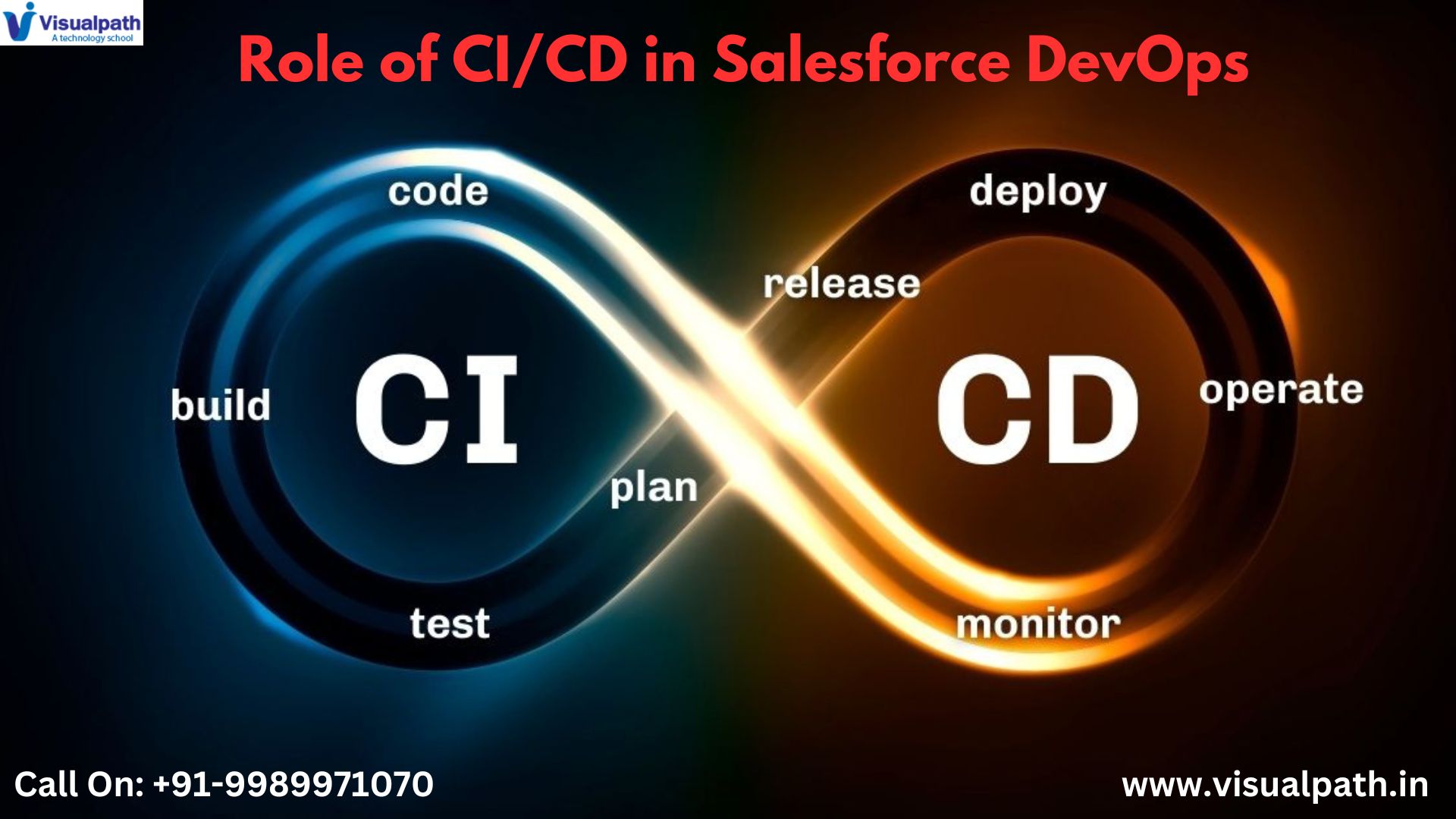
  • The Role of CI/CD in Salesforce DevOps: Copado’s Approach

    The Role of CI/CD in Salesforce DevOps: Copado’s Approach

    Salesforce DevOps Training rapidly evolving landscape of software development, Continuous Integration and Continuous Deployment (CI/CD) have become pivotal in streamlining workflows and enhancing product quality. Within the Salesforce ecosystem, implementing effective CI/CD practices presents unique challenges due to its metadata-driven architecture. Copado, a leading Salesforce DevOps Course platform tailored for Salesforce, offers a comprehensive solution to these challenges. This article explores the role of CI/CD in Salesforce DevOps and delves into Copado’s approach to facilitating seamless integration and deployment processes.

    Understanding CI/CD in Salesforce DevOps

    Continuous Integration (CI) involves the frequent merging of code changes into a shared repository, enabling early detection and resolution of conflicts. Continuous Deployment (CD) automates the release of these validated changes to production environments, ensuring that new features and fixes are delivered to users promptly. In the context of Salesforce, CI/CD practices must accommodate the platform’s metadata-centric development model, where components like objects, fields, and configurations are defined as metadata.

    Challenges in Implementing CI/CD for Salesforce

    Implementing CI/CD within Salesforce presents several challenges:

    1. Metadata Complexity: Salesforce DevOps Certification extensive metadata types and interdependencies can complicate version control and deployment processes.
    2. Declarative Changes: Many customizations are made through declarative (point-and-click) configurations, which may not be easily tracked in traditional version control systems.
    3. Environment Management: Ensuring consistency across various environments (development, testing, production) requires meticulous coordination.

    Copado’s Approach to CI/CD in Salesforce

    Copado addresses these challenges by providing a unified platform that integrates CI/CD processes tailored specifically for Salesforce environments. Key features of Copado’s approach include:

    1. Automated Deployments: Copado automates the deployment process, reducing manual tasks and minimizing errors. This automation accelerates release cycles and enhances team productivity.
    2. Version Control Integration: By integrating with version control systems, Salesforce DevOps With Copado Training enables tracking of metadata changes, facilitating collaboration among development teams and maintaining a comprehensive history of modifications.
    3. Quality Gates and Testing: Copado incorporates quality gates and automated testing into the CI/CD pipeline, ensuring that only validated changes progress through the deployment stages. This integration enhances the reliability and stability of releases.
    4. Compliance and Security: With built-in compliance checks and security protocols, Copado ensures that deployments adhere to organizational policies and regulatory standards, mitigating risks associated with unauthorized changes.
    5. End-to-End Visibility: Copado provides comprehensive dashboards and reporting tools, offering stakeholders real-time insights into the development and deployment processes. This transparency facilitates informed decision-making and proactive issue resolution.

    Benefits of Copado’s CI/CD Solution

    Implementing Copado’s CI/CD approach in Salesforce DevOps yields several benefits:

    1. Accelerated Release Cycles: Automation of integration and deployment tasks reduces the time required to deliver new features and updates to end-users.
    2. Improved Collaboration: Centralized version control and transparent workflows enhance communication and coordination among development, testing, and operations teams.
    3. Enhanced Quality Assurance: Integrated testing and quality gates catch defects early in the development process, leading to more stable and reliable releases.
    4. Regulatory Compliance: Automated compliance checks ensure adherence to industry regulations and internal policies, reducing the risk of non-compliance penalties.
    5. Scalability: Copado’s platform is designed to handle the complexities of large-scale Salesforce implementations, making it suitable for organizations of varying sizes.

    Conclusion

    Continuous Integration and Continuous Deployment are integral components of modern Salesforce DevOps practices. Copado’s tailored approach addresses the unique challenges posed by Salesforce’s metadata-driven architecture, offering automated deployments, integrated version control, quality assurance, compliance, and comprehensive visibility. By adopting Copado’s CI/CD solutions, organizations can enhance their development workflows, reduce time-to-market, and deliver high-quality solutions that meet both business objectives and user expectations.

    Visualpath is the Leading and Best Software Online Training Institute in Hyderabad. Avail complete Salesforce DevOps Course Worldwide. You will get the best course at an affordable cost.

    WhatsApp: https://www.whatsapp.com/catalog/919989971070/

    Visit: https://www.visualpath.in/online-salesforce-devops-training.html

    Visit Blog:  https://salesforcedevopscourseonlinetraining.blogspot.com/

  • What You Need to Know About Salesforce DevOps with Copado

    What You Need to Know About Salesforce DevOps with Copado

    Salesforce DevOps Training Leveraging Salesforce require efficient development and deployment processes to maintain a competitive edge. Implementing DevOps practices tailored for Salesforce is essential for achieving this efficiency. Copado, a leading DevOps platform, offers comprehensive solutions designed specifically for the Salesforce ecosystem. This article explores the key aspects of Salesforce DevOps with Copado, highlighting its features, benefits, and impact on development workflows.

    Understanding Salesforce DevOps

    DevOps is a set of practices that combines software development (Dev) and IT operations (Ops) to shorten the development lifecycle and deliver high-quality software continuously. In the context of Salesforce DevOps Course involves automating and streamlining the processes of building, testing, and deploying applications within the Salesforce platform. This approach enhances collaboration among development teams, reduces errors, and accelerates delivery timelines.

    Introducing Copado

    Copado is a powerful DevOps platform that seamlessly integrates with the Salesforce ecosystem. It enables organizations to adopt agile methodologies, automate their release processes, and optimize the software development lifecycle on the Salesforce platform. By providing a unified environment for teams to collaborate, develop, test, and deploy, Salesforce DevOps Certification eliminates the challenges associated with traditional development methods.

    Key Features of Copado

    1. Version Control Integration: Copado integrates with popular version control systems, such as Git, allowing teams to manage and track changes to Salesforce source code and configurations. This feature ensures version control, traceability, and collaborative development.
    2. Continuous Integration and Continuous Deployment (CI/CD): Copado automates tasks at every stage of the delivery lifecycle for true CI/CD, enabling faster, more reliable software updates across various environments.
    3. Automated Testing: Copado provides an end-to-end testing solution, enhancing code quality and reducing the need for extensive alpha testing. It offers comprehensive support for diverse testing methodologies, encompassing a range of types such as Apex Tests, Manual test scripts, Pull Requests, Static code analysis, and Selenium.
    4. Environment Management: Copado simplifies sandbox and environment management, allowing teams to efficiently handle multiple development, testing, and production environments. This capability ensures consistency and reduces configuration errors across environments.
    5. Compliance and Governance: Copado ensures compliance and governance by providing tools to manage and enforce development standards, security protocols, and regulatory requirements throughout the development process.

    Benefits of Using Copado for Salesforce DevOps

    • Streamlined Development Processes: Copado automates repetitive tasks, such as code deployments and testing, reducing manual effort and minimizing errors. It enables developers to focus on innovation, resulting in faster development cycles and improved productivity.
    • Faster Time-to-Market: With Copado’s CI/CD capabilities, organizations can rapidly deliver applications and changes to the Salesforce platform. The expedited release cycle facilitated by Copado empowers businesses to swiftly respond to market demands, gain a distinct competitive advantage, and capitalize on emerging opportunities.
    • Increased Quality and Stability: Copado emphasizes comprehensive testing and validation processes, enabling organizations to deliver high-quality applications. By identifying and addressing issues at an early stage within the development cycle, Salesforce DevOps with Copado Training effectively mitigates deployment failures, elevates the overall user experience, and contributes to heightened customer satisfaction.
    • Enhanced Collaboration: Copado fosters collaboration among development, operations, and business teams by providing a unified platform for communication and coordination. This collaborative environment leads to better alignment with business objectives and more successful project outcomes.

    Implementing Copado in Your Organization

    Adopting Copado for Salesforce DevOps involves several key steps:

    1. Assessment: Evaluate your current development and deployment processes to identify areas where Copado can add value.
    2. Training: Provide training for your teams to ensure they understand how to utilize Copado effectively. Salesforce offers modules such as “Salesforce DevOps with Copado” to help teams get started.
    3. Integration: Integrate Copado with your existing Salesforce environments and version control systems.
    4. Automation: Automate your development, testing, and deployment pipelines using Copado’s tools and features.
    5. Monitoring and Improvement: Continuously monitor your DevOps processes and use Copado’s analytics to identify areas for improvement.

    Conclusion:

    Implementing DevOps practices tailored for Salesforce is essential for organizations aiming to enhance their development efficiency and software quality. Copado provides a comprehensive platform that integrates seamlessly with Salesforce, offering tools for version control, CI/CD, automated testing, environment management, and compliance. By adopting Copado, organizations can streamline their development processes, accelerate time-to-market, and deliver high-quality applications that meet evolving business needs.

    Visualpath is the Leading and Best Software Online Training Institute in Hyderabad. Avail complete Salesforce DevOps Training Worldwide. You will get the best course at an affordable cost.

    WhatsApp: https://www.whatsapp.com/catalog/919989971070/

    Visit:  https://www.visualpath.in/online-salesforce-devops-training.html

    Visit Blog: https://www.blogger.com/blog/posts/4995236664471863657

  • Why Should Choose Copado for Salesforce DevOps Automation?

    Why Should Choose Copado for Salesforce DevOps Automation?

    Salesforce DevOps Course has revolutionized how organizations manage application development and deployments on the Salesforce platform. Combining development and operations practices, it ensures streamlined workflows, faster releases, and higher-quality applications. Among the various tools available for Salesforce DevOps, Copado stands out as a leader.

    Copado is a comprehensive DevOps platform specifically designed for Salesforce, offering features like version control, continuous integration/continuous deployment (CI/CD), and automated testing. But why should you choose Copado for Salesforce DevOps automation? Let’s explore.

    The Need for DevOps in Salesforce

    Salesforce’s no-code/low-code approach makes it a popular choice for businesses, but managing complex development environments can be challenging. Challenges include:

    • Managing multiple developers and environments.
    • Ensuring error-free deployments.
    • Maintaining version control and audit trails.
    • Delivering faster releases without compromising quality.

    DevOps practices help overcome these challenges, and Copado’s specialized capabilities make it the ideal choice.

    Key Benefits of Choosing Copado for Salesforce DevOps Automation

    1. End-to-End Automation

    Copado provides automation tools for every stage of the DevOps lifecycle:

    • Version Control: Seamlessly integrate with Git for robust version tracking.
    • CI/CD Pipelines: Automate code integration, testing, and deployments across Salesforce environments.
    • Automated Testing: Ensure quality by running automated test cases before deployment.

    Salesforce DevOps Training By automating repetitive tasks, Copado minimizes manual errors and accelerates delivery timelines.

    2. Cross-Environment Visibility

    Copado’s intuitive dashboards provide real-time visibility into all environments, deployments, and processes. This transparency allows teams to:

    • Monitor progress and detect bottlenecks.
    • Track changes across environments.
    • Gain insights into team performance and deployment success rates.

    3. Seamless Collaboration

    Collaboration between developers, admins, and stakeholders is crucial for Salesforce projects. Copado simplifies collaboration by:

    • Offering tools for code merging and conflict resolution.
    • Providing integrated communication features.
    • Enabling non-technical users to contribute through an easy-to-use interface.

    This fosters alignment across teams, ensuring smoother and faster delivery Salesforce DevOps With Copado Training cycles.

    4. Built-In Compliance and Security

    Compliance and security are critical for Salesforce environments, especially in industries like healthcare and finance. Copado ensures:

    • Audit Trails: Keep detailed records of every change and deployment for regulatory compliance.
    • User Permissions: Granular control over who can access and modify specific environments.
    • Data Security: Secure handling of sensitive data during migrations and deployments.

    5. Flexibility and Scalability

    Copado is designed to grow with your organization. Its flexibility allows teams to:

    • Handle simple admin tasks and complex enterprise-grade projects alike.
    • Scale workflows as business requirements evolve.
    • Integrate with other DevOps tools like Jenkins and Jira for enhanced functionality.

    6. Enhanced Testing Capabilities

    Testing is a critical component of any deployment process. Salesforce DevOps Certification features include:

    • Automated regression testing to ensure new changes don’t break existing functionality.
    • Test scheduling and tracking for efficient resource management.
    • Integration with external testing tools for advanced use cases.

    7. Accelerated Time-to-Market

    By streamlining development and deployment processes, Copado enables organizations to deliver updates and new features faster. This agility is especially valuable in today’s competitive business landscape.

    Real-World Use Cases for Copado in Salesforce DevOps

    1. Complex Enterprise Deployments

    Enterprises managing large Salesforce environments with multiple teams and regions benefit from Copado’s unified platform. It ensures:

    • Consistent deployments across environments.
    • Reduced downtime during migrations.

    2. Managed Service Providers (MSPs)

    MSPs can use Copado to efficiently handle multiple client projects, ensuring:

    • Seamless environment management.
    • Faster delivery of updates and fixes.

    3. Regulated Industries

    Industries like healthcare, finance, and government rely on Copado’s compliance features to meet strict regulatory requirements while maintaining development speed.

    Conclusion

    Copado’s Salesforce-native DevOps platform is a game-changer for organizations looking to enhance their Salesforce development and deployment processes. Its automation capabilities, real-time visibility, compliance features, and flexibility make it the ideal choice for businesses of all sizes.

    By adopting Copado, organizations can achieve faster releases, higher-quality applications, and seamless collaboration—all while maintaining compliance and security. Whether you’re a small team or a global enterprise, Copado provides the tools you need to succeed in Salesforce DevOps automation.

    Visualpath is the Leading and Best Software Online Training Institute in Hyderabad. Avail complete Salesforce DevOps Course Worldwide. You will get the best course at an affordable cost.

    WhatsApp: https://www.whatsapp.com/catalog/919989971070/

    Visit: https://www.visualpath.in/online-salesforce-devops-training.html

  • Salesforce DevOps with Copado: Why Copado is a Game Changer

    Salesforce DevOps with Copado: Why Copado is a Game Changer

    Salesforce DevOps is a cornerstone for businesses, providing powerful tools to manage customer relationships, streamline processes, and drive growth. However, as Salesforce implementations grow in complexity, so do the challenges of managing development, testing, and deployments. This is where Salesforce DevOps becomes critical.

    DevOps for Salesforce bridges the gap between development and operations, promoting collaboration, automation, and continuous improvement. It ensures faster releases, higher quality, and better governance. Among the myriad tools available, Copado has emerged as a leading platform that revolutionizes Salesforce DevOps.

    What is Copado?

    Copado is an end-to-end, native DevOps platform designed specifically for Salesforce. It provides tools for version control, continuous integration, continuous delivery (CI/CD), automated testing, and compliance, all tailored to the unique requirements of Salesforce development. By integrating seamlessly with Salesforce, Copado empowers teams to accelerate releases while ensuring quality and compliance Salesforce DevOps Training.

    Why Copado is a Game Changer

    1. Native Salesforce Integration

    One of Copado’s standout features is its native integration with Salesforce. Unlike generic DevOps tools that require significant customization to work with Salesforce’s metadata-driven architecture, Copado is built specifically for Salesforce. This ensures smoother implementation, minimal learning curve, and better utilization of Salesforce’s native capabilities.

    2. End-to-End Automation

    Copado excels in automating every stage of the DevOps lifecycle. From user story management to deployment, Copado’s automation capabilities reduce manual effort and errors. Features like automated metadata conflict resolution and pre-deployment validations ensure that releases are both fast and error-free.

    3. Version Control Made Simple

    Version control is often a pain point in Salesforce due to its metadata-driven architecture. Copado simplifies this by offering version control that’s fully integrated with Salesforce. Developers can track changes, manage branches, and collaborate more effectively. This   Salesforce DevOps Course transparency reduces the risk of overwrites and deployment failures.

    4. Continuous Integration and Delivery

    CI/CD is a cornerstone of modern DevOps, and Copado delivers robust tools to implement it effectively for Salesforce. With Copado, teams can:

    • Automatically test and validate changes.
    • Deploy updates seamlessly across environments.
    • Ensure consistent quality in production.

    5. Compliance and Security

    For organizations in regulated industries, compliance is a top priority. Copado includes built-in compliance features that make it easier to adhere to standards like GDPR, HIPAA, and SOX. Automated audit trails and deployment logs provide full visibility into who did what and when, making compliance audits a breeze.

    6. Enhanced Collaboration

    Copado fosters better collaboration across teams by providing a unified platform. Developers, admins, testers, and business stakeholders can work together seamlessly. With its integration into Agile tools like Jira and Slack, Copado ensures everyone stays aligned.

    7. AI-Powered Insights

    Recently, Copado introduced AI-powered tools like CopadoGPT. These tools help teams predict deployment risks, optimize workflows, and gain actionable insights into their DevOps processes. By leveraging AI, Copado stays ahead of the curve in delivering cutting-edge solutions.

    Benefits of Using Copado for Salesforce DevOps

    Faster Time to Market

    With its robust automation and CI/CD capabilities, Copado enables teams to release features faster without compromising quality.

    Reduced Errors and Rollbacks

    Automated testing and validation ensure that only high-quality code reaches production, minimizing the risk of errors and costly rollbacks.

    Improved Governance

    Copado’s built-in compliance and audit features provide better control and visibility, ensuring adherence to organizational policies and industry regulations.

    Higher Productivity

    By eliminating repetitive manual tasks, Copado frees up time for teams to focus on innovation and strategic priorities.

    Scalability

    Whether your organization has a small Salesforce instance or a sprawling multi-cloud setup, Copado scales effortlessly to meet your needs.

    Real-World Success Stories

    Organizations across industries have leveraged Copado to transform their Salesforce DevOps. For example:

    • A leading financial services firm reduced its deployment time by 75%.
    • A global retail giant improved release quality by automating 90% of its testing.
    • A healthcare company achieved 100% compliance with HIPAA regulations through Copado’s audit trails.

    Conclusion

    Salesforce DevOps is no longer optional; it’s a necessity for organizations aiming to stay competitive in today’s fast-paced business environment. Copado stands out as a game-changing platform that simplifies, accelerates, and enhances Salesforce DevOps. By adopting Copado, businesses can achieve faster releases, higher quality, better compliance, and ultimately, greater success in their Salesforce journey.

    Visualpath is the Leading and Best Software Online Training Institute in Hyderabad. Avail complete Salesforce DevOps Training Worldwide. You will get the best course at an affordable cost.

    WhatsApp: https://www.whatsapp.com/catalog/919989971070/

    Visit  https://www.visualpath.in/online-salesforce-devops-training.html

  • Salesforce DevOps Training: Salesforce DevOps Best Practices – A Developer’s Guide

    Salesforce DevOps Training: Salesforce DevOps Best Practices – A Developer’s Guide

    Salesforce DevOps Training: Salesforce DevOps Best Practices – A Developer’s Guide

    Salesforce DevOps Training is essential for developers and organizations striving to streamline deployment processes, improve collaboration, and enhance application quality. Implementing Salesforce DevOps practices allows teams to optimize workflows, ensuring faster and more reliable delivery of updates and features. Whether you are considering enrolling in a Salesforce DevOps course or looking to upskill your team, mastering DevOps is critical to staying competitive in today’s fast-paced digital landscape.

    What is Salesforce DevOps?

    Salesforce DevOps integrates development and operations practices to improve collaboration, automate workflows, and enhance the efficiency of Salesforce application development.

    Core Objectives of Salesforce DevOps

    • Enhanced Collaboration: Bridging the gap between development, operations, and QA teams.
    • Streamlined Deployments: Automating deployments to minimize manual intervention and errors.
    • Improved Quality Assurance: Incorporating testing into the development pipeline to deliver bug-free updates.

    Salesforce DevOps training equips developers with the tools and techniques to implement these practices effectively.

    Key Components of Salesforce DevOps

    To achieve DevOps success, understanding its core components is critical:

    Version Control

    Version control systems like Git allow teams to manage changes to the codebase efficiently.

    Continuous Integration/Continuous Deployment (CI/CD)

    CI/CD automates testing and deployment, ensuring smooth updates.

    • Best Practice: Leverage tools like Jenkins or GitLab CI for seamless integration.

    Automated Testing

    Incorporating testing at every stage of the pipeline guarantees quality.

    • Best Practice: Use automated tools like Selenium or Provar for regression testing.

    Monitoring and Feedback

    Continuous monitoring and feedback loops enhance system reliability.

    • Best Practice: Utilize monitoring tools like Salesforce Shield for real-time alerts.

    Benefits of Salesforce DevOps Training

    Enrolling in a Salesforce DevOps course provides the following benefits:

    • Hands-on Experience: Practical exercises that simulate real-world challenges.
    • Tool Proficiency: Mastering tools like Copado, Gearset, and Jenkins.
    • Career Advancement: DevOps-certified professionals are in high demand.
    • Improved Collaboration Skills: Learning how to streamline workflows between teams.

    Best Practices for Salesforce DevOps

    Adopting best practices ensures that Salesforce DevOps implementation delivers maximum results.

    Standardize Processes

    • Define workflows for coding, testing, and deployment to maintain consistency.
    • Implement clear governance policies for version control and CI/CD pipelines.

    Prioritize Security

    • Secure sensitive data with tools like Salesforce Shield.
    • Train teams in identifying and mitigating potential security risks.

    Automate Where Possible

    • Automate repetitive tasks like testing and code deployment.
    • Use tools like Jenkins for continuous integration and deployment.

    Foster a Collaborative Culture

    • Encourage open communication between developers and operations teams.
    • Hold regular sprint reviews and retrospectives to align team goals.

    Monitor Metrics and KPIs

    • Track deployment frequency, lead time for changes, and mean time to recovery.
    • Use these metrics to refine and optimize DevOps processes.

    Salesforce DevOps Tools to Master

    • Copado: A powerful DevOps platform tailored for Salesforce, Copado streamlines CI/CD processes and ensures compliance.
    • Gearset: Known for its simplicity, Gearset is ideal for managing Salesforce deployments.
    • Jenkins: An open-source CI/CD tool that integrates seamlessly with Salesforce pipelines.
    • Provar: Automates Salesforce testing for improved quality assurance.
    • GitHub: A widely-used version control platform that supports collaborative development.

    Challenges in Salesforce DevOps

    Implementing DevOps in Salesforce isn’t without hurdles. Addressing these challenges is crucial for success:

    • Limited Tool Integration: Overcome by investing in versatile platforms like Copado or Gearset.
    • Knowledge Gaps: Enroll in a Salesforce DevOps course to upskill your team.
    • Resistance to Change: Foster a culture of continuous improvement and collaboration.

    Tips for Successful Salesforce DevOps Implementation

    • Start Small: Begin with small-scale projects to test and refine your DevOps processes.
    • Invest in Training: Comprehensive Salesforce DevOps training ensures your team is equipped with the necessary skills.
    • Use Metrics for Improvement: Regularly analyze DevOps metrics to identify bottlenecks and optimize processes.
    • Leverage Cloud Platforms: Salesforce tools like Salesforce DX can enhance DevOps workflows.
    • Engage Stakeholders: Keep stakeholders informed and involved to ensure alignment with business goals.

    Conclusion

    Salesforce DevOps is a transformative approach that enhances efficiency, collaboration, and quality in Salesforce development projects. Investing in Salesforce DevOps training and adopting best practices ensures a seamless implementation process. Whether you’re starting with version control, automating CI/CD pipelines, or mastering tools like Copado, a structured approach to DevOps is essential.

    Visualpath is one of the Best Salesforce DevOps Online Training Hyderabad providing Online Training with real-time Projects with highly skilled and certified trainers with 15+ years of experience. Salesforce DevOps Online Courses is specially designed for IT developers.

    Enroll Now! Call: +91-9989971070

     Course Covered:

    Salesforce, DevOps, Copado, Deployment tools, Jenkins, Testing, Automation, Version control, Agility, Reporting

    Visit: https://visualpath.in/online-salesforce-devops-training.html

    Visit: https://visualpathblogs.com/

    Join Us WhatsApp: https://www.whatsapp.com/catalog/919989971070/

  • Salesforce DevOps Certification? Understanding Salesforce DevOps – Key Components and Benefits

    Salesforce DevOps Certification? Understanding Salesforce DevOps – Key Components and Benefits

    Salesforce DevOps Training has revolutionized the way businesses manage customer relationships and drive growth. However, as Salesforce environments grow complex, organizations seek seamless integration, automated testing, and continuous delivery processes to enhance efficiency. Here, Salesforce DevOps Certification comes into play, equipping professionals with skills in this growing field. This certification helps users understand the tools, best practices, and strategies to bring DevOps into Salesforce environments. Let’s dive deeper into the essentials of Salesforce DevOps, key components, benefits, and effective tips to get started on your certification journey.

    What is Salesforce DevOps?

    Salesforce DevOps is a practice that integrates development, operations, and quality assurance within Salesforce platforms. It focuses on improving collaboration between development and operations teams, automating processes, and implementing continuous integration/continuous deployment (CI/CD) pipelines. With Salesforce DevOps, teams can ensure faster delivery, better security, and improved user experience by quickly identifying and resolving issues within the Salesforce ecosystem.

    Key Features of Salesforce DevOps:

    Continuous Integration (CI): Allows for automated integration of code changes, reducing integration errors and streamlining the development process.

    Continuous Deployment (CD): Facilitates the automated deployment of code, configurations, and features in Salesforce environments.

    Automated Testing: Enables consistent quality assurance through automated tests, helping teams identify issues earlier in the development lifecycle.

    Salesforce DevOps Certification provides in-depth knowledge of these features, along with hands-on training to use Salesforce DevOps tools effectively. Professionals interested in a Salesforce DevOps Course gain practical skills in setting up CI/CD pipelines, managing version control, and implementing automated testing strategies.

    Key Components of Salesforce DevOps

    Salesforce DevOps involves several crucial components that enhance the development and operational efficiency within a Salesforce environment:

    Version Control

    • Version control systems, such as Git, enable Salesforce teams to track changes, manage multiple versions, and collaborate seamlessly. Understanding version control is crucial for managing complex projects and minimizing the risk of conflicts in code.

    CI/CD Pipelines

    • A fundamental aspect of DevOps, CI/CD pipelines automate the code integration and deployment processes. In Salesforce DevOps, CI/CD ensures faster and more reliable updates, minimizing the time between development and deployment.

    Automated Testing

    • Automated testing validates the quality and functionality of code before deployment. With a Salesforce DevOps Course, professionals learn to implement automated testing tools to reduce bugs and maintain the quality of Salesforce applications.

    Monitoring and Alerts

    • Monitoring tools are essential in Salesforce DevOps for tracking system performance, identifying bottlenecks, and preventing outages. They help ensure stability and security within the Salesforce environment.

    Release Management

    • Release management strategies within Salesforce DevOps enable teams to manage and schedule updates effectively, ensuring smooth transitions between development and production environments.

    Understanding these components is essential for achieving success in Salesforce DevOps Training. Certification programs provide hands-on experience with these tools, ensuring professionals can confidently manage and optimize DevOps processes.

    Benefits of Salesforce DevOps Certification

    Pursuing Salesforce DevOps Certification offers numerous benefits for professionals and organizations:

    • Improved Collaboration: Salesforce DevOps bridges the gap between development and operations teams, fostering a culture of collaboration. Certified professionals are better equipped to manage cross-functional teams, improving communication and alignment.
    • Enhanced Deployment Speed and Efficiency: With automated workflows, CI/CD pipelines, and reduced manual effort, Salesforce DevOps increases the speed and efficiency of deployments. This results in faster time-to-market and a competitive advantage for organizations.
    • Reduced Risk and Enhanced Quality: Automation in testing, deployment, and monitoring reduces the risk of human errors and improves the overall quality of Salesforce applications. Certified professionals learn to implement best practices in testing and quality control.
    • Scalability and Flexibility: Salesforce DevOps Certification offers knowledge on creating scalable and flexible DevOps processes, enabling organizations to adapt to growth and changing market demands.
    • Career Advancement: Salesforce DevOps skills are in high demand. Obtaining a Salesforce DevOps Certification demonstrates expertise in DevOps principles and practices, enhancing career prospects and earning potential.

    Tips for Succeeding in Salesforce DevOps Certification

    Getting started with Salesforce DevOps Certification can be a rewarding yet challenging journey. Here are some tips to help you succeed:

    Choose the Right Salesforce DevOps Course

    • Research and select a reputable Salesforce DevOps Course that offers hands-on experience, real-world examples, and detailed insights into Salesforce DevOps components.

    Gain Practical Experience

    • While theoretical knowledge is essential, practical experience is equally critical. Engage in projects that require CI/CD pipelines, automated testing, and version control within Salesforce environments.

    Conclusion

    The Salesforce DevOps Certification offers comprehensive knowledge of implementing DevOps principles within the Salesforce environment, equipping professionals with valuable skills in automation, quality control, and deployment. Through Salesforce DevOps Training and a Salesforce DevOps Course, individuals can achieve mastery over key DevOps components, including CI/CD pipelines, version control, and automated testing. The benefits of Salesforce DevOps are vast—from increased collaboration and faster deployment speeds to enhanced system reliability.

    Visualpath is one of the Best Salesforce Devops Training in Hyderabad providing Online Training with real-time Projects with highly skilled and certified trainers with 15+ years of experience. Salesforce Devops With Copado Training is specially designed for IT developers.

    Course Covered

    Salesforce, DevOps, Copado, Deployment tools, Jenkins, Testing, Automation, Version control, Agility, Reporting

    Visit: https://visualpath.in/online-salesforce-devops-training.html

    Join Us WhatsApp: https://www.whatsapp.com/catalog/919989971070/

  • Salesforce DevOps Certification Copado Deployment Pipeline? Key Features for Salesforce DevOps

    Salesforce DevOps Certification Copado Deployment Pipeline? Key Features for Salesforce DevOps

    Salesforce DevOps Training, implementing DevOps principles is crucial for efficient, reliable, and scalable development and deployment processes. With tools like Copado, Salesforce developers and administrators can streamline their DevOps practices. Earning a Salesforce DevOps Certification in Copado Deployment Pipeline brings immense value by verifying a professional’s ability to optimize and deploy Salesforce changes swiftly and securely. This article explores Copado’s deployment pipeline, focusing on its key features and offering tips to help professionals succeed with Salesforce DevOps training. Whether you are beginning with a Salesforce DevOps course or aiming to earn a Salesforce DevOps certification, mastering Copado’s features can be transformative for your career.

    Why Salesforce DevOps and Copado?

    Salesforce’s highly customizable platform demands rigorous change management to ensure seamless integrations and efficient delivery. Salesforce DevOps certification in Copado serves as a testament to one’s expertise in implementing robust DevOps practices, addressing version control, continuous integration, and continuous delivery within the Salesforce environment. The Salesforce DevOps training courses that focus on Copado Deployment Pipeline prepare professionals with practical skills and knowledge, making deployment smooth and risk-free.

    Key Features of the Copado Deployment Pipeline

    Version Control Management

    Copado integrates with popular version control systems (VCS) like Git, allowing teams to maintain an organized codebase while fostering collaboration across multiple environments. Version control is crucial for Salesforce DevOps because it tracks every change, ensuring no loss of data or functionality when merging changes. A Salesforce DevOps course covering Copado explains the process of branch management and conflict resolution within the Salesforce ecosystem, enhancing code quality and project consistency.

    Automated Testing and Validation

    Copado offers automated testing and validation, which is essential for identifying issues early in the pipeline. With automated test scripts and validations, Salesforce DevOps certification holders can quickly spot bugs or conflicts before they reach production. By following best practices learned in Salesforce DevOps training, teams can use Copado to set up robust test classes, eliminate manual testing, and ensure high-quality deployments.

    Continuous Integration and Continuous Delivery (CI/CD)

    Continuous Integration and Continuous Delivery (CI/CD) are the backbone of DevOps, and Copado excels in enabling these practices within Salesforce. Copado’s CI/CD capabilities allow developers to commit code changes frequently, automating deployments to different environments in Salesforce. Through Salesforce DevOps courses focused on CI/CD with Copado, professionals learn to implement strategies that streamline the flow from development to production, significantly reducing deployment times and minimizing errors.

    Environment Management and Org Sync

    Environment management in Copado is a key feature that aids in managing multiple Salesforce orgs efficiently. The platform offers tools for org synchronization, where metadata changes are easily deployed across development, staging, and production environments. Salesforce DevOps training emphasizes the importance of org sync and environment management, allowing developers to push updates securely and swiftly. With this, changes are consistently reflected across all environments, making it easier to identify conflicts or issues specific to particular environments.

    Advanced Analytics and Reporting

    Copado includes comprehensive analytics and reporting features, allowing Salesforce DevOps certification holders to track deployment metrics, monitor success rates, and assess team productivity. Through advanced dashboards and visualizations, teams can gain insights into pipeline health, change velocity, and release quality. These metrics are invaluable for identifying bottlenecks and optimizing the deployment pipeline. A Salesforce DevOps course provides the necessary skills to interpret these analytics, enabling professionals to continuously improve their processes.

    Tips for Success in Salesforce DevOps with Copado

    Focus on Hands-on Learning

    • Practical experience is essential in Salesforce DevOps training. Familiarize yourself with the Copado platform, as hands-on work enables you to better understand the nuances of deployment and troubleshooting.

    Emphasize Automation

    • Automation is central to DevOps. Use the tools provided by Copado to automate repetitive tasks, from testing to deployments, to reduce human error and improve consistency.

    Optimize Testing Strategies

    • Invest time in creating robust test classes. Salesforce DevOps courses often highlight testing strategies, and Copado provides the framework to apply these best practices.

    Track and Learn from Metrics

    • Make use of Copado’s analytics. The insights gained from these reports can guide improvements and streamline the deployment pipeline.

    Collaborate Across Teams

    • DevOps is inherently collaborative. Leveraging version control and CI/CD practices with Copado fosters better communication and alignment between development and operations teams.

    Conclusion

    Mastering Copado’s deployment pipeline through Salesforce DevOps certification not only demonstrates proficiency in DevOps practices but also strengthens one’s ability to drive successful Salesforce projects. Salesforce DevOps training equips professionals with skills to harness Copado’s features—automated testing, version control, environment management, and analytics—transforming deployment from a manual, error-prone task to an automated, streamlined process. This foundation of skills, backed by Salesforce DevOps certification, makes you a valuable asset to any team. For a successful career in Salesforce DevOps, pursuing an in-depth Salesforce DevOps course focused on Copado is a strategic investment that pays dividends in both technical expertise and industry recognition.

    Visualpath is one of the Best Salesforce DevOps Training in Hyderabad providing Online Training with real-time Projects with highly skilled and certified trainers with 15+ years of experience. Salesforce DevOps With Copado Training is specially designed for IT developers.

    Course Covered

    Salesforce, DevOps, Copado, Deployment tools, Jenkins, Testing, Automation, Version control, Agility, Reporting

    Visit: https://visualpath.in/online-salesforce-devops-training.html

    Join Us WhatsApp: https://www.whatsapp.com/catalog/919989971070/

  • Salesforce DevOps with Copado Training? The Ultimate Guide to Copado for Salesforce DevOps

    Salesforce DevOps with Copado Training? The Ultimate Guide to Copado for Salesforce DevOps

    The landscape of Salesforce DevOps Training has transformed rapidly with the adoption of DevOps, where speed, agility, and quality are essential. For professionals aiming to leverage Salesforce DevOps Training to manage these dynamics efficiently, Copado offers a comprehensive, streamlined solution. Copado is widely recognized in the Salesforce ecosystem for its extensive DevOps tools, allowing users to optimize workflows, enhance collaboration, and improve deployment efficiency. This guide explores the key aspects of the Salesforce DevOps Course with Copado, covering essential tools, benefits, and strategies for implementing robust DevOps practices in Salesforce development.

    Understanding Salesforce DevOps Training with Copado

    Salesforce DevOps Training equips developers, admins, and IT professionals with skills to implement DevOps practices tailored to Salesforce environments. Copado is a preferred choice within this framework, as it integrates seamlessly with Salesforce, offering tools that automate and simplify development and release cycles. A comprehensive Salesforce DevOps Training experience includes both foundational DevOps principles and practical Copado-based exercises. In a typical Salesforce DevOps Course, participants can expect hands-on training in managing version control, continuous integration (CI), continuous delivery (CD), and quality assurance (QA) testing. By focusing on automation and streamlined workflows, the course ensures professionals can handle frequent deployments without sacrificing quality.

    With Copado, teams gain access to an end-to-end solution that minimizes bottlenecks and encourages collaboration across the entire development cycle. This empowers teams to deliver innovative features at a faster pace, meeting the demands of dynamic Salesforce environments. Copado’s user-friendly interface and automation capabilities make it a popular choice for professionals undergoing Salesforce Devops Online Training. Additionally, the Copado-based Salesforce DevOps Course emphasizes building a collaborative DevOps culture by bridging the gaps between development, testing, and operations teams.

    Key Components of the Salesforce DevOps Course with Copado

    The Salesforce DevOps Course designed around Copado introduces learners to the critical components and strategies essential for successful DevOps practices within Salesforce. Central to this training are core areas like version control management, CI/CD automation, and quality testing—all optimized within Copado’s platform. Here’s a breakdown of the major components covered:

    • Version Control: Salesforce DevOps Training places significant emphasis on version control, where Copado offers Git-based version control, enabling teams to manage code changes and maintain code integrity. This aspect is crucial for tracking changes and ensuring consistent code quality, especially in environments with multiple developers working simultaneously.
    • CI/CD Automation: The training integrates continuous integration and continuous deployment to reduce time-to-market for Salesforce solutions. With Copado, CI/CD processes are automated, removing manual deployment bottlenecks and ensuring seamless transitions from development to production.
    • Automated Testing: Copado incorporates tools for automated testing, which is integral to the Salesforce DevOps Course. Testing ensures code reliability and allows teams to catch potential errors before deployment, resulting in fewer production issues and enhanced code quality.
    • Through Salesforce DevOps Training with Copado, professionals learn to set up automated workflows, manage deployments effectively, and ensure code consistency across environments. These skills are invaluable in maintaining quality standards and accelerating deployment timelines, especially for organizations scaling their Salesforce platforms.

    Advantages of Salesforce DevOps Training and Course Certification with Copado

    Completing a Salesforce DevOps Course centered on Copado provides a competitive edge, equipping professionals with tools and methodologies for effective DevOps implementation in Salesforce. Here are some advantages of pursuing Salesforce DevOps Training with a focus on Copado:

    • Enhanced Efficiency and Speed: By learning to leverage Copado’s automated tools, trainees can perform faster deployments and streamline workflows, improving team efficiency and productivity.
    • Reduced Errors and Downtime: Automated testing and CI/CD reduce the risk of errors in production, resulting in smoother deployments and minimal downtime.
    • Scalability: Copado’s architecture supports scalability, meaning professionals trained on this platform are equipped to manage Salesforce projects of varying complexities.
    • Career Advancement: Salesforce DevOps Training opens career opportunities as businesses increasingly seek skilled Salesforce DevOps engineers and developers proficient in Copado.

    With the in-depth training and hands-on experience provided in the Salesforce DevOps Course, participants are better prepared to meet the rising demand for Salesforce DevOps professionals. This training ultimately helps professionals stay relevant in an evolving Salesforce landscape, where agile and efficient practices are prioritized.

    Best Practices and Tips for Salesforce DevOps with Copado

    To make the most of Salesforce DevOps Training, incorporating best practices is essential. Here are several tips for professionals seeking to excel in their Salesforce DevOps Course:

    • Embrace Automation Early: Automation is key to successful DevOps. Mastering Copado’s automation capabilities will save time and reduce manual intervention.
    • Utilize Copado’s Testing Tools: Copado’s built-in testing tools should be fully utilized during training. Automated testing can identify potential issues and ensure code reliability.
    • Foster Collaboration: A core part of DevOps is collaboration. Salesforce DevOps Training encourages cross-functional teamwork, vital for a cohesive DevOps culture.
    • Commit to Continuous Learning: Salesforce DevOps practices and tools are constantly evolving. Staying updated with Copado’s features and DevOps trends will help professionals adapt to new challenges and opportunities.

    By following these best practices, individuals in the Salesforce DevOps Course can effectively integrate Copado into their workflows, driving successful Salesforce implementations and continuous improvements.

    Conclusion

    The Salesforce DevOps Training with Copado is essential for professionals aiming to enhance their Salesforce development skills and build scalable DevOps practices. With its focus on automation, collaboration, and streamlined workflows, Copado offers a powerful platform for managing Salesforce projects, which is reinforced through Salesforce DevOps Training. By completing a Salesforce DevOps Course, participants gain valuable insights and practical skills that prepare them for the demands of Salesforce DevOps roles. As organizations continue to seek ways to enhance their Salesforce environments, trained Copado professionals will be highly sought-after, making this training a valuable career asset. The integration of Copado in Salesforce DevOps enables professionals to deploy faster, ensure quality, and scale effectively, reinforcing Copado’s position as a leader in Salesforce DevOps solutions.

    Visualpath is the Leading and Best Institute for learning in Hyderabad. We provide salesforce devops certification you will get the best course at an affordable cost.

    Visit: https://www.visualpath.in/online-salesforce-devops-training.html

    Join Us WhatsApp: https://www.whatsapp.com/catalog/919989971070/

  • Salesforce DevOps? Top 5 Salesforce Development Future Trends in 2024

    Salesforce DevOps? Top 5 Salesforce Development Future Trends in 2024

    Introduction

    Salesforce DevOps Online Training As Salesforce continues to dominate the CRM space, its development landscape is rapidly evolving. DevOps practices within Salesforce are becoming more crucial to streamline workflows, enhance collaboration, and improve the overall development lifecycle. In 2024, Salesforce DevOps will be shaped by emerging trends that will define how developers build, test, and deploy applications on the platform. Let’s explore the top five future trends in Salesforce development to watch in 2024. Salesforce DevOps Online Course

    Increased Adoption of AI-Powered DevOps Tools

    With AI transforming various industries, Salesforce development is no exception. AI-powered tools will play a significant role in automating routine DevOps tasks, such as code reviews, testing, and deployment.

    • AI tools will enhance error detection and automated troubleshooting.
    • Predictive analytics will guide optimization in release management.
    • AI integration will reduce manual tasks, accelerating the DevOps pipeline.

    Greater Emphasis on Continuous Integration and Continuous Delivery (CI/CD)

    In 2024, Salesforce DevOps will witness a stronger focus on CI/CD to ensure faster and more reliable releases. CI/CD pipelines will become more automated and seamless, allowing developers to push frequent updates with minimal risk.

    • Automated testing and deployment will become the norm.
    • Developers will rely more on monitoring tools to track real-time issues.
    • CI/CD frameworks will enable frequent and smooth code deployments.

    DevOps Governance and Security

    Security and governance will continue to be a priority in Salesforce DevOps. With the increasing volume of data handled by Salesforce platforms, ensuring secure DevOps practices will be crucial. DevOps governance frameworks will focus on maintaining compliance and security without compromising agility.

    • Enhanced DevSecOps practices will integrate security into every stage of the development lifecycle.
    • Stronger role-based access controls and permissions will ensure secure access.
    • Automated compliance monitoring tools will keep security risks in check.

    Rise of Low-Code/No-Code Development Integration

    The growing popularity of low-code and no-code platforms will influence Salesforce development in 2024. These platforms will allow developers and business users to collaborate more efficiently by simplifying complex processes and promoting rapid prototyping.

    • Low-code tools will increase the pace of app development.
    • Developers will combine no-code automation with advanced DevOps practices.
    • Greater collaboration between IT and business teams will be enabled by low-code solutions.

    Hybrid Cloud Adoption in Salesforce DevOps

    Hybrid cloud strategies will become more common as organizations look for flexibility and scalability. Salesforce developers will integrate hybrid cloud environments into their DevOps workflows to optimize resources, manage workloads, and enhance data availability. Salesforce DevOps Training

    • Hybrid cloud adoption will streamline multi-cloud management.
    • Developers will use hybrid environments to reduce operational costs.

    Conclusion

    Salesforce DevOps is rapidly evolving, with several trends shaping its future in 2024. The integration of AI tools, a strong focus on CI/CD, enhanced security measures, and the rise of low-code platforms will significantly influence the development landscape. Additionally, hybrid cloud adoption will provide the flexibility that developers need to create scalable and robust Salesforce applications. These trends will help teams deliver faster, more secure, and efficient solutions in an ever-changing Salesforce ecosystem.

    Visualpath is the Leading and Best Institute for learning in Hyderabad. We provide Salesforce DevOps Training in Ameerpet you will get the best course at an affordable cost.

    WhatsApp: https://www.whatsapp.com/catalog/919989971070/

    Visit: https://visualpath.in/salesforce-devops-online-training.html

  • The Benefits of Using Copado? for Salesforce Deployment

    The Benefits of Using Copado? for Salesforce Deployment

    Introduction

    Salesforce DevOps Online Training In today’s fast-paced business environment, organizations rely on efficient and effective software deployment to maintain a competitive edge. For Salesforce users, managing deployments can be a complex and time-consuming task. Enter Copado—a powerful DevOps solution specifically designed for Salesforce. Salesforce DevOps Training

    Streamlined Deployment Processes

    One of the primary advantages of using Copado is its ability to streamline deployment processes. Traditional deployment methods often involve manual tasks that can lead to errors and inconsistencies. Copado automates many of these processes, allowing teams to focus on higher-value activities.

    Key Points:

    • Automation: Copado automates deployment tasks, reducing the risk of human error.
    • Version Control: With built-in version control, teams can easily track changes and manage different versions of code.
    • Rollback Options: In case of issues, Copado provides simple rollback options, ensuring a smoother recovery process.

    Enhanced Collaboration

    Copado fosters collaboration among team members, which is crucial for successful deployments. By providing a centralized platform, it encourages communication and teamwork, making it easier for teams to work together.

    Key Points:

    • Centralized Repository: All team members have access to a single source of truth for all deployment-related information.
    • Real-Time Updates: Teams can see real-time updates on deployment status, facilitating quicker decision-making.
    • Integrated Communication Tools: Copado integrates with popular communication tools, making it easier for teams to discuss changes and share feedback.

    Improved Quality and Compliance

    Quality assurance is vital in any deployment process, and Copado helps enhance quality through its robust features. It ensures that changes are properly tested and validated before going live.

    Key Points:

    • Automated Testing: Copado supports automated testing, which helps identify issues early in the deployment cycle.
    • Compliance Checks: The platform includes built-in compliance checks to ensure that all changes adhere to organizational standards.
    • Audit Trails: Detailed audit trails provide transparency and accountability for every salesforce deployment, making it easier to address compliance concerns.

    Increased Speed to Market

    In a competitive landscape, the ability to deploy quickly can make a significant difference. Copado helps organizations accelerate their deployment timelines, allowing them to respond faster to market demands.

    Key Points:

    • Fast Track Releases: Automated processes and streamlined workflows enable quicker releases.
    • Parallel Deployments: Teams can execute multiple deployments simultaneously, reducing bottlenecks. Salesforce DevOps with Copado Training 
    • Continuous Integration and Continuous Delivery (CI/CD): Copado supports CI/CD practices, further speeding up the deployment lifecycle.

    Conclusion

    Incorporating Copado into your Salesforce deployment strategy can lead to numerous benefits, from streamlined processes and enhanced collaboration to improved quality and faster time to market. By leveraging automation and integrated tools, organizations can focus on innovation rather than getting bogged down in manual tasks. For any Salesforce user looking to optimize their deployment process, Copado offers a robust solution that aligns perfectly with today’s agile business needs. Embracing Copado is not just a choice; it’s a strategic move toward a more efficient and productive future in Salesforce deployment.

    Visualpath is the Leading and Best Institute for learning in Hyderabad. We provide Salesforce DevOps Training you will get the best course at an affordable cost.

    WhatsApp: https://www.whatsapp.com/catalog/919989971070/

    Visit: https://visualpath.in/salesforce-devops-online-training.html

  • What is Salesforce DX? A Dive into Salesforce’s Developer Toolset

    What is Salesforce DX? A Dive into Salesforce’s Developer Toolset

    Introduction

    Salesforce DevOps Training Salesforce DX (Developer Experience) is a suite of tools and features designed to enhance the development process on the Salesforce platform. It offers modern development methodologies that promote better collaboration, version control, and deployment flexibility. With Salesforce DX, developers can streamline workflows and integrate with external systems, allowing for more robust and scalable applications. Salesforce DevOps Training in Ameerpet 

    Key Features of Salesforce DX

    Salesforce DX stands out with features aimed at improving the developer’s experience, facilitating continuous integration, and enabling agile development. Here’s a closer look at the most significant features:

    • Source-Driven Development: Allows developers to manage Salesforce metadata using external version control systems.
    • Scratch Orgs: Temporary environments for development and testing that enhance flexibility.
    • Continuous Integration and Delivery (CI/CD): Supports automated testing and deployment, making it easier to maintain quality in the development lifecycle.
    • Command-Line Interface (CLI): A powerful tool for interacting with Salesforce DX, allowing developers to manage orgs, metadata, and applications from a terminal.

    Salesforce DX Tools

    Salesforce DX offers a variety of tools that allow for efficient development, testing, and deployment of applications. Let’s explore some of the primary tools developers use in this ecosystem:

    Salesforce CLI

    • Enables command-based development tasks like managing orgs, metadata, and scratch orgs.
    • Simplifies automation of workflows, making complex processes faster and repeatable.

    Scratch Orgs

    • Temporary, disposable orgs for development and testing purposes.
    • Helps in isolated development, ensuring individual team members can work independently.

    Visual Studio Code (VS Code)

    • A popular code editor with Salesforce extensions for developers to write, test, and debug Salesforce applications.
    • Provides support for features like syntax highlighting, code completion, and debugging directly in the IDE.

    Benefits of Salesforce DX

    Salesforce DX introduces several advantages to teams working on Salesforce development. By leveraging these tools and features, organizations can enjoy enhanced productivity, better version control, and more reliable deployments. Key benefits include:

    Improved Collaboration

    • Source-driven development allows teams to work more cohesively by integrating Salesforce development with external version control systems like Git.

    Enhanced Flexibility

    Faster Deployment

    • The CLI and CI/CD features help automate workflows, leading to quicker, more reliable deployments with fewer errors.

    Greater Scalability

    • Salesforce DX supports complex and larger development teams by making the collaboration, testing, and release processes more streamlined.

    Conclusion

    Salesforce DX provides a modern, efficient framework for developing and managing applications on Salesforce. Through its array of tools like the Salesforce CLI, Scratch Orgs, and Visual Studio Code integrations, it enables developers to adopt best practices, automate workflows, and collaborate more effectively. By embracing Salesforce DX, development teams can experience a more agile, flexible, and scalable approach to building solutions on the Salesforce platform.

    Visualpath is the Leading and Best Institute for learning in Hyderabad. We provide Salesforce DevOps Online Training Institute you will get the best course at an affordable cost.

    WhatsApp: https://www.whatsapp.com/catalog/919989971070/

    Visit: https://visualpath.in/salesforce-devops-online-training.html

  • What is Salesforce DX? A Dive into Salesforce’s Developer Toolset

    What is Salesforce DX? A Dive into Salesforce’s Developer Toolset

    Introduction

    Salesforce DevOps Training Salesforce DX (Developer Experience) is a suite of tools and features designed to enhance the development process on the Salesforce platform. It offers modern development methodologies that promote better collaboration, version control, and deployment flexibility. With Salesforce DX, developers can streamline workflows and integrate with external systems, allowing for more robust and scalable applications. Salesforce DevOps Training in Ameerpet 

    Key Features of Salesforce DX

    Salesforce DX stands out with features aimed at improving the developer’s experience, facilitating continuous integration, and enabling agile development. Here’s a closer look at the most significant features:

    • Source-Driven Development: Allows developers to manage Salesforce metadata using external version control systems.
    • Scratch Orgs: Temporary environments for development and testing that enhance flexibility.
    • Continuous Integration and Delivery (CI/CD): Supports automated testing and deployment, making it easier to maintain quality in the development lifecycle.
    • Command-Line Interface (CLI): A powerful tool for interacting with Salesforce DX, allowing developers to manage orgs, metadata, and applications from a terminal.

    Salesforce DX Tools

    Salesforce DX offers a variety of tools that allow for efficient development, testing, and deployment of applications. Let’s explore some of the primary tools developers use in this ecosystem:

    Salesforce CLI

    • Enables command-based development tasks like managing orgs, metadata, and scratch orgs.
    • Simplifies automation of workflows, making complex processes faster and repeatable.

    Scratch Orgs

    • Temporary, disposable orgs for development and testing purposes.
    • Helps in isolated development, ensuring individual team members can work independently.

    Visual Studio Code (VS Code)

    • A popular code editor with Salesforce extensions for developers to write, test, and debug Salesforce applications.
    • Provides support for features like syntax highlighting, code completion, and debugging directly in the IDE.

    Benefits of Salesforce DX

    Salesforce DX introduces several advantages to teams working on Salesforce development. By leveraging these tools and features, organizations can enjoy enhanced productivity, better version control, and more reliable deployments. Key benefits include:

    Improved Collaboration

    • Source-driven development allows teams to work more cohesively by integrating Salesforce development with external version control systems like Git.

    Enhanced Flexibility

    Faster Deployment

    • The CLI and CI/CD features help automate workflows, leading to quicker, more reliable deployments with fewer errors.

    Greater Scalability

    • Salesforce DX supports complex and larger development teams by making the collaboration, testing, and release processes more streamlined.

    Conclusion

    Salesforce DX provides a modern, efficient framework for developing and managing applications on Salesforce. Through its array of tools like the Salesforce CLI, Scratch Orgs, and Visual Studio Code integrations, it enables developers to adopt best practices, automate workflows, and collaborate more effectively. By embracing Salesforce DX, development teams can experience a more agile, flexible, and scalable approach to building solutions on the Salesforce platform.

    Visualpath is the Leading and Best Institute for learning in Hyderabad. We provide Salesforce DevOps Online Training Institute you will get the best course at an affordable cost.

    WhatsApp: https://www.whatsapp.com/catalog/919989971070/

    Visit: https://visualpath.in/salesforce-devops-online-training.html