Tag: Salesforce Data Cloud Training Hyderabad

  • Identity Resolution in Salesforce Data Cloud: Complete Guide

    Identity Resolution in Salesforce Data Cloud: Complete Guide

    Identity Resolution in Salesforce Data Cloud: Complete Guide

    Identity Resolution in Salesforce Data Cloud: Complete Guide

    Introduction

    Identity Resolution is one of the most important capabilities in modern customer data platforms. Businesses collect customer information from websites, mobile apps, CRM systems, support portals, and marketing tools. However, this information often exists in separate records.

    Identity Resolution helps connect these records and create a complete view of each customer. Professionals learning Salesforce Data Cloud Online Training often study Identity Resolution because it plays a central role in customer profile management and personalization.

    What Identity Resolution is

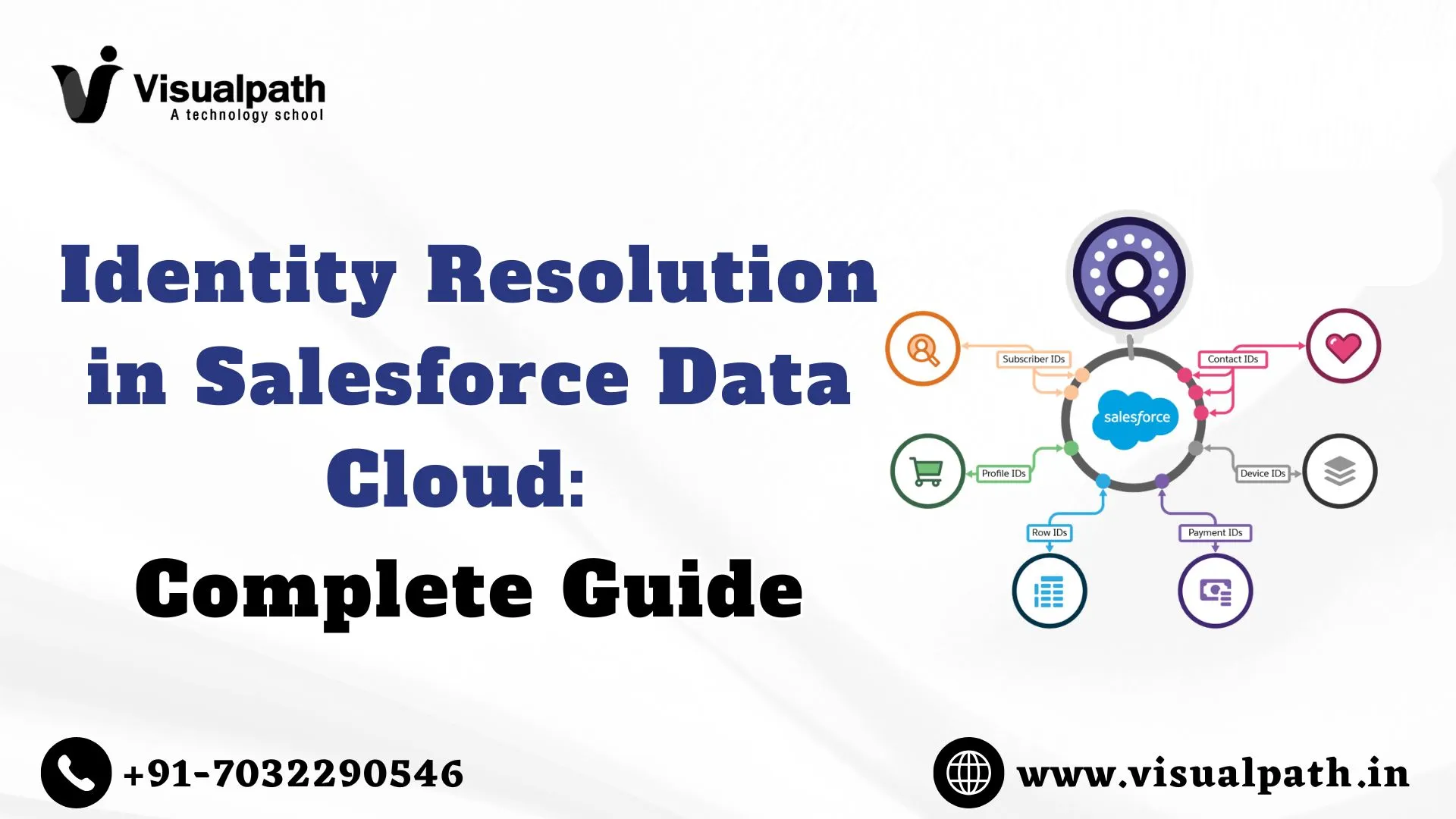
    Identity Resolution is the process of identifying and linking records that belong to the same customer. Customer information may come from different systems and channels. Each system may store only part of the customer’s details.

    For example, a customer may use an email address while shopping online. The same customer may contact support using a phone number. Without Identity Resolution, these interactions may appear as separate records. This unified profile becomes a trusted source of customer information. Teams can use it for reporting, engagement, and customer service activities.

    Why it Matters

    Customer data Platform (CDP) is growing rapidly. Most organizations use multiple applications to manage sales, marketing, service, and operations. As data moves across systems, duplicate records often appear. Duplicate records create several challenges. Marketing teams may send repeated messages. Service teams may not see a customer’s full history. Business reports may contain inaccurate numbers.

    Organizations that maintain accurate customer profiles can better understand customer behavior. This understanding supports more effective communication and decision-making.

    How it Works in Salesforce Data Cloud

    Salesforce Data Cloud includes built-in Identity Resolution capabilities that help organizations create unified customer profiles from multiple data sources.

    1: Data Ingestion

    The process begins when customer data is collected from various sources. These sources may include CRM systems, websites, mobile applications, commerce platforms, and customer support channels.

    2: Data Standardization

    After data is ingested, Salesforce Data Cloud standardizes the information. This ensures that customer records follow a consistent structure and format across systems.

    3: Record Matching

    The platform then applies matching rules to identify records that may belong to the same customer. These rules compare attributes such as email addresses, phone numbers, names, and customer IDs.

    4: Data Reconciliation

    Once matching is complete, reconciliation rules determine which values should be retained when multiple records contain conflicting information. This helps maintain data accuracy.

    5: Unified Profile Creation

    Salesforce Data Cloud combines matched records into a unified customer profile. The profile serves as a trusted source of customer information across the organization.

    6: Continuous Updates

    As new customer interactions occur, the platform continuously updates the unified profile. This ensures that customer information remains current and reliable.

    Professionals enrolled in a Salesforce Data Cloud Course often practice these Identity Resolution processes using real-world business scenarios and sample datasets.

    Matching Rules and Reconciliation Rules

    Matching rules help identify customer records that belong to the same person. Salesforce Data Cloud compares details such as names, email addresses, phone numbers, customer IDs, and addresses to find potential matches.

    Matching Methods

    • Exact Matching: Compares identical values.
    • Fuzzy Matching: Identifies records with minor differences.
    • Probabilistic Matching: Uses confidence scores to estimate matches.

    Once records are matched, reconciliation rules determine which information should appear in the unified customer profile. For example, if two records contain different phone numbers, the platform can keep the most recent or most trusted value.

    Together, matching and reconciliation rules help reduce duplicate records and create accurate customer profiles.

    Key Benefits

    Identity Resolution delivers several business and technical advantages.

    Some of the most important benefits include:

    • Improved customer data accuracy.
    • Reduced duplicate records.
    • Better customer segmentation.
    • More reliable analytics.
    • Consistent customer experiences.
    • Stronger personalization capabilities.
    • Enhanced operational efficiency.

    Marketing teams can create more precise audience segments. Sales teams gain a complete understanding of customer interactions. Service teams can access customer history more quickly.

    These improvements help organizations build trust in their data and make informed decisions.

    Real-World Use Cases

    Identity Resolution helps organizations create a unified view of customers across multiple systems and channels.

    Retail

    Retail companies combine online and in-store interactions to build a complete customer shopping history and understand purchasing preferences.

    Banking

    Banks unify customer data from different channels, helping teams improve customer service and gain better visibility into customer relationships.

    Healthcare

    Healthcare providers connect patient records from multiple systems to maintain accurate and consistent information.

    Telecommunications

    Telecom companies combine billing, service, and support records to create a complete customer profile.

    E-Commerce

    E-commerce businesses use unified profiles to understand buying behavior and deliver more personalized customer experiences.

    Many professionals enrolled in Salesforce Data Cloud Training Hyderabad explore these practical use cases to understand how Identity Resolution supports modern business operations.

    Best Practices

    Successful Identity Resolution requires a structured approach. Organizations should begin by improving data quality. Accurate customer data produces more reliable matching results.

    Regular monitoring is equally important. Teams should review matching outcomes and adjust rules when necessary.

    Additional best practices include:

    • Establishing data governance policies.
    • Using trusted customer identifiers.
    • Reviewing reconciliation logic regularly.
    • Testing rules before deployment.
    • Monitoring profile accuracy over time.

    Following these practices helps organizations maintain reliable and scalable customer data management processes.

    Future Trends

    Identity Resolution is evolving as organizations manage larger volumes of customer data across multiple channels.

    AI-Powered Matching

    Artificial intelligence is improving customer matching by identifying relationships between records with greater accuracy.

    Real-Time Profile Updates

    Organizations increasingly expect customer profiles to update instantly as new interactions occur.

    Stronger Privacy Controls

    Future Identity Resolution solutions are expected to include enhanced privacy, consent management, and compliance features.

    Growing Adoption

    From 2024 to 2026, investments in customer data platforms have continued to grow as businesses seek better customer insights and operational efficiency.

    FAQs

    Q. What is Identity Resolution in the Salesforce Data Cloud?
    A. It links customer records from multiple sources and creates one trusted profile for consistent customer insights.
    Q. Why is Identity Resolution important in Salesforce Data Cloud?
    A. It reduces duplicate records, improves data quality, and helps teams deliver better customer experiences.
    Q. How does Identity Resolution work in Salesforce Data Cloud?
    A. It uses matching and reconciliation rules to connect records and build unified customer profiles.
    Q. What are the benefits of Identity Resolution in Salesforce Data Cloud?
    A. It improves personalization, reporting accuracy, customer understanding, and operational efficiency.
    Q. What data sources can Identity Resolution connect to the Salesforce Data Cloud?
    A. CRM, web, commerce, service, and marketing data can connect; Visualpath explains these concepts in training.

    Conclusion

    Identity Resolution is a foundational capability within Salesforce Data Cloud. It helps organizations connect customer information from multiple sources and create trusted customer profiles.

    By using matching and reconciliation rules, businesses can improve data quality, reduce duplication, and gain a complete customer view. These capabilities support better customer experiences, stronger analytics, and more informed decision-making.

    As customer data continues to grow across channels, understanding Identity Resolution remains an important skill for professionals working with Salesforce Data Cloud and modern customer data platforms.

    Visualpath is a leading software and online training institute in Hyderabad.

    For More Information about Salesforce Data Cloud Training

    Contact Call/WhatsApp: +91-7032290546
    Visit:
    https://www.visualpath.in/salesforce-data-cloud-training.html
  • How Salesforce Data Cloud Powers AI-Driven Marketing in 2026

    How Salesforce Data Cloud Powers AI-Driven Marketing in 2026

    How Salesforce Data Cloud Powers AI-Driven Marketing in 2026

    How Salesforce Data Cloud Powers AI-Driven Marketing in 2026

    Introduction

    AI-driven marketing helps businesses use data to understand customer needs and improve engagement. In 2026, marketing depends on real-time data and smart insights. Companies use platforms like Salesforce Data Cloud to manage large data from many sources.

    It brings customer data, AI, and automation into one system. This helps teams create better campaigns and improve results. Many learners now choose Salesforce Data Cloud Course to build practical skills for modern marketing roles.

    1. What is Salesforce Data Cloud?

    Salesforce Data Cloud is a platform that helps businesses collect and manage customer data. It creates a single view of each customer, and collects data from multiple sources and combines it into one system. Builds unified customer profiles to give a clear understanding of users. It also removes duplicate records to improve data accuracy. The platform connects with CRM and marketing tools for better workflows. It supports real-time data usage to help teams make faster decisions.

    2. Why AI-Driven Marketing Matters in 2026

    Marketing today requires both speed and precision. As digital interactions increase, customers expect relevant and timely experiences across every channel.

    AI-driven marketing helps businesses manage growing data and deliver better results with less manual effort.

    • Customers expect personalized experiences
    • Data is increasing rapidly across platforms
    • Manual marketing processes are time-consuming
    • AI improves decision-making accuracy
    • Faster insights lead to better campaign performance

    3. How Salesforce Data Cloud Works

    Salesforce Data Cloud works as a unified platform that collects, processes, and activates customer data for marketing and analytics.

    It converts raw data into structured insights that businesses can use for targeted campaigns.

    • Collects data from multiple applications and systems
    • Transforms raw data into usable formats
    • Matches customer identities across sources
    • Stores data in a unified customer model
    • Activates data for marketing campaigns

    4. Data Unification and Identity Resolution

    This feature helps businesses build a complete and accurate customer profile. It connects data from multiple sources into one system.

    It ensures consistency and improves the quality of customer data.

    • Merges data from different platforms
    • Removes duplicate records
    • Creates a single customer view
    • Tracks behaviour across channels
    • Improves overall data accuracy

    Example:
    A retail company combines website activity and purchase history to understand customer preferences and deliver better recommendations.

    5. AI and Automation in Marketing

    AI and automation simplify marketing operations by reducing manual work and improving efficiency. They help teams focus more on strategy and less on repetitive tasks.

    • Predictive models forecast customer actions
    • AI suggests best offers for each user
    • Automation handles repetitive marketing tasks
    • Campaign performance improves over time
    • Decision-making becomes data-driven

    Many professionals now choose Salesforce Data Cloud Online Training to learn these tools step by step.

    6. AI-Driven Marketing with Salesforce Data Cloud

    AI-driven marketing uses unified data and intelligent algorithms to improve campaign performance. Salesforce Data Cloud enables real-time decision-making and personalization.

    It helps businesses deliver relevant experiences at every stage of the customer journey.

    • AI uses unified data for better predictions
    • Campaigns adjust in real time
    • Customer journeys become more relevant
    • Teams can optimize strategies faster
    • Insights help improve ROI

    Example:
    A banking app sends personalized offers based on recent transactions and user activity.

    7. Real-Time Customer Insights

    Real-time insights allow businesses to respond instantly to customer actions. This improves engagement and reduces missed opportunities.

    • Tracks customer behaviour instantly
    • Identifies changes in user interest
    • Sends timely and relevant messages
    • Improves engagement rates
    • Reduces missed opportunities

    Example:
    An e-commerce platform updates product suggestions while users are browsing.

    8. Personalization at Scale

    Personalization is essential for modern marketing success. Businesses must deliver consistent and relevant experiences across all channels.

    AI enables personalization at scale without increasing manual effort.

    • Delivers content based on user behaviour
    • Customizes emails and notifications
    • Adjusts website experiences dynamically
    • Uses AI for product recommendations
    • Maintains consistency across channels

    Example:
    Streaming platforms suggest shows based on watch history and preferences.

    9. AI-Driven Marketing with Use Cases

    Salesforce Data Cloud supports multiple industry use cases, helping businesses apply AI-driven strategies effectively.

    • Retail: Product recommendations
    • Banking: Fraud detection and alerts
    • Healthcare: Patient engagement
    • Telecom: Customer retention
    • E-commerce: Dynamic offers

    Learners exploring Salesforce Data Cloud Training Hyderabad often study these use cases in practical sessions.

    10. Learning Path for Beginners

    A structured path helps build expertise.

    • Start with data fundamentals
    • Learn Salesforce ecosystem basics
    • Understand Data Cloud architecture
    • Practice real-time data scenarios
    • Work on marketing use cases

    Visualpath provides guided learning with practical examples and exercises.

    11. Career Opportunities in 2026

    The demand for AI-driven marketing professionals continues to grow across industries. Organizations are actively seeking skilled individuals who can work with data and AI technologies.

    Common career roles include:

    • Data Analyst
    • Marketing Automation Specialist
    • CRM Consultant
    • AI Marketing Specialist
    • Salesforce Developer

    These roles require a strong understanding of data, tools, and real-world applications. Professionals with practical experience and domain knowledge are well-positioned for long-term career growth.

    FAQs

    Q. What is Salesforce Data Cloud in AI-driven marketing?
    A. It is a platform that unifies customer data and uses AI to improve marketing decisions, targeting, and personalization across channels.
    Q. How does Salesforce Data Cloud improve customer targeting?
    A. It creates unified profiles and uses AI insights to identify the right audience, improving targeting accuracy and campaign performance.
    Q. What are the benefits of AI-driven marketing with Salesforce Data Cloud?
    A. It improves personalization, increases ROI, and reduces manual work. Visualpath training helps learners understand these benefits in practice.
    Q. How does Salesforce Data Cloud enable real-time personalization?
    A. It processes live data and updates customer profiles instantly, allowing businesses to deliver timely and relevant personalized experiences.
    Q. What are the top use cases of Salesforce Data Cloud in marketing?
    A. Common use cases include customer segmentation, real-time offers, journey optimization, and campaign automation taught at Visualpath.

    Conclusion

    Salesforce Data Cloud plays a key role in modern marketing. It connects data, AI, and automation in one system. This helps businesses understand customers better and act faster. AI-driven marketing depends on accurate data and real-time insights.

    Learning these tools is important for career growth. A structured Salesforce Data Cloud Course can help build strong skills. With the right training and practice, professionals can work on real-world marketing challenges and deliver measurable results.

    For more insights, read our previous blog on: What Is Salesforce Data Cloud? A Complete Beginner’s Guide

    Visualpath is a leading software and online training institute in Hyderabad.

    For More Information about Salesforce Data Cloud Training

    Contact Call/WhatsApp: +91-7032290546
    Visit:
    https://www.visualpath.in/salesforce-data-cloud-training.html

  • What Is Salesforce Data Cloud? A Complete Beginner’s Guide

    What Is Salesforce Data Cloud? A Complete Beginner’s Guide

    What Is Salesforce Data Cloud? A Complete Beginner’s Guide

    What Is Salesforce Data Cloud? A Complete Beginner’s Guide
    What Is Salesforce Data Cloud? A Complete Beginner’s Guide

    Introduction

    Salesforce Data Cloud Training helps beginners understand how customer data is managed in a single platform. It is useful for learning modern data systems and improving decision-making.

    Today, companies collect data from websites, mobile apps, and connected devices. However, this data is often stored in separate systems. As a result, teams struggle with data integration and cannot use it effectively.

    Salesforce Data Cloud solves this problem by connecting data from different sources and creating one complete customer view.

    1. What Is Salesforce Data Cloud

    Salesforce Data Cloud is a platform that collects and connects customer data from multiple sources into one system. It helps businesses view complete customer information in one place.

    It is part of the Salesforce ecosystem and supports real-time data processing.

    • Collects data from multiple systems
    • Unifies data into a single profile
    • Removes duplicate records
    • Provides real-time insights
    • Supports AI-based analysis

    Example:
    A customer browses products on a website and later makes a purchase using a mobile app. Data Cloud combines both actions into one profile.

    2. How Salesforce Data Cloud Works

    Salesforce Data Cloud works by collecting, cleaning, and organizing data into a unified system. It ensures data accuracy and usability.

    • Data ingestion from multiple sources
    • Data cleaning and transformation
    • Identity resolution to match users
    • Data unification into profiles
    • Data activation for business use

    This process helps organizations make faster and smarter decisions.

    3. Key Features of Salesforce Data Cloud

    Salesforce Data Cloud includes powerful features that simplify data management.

    • Real-time data processing
    • Data unification across platforms
    • Identity resolution engine
    • AI-powered insights (Einstein AI)
    • Data security and governance
    • Scalable architecture
    • Integration with Salesforce tools
    • Support for structured and unstructured data

    4. Why Businesses Use Salesforce Data Cloud

    Businesses need a clear understanding of their customers. However, scattered data makes this difficult.

    Salesforce Data Cloud helps solve this challenge.

    • Creates a single customer view
    • Enables personalized marketing
    • Improves decision-making
    • Provides faster data access
    • Enhances customer engagement
    • Delivers real-time customer insights for better targeting

    Example:
    An e-commerce company uses unified data to recommend products based on customer behaviour.

    5. Data Sources Supported

    Salesforce Data Cloud supports multiple data sources, making it flexible for different industries.

    • CRM systems
    • Websites and mobile apps
    • IoT devices
    • Third-party applications
    • APIs for integration
    • Batch and real-time data
    • Large-scale data handling
    • Consistent data management

    6. Real-World Use Cases

    Salesforce Data Cloud is widely used across industries.

    • Retail: Personalized product recommendations
    • Banking: Fraud detection
    • Healthcare: Patient data management
    • Telecom: Customer churn prediction

    Example:
    A telecom company analyses user activity to predict churn and sends targeted offers to retain customers.

    6. Skills Required

    To learn Salesforce Data Cloud, beginners need basic technical knowledge.

    • Understanding of Salesforce platform
    • Basic data concepts
    • SQL fundamentals
    • API basics
    • Data modeling
    • Cloud computing basics
    • Problem-solving skills

    7. Learning Path for Beginners

    A structured learning path helps beginners understand concepts step by step.

    • Learn Salesforce fundamentals
    • Understand CRM concepts
    • Study data models
    • Explore Data Cloud architecture
    • Practice data ingestion
    • Work on real-time scenarios
    • Build small projects
    • Create dashboards for insights

    Salesforce Data Cloud Training helps learners gain practical knowledge through real-world examples and guided practice.

    8. Career Opportunities

    Salesforce Data Cloud skills are in high demand across industries.

    • Data Analyst
    • Salesforce Developer
    • Data Engineer
    • CRM Specialist
    • High demand in 2025 and beyond
    • Opportunities in global companies
    • Strong career growth

    Salesforce Data Cloud Training Ameerpet helps learners gain hands-on experience with structured guidance.

    FAQs

    Q. What is Salesforce Data Cloud in simple terms?
    A. It connects data from different sources and creates a single customer profile to help businesses understand and act better.
    Q. What are the key features of Salesforce Data Cloud?
    A. It includes real-time data processing, identity resolution, AI insights, and strong data security.
    Q. Who should use Salesforce Data Cloud?
    A. Businesses, marketers, and data professionals use it. Visualpath helps beginners learn it through practical training.
    Q. What are the benefits of Salesforce Data Cloud?
    A. It improves decision-making, enhances customer experience, and enables personalized marketing using unified data.
    Q. Is Salesforce Data Cloud suitable for beginners?
    A. Yes, beginners can learn it step by step with structured training and real-time examples.

    Conclusion

    Salesforce Data Cloud plays an important role in helping businesses manage and understand customer data effectively. By connecting data from multiple sources and creating a unified view, it enables organizations to make smarter decisions and improve customer experiences. Its ability to process real-time data and support AI-driven insights makes it a valuable tool in today’s data-driven world.

    For beginners, learning Salesforce Data Cloud opens the door to strong career opportunities in data and CRM roles. With the right training and practical exposure, learners can build the skills needed to work on real-world projects and succeed in modern organizations.

    For more insights, read our previous blog on: Salesforce Data Cloud Explained: Key Components and Features

    Visualpath is a leading software and online training institute in Hyderabad.

    For More Information about Salesforce Data Cloud Training

    Contact Call/WhatsApp: +91-7032290546
    Visit: https://www.visualpath.in/salesforce-data-cloud-training.html
  • Salesforce Data Cloud Explained: Key Components and Features

    Salesforce Data Cloud Explained: Key Components and Features

    Salesforce Data Cloud Explained: Key Components and Features

    Salesforce Data Cloud Explained: Key Components and Features

    Introduction

    Businesses collect data from websites, apps, sales tools, and support systems. Managing this data is often difficult. Salesforce Data Cloud helps companies gather customer data into one organized platform. It builds a single view of each customer.

    This modern customer data platform (CDP) helps businesses improve marketing, sales, and customer engagement. Professionals who want to understand this technology often begin with Salesforce Data Cloud Online Training that explains architecture, components, and real-world implementation workflows.

    1. What is Salesforce Data Cloud?

    Salesforce Data Cloud is a modern customer data platform inside the Salesforce ecosystem. It connects data from many systems. Companies often store customer information in separate applications. These may include CRM systems, e-commerce platforms, marketing tools, and service platforms.

    Data Cloud collects information from these sources and organizes it into one central environment. The platform creates a unified customer profile that includes interactions, purchases, preferences, and engagement history.

    2. Salesforce Data Cloud Architecture Overview

    Salesforce Data Cloud architecture is built with several connected layers. Each layer manages a specific stage of the data workflow.

    These layers help collect, process, organize, and activate customer data across business systems.

    Main architecture layers include:

    • Data ingestion layer – Collects data from CRM systems, marketing tools, mobile apps, and other platforms.
    • Processing layer – Cleans raw data and standardizes formats for consistent analysis.
    • Identity resolution layer – Connects related records and identifies profiles belonging to the same customer.
    • Data modeling layer – Organizes data into structured objects such as purchases, preferences, and interactions.
    • Activation layer – Sends insights to marketing, sales, and service applications.

    This layered architecture helps the platform manage large enterprise datasets efficiently.

    3. Key Components of Salesforce Data Cloud

    Several core components work together inside Data Cloud. These components manage the entire lifecycle of customer data.

    Important components include:

    • Data ingestion tools
      Import data from external applications and databases.
    • Data modeling framework
      organizes customer data using structured objects.
    • Identity resolution engine
      connects different records belonging to the same person.
    • Processing engine
      Cleans and transforms incoming datasets.
    • Segmentation tools
      Create groups of customers based on behaviours or attributes.
    • Activation layer
      Sends insights to marketing automation or service tools.

    Understanding these components helps professionals design effective customer data solutions.

    Learners often explore these systems in Salesforce Data Cloud Classes, where they practice configuring data models and pipelines.

    4. Data Ingestion and Integration

    Data ingestion is the first step in the Data Cloud workflow. It collects information from internal and external sources. Businesses usually store data in different systems. These systems may not use the same data format. Data Cloud integration tools solve this problem.

    The platform connects to sources such as CRM platforms, web applications, support systems, and analytics tools. Integration pipelines move data into the platform. These pipelines may run in scheduled batches or in real time.

    During ingestion, transformation rules clean the data. They remove duplicate records and fix formatting errors.

    5. Identity Resolution and Unified Profiles

    Identity resolution is one of the most important capabilities of Data Cloud. A single customer may appear in multiple systems. One record may use an email address, while another uses a phone number.

    The identity resolution engine compares identifiers to detect matches.

    Common identifiers include:

    • Email address
    • Phone number
    • Customer ID
    • Device ID

    When the system finds matching records, it merges them into a single profile. This unified profile contains the customer’s interactions, purchases, and engagement history.

    As new data arrives, the profile updates automatically. Professionals studying identity resolution often explore practical configuration during Salesforce Data Cloud Training Bangalore programs focused on real data scenarios.

    6. Salesforce Data Cloud Features for Businesses

    Salesforce Data Cloud provides features that help organizations manage and analyse customer data effectively. These capabilities support better insights and customer engagement.

    Key capabilities include:

    • Real-time data processing – Customer profiles update instantly when new interactions occur.
    • Advanced segmentation – Teams create audience groups based on behavior and demographics.
    • Analytics dashboards – Visual dashboards show customer trends and campaign performance.
    • AI-driven insights – AI analyses customer patterns to support better decisions.
    • Cross-channel personalization – Businesses deliver consistent experiences across web, email, and mobile platforms.
    • Scalable infrastructure – The platform handles large volumes of enterprise data efficiently.

    7. Security and Governance in Data Cloud

    Customer data must be handled carefully. Data Cloud includes several governance and security features. Access control allows administrators to define who can view or modify data.

    Encryption protects sensitive information during storage and transmission. Audit monitoring tracks system activity and configuration changes.

    Compliance tools help organizations follow data protection regulations. Consent management also records customer communication preferences. These measures ensure responsible data management across the organization.

    8. Real Business Use Cases

    Salesforce Data Cloud helps organizations understand customers better. It connects data from many systems and creates a unified view.

    This unified data allows companies to improve marketing, service, and decision-making. Different industries use the platform in practical ways.

    Common business use cases include:

    • Retail personalization
      Retail companies analyse purchase history and browsing behavior to send relevant product offers and promotions.
    • Banking customer insights
      Banks use unified profiles to understand customer activity across accounts, transactions, and support interactions.
    • E-commerce recommendations
      online stores use real-time customer behavior to recommend products and improve shopping experiences.
    • Healthcare engagement analysis
      Healthcare organizations analyse patient interaction data to understand service usage and engagement trends.
    • Customer journey analysis
      Businesses track how customers interact across websites, apps, and support channels to improve services.

    These examples show how unified data helps organizations make clearer decisions and improve customer experiences.

    9. Learning Salesforce Data Cloud Skills

    Salesforce Data Cloud skills are increasingly valuable in the Salesforce ecosystem.

    Professionals working with customer data often learn:

    • Data ingestion configuration
    • Identity resolution rules
    • Customer data modeling
    • Segmentation strategies
    • Real-time data processing
    • Data governance practices

    Many learners begin their learning journey through structured Salesforce Data Cloud Online Training programs. Training environments like those offered at Visualpath help professionals understand how Data Cloud works in real enterprise scenarios.

    FAQs

    Q. What is Salesforce Data Cloud and how does it work?
    A. Salesforce Data Cloud gathers data from multiple systems, unifies records, and builds real-time customer profiles for analysis and engagement.
    Q. What are the key components of Salesforce Data Cloud?
    A. The platform includes data ingestion tools, identity resolution engines, data models, segmentation systems, and activation tools.
    Q. What features make Salesforce Data Cloud important for businesses?
    A. It offers unified profiles, real-time data processing, segmentation tools, and analytics dashboards to improve customer insights.
    Q. How does Salesforce Data Cloud create a unified customer profile?
    A. Data Cloud matches identifiers across datasets and merges records to create a single customer profile with full interaction history.
    Q. What are common use cases of Salesforce Data Cloud?
    A. Companies use it for marketing personalization, customer analytics, service insights, and sales opportunity identification.

    Conclusion

    Salesforce Data Cloud helps organizations unify and manage customer data from many sources. Its architecture combines ingestion pipelines, identity resolution systems, and analytics tools to create reliable customer insights.

    Unified profiles help marketing, sales, and service teams understand customer behavior more clearly. As companies continue adopting data-driven strategies, learning Data Cloud concepts and tools becomes an important skill for modern technology professionals.

    For more insights, read our previous blog on: What Makes Salesforce Data Cloud Different from Other CDPs?

  • What Makes Salesforce Data Cloud Different from Other CDPs?

    What Makes Salesforce Data Cloud Different from Other CDPs?

    What Makes Salesforce Data Cloud Different from Other CDPs?

    What Makes Salesforce Data Cloud Different from Other CDPs?

    Introduction

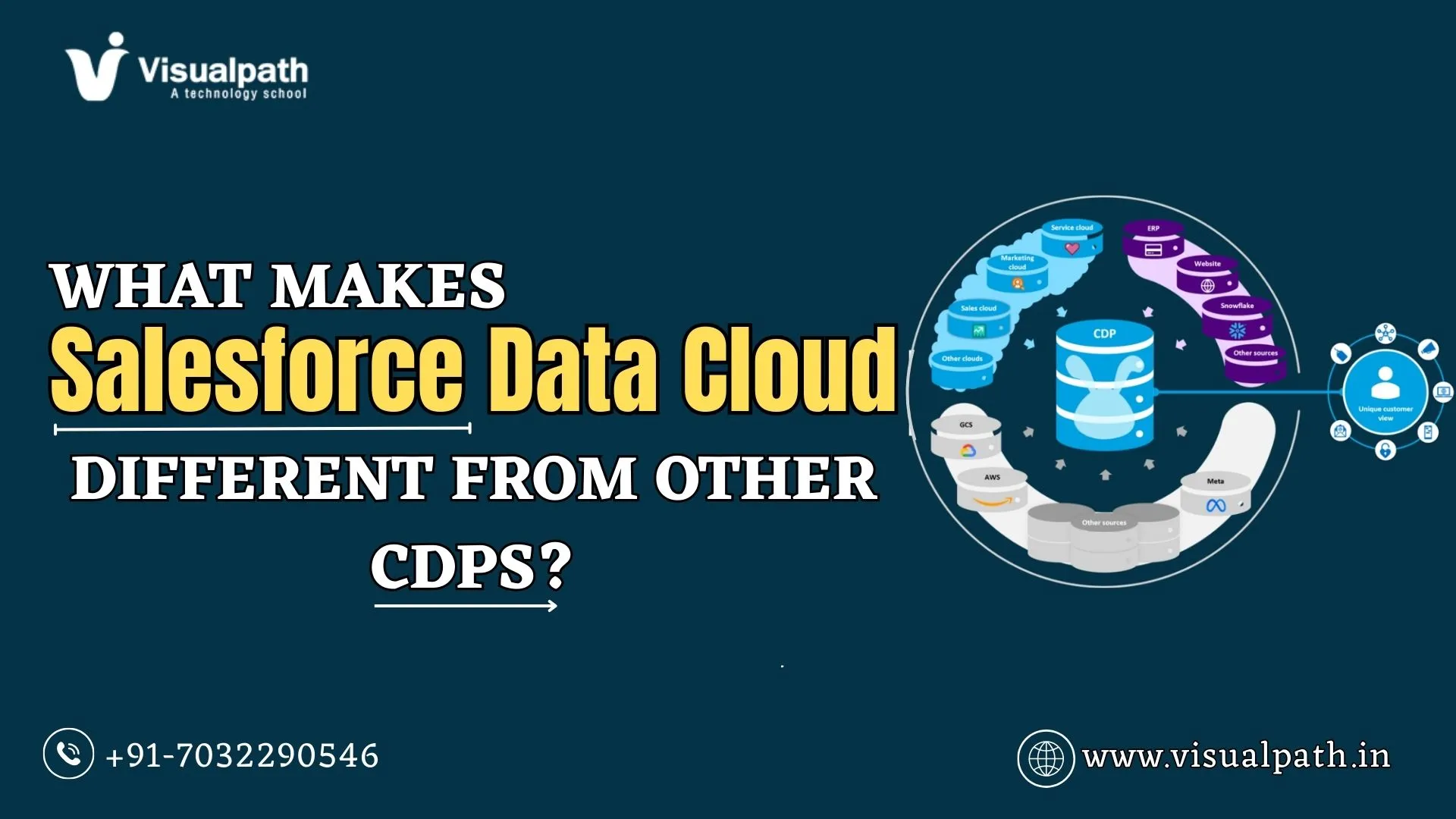
    Customer data platforms help businesses understand customers across many systems. However, not all platforms work the same way. Salesforce Data Cloud connects data across the Salesforce ecosystem and external sources.

    Many professionals explore Salesforce Data Cloud Training to understand how modern enterprises manage unified customer data. This article explains how Salesforce Data Cloud differs from other CDPs. It also explains its architecture, features, and practical use cases.

    1. What is a Customer Data Platform?

    Customer Data Platforms collect customer information from many systems.

    Key functions include:

    • Collecting data from websites and apps
    • Storing customer interaction history
    • Building unified customer profiles
    • Supporting marketing segmentation
    • Enabling campaign targeting

    Most traditional CDPs work as separate systems. This creates integration challenges. Data updates may take hours or days.

    Organizations struggle to maintain a single customer view. Salesforce Data Cloud approaches this problem differently.

    2. Salesforce Ecosystem Integration

    Salesforce Data Cloud connects directly with Salesforce products.

    Important integrations include:

    • Salesforce CRM data
    • Marketing Cloud engagement data
    • Service Cloud interactions
    • Commerce Cloud transactions
    • Mule Soft integrations

    Benefits of this integration include:

    • Faster data sharing
    • Consistent customer profiles
    • Unified customer insights
    • Reduced data duplication

    Example:

    A retail brand tracks online purchases and service requests. Salesforce Data Cloud combines these records into one profile. Sales and marketing teams access the same customer information. Many professionals study these integrations through a Salesforce Data Cloud Training Course.

    3. Real-Time Data Processing

    Many CDPs process data using batch systems. Batch processing causes delays. Salesforce Data Cloud processes data in real time.

    Core capabilities include:

    • Streaming data ingestion
    • Instant profile updates
    • Real-time audience creation
    • Live behaviour tracking
    • Dynamic marketing triggers

    Example:

    A customer browses a product online. Salesforce Data Cloud immediately updates the customer profile. Marketing tools then send a personalized offer. This happens within seconds. Real-time processing improves customer engagement.

    4. Identity Resolution System

    Customers interact with brands through many devices. Identity resolution connects these records. Salesforce Data Cloud uses advanced identity matching models.

    Core identity functions include:

    • Email matching
    • Phone number matching
    • Device identity signals
    • Behavioural data matching
    • AI-supported profile linking

    Benefits include:

    • One customer profile
    • Reduced duplicate records
    • Better segmentation
    • Accurate personalization

    Example:

    A customer uses a laptop and mobile phone. Salesforce Data Cloud connects both activities into one profile. Other CDPs often require extra tools for this process.

    5. AI and Predictive Insights

    Salesforce Data Cloud integrates with Salesforce AI technologies.

    AI helps businesses understand customer behaviour.

    Key AI capabilities include:

    • Predictive customer segmentation
    • Customer lifetime value prediction
    • Churn prediction models
    • Behavioural trend analysis
    • Intelligent recommendations

    Example:

    A telecom company predicts which customers may leave. Salesforce Data Cloud identifies high-risk profiles. Service teams then contact those customers. This reduces customer churn.

    6. Data Governance and Security

    Data governance is critical for enterprise platforms. Salesforce Data Cloud provides strong governance tools.

    Important controls include:

    • Role-based data access
    • Consent management
    • Data lineage tracking
    • Data classification policies
    • Secure API management

    These controls help organizations manage compliance.

    Example:

    A healthcare company protects patient-related customer data. Access permissions control who can view specific datasets. This protects sensitive information.

    7. Marketing Personalization

    Marketing teams rely on accurate customer insights. Salesforce Data Cloud helps personalize marketing campaigns.

    Common marketing uses include:

    • Customer segmentation
    • Cross-channel marketing
    • Personalized messaging
    • Customer journey automation
    • Behavioural targeting

    Example:

    A travel company tracks search behaviour. Salesforce Data Cloud updates the customer profile instantly. Marketing systems then send personalized travel offers. This improves campaign results.

    8. Learning Salesforce Data Cloud

    Organizations need professionals who understand modern data platforms. Salesforce Data Cloud skills are increasingly important.

    Professionals learn topics such as:

    • Data integration architecture
    • Customer identity resolution
    • Data governance strategies
    • Salesforce ecosystem connectivity
    • Real-time data pipelines

    Many learners explore Salesforce Data Cloud Training Chennai to gain practical platform experience.

    Career roles include:

    • Salesforce Data Engineer
    • CRM Data Analyst
    • Marketing Technology Specialist
    • Data Platform Architect

    These roles support enterprise data strategies.

    9. Enterprise Data Strategy

    Modern enterprises use many data platforms. Customer information often stays disconnected. Salesforce Data Cloud helps unify these systems.

    Strategic benefits include:

    • Centralized customer data
    • Faster marketing execution
    • Unified analytics insights
    • Cross-team collaboration
    • Better customer experience management

    Organizations continue adopting unified customer data strategies. Salesforce Data Cloud plays an important role in these architectures.

    FAQs

    Q. What makes Salesforce Data Cloud different from other CDPs?
    A. Salesforce Data Cloud connects Salesforce apps and external systems. It processes real-time data and builds unified customer profiles.
    Q. Why choose Salesforce Data Cloud over other CDP platforms?
    A. Salesforce Data Cloud provides native CRM integration, governance controls, and real-time insights. Many professionals learn it through Visualpath training institute.
    Q. How does Salesforce Data Cloud unify customer data?
    A. The platform collects data from APIs, events, and systems. Identity resolution links records into a single customer profile.
    Q. Does Salesforce Data Cloud provide real-time data insights?
    A. Yes. Salesforce Data Cloud processes streaming data events and updates profiles instantly for marketing and service teams.
    Q. What unique features does Salesforce Data Cloud offer?
    A. Features include real-time processing, AI insights, unified profiles, and governance tools often taught in Visualpath training programs.

    Conclusion

    Salesforce Data Cloud provides a modern approach to customer data platforms. It integrates directly with the Salesforce ecosystem. Real-time processing improves customer engagement. Identity resolution creates unified customer profiles. AI capabilities deliver predictive insights. Strong governance protects enterprise data.

    For organizations managing large customer datasets, Salesforce Data Cloud provides a unified platform for marketing, analytics, and customer experience strategies.

    For more insights, read our previous blog on: How Salesforce Data Cloud Enables Real-Time Customer Insights?

  • How to Start a Career in Salesforce Data Cloud in 2026

    How to Start a Career in Salesforce Data Cloud in 2026

    How to Start a Career in Salesforce Data Cloud in 2026

    How to Start a Career in Salesforce Data Cloud in 2026

    Introduction

    The Salesforce ecosystem is evolving faster than ever, and in 2026, one role is gaining serious momentum — Salesforce Data Cloud professionals. As companies shift toward AI-driven CRM, real-time personalization, and unified customer data, Salesforce Data Cloud has become a mission-critical platform.

    This growing demand has increased interest in Salesforce Data Cloud Training, as professionals look to build future-ready skills. If you’re planning to enter the Salesforce domain or switch careers into a high-growth tech role, this guide will show you exactly how to start a career in Salesforce Data Cloud in 2026.


    Why Salesforce Data Cloud Is a High-Demand Skill in 2026

    Modern businesses run on data. But data is useless when it’s scattered across systems.

    Salesforce Data Cloud solves this by unifying customer data from multiple sources into a single real-time profile. It powers:

    • Customer 360 experiences
    • AI-driven personalization
    • Predictive analytics
    • Real-time segmentation
    • Cross-channel marketing automation

    With companies investing heavily in AI and automation, professionals who understand Data Cloud architecture, identity resolution, and data modeling are becoming extremely valuable.


    Step 1: What Salesforce Data Cloud Actually Is

    Before jumping into tools, you need clarity.

    Salesforce Data Cloud is a real-time customer data platform that connects, harmonizes, and activates data from multiple sources into a unified profile. It integrates CRM, marketing, commerce, and external data systems to create a single source of truth.

    For beginners and professionals looking to gain practical expertise, enrolling in Salesforce Data Cloud Online Training can help you understand these core concepts through structured lessons, live scenarios, and hands-on projects that reflect real-world business use cases.


    Step 2: Learn Core Skills Required in 2026

    To build a career in Salesforce Data Cloud, you need a mix of CRM + data + business understanding.

    Key skills include:

    • Salesforce fundamentals
    • Data modeling concepts
    • SQL basics
    • Data integration concepts
    • APIs and connectors
    • CRM workflows
    • Marketing Cloud basics
    • Understanding of AI
    •  & analytics

    If you already know Salesforce Admin or Marketing Cloud, you have a big advantage.


    Step 3: Get Hands-On Experience

    Theory won’t get you hired.

    You must practice:

    • Creating data streams
    • Configuring identity resolution rules
    • Building unified customer profiles
    • Creating segments
    • Activating data across CRM

    Hands-on project experience is what recruiters look for in 2026.

    Build small demo use cases like:

    • Retail customer personalization
    • Banking customer segmentation
    • E-commerce abandoned cart activation

    Real scenarios make your profile stronger.


    Step 4: Earn Salesforce Certifications

    While Data Cloud certifications are evolving, having these boosts your credibility:

    • Salesforce Administrator
    • Marketing Cloud certification
    • Data-related Salesforce certifications

    Certifications are not mandatory but they help you stand out in competitive markets.


    Step 5: Understand Salary and Job Market in 2026

    Salesforce Data Cloud roles are premium because of limited skilled professionals.

    Average salary ranges in 2026:

    India: ₹6 LPA – ₹18 LPA (based on experience)
    US: $85,000 – $140,000 per year

    As AI adoption grows, these numbers are expected to increase.


    Who Should Learn Salesforce Data Cloud?

    This career path is ideal for:

    • Salesforce Admins
    • Marketing Cloud professionals
    • Data analysts
    • CRM professionals
    • Fresh graduates interested in cloud careers
    • IT professionals switching to Salesforce

    Even non-coders can enter this field with structured training.


    Future Scope of Salesforce Data Cloud Beyond 2026

    The future is AI-powered CRM.

    Salesforce Data Cloud is becoming the foundation for:

    • Einstein AI
    • Predictive customer journeys
    • Hyper-personalization
    • Real-time engagement

    As AI adoption accelerates, organizations are investing heavily in unified data platforms to drive intelligent automation and customer-centric strategies.

    For professionals who want to stay ahead of this transformation, enrolling in a Salesforce Data Cloud Course can provide structured learning, real-world project exposure, and the expertise required to capitalize on these growing opportunities beyond 2026.


    FAQs

    Q. What is Salesforce Data Cloud in simple terms?
    Salesforce Data Cloud is a real-time customer data platform that unifies data from multiple systems into a single Customer 360 profile. It enables AI-driven personalization, segmentation, and analytics across Salesforce applications.
    Q. Is Salesforce Data Cloud worth learning in 2026?
    Yes. In 2026, demand for AI-powered CRM and unified customer data is growing rapidly, making Salesforce Data Cloud a high-value and future-proof career skill.
    Q. Who can start a career in Salesforce Data Cloud?
    Salesforce Admins, CRM professionals, marketers, data analysts, IT graduates, and freshers with structured training such as programs offered by Visualpath can start a career in Salesforce Data Cloud.
    Q. What skills are required for Salesforce Data Cloud jobs?
    Key skills include Salesforce fundamentals, data modeling, identity resolution, SQL basics, data integration, and customer segmentation strategies.
    Q. What does a Salesforce Data Cloud professional do?
    They unify customer data, configure identity resolution, create segments, and activate data to power AI-driven CRM and personalized customer experiences.

    Final Thoughts

    The Salesforce ecosystem is evolving faster than ever, and in 2026, one role is gaining serious momentum — Salesforce Data Cloud professionals. As companies shift toward AI-driven CRM, real-time personalization, and unified customer data, Salesforce Data Cloud has become a mission-critical platform.

    If you’re planning to enter the Salesforce domain or switch careers into a high-growth tech role, this guide will show you exactly how to start a career in Salesforce Data Cloud in 2026.

    For more insights, read our previous blog on: What Is Salesforce Data Cloud and How Does It Work?

  • Why Is Salesforce Data Cloud Important for CRM?

    Why Is Salesforce Data Cloud Important for CRM?

    Why Is Salesforce Data Cloud Important for CRM?

    Why Is Salesforce Data Cloud Important for CRM?

    Introduction

    Modern CRM is no longer just about managing contacts, leads, and opportunities. Today’s customers interact with brands across websites, mobile apps, emails, social media, support channels, and physical stores—and they expect every interaction to feel connected and personal. Traditional CRM systems struggle to meet this expectation because customer data is often scattered across multiple systems and updated with delays.

    This growing demand for unified and real-time customer data has also increased interest in Salesforce Data Cloud Training, as professionals look to understand how modern CRM platforms handle large-scale customer data effectively.

    Salesforce Data Cloud plays a critical role in solving this problem. It acts as the real-time data foundation that transforms CRM from a record-keeping tool into an intelligent, customer-centric platform.


    The Biggest Challenge in Modern CRM: Disconnected Data

    Most organizations collect massive amounts of customer data, but that data lives in silos—marketing platforms, transaction systems, support tools, analytics databases, and external sources. As a result, CRM teams often work with incomplete or outdated information.

    This leads to common CRM problems such as inconsistent customer profiles, poor personalization, delayed insights, and disconnected customer experiences. Salesforce Data Cloud addresses these issues by unifying customer data into a single, trusted view that updates in real time.


    What Salesforce Data Cloud Brings to CRM

    Salesforce Data Cloud connects structured and unstructured data from multiple sources and harmonizes it into a unified customer profile. Unlike traditional data integration tools, it works in real time and is deeply embedded into the Salesforce ecosystem.

    For CRM teams, this means sales, service, and marketing users no longer rely on fragmented data. Instead, every team accesses the same live customer profile, enabling consistent and intelligent engagement across all touch points.


    Real-Time Customer 360: The Core of Modern CRM

    One of the biggest reasons Salesforce Data Cloud is important for CRM is its ability to deliver a real-time Customer 360. Customer behaviour changes constantly—browsing a product, abandoning a cart, opening an email, or contacting support.

    Salesforce Data Cloud captures these signals instantly and reflects them inside CRM workflows. Sales teams can see recent engagement before a call, service agents can understand customer history instantly, and marketing teams can personalize journeys based on live behaviours rather than outdated data.


    Smarter Personalization across CRM Touchpoints

    Personalization is no longer optional in CRM—it’s expected. Salesforce Data Cloud enables hyper-personalized experiences by activating unified data directly across Salesforce applications.

    Marketing teams can target customers with relevant messages, sales teams can tailor conversations based on intent, and service agents can resolve issues faster with full context. This level of personalization strengthens customer trust and improves overall experience.


    AI-Ready CRM with Salesforce Data Cloud

    Modern CRM increasingly depends on artificial intelligence. However, AI is only as effective as the data it learns from. Salesforce Data Cloud provides clean, harmonized, and real-time data that fuels AI-driven insights.

    With Salesforce AI capabilities, CRM users can receive predictive recommendations, next-best actions, and intelligent automation powered by accurate customer data. This makes CRM proactive rather than reactive.


    Eliminating Data Silos in CRM Operations

    Salesforce Data Cloud removes the traditional boundaries between CRM and external data systems. It ingests data from data warehouses, transactional systems, marketing tools, and third-party platforms without complex manual integrations.

    By breaking down data silos, organizations create a single source of truth for CRM, ensuring every department works with consistent and reliable customer information.


    Supporting Scalable and Future-Ready CRM

    As customer data volumes grow, CRM systems must scale without losing performance. Salesforce Data Cloud is built on a highly scalable architecture that supports large datasets and high-velocity data streams.

    Before adopting any modern CRM strategy, many professionals choose to upskill through a Salesforce Data Cloud Course to gain hands-on experience with real-time data unification, customer identity resolution, and AI-driven CRM workflows.


    Why Salesforce Data Cloud Is a Game Changer for CRM Teams

    For CRM teams, Salesforce Data Cloud is more than a data platform—it is a strategic enabler. It transforms CRM into a connected, intelligent system that understands customers in real time and responds with relevance and speed.

    By unifying data, enabling AI, and powering personalized experiences, Salesforce Data Cloud elevates CRM from operational efficiency to customer-centric excellence.


    FAQs

    Q. What is Salesforce Data Cloud used for in CRM?
    Salesforce Data Cloud unifies customer data from multiple sources into a single real-time profile, enabling personalized CRM experiences.
    Q. Why is Salesforce Data Cloud important for modern CRM?
    Modern CRM needs real-time, accurate data. Salesforce Data Cloud removes data silos and supports faster, personalized interactions.
    Q. How does Salesforce Data Cloud improve customer experience?
    It provides a complete, up-to-date customer view, allowing relevant communication and quicker issue resolution.
    Q. Who should learn Salesforce Data Cloud?
    Salesforce professionals, CRM consultants, and data specialists should learn it. Many start with practical training from Visualpath to gain job-ready skills.
    Q. Is Salesforce Data Cloud a good career skill for the future?
    Yes, it’s a high-demand skill as businesses adopt data-driven and AI-powered CRM solutions.

    Final Thoughts

    Salesforce Data Cloud is important for CRM because it bridges the gap between customer data and customer experience. In an era where real-time insights, personalization, and AI-driven decisions define success, Salesforce Data Cloud provides the foundation modern CRM systems need to thrive.

    Organizations that adopt Salesforce Data Cloud position their CRM platforms to deliver smarter engagement, stronger relationships, and long-term competitive advantage.

  • Can Data Cloud Enable Real-Time Marketing Decisions?

    Can Data Cloud Enable Real-Time Marketing Decisions?

    Can Data Cloud Enable Real-Time Marketing Decisions?

    Introduction

    Marketing success depends on how quickly brands can understand customer behaviour and respond with relevant actions. Static data and delayed insights no longer meet the expectations of modern consumers. Marketers now need real-time intelligence to make accurate decisions across campaigns, channels, and customer journeys. This is where Salesforce Data Cloud plays a critical role. Many professionals are enrolling in Salesforce Data Cloud Classes to understand how this platform empowers marketers with real-time insights that drive smarter and faster decisions.

    How Salesforce Data Cloud Enables Real-Time Marketing Decisions

    1. Unified Customer Data for Instant Context

    One of the biggest challenges marketers face is fragmented customer data. Information often exists in silos across CRM systems, marketing tools, websites, mobile apps, and third-party platforms. Salesforce Data Cloud solves this by unifying all customer data into a single, real-time profile.

    With a complete view of customer behaviour, marketers can instantly understand:

    • Who the customer is
    • What actions they are taking
    • Which channels they prefer
    • Where they are in the buying journey

    This unified context ensures marketing decisions are based on accurate and current information.

    2. Real-Time Data Ingestion and Event Processing

    Real-time marketing requires real-time data. Salesforce Data Cloud continuously ingests live data from multiple touchpoints, including:

    • Website interactions
    • Email engagement
    • Mobile app activity
    • Ecommerce transactions
    • Customer support interactions

    As soon as a customer action occurs, the data is processed and reflected in their profile. During Salesforce Data Cloud Training Online, professionals learn how this instant data flow allows marketing teams to react immediately triggering campaigns, adjusting journeys, or personalizing offers in real time.

    3. Dynamic Segmentation for Smarter Decisions

    Traditional marketing segmentation relies on static lists that quickly become outdated. Salesforce Data Cloud enables dynamic audience segmentation that updates automatically as customer behaviour changes.

    Marketers can create segments based on:

    • Live behavioural signals
    • Purchase intent
    • Engagement levels
    • Demographics and preferences
    • AI-driven scores

    This ensures that marketing decisions such as who receives an offer or message are always relevant and timely.

    4. AI-Powered Insights and Predictive Intelligence

    Salesforce Data Cloud works closely with AI to enhance real-time decision-making. By analysing unified and real-time data, AI models can predict customer intent and recommend next-best actions.

    AI-powered capabilities support:

    • Predictive lead and engagement scoring
    • Real-time content recommendations
    • Churn risk identification
    • Personalized offer selection

    These insights help marketers move from reactive to proactive decision-making.

    5. Real-Time Journey Orchestration

    Marketing decisions often involve determining the next step in a customer journey. Salesforce Data Cloud enables real-time journey orchestration by responding instantly to customer actions.

    For example:

    • If a customer abandons a cart, a follow-up message can be triggered immediately
    • If engagement drops, journeys can pause or adjust automatically
    • If intent increases, personalized offers can be delivered instantly

    This agility ensures customers receive the right message at the right time.

    6. Cross-Channel Marketing Consistency

    Customers interact with brands across multiple channels email, web, mobile, social, and commerce. Salesforce Data Cloud ensures consistency by synchronizing customer data across all channels in real time.

    This helps marketers:

    • Avoid duplicate or conflicting messages
    • Maintain consistent personalization
    • Align campaigns across platforms
    • Improve overall customer experience

    Real-time decision-making becomes more effective when all channels share the same data foundation.

    7. Scalable Marketing Decisions for Growing Brands

    As businesses grow, managing real-time marketing decisions becomes more complex. Salesforce Data Cloud is built to scale, supporting large data volumes and high-frequency customer interactions.

    Whether managing thousands or millions of customers, marketers can rely on Data Cloud to deliver fast insights without sacrificing accuracy or performance.

    FAQs

    1. How does Salesforce Data Cloud support real-time marketing decisions?
    It unifies customer data and processes live events, allowing marketers to respond instantly to customer behaviour.
    2. Can Data Cloud improve campaign personalization?
    Yes. Real-time insights and AI-driven recommendations enable highly personalized and relevant campaigns.
    3. Does Data Cloud integrate with Marketing Cloud?
    Absolutely. It seamlessly powers journeys, segmentation, and personalization within Marketing Cloud.
    4. Is Data Cloud suitable for global marketing teams?
    Yes. Its scalable architecture supports global campaigns and real-time engagement across regions.
    5. Can Data Cloud reduce marketing errors?
    Yes. By using accurate, real-time data, it minimizes irrelevant messaging and improves targeting precision.

    Conclusion

    For professionals looking to master modern marketing technology, gaining expertise through Salesforce Data Cloud Training is a valuable step. Understanding how Data Cloud enables real-time marketing decisions helps organizations improve engagement, boost conversion rates, and stay competitive in an increasingly data-driven marketing landscape.

    Visualpath is the Leading and Best Software Online Training Institute in Hyderabad

    For More Information about Best Salesforce Data Cloud Online Training

    Contact Call/WhatsApp: +91-7032290546

    Visit: https://www.visualpath.in/salesforce-data-cloud-training.html

  • What Makes Salesforce Data Cloud Essential for CRM Teams

    What Makes Salesforce Data Cloud Essential for CRM Teams

    What Makes Salesforce Data Cloud Essential for CRM Teams

    Introduction

    Customer Relationship Management has evolved far beyond storing contact details and tracking sales activities. Today, CRM teams are expected to understand customers deeply, anticipate their needs, and deliver personalized experiences across every interaction. This level of expectation cannot be met with fragmented or outdated data. Salesforce Data Cloud has emerged as a critical solution that enables CRM teams to unify, analyze, and activate customer data in real time. As organizations increasingly align sales, service, and marketing efforts, professionals pursuing Salesforce Marketing Cloud Training are also learning how Data Cloud plays a vital role in strengthening CRM strategies and improving customer engagement.

    Understanding Salesforce Data Cloud in the CRM Ecosystem

    Salesforce Data Cloud is a real-time customer data platform designed to collect, harmonize, and activate data from multiple systems. These systems may include CRM applications, websites, mobile apps, e-commerce platforms, and external data sources. Instead of working with disconnected datasets, CRM teams gain access to a continuously updated customer profile.

    This unified data layer ensures that sales representatives, service Salesforce Data Cloud Training, and marketers all work from the same source of truth. As a result, customer interactions become more consistent, informed, and personalized across departments.

    Why CRM Teams Need Salesforce Data Cloud

    Unified Customer View

    One of the biggest challenges for CRM teams is data fragmentation. Customer information often exists across multiple systems, leading to inconsistent messaging and missed opportunities. Salesforce Data Cloud resolves this by creating a single, unified customer profile that includes behavior, preferences, transaction history, and engagement data.

    With a complete view of the customer, CRM teams can understand the full customer journey rather than isolated interactions. This improves relationship management and builds trust through consistent communication.

    Real-Time Data Access for Faster Action

    CRM success depends on timely responses. Salesforce Data Cloud processes and updates customer data in real time, allowing teams to react instantly to customer actions. For example, when a customer submits an inquiry, abandons a cart, or raises a support ticket, CRM teams can respond with accurate and relevant information without delay.

    This real-time capability helps businesses improve response times, resolve issues faster, and increase customer satisfaction.

    Improved Personalization Across Touchpoints

    CRM professionals who undergo Salesforce Data Cloud Training Online often learn how Data Cloud integrates with marketing and service tools to deliver consistent personalization across email, sales calls, customer support, and digital channels.

    Better Collaboration Between Teams

    Salesforce Data Cloud strengthens collaboration between sales, service, and marketing teams by ensuring everyone has access to the same customer information. When teams work with unified data, handoffs become smoother and communication gaps are reduced.

    AI-Driven Insights for Smarter Decisions

    Salesforce Data Cloud works seamlessly with Salesforce Einstein AI to deliver predictive insights. CRM teams can identify patterns, predict customer behavior, and receive recommendations for next best actions.

    These insights help CRM teams focus on high-value customers, identify churn risks early, and prioritize opportunities more effectively. Instead of relying on assumptions, decisions are driven by accurate, data-backed intelligence.

    How Salesforce Data Cloud Enhances CRM Performance

    Stronger Customer Engagement

    By using unified and real-time data, CRM teams can engage customers with relevant messaging and timely responses. Customers feel understood and valued when interactions reflect their needs and past behavior.

    Higher Productivity for CRM Teams

    When data is centralized and automated, CRM teams spend less time searching for information and more time engaging with customers. This increases efficiency and allows teams to focus on building relationships rather than managing data.

    Increased Revenue Opportunities

    Salesforce Data Cloud helps CRM teams identify cross-sell and upsell opportunities based on customer behavior and preferences. By understanding what customers are likely to need next, teams can make relevant offers that increase revenue.

    Consistent Customer Experience

    Consistency is critical for customer trust. Salesforce Data Cloud Training Course ensures that customers receive the same level of service and messaging regardless of the channel or department they interact with. This consistency strengthens brand credibility and loyalty.

    Real-World CRM Use Case

    Consider a company with sales, service, and marketing teams operating separately. Without unified data, customers receive disconnected experiences. With Salesforce Data Cloud, customer data from all touchpoints is unified. A service agent can see marketing interactions, a sales representative can understand recent support issues, and marketing teams can avoid sending irrelevant campaigns. This alignment leads to smoother customer journeys and stronger relationships.

    FAQs

    What is Salesforce Data Cloud and why is it important for CRM teams
    Salesforce Data Cloud is a real-time data platform that unifies customer data from multiple sources.
    How does Salesforce Data Cloud improve CRM personalization
    It enables personalization by using real-time data and unified customer profiles. CRM teams can tailor interactions based on behaviour, preferences, and engagement history.
    Can Salesforce Data Cloud work with Marketing Cloud
    Yes. Salesforce Data Cloud integrates with Marketing Cloud, allowing CRM and marketing teams to share insights and deliver consistent
    Is Salesforce Data Cloud suitable for small and large organizations
    Salesforce Data Cloud is scalable and can be used by organizations of all sizes. It adapts to growing data volumes and evolving business needs.

    Conclusion

    Salesforce Data Cloud has become essential for modern CRM teams because it transforms fragmented data into actionable insights. By providing a unified, real-time view of customers, it enables better personalization, faster responses, and stronger collaboration across departments. CRM teams can move beyond basic data management and focus on building meaningful, long-term customer relationships. As customer expectations continue to rise, mastering Data Cloud is no longer optional

    Visualpath is the Leading and Best Software Online Training Institute in Hyderabad

    For More Information about Best Salesforce Data Cloud Online Training

    Contact Call/WhatsApp: +91-7032290546

    Visit: https://www.visualpath.in/salesforce-data-cloud-training.html
  • Can Data Cloud Boost Marketing Automation Accuracy?

    Can Data Cloud Boost Marketing Automation Accuracy?

    Can Data Cloud Boost Marketing Automation Accuracy?

    Introduction

    Marketing automation has transformed how businesses engage with customers, but its success depends heavily on data quality, timeliness, and relevance. Automated campaigns that rely on outdated or fragmented data often result in poor targeting, irrelevant messaging, and low engagement. This is where Salesforce Data Cloud plays a crucial role. By unifying customer data and delivering real-time insights, it helps marketers dramatically improve automation accuracy. Many professionals now enroll in Salesforce Data Cloud Classes to learn how this platform strengthens marketing automation strategies with intelligent, data-driven precision.

    How Salesforce Data Cloud Improves Marketing Automation Accuracy

    1. Unified Customer Data for Precise Targeting

    One of the biggest challenges in marketing automation is fragmented customer data spread across CRM systems, marketing platforms, websites, and third-party applications. Salesforce Data Cloud resolves this by unifying all customer data into a single, real-time profile.

    This unified view allows marketers to:

    • Eliminate duplicate or incomplete records
    • Accurately identify customer preferences
    • Build precise audience segments
    • Trigger campaigns based on real behavior

    During Salesforce Data Cloud Training Online, learners discover how unified profiles significantly reduce targeting errors and improve campaign relevance.

    2. Real-Time Data Ingestion for Timely Automation

    Marketing automation becomes more accurate when actions are triggered at the right moment. Salesforce Data Cloud continuously ingests real-time data such as:

    • Website activity
    • Email engagement
    • Mobile app behavior
    • Purchase history
    • Customer interactions

    This enables automated campaigns to respond instantly to customer actions. Whether it’s sending a follow-up email, triggering a personalized offer, or updating a journey, automation stays aligned with real-time customer intent.

    3. Smarter Segmentation With Dynamic Audiences

    Static segments often lead to inaccurate automation. Data Cloud enables dynamic segmentation that updates automatically as customer behavior changes.

    Marketers can segment audiences based on:

    • Real-time behavior
    • Demographics
    • Engagement patterns
    • Purchase intent
    • AI-driven propensity scores

    These continuously refreshed segments ensure automated campaigns remain accurate, relevant, and personalized.

    4. AI-Powered Insights for Predictive Automation

    Salesforce Data Cloud enhances marketing automation with Einstein AI. By analyzing unified and real-time data, AI predicts future customer actions and recommends optimal engagement strategies.

    AI-driven automation supports:

    • Predictive lead scoring
    • Churn prediction
    • Product recommendations
    • Next-best action triggers
    • Personalized journey paths

    With AI guiding automation, campaigns become more intelligent and data-backed.

    5. Cross-Channel Automation Accuracy

    Customers interact with brands across multiple channels, including email, mobile, web, social, and commerce platforms. Salesforce Data Cloud ensures consistency across all touchpoints by syncing customer data in real time.

    This allows marketers to:

    • Avoid duplicate messages
    • Deliver consistent content
    • Personalize cross-channel journeys
    • Maintain accurate customer context

    Automation accuracy improves because every channel uses the same up-to-date data.

    6. Improved Journey Orchestration

    Data Cloud plays a key role in improving customer journey orchestration. Automated journeys can adapt dynamically based on real-time signals such as engagement, inactivity, or purchase behavior.

    This ensures:

    • Customers receive relevant messages
    • Campaigns pause or adjust automatically
    • Journeys respond to intent changes
    • Engagement feels personalized, not robotic

    FAQs

    1. How does Data Cloud improve marketing automation accuracy?
    By unifying customer data and processing real-time signals, it ensures automation triggers are based on accurate and current information.
    2. Can Data Cloud integrate with Marketing Cloud?
    Yes. It integrates seamlessly with Marketing Cloud to power intelligent journeys and personalization.
    3. Does AI play a role in marketing automation?
    Absolutely. Einstein AI enhances predictions, segmentation, and automation triggers.
    4. Is Data Cloud useful for both B2B and B2C marketing?
    Yes. It supports automation strategies for individual customers, households, and business accounts.
    5. Can Data Cloud reduce irrelevant marketing messages?
    Yes. With accurate data and real-time insights, it minimizes over-messaging and irrelevant outreach.

    Conclusion

    For professionals seeking to build expertise in this domain, enrolling in Salesforce Data Cloud Training is a smart move. By mastering how Data Cloud enhances marketing automation accuracy, individuals and organizations can unlock the full potential of their marketing efforts and stay competitive in an increasingly data-driven digital landscape.

    Visualpath is the Leading and Best Software Online Training Institute in Hyderabad

    For More Information about Best Salesforce Data Cloud Online Training

    Contact Call/WhatsApp: +91-7032290546

    Visit: https://www.visualpath.in/salesforce-data-cloud-training.html