Tag: Sailpoint Training Bangalore

  • SailPoint Integration with SAP and Enterprise Applications

    SailPoint Integration with SAP and Enterprise Applications

    SailPoint Integration with SAP and Enterprise Applications

    Introduction

    SailPoint is a powerful identity governance platform that helps organizations manage user access across multiple systems. SailPoint makes it easy to connect different applications and control access from one central place. Many professionals start learning this through Sailpoint Identity IQ Training to understand how integration works and how organizations manage access securely.

    What Is SAP and Why Integration Matters?

    SAP is one of the most widely used enterprise software systems in the world. It helps organizations manage business processes such as finance, human resources, supply chain, and customer management.

    Because SAP contains sensitive business data, it is very important to control who can access it. Without proper access control, there can be risks like:

    • Unauthorized access to financial data
    • Misuse of employee information
    • Compliance violations

    SailPoint integration with SAP ensures that only the right users can access the right data.

    How SailPoint Integrates with SAP

    SailPoint connects with SAP systems using connectors and APIs. These connectors allow SailPoint to communicate with SAP and manage user identities.

    Through integration, SailPoint can:

    • Create user accounts in SAP
    • Assign roles and permissions
    • Update user access automatically
    • Remove access when no longer needed

    This automation improves efficiency and reduces errors.

    Identity Lifecycle Management

    Integration helps manage the full identity lifecycle in SAP systems.

    On boarding

    When a new employee joins, SailPoint automatically creates their account in SAP and assigns access based on their role.

    Role Changes

    If an employee changes their job role, their SAP access is updated automatically.

    Off boarding

    When an employee leaves the company, SailPoint removes their access from SAP immediately.

    This ensures that no unnecessary access remains in the system.

    Role-Based Access Control in SAP

    Role-based access control (RBAC) is very important in SAP environments. SailPoint helps define roles and assign permissions based on job responsibilities.

    For example:

    • Finance team → Access to financial modules
    • HR team → Access to employee records
    • Sales team → Access to customer data

    This approach reduces complexity and improves security.

    Professionals who learn through a Sailpoint Online Course often understand how to design roles and manage permissions effectively in enterprise applications like SAP.

    Integration with Other Enterprise Applications

    SailPoint is not limited to SAP. It integrates with many enterprise applications such as:

    • HR systems
    • Cloud applications
    • Databases
    • ERP tools

    This allows organizations to manage all identities from a single platform.

    Benefits include:

    • Centralized access control
    • Better visibility of user permissions
    • Reduced administrative work

    Access Request and Approval

    SailPoint provides a structured access request system for SAP and other applications.

    The process works like this:

    1. User requests access
    2. Manager reviews the request
    3. Approval is given or denied
    4. Access is granted automatically

    This ensures that all access is properly approved and documented.

    Compliance and Audit Support

    Organizations must follow strict regulations when managing systems like SAP. SailPoint helps maintain compliance by keeping detailed records.

    It tracks:

    • Who requested access
    • Who approved it
    • When access was granted
    • When access was removed

    These records are useful during audits and help organizations meet compliance requirements.

    Monitoring and Risk Detection

    SailPoint monitors user activity across SAP and other systems. It detects unusual behavior such as:

    • Access at unusual times
    • Unauthorized attempts to access sensitive data
    • Access outside job roles

    Security teams receive alerts and can take quick action to prevent risks.

    Automation Benefits

    Automation is one of the biggest advantages of SailPoint integration.

    Automation helps:

    • Reduce manual work
    • Improve accuracy
    • Speed up access provisioning
    • Maintain consistent policies

    This makes identity management more efficient and secure.

    Many learners gain practical experience in automation and integration through Sailpoint Training Bangalore, where they work on real-time scenarios involving SAP and enterprise applications.

    Improved User Experience

    SailPoint makes it easier for users to manage their access.

    Users can:

    • Request access easily
    • Track approval status
    • Reset passwords

    This improves productivity and reduces dependency on IT teams.

    Why Enterprises Choose SailPoint Integration

    Organizations choose SailPoint for integration because it provides:

    • Strong security controls
    • Easy automation
    • Centralized identity management
    • Seamless integration with SAP and other systems
    • Scalable solutions for large enterprises

    These features help organizations manage access efficiently while protecting sensitive data.

    FAQs

    1. What is SailPoint integration?
    SailPoint integration connects the platform with other systems like SAP to manage user access from one place.
    2. Why is SAP integration important?
    SAP contains sensitive data, so integration helps control access and improve security.
    3. What is role-based access control?
    It assigns permissions based on job roles instead of individual users.
    4. How does SailPoint improve compliance?
    It provides audit logs and reports that help organizations follow security regulations.
    5. Can SailPoint integrate with cloud applications?
    Yes, it supports integration with cloud platforms, databases, and enterprise tools.

    Conclusion

    Integration plays a key role in modern identity governance. Connecting identity management systems with enterprise applications ensures better control, improved security, and efficient operations.

    By using a centralized approach, organizations can manage user access, monitor activities, and maintain compliance across all systems. This helps businesses protect their data while allowing employees to work smoothly and securely.

    Visualpath is the Leading and Best Software Online Training Institute in Hyderabad

    For More Information about Best Sailpoint Identity IQ Training

    Contact Call/WhatsApp: +91-7032290546

    Visit: https://www.visualpath.in/sailpoint-online-training.html
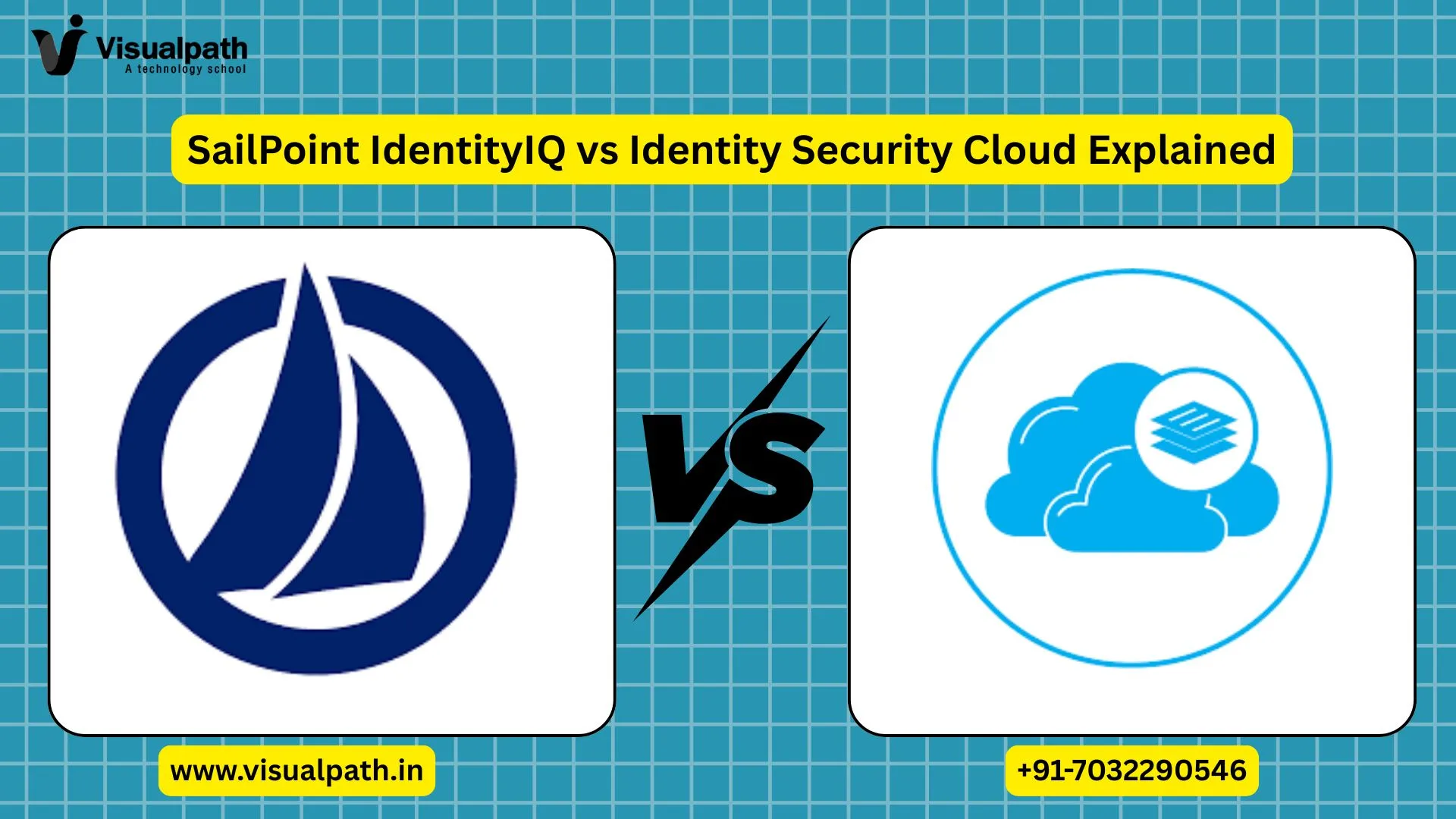
  • SailPoint IdentityIQ vs Identity Security Cloud Explained

    SailPoint IdentityIQ vs Identity Security Cloud Explained

    SailPoint IdentityIQ vs Identity Security Cloud Explained

    Introduction

    SailPoint is a leading platform used by organizations to manage digital identities and control user access. Both are designed to improve identity governance, but they work in slightly different ways. Many learners start their journey with a Sailpoint Course to understand how these tools help organizations protect their data and manage user access effectively.

    Understanding the difference between these two solutions helps businesses choose the right one based on their needs.

    What Is SailPoint IdentityIQ?

    SailPoint IdentityIQ is an on-premise identity governance solution. This means it is installed and managed within the organization’s own servers.

    It helps companies:

    • Manage user access
    • Control identity lifecycle
    • Perform access certifications
    • Enforce security policies
    • Generate compliance reports

    IdentityIQ is suitable for large enterprises that want full control over their systems and data.

    What Is Identity Security Cloud?

    Identity Security Cloud is a cloud-based solution offered by SailPoint. It is managed by SailPoint and does not require heavy infrastructure.

    It helps organizations:

    • Manage identities from the cloud
    • Automate access management
    • Monitor user activity
    • Improve security with less effort

    This solution is ideal for businesses that prefer cloud technology and want a flexible, scalable system.

    Key Difference: Deployment Model

    The main difference between IdentityIQ and Identity Security Cloud is how they are deployed.

    • IdentityIQ → Installed on company servers (on-premise)
    • Identity Security Cloud → Hosted in the cloud

    On-premise systems give more control, while cloud systems offer flexibility and ease of use.

    Ease of Implementation

    Identity Security Cloud is easier to set up because it does not require hardware or complex installation. Organizations can start using it quickly.

    IdentityIQ, on the other hand, requires:

    • Server setup
    • Installation
    • Configuration
    • Maintenance

    This makes IdentityIQ more suitable for organizations with strong IT infrastructure.

    Customization and Control

    IdentityIQ offers more customization options. Organizations can modify workflows, policies, and configurations based on their needs.

    Identity Security Cloud has limited customization but provides standard features that work for most businesses.

    Professionals who learn through Sailpoint Id Online Courseentity IQ Training often understand how customization plays a major role in IdentityIQ implementations.

    Scalability

    Identity Security Cloud is highly scalable. Since it is cloud-based, it can easily support growing organizations without additional hardware.

    IdentityIQ can also scale, but it requires upgrading infrastructure, which may take time and cost more.

    Maintenance and Updates

    In IdentityIQ, the organization is responsible for maintenance, updates, and security patches.

    In Identity Security Cloud, SailPoint handles:

    • System updates
    • Security patches
    • Maintenance tasks

    This reduces workload for IT teams and ensures the system stays updated.

    Security Features

    Both solutions provide strong security features such as:

    • Role-based access control
    • Identity lifecycle management
    • Access certifications
    • Policy enforcement

    However, Identity Security Cloud includes advanced monitoring and real-time updates, making it more dynamic.

    Cost Consideration

    IdentityIQ may have higher upfront costs because of infrastructure and setup requirements.

    Identity Security Cloud usually follows a subscription model, which spreads the cost over time.

    Organizations choose based on their budget and long-term plans.

    Integration Capabilities

    Both IdentityIQ and Identity Security Cloud can integrate with:

    • HR systems
    • Cloud applications
    • Databases
    • Enterprise tools

    Integration helps manage all identities from one platform and improves efficiency.

    User Experience

    Identity Security Cloud provides a more modern and user-friendly interface. Employees can easily:

    • Request access
    • Track approvals
    • Manage their profiles

    IdentityIQ also offers these features but may feel more complex due to customization options.

    When to Choose IdentityIQ

    Choose IdentityIQ if:

    • You need full control over your system
    • Your organization has strong IT infrastructure
    • You require deep customization
    • You prefer on-premise solutions

    When to Choose Identity Security Cloud

    Choose Identity Security Cloud if:

    • You want quick deployment
    • You prefer cloud-based solutions
    • You need easy scalability
    • You want less maintenance

    Career Opportunities

    Both technologies offer strong career opportunities in identity governance. Roles include:

    • IAM Analyst
    • SailPoint Developer
    • Security Consultant

    Many learners choose Sailpoint Training in Ameerpet to gain practical knowledge and build careers in this field.

    FAQs

    1. What is the main difference between IdentityIQ and Identity Security Cloud?
    IdentityIQ is an on premise solution, while Identity Security Cloud is a cloud-based solution.
    2. Which is easier to implement?
    Identity Security Cloud is easier because it does not require complex installation.
    3. Which offers more customization?
    IdentityIQ provides more customization options compared to the cloud solution.
    4. Is Identity Security Cloud secure?
    Yes, it offers strong security features with regular updates and monitoring.
    5. Which is better for small businesses?
    Identity Security Cloud is usually better due to its flexibility and lower maintenance.

    Conclusion

    Choosing between IdentityIQ and Identity Security Cloud depends on your organization’s needs, infrastructure, and long-term goals. Both solutions provide strong identity governance capabilities and help protect sensitive data.

    Organizations that need control and customization may prefer one approach, while those looking for flexibility and ease of use may choose another. By understanding the differences, businesses can select the right solution to manage identities efficiently and securely.

    Visualpath is the Leading and Best Software Online Training Institute in Hyderabad

    For More Information about Best Sailpoint Identity IQ Training

    Contact Call/WhatsApp: +91-7032290546

    Visit: https://www.visualpath.in/sailpoint-online-training.html

  • SailPoint Identity Security Cloud Features Explained

    SailPoint Identity Security Cloud Features Explained

    Introduction

    Sailpoint is a well-known identity governance platform that helps organizations manage digital identities and protect sensitive information. In modern businesses, employees use many systems such as cloud applications, databases, and internal tools. Without proper identity management, it becomes difficult to control who can access important data. This is why identity security platforms are very important for companies today. Many IT professionals choose Sailpoint Identity IQ Training to understand how identity governance works and how organizations secure their digital systems effectively.

    What Is SailPoint Identity Security Cloud?

    SailPoint Identity Security Cloud is a cloud-based identity governance solution. It helps companies manage employee identities, control access to applications, and reduce security risks.

    In simple terms, it acts like a smart security system for digital identities. It decides:

    • Who can access certain systems
    • When access should be given
    • When access should be removed

    This ensures that only the right people can use important company systems.

    Identity Lifecycle Management

    One of the most important features of SailPoint Identity Security Cloud is identity lifecycle management. This feature manages the entire journey of a user inside an organization.

    The lifecycle includes three main stages:

    1. On boarding

    When a new employee joins a company, the system automatically creates their digital identity. Based on their job role, they receive access to necessary applications.

    2. Role Changes

    If an employee changes their department or job role, their access permissions are updated automatically.

    3. Off boarding

    When an employee leaves the company, their access is removed immediately. This prevents security risks and protects company data.

    This automation reduces manual work for IT teams and improves security.

    Access Request and Approval

    Sometimes employees need additional access to complete their tasks. SailPoint Identity Security Cloud provides an easy access request system.

    The process works like this:

    1. The employee submits an access request.
    2. The request goes to the manager for approval.
    3. The manager reviews and approves or rejects the request.
    4. If approved, the system automatically grants access.

    This process ensures that access permissions are properly reviewed and controlled.

    Role-Based Access Control

    Role-based access control (RBAC) is another important feature. Instead of giving permissions to each employee individually, permissions are assigned based on roles.

    For example:

    • HR team → Access to employee data systems
    • Finance team → Access to financial applications
    • IT team → Access to technical systems

    When an employee is assigned a role, the required permissions are automatically provided.

    Professionals learning identity governance through a Sailpoint Online Course often understand how role-based access simplifies identity management in large organizations.

    Access Certification and Compliance

    Organizations must follow many security and compliance regulations. SailPoint Identity Security Cloud helps companies meet these requirements through access certification.

    Managers receive reports showing which employees have access to certain systems. They review these permissions and decide whether access should continue or be removed.

    This process helps organizations:

    • Maintain security standards
    • Follow compliance regulations
    • Reduce unnecessary access rights

    Regular access reviews help prevent security issues.

    Policy Management

    Policy management is another powerful feature of SailPoint Identity Security Cloud. Companies can define rules that control access permissions.

    Examples of policies include:

    • A user cannot approve their own access request
    • Temporary access expires after a specific period
    • High-risk systems require multiple approvals

    These policies help organizations maintain strict security controls.

    Monitoring and Risk Detection

    Security monitoring is important for detecting suspicious activities. SailPoint Identity Security Cloud monitors user behaviour and identifies unusual actions.

    For example:

    • A user accessing systems at unusual times
    • Multiple failed login attempts
    • Access to systems outside the user’s job role

    Security teams receive alerts when such activities occur. This allows them to respond quickly and prevent possible threats.

    Integration with Enterprise Applications

    Modern companies use many applications such as HR systems, cloud platforms, and enterprise software. SailPoint Identity Security Cloud integrates with these systems to manage identities from one central platform.

    Integration allows the platform to:

    • Sync employee data from HR systems
    • Manage access to cloud applications
    • Connect with enterprise tools and databases

    Because of these integrations, organizations can manage identity security efficiently.

    Automation and Efficiency

    Automation is one of the biggest advantages of SailPoint Identity Security Cloud. Instead of manually managing user access, the system performs many tasks automatically.

    Automation benefits include:

    • Faster access provisioning
    • Reduced human errors
    • Improved compliance management
    • Better security monitoring

    Many learners gain practical experience through Sailpoint Training in Ameerpet, where they understand how automation improves identity governance processes in real-world organizations.

    Why Organizations Choose SailPoint Identity Security Cloud

    Organizations trust SailPoint because it provides strong security and flexible identity management solutions.

    Key advantages include:

    • Centralized identity management
    • Strong access control mechanisms
    • Automated workflows
    • Compliance and audit support
    • Scalable cloud-based architecture

    These features make SailPoint one of the leading identity governance platforms used by enterprises worldwide.

    FAQs

    1. What is SailPoint Identity Security Cloud?
    It is a cloud-based identity governance platform that helps organizations manage digital identities and control user access to applications.
    2. Why is identity security important?
    Identity security protects sensitive data and ensures that only authorized users can access company systems.
    3. What is identity lifecycle management?
    It is the process of managing user identities from on boarding to off boarding within an organization.
    4. What is role-based access control?
    Role-based access control assigns permissions based on job roles rather than individual users.
    5. How does SailPoint improve compliance?
    SailPoint provides reports and access reviews that help organizations follow security regulations and pass audits.

    Conclusion

    Identity security plays a critical role in protecting modern digital environments. Organizations need reliable solutions to manage user access, prevent security risks, and maintain compliance with industry regulations.

    Identity governance platforms help businesses control digital identities, automate access management, and monitor user activity. By implementing a strong identity security strategy, companies can protect sensitive data, reduce risks, and ensure smooth business operations in today’s technology-driven world.

    Visualpath is the Leading and Best Software Online Training Institute in Hyderabad

    For More Information about Best Sailpoint Identity IQ Training

    Contact Call/WhatsApp: +91-7032290546

    Visit: https://www.visualpath.in/sailpoint-online-training.html

  • How Does SailPoint Manage User Access?

    How Does SailPoint Manage User Access?

    How Does SailPoint Manage User Access?

    Introduction

    Sailpoint helps organizations make sure the right person gets the right access at the right time. Many IT professionals choose Sailpoint IIQ Training to understand how identity governance works and how companies protect their systems from security risks.

    Managing user access is one of the most important parts of cybersecurity. If access is not controlled properly, it can lead to data leaks, insider threats, and compliance issues. Sailpoint simplifies this process by automating identity management tasks and monitoring user permissions continuously.

    What Is User Access Management?

    User access management is the process of controlling who can use certain systems or applications in a company. Every employee has a digital identity that allows them to log in to company systems.

    For example:

    • HR employees access employee records
    • Finance teams access financial data
    • IT staff manage servers and applications

    User access management ensures that employees only access the information they need to do their jobs. It prevents unnecessary permissions and improves overall security.

    Identity Lifecycle Management

    One of the main ways Sailpoint manages user access is through identity lifecycle management. This means managing access from the moment an employee joins a company until the time they leave.

    The lifecycle includes:

    1. Onboarding
    When a new employee joins, the system automatically creates their digital identity. Based on their role, access to applications is granted.

    2. Role Changes
    If an employee changes departments or gets promoted, their access is updated automatically.

    3. Offboarding
    When an employee leaves the company, their access is removed immediately to prevent misuse.

    This automated process reduces manual work and increases security.

    Role-Based Access Control

    Sailpoint uses role-based access control (RBAC) to manage permissions effectively. Instead of assigning access individually to every employee, permissions are grouped into roles.

    For example:

    • Marketing role → Access to marketing tools
    • Finance role → Access to accounting systems
    • IT role → Access to technical platforms

    When an employee is assigned a role, they automatically receive the required permissions. This saves time and reduces administrative effort.

    Access Request and Approval

    Employees sometimes need additional access to perform new tasks. Sailpoint provides a simple access request system.

    The process works like this:

    1. The employee submits an access request.
    2. The manager reviews the request.
    3. The request is approved or rejected.
    4. If approved, access is granted automatically.

    This process ensures that access is always reviewed and approved by authorized people.

    Professionals who enroll in a Sailpoint Online Course often learn how to configure these approval workflows and manage access requests efficiently in enterprise environments.

    Access Certification and Reviews

    Access reviews are important for maintaining security. Sailpoint regularly checks whether users still need the permissions they have.

    Managers receive certification reports that show:

    • Which employees have access
    • What applications they can use
    • Whether the access is still required

    Managers can approve or remove permissions based on current job roles. This process helps organizations maintain compliance with security regulations.

    Policy Enforcement

    Sailpoint allows organizations to create security policies that control access rules. These policies help prevent risky situations.

    For example:

    • A user should not have both payment approval and payment processing rights.
    • Temporary access should expire automatically.
    • High-risk systems require additional approval.

    Policy enforcement ensures that security guidelines are followed across the organization.

    Monitoring and Reporting

    Monitoring user activity is another important feature of Sailpoint. The platform tracks access patterns and identifies unusual behavior.

    For example:

    • A user accessing systems outside working hours
    • Multiple failed login attempts
    • Access to systems not related to the user’s role

    These alerts help security teams respond quickly to potential threats.

    Detailed reports also help organizations prepare for compliance audits.

    Integration with Enterprise Systems

    Modern organizations use many systems such as HR platforms, databases, and cloud applications. Sailpoint integrates with these systems to manage identities centrally.

    Integration allows the platform to:

    • Sync employee data from HR systems
    • Manage access to cloud applications
    • Connect with enterprise databases

    Because of these integrations, identity management becomes easier and more efficient.

    Automation Benefits

    Automation is one of the biggest advantages of Sailpoint. Instead of manually managing access, the platform performs many tasks automatically.

    Benefits of automation include:

    • Faster access provisioning
    • Reduced manual errors
    • Improved compliance
    • Better security monitoring

    Automation allows IT teams to focus on strategic work instead of repetitive tasks.

    Many professionals enhance their practical knowledge through Sailpoint Training, where they learn how to implement automation and manage identity governance systems effectively.

    FAQs

    1. What is Sailpoint used for?
    Sailpoint is used for identity governance and managing user access to applications and systems within organizations.
    2. How does Sailpoint improve security?
    It controls user permissions, monitors access activities, and removes unnecessary access rights.
    3. What is role-based access control?
    It is a method where users receive permissions based on their job roles rather than individual assignments.
    4. Why are access reviews important?
    Access reviews ensure that employees only have the permissions required for their current job roles.
    5. Can Sailpoint integrate with other systems?
    Yes, Sailpoint integrates with HR systems, cloud platforms, and enterprise applications.

    Conclusion

    Managing user access is critical for protecting organizational data and maintaining strong cybersecurity practices. Identity governance platforms simplify this complex process by automating identity management, monitoring access permissions, and ensuring compliance with security policies.

    Visualpath is the Leading and Best Software Online Training Institute in Hyderabad

    For More Information about Best Sailpoint Identity IQ Training

    Contact Call/WhatsApp: +91-7032290546

    Visit: https://www.visualpath.in/sailpoint-online-training.html
  • What Is SailPoint IdentityIQ and Why Use It?

    What Is SailPoint IdentityIQ and Why Use It?

    What Is SailPoint IdentityIQ and Why Use It?

    Introduction

    SailPoint is a leading identity governance platform that helps organizations manage who has access to what. In today’s digital world, companies use many applications, cloud platforms, and internal systems. Managing user access manually can lead to errors, security risks, and compliance issues. That is where SailPoint IdentityIQ plays an important role. It automates identity management, improves security, and ensures the right people get the right access at the right time. Many professionals explore SailPoint Online Training to understand how identity governance works and how organizations protect sensitive data efficiently. Testing a Large Language Model means checking how well it understands questions, how accurate its answers are, and whether it behaves responsibly. In this article, we will explore simple and practical ways to test LLMs effectively in a way that anyone can understand.

    Why Testing Large Language Models Is Important

    Large Language Models generate answers based on patterns they learned from massive amounts of data. However, they do not “think” like humans. They predict the next word based on probability. Because of this, they can:

    • Provide incorrect facts
    • Show biased responses
    • Misunderstand complex instructions
    • Generate unsafe content

    If these issues are not identified during testing, they can create serious problems in real-world applications like healthcare, education, banking, or customer support.

    Testing ensures that the model is:

    • Accurate
    • Reliable
    • Safe
    • Fair
    • Useful for users

    Step 1: Define Clear Testing Goals

    Before testing begins, you must decide what success looks like. Ask simple questions:

    • Should the model answer factual questions correctly?
    • Should it summarize text clearly?
    • Should it follow instructions properly?
    • Should it avoid harmful language?

    Clear goals make testing easier and more organized.

    For example, if you are building a chatbot for a company, your goal might be to provide accurate customer support answers. If you are building a writing assistant, your focus may be grammar and clarity.

    Step 2: Test Accuracy with Benchmark Datasets

    One common way to is by using benchmark datasets. These are collections of questions and answers created by experts.

    You give the model the same questions and compare its answers with correct ones.

    This helps measure:

    • Factual accuracy
    • Language understanding
    • Reasoning ability

    Professionals who take a Sailpoint Course understand how structured evaluation improves system reliability. Similarly, benchmarks provide a structured way to compare performance.

    Popular evaluation areas include:

    • Reading comprehension
    • Logical reasoning
    • Math problem-solving
    • Language translation

    If the model scores well consistently, it shows strong performance.

    Step 3: Human Evaluation

    Even though automated tests are helpful, human testing is extremely important.

    Humans can evaluate:

    • Tone and clarity
    • Natural flow of language
    • Emotional understanding
    • Relevance of answers

    For example, a model might give a technically correct answer, but the tone might sound rude or robotic. Only humans can properly judge that.

    Human testers usually rate responses on:

    • Helpfulness
    • Correctness
    • Safety
    • Friendliness

    This process makes the model more user-friendly.

    Step 4: Test for Bias and Fairness

    Bias testing checks whether the model treats all groups fairly.

    Sometimes models can unintentionally produce biased content because they learned from biased data.

    To test this:

    • Ask similar questions about different genders, religions, or backgrounds.
    • Compare whether responses change unfairly.
    • Review any stereotypes or harmful assumptions.

    If bias is found, developers must retrain or adjust the model.

    Fair AI systems build trust and protect users.

    Step 5: Safety and Risk Testing

    Safety testing ensures the model does not generate harmful or dangerous content.

    You should test scenarios like:

    • Asking for illegal advice
    • Requesting harmful instructions
    • Encouraging violence or hate speech

    The model should refuse or provide safe alternatives.

    Security experts often create “stress tests” where they try to trick the model into giving unsafe responses. This is called adversarial testing.

    People enrolling in Sailpoint Idoline Course IQ Training learn how identity systems must be protected from misuse. In the same way, LLMs must be protected from harmful exploitation.

    Step 6: Prompt Testing

    Large Language Models behave differently depending on how questions are asked. So testing must include:

    • Short prompts
    • Long detailed prompts
    • Confusing prompts
    • Multi-step instructions

    Check if the model:

    • Follows instructions correctly
    • Maintains context in long conversations
    • Avoids contradictions

    Prompt testing ensures the model performs well in real-life usage.

    Frequently Asked Questions (FAQs)

    1. What is the main purpose of testing Large Language Models?
    The main purpose is to ensure accuracy, safety, fairness, and reliability before real-world use.
    2. Can automated tools alone test LLMs completely?
    No. Automated tools measure accuracy, but human evaluation is needed for tone, clarity, and fairness.
    3. What is bias testing in LLMs?
    Bias testing checks whether the model treats different groups fairly without stereotypes.
    4. Why is safety testing important?
    Safety testing prevents harmful or dangerous content from being generated.
    5. How often should LLMs be tested?
    Testing should happen regularly, even after deployment, to maintain quality.

    Conclusion

    Testing Large Language Models effectively requires planning, structured evaluation, human review, and continuous improvement. By combining accuracy checks, bias testing, safety validation, and real-world scenario testing, organizations can build systems that users trust. Proper evaluation ensures that these powerful tools remain helpful, safe, and reliable for everyone.

    Visualpath is the Leading and Best Software Online Training Institute in Hyderabad

    For More Information about Best Sailpoint Identity IQ Training

    Contact Call/WhatsApp: +91-7032290546

    Visit: https://www.visualpath.in/sailpoint-online-training.html

  • Why SailPoint Is Key to Identity Security

    Why SailPoint Is Key to Identity Security

    Why SailPoint Is Key to Identity Security

    Introduction

    identity has become the new security perimeter. Organizations no longer operate within traditional network boundaries, and employees, partners, and customer’s access systems from multiple devices and locations. As cyber threats grow more sophisticated, managing identities and controlling access has become a top priority for enterprises worldwide. SailPoint stands out as a leading identity governance solution that helps organizations secure access while maintaining compliance and operational efficiency. For professionals looking to build expertise in this domain, Sailpoint Identity IQ Training provides the essential foundation to understand identity lifecycle management, access governance, and security best practices.

    The Rising Importance of Identity Security

    Identity security focuses on ensuring that the right individuals have appropriate access to technology resources at the right time. Poor identity governance can lead to excessive access privileges, insider threats, and compliance violations. With remote work, cloud computing, and digital transformation accelerating, identity-related risks have significantly increased.

    Traditional security tools often fail to provide full visibility into user access across systems. This is where SailPoint plays a critical role. It provides centralized identity governance, automates access certifications, and reduces the risk of unauthorized access. By implementing SailPoint, organizations gain improved control over user permissions and enhanced protection against security breaches.

    How SailPoint Strengthens Identity Governance

    SailPoint IdentityIQ offers a comprehensive platform that manages the complete identity lifecycle from onboarding and provisioning to role management and deprovisioning. Automation ensures that access is granted and revoked accurately, minimizing human error and reducing security gaps.

    Key features that make SailPoint essential for identity security include:

    • Automated access certifications
    • Role-based access control (RBAC)
    • Separation of duties (SoD) enforcement
    • Policy violation detection
    • Real-time access reporting

    These capabilities help organizations stay compliant with regulations such as GDPR, HIPAA, and SOX while maintaining operational efficiency.

    Key Skills Developed Through SailPoint Learning

    Building expertise in SailPoint enhances both technical and functional IAM knowledge. Professionals learn how to configure identity workflows, integrate enterprise applications, manage connectors, and handle access requests effectively. Understanding these components helps security teams implement scalable identity governance frameworks.

    A structured Sailpoint Online Course equips learners with practical exposure through real-time scenarios and hands-on labs. Participants gain experience in application onboarding, access review campaigns, rule development, and troubleshooting identity issues. This applied knowledge ensures that professionals are ready to manage real enterprise IAM environments.

    SailPoint in Cloud and Hybrid Environments

    Modern enterprises operate across cloud, on-premises, and hybrid infrastructures. Managing identities across such complex environments requires a unified governance solution. SailPoint integrates seamlessly with cloud platforms, directories, databases, and enterprise applications, offering complete visibility into user access.

    By leveraging SailPoint, organizations can implement zero-trust security models and enforce least-privilege principles. This approach significantly reduces attack surfaces and strengthens overall cybersecurity posture. For security professionals, understanding how SailPoint supports hybrid environments is a critical skill in today’s job market.

    Career Opportunities with SailPoint Expertise

    As identity security becomes central to enterprise risk management, the demand for SailPoint professionals continues to grow. Companies seek skilled IAM engineers, SailPoint developers, identity governance consultants, and security architects who can manage access control systems effectively.

    Professionals with SailPoint expertise often enjoy strong salary growth and career advancement opportunities. With experience, they can move into senior roles responsible for designing and overseeing enterprise identity strategies. The global shift toward compliance-driven security ensures that SailPoint skills remain highly relevant for years to come.

    Why SailPoint Stands Out Among IAM Solutions

    While several IAM tools exist in the market, SailPoint distinguishes itself through its scalability, automation capabilities, and governance-focused architecture. Its ability to handle complex enterprise requirements makes it a preferred choice for large organizations.

    Additionally, SailPoint emphasizes risk-based identity security, allowing organizations to prioritize high-risk access and respond proactively. This strategic approach to identity management positions SailPoint as a key player in modern cybersecurity frameworks.

    FAQs

    1. What makes SailPoint important for identity security?
    SailPoint centralizes identity governance, automates access reviews, and ensures compliance, reducing security risks significantly.
    2. Is SailPoint suitable for beginners in IAM?
    Yes. With structured learning and practical training, beginners can understand core identity governance concepts effectively.
    3. How long does it take to learn SailPoint?
    Typically, 6–8 weeks of focused learning with hands-on practice is sufficient to grasp core functionalities.
    4. Does SailPoint support cloud environments?
    Yes. SailPoint integrates with cloud, hybrid, and on-premises systems, making it suitable for modern enterprises.
    5. What roles can I pursue after learning SailPoint?
    Common roles include IAM Engineer, SailPoint Developer, Identity Governance Consultant, and Security Architect.

    Conclusion

    Identity security has become the foundation of modern cybersecurity strategies. Organizations must ensure that access rights are controlled, monitored, and compliant at all times. SailPoint provides the tools and governance framework necessary to achieve this goal effectively. Enrolling in SailPoint Online Training enables professionals to master identity lifecycle management, strengthen access governance skills, and contribute meaningfully to enterprise security initiatives. As businesses continue to prioritize identity-driven security models, SailPoint expertise will remain a key differentiator for career growth in the IAM domain.

    Visualpath is the Leading and Best Software Online Training Institute in Hyderabad

    For More Information about Best Sailpoint Identity IQ Training

    Contact Call/WhatsApp: +91-7032290546

    Visit: https://www.visualpath.in/sailpoint-online-training.html

  • How SailPoint Boosts Identity Security Skills

    How SailPoint Boosts Identity Security Skills

    How SailPoint Boosts Identity Security Skills

    Introduction

    In an era where cyber threats are evolving faster than ever, identity security has become the backbone of enterprise cybersecurity strategies. Organizations no longer focus only on network security they prioritize who has access to what, when, and why. SailPoint has emerged as a leader in identity governance, helping enterprises manage identities, access controls, and compliance efficiently. For professionals aiming to strengthen their identity security expertise, Sailpoint Identity IQ Training plays a crucial role in building hands-on, job-ready IAM skills that align with real-world enterprise needs.

    The Growing Importance of Identity Security

    As businesses move toward cloud platforms, hybrid infrastructures, and remote work environments, identity-related risks have increased significantly. Insider threats, excessive access privileges, and poor access visibility are among the top causes of security breaches. Identity security ensures that only the right users have the right access at the right time.

    SailPoint addresses these challenges by providing a centralized identity governance platform that helps organizations manage user identities, roles, access reviews, and policy enforcement. Learning SailPoint equips professionals with the skills needed to tackle modern identity security challenges confidently.

    Understanding SailPoint’s Role in Identity Governance

    SailPoint IdentityIQ is designed to automate and simplify identity governance processes. It covers the complete identity lifecycle from onboarding users to modifying access and eventually deprovisioning accounts. This automation reduces human error, improves compliance, and strengthens security posture.

    By mastering SailPoint, professionals gain exposure to key IAM concepts such as access certifications, role-based access control (RBAC), separation of duties (SoD), and policy management. These skills are highly valued across industries, especially in regulated sectors like banking, healthcare, and finance.

    Key Skills You Gain from SailPoint Training

    SailPoint training focuses on both technical and functional skill development. Learners understand how to configure workflows, integrate applications, manage identities, and generate compliance reports. Training also emphasizes troubleshooting and optimization, which are critical for real-world IAM implementations.

    A well-structured Sailpoint Online Course helps professionals learn how to work with connectors, manage access requests, design roles, and implement governance policies. Hands-on labs and real-time use cases ensure learners can confidently apply their knowledge in enterprise environments.

    How SailPoint Enhances Identity Security Expertise

    SailPoint goes beyond basic access management by introducing advanced governance capabilities. Through training, professionals learn how to identify risky access patterns, reduce privilege creep, and enforce least-privilege principles. These skills directly contribute to stronger identity security frameworks.

    Additionally, SailPoint integrates seamlessly with cloud platforms, directories, and enterprise applications. Learning these integrations prepares professionals to manage identities across complex IT ecosystems. This holistic understanding makes them valuable assets to security and IAM teams.

    Who Should Learn SailPoint

    SailPoint training is suitable for a wide range of professionals. Security analysts, IAM engineers, system administrators, compliance professionals, and IT consultants can all benefit. Even professionals from non-security backgrounds, such as application support or testing, can transition into IAM roles with SailPoint expertise.

    Fresh graduates looking to enter cybersecurity can also use SailPoint as a strong foundation. With the right training, they gain practical skills that align with current industry demands and hiring trends.

    Career Growth and Opportunities with SailPoint Skills

    Professionals skilled in SailPoint are in high demand globally. Common job roles include Identity Access Management Engineer, SailPoint Developer, Identity Governance Consultant, and Security Architect. These roles often come with competitive salary packages due to the critical nature of identity security.

    As organizations continue to adopt zero-trust and compliance-driven security models, SailPoint expertise becomes even more valuable. With experience, professionals can advance into leadership or architectural roles within IAM and cybersecurity domains.

    FAQs

    1. What is SailPoint used for?
    SailPoint is used for identity governance, managing user access, ensuring compliance, and reducing identity-related security risks.
    2. Is SailPoint difficult to learn?
    With basic knowledge of IT concepts and structured training, SailPoint is manageable and beginner-friendly.
    3. Does SailPoint training include practical experience?
    Yes, most quality programs include hands-on labs, real-time scenarios, and project-based learning.
    4. What background is required for SailPoint?
    Basic understanding of Java, SQL, or identity concepts is helpful but not mandatory.
    5. Is SailPoint relevant for the future?
    Absolutely. Identity security remains a top priority, making SailPoint skills highly future-proof.

    Conclusion

    As cyber threats become more identity-centric, professionals must evolve their skill sets to stay relevant in the security landscape. SailPoint Online Training empowers learners with practical identity governance knowledge, real-world implementation skills, and a strong understanding of enterprise security needs. Whether you’re starting your journey in IAM or looking to enhance your identity security expertise, SailPoint training offers a clear path to long-term career growth and success.

    Visualpath is the Leading and Best Software Online Training Institute in Hyderabad

    For More Information about Best Sailpoint Identity IQ Training

    Contact Call/WhatsApp: +91-7032290546

    Visit: https://www.visualpath.in/sailpoint-online-training.html