Tag: Power Apps Training in Hyderabad

  • How Power Apps Empowers Citizen Developers

    How Power Apps Empowers Citizen Developers

    How Power Apps Empowers Citizen Developers

    Introduction

    In the modern business world, companies need software solutions faster than ever before. Traditional coding can take months or even years to finish a single project. This is where Power Apps Citizen Developers come into play. These are regular employees—like HR managers, accountants, or sales reps—who build their own business applications without knowing how to write complex code. By using Microsoft Power Apps, these individuals can solve their own department’s problems. This shift changes how businesses work by making technology accessible to everyone, not just the IT department.

    The Rise of the Citizen Developer

    For a long time, if a worker needed a new digital tool, they had to ask the IT team. Often, the IT team was too busy with bigger projects. This created a “backlog” or a long waiting list. Today, low-code platforms have changed this story. A citizen developer is someone who understands a business process very well and uses a platform like Power Apps to digitize it.

    Because they live the problem every day, they are often the best people to build the solution. They do not need to explain their needs to a programmer because they are the ones building the app. To get started correctly, many people look for a Power Apps Course to learn the basic building blocks of the platform.

    Why Power Apps is the Right Tool

    Power Apps is designed with a user-friendly interface that looks a lot like PowerPoint. You can drag and drop buttons, text boxes, and images onto a screen. Behind the scenes, the platform handles the difficult parts of the technology.

    There are three main types of apps you can create:

    1. Canvas Apps: These start with a blank screen. You decide exactly where every element goes. It is great for mobile apps used in the field.
    2. Model-driven Apps: These are built on top of your data. The layout is mostly chosen for you, making them perfect for complex business processes.
    3. Power Pages: These allow you to build websites that external people can use.

    By using these tools, a worker can turn a messy paper form into a clean digital app in just a few days. Taking a Power Apps Training Online helps users understand which type of app fits their specific goal.

    Breaking down Technical Barriers

    The biggest wall for most people is the “code barrier.” Most people find languages like Java or C++ very scary. Power Apps uses a language called Power Fx. If you know how to write a formula in Microsoft Excel, you can learn Power Fx. It uses simple logic like “If this happens, then do that.”

    This simplicity is what truly defines Power Apps Citizen Developers. It removes the fear of breaking things. Because the environment is governed by the company’s IT department, it is also safe. IT can set rules about who can see the data, ensuring that the company stays secure while employees innovate.

    The Role of Visualpath in Skill Building

    While the tools are easy to use, knowing how to structure data is still important. This is why professional guidance is valuable. Visualpath provides structured learning paths that take a beginner and turn them into a confident builder. Without a solid foundation, a citizen developer might build an app that works today but breaks when too many people use it.

    By enrolling in a Power Apps Course, students learn the “best practices.” They learn how to connect their apps to different data sources like SharePoint, Excel, or SQL Server. This makes the apps more powerful and reliable for the whole company.

    How Power Apps Citizen Developers Save Money

    Hiring a team of professional developers is very expensive. It also takes a long time to hire them and get them started. When a company empowers its own staff to build tools, it saves a massive amount of money.

    Instead of paying for outside consultants, the company uses the talent it already has. An employee who spends two hours a day doing manual data entry can spend a week building an app that automates that task forever. The return on investment is immediate. This is why Power Apps Training Online has become so popular for corporate teams looking to upskill their workforce.

    Improving Business Agility

    Business agility means being able to change quickly when the market changes. If a new regulation comes out, a citizen developer can update their app in an afternoon. If they had to wait for a professional software cycle, it might take months to see those changes.

    This speed gives companies a competitive edge. They can test new ideas quickly. If an app idea does not work, they can discard it without having lost thousands of dollars in development costs. It encourages a culture of “trying things out,” which leads to better innovation over time.

    Support from the IT Department

    A common myth is that citizen developers replace the IT department. This is not true. Instead, they become partners. IT professionals can focus on high-level security, infrastructure, and very complex systems. Meanwhile, the citizen developers handle the smaller, “last-mile” problems that IT usually doesn’t have time for.

    Visualpath emphasizes this partnership in its curriculum. It teaches students how to build apps that follow the rules set by IT. This ensures that the apps are not just helpful, but also professional and secure.

    Learning Through Power Apps Training Online

    The digital landscape moves fast. Learning through a Power Apps Training Online program allows workers to learn at their own pace. They can watch videos, practice in a “sandbox” environment, and ask mentors questions.

    Modern platforms make it easy to learn from anywhere in the world. Whether someone is in an office or working from home, they can gain the skills needed to become one of the many successful Power Apps Citizen Developers. This flexibility is key to the growth of the low-code movement.

    Real-World Impact

    Think about a construction company. A site manager might use a paper clipboard to check safety rules. This paper can get lost or dirty. A citizen developer at that company could build a simple app where the manager taps “Yes” or “No” on their phone. The data goes straight to the head office in real-time.

    This is not a dream; it is happening right now in thousands of companies. Those who take a Power Apps Course are often the leaders of these digital changes within their organizations. They become the “go-to” people for solving problems.

    FAQ

    Q. What is a citizen developer?
    A. A citizen developer is an employee who creates application functionalites for others to use, despite not having formal professional programmer training.
    Q. Can I learn Power Apps without coding experience?
    A. Yes, Power Apps is designed for people without coding skills. You can learn the basics through a Power Apps Course at Visualpath very quickly.
    Q. What are the benefits of Power Apps for small businesses?
    A. It reduces costs and speeds up work. Small teams can build custom tools without hiring expensive developers by using Power Apps Training Online.
    Q. Is Power Apps secure for company data?
    A. Yes, it uses Microsoft’s high-level security. IT admins can control who sees data, ensuring everything stays safe within the Visualpath taught standards.
    Q. How long does it take to build an app?
    A. Simple apps can be built in just a few hours. More complex systems might take a few weeks of practice and guided learning.

    Conclusion

    The era of waiting for software is over. Power Apps has opened the door for everyone to be a creator. By becoming Power Apps Citizen Developers, employees can take control of their workflows and drive efficiency. With the right support from places like Visualpath, the journey from a beginner to an app creator is short and rewarding.

    Visualpath is a leading online training provider delivering expert-led courses in Cloud, DevOps, PowerApps, and AI technologies. With real-time projects and hands-on learning, Visualpath helps professionals build job-ready skills worldwide.

    Visit: https://www.visualpath.in/microsoft-powerapps-training.html

    Contact Call/WhatsApp: +91-7032290546

  • Power Apps Role in Replacing Legacy Applications

    Power Apps Role in Replacing Legacy Applications

    Power Apps Role in Replacing Legacy Applications

    Introduction

    Many companies still use old software systems. These systems are often slow and hard to update. The Power Apps role in modern business is to fix this problem. Microsoft Power Apps allows teams to build new tools quickly. It helps move data from old databases to the cloud. This process is called digital transformation. It makes work faster and saves a lot of money. Using modern tools helps businesses stay competitive in a fast world.

    The Problem with Legacy Systems

    Legacy applications are like old cars. They may still run but they break down often. They are expensive to maintain. Finding people who know how to fix old code is getting harder. These systems also do not talk to modern apps. This creates silos where data gets stuck. Security is another big worry. Old software often lacks the latest safety features. Hackers find it easier to attack these weak points.

    How Power Apps Changes the Game

    Power Apps is a low-code platform. This means you do not need to write thousands of lines of code. You can drag and drop parts to make an app. This speeds up the building process. What used to take months now takes weeks. It allows regular employees to help build tools. This reduces the pressure on the IT department. Learning these skills is easier with a Power Apps Course. It gives you the foundation to build professional solutions.

    Connecting Old Data to New Interfaces

    You do not have to throw away your old data. Power Apps uses connectors to talk to old systems. It acts as a bridge between the old and the new. You can keep your data in an old SQL server. The app provides a fresh and easy screen for users. This makes the transition smooth for employees. They see a modern interface but the core data remains safe. This is a key part of the Power Apps role in tech.

    Improving User Experience

    Old apps are often ugly and confusing. They have too many buttons and menus. Power Apps focuses on the user. You can design apps that work on phones and tablets. This allows people to work from anywhere. Field workers can enter data on the go. Managers can see live reports on their mobile devices. This flexibility is a huge upgrade from desk-bound legacy software. Taking Power Apps Training Online helps designers learn these mobile-first layouts.

    Reducing Development Costs

    Building custom software from scratch is very pricey. You need a big team of expert developers. Power Apps lowers this cost significantly. Since it uses pre-made blocks, development is faster. Faster work means lower labor costs. It also uses a subscription model. This helps businesses plan their budgets better. Companies can build many small apps instead of one giant system. This modular approach is much more efficient.

    Enhancing Data Security and Compliance

    Security is built into the Microsoft cloud. When you move to Power Apps, you get these benefits. It uses Azure Active Directory for logins. You can control exactly who sees what data. This is much safer than old systems with simple passwords. It also helps with global data rules. Modern apps make it easier to follow privacy laws. This protects the company from legal trouble and big fines.

    The Importance of Professional Training

    To use these tools well, you need proper guidance. Many people try to learn on their own. However, a structured Power Apps Course is much better. It teaches the best ways to organize your apps. It also covers how to handle complex data. Visualpath offers expert training for this platform. Their instructors show you real-world examples. This makes the learning process much faster and more effective.

    Future-Proofing You’re Business

    Technology changes every single day. Power Apps is built to grow with those changes. Microsoft adds new features almost every month. Your apps will stay updated automatically. You will not get stuck with “old” software again in five years. This gives business leaders peace of mind. They can focus on growing their company instead of fixing bugs. It is a long-term solution for a digital world.

    Real-World Success Stories

    Many large companies have already made the switch. They replaced paper forms with digital apps. They turned messy spreadsheets into clean databases. One company saved thousands of hours by automating simple tasks. Another reduced data entry errors by half. These results are common for those who master the platform. Enrolling in Power Apps Training Online is the first step toward these results. It empowers workers to solve their own problems.

    Collaborating with Visualpath

    When choosing a place to learn, quality matters. Visualpath is known for high-quality technical education. They provide hands-on labs for students. This means you practice while you learn. You get to build real apps during your Power Apps Course. This experience is vital for your career. It builds confidence and proves you have the skills. Many top professionals started their journey at Visualpath.

    FAQ

    Q. Why should companies choose Power Apps over traditional coding?
    A. Power Apps is faster and costs less than traditional coding. It allows non-coders to build tools. This helps businesses innovate at a much higher speed.
    Q. How does Power Apps connect to existing legacy databases?
    A. It uses over 600 connectors and on-premises data gateways. This allows the new app to read and write data to your old systems without any risks.
    Q. Is a Power Apps Course necessary for IT professionals?
    A. Yes, it helps professionals learn best practices and advanced logic. Visualpath offers deep insights that you cannot find in basic online tutorials.
    Q. Can Power Apps work on mobile devices?
    A. Yes, all apps built this way work on iOS and android. This allows your team to access important business data from any location in the world.
    Q. Where can I find the best Power Apps Training Online?
    A. Visualpath provides excellent online training with live experts. Their program covers everything from basic design to complex data integration for businesses.

    Summary

    The Power Apps role in replacing legacy apps is transformative. It solves the issues of cost, speed, and security. By using low-code tools, businesses can innovate faster. They can bridge the gap between old data and modern needs. This creates a better experience for both workers and customers. Investing in a Power Apps Course ensures you are ready for this shift. It is the best way to handle the future of business software.

    Visualpath is a leading online training provider delivering expert-led courses in Cloud, DevOps, PowerApps, and AI technologies. With real-time projects and hands-on learning, Visualpath helps professionals build job-ready skills worldwide.

    Visit: https://www.visualpath.in/microsoft-powerapps-training.html

    Contact Call/WhatsApp: +91-7032290546

  • How PowerApps Helps Fresher’s and Professionals Daily

    How PowerApps Helps Fresher’s and Professionals Daily

    How PowerApps Helps Fresher’s and Professionals Daily

    Introduction

    PowerApps benefits are clear in daily work tasks. It helps people build simple apps without deep coding skills. Both fresher’s and professionals use it to solve real problems. It saves time and improves work speed. Many teams now depend on it for quick solutions. Learning through Power Apps Training helps beginners start easily. It also helps professionals improve their workflow.

    The Rise of Low-Code Technology

    Technology is changing how we work every day. In the past, only developers could create software. Now, low-code platforms allow anyone to build apps. This shift is very important for the year 2026. Companies want employees who can provide digital solutions. You do not need a computer science degree to start. You just need logic and a desire to learn. Many people take a Power Apps Training course to begin. This training teaches the basics of the interface. It also shows how to connect data sources. Understanding these basics is the first step toward success.

    How fresher’s Benefit from PowerApps

    Starting a career can be very scary for new graduates. They often lack practical experience with enterprise tools. PowerApps gives fresher’s a way to stand out. It allows them to create portfolios of working applications. Instead of just talking, they can show what they built. A fresher can build a simple expense tracker or a leave request app. These small projects prove they understand business logic. Taking Power Apps Online Training helps them learn from home. This flexibility is great for students finishing their degrees. It makes them more employable in a competitive market.

    Solving Real-World Problems

    Professionals face many repetitive tasks every single day. They might spend hours moving data between spreadsheets. PowerApps can automate these manual processes easily. For example, a sales manager can track leads on a mobile phone. A warehouse worker can scan barcodes directly into a database. These apps save time and reduce human errors. This is the core of PowerApps Daily Use in big companies. It makes the entire team more efficient and productive. When you solve problems, you become a valuable asset to your firm.

    Enhancing Data Management

    Data is the most valuable resource for any business today. However, data is only useful if it is organized. PowerApps connects to many different data sources like Excel or SQL. It provides a clean interface for entering and viewing information. Professionals use it to create dashboards and reports. This helps leaders make better decisions based on facts. If you want to master these connections, consider Power Apps Training at Visualpath. Expert guidance makes learning these technical parts much easier. You will learn how to keep data safe and accurate.

    Collaboration and Teamwork

    Modern work is all about collaboration. PowerApps is part of the Microsoft 365 suite. This means it works perfectly with Teams and SharePoint. A team can share an app with just one click. Everyone sees the same data at the same time. This prevents confusion and keeps projects on track. Professionals use these apps to manage group tasks and schedules. Fresher’s can contribute by maintaining these apps for the team. It is a great way to learn about corporate workflows. Many experts recommend Power Apps Online Training to stay updated on new features.

    Career Growth and Opportunities

    Learning a new skill is the best way to get a promotion. PowerApps developers are in high demand right now. Companies are looking for people who can build apps quickly. This skill is useful in finance, healthcare, and retail. It is not limited to just one industry. Professionals can transition into roles like Power Platform Consultant. Fresher’s can start as Junior Developers or Business Analysts. The salary for these roles is usually very high. Investing time in Power Apps Training is a smart career move. It prepares you for the challenges of the future.

    Improving the User Experience

    A good app must be easy for people to use. PowerApps allows you to design beautiful and simple interfaces. You can use drag-and-drop tools to place buttons and text. This is called User Experience or UX design. Professionals focus on making tools that their colleagues enjoy using. A well-designed app increases adoption within the company. If the app is hard to use, people will ignore it. Learning these design principles is a key part of your journey. Many students at Visualpath learn how to make apps look professional.

    Flexibility of Online Learning

    The world is more connected than ever before. You can learn complex skills without leaving your house. Power Apps Online Training provides high-quality lessons through the internet. This is perfect for busy professionals who work full-time. They can study during the weekends or in the evenings. Fresher’s can also learn at their own pace. Online platforms offer videos, quizzes, and hands-on labs. This variety helps different types of learners succeed. It is an affordable way to gain a global certification. Staying consistent is the secret to mastering the platform.

    Why Visualpath is a Great Choice

    Choosing the right place to learn is very important. You need a place that offers practical knowledge. Visualpath provides comprehensive courses for all skill levels. Their instructors have real industry experience. They do not just teach theory from a book. They show you how to build apps for real companies. This hands-on approach is very effective for students. You get to work on projects that mimic real work tasks. This builds your confidence before you start a job. Many successful professionals started their journey at this institute.

    The Future of Business Apps

    The demand for custom software will only grow over time. Standard software cannot solve every unique business problem. Every company has its own specific way of working. PowerApps provides the flexibility to meet these unique needs. In the future, AI will likely help build these apps even faster. Being early to learn this technology is a big advantage. You will be ready when the industry changes again. Understanding PowerApps Daily Use keeps your skills relevant for years. It is a long-term investment in your professional life.

    FAQ Section

    Q. What is the main benefit of PowerApps for a fresher?
    A. PowerApps allows fresher’s to build a portfolio of real apps. This shows employers they have practical skills and can solve business problems easily.
    Q. Do I need to know how to code to use PowerApps?
    A. No, you do not need deep coding knowledge. It uses a low-code approach with simple formulas. Learning at Visualpath helps you master it quickly.
    Q. Can I learn PowerApps while working a full-time job?
    A. Yes, you can. Many people choose online training to study at their own pace. This flexibility allows you to balance work and learning effectively.
    Q. How does PowerApps improve daily productivity for pros?
    A. It automates repetitive manual tasks like data entry. This saves hours of work every week and allows professionals to focus on more important duties.
    Q. Is there a high demand for PowerApps skills in 2026?
    A. Yes, the demand is very high. Companies need custom apps to stay competitive. Professionals with these skills often earn higher salaries in the tech market.

    Summary

    PowerApps is a powerful tool for the modern age. It helps fresher’s enter the job market with strong skills. It helps professionals save time and automate their daily work. By using low-code tools, anyone can become a solution provider. Training is the fastest way to master this versatile platform. Whether you choose in-person or online classes, the benefits are clear. You will improve your efficiency and boost your career prospects. Start your learning journey today and see the difference it makes.

    Visualpath is a leading online training provider delivering expert-led courses in Cloud, DevOps, PowerApps, and AI technologies. With real-time projects and hands-on learning, Visualpath helps professionals build job-ready skills worldwide.

    Visit: https://www.visualpath.in/microsoft-powerapps-training.html

    Contact Call/WhatsApp: +91-7032290546

  • Essential Power Apps Features Every Business User Needs

    Essential Power Apps Features Every Business User Needs

    Essential Power Apps Features Every Business User Needs

    Microsoft Power Apps has changed how companies solve problems. You no longer need to be a computer scientist to build software. Modern Power Apps Features allow regular employees to create custom applications for their specific needs. This shift is called low-code development. It helps businesses move faster without waiting for busy IT departments. By using these tools, you can turn a manual process into a digital one in days.

    The Power of Pre-Built Templates

    Starting a new project can feel hard. One of the best Power Apps Features is the library of pre-built templates. These templates give you a finished layout for common tasks. You can find designs for budget tracking, site inspections, or meeting captures. Using a template saves many hours of work. You only need to connect your data and change the colors.

    Many people start their journey with a Power Apps Course. This helps them understand how to customize these templates correctly. When you learn the basics, you can make a template feel like a custom app. This is a great way for beginners to see fast results. It builds confidence while teaching the core logic of the platform.

    Seamless Data Integration

    Modern businesses keep their information in many places. You might use Excel, SharePoint, or SQL databases. One of the most important Power Apps Features is the ability to connect to these sources. Data connectors act like bridges between your app and your data. You do not have to move your files to use them.

    If you want to master these connections, a Power Apps Online Training program is useful. Experts at Visualpath can show you how to link different systems securely. This ensures your app always shows the most current information. Secure data handling is vital for every professional environment today.

    AI Builder for Smarter Apps

    Artificial intelligence is no longer just for big tech firms. Power Apps includes a tool called AI Builder. This feature lets you add smart functions without writing complex code. You can build apps that read receipts or recognize objects in photos. It can even predict future trends based on your old data.

    This technology makes your apps much more powerful. Instead of typing in data, a user can just take a picture. The app fills in the form automatically. Learning to use AI Builder is a key part of a Power Apps Course. It helps you stay ahead of the competition in the job market.

    Responsive Design for Mobile Users

    People work from many different locations today. They use phones, tablets, and laptops. A top-tier app must look good on every screen size. Power Apps uses responsive containers to handle this. This means the buttons and text move to fit the device perfectly.

    Building a responsive app requires a bit of planning. You must think about how a finger touches a screen versus a mouse click. Through Power Apps Online Training, you can learn the best design patterns. This ensures your co-worker’s have a smooth experience no matter what device they use.

    Canvas and Model-Driven Approaches

    There are two main ways to build apps in this ecosystem. Canvas apps give you total control over the look and feel. You start with a blank screen and place items exactly where you want. This is perfect for apps that need a specific brand style. It feels like making a slide in a presentation.

    Model-driven apps are different. They focus more on complex data and business processes. The layout is mostly chosen for you based on your data structure. Choosing the right one is one of the most vital Power Apps Features to understand. Visualpath teaches students when to use each type for the best efficiency.

    Enhanced Security and Governance

    Business data must stay safe at all times. Power Apps uses the Microsoft Power Platform admin center for security. Leaders can control who sees specific apps or data sets. You can set rules to prevent data from being shared outside the company. This keeps your private information protected from leaks.

    Understanding security is a major part of any Power Apps Course. It is not just about making things look pretty. It is about making sure they are safe for the whole company to use. Professionals need to know how to manage permissions for large teams. This ensures the app remains a helpful tool rather than a risk.

    Offline Capabilities for Field Work

    Sometimes your team needs to work in places without internet. Power Apps has features that allow apps to work offline. The app saves the data on the device temporarily. When the user gets back to a Wi-Fi signal, the app syncs the data. This is essential for construction sites or remote warehouses.

    Setting up offline mode takes a few extra steps. You have to tell the app which data to store locally. Taking Power Apps Online Training can help you master these technical settings. It makes your apps reliable in every possible work environment. Reliable apps lead to happier users and better data quality.

    Role-Based Access Control

    Not every user needs to see every button in an app. Role-based access allows you to hide or show features based on a person’s job. A manager might see a “Delete” button that a regular worker cannot see. This simplifies the user interface for everyone. It also prevents accidental mistakes that could hurt your data.

    By utilizing these Power Apps Features, you create a cleaner workflow. People only focus on the tasks they are responsible for doing. This reduces confusion and speeds up daily operations. Expert instructors at Visualpath emphasize this during their advanced modules.

    Low-Code Logic with Power FX

    Power FX is the language used to tell your app what to do. It looks very similar to Excel formulas. If you can use a “SUM” or “IF” function in a spreadsheet, you can learn Power Fx. This makes it easy for business users to add logic to their buttons and forms.

    Even though it is simple, Power Fx is very deep. You can create complex rules for how data moves through your company. A Power Apps Online Training session is the fastest way to learn these formulas. Once you know them, you can build almost anything you can imagine.

    FAQ

    Q. What is the main benefit of using Power Apps for small businesses?
    A. Power Apps allows small teams to build custom tools without hiring expensive developers. It saves money while automating daily tasks through Visualpath training.
    Q. Can Power Apps connect to non-Microsoft data sources?
    A. Yes, it connects to over 600 sources like Google Drive and Salesforce. This flexibility is a core part of the Power Apps Online Training curriculum.
    Q. Is it hard for a non-technical person to learn Power Apps?
    A. No, it is designed for business users. Most people find it easy to learn basic functions through a structured Power Apps Course at Visualpath.
    Q. Do I need to buy special hardware to run these apps?
    A. No, these apps run on standard phones, tablets, and computers. They work through a web browser or a simple mobile app available on all stores.
    Q. How does Visualpath help in mastering Power Apps Features?
    A. Visualpath provides hands-on labs and expert guidance. Their trainers explain complex features using simple steps that anyone can follow and understand.

    Summary

    Power Apps provides a massive set of tools for modern workers. From AI integration to offline sync, these features solve real world problems. Using templates and data connectors allows for rapid development. Security and responsive design ensure these apps work well for large organizations. Learning these skills at Visualpath can change your career path. Mastering these features makes you a valuable asset to any digital team.

    Visualpath is a leading online training provider delivering expert-led courses in Cloud, DevOps, PowerApps, and AI technologies. With real-time projects and hands-on learning, Visualpath helps professionals build job-ready skills worldwide.

    Visit: https://www.visualpath.in/microsoft-powerapps-training.html

    Contact Call/WhatsApp: +91-7032290546

  • Power Apps Governance Strategy for Enterprises

    Power Apps Governance Strategy for Enterprises

    Power Apps Governance Strategy for Enterprises

    Introduction

    Large companies use many digital tools today. Microsoft Power Apps is one of the most popular tools. It lets employees build their own apps quickly. However, without a Power Apps Governance Strategy, things can get messy. Apps might overlap or leak data. A good strategy keeps your data safe. It also makes sure every app serves a real purpose. Leaders must balance freedom with control. This guide explains how to manage your Power Platform effectively.

    Why Enterprises Need a Governance Plan

    A big company can have thousands of users. If everyone builds apps, the IT team might lose track. This is called “Shadow IT.” It can lead to security risks. A strong plan prevents these problems. It sets rules for who can create apps. It also defines where the data goes. This keeps the whole system healthy and organized.

    Establishing an Environment Strategy

    Environments are like containers for your apps. You should not keep everything in one place. Most companies use a “Default” environment for personal productivity. For big business apps, you need separate spaces. These are for development, testing, and production. This setup prevents accidental changes to live apps. It also helps in managing permissions for different teams.

    Data Loss Prevention (DLP) Policies

    Data is your most valuable asset. You must protect it from leaking. DLP policies are the walls around your data. They stop users from sharing sensitive info with outside tools. For example, you can block an app from sending data to social media. You can group connectors into “Business” or “Non-Business” categories. This ensures work data stays within work tools.

    Monitoring and Visibility

    You cannot manage what you cannot see. Enterprises must watch how apps are used. The Center of Excellence (CoE) Starter Kit is a great tool for this. It gives you a dashboard of all apps and makers. You can see which apps are popular. You can also find apps that no one uses anymore. Deleting old apps saves space and reduces risk.

    Power Apps Governance Strategy in Practice

    A real strategy involves people and processes. It is not just about software settings. You need a team to lead the effort. This team is often called the Center of Excellence. They provide guidance to new makers. They also check if new apps follow company rules. This creates a culture of responsible building.

    Training Your Workforce

    Education is the best way to ensure good governance. When employees know the rules, they follow them better. Many companies invest in Power Apps Training for their staff. This teaching covers how to build apps safely. It also explains the company’s specific security rules. Well-trained employees make fewer mistakes. This reduces the burden on the IT department.

    If you are looking for professional help, Visualpath offers great courses. Their Power Apps Online Training covers enterprise management in detail. Learning from experts helps you avoid common pitfalls. It also speeds up the adoption of the platform across the firm.

    Automating Governance Tasks

    Doing everything manually is impossible in a large firm. Automation is the secret to scaling your strategy. You can set up flows to welcome new makers. You can also automate the request process for new environments. If an app does not follow the rules, a system can flag it. This allows your IT team to focus on high-level tasks.

    Power Apps Training and Growth

    The platform changes very fast. Microsoft adds new features almost every month. This means your governance team must stay updated. Continuous Power Apps Training is vital for your core team. They need to know about new security features. They also need to understand how AI is changing app building.

    Managing App Licenses

    Licenses can be expensive if not managed well. A good strategy tracks who has which license. You should only give premium licenses to those who need them. Regular audits help you reclaim unused licenses. This saves the company a lot of money over time. It also ensures you stay compliant with Microsoft’s terms.

    Supporting Citizen Developers

    Citizen developers are non-technical staff who build apps. They are the heart of the Power Platform. Your Power Apps Governance Strategy should support them. Do not make the rules too strict. If it is too hard to build an app, people will find other ways. Give them a “sandbox” to play in. This encourages innovation while keeping the main systems safe.

    Taking a Power Apps Online Training course can empower these users. Visualpath provides the right skills for any skill level. When users feel confident, they build better tools. These tools then solve real business problems faster than IT could alone.

    FAQ

    Q. Why is a Center of Excellence (CoE) important for Power Apps?
    A. A CoE provides a central team to manage apps. It sets standards, trains users, and ensures all apps follow company security and data rules.
    Q. What are the benefits of Power Apps Online Training?
    A. Training helps users build better apps faster. Visualpath offers flexible online classes that teach employees how to use the platform safely and effectively.
    Q. How do DLP policies protect enterprise data?
    A. DLP policies prevent users from moving data between business and non-business apps. This stops sensitive company information from leaking to the public web.
    Q. Can Visualpath help with enterprise-level Power Apps skills?
    A. Yes. Visualpath provides expert-led courses designed for professionals. Their curriculum covers both app building and high-level governance for large organizations.
    Q. How often should a company audit its Power Apps environment?
    A. Companies should perform minor checks weekly and full audits every quarter. This helps identify unused apps and ensures all users have the correct permissions.

    Conclusion

    Building a Power Apps Governance Strategy is a journey. It starts with setting clear rules and environments. It continues with constant monitoring and user support. Protecting data through DLP policies is a top priority. Automation helps you manage thousands of apps without stress.

    Education remains the most important pillar. Investing in Power Apps Training creates a team of experts. Using resources from Visualpath ensures your team stays ahead. A governed platform is a powerful platform. It allows your business to grow safely and quickly. Start small, listen to your users, and scale your rules as you grow.

    Visualpath is a leading online training provider delivering expert-led courses in Cloud, DevOps, PowerApps, and AI technologies. With real-time projects and hands-on learning, Visualpath helps professionals build job-ready skills worldwide.

    Visit: https://www.visualpath.in/microsoft-powerapps-training.html

    Contact Call/WhatsApp: +91-7032290546

  • What is performance optimization in Power Automate?

    What is performance optimization in Power Automate?

    What is performance optimization in Power Automate?

    Automation is a key part of modern business. Many companies use Microsoft Power Automate to save time. However, poorly built flows can run slowly. They may even fail under heavy loads. This guide explores Power Automate optimization strategies for better results. We will look at professional methods to keep your workflows efficient and reliable.

    Use Filter Query in Triggers

    Efficiency begins at the start of your workflow. Many users trigger a flow and then use a condition. This approach pulls all data into the flow first. It wastes memory and processing power. A better way is to use a filter query directly in the trigger. Power Apps and Power Automate Training

    Filter queries use OData syntax to limit data. For example, you can tell the flow to only look for “High” priority tickets. This stops the flow from running for every single update. It reduces the number of runs significantly. This keeps your API limits safe and improves speed.

    Implement Concurrency Control

    By default, some loops run one item at a time. This is called sequential processing. It can be very slow for large datasets. You can enable concurrency control in the “Apply to each” settings. This allows the flow to process multiple items at once. Power Automate Online Training

    Increasing the degree of parallelism speeds up the task. You can set this up to 50 in many cases. However, be careful with shared variables. If multiple branches update one variable at once, errors might occur. Always test your logic before increasing concurrency.

    Power Automate Optimization Techniques for Variables

    Variables are useful but come with a performance cost. Every “Set variable” action is a separate call to the engine. If you use many variables inside a loop, the flow slows down. Try to use “Compose” actions instead of variables when the value does not change.

    Compose actions are faster because they are static. They do not require the overhead of memory allocation. You should also avoid initializing variables inside loops. Always declare them at the top of your flow. This structure makes the workflow cleaner and much faster to execute.

    Reduce Action Counts

    Every action in a flow takes time to process. A flow with 100 actions will always be slower than one with 10. Look for ways to merge steps. You can use expressions to perform math or string changes in one step.

    Avoid using “Condition” actions for simple data checks. Use the if expression within a “Compose” block instead. This removes visual clutter and reduces the engine’s workload. High action counts also consume your daily request limits faster. Keeping flows lean is a core part of Power Automate optimization.

    Use Child Flows for Logic

    Large flows are hard to manage and slow to load. If your flow is too long, break it into child flows. A parent flow can call a child flow to handle specific tasks. This modular approach makes debugging much easier.

    Child flows allow you to reuse logic across different projects. It also prevents the “timeout” errors seen in massive workflows. To use this, ensure your flows are inside a solution. Solutions provide better deployment options and environment management. Experts at Visualpath often recommend this for enterprise-level automation. Microsoft Power Automate Training

    Manage Data with Pagination

    When you fetch records from SharePoint or Excel, there is a limit. Usually, the flow only gets the first 100 or 250 items. If you have thousands of rows, you need pagination. You can turn this on in the action settings.

    Pagination allows the flow to loop through all available data. You can set a threshold, such as 5000 records. Without this, your flow might miss important information. Properly configured pagination ensures your automation remains accurate. It handles growing data volumes without breaking.

    Error Handling Best Practices

    Fast flows are useless if they fail without a trace. Use “Configure run after” settings to manage errors. This allows you to create a “Catch” block. If a step fails, the flow can send an alert or log the error.

    This prevents the entire process from stopping abruptly. You can also use “Scopes” to group related actions. If any action in the scope fails, the error handler triggers. This professional setup ensures high uptime. Reliable error handling is a sign of a skilled developer.

    Monitor Flow Analytics

    You cannot improve what you do not measure. Use the built-in analytics tab to check your flow’s health. It shows you how many times the flow succeeded or failed. It also tracks the duration of each run.

    Look for spikes in run time. This often points to a specific action that is struggling. Monitoring these trends helps you fix issues before they impact users. Regular audits of these charts keep your system optimized. It is a vital habit for any automation professional. Power Automate Classes

    FAQ Section

    Q. How do I make my Power Automate flows run faster?
    A. Use filter queries in triggers and enable concurrency in loops. Minimize variables and reduce the total number of actions per flow.
    Q. What is the best way to learn these advanced skills?
    A. You should join a professional course. Visualpath offers deep training on performance tuning and complex enterprise automation logic.
    Q. Why is my “Apply to each” loop taking so long?
    A. It likely runs sequentially. Go to settings and turn on Concurrency Control to process multiple items at the same time.
    Q. Can I use expressions to replace multiple actions?
    A. Yes. Use the Expression builder to combine math, dates, and string logic. This reduces the action count and improves flow speed.
    Q. Where can I find expert guidance on Power Platform?
    A. The team at Visualpath provides excellent coaching. They help student’s master real-world scenarios and pass professional certifications easily.

    Summary

    Optimizing your workflows is essential for scaling. Start by filtering data at the source. Use concurrency to handle large tasks quickly. Keep your action count low by using expressions and child flows. Always monitor your analytics to find bottlenecks.

    By following these steps, you create robust systems. These skills are highly valued in the job market. Many successful developers start their journey with structured learning. Specialized training at Visualpath can help you master these technical details. Efficient flows save time, reduce costs, and ensure your business runs smoothly.

    Visualpath is a leading online training provider delivering expert-led courses in Cloud, DevOps, PowerApps, and AI technologies. With real-time projects and hands-on learning, Visualpath helps professionals build job-ready skills worldwide.

    Visit: https://www.visualpath.in/microsoft-powerapps-training.html

    Contact Call/WhatsApp: +91-7032290546

  • How does Power Automate benefit enterprise automation?

    How does Power Automate benefit enterprise automation?

    How does Power Automate benefit enterprise automation?

    Microsoft Power Automate answers this need through low-code automation that empowers users across departments. Businesses adopt automation platforms to eliminate repetitive tasks, strengthen productivity, and maintain consistent processes. Many enterprises struggle with fragmented systems. Manual workflows consume valuable time. Data silos slow collaboration. Power Automate introduces structured automation that connects services, triggers actions, and delivers measurable results. A clear understanding of its benefits helps decision-makers plan digital transformation strategies with confidence. Power Apps and Power Automate Training

    Streamlining Complex Business Workflows

    Modern enterprises run on hundreds of unique software tools. Power Automate serves as the glue between these diverse systems. It uses specialized connectors to link platforms like SharePoint, Dynamics 365, and third-party apps like Salesforce. This deep connectivity ensures that data moves instantly across departments without any human help.

    When a salesperson closes a deal in the CRM, Power Automate creates an invoice in the accounting system immediately. It then alerts the project lead through Microsoft Teams. Such automation clears away bottlenecks and speeds up every project timeline. Visualpath offers expert training to help professionals master these vital system integrations.

    Enhancing Data Accuracy and Reducing Human Error

    Manual data entry remains a major headache for large-scale operations. A tiny typo in a financial report or a customer file leads to massive headaches later. Power Automate fixes this risk by moving information automatically. Power Automate Online Training

    The platform grabs data from digital forms and fills out databases with perfect precision every time. It also manages document processing through the AI Builder tool. This feature picks out key details in receipts or invoices and saves them correctly. By removing the “human factor” from routine data handling, companies protect their data integrity.

    Boosting Employee Productivity

    Mindless chores often drain the spirit of a talented workforce. Tasks like filing email attachments or chasing down approvals eat up hours every single week. Power Automate gives this precious time back to the employees.

    Staff members use desktop flows to automate old legacy software that lacks modern connections. This method, called Robotic Process Automation (RPA), copies human actions like clicking or typing. Workers then spend their energy on creative strategy and big-picture goals. Visualpath provides Power Apps and Power Automate globally to ensure teams everywhere work at their highest potential.

    Key Features Supporting Enterprise Growth

    Seamless Integration with the Microsoft Ecosystem

    Power Automate lives natively inside the Microsoft 365 environment. This tight integration means companies do not have to buy or install brand-new infrastructure. Users build flows directly within Excel, Teams, or the Outlook interface. Microsoft Power Automate Training

    This familiarity makes the learning process much faster for the average employee. A marketing pro can track social media trends without writing one line of computer code. Creating “citizen developers” inside the firm allows for a very fast rollout of automation tools.

    Advanced AI and Intelligent Automation

    The addition of AI features puts Power Automate far ahead of simple script tools. It provides pre-built AI models for reading sentiment, spotting objects, or translating languages.

    An enterprise automates its customer help desk by using AI to sort incoming tickets. The system senses the tone of an email and sends angry complaints to a manager right away. This level of smart tech ensures that the automation is fast and very clever.

    Global Scalability and Governance

    Huge companies need tools that grow right alongside them. Power Automate supports complex security setups and multi-tenant environments. Administrators set Data Loss Prevention (DLP) rules to control how data moves between different apps.

    Visualpath delivers services across multiple locations worldwide, helping global firms maintain a high standard for their automation. Power Automate Classes

    Real-World Use Cases in Enterprise Environments

    Human Resources and Onboarding

    Hiring a new staff member involves dozens of small, boring steps. HR teams must set up emails, assign training videos, and send out welcome letters. Power Automate starts this whole chain from one single click.

    Once HR clicks “hired” on a candidate, the software does everything else. It books orientation meetings and sends digital guides to the new person. This process builds a great first impression and saves the HR team from a mountain of paperwork.

    Finance and Procurement

    Finance offices handle huge stacks of repetitive invoices and forms. Power Automate makes the approval process simple by sending documents to the right boss based on the price.

    Customer Service Excellence

    Speed matters most in the world of customer support. Power Automate scans support mailboxes and sends instant “we got it” notes to clients. Power Automate Training

    When a person asks for an order update, the automation finds the tracking code and replies in seconds. This fast response creates happy customers and builds long-term brand loyalty.

    FAQs

    1. What is the monthly cost for a Power Automate Premium license?
    A. the Premium plan usually costs $20 per user each month for full access to cloud and desktop flows. The Visualpath training institute explains these pricing details clearly during their certification courses for beginners.
    2. Does Microsoft offer a free version of Power Automate for students?
    A. Students with a valid school email often get access to a limited version through their Microsoft 365 Education plan. This allows them to learn the basics of automation before moving to a full professional license.
    3. Can I run Power Automate flows without a constant internet connection?
    A. Cloud flows require a web connection, but desktop flows (RPA) run locally on your computer to handle tasks. You still need an internet connection to sync your data and manage the flow settings.
    4. How does the pay-as-you-go plan work for Power Apps?
    A. This plan links to an Azure subscription and charges you only when a user actually opens an app. It helps small teams save money if they only use their custom apps a few times a month.
    5. Where can I find expert guidance for Power Platform services around the world?
    A. Visualpath provides Power Apps and Power Automate training globally and delivers services across multiple locations worldwide for all skill levels. Their instructors offer hands-on help to ensure you understand every part of the licensing process.

    Conclusion

    Power Automate delivers strong value for enterprise automation through productivity improvements, cost optimization, scalability, and integration capabilities. Low-code tools enable rapid deployment of automation strategies without heavy development resources.

    Enterprises that embrace automation strengthen operational efficiency and improve collaboration across departments. Clear governance and analytics ensure sustainable growth. Skilled training combined with practical implementation accelerates enterprise success.

    Visualpath is a leading online training provider delivering expert-led courses in Cloud, DevOps, PowerApps, and AI technologies. With real-time projects and hands-on learning, Visualpath helps professionals build job-ready skills worldwide.

    Visit: https://www.visualpath.in/microsoft-powerapps-training.html

    Contact Call/WhatsApp: +91-7032290546

  • What Are the Benefits of Using PowerApps for Your Business?

    What Are the Benefits of Using PowerApps for Your Business?

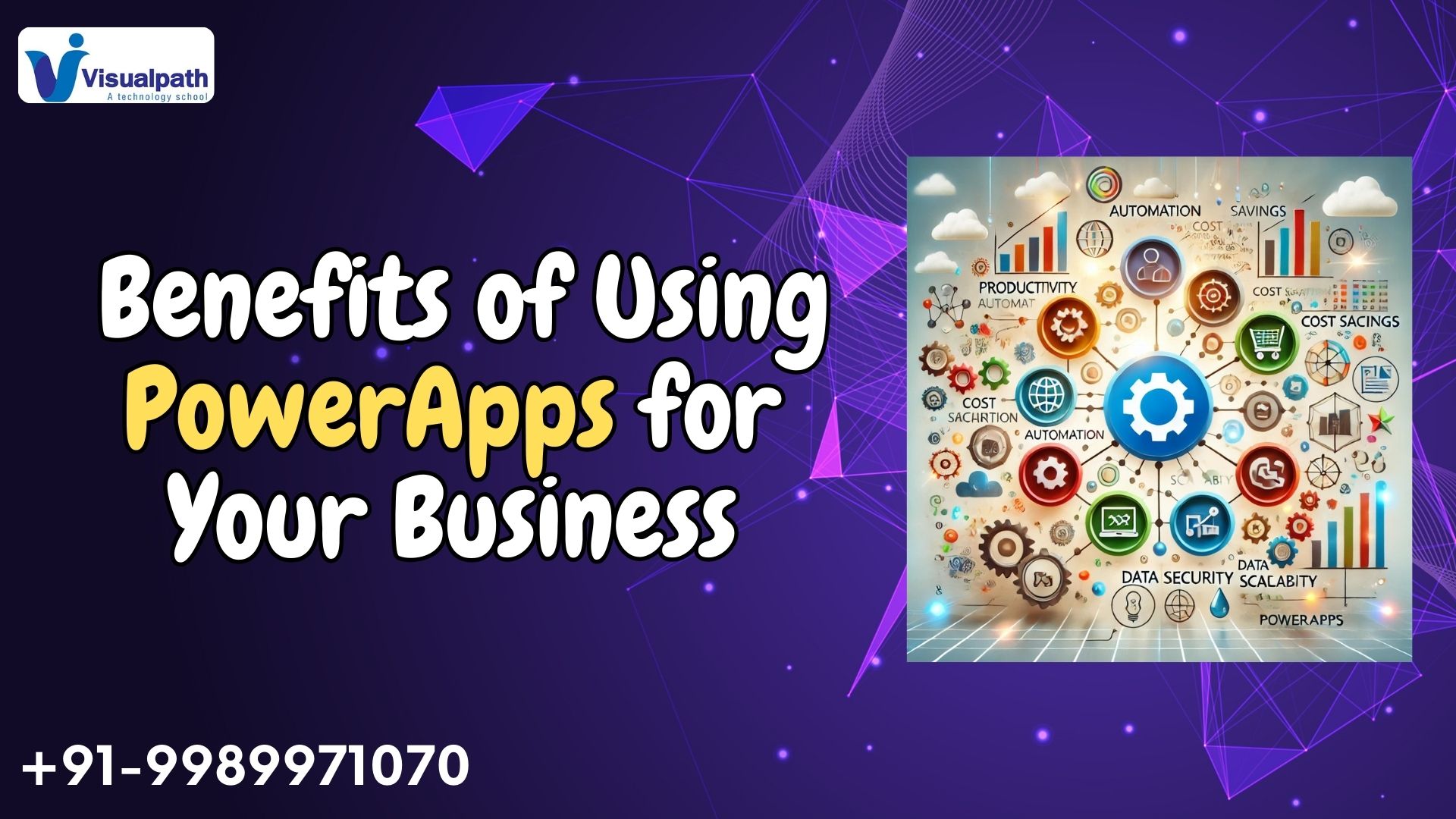
    PowerApps Training is rapidly becoming essential for businesses that aim to streamline operations, improve productivity, and drive digital transformation. As organizations adopt automation and data-driven solutions, Microsoft PowerApps emerges as a powerful platform for creating customized applications that can address unique business needs without extensive coding skills. Paired with Power Automate Training, PowerApps empowers employees across all functions to create, automate, and scale solutions efficiently. This article delves into the primary benefits of using PowerApps in business environments and how PowerApps Training can empower teams to achieve greater operational efficiency.

    Empowering Employees with No-Code Development Capabilities

    One of the standout benefits of PowerApps Training is the ability to empower employees, even those without a technical background, to build functional applications through a no-code or low-code interface. In traditional software development, creating a customized app requires technical skills that many employees might not possess, as well as the time and expense of engaging IT resources or third-party developers. PowerApps eliminates this barrier by offering intuitive tools that let non-technical users develop apps tailored to specific needs without complex programming. Through Power Automate Training, employees can also add automation to these applications, freeing up time that would otherwise be spent on repetitive tasks. Together, these tools enable employees to be more proactive in creating solutions that streamline their workflows and increase productivity.

    For example, a sales team might use PowerApps to design a custom app for tracking client interactions, while a human resources team could build an on boarding app that guides new hires through necessary documentation and tasks. With PowerApps Training, these teams can design these apps independently and quickly adapt them as needs evolve, making the organization more agile and responsive. In combination with Power Automate Training, employees can automate workflows within these apps, enabling more seamless, efficient processes across departments.

    Seamless Integration with Microsoft 365 and Other Business Platforms

    Another significant advantage of using PowerApps is its seamless integration with Microsoft 365 applications and a range of other platforms, making it a natural choice for businesses already invested in the Microsoft ecosystem. With PowerApps Training, employees can learn how to connect PowerApps to commonly used tools like SharePoint, Teams, and Excel, allowing them to build apps that leverage data across these platforms. This integration capability eliminates the need to create additional data storage systems and enables employees to access and update information within familiar applications.

    Moreover, Power Automate Training complements this by teaching employees to automate processes that span multiple applications. For example, an employee might design a PowerApp that automatically updates a SharePoint list every time an entry is made in an Excel file or triggers a notification in Teams whenever an important document is uploaded. Through these integrations, businesses can ensure data consistency across platforms, minimize redundant data entry, and enable team members to access up-to-date information, ultimately boosting productivity and improving decision-making.

    Boosting Productivity and Cost-Effectiveness

    Investing in PowerApps Training and Power Automate Training can yield significant productivity gains and cost savings for organizations of all sizes. By enabling employees to create and automate processes, businesses reduce their dependence on external developers and high-cost software solutions. PowerApps can be used to develop anything from simple data entry tools to complex workflows, providing flexibility to address a wide range of operational challenges. Moreover, automated workflows created with Power Automate reduce the time employees spend on repetitive tasks, allowing them to dedicate more time to higher-value activities.

    For example, a finance team could create an app to track invoices and automate approval processes, eliminating the need for manual follow-ups and reducing the risk of delayed payments. By minimizing manual errors and speeding up processes, PowerApps and Power Automate help organizations save both time and money. In the long run, PowerApps Training empowers employees to create solutions that reduce bottlenecks and foster greater efficiency across the company, contributing to both immediate and long-term cost savings.

    Enhanced Data Security and Regulatory Compliance

    In today’s data-driven business environment, security and compliance are top priorities. PowerApps offers robust security features, including role-based access control, data encryption, and compliance with industry standards, making it a secure option for businesses handling sensitive information. With PowerApps Training, businesses can learn how to implement these security measures effectively to protect data from unauthorized access and ensure compliance with regulatory requirements.

    Moreover, Power Automate Training enables organizations to automate compliance workflows, ensuring that critical processes are consistently followed and recorded. For example, a healthcare organization could create an app to track patient data and automate compliance checks based on healthcare regulations, minimizing the risk of regulatory violations. By automating these processes, organizations reduce the likelihood of human error and establish a reliable system for tracking compliance, protecting both their data and their reputation.

    Scalability and Flexibility to Meet Evolving Business Needs

    As businesses grow and evolve, their operational needs change, and PowerApps is designed to support this scalability. With PowerApps Training, companies can build scalable applications that can adapt to new requirements as they arise, making PowerApps an ideal solution for businesses that need to stay agile in a fast-changing market. The platform’s flexibility allows organizations to easily add features, connect with new systems, and adapt apps to accommodate increased demand without significant redevelopment.

    Power Automate complements this scalability by providing robust automation capabilities that can grow with the organization’s needs. For instance, as a business expands, it may need to automate a larger volume of processes, integrate additional data sources, or handle more complex workflows. Through Power Automate Training, employees can learn how to scale their automation solutions to meet these demands, ensuring that the organization remains efficient and capable of handling increasing workloads without overburdening its workforce. This scalability positions PowerApps as a long-term solution that can grow alongside the business, minimizing the need for costly system overhauls or replacements.

    Conclusion

    Investing in PowerApps Training and Power Automate Training offers businesses a range of benefits, from enhanced productivity to improved data security and compliance. By empowering employees to create customized applications and automate workflows, organizations can streamline their operations, reduce costs, and drive innovation across departments. The seamless integration with Microsoft 365 and other business platforms enhances data accessibility and consistency, while robust security features protect sensitive information. Moreover, PowerApps’ scalability ensures that it can grow with the organization, making it a future-proof solution that adapts to changing needs.

    For companies looking to gain a competitive edge in today’s digital landscape, embracing PowerApps Training and equipping employees with the tools to create and automate workflows is a strategic move that promises lasting benefits. As businesses continue to face rapid changes and increasing operational demands, PowerApps provides the flexibility, efficiency, and scalability necessary to keep pace, enabling teams to focus on high-impact tasks and drive sustainable growth.

    Visualpath is the Leading and Best Institute for learning in Hyderabad. We provide PowerApps Training in Hyderabad and Power Automate Training. You will get the best course at an affordable cost.

    Attend Free Demo

    Call on – +91-9989971070

    What’s App: https://www.whatsapp.com/catalog/919989971070/

    Visit:  https://www.visualpath.in/online-powerapps-training.html

  • How to Create Custom Workflows Using Power Automate Training

    How to Create Custom Workflows Using Power Automate Training

    Power Automate Training has become essential for anyone interested in optimizing business processes through automation. With the growing need to streamline workflows and eliminate repetitive tasks, learning how to use Power Automate to create custom workflows is a valuable skill. For professionals seeking ways to automate processes, integrate applications, and improve efficiency, Power Automate Training provides comprehensive insights. If you are interested in advanced automation solutions and reside in India, PowerApps Training in Hyderabad is also available to enhance your skills in creating seamless, interconnected workflows. By learning both Power Automate and PowerApps, you can create powerful, custom workflows that bridge multiple systems and applications.

    Custom workflows are especially valuable because they allow for task automation tailored to unique needs, minimizing human error and enhancing productivity. As you dive into Power Automate Training, you’ll discover a versatile tool capable of automating a wide variety of processes. For example, whether you want to automatically send notifications, update databases, or integrate with CRM systems, Power Automate makes it possible. Coupled with PowerApps Training in Hyderabad, users can integrate app functionality and custom workflows, allowing for automation that extends into custom applications built with PowerApps.

    Why Custom Workflows Are Valuable

    The primary appeal of custom workflows is that they allow organizations to define automation that suits their specific requirements. Instead of relying on general automation solutions that may not address all of a business’s needs, custom workflows provide tailored solutions that enhance productivity. With Power Automate Training, you can automate everything from simple notifications to intricate multi-step processes that involve data from multiple applications.

    Custom workflows can benefit businesses by saving time, reducing manual work, and improving data consistency. Automating repetitive tasks frees up employees to focus on strategic initiatives, leading to higher productivity and less time spent on routine actions. Power Automate Training enables users to design workflows that connect seamlessly with various applications, making data and processes more integrated and accessible.

    Step-by-Step Guide to Creating a Custom Workflow in Power Automate

    1. Define Your Workflow Objective

    The first step in creating a custom workflow is to define its purpose clearly. For instance, are you looking to automate notifications, data updates, or file management? Understanding what you want to achieve is essential in guiding the structure and steps of your workflow. In Power Automate Training, you’ll learn best practices for workflow design, including identifying key triggers and actions that align with your automation goals.

    2. Select a Trigger for Your Workflow

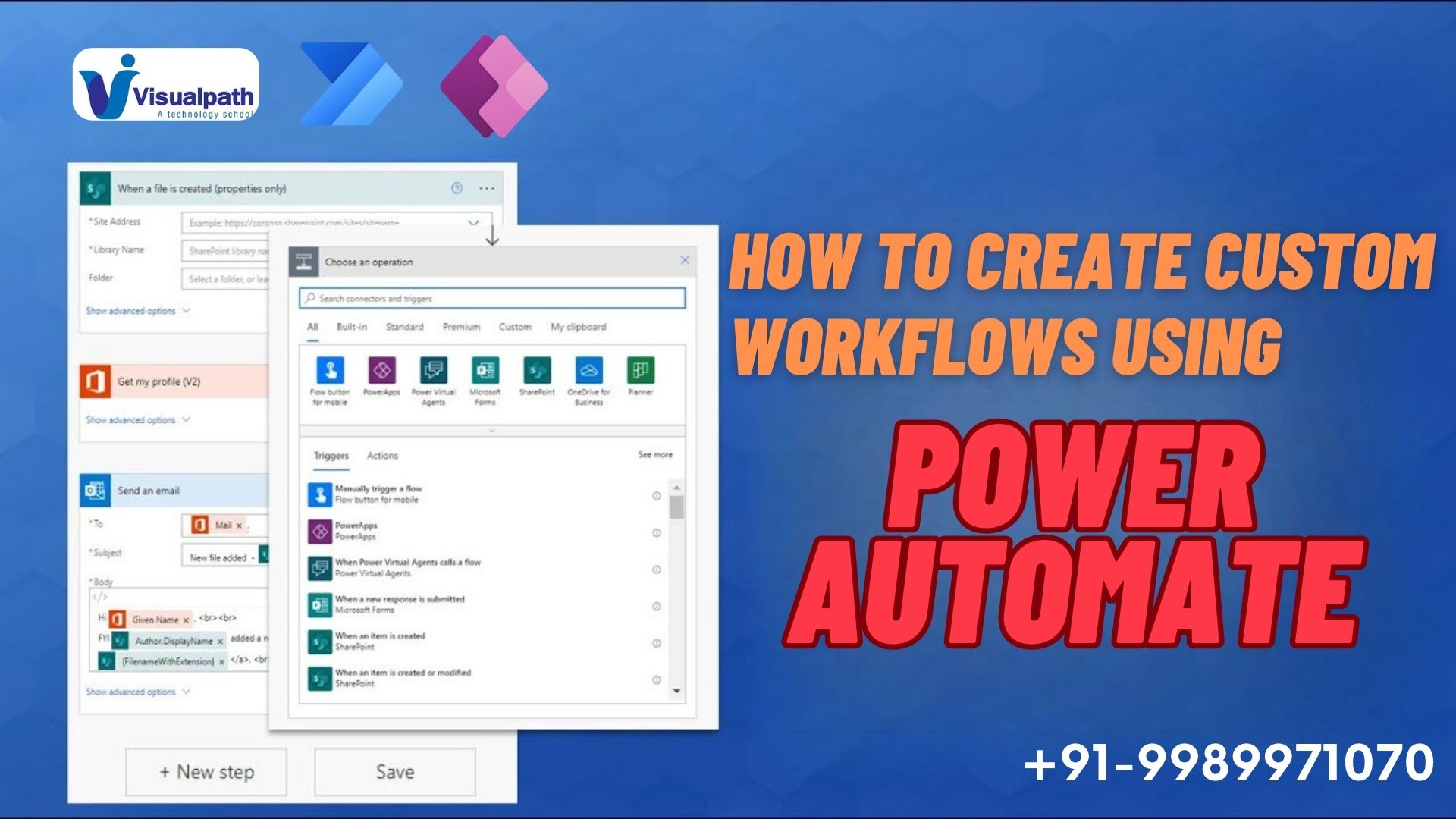
    In Power Automate, every workflow begins with a trigger that sets the process in motion. Triggers can be based on various events, such as the arrival of an email, a database update, or a user-initiated action. Through Power Automate Training, you’ll learn about the wide array of triggers available and how to select the right one to initiate your custom workflow. By choosing a relevant trigger, you can ensure that your workflow is activated precisely when it’s needed.

    3. Add the Required Actions

    After defining a trigger, the next step is to add actions—these are the tasks that the workflow will perform in response to the trigger. Actions could include sending an email, updating a record in a database, or performing calculations. Power Automate Training provides in-depth guidance on configuring actions to match specific needs, helping you build workflows that are both functional and efficient.

    4. Use Conditions and Loops for Advanced Control

    Conditions and loops offer advanced options for making workflows adaptable. Conditions allow your workflow to branch based on specified criteria, while loops allow it to repeat certain actions multiple times. For example, you might want the workflow to send different emails based on the data it receives. Conditions and loops are fundamental elements in Power Automate Training that help you build workflows capable of handling complex scenarios.

    5. Test and Deploy the Workflow

    Before rolling out your custom workflow, it’s crucial to test it thoroughly. Testing ensures that the workflow behaves as expected and allows you to catch and resolve any issues before deployment. In Power Automate Training, you’ll learn methods for testing workflows, including simulating triggers and monitoring workflow executions to identify potential areas for improvement. Once testing is complete, you can deploy your workflow and monitor its performance over time.

    Advanced Features in Power Automate for Custom Workflows

    Using Dynamic Content

    Dynamic content in Power Automate allows workflows to respond to varying data inputs, making automation more adaptable and responsive. For example, you can use dynamic content to personalize email notifications or adapt workflow actions based on real-time data changes. Through Power Automate Training, you’ll learn how to leverage dynamic content to enhance the flexibility of your workflows. This feature is particularly useful for businesses that handle high volumes of data, as it enables workflows to respond to changing conditions in real time.

    Integrating PowerApps with Power Automate

    For those interested in building custom applications that work seamlessly with automated workflows, PowerApps Training in Hyderabad offers the skills necessary to integrate PowerApps with Power Automate. This integration enables users to trigger workflows directly from within a PowerApp, creating a unified experience. For example, a field service technician could use a PowerApp to log service details, which then triggers a workflow in Power Automate to update the central database, notify relevant team members, and generate a follow-up task. This powerful combination of tools allows for customized, app-driven automation that enhances operational efficiency.

    Best Practices for Building Efficient Workflows

    Optimize Trigger Frequency

    To ensure efficiency, avoid setting up workflows to trigger too frequently, as this could lead to redundant executions and system overload. Setting appropriate trigger frequencies, which is covered in Power Automate Training, can help you manage system resources more effectively.

    Use Error Handling Mechanisms

    Error handling is essential for maintaining the reliability of automated workflows. In Power Automate Training, you’ll learn techniques such as setting up retries for failed actions or configuring alerts for workflow failures. These methods are crucial for identifying and addressing issues promptly.

    Document Your Workflows for Future Reference

    Clear documentation ensures that workflows are easy to understand and maintain, especially as workflows expand in complexity. Proper documentation is a best practice emphasized in Power Automate Training, as it helps users track workflow changes and collaborate more effectively within teams.

    Conclusion

    Custom workflows in Power Automate are transforming the way businesses manage their processes, bringing about a new level of efficiency and accuracy. With the right skills gained through Power Automate Training and enhanced with PowerApps Training in Hyderabad, you can harness the full potential of Power Automate to automate routine tasks and streamline operations. By mastering the steps to build custom workflows—from defining objectives and selecting triggers to testing and deploying—you’ll be equipped to create automation solutions tailored to your organization’s needs. Investing in these skills is essential for staying competitive in an increasingly digital landscape, where automation is becoming the backbone of productivity and growth.

    Visualpath is the Leading and Best Institute for learning in Hyderabad. We provide PowerApps and Power Automate Training. You will get the best course at an affordable cost.

    Attend Free Demo

    Call on – +91-9989971070

    What’s App: https://www.whatsapp.com/catalog/919989971070/

    Visit:  https://www.visualpath.in/online-powerapps-training.html

  • 10 Common Mistakes to Avoid When Using Power Automate

    10 Common Mistakes to Avoid When Using Power Automate

    Automation is transforming the way organizations manage their workflows, making platforms like Microsoft Power Automate essential for anyone looking to streamline repetitive tasks and improve productivity. Power Automate is highly flexible, allowing users to connect different applications, automate routine tasks, and create end-to-end workflows. However, due to its power and complexity, users often make common mistakes that hinder their ability to fully leverage this tool. Understanding these pitfalls can prevent costly errors and maximize efficiency. That’s why Power Automate Training and Power Apps Training are critical for users seeking to avoid missteps and implement best practices in automation.

    1. Over-Automating Tasks

    One of the most common mistakes is over-automating. While Power Automate enables users to automate a broad range of tasks, automating every part of a workflow can create overly complicated processes that are hard to monitor and troubleshoot. Without structured Power Automate Training, new users may find themselves adding unnecessary steps to workflows, which can lead to complications and debugging issues. Automation works best when it simplifies processes rather than creating an intricate network of steps. Power Apps Training teaches users to focus on high-impact automations and avoid over-engineering workflows, ensuring that automation enhances rather than complicates daily operations.

    2. Ignoring Trigger Conditions

    Incorrectly setting up trigger conditions is another common problem, as it can lead to workflows executing needlessly and consuming API calls that are often limited in many business plans. For instance, a flow might be triggered every time an item is created or modified, but it’s essential to define specific conditions to prevent excess executions. Ignoring these triggers is costly and inefficient, but Power Automate Training includes in-depth guidance on configuring trigger conditions effectively, ensuring flows only activate when needed. For example, training covers strategies for narrowing down conditions and using filters to make workflows smarter and resource-efficient.

    3. Failing to Implement Error-Handling Techniques

    Error handling is vital in automation workflows. Yet many users overlook implementing fall back actions and error-handling conditions within their flows, which can lead to failed tasks or incomplete processes. This is especially problematic in business-critical workflows where failure points can disrupt operations. Learning error-handling strategies through Power Automate Training can help users configure flows with resilience, allowing them to account for potential errors and specify alternative actions. For example, using the “Configure Run After” function in Power Automate enables workflows to proceed even when an error occurs in a specific step, ensuring continuity in your processes.

    4. Overlooking Permissions and Security Settings

    Permissions and security are paramount in any automation platform, and Power Automate is no exception. Many users forget to set appropriate permissions for workflows that interact with different applications and data sources, leading to potential security issues. In some cases, workflows can fail entirely if permissions are insufficient, resulting in workflow interruptions and data access issues. By undergoing Power Apps Training, users gain a comprehensive understanding of permissions and access requirements across different applications, allowing them to safeguard data while avoiding potential interruptions. This ensures that workflows are robust, secure, and aligned with organizational compliance standards.

    5. Using Poor Naming Conventions and Documentation

    A well-documented flow is easier to manage, debug, and update, especially as workflows grow and evolve over time. However, many users underestimate the importance of maintaining consistent naming conventions and comprehensive documentation, making workflows harder to understand, especially for new team members or when workflows need updates months down the line. Proper Power Automate Training emphasizes creating structured and intuitive names for variables, actions, and triggers within workflows, helping users keep flows organized and making them accessible to anyone managing the workflow in the future. This approach not only facilitates easier troubleshooting but also supports collaboration across teams.

    6. Testing and Debugging Inefficiently

    Another common pitfall is inefficient testing and debugging of workflows. While some users rely on manual testing, Power Automate offers built-in testing tools that allow users to preview how workflows will perform under different scenarios. Skipping these tools can lead to overlooked issues that impact the entire automation process. Through Power Apps Training, users learn how to effectively use testing modes, check for flow errors, and address potential problems before workflows are deployed in a live environment. This proactive approach ensures workflows are dependable and minimizes interruptions in daily operations.

    7. Failing to Manage API Limits

    Power Automate often connects with multiple third-party applications and data sources, many of which have API usage limits. Ignoring these limits can lead to unintentional usage spikes and, eventually, API throttling, where workflows are temporarily halted due to excess usage. Training in API management, as part of Power Automate Training, educates users on how to monitor and optimize API usage. Through techniques such as reducing unnecessary flow runs and consolidating API requests, users can avoid interruptions due to exceeded limits, ensuring uninterrupted workflow functionality.

    8. Not Backing Up or Versioning Workflows

    While Power Automate automatically saves workflows, not actively backing up workflows can be a costly mistake if workflows are accidentally deleted or corrupted. Versioning allows users to revert to a previous workflow state without starting from scratch. Power Automate Training teaches best practices for versioning and backup, ensuring that workflows are protected and can be easily restored if issues arise.

    9. Neglecting Performance Optimization

    In the quest for automation, it’s easy to forget about performance optimization. Workflows can become slow and resource-intensive if they include redundant steps or excessive loops. A solid Power Apps Training curriculum teaches users to optimize workflows by removing unnecessary actions, consolidating steps, and using parallel branches where appropriate. Optimized workflows not only improve performance but also reduce system load, creating a more seamless user experience.

    10. Not Continuously Improving Workflows

    Automation is an evolving process, and workflows should be periodically evaluated for improvement opportunities. Many users set up workflows and assume they will function indefinitely. By revisiting workflows periodically, users can implement new features, improve efficiency, and adapt to any changes in application APIs. Power Automate Training reinforces the importance of ongoing workflow maintenance, helping users stay current with best practices and adapt to evolving needs.

    Conclusion

    Mastering Power Automate requires not only an understanding of the tool’s capabilities but also a keen awareness of common pitfalls. By investing in Power Automate Training and Power Apps Training, users can avoid frequent mistakes, build resilient workflows, and enhance productivity. Learning best practices in automation empowers users to create workflows that are reliable, secure, and well-optimized, transforming Power Automate into a powerful ally in today’s fast-paced digital environment.

    Visualpath is the Leading and Best Institute for learning in Hyderabad. We provide Power Apps and Power Automate Training. You will get the best course at an affordable cost.

    Attend Free Demo

    Call on – +91-9989971070

    What’s App: https://www.whatsapp.com/catalog/919989971070/

    Visit:  https://www.visualpath.in/online-powerapps-training.html