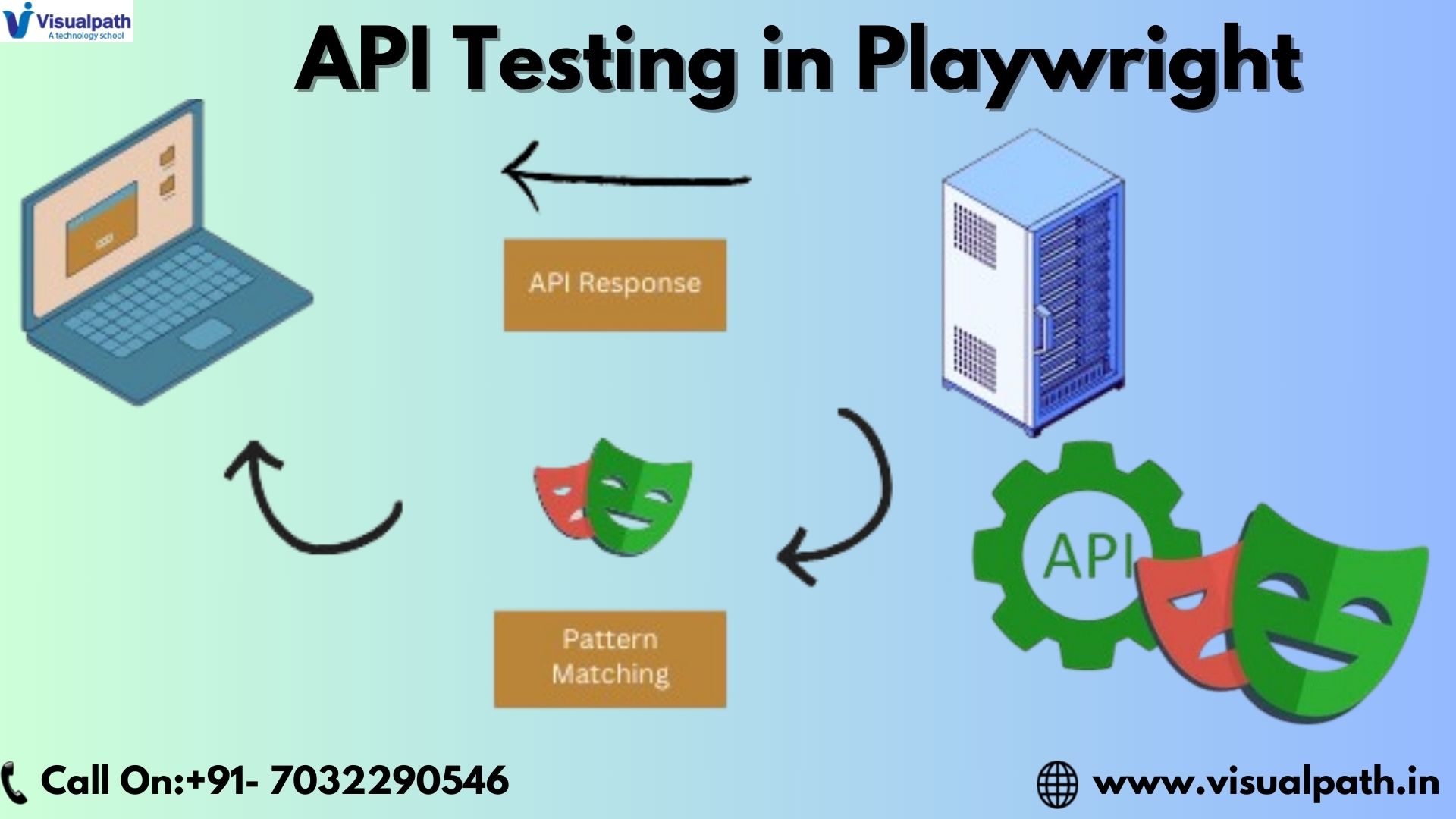
PlayWright Automation Training, while celebrated for its robust browser automation capabilities, also provides a remarkably efficient and elegant way to conduct API testing. This comprehensive guide caters to beginners, offering a clear and practical introduction to leveraging Playwright for this crucial aspect of software quality assurance. We’ll explore the essential concepts, walk through practical examples, and outline best practices to empower you to begin API testing with confidence. API testing is fundamental to ensuring the reliability, functionality, and performance of backend services, and Playwright’s versatile nature makes it an excellent choice for this task.
Why Choose Playwright for API Testing?
While dedicated API testing tools like Postman are widely used, Playwright offers several compelling advantages:
- Unified Testing Framework: Playwright allows you to consolidate your testing efforts by using the same framework for both UI and API testing. This streamlines your overall testing process, reduces the learning curve, and simplifies the management of your testing infrastructure. Having a single platform for all testing needs simplifies reporting and analysis as well.
- Seamless Integration with Browser Automation: In many cases, APIs interact directly with web applications. Playwright’s ability to seamlessly integrate API tests with browser automation allows you to create comprehensive end-to-end test scenarios. This PlayWright Training ensures that the entire system, from the user interface to the backend API, functions correctly.
- Modern and Efficient Architecture: Playwright is built on a modern, event-driven architecture, resulting in exceptional performance, stability, and scalability. This is particularly beneficial when dealing with complex API test suites or high volumes of API requests. Tests execute quickly and reliably.
- Support for Multiple Programming Languages: Playwright’s versatility extends to its support for multiple programming languages, including JavaScript/TypeScript, Python, Java, and .NET. This makes it accessible to a wide range of developers, regardless of their preferred language or their team’s existing skill set.
Setting Up Playwright for API Testing:
Before you can begin API testing with Playwright, you’ll need to make sure you have the necessary prerequisites in place. This typically involves having Node.js and npm (or yarn) installed on your system. Once these are set up, installing Playwright is a simple command-line operation. This single installation provides all the necessary components for both API and browser testing.
Writing Your First API Test (Conceptual Overview):
Let’s discuss the general process of creating a basic API test using Playwright. The fundamental steps involve defining a test case, using Playwright’s built-in request capability to make the API call, and then verifying the API’s response. Response verification typically includes checking the HTTP status code (e.g., confirming a successful response with a 200 code) and examining the data returned by the API to PlayWright Automation Online Training ensure it matches your expectations.
Making Different API Requests:
Playwright’s request feature is designed to handle a variety of API request types, covering the full range of HTTP methods:
- GET: Used to retrieve data from the API endpoint. This is the standard method for fetching information.
- POST: Used to create new resources on the server. This method sends data to the API to be stored or processed.
- PUT: Used to update existing resources on the server. This method sends data to the API to modify a previously created resource.
- DELETE: Used to delete resources from the server. This method removes data from the server.
When making POST or PUT requests, you will usually need to include the data you want to send to the API (often referred to as the “payload”). This payload is typically formatted as JSON.
Grouping Tests and Running in Parallel:
PlayWright Online Training provides mechanisms to organize your tests effectively. You can group related tests together, which improves the structure and readability of your test suite. This makes it easier to manage and maintain your tests as your project grows. Furthermore, Playwright allows you to run your tests in parallel, significantly reducing the overall execution time, especially when you have a large number of tests to run. This is crucial for efficient testing in a CI/CD environment.
Best Practices for API Testing with Playwright:
- Use Descriptive Test Names: Choose test names that are clear, concise, and accurately describe the API endpoint being tested and the expected behavior. This greatly improves the readability and maintainability of your test suite, making it easier for team members to understand the purpose of each test.
- Test All Possible Scenarios: Don’t just test the “happy path” (successful requests). Cover positive, negative, and edge cases to ensure your API is robust and handles unexpected inputs or conditions gracefully. Consider boundary conditions, invalid data, and error handling.
- Thoroughly Validate the Response Body: Go beyond simply checking the HTTP status code. PlayWright with TypeScript Training thoroughly validate the structure and content of the response body to ensure it contains the expected data in the correct format. Check data types, specific values, and the presence of required fields.
- Implement Data-Driven Testing: Use test data from external sources (e.g., files or databases) to run the same test with a variety of inputs. This helps to increase test coverage and identify potential issues with different data sets, ensuring your API works correctly with a wide range of data.
- Keep Your Tests Organized: Group related tests together and use a clear and consistent folder structure to keep your test suite well organized. This makes it easier to navigate and maintain your tests as your project grows.
- Integrate with CI/CD: Integrate your API tests into your Continuous Integration and Continuous Delivery (CI/CD) pipeline. This ensures that your APIs are tested automatically with every build, helping to catch regressions early and maintain the quality of your backend services throughout the development lifecycle.
Conclusion:
Playwright stands out as a versatile and powerful tool for API testing. Its unified framework, modern architecture, and ease of use make it an excellent choice for developers looking to test their APIs effectively and efficiently. By adhering to the guidelines and best practices outlined in this article, you can leverage Playwright to build robust and reliable API tests, ensuring the quality, performance, and functionality of your backend services. With its seamless integration with UI testing, Playwright can truly become your one-stop solution for all your testing needs.