Tag: online training

  • SAP Ariba Currently Integrated with SAP ERP and S/4HANA in 2025?

    SAP Ariba Currently Integrated with SAP ERP and S/4HANA in 2025?

    SAP Ariba Currently Integrated with SAP ERP and S/4HANA in 2025?

    In 2025, SAP Ariba integration with SAP ERP and S/4HANA has become more streamlined, intelligent, and essential for businesses looking to optimize procurement and supply chain operations. As companies evolve to meet modern demands, seamless data connectivity and automation between platforms have become non-negotiable.

    As an experienced writer observing ERP trends closely, one truth stands out: organizations using SAP ERP or SAP S/4HANA gain immense value by connecting SAP Ariba to their digital core. This integration doesn’t just improve operational efficiency—it drives visibility, compliance, and agility in global supply chain networks. SAP Ariba Online Training

    In this article, we’ll break down how SAP Ariba is integrated with SAP ERP and S/4HANA in 2025, what methods are most commonly used, and why this matters for your business. Let’s dive in.

    The Evolution of SAP Ariba Integration

    Over the years, integrating SAP Ariba with backend systems has significantly matured:

    • 2010s: Companies relied heavily on middleware, file-based uploads, and manual configuration. Integration often felt clunky.
    • 2020–2023: Ariba Cloud Integration Gateway (CIG) simplified many of the technical barriers.
    • 2025: With SAP S/4HANA cloud adoption rising, SAP Ariba integration is far more streamlined with APIs, prepackaged scenarios, and native connectors—making “plug-and-play” integration increasingly real.

    Put simply, integration has shifted from a heavy IT project to a business enabler that accelerates time-to-value.

    How SAP Ariba Works with SAP ERP and S/4HANA in 2025

    Let’s take a closer look at the current state of SAP Ariba integration in 2025:

    1. Using Ariba Cloud Integration Gateway (CIG)

    CIG remains the primary integration tool in 2025. It is cloud-based and simplifies connectivity between SAP Ariba and backend systems. Companies configure integration scenarios through an intuitive interface, avoiding excessive custom development.

    • Connects with both SAP ERP (older ECC systems still in use) and SAP S/4HANA(on-premise or cloud).
    • Preconfigured templates for purchase order, invoice, supplier lifecycle, and sourcing processes.
    • Faster onboarding of suppliers and customers.

    2. APIs and SAP Business Technology Platform (BTP)

    SAP BTP has become a powerful player in integration. APIs available through SAP API Business Hub enable real-time data flows between SAP Ariba and S/4HANA.

    For example:

    • Real-time purchase order status updates.
    • Automated invoice reconciliation.
    • Supplier risk checking integrated with master data.

    This API-first strategy gives businesses the flexibility to expand use cases without breaking their core systems.

    3. Direct S/4HANA Integration

    In fully upgraded S/4HANA environments, certain integration features come prebuilt. Configuration is lighter, dashboards are unified, and procurement teams can navigate seamlessly between Ariba and ERP interfaces. SAP Ariba Training

    This reduces the earlier reliance on middleware and enhances end-user experience.

    Key Business Benefits in 2025

    The combination of SAP Ariba with SAP ERP or S/4HANA delivers tangible business outcomes:

    • End-to-End Visibility: From sourcing to payment, decision-makers have real-time visibility.
    • Compliance & Control: Centralized contracts and policies reduce risks.
    • Cost Savings: Improved supplier collaboration cuts procurement costs.
    • Agility in Supply Networks: With global disruptions still a reality, integrated systems provide resilience.
    • Faster Time-to-Value: Plug-and-play integration through CIG and APIs means businesses gain ROI quicker.

    Common Integration Scenarios

    Here are the most widely used SAP Ariba integration scenarios today:

    • Purchase Orders from ERP/S4HANA flow into Ariba Network.
    • Supplier Invoices from Ariba flow back into the ERP system.
    • Contracts created in Ariba are integrated with SAP S/4HANA for visibility.
    • Supplier Lifecycle Management syncs between systems for cleaner master data.

    These practical scenarios demonstrate why integration isn’t optional anymore—it’s essential.

    The Road Ahead: SAP Ariba + S/4HANA in the Cloud

    Looking forward, SAP’s strategy is clear: cloud-first. SAP S/4HANA Public Cloud combined with SAP Ariba will be the default for many enterprises by 2030. That means:

    • Wider use of SAP API Hub as a standard integration platform.
    • Increasing automation through AI-driven Ariba recommendations.
    • Simplified governance models for procurement teams.

    The message is simple: businesses not adopting seamless integration risk falling behind.

    Why Choose Visualpath for SAP Ariba Training?

    If you’re looking to build expertise in this space, solid training makes all the difference. Visualpath is one of the trusted names in online IT training, offering SAP Ariba online training worldwide.

    Here’s why Visualpath stands out:
    1. In-depth Online Training – Expert-led sessions designed for real learning, not just theory.
    2. Real-Time Projects & Hands-On Learning – You’ll practice integration scenarios just like real enterprises use.
    3. 100% Placement Assistance – A strong support system to help students land roles in ERP and procurement fields.

    In my experience, brands like Visualpath don’t just teach the tool—they prepare you for the very challenges businesses face in 2025 with SAP Ariba integration.

    How to Get Started with Integration

    If you’re planning to implement or optimize SAP Ariba integration with SAP ERP or S/4HANA, here are a few tips:

    1. Assess Your Current Landscape – Understand your SAP version (ECC or S/4HANA) and identify gaps.
    2. Use Standard Integration Kits – SAP provides Integration Toolkits (ITKs) and cloud integration gateways to reduce development time.
    3. Leverage SAP BTP for Custom Needs – If you need custom workflows, use BTP’s capabilities for seamless extension and API management.
    4. Train Your Team – Make sure your team understands how systems connect and how to manage exceptions. (Hint: Visualpath can help here.)

    FAQs – SAP Ariba Integration with SAP ERP and S/4HANA

    1. What is SAP Ariba integration?
    SAP Ariba integration connects Ariba’s cloud procurement platform with SAP ERP or S/4HANA to automate and streamline procurement processes.
    2. Can Ariba connect with SAP S/4HANA?
    Yes, Ariba integrates seamlessly with SAP S/4HANA using pre-built connectors and SAP Business Technology Platform (BTP).
    3. Is integration possible with SAP ERP (ECC)?
    Yes, Ariba still supports integration with SAP ERP (ECC) in 2025 for businesses using on-premise systems.
    4. What platform supports the integration?
    SAP Business Technology Platform (BTP) is used to enable secure, scalable integration between Ariba and SAP systems.
    5. Where can I learn SAP Ariba integration?
    You can learn through Visualpath, which offers SAP Ariba online training worldwide with real-time projects and 100% placement assistance.

    Final Thoughts

    In 2025, SAP Ariba integration with SAP ERP and S/4HANA is no longer a luxury — it’s a competitive necessity. The ability to automate, connect, and analyze procurement data in real time offers a huge advantage in today’s fast-paced business environment.

    Whether you’re starting your journey or optimizing your current setup, staying informed and upskilled is key. With expert support from platforms like Visualpath, you can confidently take the next step toward smarter procurement and supply chain operations.

    Visualpath offers globally accessible SAP Ariba online training, focusing on hands-on learning and industry projects for in-depth expertise. Learners benefit from expert instructors and 100% placement assistance, ensuring career-ready skills in procurement and supply chain management.

    Contact Call/WhatsApp: +91-7032290546
  • Integrating Gen AI into Your DevOps Toolchain 

    Integrating Gen AI into Your DevOps Toolchain 

    Introduction 

    Gen AI For DevOps has revolutionized how teams collaborate, automate, and deliver high-quality products. As organizations strive for faster deployment cycles and more efficient workflows, the integration of emerging technologies becomes essential. Among the most transformative is Generative AI (Gen AI), which has the potential to significantly enhance the capabilities of DevOps pipelines. From intelligent code generation to predictive analytics and incident response, Gen AI is reshaping how development and operations teams build, test, deploy, and manage applications. This article explores how Gen AI can be effectively integrated into your DevOps toolchain to drive automation, innovation, and reliability. 

    1. Enhancing Code Quality and Generation 

    One of the most immediate applications of Gen AI in DevOps is in code generation and quality assurance. Tools like GitHub Copilot, powered by large language models, can assist developers by suggesting entire code blocks, fixing bugs, or even generating unit tests. This reduces manual effort, enhances productivity, and minimizes human error. Integrated into CI/CD pipelines, AI-driven code assistants can also review pull requests, enforce coding standards, and provide contextual suggestions, ensuring consistent code quality across teams. 

    2. Intelligent Testing and QA Automation 

    Testing is a critical phase in the DevOps cycle, and Gen AI can significantly accelerate this process. AI models can automatically generate test cases based on code changes, user stories, or requirements. Additionally, they can prioritize test execution based on risk analysis, reducing time and resource consumption. Predictive AI can identify potentially flaky or redundant tests, allowing QA teams to maintain a lean and effective test suite.  

    3. Streamlining Incident Management and Monitoring 

    Monitoring and incident response are key components of the “Ops” side of DevOps. Gen AI can help detect anomalies, predict outages, and recommend remediation steps before issues escalate. By analyzing logs, metrics, and historical incidents, AI systems can automatically classify and triage alerts, reducing alert fatigue and enabling faster resolution. Natural language interfaces also allow engineers to query system states or incident history conversationally, making on-call workflows more efficient and less stressful. Generative AI For DevOps Online Training 

    4. Automating Documentation and Knowledge Sharing 

    DevOps processes generate a large amount of documentation  from runbooks and postmortems to deployment guides and environment specificationsThis ensures up-to-date, comprehensive knowledge sharing across teams and helps onboard new engineers more effectively. AI-generated documentation also bridges gaps between dev, ops, and security teams, fostering better collaboration. Generative AI For DevOps Training classes 

    5. Optimizing Deployment and Resource Management 

    AI-driven systems can optimize infrastructure provisioning, scaling, and deployment strategies. For example, Gen AI models can analyze past deployment patterns and recommend optimal deployment windows, rollback strategies, or canary release configurations. They can also monitor cloud costs and suggest resource adjustments to improve cost-efficiency without compromising performance. By incorporating Gen AI into infrastructure-as-code and container orchestration tools, DevOps teams can achieve greater scalability and automation. 

    Conclusion 

    Integrating Generative AI into your DevOps toolchain is not just a trend — it’s a strategic move toward intelligent automation, continuous improvement, and operational resilience. By enhancing every stage of the software development lifecycle, Gen AI empowers teams to work smarter, respond faster, and deliver better software. However, successful integration requires careful consideration of governance, model transparency, and ethical AI usage. As tools mature and use cases expand, Gen AI will become an indispensable ally in building the future of DevOps. Organizations that embrace this transformation early stand to gain a significant competitive edge in agility, innovation, and customer satisfaction. 

    Trending Courses: Salesforce Marketing Cloud, Cyber Security, GCP Data Engineering 

    Visualpath is the Leading and Best Software Online Training Institute in Hyderabad. 

    For More Information about Best  Gen AI for DevOps 

    Contact Call/WhatsApp: +91-7032290546 

    Visit: https://www.visualpath.in/generative-ai-for-devops-online-training.html 

  • Oracle Fusion HCM: Empowering Data-Driven HR Decisions

    Oracle Fusion HCM: Empowering Data-Driven HR Decisions

    Oracle Fusion HCM (Human Capital Management ) is a cloud-native platform, this cutting-edge solution allows HR leaders to make informed, timely, and impactful decisions based on real-time workforce insights. Whether you’re an HR professional, an IT administrator, or a business leader aiming to modernize your workforce management approach, Oracle Fusion HCM Training offers everything you need to turn data into actionable intelligence.

    What is Oracle Fusion HCM?

    Oracle Fusion HCM (Human Capital Management) is a cloud-based software suite designed to manage every aspect of the employee lifecycle — from recruitment and on boarding to payroll, performance, and succession planning. Unlike legacy HR systems that operate in silos, this platform delivers a unified experience across the entire organization.

    The beauty of Oracle Fusion HCM Online lies in its deep analytics, predictive modelling, and AI capabilities that help organizations harness the power of data for better decision-making. From tracking employee engagement to forecasting future workforce needs, it’s a solution built for forward-thinking companies.

    The Power of Data in HR Decision-Making

    Gone are the days when HR decisions were made based on gut instinct? Today, data is the new currency, and HR teams need systems that can offer meaningful insights quickly and accurately. Oracle Fusion HCM Cloud Training enables users to navigate advanced analytics dashboards and KPIs, turning raw data into visual insights that are easy to interpret and act on.

    With built-in business intelligence tools, HR leaders can:

    • Identify high-performing employees and potential attrition risks
    • Monitor diversity and inclusion progress
    • Optimize hiring strategies based on market and internal data
    • Align workforce planning with organizational goals

    All of this is possible with Oracle Fusion HCM, which provides real-time access to workforce analytics, dashboards, and personalized reports.

    Benefits of Oracle Fusion HCM for Data-Driven HR

    1. Unified Data Model

    Unlike disconnected HR systems, Oracle Fusion HCM Online offers a single source of truth for all workforce data. This consistency ensures accurate reporting, simplified compliance, and enhanced collaboration across departments.

    2. Embedded AI and Machine Learning

    Through AI-powered suggestions and predictive analytics, Oracle Fusion HCM can forecast trends like employee turnover, recommend learning paths, and even suggest optimal salary adjustments.

    3. Intuitive Dashboards

    The platform comes with customizable dashboards that allow HR professionals to visualize key metrics and make sense of complex data sets quickly. With Oracle Fusion HCM Cloud Training, users can learn how to customize and use these dashboards effectively.

    4. Self-Service Capabilities

    Employees and managers have access to intuitive self-service features, which reduce administrative tasks and provide more transparency. With better access to their data, users can make informed decisions regarding their career paths, training needs, and performance goals.

    Importance of Oracle Fusion HCM Cloud Training

    Adopting a powerful tool like just the first step. To unlock its full potential, organizations must invest in Oracle Fusion Training. Training ensures that HR teams, analysts, and end-users understand the platform’s capabilities, from basic workflows to advanced analytics.

    Well-trained professionals can:

    • Leverage all features for maximum ROI
    • Avoid common implementation mistakes
    • Ensure data accuracy and compliance
    • Boost user adoption and overall satisfaction

    There are many online resources available for Oracle Fusion HCM (Human Capital Management) Online training, including certifications, live instructor-led courses, and self-paced learning paths tailored to different user roles.

    Making Smarter HR Decisions with Oracle Fusion HCM

    In a world where workforce agility and intelligence are crucial, stands out as a transformative tool for HR departments. It doesn’t just automate tasks; it empowers HR professionals to become strategic leaders backed by accurate, timely, and actionable data.By integrating advanced analytics with a user-friendly interface, ensures that every HR decision is rooted in facts, not guesswork. Organizations that invest in Oracle Fusion HCM Cloud Training will not only improve HR efficiency but also drive better business outcomes.

    If you’re ready to modernize your HR operations and take your team to the next level, it’s time to explore the potential of Oracle Fusion HCM.

    Conclusion:

     Oracle Fusion HCM Cloud In a world where workforce agility and intelligence are crucial, stands out as a transformative tool for HR departments. It doesn’t just automate tasks; it empowers HR professionals to become strategic leaders backed by accurate, timely, and actionable data. integrating advanced analytics with a user-friendly interface, Oracle Fusion HCM Online ensures that every HR decision is rooted in facts, not guesswork. Organizations that invest will not only improve HR efficiency but also drive better business outcomes.

    Trending Courses: Oracle Integration Cloud (OIC), Oracle Fusion PPM, Oracle Fusion HCM

  • Revolutionizing DevOps with Generative AI Tools

    Revolutionizing DevOps with Generative AI Tools

    Introduction to DevOps with Generative AI

    Gen AI for DevOps has transformed the software development landscape by bridging the gap between development and operations, ensuring faster and more efficient software delivery. However, as businesses scale, traditional DevOps practices often struggle to keep up with the increasing complexity of modern applications. This is where Generative AI (Gen AI) steps in, offering intelligent automation, enhanced decision-making, and optimized workflows. By leveraging AI-powered tools, organizations can revolutionize their DevOps pipelines, making them more resilient, efficient, and adaptive.

    Understanding Generative AI in DevOps

    Generative AI refers to AI models that can generate content, predict outcomes, and automate complex processes. In DevOps, Gen AI can be used for tasks such as code generation, automated testing, anomaly detection, security enhancement, and performance optimization. By integrating AI-driven tools into DevOps workflows, teams can reduce manual efforts, improve efficiency, and minimize errors. Generative AI For DevOps Online Training

    Key Areas Where Generative AI Enhances DevOps

    1. Automated Code Generation and Optimization

    Generative AI tools like GitHub Copilot and OpenAI Codex assist developers by generating high-quality code snippets, suggesting best practices, and optimizing existing codebases. This reduces development time and enhances code quality, allowing DevOps teams to focus on more strategic tasks.

    2. Intelligent Automated Testing

    Traditional testing methods can be time-consuming and error-prone. AI-powered testing tools, such as Testim and Mabl, use machine learning to create and execute test cases automatically. They can analyze previous test results, identify patterns, and predict potential failures, significantly improving software reliability.

    3. Enhanced Security with AI-Driven Threat Detection

    Cybersecurity is a critical concern in DevOps. Generative AI enhances security by identifying vulnerabilities in code, detecting anomalies in network traffic, and suggesting patches before exploits occur. AI-driven tools like Darktrace and Lacework continuously monitor systems for suspicious activities, ensuring proactive security measures.

    4. Optimized CI/CD Pipelines

    Continuous Integration and Continuous Deployment (CI/CD) pipelines are at the core of DevOps. AI can optimize these pipelines by predicting build failures, identifying performance bottlenecks, and recommending corrective actions. Tools like Harness and Spacelift leverage AI to streamline CI/CD workflows, reducing deployment risks and improving efficiency.

    5. Intelligent Incident Management and Root Cause Analysis

    AI-powered observability tools like Datadog and New Relic analyze logs, metrics, and traces to detect anomalies in real time. They help DevOps teams quickly identify the root cause of incidents, reducing mean time to resolution (MTTR) and minimizing downtime.

    6. Infrastructure as Code (IaC) Automation

    Generative AI simplifies infrastructure management by generating and optimizing Infrastructure as Code (IaC) scripts. Tools like Terraform and Pulumi integrate AI-driven suggestions, allowing teams to automate cloud provisioning, configuration, and scaling more effectively. Gen AI For DevOps Course Online

    Benefits of Using Generative AI in DevOps

    • Increased Productivity: AI-powered automation reduces manual tasks, enabling teams to focus on strategic initiatives.
    • Improved Code Quality: AI-generated suggestions and optimizations enhance coding standards and reduce bugs.
    • Enhanced Security: AI-driven threat detection proactively identifies and mitigates vulnerabilities.
    • Faster Deployments: Optimized CI/CD pipelines accelerate software releases and improve delivery timelines.
    • Better Decision-Making: AI analyzes vast amounts of data, providing insights for informed decision-making.

    Challenges and Considerations

    While Generative AI offers numerous benefits, organizations must consider potential challenges:

    • AI Model Accuracy: AI-generated code and recommendations may not always be perfect, requiring human oversight.
    • Security Concerns: AI models may introduce new security risks if not properly trained and monitored.
    • Integration Complexity: Implementing AI-driven tools into existing DevOps workflows requires careful planning and expertise.

    Future of DevOps with Generative AI

    The future of DevOps will be increasingly AI-driven, with more intelligent automation, self-healing systems, and predictive analytics. As AI models continue to evolve, they will become more sophisticated in assisting DevOps teams, reducing operational burdens, and enhancing overall efficiency. Organizations that embrace Generative AI early will gain a competitive edge in the fast-paced software development landscape.

    Conclusion

    Generative AI is revolutionizing DevOps by introducing intelligent automation, predictive analytics, and enhanced security. By leveraging AI-powered tools, organizations can optimize their DevOps pipelines, improve efficiency, and reduce operational risks. While challenges exist, the benefits far outweigh the risks, making AI-driven DevOps a game-changer in modern software development. Businesses that invest in AI-powered DevOps solutions today will be better positioned to lead in the future of technology-driven innovation.

    Trending Courses: Salesforce Marketing Cloud, GCP Data Engineer Training, Cyber Security

  • How Salesforce Data Cloud Transforms Data Management

    How Salesforce Data Cloud Transforms Data Management

    Salesforce Data Cloud Training In today’s data-driven world, businesses are inundated with information from myriad sources. However, extracting meaningful insights and delivering personalized customer experiences remains a significant challenge. Salesforce Data Cloud emerges as a transformative solution, revolutionizing data management by unifying disparate data sources and empowering organizations to unlock the true potential of their customer data.

    The Challenge of Fragmented Data:

    Traditionally, customer data resides in silos across various systems, hindering a holistic view of the customer journey. This fragmentation leads to inconsistent customer experiences, missed opportunities, and inefficient marketing campaigns. Salesforce Data Cloud addresses this challenge by unifying data from diverse sources into a single, comprehensive customer profile.

    Salesforce Data Cloud: A Unified Data Platform:

    Salesforce Data Cloud acts as a real-time data platform, harmonizing data from CRM, ERP, marketing automation, e-commerce, and other sources. It provides a unified view of customer data, enabling businesses to create personalized experiences across all touchpoints.

    Key Features and Capabilities:

    • Real-Time Data Ingestion: Data Cloud ingests data from various sources in real-time, ensuring that customer profiles are always up-to-date.
    • Data Harmonization: The platform harmonizes data from different sources, resolving inconsistencies and creating a unified customer profile.
    • Identity Resolution: Data Cloud uses advanced identity resolution techniques to match and merge customer profiles, even when data is fragmented or incomplete.
    • Segmentation and Activation: The platform enables businesses to segment customers based on their behaviors, preferences, and demographics, and activate these segments across various marketing channels.
    • Real-Time Customer Insights: Salesforce Data Cloud Course provides real-time customer insights, enabling businesses to understand customer behavior and preferences.
    • Activation Across Channels: The platform allows for the activation of unified customer profiles across various marketing channels, including email, social media, and advertising.
    • Data Security and Compliance: Data Cloud prioritizes data security and compliance, providing robust security features and ensuring adherence to regulatory requirements.
    • Integration with Salesforce Ecosystem: Data Cloud integrates seamlessly with the Salesforce ecosystem, including Sales Cloud, Service Cloud, and Marketing Cloud.
    • Data Spaces: Data Spaces allow you to organize data into logical groups, based on different business needs.
    • Calculated Insights: Allows for the creation of derived data points, based on existing data, that can be used for segmentation and activation.

    Transforming Data Management:

    • Unified Customer View: Salesforce Data Cloud Online Training provides a single, comprehensive view of the customer, eliminating data silos and enabling personalized interactions.
    • Real-Time Personalization: The platform enables real-time personalization, allowing businesses to deliver targeted messages and offers based on customer behavior.
    • Improved Marketing ROI: By enabling targeted marketing campaigns, Data Cloud improves marketing ROI and reduces customer acquisition costs.
    • Enhanced Customer Experience: Data Cloud empowers businesses to deliver personalized and consistent customer experiences across all touchpoints, leading to increased customer satisfaction and loyalty.
    • Data-Driven Decision Making: The platform provides real-time customer insights, enabling businesses to make data-driven decisions and optimize their operations.
    • Increased Operational Efficiency: By automating data integration and harmonization, Data Cloud increases operational efficiency and reduces manual effort.
    • Faster Time-to-Insight: Real-time data ingestion and harmonization accelerate the time-to-insight, enabling businesses to quickly identify trends and opportunities.
    • Improved Data Governance: Data Cloud provides robust data governance features, ensuring data quality and compliance.

    Use Cases:

    • Personalized Marketing Campaigns: Deliver targeted marketing campaigns based on customer behavior and preferences.
    • Real-Time Customer Service: Provide personalized customer service based on real-time customer data.
    • Predictive Analytics: Use customer Salesforce Data Cloud Certification to predict future behavior and personalize offers.
    • Customer 360: Create a comprehensive customer 360 view for sales, service, and marketing teams.

    Conclusion:

    Salesforce Data Cloud is a game-changer for data management, empowering businesses to unify disparate data sources, gain real-time customer insights, and deliver personalized experiences. By breaking down data silos and providing a unified customer view, Data Cloud enables organizations to build stronger customer relationships, improve marketing ROI, and drive business growth. Embracing Salesforce Data Cloud is a crucial step towards achieving data-driven success in today’s competitive landscape.

    Trending  Courses Are : Generative AI, Salesforce Devops, Salesforce marketing Cloud

  • The Role of Metadata Manager in Informatica IDMC

    The Role of Metadata Manager in Informatica IDMC

    Introduction to Informatica Intelligent Data Management Cloud

    Informatica Intelligent Data Management Cloud (IDMC) is a comprehensive, cloud-native platform that facilitates data integration, data governance, and metadata management. One of the key components within IDMC is the Metadata Manager, which plays a critical role in tracking, managing, and governing metadata across an organization’s data ecosystem. Effective metadata management ensures better data quality, compliance, and operational efficiency.

    What is a Metadata Manager?

    Metadata Manager in Informatica IDMC is a powerful tool that provides a centralized repository for managing metadata across multiple data sources. It helps organizations gain insights into their data lineage, data dependencies, and overall data landscape. By offering visibility into metadata, it allows users to govern data assets effectively, streamline compliance efforts, and enhance overall data trustworthiness. IICS Online Training

    Key Roles and Functions of Metadata Manager in Informatica IDMC

    1. Metadata Discovery and Cataloging

    Metadata Manager automates the discovery of metadata from various sources such as databases, data lakes, ETL processes, and business intelligence tools. By cataloguing metadata, it helps organizations build a structured and searchable repository of data assets, making it easier to understand relationships between different data entities.

    2. Data Lineage and Impact Analysis

    One of the most important functions of Metadata Manager is tracking data lineage. It provides end-to-end visibility of data movement from source to destination, enabling users to understand how data flows through different systems. Additionally, impact analysis helps businesses assess the potential effects of changes in data structures, reducing risks associated with modifications. Informatica Cloud Training

    3. Data Governance and Compliance

    Metadata Manager plays a crucial role in ensuring data governance by enforcing policies and rules across an organization’s data environment. It helps in maintaining compliance with regulations like GDPR, HIPAA, and CCPA by offering complete visibility into data usage, data classification, and access control mechanisms.

    4. Data Quality Management

    By leveraging metadata insights, organizations can enhance data quality through profiling, validation, and standardization. Metadata Manager helps identify data inconsistencies, redundancies, and errors, allowing data teams to maintain high-quality data for analytics and decision-making. Informatica IICS Training

    5. Business Glossary Integration

    Metadata Manager supports the integration of a business glossary, enabling users to link technical metadata with business terms. This alignment ensures better collaboration between technical and non-technical users, facilitating a common understanding of data across the organization.

    6. Automation and AI-Driven Insights

    Modern Metadata Managers in IDMC are equipped with AI and machine learning capabilities that automate metadata management processes. These features help organizations automatically classify data, detect patterns, and generate intelligent recommendations for optimizing data governance strategies.

    Benefits of Using Metadata Manager in Informatica IDMC

    • Improved Data Visibility: Offers a centralized view of all metadata assets, enhancing data transparency. Informatica Cloud IDMC Training
    • Enhanced Compliance and Security: Ensures regulatory compliance by tracking data access and governance policies.
    • Faster Decision-Making: Provides insights into data relationships and dependencies, reducing the time needed for impact analysis.
    • Better Collaboration: Bridges the gap between IT and business teams by offering a unified metadata framework.
    • Operational Efficiency: Automates metadata extraction, classification, and lineage tracking, reducing manual efforts.

    Conclusion

    The Metadata Manager in Informatica IDMC is an essential tool for organizations looking to streamline their metadata management processes. By enabling metadata discovery, data lineage tracking, governance, and automation, it empowers businesses to maintain high data quality, ensure regulatory compliance, and optimize overall data operations. As enterprises continue to embrace cloud-native data ecosystems, having a robust metadata management solution like Informatica IDMC becomes increasingly vital for driving data-driven success.

    Trending Courses: Artificial Intelligence, Azure AI Engineer, Azure Data Engineering,

  • Key Benefits of Using Microsoft Fabric for Analytics

    Key Benefits of Using Microsoft Fabric for Analytics

    Microsoft Fabric is transforming the landscape of data analytics by offering a unified and intelligent data platform. It combines data engineering, data science, real-time analytics, and business intelligence, enabling organizations to streamline their data workflows efficiently. This innovative solution simplifies complex data operations and ensures businesses can derive valuable insights quickly and effectively. Microsoft Fabric Training

    1. Unified Data Platform

    One of the most significant benefits of Microsoft Fabric is its ability to unify data from various sources into a single platform. This eliminates the need for multiple data management tools, reducing complexity and improving efficiency. Organizations can integrate data from on-premises systems, cloud-based storage, and third-party applications seamlessly, ensuring a more cohesive data environment.

    2. Seamless Integration with Microsoft Ecosystem

    Microsoft Fabric is designed to work seamlessly with other Microsoft products, such as Azure, Power BI, and Microsoft 365. This deep integration allows businesses to leverage their existing Microsoft infrastructure while enhancing their data analytics capabilities. With Power BI, for example, users can visualize and share insights effortlessly, making data-driven decision-making more accessible.

    3. AI and Machine Learning Capabilities

    Another key advantage of Microsoft Fabric is its built-in AI and machine learning capabilities. These advanced technologies help organizations analyze large datasets, identify trends, and make predictive decisions. Automated machine learning models within Microsoft Fabric reduce the need for manual intervention, accelerating the analytics process and improving accuracy.

    4. Enhanced Security and Compliance

    Data security is a top priority for any organization, and Microsoft Fabric offers robust security features to protect sensitive information. It includes built-in compliance controls, role-based access, and encryption measures to ensure that data is safe from unauthorized access. With regulatory compliance standards such as GDPR and HIPAA in place, businesses can confidently manage their data while meeting legal requirements. Microsoft Fabric Online Training Institute

    5. Real-Time Analytics for Faster Decision-Making

    Microsoft Fabric supports real-time analytics, allowing businesses to process and analyze data as it is generated. This capability is crucial for industries such as finance, healthcare, and e-commerce, where real-time insights can lead to faster decision-making and improved customer experiences. With real-time dashboards and reporting, organizations can monitor key metrics and adjust their strategies proactively.

    6. Cost-Effective and Scalable Solution

    Cost efficiency is another major benefit of Microsoft Fabric. By consolidating multiple data management and analytics tools into one platform, businesses can significantly reduce their operational costs. Additionally, Microsoft Fabric is highly scalable, allowing organizations to expand their data capabilities as they grow without incurring excessive expenses. The pay-as-you-go pricing model ensures that companies only pay for the resources they use. Microsoft Fabric Certification Course

    7. Improved Collaboration and Productivity

    Microsoft Fabric fosters collaboration among teams by enabling seamless data sharing and integration. With cloud-based access, employees from different departments can work on data projects simultaneously, improving productivity and efficiency. The platform also supports automated workflows, reducing manual data processing tasks and allowing teams to focus on strategic initiatives.

    Conclusion

    Microsoft Fabric is a game-changer in the field of data analytics, offering a unified, secure, and intelligent platform for businesses of all sizes. With seamless integration, AI-powered analytics, real-time insights, and cost-effective scalability, organizations can harness the full potential of their data. By adopting Microsoft Fabric, businesses can drive innovation, enhance decision-making, and stay ahead in today’s data-driven world.

    Trending Courses: Gcp Ai, Unqork Training, Data Build Tool

    Visualpath is the Leading and Best Software Online Training Institute in Hyderabad.

    For More Information about Microsoft Fabric

    Contact Call/WhatsApp: +91 7032290546

    Visit: https://www.visualpath.in/online-microsoft-fabric-training.html

  • What Skills Do You Need to Become a Cybersecurity Pro?

    What Skills Do You Need to Become a Cybersecurity Pro?

    Introduction

    Cybersecurity is one of the industries with the quickest growth and most demand right now. As businesses and organizations face an increasing number of cyber threats, the need for skilled cybersecurity professionals has never been greater. If you’re looking to build a career in cybersecurity, it’s essential to develop the right skills. This article explores the key technical and soft skills needed to become a cybersecurity professional and succeed in this ever-evolving industry.

    Technical Skills Required for Cybersecurity

    1. Networking and System Administration

    Understanding networks and how they operate is fundamental in cybersecurity. Knowledge of network protocols, firewalls, VPNs, and system administration helps in identifying vulnerabilities and securing systems. Cyber Security Online Training

    2. Programming and Scripting

    A good cybersecurity professional should be familiar with programming languages like Python, Java, C++, and scripting languages such as PowerShell or Bash. These skills help in automating security tasks and understanding vulnerabilities in software.

    3. Ethical Hacking and Penetration Testing

    Ethical hacking involves identifying and exploiting security weaknesses to improve an organization’s defenses. Penetration testing skills help cybersecurity experts simulate real-world attacks to strengthen security measures.

    4. Security Incident Handling and Response

    Cybersecurity professionals must be able to respond effectively to security breaches. Knowledge of digital forensics, incident response procedures, and mitigation strategies is crucial in minimizing damage from cyber-attacks. Cyber Security Classes

    5. Cloud Security

    As businesses migrate to the cloud, understanding cloud security concepts such as identity and access management (IAM), encryption, and cloud compliance becomes essential.

    6. Cryptography

    Data protection relies on cryptography techniques such as encryption and hashing. Professionals should understand Public Key Infrastructure (PKI), SSL/TLS, and other cryptographic protocols to secure information.

    Soft Skills Essential for Cybersecurity Professionals

    1. Problem-Solving Skills

    Cybersecurity is all about identifying, analyzing, and resolving security threats. Strong problem-solving skills enable professionals to think critically and apply creative solutions to complex security issues.

    2. Attention to Detail

    Cyber threats often exploit minor weaknesses in systems. Having keen attention to detail helps professionals detect small vulnerabilities before they turn into major security incidents.

    3. Communication Skills

    Cybersecurity experts must be able to explain complex security concepts in simple terms. Whether communicating with non-technical staff or writing security reports, effective communication is crucial. Best Cyber Security Training

    4. Continuous Learning and Adaptability

    Cyber threats constantly evolve, so cybersecurity professionals must stay updated with the latest trends, tools, and threats. Enrolling in cybersecurity certifications and training programs can help keep skills sharp.

    5. Teamwork and Collaboration

    Cybersecurity is not a one-person job. Professionals must work with IT teams, management, and external security experts to implement and maintain effective security strategies.

    Conclusion

    A successful career in Cybersecurity requires a combination of technical expertise and essential soft skills. From mastering networking and ethical hacking to developing strong problem-solving and communication abilities, aspiring professionals must continuously learn and adapt. With the right skills and dedication, you can become a highly sought-after cybersecurity expert and help protect organizations from ever-growing cyber threats. Start your journey today by acquiring these critical skills and staying ahead in the dynamic world of cybersecurity.

    Visualpath is the Leading and Best Software Online Training Institute in Hyderabad

    For More Information about Best Cybersecurity

    Contact Call/WhatsApp: +91-7032290546
    Visit: https://www.visualpath.in/online-best-cyber-security-courses.html

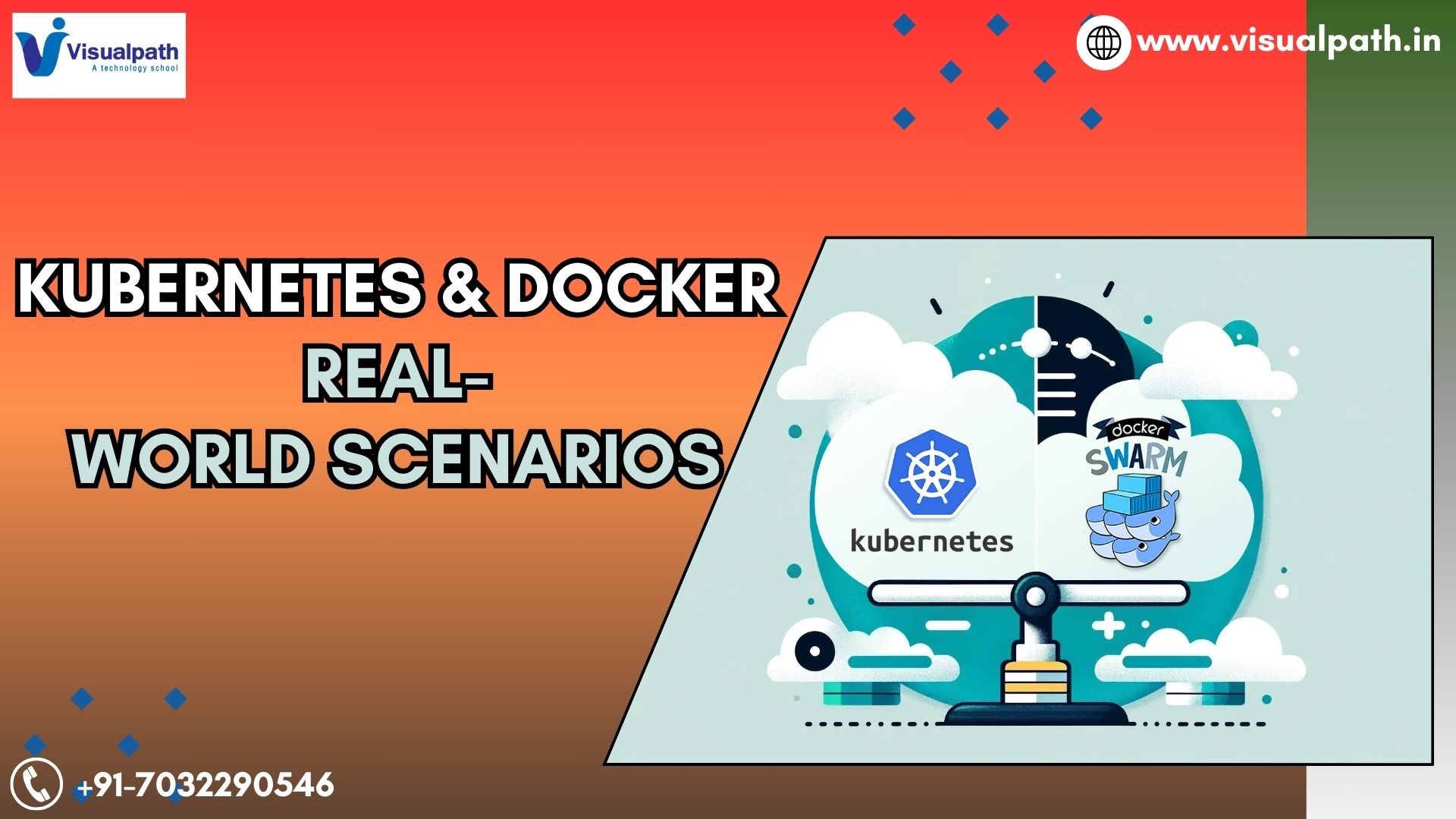
  • Kubernetes And Docker: Real-World Scenarios

    Kubernetes And Docker: Real-World Scenarios

    Kubernetes and Docker have become essential tools for organizations looking to build, deploy, and scale applications efficiently. These technologies are widely used in real-world scenarios to handle complex applications, improve resource utilization, and provide seamless deployment. In this article, we will explore the most common real-world use cases that shine together.

    Docker and Kubernetes Microservices Architecture Deployment

    One of the most popular real-world applications of it is in deploying microservices-based applications. Microservices break down large applications into smaller, independent services. Each service can be packaged into a Docker container, making it portable and easy to manage. Docker and Kubernetes Training

    Kubernetes orchestrates these containers across multiple servers, ensuring that they stay running, scale when necessary, and recover from failures. This approach is widely adopted by companies like Netflix, Amazon, and Uber to ensure smooth, large-scale operations with high availability.

    Example:
    Imagine an e-commerce website where the payment service, user authentication, and product catalog are all separate microservices. Each service runs in its own Docker container, and Kubernetes manages the entire cluster, ensuring each microservice scales during high-traffic events like Black Friday.

    Docker and Kubernetes Automated CI/CD Pipelines

    In real-world DevOps environments, integrating into Continuous Integration and Continuous Deployment (CI/CD) pipelines helps teams deliver code faster and more reliably. Docker Online Training

    With Docker, developers can build and test their applications in isolated environments. Once the code passes all checks, Kubernetes can handle automated deployments to production clusters without downtime.

    Example:
    A fintech company can build a CI/CD pipeline where every time a developer pushes new code, a Docker image is created, tested, and automatically deployed using Kubernetes. Rollbacks are easy, and updates are seamless, reducing human error.

    Handling Traffic Spikes

    Businesses often experience sudden traffic spikes, such as during holiday sales or viral social media moments. Scaling applications to handle increased loads becomes simple and automated.

    Kubernetes automatically monitors the system’s load and scales containers horizontally (by adding more container instances) to manage high demand. Once the traffic decreases, it scales down the containers to save resources.

    Example:
    Streaming platforms like Spotify or YouTube rely on Kubernetes and Docker to scale their services dynamically, ensuring millions of users get a smooth experience during peak hours

    Hybrid and Multi-Cloud Deployments

    Many organizations are shifting towards hybrid cloud or multi-cloud strategies to avoid vendor lock-in and improve redundancy. Docker and Kubernetes play a critical role in these deployments by offering consistent environments across different cloud providers. Kubernetes Online Training

    Example:
    A global enterprise can deploy part of its workload on AWS and another part on Google Cloud using Kubernetes clusters. Docker containers ensure that the application behaves the same regardless of where it runs, improving portability and reliability.

    Edge Computing and IoT

    In edge computing and IoT (Internet of Things) scenarios, deploying services closer to the source of data is crucial for reducing latency. Docker containers provide lightweight environments ideal for edge devices, while Kubernetes helps manage deployments across distributed locations.

    Example:
    Smart cities use Docker and Kubernetes to manage traffic systems, sensors, and public safety systems in real time, with workloads running at the edge and managed centrally. Docker and Kubernetes Online Training

    Conclusion

    Real-world use cases of Kubernetes and Docker highlight why these tools have become the backbone of modern application deployment. From handling microservices and automating CI/CD pipelines to managing traffic spikes and supporting hybrid cloud strategies, they provide reliable, scalable, and efficient solutions for businesses of all sizes. By leveraging together, organizations can ensure their applications are resilient, portable, and ready to meet today’s growing demands.

    Visualpath is the Best Software Online Training Institute in Hyderabad. Avail is complete worldwide. You will get the best course at an affordable cost. For More Information about Docker and Kubernetes Training

    Contact Call/WhatsApp: +91-9989971070

    Visit: https://www.visualpath.in/online-docker-and-kubernetes-training.html

  • MuleSoft: Best Practices for API Management

    MuleSoft: Best Practices for API Management

    MuleSoft digital landscape, APIs (Application Programming Interfaces) are the backbone of modern software development, enabling seamless communication between applications, systems, and devices. MuleSoft, a leader in API-led connectivity, provides a powerful platform for designing, building, and managing APIs. However, to fully leverage. It’s essential to follow best practices for API management. Let’s explore some of the key strategies.

    1. Design APIs with a Consumer-First Approach

    API design should always start with the end-user in mind. Understanding the needs and expectations of developers, partners, and clients who will use your API ensures that you create intuitive, easy-to-navigate interfaces. Use RAML (RESTful API Modeling Language) or OpenAPI specifications to document your API thoroughly and ensure clear communication.

    2. Adopt an API-Led Connectivity Approach

    MuleSoft promotes API-led connectivity, organizing APIs into three layers:

    • System APIs: Access underlying systems (databases, ERPs, etc.) without exposing their complexity MuleSoft Training.
    • Process APIs: Orchestrate and process data, combining multiple system APIs.
    • Experience APIs: Deliver data to end-users in a format suited to their devices or channels. This modular architecture increases flexibility, reusability, and scalability.

    3. Ensure Strong Security Measures

    API security is crucial to prevent unauthorized access and data breaches. Implement the following security measures:

    • Use OAuth 2.0 for secure authorization.
    • Apply API policies like rate limiting, IP whitelisting, and threat protection.
    • Encrypt sensitive data and use HTTPS for all communications. Regularly audit APIs for vulnerabilities and maintain an incident response plan.

    4. Implement Version Control

    APIs evolve over time, and version control helps maintain backward compatibility while allowing for new features. software online training institute, Use clear versioning in your API URLs (e.g., /api/v1/resource) and communicate changes effectively to consumers. Provide thorough documentation for each version and a clear deprecation policy.

    5. Monitor and Analyze API Usage

    Continuous monitoring helps identify performance bottlenecks, security threats, and user behaviour patterns. MuleSoft’s Anypoint Monitoring allows real-time tracking of API health, latency, and traffic. Leverage analytics to gain insights into how your APIs are being used and optimize accordingly MuleSoft Course.

    6. Enforce Governance and Standardization

    Establish clear governance policies for API development and deployment. This includes setting coding standards, ensuring consistent error handling, and aligning with organizational compliance requirements. MuleSoft’s Anypoint Platform facilitates centralized governance, helping maintain quality and security across all APIs.

    7. Enable Reusability and Scalability

    Design APIs for reusability by following standardized patterns and modular architecture. Encourage internal teams to reuse existing APIs instead of building redundant solutions. Scalability can be achieved by load balancing, using caching mechanisms, and deploying APIs in cloud environments.

    Conclusion

    Effective API management is essential for leveraging MuleSoft Online full potential. By adopting consumer-first design, ensuring security, implementing proper version control, and monitoring usage, organizations can build robust and scalable API ecosystems. MuleSoft’s Anypoint Platform provides the tools necessary to enforce governance, enable reusability, and deliver seamless integrations.

    Visualpath is the Leading and Best Software Online Training Institute in Hyderabad.

    For More Information about MuleSoft Training

    Contact Call/WhatsApp: +91-7032290546
    Visit: https://www.visualpath.in/Mulesoft-Training-in-hyderabad.html

  • GCP DevOps vs. AWS DevOps: Key Differences Explained

    GCP DevOps vs. AWS DevOps: Key Differences Explained

    GCP DevOps vs. AWS DevOps has become a crucial aspect of modern software development, enabling faster and more efficient deployment cycles. Among the leading cloud platforms, Google Cloud Platform (GCP) DevOps and Amazon Web Services (AWS) DevOps provide powerful tools and services to streamline development, integration, and deployment processes. While both platforms offer similar capabilities, they differ in their approach, services, and integration capabilities. This article explores the key differences between GCP DevOps and AWS DevOps to help you choose the right platform for your needs.

    Key Differences Between GCP DevOps and AWS DevOps

    1. CI/CD Services

    Both GCP and AWS provide robust Continuous Integration and Continuous Deployment (CI/CD) tools, but they function differently:

    • GCP DevOps: Uses Cloud Build for CI/CD, which provides a serverless build and testing platform with deep integration into GCP services.
    • AWS DevOps: Uses AWS CodePipeline, which offers a fully managed CI/CD service designed to automate the build, test, and deployment processes.

    GCP’s Cloud Build provides more flexibility for containerized applications, while AWS CodePipeline is highly customizable and integrates seamlessly with other AWS services.

    2. Infrastructure as Code (IaC)

    Infrastructure automation is a key component of DevOps, and both cloud providers offer solutions for managing infrastructure using code:

    • GCP DevOps: Uses Terraform (third-party) and Deployment Manager to provision and manage cloud resources.
    • AWS DevOps: Offers AWS CloudFormation and supports Terraform for infrastructure automation.

    AWS CloudFormation provides native automation for AWS infrastructure, while GCP relies on Terraform, which offers a multi-cloud approach.

    3. Container and Kubernetes Support

    Containerization is essential for modern DevOps workflows, and both GCP and AWS offer excellent support for Kubernetes:

    • GCP DevOps: Provides Google Kubernetes Engine (GKE), which is considered one of the best-managed Kubernetes services in the industry. GCP DevOps Training
    • AWS DevOps: Uses Amazon Elastic Kubernetes Service (EKS) and Amazon Elastic Container Service (ECS) for container orchestration.

    GKE offers better automation, scalability, and efficiency for Kubernetes workloads, whereas AWS provides multiple container orchestration options.

    4. Security and Compliance

    Security is a critical factor in DevOps, and both platforms offer built-in security and compliance tools:

    • GCP DevOps: Uses Binary Authorization, IAM, and Security Command Center to secure workloads.
    • AWS DevOps: Provides AWS IAM, AWS Security Hub, and GuardDuty for security and compliance monitoring.

    AWS has a more extensive compliance portfolio, making it a preferred choice for industries with strict security regulations. GCP DevOps Online Training

    5. Logging and Monitoring

    Both platforms offer robust logging and monitoring services to help teams track performance and troubleshoot issues:

    • GCP DevOps: Uses Cloud Logging and Cloud Monitoring, which provide real-time insights and anomaly detection.
    • AWS DevOps: Uses Amazon CloudWatch, which integrates deeply with AWS services for metrics, logging, and event monitoring.

    AWS CloudWatch is preferred for its in-depth AWS integration, while GCP’s Cloud Monitoring is beneficial for multi-cloud setups.

    Which One Should You Choose?

    The choice between GCP DevOps and AWS DevOps depends on multiple factors:

    • Choose GCP DevOps if you prefer strong Kubernetes support, better multi-cloud compatibility, and powerful AI/ML integrations.
    • Choose AWS DevOps if you need extensive cloud services, better compliance, and deeper integration with enterprise cloud workloads.

    Conclusion

    Both GCP DevOps and AWS DevOps provide powerful tools for implementing CI/CD, infrastructure automation, security, and monitoring. While GCP offers best-in-class Kubernetes support and multi-cloud compatibility, AWS provides stronger compliance, automation, and broader cloud services. The choice depends on your project requirements, cloud strategy, and existing infrastructure.

    Visualpath is the Leading and Best Software Online Training Institute in Hyderabad.

    For More Information about GCP DevOps Certification Course in India

    Contact Call/WhatsApp: +91-7032290546
    Visit: https://www.visualpath.in/online-gcp-devops-certification-training.html

  • SAP Ariba Supplier Lifecycle Management

    SAP Ariba Supplier Lifecycle Management

    SAP Ariba Supplier Lifecycle Management (SLM) fast-paced business environment, managing suppliers effectively is crucial for maintaining operational efficiency, reducing risks, and fostering strong partnerships. SAP Ariba Supplier Lifecycle Management (SLM) is a comprehensive solution that helps organizations streamline the entire supplier management process, from onboarding to performance evaluation. With its powerful tools and automated workflows, SAP Ariba SLM enables companies to build better supplier relationships, ensure compliance, and drive long-term value.

    What is SAP Ariba Supplier Lifecycle Management?

    SAP Ariba Supplier Lifecycle Management is an advanced cloud-based solution designed to manage the end-to-end lifecycle of suppliers. It provides businesses with a centralized platform to oversee supplier information, qualifications, performance, risk, and compliance. With SAP Ariba SLM, organizations can efficiently handle supplier onboarding, monitor ongoing performance, manage certifications, and ensure that suppliers meet business and regulatory requirements. SAP Ariba Training

    This solution is especially valuable for enterprises dealing with multiple suppliers across various regions and industries, as it ensures consistency and transparency across the entire supplier base.

    Key Features of SAP Ariba Supplier Lifecycle Management

    1. Supplier Onboarding and Qualification

    SAP Ariba SLM simplifies the onboarding process through standardized forms, automated approvals, and digital document collection. It helps assess suppliers based on predefined criteria, ensuring only qualified suppliers are added to the network. This not only speeds up the onboarding process but also reduces administrative workload and errors.

    2. Centralized Supplier Information Management

    With SAP Ariba SLM, all supplier data is stored in one secure location. Businesses can easily access and update key details, such as contact information, certifications, compliance documents, and performance records. This centralized data improves visibility and helps in making informed business decisions.

    3. Risk and Compliance Management

    Managing supplier risk is critical. SAP Ariba SLM integrates risk assessment tools that monitor suppliers for potential legal, financial, and operational risks. Businesses receive alerts on any issues that may impact their supply chain, ensuring proactive risk mitigation. SAP Ariba Online Training

    4. Performance Management

    Ongoing evaluation of suppliers is made simple through customizable scorecards and feedback tools. Companies can assess supplier performance based on delivery timelines, quality standards, and service levels, enabling continuous improvement and accountability.

    5. Collaboration and Communication

    SAP Ariba SLM facilitates seamless communication between buyers and suppliers. Through the Ariba Network, both parties can exchange information, resolve issues, and manage tasks efficiently, enhancing collaboration and fostering long-term partnerships. SAP Ariba Online Course

    Benefits of SAP Ariba Supplier Lifecycle Management

    • Enhanced Supplier Visibility: Gain a complete view of all supplier relationships, risks, and performance data in real time.
    • Improved Compliance: Ensure suppliers meet legal and regulatory standards with automated checks and documentation.
    • Increased Efficiency: Reduce manual work through automated workflows and centralized data management.
    • Better Risk Management: Identify and address potential risks before they impact your operations.
    • Stronger Supplier Relationships: Collaborate effectively and build trust with high-performing suppliers. Sap Ariba Training Institutes

    Why Should Businesses Use SAP Ariba SLM?

    In an era where supply chain disruptions are increasingly common, businesses must have strong, reliable suppliers. SAP Ariba SLM helps companies stay competitive by ensuring their supplier base is compliant, high-quality, and aligned with business goals. It reduces operational risks, optimizes supplier performance, and creates a structured approach to managing supplier relationships throughout their lifecycle.

    Conclusion

    SAP Ariba Supplier Lifecycle Management is a strategic solution for businesses looking to enhance supplier management, reduce risks, and improve efficiency. By digitizing and centralizing supplier processes, it empowers organizations to make smarter decisions, maintain strong supplier partnerships, and ensure long-term success in the global marketplace.

    Visualpath is the Best Software Online Training Institute in Hyderabad. Avail is complete worldwide. You will get the best course at an affordable cost. For More Information about SAP Ariba Training

    Contact Call/WhatsApp: +91-9989971070

    Visit: https://www.visualpath.in/online-sap-ariba-training.html

  • Docker and Kubernetes: CI/CD Pipelines

    Docker and Kubernetes: CI/CD Pipelines

    Continuous Integration and Continuous Deployment (CI/CD) have become essential for modern software development. Docker and Kubernetes are two critical technologies that help streamline and automate CI/CD pipelines, ensuring faster and more reliable application deployment. This article explores how Docker and Kubernetes contribute to CI/CD pipelines, their benefits, and the best practices for implementation.

    Understanding CI/CD Pipelinesis

    CI/CD pipelines automate software delivery by integrating code changes frequently and deploying them efficiently. Docker and Kubernetes Training

    1. Continuous Integration (CI): Developers merge their code into a shared repository multiple times a day. Automated tests are run to detect errors early.

    Role of Docker in CI/CD Pipelines

    Docker simplifies CI/CD pipelines by packaging applications and their dependencies into containers. This ensures consistency across different environments. Here’s how Docker enhances CI/CD:

    • Consistency Across Environments: Developers can create Docker images that work the same way on local, testing, and production environments.
    • Docker enables applications to be built a single time and executed on any environment, reducing build duration and eliminating compatibility problems.
    • Scalability: Docker containers can be quickly scaled up or down as needed.

    Steps to Use Docker in CI/CD Pipelines

    1. Build Docker Images: Use a Dockerfile to define application dependencies and configurations.
    2. Push to a Container Registry: Store the image in a registry like Docker Hub or Azure Container Registry. Docker and Kubernetes Course

    Role of Kubernetes in CI/CD Pipelines

    Kubernetes automates container deployment, scaling, and management. It ensures smooth application delivery in CI/CD pipelines through:

    • Automated Rollouts and Rollbacks: Kubernetes manages deployments with rolling updates and can revert to previous versions if issues arise.
    • Load Balancing: Ensures traffic is distributed efficiently across containers.
    • Self-Healing: Automatically replaces failed containers to maintain uptime.
    • Declarative Configuration: Kubernetes uses YAML manifests for predictable and repeatable deployments.

    Implementing Kubernetes in a CI/CD Pipeline

    1. Use Kubernetes Manifests: Define Deployment, Service, and Ingress configurations in YAML files.
    2. Automate Deployments: Utilize tools like Helm or Kustomize for Kubernetes resource management.
    3. Integrate with CI/CD Tools: Jenkins, GitHub Actions, GitLab CI/CD, or Azure DevOps can trigger deployments based on code changes. Docker and Kubernetes Online Training

    CI/CD Pipeline Workflow with Docker and Kubernetes

    1. CI Process: A CI tool builds the Docker image, runs tests, and pushes the image to a container registry.
    2. CD Process: Kubernetes pulls the latest image and updates the running application.
    3. Prometheus and Grafana handle deployment monitoring. ELK Stack offers logging and insights.

    Best Practices for Docker and Kubernetes in CI/CD

    • Use Multi-Stage Docker Builds: This reduces image size and improves performance.
    • Scan Docker Images for Security Vulnerabilities: Use tools like Trivy or Clair.
    • Leverage Infrastructure as Code (IaC): Use Terraform or Kubernetes manifests for consistent deployments.
    • Automate Everything: From testing to deployment, automation ensures efficiency and reliability.

    Conclusion

    Docker and Kubernetes revolutionize CI/CD pipelines by automating deployment, ensuring consistency, and improving scalability. By leveraging containerization and orchestration, organizations can achieve faster releases, higher reliability, and improved software quality. Implementing best practices ensures smooth and secure CI/CD workflows.

    Visualpath is the Best Software Online Training Institute in Hyderabad. Avail is complete worldwide. You will get the best course at an affordable cost. For More Information about Docker and Kubernetes Training

    Contact Call/WhatsApp: +91-9989971070

    Visit: https://www.visualpath.in/online-docker-and-kubernetes-training.html

  • MLOps in 2025: Key Roles and Responsibilities

    MLOps in 2025: Key Roles and Responsibilities

    As machine learning (ML) adoption grows, businesses face challenges in deploying, managing, and scaling ML models efficiently. MLOps (Machine Learning Operations) bridges the gap between ML development and production by streamlining workflows, ensuring model reliability, and automating deployment. In 2025, MLOps has evolved into a critical discipline, with organizations relying on skilled professionals to optimize AI solutions.

    This article explores the key MLOps roles and responsibilities that are essential for businesses to succeed in managing machine learning systems effectively.

    Key MLOps Roles in 2025

    1. MLOps Engineer

    MLOps Engineers are responsible for building and maintaining ML pipelines, automating model deployment, and ensuring scalability. They work closely with data scientists and software engineers to operationalize ML models efficiently.

    Key Responsibilities:

    • Automate ML workflows and CI/CD pipelines
    • Optimize model performance in production environments
    • Ensure ML models are monitored, retrained, and updated
    • Collaborate with DevOps teams for infrastructure management

    MLOps Training

    2. Data Engineer

    Data Engineers focus on preparing and managing the data that fuels ML models. They create scalable data pipelines that ensure smooth data flow from collection to model training.

    Key Responsibilities:

    • Build and maintain ETL (Extract, Transform, Load) pipelines
    • Ensure data quality and consistency for ML models
    • Work with cloud platforms to store and process large datasets
    • Optimize data storage and retrieval for real-time AI applications

    3. ML Engineer

    ML Engineers specialize in model development, focusing on training and optimizing algorithms before they reach production. They also ensure models are efficient, scalable, and integrate seamlessly with workflows. MLOps Online Course

    Key Responsibilities:

    • Develop and fine-tune ML models
    • Implement model validation and testing strategies
    • Convert research models into production-ready applications
    • Work with MLOps Engineers to deploy models efficiently

    4. DevOps Engineer (for MLOps)

    DevOps Engineers in Machine Learning focus on integrating ML workflows with cloud environments and managing infrastructure-as-code (IaC) to ensure scalability and security.

    Key Responsibilities:

    • Automate infrastructure setup for ML model deployment
    • Manage Kubernetes, Docker, and cloud services for AI workloads
    • Implement security best practices for ML pipelines
    • Ensure high availability and disaster recovery for ML models

    5. AI Product Manager

    AI Product Managers bridge the gap between technical teams and business stakeholders, ensuring ML solutions align with business goals. They define strategies and oversee the deployment of AI-driven products.

    Key Responsibilities:

    • Define AI product requirements and roadmaps
    • Collaborate with Machine Learning Operations teams to ensure model reliability
    • Monitor AI model performance and user impact
    • Communicate ML insights to non-technical stakeholders

    Importance of MLops in 2025

    MLOps is no longer optional for enterprises deploying AI solutions. As models become more complex, businesses need strong governance, automation, and scalability to manage AI lifecycles effectively. MLOps ensures: MLOps Online Training

    • Faster AI Deployment: Automated pipelines speed up model releases.
    • Improved Model Performance: Continuous monitoring enhances accuracy.
    • Reduced Operational Costs: Efficient workflows minimize cloud expenses.
    • Better Collaboration: DevOps, ML, and data teams work seamlessly.
    • Enhanced Security: Compliance and governance ensure responsible AI use.

    Conclusion

    In 2025, MLOps is essential for managing AI at scale. Skilled professionals in MLOps Engineering, Data Engineering, ML Engineering, DevOps, and AI Product Management play a crucial role in ensuring AI solutions are reliable, scalable, and aligned with business objectives.

    Visualpath is the Leading and Best Software Online Training Institute in Hyderabad.

    For More Information about MLOps Online Training

    Contact Call/WhatsApp: +91-7032290546

    Visit: https://www.visualpath.in/online-mlops-training.html

  • Top GCP DevOps Tools: Essential Guide for 2025

    Top GCP DevOps Tools: Essential Guide for 2025

    Google Cloud Platform (GCP) has emerged as a powerful cloud provider for enterprises looking to implement DevOps practices efficiently. With its comprehensive suite of tools, GCP enables automation, scalability, and continuous integration/continuous deployment (CI/CD) for modern applications. In 2025, adopting the right GCP DevOps tools is crucial for enhancing productivity and ensuring seamless software delivery. This article explores the top GCP DevOps tools and their benefits in optimizing development workflows.

    1. Google Kubernetes Engine (GKE)

    GKE is one of the most widely used container orchestration platforms, offering automated deployment, scaling, and operations for containerized applications. It integrates seamlessly with other GCP services and provides features like auto-scaling, security, and managed Kubernetes clusters. GKE is ideal for teams looking to run microservices efficiently in the cloud.

    2. Cloud Build

    Cloud Build is GCP’s fully managed CI/CD service that automates the building, testing, and deployment of applications. It supports multiple source repositories, including GitHub, Bitbucket, and Cloud Source Repositories. With Cloud Build, developers can execute parallel builds, speed up deployments, and enhance the software development lifecycle. GCP DevOps Training

    3. Cloud Deployment Manager

    This tool allows teams to automate infrastructure provisioning using declarative configuration files. Cloud Deployment Manager helps in defining and managing GCP resources in a structured manner, ensuring consistency across deployments. It is essential for managing infrastructure as code (IaC) efficiently.

    4. Anthos

    Anthos is a hybrid and multi-cloud platform that enables consistent DevOps practices across on-premises and cloud environments. With Anthos, organizations can modernize their applications using Kubernetes and automate security policies. It is a preferred tool for enterprises looking for flexibility in managing workloads across different cloud providers.

    5. Cloud Run

    Cloud Run is a serverless container platform that enables developers to deploy and manage stateless containers in a fully managed environment. It eliminates infrastructure management and auto-scales applications based on demand. Cloud Run simplifies DevOps processes by providing a cost-effective and efficient way to run cloud-native applications.

    6. Cloud Logging & Monitoring (Operations Suite)

    GCP’s Operations Suite (formerly Stackdriver) offers powerful logging, monitoring, and diagnostics tools for applications running on GCP. With real-time insights and proactive alerting, teams can ensure high availability and quickly detect performance bottlenecks. These tools play a crucial role in maintaining a stable DevOps pipeline. GCP DevOps Online Training

    7. Artifact Registry

    Artifact Registry is GCP’s centralized storage solution for container images, packages, and dependencies. It enhances security by enabling private repositories and integrates with CI/CD pipelines for seamless software delivery. This tool is essential for managing and securing software artifacts in DevOps workflows.

    8. Cloud Functions

    Cloud Functions provide a lightweight, event-driven compute platform that enables developers to execute code in response to events. It is commonly used for automating DevOps tasks, such as log processing, event triggers, and workflow automation, without managing servers.

    9. Binary Authorization

    This security-focused tool ensures that only verified and trusted container images are deployed within an organization. It integrates with GKE and other GCP services to enforce policies and prevent unauthorized code from entering production. Binary Authorization is critical for DevSecOps strategies.

    10. Terraform on GCP

    Terraform is an open-source infrastructure as code tool that integrates seamlessly with GCP for automating cloud resource provisioning. It enables DevOps teams to create reproducible environments, track changes, and enhance collaboration while managing infrastructure efficiently.

    Conclusion

    As organizations adopt DevOps best practices, leveraging the right GCP tools is essential for automating workflows, improving security, and enhancing cloud performance. From container orchestration with GKE to CI/CD automation with Cloud Build, GCP provides a robust ecosystem to support DevOps teams in 2025. By integrating these tools, businesses can achieve faster deployments, increased reliability, and optimized cloud infrastructure.

    Visualpath is the Leading and Best Software Online Training Institute in Hyderabad.

    For More Information about GCP DevOps Certification Course in India

    Contact Call/WhatsApp: +91-7032290546

    Visit: https://www.visualpath.in/online-gcp-devops-certification-training.html