Tag: MLOpsOnlineTraining

  • MLOps: Filling the Gap Between Data Science and IT Operations

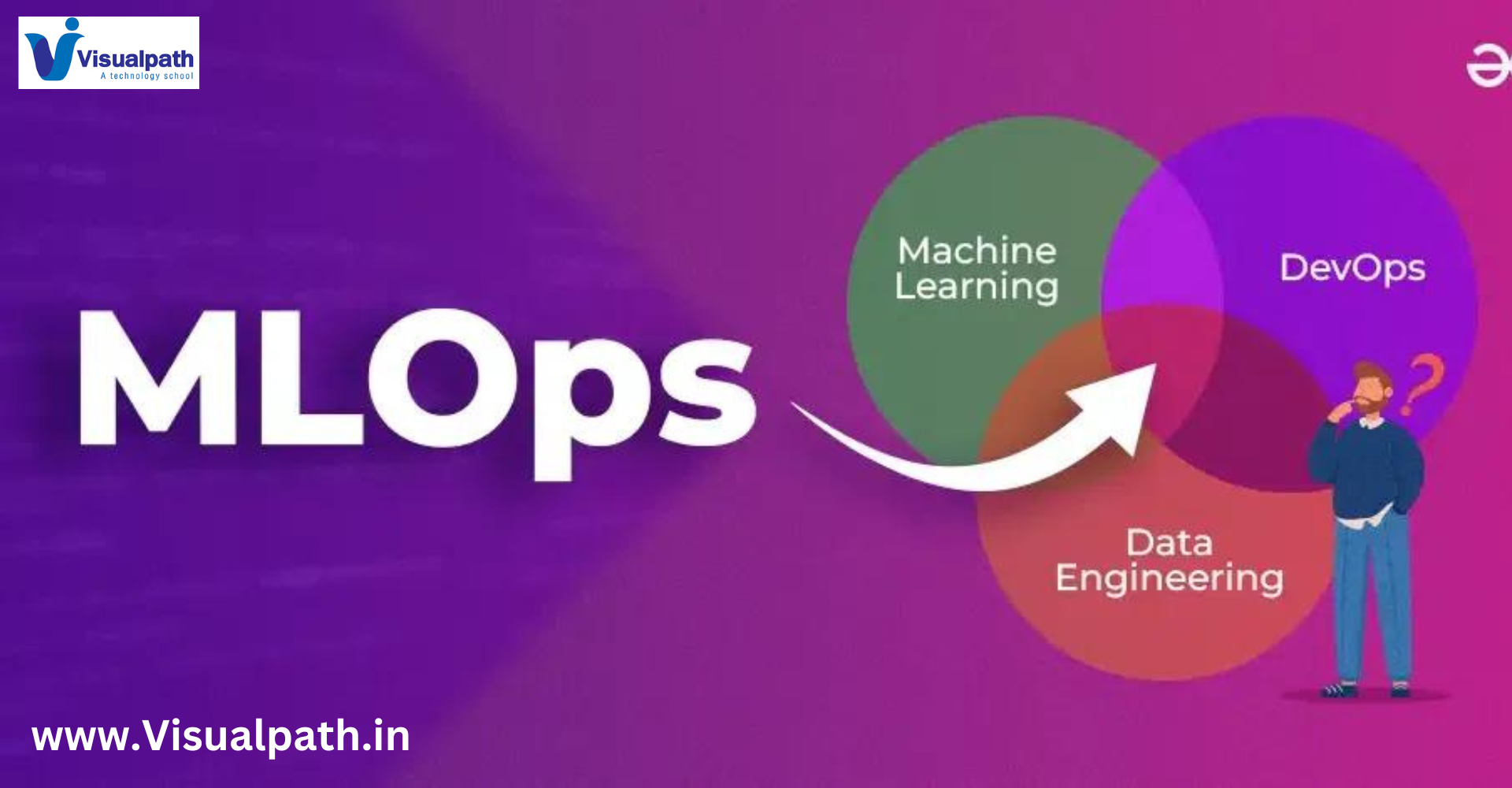
    MLOps, or Machine Learning Operations, is a practice that bridges the gap between data science and IT operations to streamline the deployment and maintenance of machine learning models in production environments. It combines elements of DevOps, data engineering, and machine learning to ensure models are reproducible, scalable, and reliably maintained. By automating workflows and fostering collaboration, MLOps enhances efficiency and ensures continuous model performance.

    Understanding MLOps

    MLOps is a collaborative function, often involving data scientists, DevOps engineers, and IT operations. Its primary goal is to streamline the process of taking machine learning models from development to production, ensuring that they are reproducible, scalable, and can be maintained over time. MLOps encompasses the following key aspects:

    1. Automation and CI/CD: Automating the machine learning pipeline, including data preprocessing, model training, and deployment, using Continuous Integration and Continuous Deployment (CI/CD) practices.
    2. Monitoring and Management: Implementing robust monitoring to track model performance, detect anomalies, and manage model versions to ensure optimal functioning. MLOps Training in Ameerpet
    3. Collaboration and Communication: Facilitating better communication between data scientists and operations teams to ensure that ML models are aligned with business goals and are efficiently operationalized.

    The MLOps Lifecycle

    The MLOps lifecycle can be broadly divided into several stages:

    1. Data Management: Collecting, storing, and pre-processing data. Ensuring data quality and consistency is crucial for building reliable models.
    2. Model Development: Experimenting with different algorithms and techniques to create the best-performing model. This involves feature engineering, hyper parameter tuning, and model selection. MLOps Course in Hyderabad
    3. Model Training: Using robust infrastructure to train models on large datasets. This stage may involve distributed computing and the use of GPUs or TPUs for faster processing.
    4. Model Validation: Testing the model to ensure it performs well on unseen data. This includes cross-validation, performance metrics evaluation, and ensuring the model does not overfit.
    5. Model Deployment: Moving the trained model into a production environment. This stage involves setting up APIs, batch processing systems, or real-time streaming services to serve the model predictions.
    6. Model Monitoring and Maintenance: Continuously monitoring the model’s performance in production and retraining it as needed to handle data drift or changing conditions.

    Benefits of MLOps

    Implementing MLOps offers several significant benefits:

    1. Efficiency: Automating repetitive tasks reduces manual efforts and speeds up the development cycle.
    2. Scalability: MLOps frameworks enable the deployment of models at scale, handling large volumes of data and traffic seamlessly.
    3. Reproducibility: Ensures that models can be consistently reproduced across different environments, promoting reliability.
    4. Collaboration: Enhances communication between data science and IT teams, aligning technical efforts with business objectives.
    5. Continuous Improvement: Facilitates continuous monitoring and iterative improvement of models based on real-world feedback and performance data.

    Tools and Technologies

    Several tools and technologies are integral to MLOps, including:

    1. Version Control Systems: Git, DVC (Data Version Control)
    2. CI/CD Tools: Jenkins, GitLab CI, CircleCI
    3. Containerization and Orchestration: Docker, Kubernetes
    4. Monitoring and Logging: ELK Stack, Grafana, and Prometheus
    5. Machine Learning Platforms: TensorFlow Extended (TFX), MLflow, Kubeflow

    Challenges in MLOps

    Despite its benefits, MLOps also comes with its set of challenges:

    1. Complexity: Integrating various tools and frameworks can be complex and requires a deep understanding of both ML and IT operations.
    2. Scalability: Ensuring that the infrastructure can scale with growing data and model complexity. MLOps Online Training
    3. Governance and Compliance: Managing data privacy, security, and compliance with regulations such as GDPR.

    Conclusion

    MLOps is a crucial discipline in the modern data-driven world, providing the backbone for deploying, monitoring, and maintaining machine learning models in production. By fostering collaboration, enhancing efficiency, and ensuring scalability, MLOps helps organizations harness the full potential of their AI and ML initiatives, turning innovative ideas into reliable, production-ready solutions. As the field evolves, embracing MLOps practices will be vital for staying competitive and achieving sustained success in the realm of machine learning. MLOps Training in Hyderabad

    The Best Software Online Training Institute in Ameerpet, Hyderabad. Avail complete Machine Learning Operations Training by simply enrolling in our institute, Hyderabad. You will get the best course at an affordable cost.

    Call on – +91-9989971070

    WhatsApp: https://www.whatsapp.com/catalog/917032290546/

    Visit: https://www.visualpath.in/mlops-online-training-course.html
  • Learn to effectively manage and track Machine Learning experiments?    

    Learn to effectively manage and track Machine Learning experiments?    

    Managing and tracking machine learning experiments is crucial for maintaining organization, reproducibility, and efficiency in any ML project. Here’s a guide on how to effectively manage and track your ML experiments without diving into the code: MLOps Training Course in Hyderabad

    1. Experiment Documentation: Start by creating a clear and detailed documentation template for each experiment. Include information such as the objective, dataset used, hyperparameters, model architecture, evaluation metrics, and any notable observations or insights.
    2. Experiment Versioning: Implement a version control system for your experiments. This can be as simple as using a spreadsheet or a more sophisticated solution like ML flow or Neptune.ai. Track changes in your experiments over time to understand what modifications lead to improvements or regressions.
    3. Data Versioning: Ensure that your datasets are versioned along with your code and experiments. Use tools like DVC or Git LFS to manage large datasets efficiently. This helps in reproducing experiments and understanding the impact of data changes on model performance.
    • Experiment Tracking Platforms: Leverage experiment tracking platforms like Weights & Biases, Tensor Board, or Neptune.ai to log experiment metadata,  hyperparameters, metrics, and visualizations. These platforms provide interactive dashboards for easy comparison and analysis of experiments. MLOps Online Training
    • Hyperparameter Tuning: Use techniques like grid search, random search, or Bayesian optimization to search for optimal hyperparameters systematically. Keep track of the hyperparameter search space and results for each experiment.
    • Model Evaluation: Establish a robust evaluation strategy with appropriate validation techniques such as cross-validation or train/validation/test splits. Record evaluation metrics for each experiment iteration to compare model performance accurately.
    • Experiment Reproducibility: Ensure reproducibility by setting random seeds for pseudo-random number generators and logging environment dependencies such as Python version, libraries, and hardware specifications.
    • Collaboration and Communication: Foster collaboration by sharing experiment results, insights, and findings with team members. Use documentation, presentations, or visualizations to communicate complex ideas effectively. MLOps Training in Ameerpet
    • Automated Experimentation: Explore automated machine learning (Auto ML) tools to streamline the experimentation process. These tools can automatically search for the best model architecture, hyperparameters, and preprocessing steps, saving time and effort.
    • Continuous Monitoring: Continuously monitor model performance in production environments and retrain models as necessary to adapt to changing data distributions or requirements.

    By following these guidelines, you can effectively manage and track machine learning experiments, leading to better insights, reproducibility, and ultimately, more successful ML projects. Machine Learning Operations Training

    Visualpath is the Best Software Online Training Institute in Hyderabad. Avail complete MLOps worldwide. You will get the best course at an affordable cost.

    Call on – +91-9989971070

    WhatsApp: https://www.whatsapp.com/catalog/917032290546/

  • MLOps: Streamlining Machine Learning Workflows

    MLOps: Streamlining Machine Learning Workflows

    In the fast-paced realm of artificial intelligence, where algorithms constantly evolve and data becomes the new oil, Machine Learning Operations (MLOps) has emerged as a crucial discipline. MLOpscombines the principles of DevOps with the intricacies of machine learning to streamline the development, deployment, and maintenance of AI models. As organizations increasingly rely on machine learning to drive decision-making and innovation, understanding MLOps becomes imperative for staying ahead in the technological race.

    The Evolution of MLOps

    Traditionally, machine learning models were developed in silos by data scientists, detached from the operational aspects of deployment and maintenance. This disjointed approach often led to inefficiencies, with models failing to perform optimally in real-world scenarios. MLOps addresses these challenges by fostering collaboration between data scientists, software engineers, and operations teams throughout the entire ML lifecycle.

    Key Components of MLOps

    1. Version Control: Just like in software development, version control systems such as Git play a crucial role in tracking changes to machine learning code and model configurations. This guarantees repeatability and promotes team member collaboration.
    2. Continuous Integration and Continuous Deployment (CI/CD): CI/CD pipelines automate the process of testing, building, and deploying machine learning models. By automating repetitive tasks, CI/CD pipelines accelerate the development cycle and ensure the seamless deployment of models into production environments. MLOps Online Training
    3. Model Monitoring and Management: Monitoring the performance of deployed models is essential for detecting drift and ensuring that they continue to deliver accurate predictions over time. MLOps platforms offer tools for monitoring model metrics, detecting anomalies, and retraining models when necessary.
    4. Infrastructure Orchestration: MLOps involves managing the infrastructure required to train, deploy, and serve machine learning models. This may include container orchestration platforms like Kubernetes, which provide scalability and resilience to machine learning workloads.
    5. Experiment Tracking and Management: Experiment tracking platforms allow data scientists to log experiments, track hyperparameters, and compare the performance of different models. This enables data-driven decision-making and helps teams iterate faster towards better-performing models.

    Challenges in Implementing MLOps

    Despite its benefits, implementing MLOps poses several challenges for organizations: MLOps Training in Ameerpet

    1. Cultural Shift: Adopting MLOps requires a cultural shift towards collaboration, transparency, and automation. Breaking down silos between data science and engineering teams can be challenging but is essential for MLOps success.
    2. Complexity: Machine learning workflows are inherently complex, involving multiple stages from data preprocessing to model deployment. Managing this complexity requires robust tooling and expertise in both machine learning and DevOps practices.
    3. Data Management: Data quality and governance are critical for the success of machine learning projects. MLOps involves establishing processes for data versioning, lineage tracking, and ensuring compliance with data privacy regulations.
    4. Scalability: As machine learning projects scale, managing infrastructure resources and orchestrating workflows becomes increasingly complex. Organizations need to invest in scalable MLOps platforms that can handle large-scale machine learning workloads. MLOps Training in Hyderabad

    The Future of MLOps

    As machine learning continues to permeate every aspect of business and society, the importance of MLOps will only grow. Organizations that invest in building robust MLOps capabilities will gain a competitive edge by accelerating innovation, reducing time to market, and delivering more reliable AI-powered solutions.

    Looking ahead, we can expect to see further advancements in MLOps tools and methodologies, driven by innovations in areas such as model interpretability, automated feature engineering, and federated learning. Additionally, as regulatory scrutiny around AI intensifies, MLOps will play a crucial role in ensuring transparency, fairness, and accountability in machine learning systems.

    Conclusion

    MLOps represents a paradigm shift in how organizations develop, deploy, and manage machine learning applications. By integrating machine learning with DevOps principles, MLOps enables teams to deliver AI-powered solutions faster, more reliably, and at scale. While implementing MLOps presents its challenges, the benefits in terms of improved collaboration, efficiency, and model performance far outweigh the initial investment. As the field of MLOps continues to evolve, it will undoubtedly shape the future of AI and drive innovation across industries. MLOps Course in Hyderabad

    The Best Software Online Training Institute in Ameerpet, Hyderabad. Avail complete Machine Learning Operations Training by simply enrolling in our institute, Hyderabad. You will get the best course at an affordable cost.

    Call on – +91-9989971070

    WhatsApp: https://www.whatsapp.com/catalog/917032290546/

    Visit: https://www.visualpath.in/mlops-online-training-course.html
  • The Future of MLOps: Bridging the Gap Between Data Science and Production

    The Future of MLOps: Bridging the Gap Between Data Science and Production

    The field of machine learning (ML) has witnessed explosive growth in recent years. Businesses are increasingly leveraging the power of ML to solve complex problems, from optimizing marketing campaigns to predicting equipment failure. However, the journey from creating a promising ML model in a research environment to deploying it effectively in production can be fraught with challenges. This gap between data science and production is where MLOps, or Machine Learning Operations, comes in.

    The Perilous Journey: From Research to Reality

    Data scientists, the architects of ML models, often focus on experimentation and innovation. They build models on local machines, spending a significant amount of time on data wrangling and model training. However, deploying these models in production requires a different skillset and infrastructure. Here’s where the gap surfaces:

    • Version Control and Reproducibility: Tracking changes in code and data is crucial for maintaining model performance and identifying issues. Traditional data science workflows often lack robust version control, making it difficult to reproduce results or revert to a previous version if needed.
    • Scalability and Infrastructure: Production environments demand models that can handle real-world data volumes and integrate seamlessly with existing systems. Models built on local machines might not scale effectively in production, leading to performance degradation. MLOps Online Training
    • Model Monitoring and Performance: Once deployed, models need constant monitoring to ensure they are performing as expected and haven’t drifted due to changes in the underlying data distribution. Data scientists might not have the expertise or resources to develop robust monitoring pipelines.

    These challenges can lead to a scenario where promising ML models never reach their full potential, hindering the return on investment (ROI) from AI initiatives.

    MLOps: Building the Bridge

    MLOps bridges the gap between data science and production by establishing a set of practices, tools, and automation to streamline the entire ML lifecycle. Here’s how MLOps addresses the challenges mentioned earlier: MLOps Training in Hyderabad

    • Version Control and Collaboration: MLOps leverages version control systems like Git to track changes in code, data, and model configurations. This allows for collaboration between data scientists and engineers, facilitates rollbacks if necessary, and ensures model reproducibility.
    • Continuous Integration and Deployment (CI/CD): MLOps adapts CI/CD practices from DevOps to automate the building, testing, and deployment of ML models. This ensures consistency, reduces errors, and speeds up the time to deploy models in production.
    • Model Packaging and Containerization: MLOps utilizes containerization technologies like Docker to package models with all their dependencies. This enables seamless deployment across different environments and cloud platforms.

    Benefits of Embracing MLOps

    Implementing MLOps practices provides several benefits for organizations:

    • Increased Efficiency: Automating repetitive tasks frees up data scientists to focus on higher-level tasks like model improvement and feature engineering. MLOps Course in Hyderabad
    • Improved Model Performance: MLOps ensures models are deployed consistently and optimized for production environments.
    • Faster Time to Market: Streamlined workflows and automated deployments lead to faster delivery of AI solutions.
    • Enhanced Governance and Compliance: Robust version control and monitoring practices facilitate better risk management and adherence to regulations.
    • Improved Collaboration: MLOps fosters collaboration between data scientists, engineers, and operations teams, leading to a more unified approach to AI development.

    The Future of MLOps: What Lies Ahead

    The future of MLOps is bright, driven by advancements in automation, artificial intelligence (AI), and a growing focus on collaboration. Here are some key trends to watch:

    • Automated Experimentation and Model Selection: Machine learning platforms will offer self-service features for data scientists to automate experiment tracking, hyperparameter tuning, and model selection, accelerating the development process. MLOps Training Institute in Hyderabad
    • AI-powered Operations: AI will play a more significant role in MLOps, automating tasks like model monitoring, anomaly detection, and data drift correction, allowing for proactive management of production models.
    • Democratization of MLOps: MLOps tools and platforms will become more user-friendly and accessible, enabling a wider range of businesses to leverage ML capabilities without requiring a dedicated team of data scientists and engineers.

    Building a Strong MLOps Foundation

    To successfully implement MLOps, organizations need to consider several factors:

    • Culture and Collaboration: Fostering a collaborative culture between data science, engineering, and operations teams is critical for successful MLOps adoption. Machine Learning Operations Training
    • Choosing the Right Tools: Selecting the appropriate MLOps tools depends on the organization’s specific needs and infrastructure. Open-source solutions and cloud-based platforms are gaining traction due to their flexibility and scalability.
    • Building a Strong Foundation: Establishing best practices for data management, version control, and model monitoring is essential for ensuring robust and reliable ML deployments.

    Conclusion

    MLOps is not just a set of tools; it’s a cultural shift that bridges the gap between the innovative world of data science and the demanding realities of production. By embracing MLOps, organizations can unlock the true potential of their machine learning models, accelerating innovation, improving efficiency, and gaining a competitive edge in the AI era. As MLOps continues to evolve alongside advancements in AI and automation, it will empower businesses to develop, deploy, and manage machine learning solutions with greater speed, reliability, and impact. The future of machine learning is undoubtedly intertwined with the success of MLOps, and organizations that embrace this approach will be well-positioned to reap the transformative benefits of AI.

    The Best Software Online Training Institute in Ameerpet, Hyderabad. Avail complete Machine Learning Operations Training by simply enrolling in our institute, Hyderabad. You will get the best course at an affordable cost.

    Call on – +91-9989971070

    WhatsApp: https://www.whatsapp.com/catalog/919989971070/

    Visit: https://www.visualpath.in/mlops-online-training-course.html
  • Top End-to-End MLOps Platforms and Tools in 2024

    Top End-to-End MLOps Platforms and Tools in 2024

    The field of Machine Learning (ML) has seen explosive growth, but deploying and managing these models in production (MLOps) remains a challenge. Disparate tools, siloed workflows, and the ever-growing complexity of models demand a more streamlined approach. Enter MLOps platforms and tools – designed to bridge the gap between ML development and operations.

    This article explores the top contenders in the 2024 MLOps landscape, categorized as:

    • End-to-End Platforms: Offering a comprehensive suite of tools for the entire ML lifecycle.
    • Specialized Tools: Addressing specific stages within the MLOps pipeline.

    These platforms provide a one-stop shop for managing your ML projects, from data preparation to deployment and monitoring.

    • AWS SageMaker (Amazon Web Services): A leader in the cloud MLOps arena, SageMaker streamlines workflows with features like built-in algorithms, automated model building (AutoML), and one-click deployments. It integrates seamlessly with other AWS services for data storage, compute, and analytics. MLOps Online Training
    • Google Vertex AI (Google Cloud Platform): Vertex AI provides a unified environment for both automated model development and custom training using popular frameworks. It boasts features like Explainable AI (XAI) for model interpretability and Vertex Pipelines for orchestrating complex ML workflows.
    • Microsoft Azure Machine Learning: Azure Machine Learning offers a drag-and-drop interface for building and deploying ML models. It integrates well with other Azure services and supports a wide range of open-source frameworks. Additionally, Azure offers responsible AI features to ensure fairness and bias detection in models.
    • Databricks Data Science & Machine Learning: Built for big data processing, Databricks offers a robust platform for large-scale ML projects. Its strength lies in its ability to handle complex data pipelines and integrate with popular data science libraries like Spark ML. MLOps Training in Ameerpet
    • Qwak MLOps Platform: A relative newcomer, Qwak provides a comprehensive suite of tools including experiment tracking, model versioning, and real-time monitoring. It boasts a user-friendly interface and focuses on simplifying complex ML workflows.

    While end-to-end platforms offer a broad range of functionalities, some organizations might prefer best-of-breed tools for specific stages of the MLOps pipeline. Here are some prominent examples:

    • Experiment Tracking & Version Control:
      • DagsHub and Weights & Biases offer centralized platforms for tracking experiments, managing model versions, and collaborating with teammates.
    • Data Labeling & Annotation:
      • Platforms like Label box and Super Annotate provide tools for efficient human-in-the-loop data labelling tasks, crucial for training high-quality supervised learning models. MLOps Training in Hyderabad
    • Feature Stores:
      • Feature stores like Hops works and Feast manage the lifecycle of features used in ML models, ensuring consistency and traceability.
    • Model Deployment & Serving:
      • KFServing (KubeFlow Serving) is an open-source framework for deploying ML models in various production environments, including Kubernetes clusters.
    • Model Monitoring & Observability:
      • Evidently.ai and Neptune.ai provide tools for monitoring model performance in production, detecting data drift, and identifying potential issues. MLOps Course in Hyderabad

    Selecting the ideal MLOps solution depends on several factors:

    • Project Requirements: Consider the complexity of your ML projects, the size and skillset of your team, and the specific needs of each stage in the lifecycle.
    • Scalability: Will your MLOps needs grow over time? Choose a platform that can scale to accommodate increasing model deployments.
    • Cloud Integration: If you’re already heavily invested in a particular cloud platform (AWS, GCP, Azure), a native MLOps solution might offer tighter integration and easier deployment. MLOps Training Course in Hyderabad
    • Open Source vs. Proprietary: Open-source tools offer greater flexibility but may require more technical expertise to set up and maintain. Proprietary platforms usually provide a more user-friendly experience with readily available support.

    The MLOps landscape is constantly evolving, with trends like:

    • AutoML Advancements: Expect further advancements in automated model building tools that make ML development more accessible.
    • Explainable AI (XAI): As regulations and ethical considerations become more prominent, XAI tools will be crucial for understanding how models arrive at their decisions. Machine Learning Training in Ameerpet
    • Continuous Learning (CL): MLOps platforms with built-in capabilities for retraining and updating models in production will become increasingly valuable.

    The landscape of MLOps in 2024 offers a wealth of options for organizations looking to streamline their machine learning pipelines. Both end-to-end platforms and specialized tools cater to various project needs and skillsets.

    The Best Software Online Training Institute in Ameerpet, Hyderabad. Avail complete Machine Learning Operations Training by simply enrolling in our institute, Hyderabad. You will get the best course at an affordable cost.

    Call on – +91-9989971070

    WhatsApp: https://www.whatsapp.com/catalog/919989971070/

    Visit: https://www.visualpath.in/mlops-online-training-course.html