Tag: Microsoft Dynamics CRM Course in Ameerpet

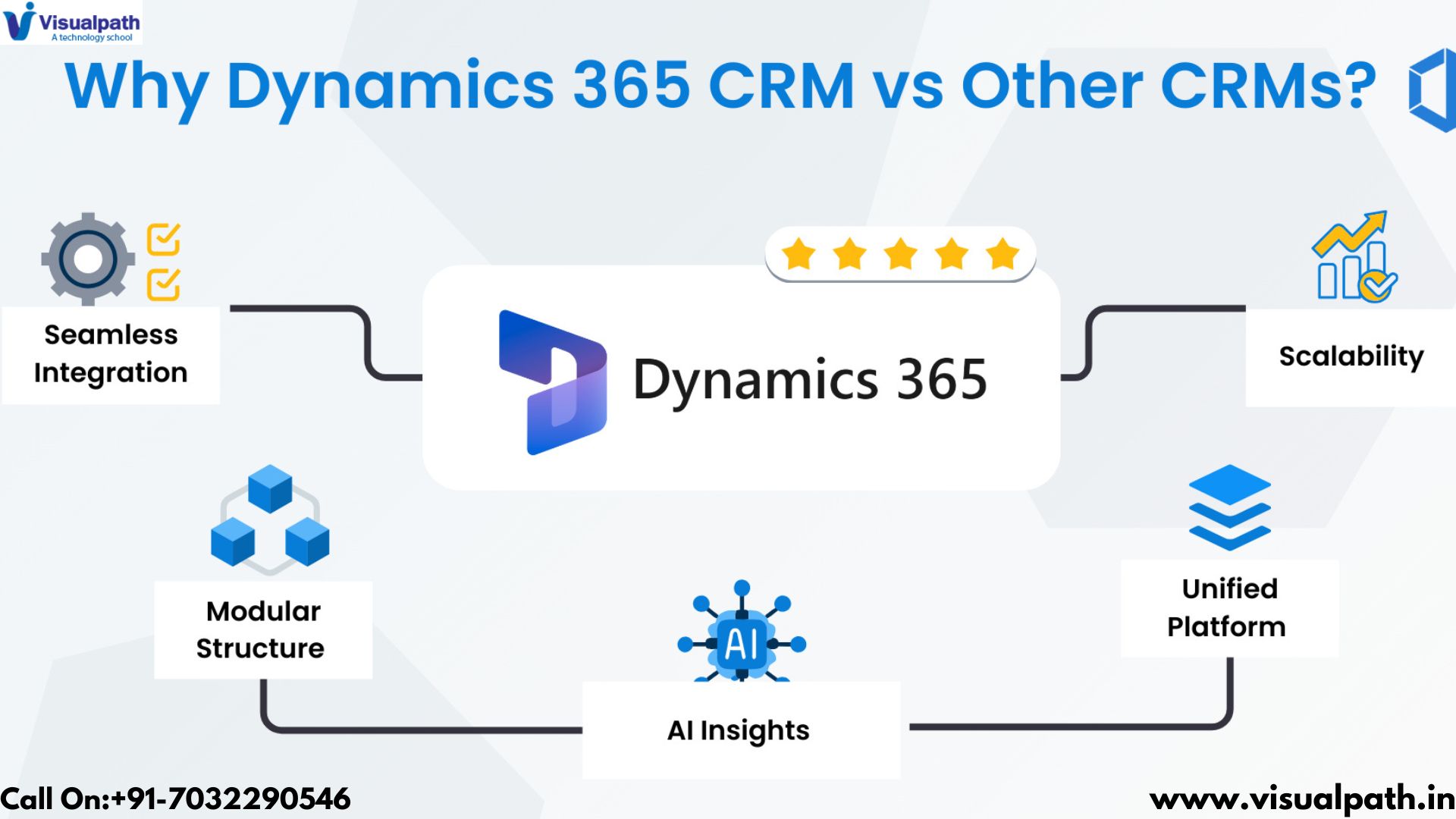
  • Why Microsoft Dynamics CRM is Key for 2025 Success

    Why Microsoft Dynamics CRM is Key for 2025 Success

    Why Microsoft Dynamics CRM is Key for 2025 Success

    In this article, we’ll explore why Microsoft Dynamics CRM is key for business success in 2025 and why Visualpath’s Microsoft Dynamics CRM online training is an excellent option to accelerate your career in this field. With the ever-growing demand for CRM expertise, enhancing your skills through trusted platforms like Visualpath could be your gateway to exciting career opportunities.

    The Growing Importance of CRM in 2025

    Customer relationship management (CRM) has long been a critical aspect of business success.

    These integrations allow businesses to centralize customer data, automate workflows, and deliver more personalized experiences.

    Key Benefits of Microsoft Dynamics CRM in 2025:

    • Seamless Integration: With Microsoft Dynamics CRM, businesses can leverage existing tools like Outlook and Excel, creating a unified experience that reduces the learning curve for employees.
    • Data-Driven Insights: The platform offers powerful analytics capabilities, enabling businesses to harness customer data and make informed decisions based on real-time insights.
    • Customer Engagement: Personalized marketing, customer support, and sales automation features ensure that businesses can create long-lasting relationships with their customers.
    • AI-Powered Automation: As AI continues to advance, Dynamics CRM integrates intelligent automation to handle routine tasks, allowing teams to focus on higher-value work.

    As businesses increasingly prioritize customer-centric strategies, Microsoft Dynamics CRM will be a cornerstone for achieving these goals, making it a key tool for future success.

    Why Choose Visualpath for Microsoft Dynamics CRM Training?

    For anyone looking to harness the power of Microsoft Dynamics CRM in their career, enrolling in a high-quality training program is essential. Visualpath, known for its comprehensive and globally recognized training programs, offers top-tier online courses that are designed to prepare you for success in this rapidly growing field.

    Visualpath’s Microsoft Dynamics CRM Online Training

    Visualpath provides Microsoft Dynamics CRM online training worldwide, catering to professionals at all levels.

    Here’s why Visualpath is the best choice for your Dynamics CRM training:

    1. In-Depth Online Training

    Visualpath’s Microsoft Dynamics CRM course offers detailed modules that cover everything from the basics to advanced functionalities.

    2. Real-Time Projects & Hands-On Learning

    In the fast-paced world of CRM, hands-on experience is crucial. Visualpath’s training goes beyond lectures and theoretical content by providing real-time projects that allow students to apply their knowledge in practical settings. By working on these live projects, you gain real-world experience that boosts your confidence and expertise.

    This hands-on approach ensures you are ready to tackle real business challenges using Microsoft Dynamics CRM, which is a crucial factor for success in today’s job market.

    3. Daily Recorded Sessions for Reference

    One of the standout features of Visualpath’s online training is the availability of daily recorded sessions.

    4. Comprehensive Cloud & AI Courses

    As the demand for Cloud and AI-related skills continues to rise, Visualpath offers specialized courses that integrate these technologies with Microsoft Dynamics CRM.

    5. Global Recognition and Support

    Visualpath’s training programs are recognized worldwide, making it an excellent choice for students and professionals looking to enhance their careers globally.

    How Microsoft Dynamics CRM Can Shape Your Career in 2025

    By gaining expertise in Microsoft Dynamics CRM, you’ll be equipped to:

    • Drive Sales Growth: Utilize the advanced analytics and automation tools within Dynamics CRM to optimize sales strategies and boost revenue.
    • Streamline Business Operations: By automating key business processes and centralizing customer data, you’ll help businesses run more efficiently.

    With the right training, you can position yourself as an expert in a field that’s set to see enormous growth in the coming years.

    FAQ About Microsoft Dynamics CRM

    What is Microsoft Dynamics CRM, and why is it important?
    Microsoft Dynamics CRM is a platform designed to manage customer relationships, automate processes, and analyze customer data. It’s crucial for businesses aiming to streamline their operations and provide better customer experiences.
    How long does it take to learn Microsoft Dynamics CRM?
    The time it takes to learn Microsoft Dynamics CRM depends on your prior knowledge and the depth of the course you’re taking. Generally, it can take anywhere from a few weeks to a few months to gain proficiency.
    Can I take Microsoft Dynamics CRM training online?
    Yes, Visualpath offers comprehensive online training for Microsoft Dynamics CRM that allows you to learn at your own pace, with hands-on projects and recorded sessions for reference.
    What career opportunities are available after learning Microsoft Dynamics CRM?
    After completing training, you can pursue roles such as CRM Developer, CRM Consultant, CRM Administrator, and more, in industries ranging from IT to healthcare, retail, and finance.
    Why should I choose Visualpath for Microsoft Dynamics CRM training?
    Visualpath provides in-depth online training with hands-on projects, daily recorded sessions, and global recognition. The company also offers courses on Cloud and AI technologies, which enhance your CRM skills.

    Conclusion

    As we move closer to 2025, Microsoft Dynamics CRM will continue to be an essential tool for businesses aiming to succeed in a customer-centric world. By gaining proficiency in Dynamics CRM, you’ll be equipped with the skills necessary to drive business success and advance your career.

    Visualpath’s Microsoft Dynamics CRM online training offers the perfect opportunity to develop these skills with real-time projects, hands-on learning, and flexible study options.

    Visualpath is a leading online training provider offering expert-led courses in Cloud, AI, DevOps, and enterprise technologies worldwide. With real-time projects and daily recorded sessions, Visualpath ensures hands-on learning for career growth.

    Contact Call/WhatsApp: +91-7032290546

    Visit: https://www.visualpath.in/online-microsoft-dynamics-crm.html

  • Connect Dynamics CRM to PowerApps (2025 Guide)

    Connect Dynamics CRM to PowerApps (2025 Guide)

    How to Connect Dynamics CRM to PowerApps: A Step-by-Step Beginner’s Guide

    How to Connect Dynamics CRM to PowerApps: A Step-by-Step Beginner’s Guide

    Hey there! If you’re just getting started with PowerApps and Dynamics CRM, welcome—you’re in for an exciting journey. I remember the first time I tried to connect Dynamics CRM to PowerApps. It felt a bit overwhelming, but once I broke it down into simple steps, it became much more manageable.

    In this guide, I’ll walk you through exactly how to connect Dynamics CRM to PowerApps—with simple steps, just a clear, beginner-friendly roadmap. Whether you’re aiming to build custom business apps, automate workflows, or explore the Microsoft Power Platform, you’re in the right place.

    Why Connect Dynamics CRM to PowerApps?

    Before we dive into the steps, let’s talk about why you might want to connect these tools.

    Dynamics CRM (now known as Dynamics 365) holds all your critical customer data. On the other hand, PowerApps is a powerful platform that lets you build low-code app development solutions to work with that data—visually and interactively.

    By integrating the two, you can:

    • Create mobile apps that pull in CRM data
    • Customize dashboards and forms
    • Automate workflows and approvals
    • Improve data entry and visibility for your team

    I was inspired to get into this after attending a Microsoft Dynamics CRM Online Training, where I first saw how seamless the integration could be.

    Step 1: Prerequisites You Need

    Before you begin, make sure you have:

    • Access to a Dynamics 365 environment (with appropriate permissions)
    • A valid PowerApps license
    • Admin privileges (or at least, system customizer rights)
    • Your CRM environment URL

    (Typically something like https://yourorg.crm.dynamics.com)

    If you’re still learning the ropes, I highly recommend a Microsoft Dynamics CRM Course in Ameerpet—they offer some practical, hands-on options that helped me build confidence quickly.

    Step 2: Sign In to PowerApps

    Start by visiting https://make.powerapps.com and sign in with your Microsoft account that has access to your Dynamics environment.

    Once inside:

    1. Click on Create from the left menu.
    2. Choose Blank app (Canvas or Model-driven depending on your use case).
    3. Give your app a name and select the environment linked to your Dynamics CRM.

    Step 3: Add Dynamics CRM as a Data Source

    Here’s the part where we connect Dynamics CRM to PowerApps directly.

    1. In the PowerApps studio, go to Data (on the left menu).
    2. Click + Add data.
    3. Search for “Dynamics 365” in the connectors list.
    4. Select it, and then choose your CRM environment.

    You’ll now see your entities (called tables in Dataverse) appear—like Contacts, Leads, Accounts, etc. This is how you start to build PowerApps on Dynamics CRM data.

    Step 4: Use CRM Tables in Your App

    Now that your CRM is connected, it’s time to use that data.

    Let’s say you want to display a list of Contacts:

    1. Insert a Gallery control into your app screen.
    2. Set its Items property to: [YourEnvironmentName]’.Contacts
    3. Customize the fields (e.g., Full Name, Email) using the panel or manually.

    You’re now pulling live CRM data into your app! This is a core part of any PowerApps and Dynamics CRM workflow.

    Step 5: Add Forms to View or Edit Data

    Displaying data is cool—but what about updating it?

    1. Insert a Form control.
    2. Connect it to the same data source (e.g., Contacts).
    3. Set it to edit mode.
    4. Add a button with the action: SubmitForm(Form1)

    Just like that, users can now automate Dynamics CRM with PowerApps by editing records through a friendly app interface.

    I practiced this with demo data at one of the CRM Training Institutes in Hyderabad, which made the learning curve feel much smoother.

    Step 6: Publish and Share Your App

    Once your app is working the way you want:

    1. Click File > Save.
    2. Then click Publish > Publish this version.
    3. Share it with users in your organization via PowerApps Admin Center.

    Now, anyone with permissions can access your app from mobile or web, enhancing collaboration and CRM automation across teams.

    Final Tips and Best Practices

    Here are a few lessons I learned the hard way:

    • Always test on a sandbox environment before going live.
    • Keep UI simple—especially if your users are not tech-savvy.
    • Use PowerApps connectors for Dynamics CRM to extend functionality (like integrating Outlook or SharePoint).
    • Monitor performance and optimize data calls to avoid sluggish apps.

    This approach is ideal for low-code app development, and honestly, I’ve built some great Dynamics CRM custom apps using PowerApps this way.

    Wrapping Up

    If you’ve followed along step by step, congratulations—you’ve just learned how to link Dynamics CRM with PowerApps! You’ve now got a working integration, a functional app, and the foundation to explore more advanced scenarios like workflows, role-based views, and Power Automate flows.

    And remember, the ability to connect Dynamics CRM to PowerApps opens up so many doors in the realm of Dynamics 365 integration. With every project, you’ll get better and faster.

    Let me know in the comments if you got stuck at any point—I’m always happy to help. And if you’re looking for more hands-on guidance, check out a local Dynamics 365 CRM PowerApps tutorial or ask around for one-on-one coaching.

    Ready to Build Powerful Apps with Dynamics CRM?

    Transform the way you work with CRM data! Join Visualpath’s Dynamics CRM with PowerApps Online Training and learn how to connect Dynamics CRM to PowerApps, automate workflows, and build custom apps—step by step.

    • Hands-on, beginner-friendly training
    • Real-time projects using Microsoft Power Platform
    • Taught by certified Dynamics 365 & PowerApps experts

    Start with a FREE live demo – no commitment required!

    Call or WhatsApp: +91-7032290546

    Visit: https://www.visualpath.in/online-microsoft-dynamics-crm.html

    Turn your CRM knowledge into real-world app development skills—book your free demo today!

    Frequently Asked Questions

    1. What is PowerApps and how does it work with Dynamics CRM?

    PowerApps is a low-code platform by Microsoft that lets you build custom apps. It connects with Dynamics CRM to automate tasks and manage data visually.

    2. Why should I integrate Dynamics CRM with PowerApps?

    Integrating Dynamics CRM with PowerApps streamlines workflows, improves data visibility, and enhances user experience across teams and devices.

    3. Where can I learn to connect Dynamics CRM to PowerApps?

    You can join Visualpath’s Dynamics 365 PowerApps Online Training, which offers step-by-step guidance for beginners and real-time hands-on projects.

    4. How to sign up for Visualpath’s PowerApps training course?

    Visit the Visualpath website or call +91-7032290546 to book a FREE demo and get full course details, timings, and registration support.

    5. Does Visualpath offer a free demo for PowerApps training?

    Yes! Visualpath offers a 100% free live demo session so you can explore the course before committing—no upfront payment required.

    6. Can you build apps on real CRM data during Visualpath’s training?

    Absolutely. Visualpath includes real-time CRM projects to help you learn by building apps on actual Dynamics CRM data.

    7. Why choose Visualpath for Dynamics CRM and PowerApps training?

    Visualpath is a trusted leader in tech training with expert instructors, real-time scenarios, and flexible learning—perfect for both beginners and pros.

  • PowerApps for Dynamics CRM: A 2025 Essential

    PowerApps for Dynamics CRM: A 2025 Essential

    PowerApps for Dynamics CRM: A 2025 Essential

    PowerApps for Dynamics CRM: A 2025 Essential

    If you’re working with Dynamics CRM, 2025 is the year to level up your game using PowerApps for Dynamics. Whether you’re a business user, a CRM admin, or just someone tired of repetitive tasks and clunky workflows, PowerApps can be your secret weapon. Let’s break it down and see why PowerApps has become such an essential piece of the Dynamics CRM puzzle.

    What is PowerApps, Anyway?

    Think of PowerApps like a toolkit that lets you build apps without needing to write a ton of code. It’s part of Microsoft’s broader Power Platform 2025, which includes other tools like Power BI and Power Automate. The best part? You don’t have to be a developer to use it.

    Let’s say your sales team uses Dynamics CRM every day—but they’re constantly switching tabs, inputting the same data in multiple places, or digging around for customer info. With PowerApps, you can create custom apps that pull all that info together, simplify workflows, and make life way easier for your team.

    Why Use PowerApps for Dynamics?

    Here’s the cool part: PowerApps connects directly to Dynamics CRM, so you’re not building something from scratch—you’re improving what already exists.

    Want to build a mobile app that lets reps update customer notes from the road? Done.

    Need a dashboard to track deals by region? No problem.

    Trying to automate follow-up tasks? PowerApps and Power Automate together make it effortless.

    When we say PowerApps for Dynamics is essential in 2025, we’re talking about how it empowers businesses to be faster, more flexible, and far less dependent on IT for small app tweaks. Microsoft Dynamics CRM Online Training

    The Role of Microsoft PowerApps in 2025

    Microsoft PowerApps has evolved a lot over the past few years. What started as a nice-to-have tool is now a core component of the Microsoft ecosystem. In 2025, more organizations are using PowerApps to digitize their business processes—and Microsoft keeps improving it with AI features, better security, and deeper integration with the Dataverse (the data layer that stores CRM info).

    So, if you’re using Microsoft tools already, PowerApps fits right in and enhances your ability to get more done with less effort.

    Simplifying CRM Workflows with Dynamics CRM Integration

    One of the biggest wins of using PowerApps is its seamless Dynamics CRM integration. Instead of jumping between screens or copying/pasting data, users can work in one unified app that’s tailored to how they work best.

    Let’s say your customer support team needs to log incoming requests and assign them to the right person quickly. A PowerApp can be built to do exactly that—no clutter, no confusion. It’s like giving your team a GPS instead of a paper map.

    Why Low-Code CRM Tools Are Taking Over

    The future of business tech is all about speed and accessibility, which is why low-code CRM tools like PowerApps are booming. You no longer have to wait weeks or months for developers to build you something. With drag-and-drop features, templates, and built-in connectors, you can go from idea to functional app in hours.

    And don’t worry if you’re not “techy.” PowerApps is designed so that anyone with a basic understanding of business logic can start building right away.

    Getting More from Your Data with Customer Data Management

    Another big benefit of using PowerApps with Dynamics CRM? Customer data management becomes a breeze. You can bring all your CRM records—contacts, leads, deals—into one app that organizes and displays them in a way that’s easy to understand.

    Think of it like organizing your closet. Instead of hunting for that one pair of shoes (aka customer record), you’ve got everything labelled, color-coded, and ready to go when you need it. That kind of efficiency can really boost your team’s performance. Microsoft Dynamics CRM Certification

    Automating Tasks with Power Automate

    Here’s where things get even cooler: Pairing PowerApps with Power Automate lets you create workflows that run in the background. For example, when a new lead is added in CRM, Power Automate can trigger an email, assign the lead to a sales rep, and even create a follow-up reminder—without anyone lifting a finger.

    This kind of automation isn’t just about saving time—it’s about reducing errors and keeping your CRM data accurate and consistent.

    Final Thoughts

    If you’re still relying on out-of-the-box CRM tools or manual processes, 2025 is the year to make the leap. With PowerApps for Dynamics, you’re not just keeping up—you’re staying ahead.

    It’s flexible, powerful, and built for real business users—not just developers. Whether you’re solving one small problem or reimagining your entire workflow, PowerApps can help you do it faster and smarter.

    And remember, you don’t have to go big on day one. Start small. Build one app. Tweak one workflow. The moment you see how easy and effective it is, you’ll be hooked. Dynamic CRM with PowerApps Course Curriculum

    Ready to Build Custom CRM Apps Without Coding?

    Unlock the power of PowerApps for Dynamics CRM and start automating your business like a pro!

    Join Visualpath’s PowerApps and Dynamics 365 CRM Online Training Course to learn how to create custom apps, streamline workflows, and master CRM integrations—step by step.

    • Beginner-friendly, hands-on training
    • Real-time projects using Microsoft Power Platform
    • Led by certified Dynamics 365 & PowerApps experts

    Start with a FREE live demo – no commitment required!

    Call or WhatsApp: +91-7032290546

    Visit: https://www.visualpath.in/online-microsoft-dynamics-crm.html

    Turn ideas into powerful apps—book your free demo today!

    1. What is PowerApps used for in Dynamics CRM?

    It’s used to build custom apps that simplify and automate CRM tasks without heavy coding.

    2. Is PowerApps suitable for non-developers?

    Yes, it’s a low-code platform designed for business users with minimal technical skills.

    3. Why should I integrate PowerApps with Dynamics CRM in 2025?

    It boosts productivity, simplifies workflows, and supports mobile-friendly custom solutions.

    4. What makes PowerApps better than third-party CRM tools?

    It’s natively integrated with Microsoft products and supports secure, scalable customization.

    5. Where can I learn PowerApps for Dynamics CRM?

    You can join Visualpath’s online training, which offers hands-on, beginner-friendly sessions.

    6. Is there a free demo available before enrolling in the course?

    Yes, Visualpath offers a free live demo with no commitment required.

  • Build CRM Solutions Fast with PowerApps Skills

    Build CRM Solutions Fast with PowerApps Skills

    Build CRM Solutions Fast with PowerApps Skills

    Build CRM Solutions Fast with PowerApps Skills
    Learn how to build CRM solutions fast using PowerApps skills. Discover how to create custom tools without coding experience in this beginner-friendly guide.

    When you think about building your own CRM (Customer Relationship Management) solution, it probably sounds like a huge, complex project that takes months of coding, right? Well, what if I told you that with just basic PowerApps skills, you could build powerful CRM tools without writing a single line of code?

    That’s the beauty of PowerApps. It lets you create custom apps quickly—apps that fit your team’s unique workflow, collect the exact data you need, and work on both desktop and mobile. Whether you’re part of a small business or a growing startup, having a custom CRM system at your fingertips (literally!) can totally change how you manage customer relationships. Microsoft Dynamics CRM Online Training

    Let’s break it down step by step—no tech degree required.

    What is PowerApps?

    At its core, Microsoft PowerApps is a low-code app development platform. That means you don’t need to be a developer to use it. With a drag-and-drop interface, pre-built templates, and built-in connectors to popular tools like Excel, SharePoint, and Dynamics 365, PowerApps makes building business apps approachable—even for beginners.

    When we talk about using PowerApps skills, we mean the ability to design simple user interfaces, understand how to connect to data sources, and create workflows that help your business run more efficiently. These skills are super handy when building your own CRM solution.

    Why Use PowerApps to Build a CRM?

    Let’s be real—off-the-shelf CRMs like Salesforce or HubSpot are powerful, but they’re not always customizable, and they can get pricey. PowerApps lets you build a CRM that does exactly what you need—nothing more, nothing less.

    With your PowerApps skills, you can:

    • Design a custom interface for your sales or support team
    • Connect to existing data sources (like Excel files, Microsoft Dataverse, or SharePoint lists)
    • Automate customer follow-ups with built-in workflows
    • Access your CRM from any device

    And the best part? You can do all this fast—we’re talking days, not months. Dynamics CRM Online Training

    Example: A Simple CRM You Can Build

    Let’s say you run a small real estate business. You want to track leads, follow-up dates, and property interests. With PowerApps, you can:

    1. Create a data source (like a SharePoint list) with fields like Name, Email, Phone, Property Type, Follow-Up Date.
    2. Use a PowerApps form to enter and view client data.
    3. Set up Power Automate (which works hand-in-hand with PowerApps) to send reminders for follow-ups.
    4. Add filtering and search so your agents can find client info on the go.

    This entire process can be set up over a weekend—even if you’re new to app development.

    Connect with Microsoft Dataverse

    If you’re looking for a more advanced and scalable setup, integrating your CRM with Microsoft Dataverse is a smart move. Dataverse stores your data in the cloud and lets you create relationships between tables (think Contacts, Deals, Tasks).

    By connecting PowerApps to Dataverse, you can take your CRM solution to the next level—more speed, better data integrity, and the ability to build more complex logic. Plus, it’s tightly integrated with Power BI, making it easy to generate visuals and dashboards.

    Integrate with Microsoft Teams

    One of the coolest things you can do with PowerApps is embed your CRM directly into Microsoft Teams. Imagine your team chatting about a client and pulling up that client’s info right inside the Teams window. No switching tabs. No extra tools.

    With your PowerApps skills, you can make this happen. Create an app, publish it to Teams, and now your CRM is part of your team’s daily workflow. It’s fast, seamless, and makes adoption easier since people already use Teams all day long.

    Add Automation with Power Automate

    What if your CRM could send email reminders, create tasks, or update records automatically? That’s where Power Automate shines. You can use it to build workflows that trigger actions based on events—like sending a “Thanks for contacting us” email the moment someone fills out a form.

    Pairing PowerApps with Power Automate is like giving your CRM a personal assistant. It’s all about working smarter, not harder.

    Secure Your App with Azure AD

    Security is important—especially when handling customer data. Thankfully, PowerApps works with Azure Active Directory (Azure AD) to manage who can access your CRM. You can restrict certain users, set permissions, and ensure data stays safe.

    Even if you’re not a security expert, setting this up is pretty straightforward thanks to Microsoft’s built-in templates and guides.

    Use Excel as a Data Source

    Still storing customer data in Excel? Good news—you can connect that spreadsheet directly to PowerApps. It’s a great way to transition from manual tracking to an automated system without throwing away your old data.

    While Excel isn’t the most robust backend for a CRM, it’s perfect for prototyping or small teams just starting out. As your needs grow, you can always upgrade your data source later.

    Analyze Customer Data with Power BI

    Once your CRM is up and running, the next step is analyzing the data you collect. Enter Power BI—Microsoft’s data visualization tool. With a few clicks, you can turn raw data into interactive charts, trend lines, and dashboards.

    And yes, your PowerApps data flows perfectly into Power BI. It’s all part of the same ecosystem. Dynamics CRM with PowerApps Online Course Curriculum

    Final Thoughts

    Building CRM solutions doesn’t have to be complicated or expensive. With the right PowerApps skills, you can create custom tools tailored to your business in a matter of days—not months. Whether you’re working with Excel, Dataverse, or full-on automation tools, PowerApps gives you the flexibility and speed you need.

    So, if you’re tired of trying to make someone else’s CRM work for you, maybe it’s time to build your own. And with PowerApps, you don’t need to be a developer—you just need the right skills and a bit of curiosity.

    Go ahead—start building your CRM, your way.

    Ready to Kickstart Your Business Central Career?

    Whether you’re completely new to ERP systems or looking to build real-world skills, now’s the perfect time to explore Microsoft Dynamics 365 Business Central—and Visualpath is here to guide you every step of the way.

    Join Visualpath’s Microsoft Dynamics 365 Training Courses and learn how to work with Business Central through structured, beginner-friendly lessons and real-time business scenarios.

    • Learn key modules like Finance, Sales, Inventory, and more
    • Hands-on projects using Microsoft’s cloud-based ERP
    • Guided by certified instructors with industry experience
    • No prior ERP or technical background required

    Start with a FREE live demo class—no risk, no pressure. Just a chance to explore and see if it’s right for you

    Call or WhatsApp us at +91-7032290546

    Or visit: https://www.visualpath.in/online-microsoft-dynamics-crm.html

    1. What is PowerApps used for?

    PowerApps is a low-code platform by Microsoft that helps users build custom business apps without needing to write complex code. It’s great for automating workflows and managing data.

    2. Can I build a CRM with PowerApps?

    Yes, you can create a fully functional CRM using PowerApps by connecting it to data sources like SharePoint, Excel, or Microsoft Dataverse.

    3. Do I need coding experience to take the PowerApps CRM course?

    No coding experience is needed. The training is beginner-friendly and designed to guide you step-by-step through real-world use cases.

    4. What do you get with the Business Central training by Visualpath?

    PowerApps lets you build custom CRM tools quickly without coding. It’s cost-effective, flexible, and ideal for businesses that need tailored solutions fast.

    5. Where can I join the Visualpath PowerApps or Business Central course?

    You can visit www.visualpath.in to explore the course details and book a free demo class.

  • Why CRM Pros Must Learn PowerApps in 2025

    Why CRM Pros Must Learn PowerApps in 2025

    Why CRM Pros Must Learn PowerApps in 2025

    CRM PowerApps Skills
    Why CRM Pros Must Learn PowerApps in 2025

    Okay, I’ll be honest—when I first saw the topic “CRM PowerApps skills,” I had no idea what that even meant. I’m not a CRM specialist or a developer. I’m just a blog writer. But after diving deep into some serious research, I realized something: this is a big deal for people working in CRM, especially as we head into 2025.

    If you’re a CRM professional, you probably already deal with customer data, manage workflows, and use tools like Microsoft Dynamics 365. What I’ve discovered is that PowerApps is a tool that can completely change how CRM work gets done. Let me walk you through what I learned and why I think this is something worth your attention. Microsoft Dynamics 365 CRM Training

    The Rise of Low-Code Tools

    I came across the term low-code development platforms a lot while researching. Basically, PowerApps falls into this category. It’s designed for people who aren’t full-time developers but still want to build apps. Yes, real apps—with forms, buttons, data, and workflows.

    From what I understand, PowerApps lets you create these custom business apps by dragging and dropping elements instead of writing complicated code. For CRM pros, this means you can build your own tools to handle tasks like customer tracking, reporting, and even automation—without waiting on the IT department. MS Dynamics CRM Training

    It Works with the Microsoft Tools You Already Use

    A big part of what makes PowerApps valuable is how it connects with the Microsoft ecosystem. If your team already uses tools like Microsoft Dynamics 365, Teams, Excel, or SharePoint, PowerApps plays really well with them.

    So imagine being able to build a small app that pulls CRM data from Dynamics 365 and lets your sales team update info straight from their phones. That’s the kind of thing I read over and over—CRM PowerApps skills help professionals create real solutions without writing complex code.

    CRM Pros Who Know Tech = In Demand

    Here’s a trend that kept coming up in job market research: companies want CRM professionals who also understand technology. Not necessarily hard-core developers, but people who can use tools like PowerApps to solve problems.

    Learning PowerApps doesn’t just make you more efficient—it actually gives you a serious edge in your career. One recruiter I read said that PowerApps skills on a CRM resume are now seen as a sign that someone is both tech-savvy and solution-oriented.

    So if you’re looking to level up or stand out in 2025, CRM PowerApps skills might just be your secret weapon. Microsoft Dynamics CRM Course Curriculum

    Automation Is the Future

    Another term I kept seeing is workflow automation tools—and apparently PowerApps connects to something called Power Automate. Together, they let you automate stuff that you’re probably doing manually right now.

    Things like sending follow-up emails, assigning leads, or notifying your team when a new customer is added. By connecting PowerApps and Power Automate, CRM teams can create systems that run in the background. That’s not just cool—it’s a time-saver and a productivity booster.

    I saw multiple case studies of businesses that saved hours every week just by setting up basic automations.

    Why It Matters in 2025

    One thing is clear: digital change is happening fast. Companies are pushing hard toward digital transformation strategies and that means traditional CRM roles are evolving. The more adaptable you are, the more valuable you become.

    That’s where CRM PowerApps skills come in. They let you customize your CRM systems quickly and respond to changes faster than most teams. You won’t need to wait weeks for IT to adjust a report or build a new tool—you can do it yourself.

    That agility could be the difference between keeping customers happy and losing them to someone faster.

    Final Thoughts (From a Writer Who’s Learning Too)

    If you’ve read this far, thanks for sticking with me. I’m not a CRM expert, but I’ve done the digging, and I genuinely believe that PowerApps is something CRM pros should take seriously in 2025.

    From what I’ve found, learning PowerApps means you’ll be able to build your own solutions, automate repetitive tasks, and improve how you manage customer relationships. Even better—it makes your work more valuable and future-proof.

    So if you’re in the CRM world and want to stay ahead, maybe it’s time to add CRM PowerApps skills to your toolkit. I’m just the messenger here, but this seems like a smart move.

    Ready to Make CRM Reports Truly Work for You?

    If you’re like me, learning about CRM tools like PowerApps has opened your eyes to just how powerful these platforms can be—especially when it comes to turning data into smart business decisions.

    But reading about it is just step one. If you’re ready to actually do something with your CRM skills…

    Visualpath offers top-rated, affordable Dynamics CRM Online Training where you can learn:

    • How to build impactful CRM reports
    • How to automate CRM workflows
    • And how to engage your customers smarter and faster

    Call/WhatsApp: +91-7032290546

    Visit: https://www.visualpath.in/online-microsoft-dynamics-crm.html

    Whether you’re a beginner or just want to sharpen your edge, this training helps you become CRM-savvy from end to end.

    Enroll today and start transforming your business insights into action!

  • When CRM Reports Make the Biggest Impact

    When CRM Reports Make the Biggest Impact

    When CRM Reports Make the Biggest Impact

    CRM Reports Impact
    When CRM Reports Make the Biggest Impact

    Let me take you into something I’ve personally learned the hard way in business — data isn’t powerful unless you actually use it. When I first started using a CRM (Customer Relationship Management system), I thought the job was done once the data was entered. But I couldn’t have been more wrong. The CRM reports impact wasn’t clear to me until I realized how those reports could actually guide decisions — not just be numbers sitting in a dashboard.

    So, let’s talk about when CRM reports make the biggest impact — from my own experience and in simple words anyone can follow.

    1. Right After a Campaign Launch

    After launching a campaign, whether it’s through email, social media, or ads, the real question becomes: did it work? This is where CRM reports come in strong. I’ve used them to track opens, clicks, conversions, and even follow-up interactions. The marketing campaigns data pulled from the CRM helps you understand what messaging connected with your audience — and what didn’t. The earlier you look at this data, the quicker you can tweak things for better results. MS Dynamic CRM Online Training in Hyderabad

    2. During Sales Forecasting Sessions

    I used to dread forecasting. It felt like throwing darts in the dark. But when I began using CRM reports, especially those related to pipeline stages and conversion rates, things started making sense. These reports help you identify which deals are likely to close and when. This is how I started improving my sales performance predictions — with facts, not guesses.

    3. When Sales Are Slowing Down

    It’s stressful when numbers drop. But instead of panicking, this is exactly the time when CRM reports make a massive difference. I remember one slow quarter where a report showed that follow-up times had increased by over 30%. That’s when I saw the CRM reports impact clearly. Fixing that one issue helped us recover lost deals and refocus the sales team. Microsoft Dynamic CRM Online Training

    4. Quarterly Review Time

    Every quarter, I sit down and pull out all the key CRM reports. Why? Because they tell a story. They show what’s working and where we’re missing the mark. For example, I noticed our customer retention numbers were slowly dropping. Digging into the reports, I found we weren’t reaching out regularly after the sale. We created a simple follow-up workflow — and retention rates started climbing again.

    5. After Onboarding a New Sales Rep

    Training a new team member is tough. But CRM reports can make it easier. I always track new reps’ activities in the CRM to spot what they’re doing well and where they might need support. Are they logging enough calls? Are they progressing leads properly? These are small things, but they make a big difference when growing your team. That’s another solid place where the CRM reports impact shows up fast. CRM Training Institute in Hyderabad

    6. While Managing Leads

    This one’s huge for me. CRM reports help organize and prioritize leads based on source, behaviour, and engagement. When I looked at our lead tracking data, I realized one source was producing leads that converted 3x faster than others. That insight helped us invest more in the right channels — and waste less time chasing cold leads.

    7. When Seeking Deeper Insights

    Sometimes, I just want to understand my business better — without assumptions. This is where CRM shines. The reports give you patterns, customer trends, deal stages, and activity breakdowns. This is how I started building true business insights that led to smarter strategies, not just short-term fixes.

    8. At Strategic Planning Time

    Whether it’s annual planning or launching a new product, CRM reports help lay the groundwork. They show you where you’ve been so you can decide where to go next. When we launched a new service, CRM data told us which clients were most likely to buy — and we were able to hit our targets faster.

    9. When Executing Targeted Outreach

    If you want to stop sending generic emails and start personalizing communication, your CRM is gold. Reports based on customer behavior help tailor the message. I’ve used CRM data to fine-tune email subject lines, send messages at the right time, and connect better with customers. That’s how you really leverage CRM analytics — by using it to talk with people, not at them.

    Final Thoughts

    Here’s what I’ve learned: The real CRM reports impact isn’t in the data itself. It’s in what you do with it. From fixing sales slowdowns to building stronger campaigns, these reports give you the clarity to act with purpose. And the best part? You don’t need to be a data expert to get value. Just start looking, learning, and adjusting.

    The sooner you start using your CRM reports not just to observe but to lead, the faster your business will grow — and your team will thank you for it.

    Ready to Make CRM Reports Truly Work for You?

    Turn your CRM data into powerful business decisions with expert training!

    Visualpath offers top-rated, affordable Dynamics CRM Online Training — learn how to generate impactful CRM reports, boost customer engagement, and master end-to-end CRM workflows.

    Call/WhatsApp: +91-7032290546

    Visit: https://www.visualpath.in/online-microsoft-dynamics-crm.html Become CRM-savvy. Enroll today and transform your business insights!

  • Beginner Guide to CRM Customization in PowerApps

    Beginner Guide to CRM Customization in PowerApps

    In today’s dynamic business environment, managing customer relationships efficiently is crucial for success. Microsoft’s PowerApps platform offers an intuitive way to design and implement custom CRM solutions that meet your business needs. If you’re just starting out, this beginner guide to CRM customization in PowerApps will walk you through the basics, helping you unlock the potential of your CRM system through customization.

    CRM Customization PowerApps
    Beginner Guide to CRM Customization in PowerApps

    PowerApps is part of Microsoft Power Platform and is designed to allow users to build apps with minimal code. Customizing your CRM within PowerApps lets you tailor your system to streamline workflows, capture relevant customer data, and enhance productivity. With CRM customization PowerApps, you can easily create apps that align with your unique sales processes and operational goals. Microsoft Dynamics CRM Training

    Understanding PowerApps and CRM Integration

    PowerApps allows for seamless integration with Microsoft Dataverse, Dynamics 365, SharePoint, and other data sources. This makes it ideal for CRM solutions, especially when your organization needs to adapt a generic CRM to fit specific processes. The low-code environment is perfect for business analysts, citizen developers, and IT professionals who want to develop without being full-fledged developers.

    Customizing CRM in PowerApps typically involves creating entities (tables), modifying forms and views, applying business rules, and automating tasks with Power Automate. CRM customization PowerApps ensures that you get a tailored solution that fits like a glove, instead of compromising with off-the-shelf software. Microsoft Dynamics 365 Training Courses

    Steps to Begin CRM Customization in PowerApps

    1. Define Your CRM Requirements

    Before diving into PowerApps, outline your CRM goals. Identify the data you need to track (e.g., leads, opportunities, and contacts), workflows, and the user roles involved. This planning phase sets the foundation for effective customization.

    • Choose the Right Data Source

    Microsoft Dataverse is often the best choice for storing CRM data because of its rich capabilities and seamless integration with PowerApps and Power Automate. Choosing the right data architecture is critical for performance and scalability in your custom business applications.

    • Design Tables and Relationships

    Tables (formerly called entities) represent the core data structures in your CRM. Define relationships between tables—such as one-to-many relationships between accounts and contacts—to model your business logic.

    • Create Forms and Views

    Use the PowerApps studio to create customized forms and views for your CRM records. Forms define how users interact with data, while views determine how data is displayed in lists or dashboards. Optimizing these components improves user experience and efficiency. Microsoft Dynamics CRM Certification

    • Automate Business Processes

    Integrate Power Automate to trigger workflows, notifications, or approvals based on specific CRM events. This feature is vital for workflow automation, helping you reduce manual work and improve consistency.

    • Test and Deploy

    Always test your app in a sandbox or development environment before rolling it out to your team. Gather feedback, fix bugs, and ensure usability before the full deployment.

    Key Benefits of CRM Customization in PowerApps

    With CRM customization PowerApps, businesses can design systems that are tailored, scalable, and adaptable. The ability to create role-specific dashboards, automate communications, and customize forms ensures that the CRM system supports your unique customer journey.

    Moreover, PowerApps supports cross-platform functionality, meaning your CRM system will work seamlessly on desktops, tablets, and smartphones—perfect for sales teams on the go.

    Implementing PowerApps for CRM also reduces the need for expensive third-party tools, thanks to built-in integration with Microsoft 365, Dynamics 365, and Azure services.

    Best Practices for Beginners

    • Start Simple: Don’t try to customize everything at once. Begin with one use case or department.
    • Use Templates: Microsoft provides templates to help you learn and build faster.
    • Focus on UX: Keep user experience front and center when designing forms and flows.
    • Leverage Community: The PowerApps community is large and active. Participate in forums, webinars, and user groups to gain insights.
    • Maintain Security: Set up role-based access to ensure data privacy and compliance with your company’s policies.

    Final Thoughts

    Whether you’re a small business or a growing enterprise, CRM customization PowerApps offers the flexibility and power you need to transform your customer relationship management process. By starting with the steps outlined in this guide, you can build a CRM that not only tracks data but also empowers your team to act on it.

    Investing time in customization today will pay off in productivity, customer satisfaction, and scalability tomorrow. PowerApps opens the door to limitless CRM possibilities—so start exploring today!

    Trending Courses: Generative AI

    Visualpath stands out as the leading and best institute for software online training in Hyderabad. We provide Microsoft Dynamics CRM Online Training. You will get the best course at an affordable cost.

    Call/What’s App – +91-7032290546

    Visit: https://www.visualpath.in/online-microsoft-dynamics-crm.html

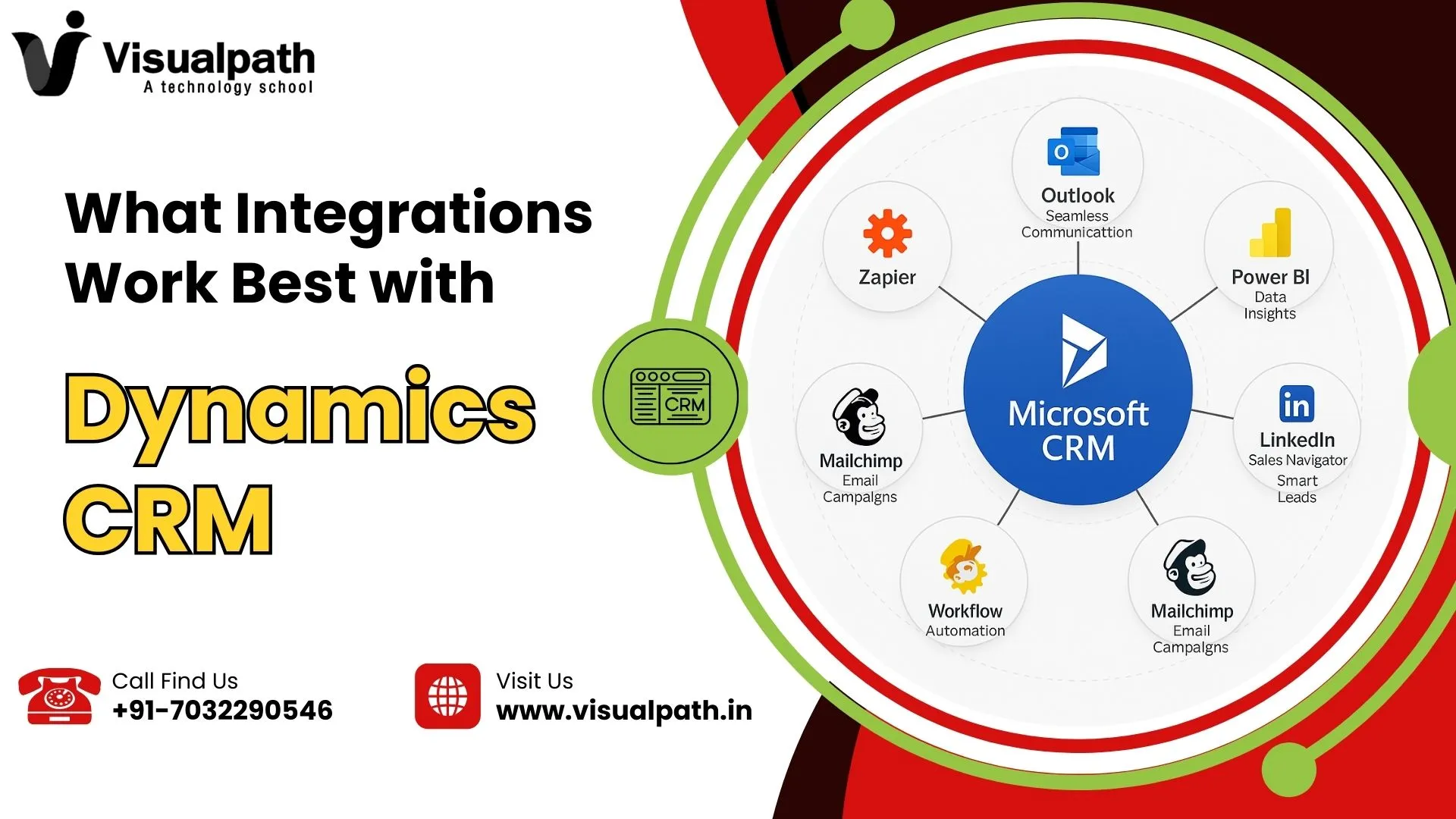
  • What Integrations Work Best with Microsoft CRM?

    What Integrations Work Best with Microsoft CRM?

    Microsoft Dynamics 365 Customer Relationship Management (CRM) is a powerful tool designed to manage customer relationships, sales, marketing, and support. However, to get the most out of it, businesses need to leverage the right Microsoft CRM integrations. Integrating Microsoft CRM with the right tools can automate workflows, improve communication, and provide deeper insights into customer behaviour. In this article, we’ll explore the best integrations that help businesses supercharge their CRM experience. Microsoft Dynamics CRM Training

    Why Integrations Are Crucial for Microsoft CRM

    Microsoft CRM becomes far more valuable when it’s connected to other platforms. Integrations allow data to flow between tools, eliminating manual entry and reducing errors. For example, connecting Microsoft CRM to your email system ensures that all customer communication is logged in one place. This streamlines the customer relationship management process and saves valuable time. Microsoft Dynamics CRM Certification

    1. Microsoft Outlook – Seamless Communication

    One of the most essential Microsoft CRM integrations is Microsoft Outlook. This integration allows sales and support teams to track emails, set appointments, and manage tasks right from their email interface. The connection ensures all interactions with customers are captured automatically, offering a complete view of each relationship.

    Using Outlook also enhances your sales automation by enabling quick email templates, calendar syncing, and real-time alerts. When emails and CRM data work together, teams can close deals faster and provide better service.

    2. Power BI – Advanced Reporting and Analytics

    Power BI is a powerful data visualization tool that integrates smoothly with Microsoft CRM. With Power BI, users can turn raw CRM data into interactive dashboards and reports, making it easier to track key performance indicators (KPIs), forecast sales, and analyze customer trends.

    It gives managers and executives the tools to understand what’s working and where to improve, all using real-time data from their CRM.

    3. SharePoint – Document Management Made Easy

    Microsoft SharePoint helps businesses organize, store, and manage documents. When integrated with Microsoft CRM, SharePoint enables users to attach and access documents directly from CRM records without using up storage space in the CRM itself.

    For industries like real estate, legal, or finance, where document tracking is critical, this integration brings significant value. It boosts productivity and ensures compliance with data management standards. SharePoint also supports cloud-based collaboration, making it easy for teams to work from anywhere. CRM Training institute in Hyderabad

    4. LinkedIn Sales Navigator – Smarter Lead Generation

    LinkedIn Sales Navigator is a favourite among sales teams for prospecting and lead nurturing. When used with Microsoft CRM, this integration helps users identify leads, get real-time insights, and build trusted relationships more efficiently.

    This powerful tool enhances your lead generation strategy by giving salespeople access to LinkedIn’s massive database directly within CRM. Teams can send connection requests, track communication, and gain insights without leaving their CRM platform.

    5. Mailchimp – Effective Email Marketing

    Mailchimp is one of the most popular email marketing platforms for businesses of all sizes. Integrating it with Microsoft CRM helps teams design, send, and track email campaigns more effectively.

    By combining CRM data with Mailchimp’s campaign features, businesses can improve customer engagement and track campaign success. This integration supports smarter email marketing automation by using data-driven insights from CRM.

    6. Zapier – Connect Hundreds of Apps

    Zapier is a connector platform that enables Microsoft CRM to integrate with hundreds of other apps, including Google Sheets, Slack, and Trello. It’s perfect for businesses that need flexible integration options without hiring developers.

    With Zapier, you can automate tasks like sending a notification when a new lead is created in CRM or adding CRM contacts to a spreadsheet. It offers huge value for companies focused on workflow automation and saving time on repetitive tasks.

    Choosing the Right Microsoft CRM Integrations

    When choosing which integrations to use, consider your team’s daily tasks and where you need the most support. Some businesses may benefit more from email tools, while others need strong data reporting or collaboration platforms. The right Microsoft CRM integrations will align with your goals and make your team more efficient.

    Final Thoughts

    Integrating Microsoft CRM with other tools can dramatically improve how your business operates. From boosting team communication to automating marketing campaigns, the right integrations turn your CRM into a powerhouse. Start with the tools your team already uses and expand based on your business needs. With strong Microsoft CRM integrations, you can improve customer service, grow sales, and operate smarter than ever before.

    Trending Courses: Generative AI, PowerApps and Power Automate, MS Dynamics 365 BC

    Visualpath stands out as the leading and best institute for software online training in Hyderabad. We provide Dynamics CRM Online Training. You will get the best course at an affordable cost.

    Call/What’s App – +91-7032290546

    Visit: https://www.visualpath.in/online-microsoft-dynamics-crm.html

  • What’s New in Microsoft Dynamics CRM for 2025?

    What’s New in Microsoft Dynamics CRM for 2025?

    As someone who has worked with Microsoft Dynamics CRM for a while now, I can say the 2025 updates are game-changers for businesses of all sizes. Microsoft has listened to what users need, and this year’s release is packed with smart, helpful, and practical improvements. If you’re using CRM to handle customer relationships, sales, or marketing, you’ll want to know what’s new and how it can help you.

    Below, I’ve broken down the latest updates and features based on my experience working hands-on with the new version. Whether you’re a small business owner or part of a large team, there’s something useful here for everyone. Microsoft Dynamics CRM Online Training

    Smarter AI-Powered Insights

    In 2025, one of the biggest highlights is the new AI-driven suggestions in Dynamics CRM. These aren’t just for show – they actually work. The system now gives real-time recommendations during customer calls or when writing emails. Based on customer history and behaviour, it suggests the next best action to take. This feature alone has saved me hours of manual planning and has helped close deals faster. Artificial Intelligence is no longer a buzzword—it’s a real-time tool that’s helping teams work smarter, not harder.

    Modern and Cleaner User Interface

    The new user interface is smoother, faster, and much easier on the eyes. If you’ve ever felt overwhelmed by the old layout, you’ll be happy with this upgrade. Microsoft has simplified navigation and grouped related features together more logically. It feels like they designed it for real people, not just tech experts. And yes, it works beautifully across all devices, including mobile and tablets. This update alone has made my daily work experience much more enjoyable. Ms Dynamics CRM Training in Hyderabad

    Improved Integration with Microsoft Teams

    If you’re using Microsoft Teams, you’re in for a treat. The new CRM version comes with deep and seamless Teams integration. You can now manage and update CRM records directly within Teams chats or meetings. This has made team collaboration much faster for us. Instead of switching between tools, we now work from a single platform, saving time and reducing errors. Integration is no longer clunky—it’s smart and real-time. Microsoft Dynamics CRM Course Curriculum

    Personalized Customer Journeys

    One of the most exciting updates for marketers is the new customer journey builder. It now supports advanced triggers, delays, and real-time customer data. For example, if a customer visits your website and fills a form, the system instantly tailors their journey and sends them content that fits their needs. I’ve used this feature to build campaigns that felt personal and human—something that’s hard to do at scale. Customer experience has never felt more dynamic.

    Easier Customization for Non-Tech Users

    In the past, if you wanted to change something in CRM, you had to ask IT. But in 2025, Microsoft has made it way easier for non-technical users to customize fields, dashboards, and workflows. The new drag-and-drop tools are super helpful. I recently updated a sales pipeline view for my team in under 10 minutes—without writing a single line of code. This shift gives more power to people like me who aren’t developers but want more control over our tools.

    Better Data Security and Compliance

    Security is a top priority this year. The 2025 version comes with enhanced data protection features, better encryption, and more detailed audit trails. This is a big relief for businesses handling sensitive data. It also helps with compliance, especially if you’re dealing with GDPR or other data laws. Personally, I feel more confident now about the way our CRM handles customer information, knowing these improvements are in place.

    Real-World Use: How These Updates Helped Me

    To give you an example, after updating to the new version, I built a custom dashboard that showed sales performance by region, product, and team. It took me just a few hours with the new UI and tools. The AI suggestions helped my team respond faster to leads, and the Teams integration meant we discussed customer cases without leaving our daily meetings. These might sound like small things—but added up, they’ve made a huge difference in how we work.

    Final Thoughts

    The 2025 version of Microsoft Dynamics CRM is focused on usability, automation, and helping people do better work with less effort. From better AI to user-friendly customization, these updates are practical, not just flashy. If you’re already using Dynamics, upgrading will improve your daily flow. And if you’re thinking about starting with a CRM, now is a great time to try it out.

    Trust me—this update is worth exploring. Whether you’re in sales, marketing, or customer support, it has tools that make your work smoother and more effective.

    Trending Courses: Generative AI, MS Dynamics 365 Business Central, PowerApps and Power Automate

    Visualpath stands out as the leading and best institute for software online training in Hyderabad. We provide Dynamics CRM Online Training. You will get the best course at an affordable cost.

    Call/What’s App – +91-7032290546

    Visit: https://www.visualpath.in/online-microsoft-dynamics-crm.html

  • Where to Store Data in Microsoft CRM + Dataverse

    Where to Store Data in Microsoft CRM + Dataverse

    If you’ve ever built anything using Microsoft CRM or the Power Platform, you’ve probably asked yourself this question: Where should I store my data? I’ve been there. When I first started using Microsoft CRM Dataverse, it felt a little overwhelming – database storage, file storage, and log storage – what does it all mean?

    Over time, I figured it out through real-world projects, and now I want to break it down for you in simple terms so you can confidently decide where to put your data and why it matters. Microsoft Dynamic CRM Training

    What is Dataverse (And Why You Should Care?)

    Dataverse is the heart of Microsoft’s CRM and Power Platform. Think of it as your data’s home – a secure, smart, and super flexible storage system that works behind apps like Power Apps, Power Automate, and Dynamics 365 Customer Engagement.

    I use Microsoft CRM Dataverse every time I need to manage customer data – contacts, accounts, deals, you name it. It comes with ready-to-use tables for these, and you can even build your own.

    The best part? It’s already connected to the Microsoft tools you probably already use, which makes everything easier.

    The 3 Main Types of Storage in Dataverse

    Here’s what I’ve learned about storage options inside Dataverse:

    Database Storage

    • This is where you keep your structured data – like names, emails, or transaction records. It’s clean, searchable, and easy to manage.

    File Storage

    • For things like attachments, images, or uploaded documents. I usually use this for storing resumes, invoices, or contracts.

    Log Storage

    • Not as exciting, but still important. This is where system activities like audit logs live. It’s great for keeping an eye on what’s happening behind the scenes.

    Whenever I set up a new CRM app, I always check the Power Platform Admin Center to see how much storage I’ve used and where it’s going. Best CRM storage practices mean staying ahead of usage before things slow down or cost more. Microsoft Dynamic CRM Online Training

    Why I Stick With Dataverse

    I used to wonder if I should go with SQL Server or SharePoint for some of my data, but here’s why I now stick with Microsoft CRM Dataverse most of the time:

    • Security is top-notch. You can lock things down to specific users or even hide certain fields.
    • It works beautifully with Microsoft Power Apps, making it easy to build apps with zero code.
    • You can automate anything using Power Automate, which saves so much time.
    • I can pull data into Power BI dashboards without complicated connectors.
    • And yes – it scales. I’ve built apps with thousands of records, and it still performs smoothly.

    Whether it’s a small project or an enterprise rollout, I always consider Power Platform data storage and how it fits my needs before choosing where to put my data.

    What I Learned from Building Real CRM Apps

    One of my biggest lessons: Don’t try to store everything in one place.
    For example, when I built an internal HR portal, I separated resume files (in file storage), employee records (in database storage), and system logs (in log storage). That kept things faster and cleaner.

    When planning, I always sketch out a CRM data model first. This helps avoid messy relationships later and makes it easier to report on. If you’re migrating from Excel or another CRM, take time to map your data properly.

    Understanding Dataverse table storage has helped me avoid headaches down the road – especially when scaling up.

    Keep It Simple, But Smart

    If you’re just starting out, here are my go-to tips:

    • Use database storage for anything you want to search, filter, or relate to other records.
    • Keep files like images and documents in file storage – not in database tables.
    • Don’t ignore log storage – especially if you want to track user activity or debug automation flows.
    • Monitor usage regularly and clean up old or inactive records.

    The combo of Microsoft CRM + Dataverse isn’t just powerful – it’s actually easy to manage once you get the hang of it.

    Final Thoughts

    If you’re serious about building with the Power Platform or managing customer relationships better, learning how to store your data right in Microsoft CRM Dataverse is essential.

    I’ve made mistakes (like stuffing PDFs into database fields – ouch!) and learned the hard way. But once you get comfortable with where and how to store your data, it opens up a world of possibilities.

    So go ahead – explore, build, and don’t be afraid to test things out. Dataverse is your friend.

    Visualpath stands out as the leading and best institute for software online training in Hyderabad. We provide Dynamics CRM Online Training. You will get the best course at an affordable cost.

    Call/What’s App – +91-7032290546

    Visit: https://www.visualpath.in/online-microsoft-dynamics-crm.html

  • Unlocking the Full Potential of Dynamics CRM with Power Apps

    Unlocking the Full Potential of Dynamics CRM with Power Apps

    Microsoft Dynamics CRM has long been a trusted solution for customer relationship management, but when paired with Power Apps, it becomes a dynamic powerhouse capable of delivering tailored, scalable, and efficient business applications.

    Why Combine Dynamics CRM with Power Apps?

    Power Apps, part of Microsoft’s Power Platform, enables users to create custom apps quickly and with minimal coding. By integrating it with Dynamics 365 CRM, businesses can build bespoke applications that extend CRM functionality, automate workflows, and enhance user experiences—without needing to heavily rely on IT teams.

    Combining the strengths of Dynamics CRM with Power Apps gives organizations the ability to:

    • Customize data entry interfaces
    • Automate manual processes
    • Create mobile-friendly apps for field agents
    • Integrate with other Microsoft 365 tools like Teams and SharePoint
    • Provide real-time data insights and dashboards

    The Real-World Benefits of Power Apps in Dynamics CRM

    1. Tailored Customer Engagement

    Every business has unique customer engagement needs. With Power Apps, you can design custom interfaces and workflows that align perfectly with your specific customer journey. For example, a healthcare organization could build a patient follow-up app that ties into their Dynamics CRM data, helping them monitor care quality and satisfaction.

    2. Enhanced Productivity and Efficiency

    Routine tasks like updating records or triggering follow-up emails can be automated using Power Automate within Power Apps. Sales reps no longer need to manually update leads or log customer calls—Power Apps handles that, letting them focus on what matters most: closing deals.

    3. Seamless Data Access and Mobility

    Power Apps makes Dynamics CRM data accessible on-the-go, even offline. Mobile apps designed with Power Apps enable field teams—such as delivery personnel, sales agents, or technicians—to view, update, and submit CRM data anytime, anywhere. This eliminates data silos and accelerates decision-making.

    4. Improved User Experience

    The default interface of Dynamics CRM may not suit every department’s needs. Power Apps allows organizations to design simple, intuitive applications tailored to the user’s role. For instance, a customer service rep might only need access to ticketing features, while the marketing team might use a campaign performance app.

    Power Apps Use Cases in Dynamics CRM

    • Lead Management App: A custom app that streamlines lead capture, qualification, and assignment directly within Dynamics CRM.
    • Customer Service App: Tailored support dashboards and mobile ticketing solutions integrated with CRM data.
    • Onboarding App: Automate customer or employee onboarding with forms and approval workflows that connect with Dynamics 365.
    • Field Service App: Offline-capable app for technicians to view service requests, update statuses, and capture signatures—all synced with CRM.

    Low-Code Power, High Impact

    Power Apps empowers both technical and non-technical users to contribute to app development, making digital transformation more accessible across departments. Its drag-and-drop builder, pre-built templates, and Microsoft Dataverse connectivity make it easy to deliver working apps in days, not months.

    Moreover, the tight integration between Power Apps and other Microsoft services—like Power BI, Power Automate, SharePoint, and Microsoft Teams—means you can create a holistic business solution that spans CRM, reporting, automation, and collaboration.

    Governance and Security

    One of the major concerns with any CRM enhancement is security. Power Apps provides built-in governance features, including data loss prevention policies, role-based access, and compliance management tools. Since both Power Apps and Dynamics CRM are hosted on Microsoft’s trusted Azure cloud platform, organizations can ensure high levels of data security, compliance, and scalability.

    Getting Started

    To unlock the full potential of your Dynamics CRM with Power Apps, start by identifying repetitive tasks and gaps in your current CRM process. Engage key stakeholders and end users to define app requirements. Then, use Power Apps to prototype, iterate, and deploy. Consider leveraging Microsoft partners or certified developers for complex solutions.

    Conclusion

    The integration of Microsoft Power Apps with Dynamics CRM transforms a powerful CRM into a fully customized business solution that drives innovation, agility, and growth. Microsoft Dynamics 365 CRM Training Whether you’re in sales, customer service, field operations, or marketing, Power Apps can help you do more with less—unlocking the full potential of your CRM platform.

    Trending Courses Are:  D365 Functional (F & O), Microsoft Dynamics 365 Business Central,   Generative AI (GenAI)Project Management Accounting Dynamics 365

  • Microsoft Dynamics 365 vs Microsoft Power Apps

    Microsoft Dynamics 365 vs Microsoft Power Apps

    Microsoft Dynamics CRM has built a strong ecosystem for businesses to manage customer relationships, automate workflows, and build custom applications. Two of the most widely used tools within this ecosystem are Microsoft Dynamics 365 and Microsoft Power Apps. While both offer powerful solutions, they serve different purposes and cater to different business needs. This article will explore the key differences, benefits, and use cases of each platform to help you make an informed decision.

    What is Microsoft Dynamics 365?

    Microsoft Dynamics 365 is an integrated suite of business applications that combine Customer Relationship Management (CRM) and Enterprise Resource Planning (ERP) capabilities. It allows businesses to manage their sales, marketing, customer service, finance, and operations within a unified platform. Dynamics 365 applications are modular, which means organizations can choose specific apps according to their needs.

    Dynamics 365 is ideal for enterprises and mid-sized companies looking to streamline complex business processes. It provides out-of-the-box features for industries like retail, finance, healthcare, and manufacturing. Additionally, it comes with deep integration with other Microsoft services such as Azure, Microsoft 365, and Teams, allowing for seamless data flow and collaboration.

    What is Microsoft Power Apps?

    Microsoft Power Apps is part of the Power Platform, designed to enable users—especially those with little to no coding experience—to build custom business applications. Power Apps empowers organizations to digitize manual processes and improve productivity by creating applications that work across web, mobile, and tablet platforms.

    Power Apps is best suited for building lightweight, task-specific apps. Whether you need a simple inventory tracker or a complex data-entry tool integrated with SharePoint or SQL Server, Power Apps gives you the flexibility to design and deploy quickly. Power Apps also integrates well with Microsoft Dynamics CRM Online Training Dataverse, Power BI, and Power Automate, offering a broader digital transformation toolkit.

    Microsoft Dynamics 365 vs Microsoft Power Apps: Key Differences

    Purpose and Use Case

    • Dynamics 365 is a fully-fledged business suite tailored for CRM and ERP functionalities.
    • Power Apps is a low-code development platform for building custom apps to digitize specific tasks.

    Target Users

    • Dynamics 365 is aimed at businesses seeking enterprise-level solutions.
    • Power Apps is for both technical and non-technical users who want to build and deploy applications rapidly.

    Customization and Flexibility

    • While Dynamics 365 offers customization through its existing modules, Power Apps provides more flexibility to create solutions from scratch.
    • Power Apps can also extend Dynamics 365 by building apps that work alongside or on top of it.

    Cost

    • Dynamics 365 can be more expensive, depending on the number of modules and users.
    • Power Apps offers a more cost-effective approach for organizations looking to solve specific problems without investing in a full suite.

    Integration Capabilities

    • Both tools integrate deeply with Microsoft services, but Power Apps excels in connecting with over 600 external data sources through connectors Dynamics CRM Online Training.

    When to Use Which?

    Use Microsoft Dynamics 365 when your organization requires:

    End-to-end CRM or ERP capabilities

    Pre-built modules for sales, marketing, or finance

    High scalability for large teams and enterprise needs

    Use Microsoft Power Apps when your business needs:

    Custom solutions for specific tasks

    Faster app development with low-code tools

    Apps that integrate with existing Microsoft or third-party systems

    Many organizations find value in using both tools together. For example, you might use Dynamics 365 for customer service and Power Apps to build a custom internal ticketing system that feeds into Dynamics.

    Conclusion

    Both Microsoft Dynamics 365 and Microsoft Power Apps are powerful tools, but they serve different roles in the Microsoft ecosystem. Dynamics 365 excels in delivering comprehensive business applications, while Power Apps provides the agility to build tailored solutions without writing extensive code. The choice between them—or the decision to use both—depends on your organization’s size, needs, and digital strategy.

    Trending Courses Are:  D365 Functional (F & O), Microsoft Dynamics 365 Business Central,   Generative AI (GenAI)Project Management Accounting Dynamics 365

  • Why Choose Power Apps in Dynamics CRM over Other Tools

    Why Choose Power Apps in Dynamics CRM over Other Tools

    Microsoft Dynamics CRM is a market leader in this space, and when combined with Power Apps, it becomes an even more potent tool for businesses. But why should you choose Power Apps over other third-party tools? This article explores the key benefits and reasons why Power Apps in Dynamics CRM stands out from the rest.

    Seamless Integration with Microsoft Ecosystem

    One of the biggest advantages of Power Apps is its seamless integration with Microsoft Dynamics CRM and other Microsoft 365 applications such as SharePoint, Teams, Outlook, and Power BI. Unlike third-party tools that often require complex configurations and additional middleware, Power Apps works natively within the Microsoft environment, reducing compatibility issues and boosting productivity.

    Customization Without Extensive Coding

    Many third-party CRM customization tools require extensive coding knowledge, which can be a barrier for businesses that lack in-house development expertise. Power Apps enables users to create custom applications with a low-code or no-code approach, making it accessible to non-technical users while still providing advanced customization capabilities for developers.

    Cost-Effectiveness

    Licensing costs and maintenance expenses for third-party CRM tools can be substantial. Power Apps is included in many Microsoft licensing plans, allowing businesses to leverage its capabilities without incurring additional expenses. Organizations that already use Microsoft Dynamics CRM can save on third-party software costs while enjoying a robust, built-in customization platform.

    Enhanced Automation with Power Automate

    Power Apps works effortlessly with Power Automate, enabling businesses to automate workflows and processes within Microsoft Dynamics CRM. Users can create automated email responses, lead management processes, customer follow-ups, and more without requiring complex programming skills. This enhances efficiency and reduces manual workload.

    AI-Powered Insights with Power BI

    Unlike third-party CRM tools, Power Apps seamlessly connects with Power BI, allowing businesses to generate AI-driven insights for better decision-making. Companies can create interactive dashboards, track customer behaviors, and gain a competitive edge using real-time data analytics.

    Security and Compliance

    Security is a major concern for businesses handling sensitive customer data. Microsoft offers enterprise-grade security and compliance standards within its ecosystem, ensuring that Power Apps users benefit from robust security protocols such as Azure Active Directory (AAD) authentication and role-based access control (RBAC). Unlike many third-party tools that require additional security measures, Power Apps comes with built-in security features aligned with industry standards.

    Scalability for Growing Businesses

    As businesses grow, their CRM requirements evolve. Many third-party tools have scalability limitations, requiring businesses to migrate to new solutions as they expand. Power Apps is built on the Microsoft Dataverse, allowing businesses to scale seamlessly by adding new features, automating processes, and integrating additional Dynamics CRM Online Training solutions without switching platforms.

    Faster Deployment and Implementation

    Deploying third-party CRM customization tools often involves lengthy setup times, extensive training, and technical configurations. With Power Apps, businesses can quickly build and deploy applications tailored to their needs, reducing implementation time and ensuring faster time-to-market for new solutions.

    Unified User Experience

    Power Apps provides a unified experience across multiple devices, including desktops, tablets, and mobile phones. Users can access Microsoft Dynamics CRM Training and their custom applications through a familiar interface, leading to better adoption rates and enhanced productivity compared to third-party alternatives.

    Conclusion

    Power Apps in Microsoft Dynamics CRM is a game-changer for businesses looking to enhance their CRM capabilities without relying on expensive third-party tools. With seamless integration, cost-effectiveness, advanced automation, security, scalability, and AI-powered insights, Power Apps provides an all-in-one solution tailored for businesses of all sizes. Choosing Power Apps over other tools ensures flexibility, efficiency, and a future-proof CRM strategy.

    Trending Courses are : Prompt EngineeringGenerative AI (GenAI)Microsoft Dynamics AX Retail Management.

    Visualpath is the Leading and Best Software Online Training Institute in Hyderabad. Avail complete Microsoft Dynamics CRM Certification Worldwide. You will get the best course at an affordable cost.

    WhatsApp:  https://wa.me/c/917032290546

    Visit: https://www.visualpath.in/online-microsoft-dynamics-crm.html

  • Why Choose MS Dynamics CRM with Power Apps Over Other Tools?

    Why Choose MS Dynamics CRM with Power Apps Over Other Tools?

    Microsoft Dynamics CRM Training organizations are increasingly seeking robust Customer Relationship Management (CRM) solutions that not only enhance customer engagement but also streamline internal processes. Microsoft Dynamics 365 CRM, when combined with Power Apps, offers a powerful alternative to traditional CRM tools. This article explores the reasons why businesses should consider this integrated solution over others.

    Seamless Integration

    One of the most significant advantages of using MS Dynamics CRM with Power Apps is the seamless integration within the Microsoft ecosystem. Dynamics 365 is designed to work effortlessly with other Microsoft products such as Office 365, Power BI, and Power Automate. This integration allows businesses to create a unified platform where data flows smoothly between applications, enhancing collaboration and productivity across teams. For instance, sales teams can access customer data from Dynamics 365 while using Excel for analysis or Outlook for communication, all without switching between different platforms.

    Customization and Flexibility

    Power Apps empowers organizations to develop custom applications tailored to their specific needs without requiring extensive coding knowledge. This low-code approach enables businesses to create bespoke solutions that address unique operational challenges. Unlike many out-of-the-box CRM systems that may not fully align with an organization’s processes, the combination of Dynamics 365 and Power Apps allows for significant customization. Companies can design apps that integrate directly with their CRM data, fostering innovation and agility in responding to market demands.

    Cost-Effectiveness

    Cost is a critical factor when selecting a CRM solution. Licensing for Microsoft Power Apps is generally more affordable compared to Dynamics 365’s full suite. Organizations can opt for Power Apps licenses that cater specifically to their needs, potentially saving thousands annually. This flexibility in licensing allows smaller businesses or those with specific requirements to access powerful Microsoft Dynamics CRM Online Training functionalities without incurring unnecessary costs associated with comprehensive solutions they may not fully utilize.

    Enhanced Data Management

    The integration of Power Apps with Dynamics 365 facilitates improved data management through centralized storage and real-time access. Businesses can consolidate customer information from various sources into a single view, enabling better decision-making and personalized customer interactions. This centralized approach not only enhances data accuracy but also streamlines workflows by reducing manual data entry and minimizing errors.

    Automation of Business Processes

    Automation is a key feature that sets MS Dynamics CRM with Power Apps apart from other CRM tools. By leveraging Power Automate, organizations can automate repetitive tasks such as data entry, approvals, and notifications. This automation not only saves time but also allows employees to focus on more strategic activities that drive business growth. The ability to automate workflows enhances overall productivity and operational efficiency.

    Advanced Analytics and Insights

    With built-in analytics capabilities through Power BI, businesses using Dynamics 365 can gain valuable insights into customer behavior and market trends. The combination of these tools enables organizations to create interactive dashboards and reports that visualize data effectively. Such insights empower teams to make informed decisions quickly, adapting strategies based on real-time information rather than relying on outdated reports.

    Scalability

    As businesses grow and evolve, their Microsoft Dynamics 365 CRM Training needs often change. MS Dynamics CRM with Power Apps offers scalability that allows organizations to expand their capabilities without significant disruptions. Whether adding new users, integrating additional functionalities, or developing new applications, this solution can adapt to meet changing business requirements seamlessly. This scalability ensures that companies are not locked into rigid systems but can evolve alongside their market demands.

    Superior User Experience

    User experience is crucial for ensuring high adoption rates among employees. The familiarity of Microsoft’s interface across its products means that employees who have previously used other Microsoft tools will find Dynamics 365 and Power Apps intuitive and easy to navigate. This reduces the learning curve associated with new software implementations and encourages user engagement from day one

    Conclusion

    Choosing MS Dynamics CRM with Power Apps over other tools presents numerous advantages for businesses looking to enhance their customer relationship management capabilities. From seamless integration within the Microsoft Dynamics CRM Online Training ecosystem and cost-effective licensing options to customization flexibility and advanced analytics, this combination offers a comprehensive solution tailored to modern business needs. By investing in this integrated platform, organizations position themselves for success in an increasingly competitive landscape, driving innovation while optimizing operations.

    Trending Courses are : D365 Functional (F & O),  Prompt Engineering,  Generative AI (GenAI),  Microsoft Dynamics AX Retail Management

    Visualpath is the Leading and Best Software Online Training Institute in Hyderabad. Avail complete Microsoft Dynamics CRM Certification Worldwide. You will get the best course at an affordable cost.

    Attend Free Demo

    Call on – +91-7032290546.

    WhatsApp:  https://wa.me/c/917032290546

    Visit: https://www.visualpath.in/online-microsoft-dynamics-crm.html

    Visit Blog: https://visualpathblogs.com/category/microsoft-dynamics-crm-with-powerapps/

  • How Canvas Apps Simplify Custom App Development in Dynamics 365 CRM

    How Canvas Apps Simplify Custom App Development in Dynamics 365 CRM

    MS Dynamics CRM Training provides a robust platform for managing customer relationships and automating business processes. However, businesses often require custom applications to address unique needs and workflows. This is where Power Apps canvas apps shine, offering a simplified approach to custom app development within the Dynamics 365 ecosystem. This article explores how canvas apps empower users to build tailored solutions, enhancing the functionality and user experience of Dynamics 365 CRM.

    The Power of Canvas Apps in Dynamics 365 CRM:

    Canvas apps, a key component of the Microsoft Power Platform, provide a pixel-perfect design experience, allowing users to create visually appealing and highly customized applications. Unlike model-driven apps, which are built on the Dynamics 365 data model, canvas apps offer complete design flexibility, enabling users to create interfaces that precisely match their requirements. This flexibility is particularly valuable for extending Dynamics 365 CRM functionalities.

    Simplifying Custom App Development:

    • Visual Design Interface: Canvas apps provide a drag-and-drop interface, allowing users to visually design app layouts and add interactive elements without writing extensive code. This simplifies the development process, making it accessible to both developers and business users.
    • Direct Data Connectivity: Canvas apps can seamlessly connect to Dynamics 365 data through connectors, enabling real-time data access and manipulation. This eliminates the need for complex data integration processes.
    • Customizable User Experience: Canvas apps allow for complete control over the user interface, enabling users to create highly customized forms, dashboards, and reports that align with their specific workflows.
    • Rapid Prototyping and Iteration: Canvas apps facilitate rapid prototyping, allowing users to quickly build and test new ideas. This iterative approach enables faster development cycles and ensures that applications meet evolving business needs.
    • Mobile-First Development: Canvas apps are designed to be responsive, ensuring that applications work seamlessly across different devices, including desktops, tablets, and smartphones. This enables mobile-first development and empowers users to access Dynamics 365 data on the go.
    • Integration with Other Services: Microsoft Dynamics CRM Online Training Canvas apps can integrate with a wide range of other Microsoft services and external systems, including SharePoint, Excel, and third-party APIs. This allows users to build applications that bring together data from various sources.
    • Low-Code Development: Canvas apps minimize the need for manual coding, empowering “citizen developers” – business users with domain expertise – to create their own applications.
    • Contextual Integration: Canvas apps can be embedded directly within Dynamics 365 forms, providing contextual information and extending the functionality of existing CRM records.
    • Custom Functionality: Canvas apps allow users to implement custom business logic and workflows, extending the capabilities of Dynamics 365 beyond its standard features.
    • Simplified Deployment: Canvas apps are easily deployed and managed through the Power Platform, simplifying the deployment process and ensuring that applications are readily available to users.

    Practical Applications in Dynamics 365 CRM:

    • Custom Sales Opportunity Tracking: Dynamics CRM Online Training Create a canvas app that provides a streamlined interface for tracking sales opportunities, tailored to specific sales processes.
    • Field Service Data Collection: Develop a mobile canvas app that allows field technicians to collect data on site, capturing information such as equipment readings and customer feedback.
    • Event Management App: Build a canvas app that streamlines event registration, check-in, and post-event follow-up, integrating with Dynamics 365 event data.
    • Customer Feedback App: Create a canvas app that allows customers to provide feedback on products or services, integrating with Dynamics 365 customer records.
    • Custom Dashboards and Reports: Develop interactive dashboards and reports that provide real-time insights into Dynamics 365 data.

    How to Build a Canvas App for Dynamics 365 CRM:

    1. Identify Business Requirements: Determine the specific needs and workflows that the canvas app will address.
    2. Plan the User Interface: Design the app layout and user experience, considering the target users and their workflows.
    3. Connect to Dynamics 365 Data: Use the Microsoft Dynamics 365 CRM Training connector to establish a connection to your CRM data.
    4. Build the App: Use the Power Apps studio to create the app, adding controls, data connections, and business logic.
    5. Test and Deploy: Thoroughly test the app and deploy it to your users.

    Conclusion:

    Canvas apps simplify custom app development within Dynamics 365 CRM by providing a visual design interface, seamless data connectivity, and complete control over the user experience. By empowering users to build tailored solutions, canvas apps enhance the functionality and usability of Microsoft Dynamics 365 CRM Training, enabling businesses to streamline operations, improve productivity, and drive better business outcomes. The flexibility and ease of use that canvas apps provide makes them a valuable tool for any organization using Dynamics 365.