
Tag: KubernetesTrainingHyderabad

  • What is the control plane node in Kubernetes?

    What is the control plane node in Kubernetes?

    Introduction:

    Kubernetes, often abbreviated as K8s, has become the de facto standard for container orchestration. It automates the deployment, scaling, and management of containerized applications. Central to its architecture is the control plane node, which plays a crucial role in maintaining the desired state of the cluster. Docker and Kubernetes Training

    The Role of the Control Plane Node:

    The control plane node is the brain of a Kubernetes cluster. It is responsible for managing the state of the cluster, making decisions on scheduling, scaling, and managing the overall health of applications. The control plane consists of several key components that work together to ensure the cluster operates smoothly.

    Key Components of the Control Plane:

    API Server:

    The API Server is the central management entity that exposes the Kubernetes API. It is the primary interface for all administrative tasks. Users, both humans and automation tools, interact with the cluster through the API Server using RESTful calls. The API Server validates and processes REST requests, updating the cluster state accordingly. Kubernetes Online Training

    etcd:

    etcd is a consistent and highly-available key-value store used as Kubernetes’ backing store for all cluster data. It stores the configuration data and state information of the cluster, ensuring consistency and durability. etcd is crucial for the operation of the control plane, as it holds the data necessary for Kubernetes to function correctly.

    Scheduler:

    The Scheduler is responsible for assigning newly created pods to nodes within the cluster. It evaluates the requirements of the pods, such as resource needs and affinity/anti-affinity rules, against the available resources on nodes. The Scheduler ensures optimal distribution of workloads to maintain balanced resource utilization across the cluster.

    Controller Manager:

    The Controller Manager runs a set of controllers, which are control loops that monitor the state of the cluster and make changes to achieve the desired state. These controllers include the Node Controller, Replication Controller, and Endpoints Controller, among others. Docker Online Training

    Cloud Controller Manager:

    The Cloud Controller Manager interacts with the underlying cloud provider’s API to manage cloud-specific resources. It abstracts cloud-specific logic from the core Kubernetes components, enabling the control plane to interact with various cloud services.

    The Importance of High Availability:

    Given its critical role, the control plane must be highly available and resilient. In a production environment, it is common to deploy multiple instances of control plane components across different nodes. This ensures that the cluster can continue operating even if one or more control plane nodes fail. High availability setups often involve load balancers to distribute requests across multiple API Server instances and etcd clusters to maintain data consistency.

    Securing the Control Plane:

    Security is paramount for the control plane, as it has complete control over the cluster.

    Best practices for securing the control plane include:

    Restricting API Access: Limiting access to the API Server to trusted users and services.

    Using TLS/SSL: Encrypting communication between control plane components and users.

    RBAC Policies: Implementing Role-Based Access Control (RBAC) to define fine-grained access permissions. Kubernetes Certification Training

    Audit Logging: Enabling audit logging to monitor and review all actions performed within the cluster.

    Conclusion:

    The control plane node is the cornerstone of a Kubernetes cluster, orchestrating all activities and maintaining the desired state of the system. Its components, including the API Server, etcd, Scheduler, Controller Manager, and Cloud Controller Manager, work in unison to manage and scale applications effectively.

    Visualpath is the Leading and Best Institute for learning Docker and Kubernetes Online in Ameerpet, Hyderabad. We provide Docker Online Training Course, you will get the best course at an affordable cost.

    Call on – +91-9989971070

    Visit : https://www.visualpath.in/DevOps-docker-kubernetes-training.html
    WhatsApp : https://www.whatsapp.com/catalog/917032290546/

  • Automation with Terraform on Azure

    Automation with Terraform on Azure

    Introduction:

    Docker Swarm, a native clustering and scheduling tool for Docker containers, allows developers to create and manage a cluster of Docker nodes as a single virtual system. One of the fundamental concepts in Docker Swarm is the “service,” which is an abstract definition of an application that can be deployed on the swarm.  Docker and Kubernetes Training

    Replicated Services:

    Replicated services are the more common type of service in Docker Swarm. When you create a replicated service, you specify the number of identical tasks (containers) that you want to run. Docker Swarm ensures that the specified number of replicas is maintained across the swarm. If a node fails or a task crashes, Docker Swarm will reschedule the tasks on available nodes to maintain the desired state.

    Key Characteristics of Replicated Services:

    Scalability: You can easily scale up or down the number of replicas. For instance, if demand increases, you can scale up the service to run more replicas to handle the load. Conversely, during low-traffic periods, you can scale down the service to save resources. Kubernetes Training in Ameerpet

    Load Balancing: Docker Swarm automatically distributes the replicas across the available nodes in the swarm. This ensures that the workload is balanced and that no single node becomes a bottleneck.

    High Availability: Replicated services offer high availability since the tasks are distributed across multiple nodes. If a node goes down, Docker Swarm redistributes the tasks to other nodes, minimizing downtime.

    To create a replicated service, you use the docker service create command, specifying the number of replicas with the –replicas flag.

    This command would create a service named my_replicated_service with three replicas of the specified Docker image.

    Global Services:

    Global services, on the other hand, ensure that exactly one task is run on every node in the swarm. This type of service is useful for tasks that need to run on all nodes, such as monitoring agents, logging daemons, or network proxies. Unlike replicated services, you do not specify the number of replicas for a global service. Docker Online Training

    Key Characteristics of Global Services:

    Node Coverage: Global services are ideal for applications that require a presence on every node. This is particularly useful for infrastructure services that collect data from all nodes or perform node-specific functions.

    Simplified Management: Since Docker Swarm manages the deployment of the service across all nodes, you don’t need to manually scale or adjust the service. The swarm handles the addition and removal of tasks as nodes are added or removed.

    Consistency: Ensures a consistent environment across the swarm by running the same task on every node, making it easier to maintain and troubleshoot.

    To create a global service, you use the docker service create command with the –mode global flag.

    This command would create a service named my_global_service that runs on every node in the swarm. Kubernetes Online Training

    Conclusion:

    In summary, Docker Swarm’s replicated and global services offer powerful tools for deploying and managing containerized applications. Understanding their differences and use cases helps you make informed decisions about how to architect and deploy your applications in a Docker Swarm cluster.

    Visualpath is the Leading and Best Institute for learning Docker and Kubernetes Online in Ameerpet, Hyderabad. We provide Docker Online Training Course, you will get the best course at an affordable cost.

    Call on – +91-9989971070

    Visit : https://www.visualpath.in/DevOps-docker-kubernetes-training.html
    WhatsApp : https://www.whatsapp.com/catalog/917032290546/

  • What is the underlying operating system of Docker?

    What is the underlying operating system of Docker?

    Introduction:

    Docker has emerged as a revolutionary technology that enables developers to create, deploy, and run applications in isolated environments called containers. While Docker itself provides a powerful platform for containerization, its underlying operating system plays a critical role in its functionality and performance. Docker and Kubernetes Training

    The Core OS of Docker: Linux

    At its core, Docker relies heavily on Linux as its underlying operating system. This dependency stems from several key features inherent to the Linux kernel, which are essential for Docker’s operation:

    Namespaces: Linux namespaces provide isolated environments for processes. Docker utilizes namespaces to ensure that each container has its own isolated process tree, network stack, and filesystem, thus enabling multiple containers to run on a single host without interfering with each other.

    Control Groups (cgroups): Cgroups are used by Docker to manage and limit the resources (CPU, memory, disk I/O, etc.) allocated to each container. This ensures that containers run efficiently without monopolizing system resources.

    Union Filesystems: Docker uses union filesystems, such as OverlayFS, to manage container images. These filesystems allow Docker to create and manage images efficiently by layering changes on top of a base image, reducing storage usage and speeding up container creation.

    Docker and Other Operating Systems:

    While Docker was initially developed for Linux, its popularity and the demand for cross-platform compatibility led to the development of Docker Desktop, which allows Docker to run on macOS and Windows. Docker Online Training

    This cross-platform functionality is achieved through various approaches:

    Docker on macOS and Windows: Docker Desktop for macOS and Windows leverages lightweight virtual machines to run a Linux kernel, ensuring that Docker containers have a consistent Linux environment, regardless of the host OS. On macOS, Docker Desktop uses HyperKit, a lightweight hypervisor, while on Windows, it utilizes the Windows Subsystem for Linux (WSL) 2 or Hyper-V, depending on the version and configuration. Kubernetes Online Training

    Windows Containers: In addition to running Linux containers on Windows, Docker also supports native Windows containers. These containers use the Windows kernel and are compatible with Windows Server 2016 and later versions. Windows containers rely on technologies similar to Linux, such as namespaces and cgroups, but are implemented within the Windows kernel.

    The Role of Kubernetes and Cloud Integration:

    Docker’s integration with Kubernetes, a leading container orchestration platform, further underscores the importance of its underlying operating system. Kubernetes, like Docker, was originally designed to run on Linux. However, it now supports multi-platform orchestration, allowing clusters to include both Linux and Windows nodes.

    Conclusion

    The underlying operating system of Docker is predominantly Linux, whose advanced features such as namespaces, cgroups, and union filesystems provide the foundation for Docker’s containerization capabilities. While Docker has extended its reach to macOS and Windows through virtualization and compatibility layers, the Linux kernel remains central to its functionality.

    Visualpath is the Leading and Best Institute for learning Docker and Kubernetes Online in Ameerpet, Hyderabad. We provide Docker Online Training Course, you will get the best course at an affordable cost.

    Call on – +91-9989971070

    Visit : https://www.visualpath.in/DevOps-docker-kubernetes-training.html
    WhatsApp : https://www.whatsapp.com/catalog/917032290546/

  • Why is monitoring important in Kubernetes?

    Why is monitoring important in Kubernetes?

    Introduction:

    Kubernetes stands out as the leading platform for managing containerized applications. It provides powerful tools for deploying, scaling, and operating application containers across clusters of hosts. However, the complexity of Kubernetes environments necessitates robust monitoring to ensure optimal performance, reliability, and security. Docker and Kubernetes Training

    Ensuring Performance and Reliability:

    Kubernetes orchestrates numerous microservices and containers that work together to deliver application functionality. Monitoring these components is essential to ensure that the system performs efficiently and remains reliable.

    Key Aspects:

    Resource Utilization: Monitoring CPU, memory, and storage usage helps identify bottlenecks and optimize resource allocation. This ensures that applications run smoothly without overloading the system.

    Health Checks: Continuously monitoring the health of pods, nodes, and services ensures that any issues are promptly detected and resolved. Kubernetes relies on these checks to automatically restart or replace failing components, maintaining system stability.

    Latency and Throughput: Monitoring network latency and throughput between microservices helps identify communication issues that could impact application performance. Ensuring low latency and high throughput is vital for maintaining a responsive user experience. Docker Online Training

    Facilitating Troubleshooting and Debugging:

    In complex Kubernetes environments, issues are inevitable. Effective monitoring provides the data needed to troubleshoot and debug problems quickly.

    Key Aspects:

    Log Aggregation: Centralized logging enables administrators to collect and analyze logs from all containersand nodes. This provides a comprehensive view of system activity and helps identify the root cause of issues.

    Metrics Collection: Gathering detailed metrics on application performance, resource usage, and system health allows for in-depth analysis. Tools like Prometheus can scrape and store metrics, providing a rich dataset for diagnosing problems.

    Alerting: Setting up alerts for key performance indicators ensures that administrators are notified immediately of potential issues. Alerts can be configured for various conditions, such as high resource usage or application errors, enabling proactive management. Kubernetes Online Training

    Enhancing Security:

    Security is a critical concern in Kubernetes environments, and monitoring plays a vital role in maintaining a secure system.

    Key Aspects:

    Anomaly Detection: Monitoring system behavior helps detect unusual activity that could indicate security breaches or malicious attacks. By identifying anomalies, administrators can respond swiftly to mitigate threats.

    Audit Logs: Keeping track of user actions and changes within the Kubernetes environment is crucial for security audits and compliance. Monitoring audit logs helps ensure that only authorized actions are performed and aids in forensic investigations.

    Policy Enforcement: Monitoring can enforce security policies by ensuring that containers and applications adhere to best practices. This includes verifying the use of least privilege, secure communication, and proper configuration settings. Kubernetes Training in Ameerpet

    Capacity Planning: Monitoring resource usage trends over time aids in capacity planning, ensuring that sufficient resources are available to meet future demands without over-provisioning.

    Cost Management: By tracking resource consumption, administrators can identify inefficiencies and optimize resource allocation. This helps reduce unnecessary costs and ensures that budgets are effectively managed.

    Conclusion:

    Monitoring is an indispensable aspect of managing Kubernetes environments. It ensures the performance and reliability of applications, facilitates troubleshooting and debugging, enhances security, and optimizes resource management and cost efficiency.

    Visualpath is the Leading and Best Institute for learning Docker and Kubernetes Online in Ameerpet, Hyderabad. We provide Docker Online Training Course, you will get the best course at an affordable cost.

    Call on – +91-9989971070

    Visit : https://www.visualpath.in/DevOps-docker-kubernetes-training.html
    WhatsApp : https://www.whatsapp.com/catalog/917032290546/

  • Kubernetes: Revolutionizing Container Orchestration

    Kubernetes: Revolutionizing Container Orchestration

    Introduction:

    Kubernetes, an open-source platform originally developed by Google, has emerged as a cornerstone in this landscape, revolutionizing the way applications are deployed, managed, and scaled. At its core, Kubernetes addresses the challenges of container orchestration, providing a robust framework for automating the deployment, scaling, and operations of application containers across clusters of hosts. Docker Online Training

    The Genesis of Kubernetes:

    The platform was released as an open-source project in 2014 and has since been maintained by the Cloud Native Computing Foundation (CNCF). Kubernetes builds on the foundation laid by Google’s internal container management system, Borg, bringing the principles and practices of container orchestration to a broader audience.

    Containers and the Need for Orchestration:

    Containers are lightweight, portable units that package an application and its dependencies, ensuring consistent execution across different environments. Docker popularized container technology, making it easier for developers to create, deploy, and run applications.

    Kubernetes addresses these complexities by providing a comprehensive set of features for container orchestration. It abstracts the underlying infrastructure, enabling developers to focus on application logic rather than infrastructure management. Kubernetes Online Training

    Core Components of Kubernetes:

    Master Node: The brain of the Kubernetes cluster, the master node manages the cluster’s state and oversees the scheduling and deployment of applications. Key components of the master node include the API server, etcd (a distributed key-value store), the scheduler, and the controller manager.

    Worker Nodes: These nodes run the actual application workloads. Each worker node contains components such as the kubelet (which communicates with the master node), the container runtime (e.g., Docker), and the kube-proxy (which manages network communication).

    Pods: The smallest deployable units in Kubernetes, pods encapsulate one or more containers, along with shared storage, network resources, and configuration. Docker and Kubernetes Training

    Services: Kubernetes services provide a stable endpoint for accessing a set of pods, facilitating load balancing and service discovery.

    Controllers: Controllers maintain the desired state of the cluster, managing tasks such as replication, scaling, and rolling updates.

    Key Features and Benefits:

    Automated Deployment and Scaling: Kubernetes automates the deployment of containers, ensuring that the desired number of container instances are running. It also supports horizontal scaling, allowing applications to scale in response to demand.

    Self-Healing: Kubernetes monitors the health of nodes and containers, automatically restarting or replacing failed containers to maintain the desired state of the application. Kubernetes Training in Ameerpet

    Service Discovery and Load Balancing: Kubernetes automatically assigns IP addresses to pods and provides DNS names for them. It also distributes network traffic evenly across the running pods.

    Storage Orchestration: Kubernetes allows developers to mount and manage storage systems, whether they are local storage, network storage, or cloud storage solutions.

    Configuration Management and Secret Handling: Kubernetes manages configuration settings and sensitive information securely, ensuring that applications have access to the necessary resources without hardcoding them.

    Use Cases and Adoption:

    It is particularly valuable in scenarios where applications require rapid deployment, frequent updates, and scalable infrastructure. Organizations leverage Kubernetes for microservices architectures, continuous deployment pipelines, and cloud-native applications, benefiting from its flexibility and resilience.

    Conclusion:

    Kubernetes has fundamentally transformed the way modern applications are managed and deployed. By providing a powerful and flexible platform for container orchestration, it enables organizations to deliver software faster, more reliably, and at scale.

    Visualpath is the Leading and Best Institute for learning Docker and Kubernetes Online in Ameerpet, Hyderabad. We provide Docker Online Training Course, you will get the best course at an affordable cost.

    Call on – +91-9989971070

    Visit : https://www.visualpath.in/DevOps-docker-kubernetes-training.html
    WhatsApp : https://www.whatsapp.com/catalog/917032290546/

  • Docker Machine: Simplifying Container Management

    Docker Machine: Simplifying Container Management

    Introduction:

    Docker has emerged as a cornerstone technology, revolutionizing how software is built, shipped, and run. One of the pivotal tools within the Docker ecosystem is Docker Machine. While Docker itself provides a robust framework for creating and managing containers, Docker Machine extends this capability by offering a streamlined process for provisioning and managing Docker hosts. Docker and Kubernetes Training

    What is Docker Machine?

    Docker Machine is an open-source tool that simplifies the creation, configuration, and management of virtual machines (VMs) that run Docker. It enables developers and system administrators to deploy Docker hosts on various platforms, including local machines, data centers, and cloud services. Key Features and Functionality:

    Provisioning Docker Hosts:

    Docker Machine automates the process of creating Docker hosts on multiple platforms. Whether it’s a local VirtualBox instance, a cloud provider like AWS or Google Cloud, or a physical server, Docker Machine provisions the necessary infrastructure and installs Docker on it.

    Unified Management Interface:

    Once Docker hosts are created, Docker Machine provides a unified interface to manage them. Users can start, stop, and inspect the state of these hosts from a single command-line interface. This centralized management is crucial for maintaining consistency and efficiency, especially in complex multi-host environments. Docker Online Training

    Cross-Platform Compatibility:

    Docker Machine supports a wide range of drivers, enabling it to operate across different platforms and cloud providers. This versatility allows organizations to adopt a hybrid cloud strategy, leveraging the strengths of various infrastructures while maintaining a uniform Docker environment.

    • Environment Configuration:

    Docker Machine simplifies the process of configuring Docker environments by setting up the necessary environment variables. These variables enable Docker CLI commands to communicate with the correct Docker daemon, ensuring that actions are performed on the intended Docker host. This feature is particularly useful for developers working on multiple projects that require different Docker setups.

    Advantages of Using Docker Machine:

    Simplified Setup and Management:

    One of the primary benefits of Docker Machine is its ability to simplify the setup and management of Docker hosts. By automating the provisioning process, it eliminates the need for manual configuration, allowing developers to focus on building and deploying applications.

    Enhanced Portability:

    Docker Machine enhances the portability of Docker environments. Since it supports multiple platforms, developers can easily move their Docker setups between local development machines, on-premises data centers, and cloud providers. Kubernetes Online Training

    Consistency Across Environments:

    With Docker Machine, organizations can ensure consistency across their development, testing, and production environments. By using the same tool to provision and manage Docker hosts, discrepancies between different stages of the software development lifecycle are minimized, reducing the risk of deployment issues.

    Scalability:

    Docker Machine’s ability to provision hosts on cloud platforms allows for easy scaling of applications. Organizations can quickly spin up additional Docker hosts to handle increased workloads, ensuring that their applications remain responsive and performant.

    Conclusion:

    Docker Machine plays a crucial role in the Docker ecosystem, offering a powerful and user-friendly tool for provisioning and managing Docker hosts across diverse environments. By simplifying the setup process, enhancing portability, and ensuring consistency, Docker Machine enables organizations to fully leverage the benefits of container technology.

    Visualpath is the Leading and Best Institute for learning Docker And Kubernetes Online in Ameerpet, Hyderabad. We provide Docker Online Training Course, you will get the best course at an affordable cost.

    Call on – +91-9989971070

    Visit : https://www.visualpath.in/DevOps-docker-kubernetes-training.html
    WhatsApp : https://www.whatsapp.com/catalog/917032290546/

  • The Responsibilities of a Node Controller in Kubernetes

    The Responsibilities of a Node Controller in Kubernetes

    Introduction:

    Kubernetes, the widely-adopted container orchestration platform, is built on a set of core components that ensure the smooth operation of containerized applications. Among these components, the node controller plays a crucial role in maintaining the health and stability of the cluster. Docker Online Training

    The Role of the Node Controller:

    The node controller is a key component of the Kubernetes control plane, tasked with managing various aspects of nodes within the cluster. Nodes, which can be physical machines or virtual machines, serve as the hosts for the containers. The node controller’s primary responsibility is to monitor the state of these nodes and ensure they operate as intended.

    Node Registration and Management:

    When a new node is added to the cluster, the node controller is responsible for registering it. This involves adding the node’s details to the etcd, the distributed key-value store that holds the cluster’s state. The node controller ensures that the new node is properly configured and ready to host workloads.

    Node Health Monitoring:

    One of the most critical responsibilities of the node controller is to continuously monitor the health of the nodes. It periodically checks the status of each node by communicating with the Kubelet running on the node. The node controller gathers health information, including the node’s availability, resource usage (CPU, memory, disk space), and any potential issues.

    Node Status Updates:

    Based on the health checks, the node controller updates the node’s status in the cluster’s API server. This status information includes whether the node is ready to accept new pods, is in a problematic state, or is completely unreachable. Docker and Kubernetes Training

    Handling Node Failures:

    In a distributed system like Kubernetes, node failures are inevitable. The node controller is designed to handle such failures gracefully. If a node becomes unresponsive or unreachable for a certain period, the node controller marks it as “NotReady.” It then initiates actions to ensure the pods running on the failed node are rescheduled onto healthy nodes, maintaining the desired state of the applications.

    Node Eviction:

    In cases where a node is determined to be in a prolonged failure state or is intentionally removed from the cluster (for maintenance or scaling down), the node controller is responsible for evicting the pods from that node. This process ensures that the workloads are safely migrated to other nodes without disrupting the overall operation of the applications. Kubernetes Online Training

    Managing Node Resources:

    The node controller also plays a role in managing the allocation and usage of resources across the nodes. It monitors resource consumption and ensures that nodes are not overburdened. If a node’s resources are running low or are being used inefficiently, the node controller can trigger actions to rebalance the load, such as moving some pods to other nodes with available resources.

    Conclusion:

    The node controller is an integral part of Kubernetes, responsible for ensuring the health, stability, and efficient operation of the nodes within a cluster. Its responsibilities, ranging from node registration and health monitoring to handling failures and managing resources, are crucial for maintaining a resilient and scalable Kubernetes environment.

    Visualpath is the Leading and Best Institute for learning Docker And Kubernetes Online in Ameerpet, Hyderabad. We provide Docker Online Training Course, you will get the best course at an affordable cost.

    Call on – +91-9989971070

    Visit : https://www.visualpath.in/DevOps-docker-kubernetes-training.html
    WhatsApp : https://www.whatsapp.com/catalog/917032290546/

  • Kubernetes API with CRDs | Operators

    Kubernetes API with CRDs | Operators

    Introduction:

    Kubernetes has revolutionized the way applications are deployed and managed in the cloud, offering robust orchestration and management of containerized applications. Central to its flexibility and power are Custom Resource Definitions (CRDs) and Custom Resources (CRs), which allow developers to extend Kubernetes’ functionality beyond its default capabilities.

    The Foundation of Extensibility:

    Custom Resource Definitions (CRDs) are at the heart of Kubernetes’ extensibility. A CRD allows users to define new types of resources within Kubernetes, expanding the Kubernetes API to include custom resource types that are specific to an application or domain. Docker Online Training

    Custom Resource Definitions (CRD):

    Creating a CRD involves specifying a schema that outlines the structure and validation rules for the custom resource. Once a CRD is created, Kubernetes users can create instances of the custom resource, known as Custom Resources (CRs), to manage their applications or infrastructure in ways that are uniquely suited to their needs.

    Custom Resources (CRs):

    Custom Resources (CRs) are the instances of the custom resource types defined by CRDs. They enable Kubernetes to manage application-specific configurations and operations using its native mechanisms like kubectl and Kubernetes controllers. Docker and Kubernetes Training

    Operators:

    Kubernetes Operators are a powerful pattern for managing complex applications. An Operator leverages CRDs to define the desired state of an application and then uses custom controllers to monitor and maintain that state.

    Automating Application Management with CRDs and CRs:

    Operators act as domain-specific controllers that extend Kubernetes capabilities by automating the management of CRs. They encapsulate the operational knowledge required to manage an application, such as deploying, scaling, and maintaining application instances. Operators continuously observe the state of CRs and take actions to ensure the application operates according to the desired state defined by those resources. Kubernetes Online Training

    Benefits of Using CRDs, CRs, and Operators:

    Customization: CRDs and CRs allow for the creation of resource types that cater to specific application needs, providing a tailored solution that integrates seamlessly with Kubernetes.

    Automation: Operators automate the lifecycle management of applications, reducing the need for manual intervention and ensuring consistency.

    Scalability: By defining custom resource types and leveraging Operators, organizations can manage complex applications at scale, applying the same principles and tools used for standard Kubernetes resources.

    Conclusion:

    Kubernetes CRDs and CRs, combined with Operators, provide a robust framework for extending Kubernetes capabilities. They empower developers and operators to define and manage application-specific resources, automate complex tasks, and maintain applications at scale with greater efficiency and precision.

    Visualpath is the Leading and Best Institute for learning Docker And Kubernetes Online in Ameerpet, Hyderabad. We provide Docker Online Training Course, you will get the best course at an affordable cost.

    Call on – +91-9989971070

    Visit : https://www.visualpath.in/DevOps-docker-kubernetes-training.html
    WhatsApp : https://www.whatsapp.com/catalog/919989971070/

  • Kubernetes: Getting started Replication Controller

    Kubernetes: Getting started Replication Controller

    Introduction:

    Kubernetes has emerged as a cornerstone for managing containerized applications. One of the key components in Kubernetes that ensures the reliability and availability of applications is the Replication Controller (RC). Understanding when to use a Replication Controller can significantly enhance the stability and scalability of your applications. Docker Online Training

    What is a Replication Controller?

    Replication Controller is a core Kubernetes object designed to manage the lifecycle of a set of identical pods. Its primary function is to maintain a specified number of pod replicas running at any given time. If a pod fails or is deleted, the Replication Controller automatically creates a new pod to replace it, ensuring continuous availability.

    Key Benefits of Using a Replication Controller:

    Ensuring High Availability:

    Replication Controllers ensure that a specified number of pod replicas are running at all times. This automatic self-healing mechanism is critical for maintaining high availability, especially for stateless applications where the loss of individual instances does not affect the overall service.

    Simplified Scaling:

    Scaling applications horizontally is simplified with Replication Controllers. By simply adjusting the replica count in the configuration, you can easily scale the number of pods up or down based on demand, without manual intervention.

    Load Balancing:

    Replication Controllers work in conjunction with Kubernetes services to distribute traffic evenly across all active pod replicas. This ensures efficient load balancing, improving the performance and reliability of applications under varying loads. Docker and Kubernetes Training

    Seamless Updates and Rollbacks:

    Though more advanced controllers like Deployments have largely replaced RCs for updates, Replication Controllers still offer basic capabilities to facilitate rolling updates and rollbacks. This ensures that updates to your application can be deployed gradually, minimizing downtime and reducing the risk of errors.

    When to Use a Replication Controller?

    Simple, Stateless Applications:

    Replication Controllers are well-suited for managing simple, stateless applications where each pod is identical and doesn’t require maintaining persistent state across restarts. Examples include web servers, stateless APIs, and batch processing jobs.

    Legacy Support:

    In some scenarios, maintaining legacy applications might require the use of Replication Controllers. If an application was initially designed with RCs in mind and there are no compelling reasons to migrate to more advanced controllers, continuing to use RCs can be practical. Kubernetes Certification Training Course

    Lightweight Management:

    For scenarios where the advanced features of Deployments or StatefulSetsare not necessary, Replication Controllers provide a lighter-weight and straightforward solution. This can be particularly useful in small-scale projects or development environments where simplicity and ease of use are prioritized.

    Educational Purposes:

    Replication Controllers offer a foundational understanding of Kubernetes’ core concepts. They serve as an excellent learning tool for beginners to grasp the basic principles of replication and pod management before moving on to more complex controllers.

    Conclusion:

    Replication Controllers play a crucial role in ensuring the high availability and reliability of simple, stateless applications in Kubernetes. By maintaining a specified number of pod replicas and facilitating basic scaling and load balancing, they provide a straightforward and effective solution for many use cases.

    Visualpath is the Leading and Best Institute for learning Docker And Kubernetes Online in Ameerpet, Hyderabad. We provide Docker Online Training Course, you will get the best course at an affordable cost.

    Call on – +91-9989971070

    Visit : https://www.visualpath.in/DevOps-docker-kubernetes-training.html
    WhatsApp : https://www.whatsapp.com/catalog/919989971070/

  • Kubernetes with GitOps and Argo CD

    Kubernetes with GitOps and Argo CD

    Introduction:

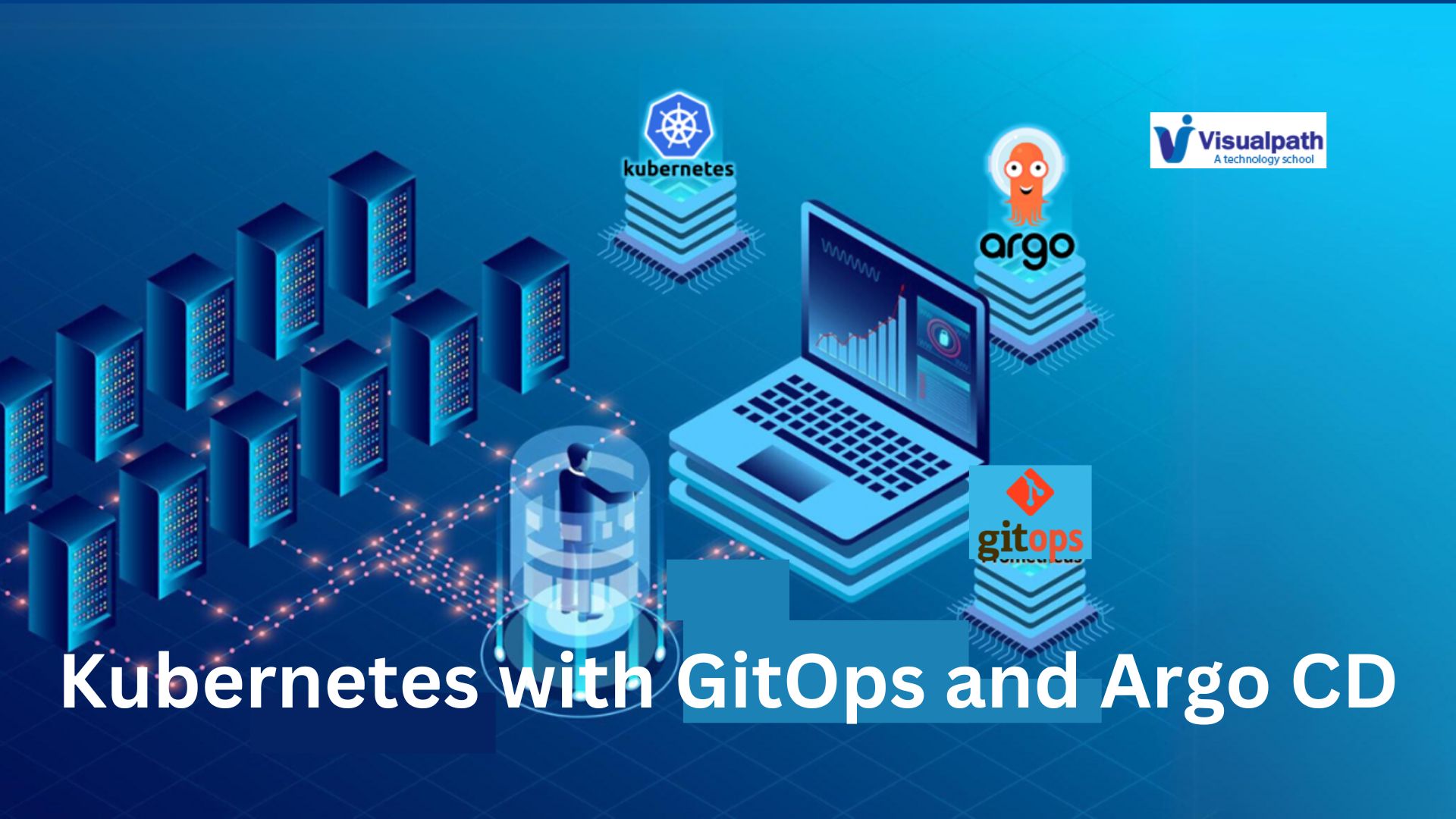
    GitOps, a modern approach to continuous delivery, addresses these needs by using Git as the single source of truth for declarative infrastructure and application configuration. Argo CD, a Kubernetes-native continuous deployment tool, pairs perfectly with GitOps to automate the deployment process, making it more efficient and less error-prone. Docker Online Training

    Understanding GitOps:

    GitOps is a methodology that uses Git repositories to manage and automate infrastructure and application deployments. It revolves around the principles of declarative configuration and version-controlled application infrastructure.

    Argo CD is an open-source, declarative, GitOps continuous delivery tool for Kubernetes. It synchronizes the desired state defined in Git with the actual state of the Kubernetes cluster, ensuring that the cluster configuration matches the repository. Docker and Kubernetes Training

    Introducing Argo CD:

    How Argo CD Implements GitOps:

    Repository Setup:

    The journey begins with setting up a Git repository that holds the desired state of the Kubernetes applications. This includes Kubernetes manifests, Helm charts, or Kustomize configurations. The repository is organized in a way that reflects the structure of the applications and environments.

    Connecting Argo CD to the Repository:

    Argo CD is then configured to monitor this Git repository. This involves defining the repository in Argo CD and specifying the path to the application definitions. Argo CD continuously watches for changes in the repository.

    Application Deployment:

    When a change is detected in the repository, Argo CD automatically synchronizes the changes with the Kubernetes cluster. This ensures that the live state of the applications matches the declared state in the repository.

    Monitoring and Management:

    Argo CD provides a comprehensive web UI and CLI to monitor the state of the applications. Users can see which applications are in sync with the Git repository and which are not. For those that are out of sync, Argo CD can automatically or manually synchronize them. Kubernetes Online Training

    Benefits of Using Argo CD for GitOps:

    Consistency and Reliability: By maintaining the desired state in Git, deployments are more predictable and less prone to human error. Automated synchronization ensures that the Kubernetes cluster state is always consistent with the Git repository.

    Enhanced Security and Compliance: With Git as the source of truth, it’s easier to enforce security policies and compliance requirements. All changes are version-controlled, providing an audit trail for all modifications.

    Improved Developer Productivity: Developers can focus on writing code and creating value, while Argo CD handles the complexity of deployments. The use of familiar Git workflows simplifies the process of making and deploying changes. Kubernetes Certification Training

    Scalability: Argo CD’s ability to manage multiple clusters and environments from a single control plane makes it ideal for organizations of all sizes, from startups to large enterprises.

    Conclusion:

    Adopting GitOps with Argo CD revolutionizes the way organizations deploy and manage applications in Kubernetes. By leveraging the power of Git for configuration management and the automation capabilities of Argo CD, teams can achieve greater efficiency, reliability, and scalability in their DevOps processes.

    Visualpath is the Leading and Best Institute for learning Docker And Kubernetes Online in Ameerpet, Hyderabad. We provide Docker Online Training Course, you will get the best course at an affordable cost.

    Call on – +91-9989971070

    Visit : https://www.visualpath.in/DevOps-docker-kubernetes-training.html
    WhatsApp : https://www.whatsapp.com/catalog/919989971070/

  • Kubernetes with GitOps: A Quick Guide

    Kubernetes with GitOps: A Quick Guide

    Kubernetes and GitOps have emerged as indispensable tools for managing complex applications. Kubernetes, a powerful container orchestration platform, provides the infrastructure to deploy, scale, and manage containerized applications seamlessly.  Docker and Kubernetes Training

    Kubernetes has revolutionized the way applications are deployed and managed, offering a scalable and flexible infrastructure solution. By abstracting away the underlying infrastructure complexities, Kubernetes enables developers to focus on building and deploying applications without worrying about the intricacies of managing servers and dependencies.

    One of the key features of Kubernetes is its ability to automatically scale applications based on demand. With features like horizontal pod autoscaling, Kubernetes ensures that applications have the resources they need to handle varying workloads efficiently. This scalability not only improves the performance of applications but also helps in optimizing resource utilization, leading to cost savings. Kubernetes Online Training

    Moreover, Kubernetes provides robust mechanisms for rolling updates and canary deployments, allowing for seamless updates to applications without downtime. This ensures a smooth user experience and minimizes the impact of updates on production environments.

    GitOps extends the principles of infrastructure as code (IaC) by using Git repositories as the single source of truth for both application code and infrastructure configurations. This approach allows for declarative configuration management, where the desired state of the infrastructure is defined in code and automatically applied to the Kubernetes cluster. Docker Online Training

    By adopting GitOps, organizations can achieve greater consistency, traceability, and reproducibility in their deployment processes. Any changes to the infrastructure or application configurations are made through pull requests, providing an auditable history of changes and enabling collaborative development workflows.

    Furthermore, GitOps promotes the practice of GitOps pipelines, where changes pushed to the Git repository trigger automated deployment pipelines. These pipelines handle tasks such as building container images, deploying applications to Kubernetes clusters, and performing validation checks, all in a fully automated fashion. Kubernetes Certification Training Course

    Combining Kubernetes with GitOps offers a powerful solution for modern software development teams looking to streamline their deployment and management processes.

    Increased Efficiency: Automation reduces manual intervention and accelerates the deployment cycle, enabling faster time-to-market for new features and updates.

    Enhanced Reliability: Declarative configuration management ensures consistency and reduces the risk of configuration drift, leading to more reliable and stable deployments. Docker and Kubernetes Online Training

    Improved Collaboration: Git-based workflows facilitate collaboration among developers, operators, and other stakeholders, fostering a culture of transparency and accountability.

    In conclusion, Kubernetes with GitOps offers a powerful combination for modernizing software deployment and management practices. By embracing these technologies, organizations can achieve greater efficiency, reliability, and agility in delivering software applications to market.

    Visualpath is the Leading and Best Institute for learning Docker And Kubernetes Online in Ameerpet, Hyderabad. We provide Docker Online Training Course, you will get the best course at an affordable cost.

    Call on – +91-9989971070.

    Visit : https://www.visualpath.in/DevOps-docker-kubernetes-training.html
    WhatsApp : https://www.whatsapp.com/catalog/919989971070/

  • Kubernetes – The Significance of Replication Controller Works

    Kubernetes – The Significance of Replication Controller Works

    Kubernetes stands out as a dominant force, empowering developers and operators to efficiently manage and deploy applications at scale. At the core of Kubernetes’ robust infrastructure lies the concept of replication controllers, a crucial component for ensuring scalability, reliability, and high availability of applications running within the Kubernetes cluster.

    Replication controllers serve as the guardians of desired pod state within a Kubernetes cluster. Simply put, they ensure that a specified number of pod replicas are running at any given time. This fundamental concept aligns perfectly with the distributed nature of containerized applications, where multiple instances of the same service may be necessary to handle varying loads and ensure fault tolerance. Docker and Kubernetes Training

    One of the primary use cases of replication controllers is to facilitate horizontal scaling of applications. By defining the desired number of replicas for a particular pod template, replication controllers automatically manage the creation, deletion, and scaling of pod instances based on the defined criteria. This enables Kubernetes to seamlessly adapt to fluctuating demand, ensuring that the application can handle increased traffic without manual intervention.

    In addition to scalability, replication controllers play a vital role in enhancing the reliability and high availability of applications. By maintaining the desired number of pod replicas, even in the face of node failures or other disruptions, replication controllers ensure that the application remains accessible and responsive. In the event of a pod failure, the replication controller swiftly detects the discrepancy between the desired and actual state, and initiates the necessary actions to restore the desired number of replicas, thereby minimizing downtime and service disruptions. Kubernetes Online Training

    One of the key principles of Kubernetes is the declarative configuration of desired state. Replication controllers embody this principle by allowing users to specify the desired number of replicas and the pod template that defines the characteristics of each replica. This declarative approach simplifies management and automation, as administratorscan focus on defining the desired state rather than manually orchestrating individual pod instances.

    While replication controllers have been a cornerstone of Kubernetes since its inception, they have evolved over time to accommodate more advanced use cases and capabilities. Replica Sets, introduced as a successor to replication controllers, offer additional features such as selector-based pod matching and the ability to scale to zero replicas. However, replication controllers continue to serve as a fundamental building block within Kubernetes, providing a simple yet powerful mechanism for managing pod replication. Docker Online Training

    In the dynamic landscape of container orchestration, replication controllers play a critical role in ensuring the scalability, reliability, and high availability of applications deployed within Kubernetes clusters. By automating the management of pod replicas based on declarative configuration, replication controllers empower organizations to efficiently orchestrate containerized workloads and adapt to changing demands with ease.

    Visualpath is the Leading and Best Institute for learning Docker And Kubernetes Online in Ameerpet, Hyderabad. We provide Docker Online Training Course, you will get the best course at an affordable cost.

    Call on – +91-9989971070.

    Visit : https://www.visualpath.in/DevOps-docker-kubernetes-training.html
    WhatsApp : https://www.whatsapp.com/catalog/919989971070/

  • A Guide to Setting Up a CI/CD Pipeline with Jenkins

    A Guide to Setting Up a CI/CD Pipeline with Jenkins

    Continuous Integration and Continuous Deployment (CI/CD) pipelines have emerged as essential tools for automating software delivery, ensuring rapid iteration, and maintaining high-quality standards. Among the plethora of CI/CD tools available, Jenkins stands out for its versatility, robustness, and extensive plugin ecosystem. Docker and Kubernetes Training

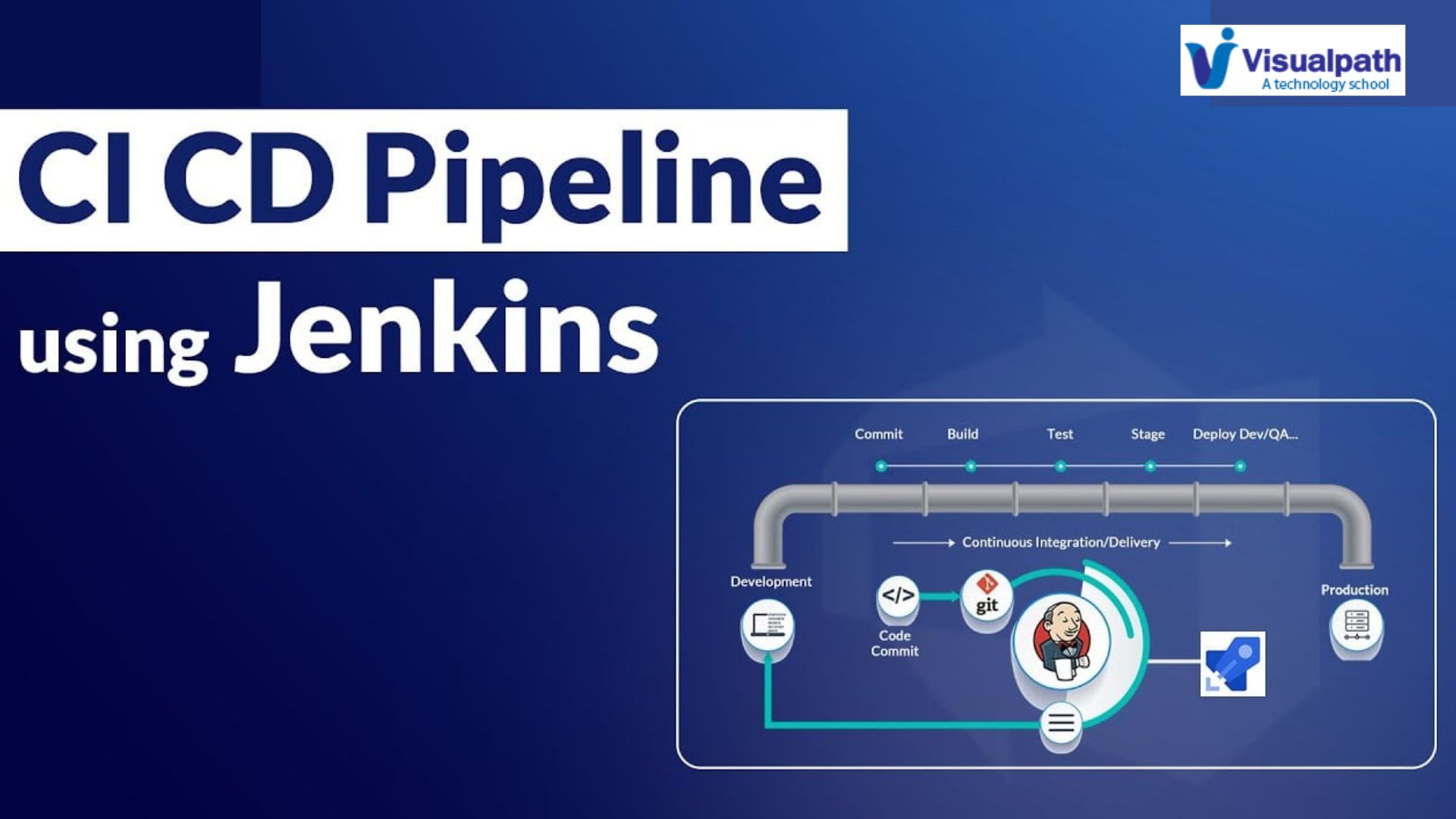
    Before diving into Jenkins, let’s grasp the concept of CI/CD pipelines. A CI/CD pipeline is a sequence of steps that automate the process of integrating code changes into a shared repository, running tests, and deploying the application. CI focuses on the continuous integration of code changes, while CD encompasses both continuous delivery (automatically deploying code changes to a staging environment) and continuous deployment (automatically deploying code changes to production). Kubernetes Online Training

    Installation: Begin by downloading and installing Jenkins on your server or local machine. Jenkins provides comprehensive installation instructions for various operating systems on its official website.

    Configuration: Once installed, access Jenkins through your web browser and follow the initial setup instructions to configure administrative settings and create your admin user.

    Plugin Installation: Jenkins offers a vast array of plugins to extend its functionality. Install relevant plugins for your CI/CD pipeline requirements, such as Git, Docker, Maven, etc. Navigate to “Manage Jenkins” > “Manage Plugins” to install plugins from the Jenkins dashboard. Docker Online Training

    Create a New Item: From the Jenkins dashboard, select “New Item” to create a new project. Enter a name for your project and choose the type of project (Freestyle project, Pipeline, etc.).

    Configure Source Code Management: Specify the repository where your code resides (e.g., Git, SVN). Provide the repository URL and credentials if required.

    Set Build Triggers: Determine when Jenkins should initiate a build. You can choose triggers such as periodic builds, webhook triggers, or trigger builds based on code commits. Kubernetes Certification Training Course

    Define Build Steps: Configure the build steps according to your project requirements. These steps may include compiling code, running tests, and generating artifacts.

    Configure Post-Build Actions: Define actions to be performed after the build completes, such as archiving artifacts, sending notifications, or triggering deployments.

    Save and Run: Save your pipeline configuration and trigger a build to test its functionality.

    In conclusion, setting up a CI/CD pipeline with Jenkins empowers software development teams to streamline their workflows, improve productivity, and deliver high-quality software with confidence. By following the steps outlined in this guide, you can harness the power of Jenkins without the need for extensive coding expertise, enabling your team to focus on innovation and creativity.

    Visualpath is the Leading and Best Institute for learning Docker And Kubernetes Online in Ameerpet, Hyderabad. We provide Docker Online Training Course, you will get the best course at an affordable cost.

    Attend Free Demo

    Visit : https://www.visualpath.in/DevOps-docker-kubernetes-training.html WhatsApp : https://www.whatsapp.com/catalog/919989971070/