Tag: google cloud

  • Understanding EL, ELT, and ETL in GCP Data Engineering

    Understanding EL, ELT, and ETL in GCP Data Engineering

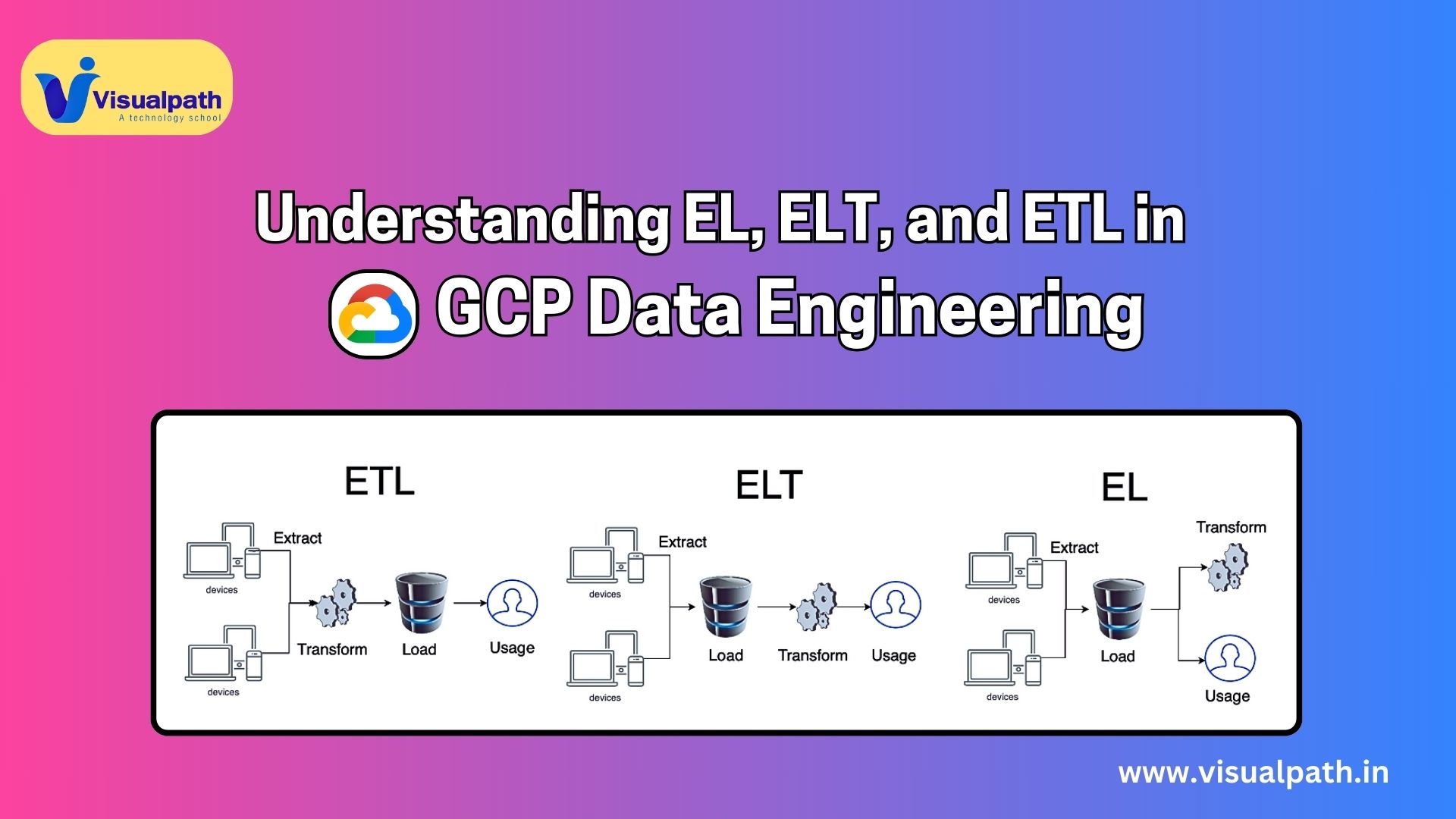
    In the realm of data engineering, particularly when working on Google Cloud Platform (GCP), the terms EL, ELT, and ETL refer to key processes that facilitate the flow and transformation of data from various sources to a destination, usually a data warehouse or data lake. For a GCP Data Engineer, it’s important to understand the differences between these processes and how to implement them efficiently using GCP services. GCP Data Engineering Training

    1. Extract, Load (EL)

    In EL (Extract, Load), data is first extracted from various sources and then directly loaded into a target system, typically a data lake like Google Cloud Storage (GCS) or BigQuery in GCP. No transformations occur during this process. EL is commonly used when:

    • The priority is to quickly ingest raw data.
    • Data needs to be stored for later processing.
    • There is a need for data backup, archiving, or unprocessed analytics.

    GCP Services for EL:

    • Cloud Dataflow: A fully managed streaming analytics service used to extract data from sources like Apache Kafka, Pub/Sub, and then load it directly into BigQuery.
    • Cloud Storage: Allows storing raw extracted data that can be later accessed and processed. GCP Data Engineer Training in Hyderabad

    Key Benefits of EL in GCP:

    • Faster initial data ingestion as transformations are deferred.
    • Suits scenarios with high data volumes and real-time ingestion needs.

    2. Extract, Transform, Load (ETL)

    ETL is the traditional data pipeline model where data is extracted, transformed into a desired format, and then loaded into the destination system. ETL is suitable when the data requires preprocessing, cleaning, or enrichment before analysis or storage.

    In the ETL process, the data transformation happens outside of the target system, often in intermediate storage or memory. This is particularly useful when dealing with large datasets that need thorough cleaning or when businesses want to standardize data before loading it into systems like BigQuery for analytics.

    GCP Services for ETL:

    • Cloud Dataflow: A powerful tool for both batch and real-time data processing, allowing engineers to extract data, apply transformations (e.g., filtering, aggregation), and load it into BigQuery or Cloud Storage.
    • Cloud Dataprep: A visually-driven data preparation tool that allows data engineers to clean, structure, and transform raw data without writing code.

    Key Benefits of ETL in GCP:

    • Enables extensive pre-processing and transformation of data before storage, ensuring the quality of data for analysis.
    • Helps businesses load only refined and structured data into their systems, improving the efficiency of analytics workflows.

    3. Extract, Load, Transform (ELT)

    ELT is a modern approach where data is first extracted and loaded into a storage system like BigQuery, and the transformation happens afterwards within the storage system itself. Unlike ETL, where transformations occur before loading, ELT leverages the computational power of modern data warehouses to perform transformations on loaded data.

    ELT is typically used in scenarios where the target system (e.g., BigQuery) has powerful data processing capabilities. This approach is often more flexible for handling large-scale data transformations as it delays them until after the data is loaded. Google Cloud Data Engineer Training

    GCP Services for ELT:

    • BigQuery: GCP’s fully managed, serverless data warehouse, ideal for ELT workflows. Data can be loaded in raw format, and SQL-based transformations can be applied as needed.
    • Cloud Composer (Apache Airflow): Orchestrates the workflow of ELT pipelines, managing extraction, loading, and the transformation process in a scheduled or event-driven manner.

    Key Benefits of ELT in GCP:

    • Greater scalability for large datasets, as transformations leverage the computational power of BigQuery.
    • Increased flexibility, allowing iterative and on-demand transformations without reloading data.

    Choosing the Right Process in GCP

    For a GCP Data Engineer, selecting between EL, ETL, and ELT depends on the specific use case:

    • EL: Best for raw data storage or when transformation can wait.
    • ETL: Ideal for structured, preprocessed data required for specific business use cases.
    • ELT: Optimal when dealing with large volumes of data and leveraging the power of modern data warehouses like BigQuery for flexible, on-demand transformations.

    By mastering these processes and understanding their differences, GCP data engineers can build efficient and scalable data pipelines that fit their organization’s needs. Google Cloud Data Engineer Online Training

    Visualpath is the Best Software Online Training Institute in Hyderabad. Avail complete GCP Data Engineering worldwide. You will get the best course at an affordable cost.

    WhatsApp: https://www.whatsapp.com/catalog/919989971070

    Visit  https://visualpath.in/gcp-data-engineering-online-traning.html
  • What is AI on Google Cloud Platform GCP? | Key Components, Benefits

    What is AI on Google Cloud Platform GCP? | Key Components, Benefits

    AI on Google Cloud Platform (GCP)

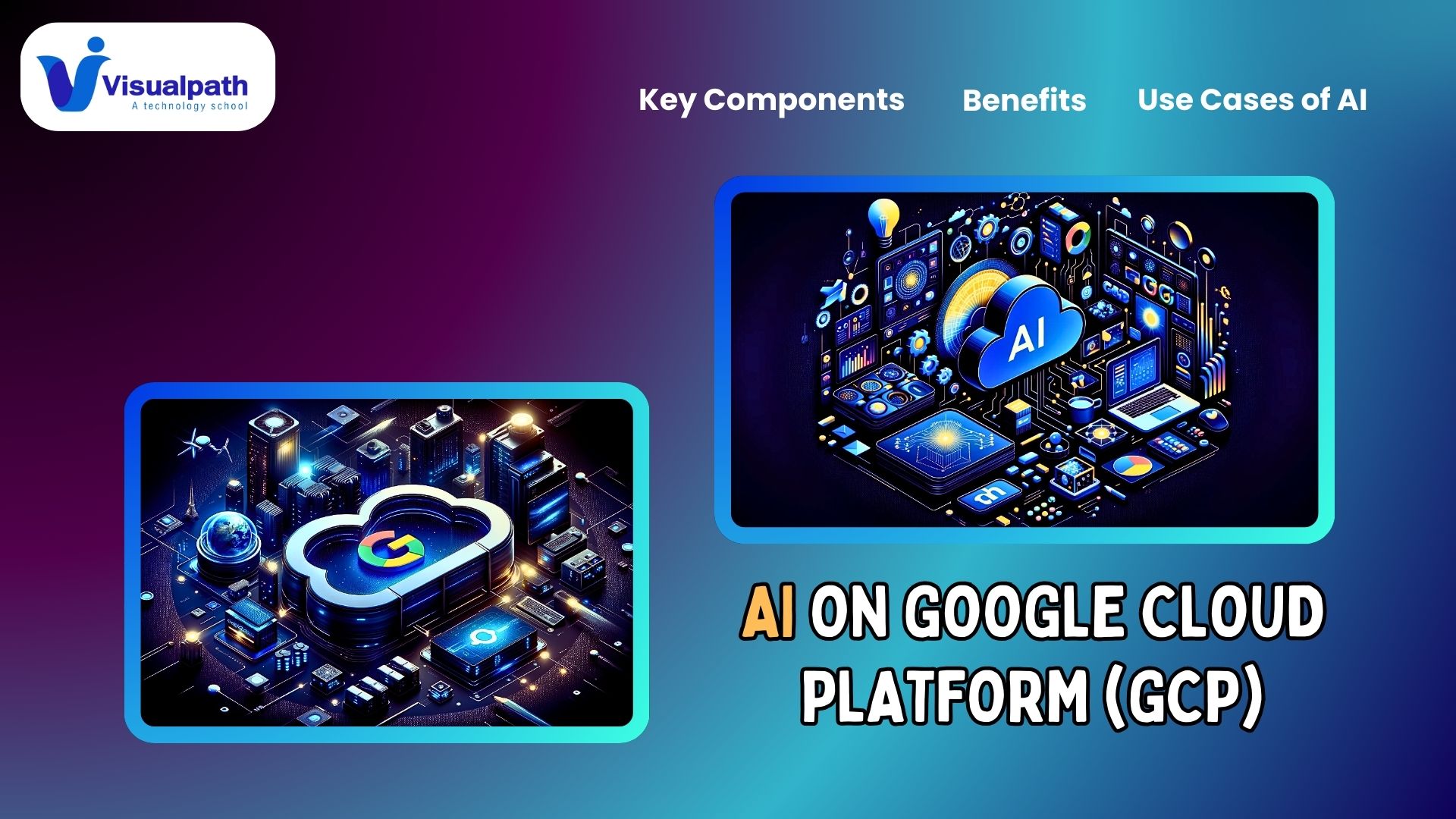
    Artificial Intelligence (AI) on Google Cloud Platform (GCP) refers to a suite of tools and services designed to help businesses and developers build, deploy, and scale AI-powered applications. GCP offers comprehensive AI and machine learning (ML) solutions that cater to various industries, from healthcare and finance to retail and manufacturing. The platform enables businesses to leverage AI to automate processes, gain insights from data, and enhance customer experiences. GCP Data Engineering Training

    Key Components of AI on GCP

    1. Google Cloud AI Platform
      The AI Platform is a fully-managed service that allows developers and data scientists to build, deploy, and scale machine learning models. It provides infrastructure and tools for every stage of the machine learning lifecycle, from data preparation and training to deployment and management. The AI Platform supports popular frameworks like TensorFlow, PyTorch, and Scikit-learn, allowing flexibility and ease of use.
    2. Pre-trained AI Models
      Google Cloud offers a wide range of pre-trained AI models through its AI Hub and AI APIs, allowing businesses to integrate AI without the need for extensive machine learning expertise. These models include image recognition (Vision AI), natural language processing (Natural Language API), and speech-to-text and text-to-speech capabilities (Speech AI). Pre-trained models can be customized with the customer’s data, offering tailored AI solutions. GCP Data Engineer Training in Hyderabad
    3. AutoML
      AutoML is a powerful tool on GCP that allows users to build custom machine-learning models with minimal coding and ML expertise. It automates the process of model training and tuning, enabling businesses to create models for image recognition, natural language, translation, and structured data. AutoML democratizes AI by making it accessible to a wider audience, including non-developers.
    4. BigQuery ML
      BigQuery ML brings machine learning directly to your data, allowing users to build and deploy machine learning models using SQL queries within BigQuery. It eliminates the need to move large datasets across systems for analysis, resulting in faster and more cost-effective machine learning workflows. Businesses can use BigQuery ML to predict customer behavior, optimize processes, and uncover insights from massive datasets.

    Use Cases of AI on GCP

    1. Healthcare
      AI on GCP has been instrumental in transforming the healthcare industry. GCP’s machine learning capabilities are being used to analyze medical data, detect diseases, and predict patient outcomes. For instance, medical image analysis using Vision AI helps in detecting abnormalities like tumours, while natural language processing can sift through vast medical records for better patient care.
    2. Retail
      In the retail sector, AI on GCP enhances the customer experience by providing personalized recommendations, optimizing supply chains, and improving demand forecasting. Retailers can use GCP’s AI tools to analyze customer behaviour, build recommendation engines, and implement AI chatbots for customer support.
    3. Manufacturing
      AI-driven solutions on GCP are helping manufacturers increase efficiency and reduce downtime by predicting equipment failures before they happen. With predictive maintenance models powered by AutoML and BigQuery ML, businesses can lower operational costs, streamline production, and improve overall equipment effectiveness. Google Cloud Data Engineer Training
    4. Finance
      In the financial industry, AI on GCP is used for fraud detection, risk management, and customer service automation. By analyzing historical financial data, AI models can predict fraudulent activities and provide early warnings, enhancing security and compliance.

    Benefits of AI on GCP

    1. Scalability
      GCP’s AI services are highly scalable, allowing businesses to expand their AI operations as needed. Whether handling small projects or massive datasets, GCP’s infrastructure is built to support growth.
    2. Ease of Use
      With tools like AutoML and pre-trained models, GCP makes AIaccessible to developers and non-technical users alike. This ease of use accelerates AI adoption across different business functions.
    3. Cost-Effectiveness
      GCP offers a pay-as-you-go pricing model, making AI solutions affordable for businesses of all sizes. The flexibility to choose services based on specific needs ensures that businesses only pay for what they use.

    Conclusion:

    AI on Google Cloud Platform empowers businesses to innovate and stay competitive by integrating intelligent systems into their operations. From building custom machine learning models to leveraging pre-trained AI solutions, GCP provides a flexible and scalable platform for AI development across industries. As AI continues to evolve, GCP’s robust infrastructure and tools position businesses to harness the power of AI for transformative results. Google Cloud Data Engineer Online Training

    Visualpath is the Best Software Online Training Institute in Hyderabad. Avail complete GCP Data Engineering worldwide. You will get the best course at an affordable cost.

    Attend Free Demo

    Call on – +91-9989971070

    WhatsApp: https://www.whatsapp.com/catalog/919989971070

    Visit  https://visualpath.in/gcp-data-engineering-online-traning.html
  • Virtual Machines & Networks in the Google Cloud Platform: A Comprehensive Guide

    Virtual Machines & Networks in the Google Cloud Platform: A Comprehensive Guide

    Introduction:

    Google Cloud Platform (GCP) offers a powerful suite of tools to build and manage cloud infrastructure, with Virtual Machines (VMs) and Networking being two of its core components. This guide provides an overview of effectively using these features, focusing on creating scalable and secure environments for your applications. GCP Data Engineering Training

    Virtual Machines in GCP

    What Are Virtual Machines?

    Virtual Machines (VMs) are virtualised computing resources that emulate physical computers. In GCP, VMs are provided through Google Compute Engine (GCE), allowing users to run workloads on Google’s infrastructure. VMs offer flexibility and scalability, making them suitable for various use cases, from simple applications to complex, distributed systems.

    Key Features of GCP VMs

    • Custom Machine Types: GCP allows you to create VMs with custom configurations, tailoring CPU, memory, and storage to your specific needs.
    • Preemptible VMs: These are cost-effective, short-lived VMs ideal for batch jobs and fault-tolerant workloads. They are significantly cheaper but can be terminated by GCP with minimal notice.
    • Sustained Use Discounts: GCP automatically provides discounts based on the usage of VMs over a billing period, making it cost-efficient.
    • Instance Groups: These are collections of VMs that you can manage as a single entity, enabling auto-scaling and load balancing across multiple instances. GCP Data Engineer Training in Hyderabad

    Creating a Virtual Machine

    1. Choose the Right Machine Type: Depending on your workload, select the appropriate machine type. For example, use high-memory instances for memory-intensive applications.
    2. Select an Operating System: GCP supports various OS options, including Windows, Linux, and custom images.
    3. Configure Disks: Attach persistent disks for durable storage, or use local SSDs for high-speed, temporary storage.
    4. Networking: Ensure your VM is configured with the correct network settings, including IP addressing, firewall rules, and VPC (Virtual Private Cloud) configuration.
    5. Deploy and Manage: After creation, manage your VMs through the GCP Console or via command-line tools like gcloud.

    Networking in GCP

    Overview of GCP Networking

    Networking in GCP is built around the concept of a Virtual Private Cloud (VPC), a virtualized network that provides full control over your network configuration. VPCs allow you to define IP ranges, subnets, routing, and firewall rules, ensuring your resources are securely and efficiently connected.

    Key Networking Components

    • VPC Networks: A global resource that spans all regions, allowing you to create subnets and control IP allocation.
    • Subnets: Subdivisions of a VPC network that define IP ranges for resources within a specific region.
    • Firewalls: Rules that allow or deny traffic to and from VMs based on specified criteria such as IP range, protocol, and port.
    • Load Balancing: Distributes traffic across multiple instances, improving availability and reliability.
    • Cloud VPN: Securely connects your on-premises network to your GCP VPC via an IPsec VPN tunnel.
    • Cloud Interconnect: Provides a dedicated connection between your on-premises network and GCP, offering higher bandwidth and lower latency than VPN. Google Cloud Data Engineer Training

    Setting Up a VPC Network

    1. Create a VPC: Start by creating a VPC, choosing whether it should be auto or custom mode. Auto mode automatically creates subnets in each region, while custom mode gives you full control over subnet configuration.
    2. Configure Subnets: Define the IP ranges and regions for your subnets. Ensure you allocate enough IP addresses to accommodate your resources.
    3. Set Up Firewalls: Implement firewall rules to control traffic to and from your VMs. Use these rules to protect your network from unauthorized access.
    4. Establish Connectivity: Depending on your needs, you can set up VPNs or Interconnects to link your VPC to other networks, such as on-premises environments.

    Best Practices for VMs and Networking in GCP

    1. Optimize VM Costs: Use preemptible VMs for non-critical workloads and take advantage of sustained use discounts.
    2. Implement Security Best Practices: Regularly update your OS and applications, and apply strict firewall rules to minimize security risks.
    3. Design for Scalability: Use instance groups and load balancers to handle varying levels of demand.
    4. Monitor and Manage: Utilize GCP’s monitoring tools to keep an eye on your VM performance and network traffic, making adjustments as needed.

    Conclusion:

    Google Cloud Platform provides robust tools for deploying and managing Virtual Machines and Networks, enabling you to build scalable, secure, and cost-efficient cloud infrastructure. By following best practices and leveraging GCP’s features, you can optimize your cloud environment for a wide range of applications. Google Cloud Data Engineer Online Training

    Visualpath is the Best Software Online Training Institute in Hyderabad. Avail complete GCP Data Engineering worldwide. You will get the best course at an affordable cost.

    WhatsApp: https://www.whatsapp.com/catalog/919989971070

    Visit  https://visualpath.in/gcp-data-engineering-online-traning.html
  • Introduction to GCP and DevOps

    Introduction to GCP and DevOps

    What is GCP?

    Google Cloud Platform (GCP) is a suite of cloud computing services provided by Google. It offers a wide range of tools and services that enable businesses to build, deploy, and manage applications at scale. GCP provides infrastructure as a service (IaaS), platform as a service (PaaS), and software as a service (SaaS) solutions, making it a versatile platform for various cloud-based operations. Some of the key services include Compute Engine for virtual machines, Kubernetes Engine for container orchestration, BigQuery for data analytics, and Cloud Storage for scalable storage solutions. GCP DevOps Online Training 

    What is DevOps?

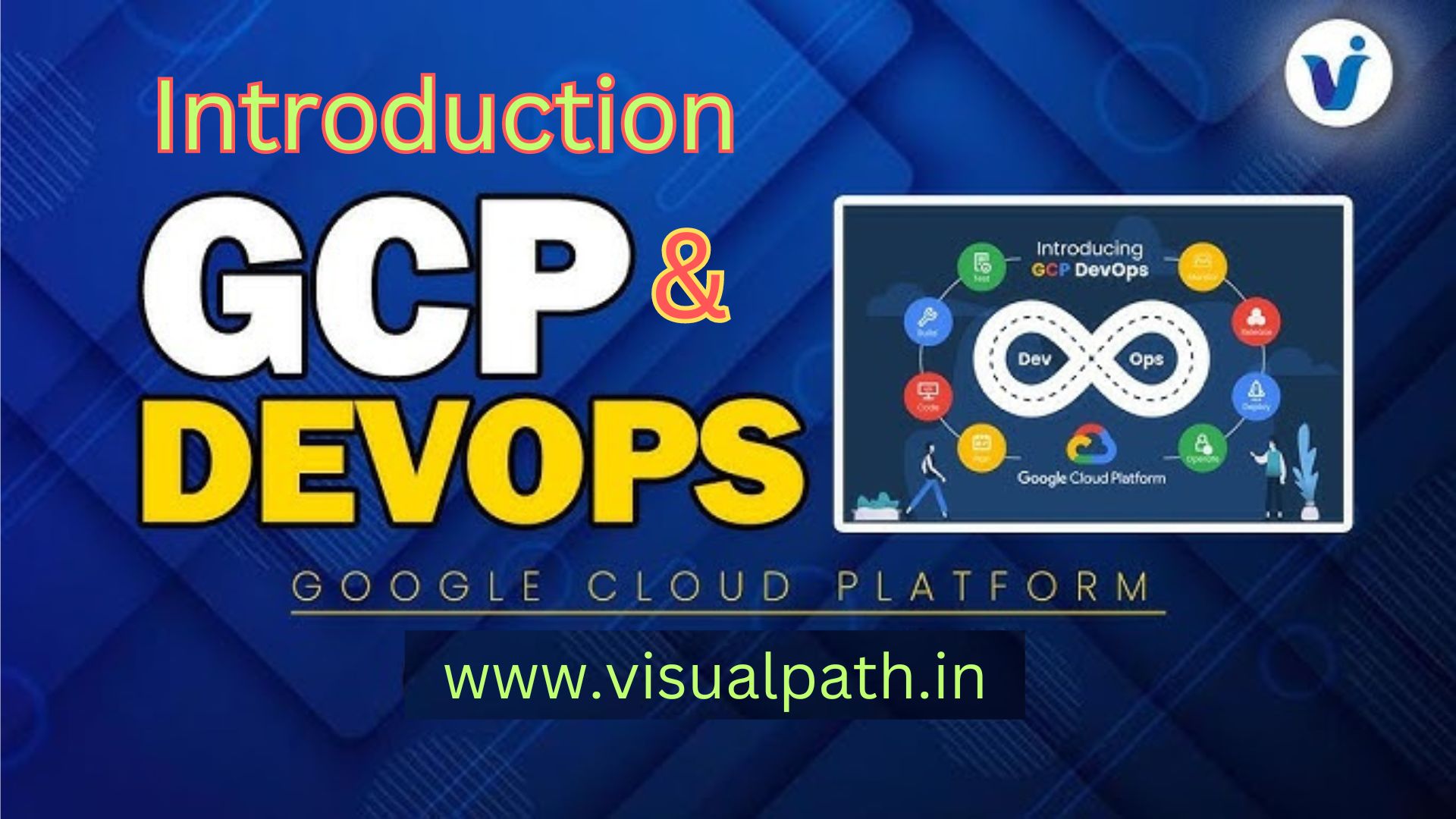
    DevOps is a cultural and technical approach that integrates software development (Dev) and IT operations (Ops) to improve collaboration, automate workflows, and accelerate the software delivery process. DevOps practices focus on automating repetitive tasks, enhancing communication between teams, and continuously improving software through iterative development and feedback loops. The ultimate goal is to deliver software faster, more reliably, and with higher quality. GCP DevOps Training

    The Synergy Between GCP and DevOps

    GCP is an ideal platform for implementing DevOps practices due to its comprehensive set of tools and services that support continuous integration, continuous delivery (CI/CD), and infrastructure as code (IaC). GCP DevOps Training in Ameerpet

    1. Continuous Integration and Continuous Deployment (CI/CD):
      1. GCP offers Cloud Build, a fully managed CI/CD service that automates the process of building, testing, and deploying applications. With Cloud Build, teams can integrate code changes more frequently and deploy updates rapidly, reducing the time to market. GCP DevOps Training in Hyderabad
    2. Infrastructure as Code (IaC):
      1. GCP integrates seamlessly with Terraform, allowing teams to manage and provision infrastructure through code. This approach ensures that infrastructure is versioned, repeatable, and consistent across environments.  GCP DevOps Training institute in Ameerpet
    3. Scalability and Flexibility:
      1. GCP’s global infrastructure and powerful tools like Kubernetes Engine allow businesses to scale applications efficiently, meeting the demands of dynamic workloads.

    Conclusion

    The combination of GCP and DevOps practices empowers organizations to innovate faster, improve collaboration, and deliver high-quality software more efficiently. By leveraging GCP’s robust cloud services and integrating DevOps methodologies, businesses can stay competitive in a rapidly evolving technological landscape.  Google Cloud Platform Training Hyderabad

    Visualpath is the Leading and Best Software Online Training Institute in Hyderabad. Avail complete GCP DevOps Online Training Worldwide. You will get the best course at an affordable cost.

    WhatsApp: https://www.whatsapp.com/catalog/919989971070

    Visit   https://visualpath.in/devops-with-gcp-online-training.html