Tag: GCP DevOps Online Training

  • GCP DevOps: Key Strategies for Effective Cloud Delivery

    GCP DevOps: Key Strategies for Effective Cloud Delivery

    Key strategies in GCP DevOps are essential for ensuring a seamless, efficient, and agile cloud delivery pipeline. As businesses increasingly adopt Google Cloud Platform (GCP) for their cloud infrastructure, implementing the right DevOps practices becomes crucial for optimizing workflows, increasing automation, and scaling services efficiently. GCP DevOps integrates development and operations, allowing teams to collaborate more effectively, automate tasks, and improve the quality of applications. In this article, we’ll explore key strategies for achieving effective cloud delivery through GCP DevOps, along with the benefits of GCP DevOps Certification Training.

    Automating Infrastructure with GCP DevOps

    One of the core principles of GCP DevOps is automation. Teams can save time and lower the risk of errors by automating repetitive operations like infrastructure provisioning, deployment, and monitoring. GCP offers various tools like Google Kubernetes Engine (GKE), Cloud Functions, and Cloud Deployment Manager, which facilitate infrastructure as code (IaC). These tools enable teams to automate the deployment of applications and resources, making the process more consistent and predictable. This automation streamlines cloud delivery and helps maintain a high level of scalability, crucial for businesses that are growing rapidly or experiencing fluctuating workloads. Through GCP DevOps Training, teams gain the skills necessary to implement automation techniques effectively.

    Continuous Integration and Continuous Deployment (CI/CD)

    Implementing a robust CI/CD pipeline is another key strategy in GCP DevOps. CI/CD is essential for ensuring that code is continuously integrated, tested, and deployed into production without disruptions. With tools such as Cloud Build, Cloud Source Repositories, and Cloud Pub/Sub, development teams can create a pipeline that automates the entire software lifecycle—from code commits to deployment.

    The benefits of CI/CD in GCP DevOps are numerous. First, it enhances the speed of software delivery, allowing teams to release updates quickly. Second, it reduces human errors during the deployment process and ensures that only tested and approved code reaches the production environment. The more effective your CI/CD pipeline is, the more agile your cloud delivery process will become.

    Managing Cloud Infrastructure with GCP Tools

    Effective cloud delivery also involves managing the infrastructure efficiently. GCP provides several tools for monitoring, logging, and troubleshooting applications and resources in real-time. Cloud Monitoring and Cloud Logging are vital to keeping track of application performance and identifying potential bottlenecks. Moreover, Stackdriver offers integrated diagnostics, which enables teams to quickly troubleshoot and resolve issues in their applications. By using GCP DevOps Online Training, teams can master these tools and ensure they are effectively managing cloud infrastructure.

    Teams may proactively detect and fix problems with cloud infrastructure before they have an impact on consumers by doing ongoing monitoring. It’s important to set up alerts for critical thresholds, such as CPU usage or memory consumption, to ensure a smooth cloud experience.

    Enhancing Collaboration and Communication

    Another key strategy for effective cloud delivery in GCP DevOps is fostering a culture of collaboration between development and operations teams. DevOps isn’t just about tools and automation; it’s about transforming the way teams work together. Implementing collaborative platforms like Google Chat or Google Meet can enhance communication, enabling faster problem-solving and decision-making.

    Organizations can increase efficiency by dismantling the silos that separate operations and development. Cross-functional teams can address issues quickly, which speeds up the cloud delivery process.

    Optimizing Cost Management in GCP DevOps

    An essential component of effectively managing cloud services is cost optimization. GCP DevOps teams must focus on cost management to ensure that cloud resources are being used effectively and within budget. GCP provides tools like Google Cloud Cost Management, Cloud Billing Reports, and Cloud Monitoring to track resource usage and cost. By analyzing cost data, teams can identify opportunities to reduce waste, optimize resource allocation, and implement strategies for better cost efficiency.

    Incorporating cost monitoring into the DevOps pipeline enables teams to make informed decisions and ensure that cloud resources are allocated according to business needs without unnecessary spending. This proactive approach to cost management leads to more sustainable cloud operations and better alignment with business goals.

    Conclusion

    The effective delivery of cloud services using the Key strategies of GCP DevOps requires the right combination of automation, collaboration, continuous integration, and cost management. By leveraging the powerful tools and strategies offered by Google Cloud, your organization can achieve a more efficient and scalable cloud environment. Investing in GCP DevOps certification and training can further enhance your team’s ability to implement these strategies successfully, ensuring that your cloud projects run smoothly and deliver exceptional results.

    Trending Courses: MLOpsDevOps, and Azure DevOps

  • Advanced GCP DevOps for Cloud Engineers

    Advanced GCP DevOps for Cloud Engineers

    Advanced GCP DevOps represents the next level of cloud operations and development using Google Cloud Platform’s powerful tools and services. It involves leveraging automation, infrastructure as code, continuous integration/continuous delivery (CI/CD), monitoring, and security to build, deploy, and maintain scalable cloud applications efficiently.

    For professionals looking to master these skills, enrolling in GCP DevOps Certification Training is an excellent way to validate their expertise and gain hands-on experience with advanced DevOps practices on Google Cloud.

    Key Characteristics of Advanced GCP DevOps

    1. Infrastructure as Code (IaC): Using tools like Terraform and Google Cloud Deployment Manager, cloud engineers automate the provisioning and management of infrastructure, ensuring repeatability and reducing manual errors.
    2. CI/CD Pipelines: Advanced GCP DevOps integrates CI/CD pipelines with tools such as Cloud Build, Jenkins, and Spinnaker to automate testing, building, and deploying applications, enabling rapid and reliable releases.
    3. Containerization and Orchestration: Emphasizing the use of Docker containers managed via Google Kubernetes Engine (GKE) for scalable and portable application deployments.
    4. Automated Monitoring and Logging: Utilizing Google Cloud’s operations suite (formerly Stackdriver) for real-time monitoring, logging, and alerting to proactively manage application health and performance.
    5. Security and Compliance: Embedding security best practices into the DevOps lifecycle with tools like Google Cloud IAM, Security Command Center, and automated policy enforcement.
    6. Cost Optimization: Employing automated tools and strategies to monitor and optimize cloud resource usage and spending.
    7. Collaboration and Agile Practices: Fostering strong collaboration between development, operations, and security teams with shared tools and processes to accelerate delivery cycles.

    Deep Dive into Advanced GCP DevOps for Cloud Engineers

    For cloud engineers working in modern enterprises, mastering advanced GCP DevOps practices is crucial to effectively manage cloud-native applications and infrastructure. To achieve this, many professionals pursue specialized GCP DevOps Training that covers real-world scenarios and best practices for managing production-grade environments.

    Infrastructure as Code (IaC) on GCP

    IaC allows engineers to define cloud resources declaratively. With Terraform or Google Cloud Deployment Manager, infrastructure definitions are stored in version control systems like Git. This brings consistency, versioning, and automation to provisioning compute instances, networking, storage, and other resources. Engineers can spin up entire environments with a single command, improving agility and reducing human error.

    Building Robust CI/CD Pipelines

    Continuous Integration and Continuous Delivery pipelines are the backbone of advanced DevOps. Using Google Cloud Build or Jenkins integrated with GCP, engineers automate the entire software delivery pipeline from code commit to production deployment. Automated testing ensures code quality, while canary deployments and blue-green releases minimize downtime and risk.

    Cloud Build integrates seamlessly with GCP services and container registries, enabling fast and secure builds. For complex deployments, tools like Spinnaker help manage multi-cloud release strategies.

    Containerization and Kubernetes Orchestration

    Containerization with Docker ensures applications run consistently across environments. Google Kubernetes Engine (GKE) provides a managed Kubernetes platform to orchestrate container deployments. Engineers can deploy microservices with scalability and high availability, taking advantage of features like auto-scaling, rolling updates, and self-healing clusters.

    Advanced GCP DevOps engineers use Helm charts and Kubernetes Operators for managing complex applications and infrastructure components declaratively.

    Monitoring, Logging, and Alerting

    Monitoring is critical in production environments. Google Cloud’s operations suite offers metrics, logs, and tracing to help engineers understand application health and diagnose issues quickly. Automated alerts based on thresholds or anomaly detection notify teams before problems impact users.

    This observability also feeds into continuous improvement, enabling root cause analysis and performance optimization.

    Security Integration

    Security in DevOps (DevSecOps) is a priority. GCP provides fine-grained Identity and Access Management (IAM) to enforce least privilege access. Security Command Center helps identify vulnerabilities and misconfigurations proactively.

    Automated policy enforcement through Infrastructure as Code scanning and runtime security monitoring ensures compliance without slowing down development.

    Cost Management

    Cloud costs can escalate quickly without proper governance. Advanced DevOps on GCP includes cost monitoring tools and automation to shut down unused resources, optimize reserved instances, and recommend cost-saving changes, helping organizations stay within budget while scaling.

    Collaboration and Agile Delivery

    Finally, advanced GCP DevOps encourages a culture of collaboration between development, operations, and security teams. Using shared dashboards, automated workflows, and chatOps tools, teams maintain high velocity and quality in releases.

    Conclusion

    AdvancedGCP DevOps is a comprehensive approach that empowers cloud engineers to automate, secure, monitor, and optimize cloud infrastructure and application delivery on Google Cloud Platform. By mastering infrastructure as code, CI/CD pipelines, container orchestration, and integrated security, engineers enable faster, safer, and more cost-effective cloud solutions.

    Trending Courses: MLOpsDevOps, and Azure DevOps

  • What Are the Core Tools in GCP DevOps?

    What Are the Core Tools in GCP DevOps?

    Tools in GCP DevOps play a vital role in automating and managing modern cloud-native applications. These tools make it easier all aspects of code integration, testing, deployment, and monitoring. For anyone looking to streamline development and operations, understanding these tools is a foundational step. Many professionals begin this journey with GCP DevOps Training, which offers structured learning in how to use these tools effectively in real-world projects.

    Below are some of the core tools that make up a robust GCP DevOps pipeline:

    1. Cloud Build

    Cloud Build is Google Cloud’s CI/CD service. You can build, test, and deploy code directly from repositories like GitHub or Cloud Source Repositories. It supports custom workflows and integrates easily with other GCP services, making it a cornerstone of DevOps automation.

    2. Google Kubernetes Engine (GKE)

    GKE offers a managed setting for the deployment of containerized applications. It handles tasks such as provisioning clusters, managing node pools, and scaling workloads. GKE is critical for teams adopting microservices architecture and is often taught in GCP DevOps Online Training programs as a key deployment platform.

    3. Artifact Registry

    This is the consolidated repository of GCP for handling container images and language packages. It allows for secure, scalable storage and integrates seamlessly with Cloud Build and GKE. Artifact Registry supports fine-grained IAM roles, helping ensure secure access across your pipeline.

    4. Cloud Source Repositories

    These are Git repositories with full features and scalability, hosted on Google Cloud. They integrate with Cloud Build and Cloud Functions, enabling developers to trigger builds and automation directly from code commits.

    5. Cloud Monitoring and Logging

    Operations Suite (formerly Stackdriver) provides real-time performance and health monitoring for GCP services and applications. With its integration into other GCP tools, you can easily set up alerts, dashboards, and log-based metrics for visibility and troubleshooting.

    6. Cloud Functions

    With Cloud Functions, developers can execute code that is triggered by events without the need to manage servers. They’re ideal for automating lightweight tasks such as sending notifications, transforming data, or invoking deployment pipelines based on triggers.

    Why These Tools Matter

    These tools collectively support continuous integration, delivery, and operations—all pillars of a successful DevOps practice. By combining them, teams can build pipelines that are fast, reliable, and secure. Each tool is modular, allowing flexibility in how you design and scale your workflows.

    Conclusion

    Understanding and using these core GCP DevOps tools empowers teams to automate their entire development lifecycle, from code to deployment to monitoring. As cloud infrastructure becomes more complex, mastering these tools ensures agility and operational efficiency. If you’re looking to advance your skills and lead DevOps initiatives in the cloud, investing in GCP DevOps Training can give you the competitive edge needed in today’s tech-driven world.

    Trending Courses: MLOpsDevOps, and Azure DevOps

  • GCP DevOps: Automate Everything with Cloud Build

    GCP DevOps: Automate Everything with Cloud Build

    GCP DevOps Automate everything with Cloud Build — this is the mantra of modern development teams seeking efficiency, speed, and scalability in the cloud. As businesses increasingly adopt DevOps practices, Google Cloud Platform (GCP) offers a powerful toolset to streamline continuous integration and continuous delivery (CI/CD). Among these tools, Cloud Build stands out as a fully managed service that automates the building, testing, and deployment of applications at scale.

    If you’re new to cloud CI/CD tools or looking to sharpen your skills, enrolling in a GCP DevOps Training program can help you understand how to automate workflows effectively using Google Cloud services.

    What is Google Cloud Build?

    Cloud Build is GCP’s native CI/CD tool that lets you execute your builds on Google infrastructure. It supports multiple languages and environments, integrates smoothly with GitHub, Bitbucket, and Google Cloud Source Repositories, and provides deep flexibility with custom build steps and Docker support. Whether you’re building containers, binaries, or deploying serverless apps, Cloud Build automates the process from start to finish.

    Key Benefits of Using Cloud Build for DevOps Automation

    Fully Managed Infrastructure
    Cloud Build handles the provisioning of infrastructure automatically. There’s no need to manage Jenkins servers or set up agents — you focus on your code, and GCP takes care of the rest.

    Support for Any Language or Environment
    Cloud Build supports building applications in a variety of languages, including Go, Python, Java, Node.js, .NET, and others. You can define custom workflows using YAML or JSON build configuration files and execute builds using Docker containers, ensuring complete environment control.

    Deep Integration with GCP Services
    Cloud Build seamlessly integrates with key GCP services such as Cloud Functions, Cloud Run, Artifact Registry, and Google Kubernetes Engine (GKE), enabling end-to-end automation across your DevOps pipeline. This seamless integration allows for full automation across your DevOps pipeline.

    Security and Permissions
    Built-in IAM controls ensure that only authorized users and services can trigger builds or deploy artifacts. You can also use Binary Authorization to enforce policy compliance before deployment.

    Scalability and Speed
    Cloud Build dynamically scales to support parallel builds and efficiently manage high-volume workloads. Whether you’re a startup or an enterprise, it can handle your scale efficiently.

      How Cloud Build Enables DevOps Automation

      In a typical DevOps pipeline on GCP, Cloud Build plays a central role in automation. Here’s how:

      • Code Commit: Developers push code to a repository (e.g., GitHub or Cloud Source Repositories).
      • Trigger Build: Cloud Build automatically triggers a pipeline using pre-defined triggers.
      • Build and Test: The application is built and tested using Docker containers, unit tests, or integration tests.
      • Artifact Storage: Build outputs are stored in Artifact Registry or Container Registry.
      • Deployment: Using GCP integrations, applications are automatically deployed to Cloud Run, GKE, App Engine, or other targets.

      If you’re aiming to automate pipelines in your organization, a GCP DevOps Online Training course is an excellent way to learn hands-on implementation with tools like Cloud Build, Cloud Deploy, and GKE.

      Example Use Case

      Consider a situation where a team is building a containerized web application. They push code to GitHub. A Cloud Build trigger detects this change and starts the build pipeline, which performs the following:

      1. Builds the Docker image.
      2. Runs automated tests.
      3. Pushes the image to Artifact Registry.
      4. Deploys the container to a GKE cluster.
      5. Notifies the team on Slack upon success or failure.

      All of this happens within minutes — without human intervention — thanks to automation.

      Best Practices for Using Cloud Build

      • Use YAML for Build Configuration: YAML makes build steps easier to manage and read.
      • Define Triggers for Branches and Tags: Automate builds based on Git branches or tags.
      • Implement Testing Stages: Include unit, integration, and security tests to maintain quality.
      • Leverage Substitutions and Secrets: Use dynamic variables and secure secrets management to avoid hardcoding.

      Whether you’re implementing CI/CD for the first time or optimizing an existing pipeline, learning how to automate with Cloud Build through GCP DevOps Online Training will provide practical skills to increase efficiency and reliability.

      Conclusion

      GCP DevOps Automate everything with Cloud Build is not just a strategy — it’s a necessity for modern software development. By automating the entire CI/CD pipeline with Cloud Build, teams reduce manual errors, increase deployment speed, and improve software quality. As cloud-native development grows, adopting tools like Cloud Build is a key step toward DevOps maturity in the Google Cloud ecosystem.

      Trending Courses: MLOpsDevOps, and Azure DevOps

    1. DevOps on GCP: Tools, Tips, and Techniques

      DevOps on GCP: Tools, Tips, and Techniques

      DevOps on GCP is transforming the way organizations build, test, and deploy applications at scale. As businesses shift to cloud-native solutions, there’s a growing demand for professionals skilled in CI/CD, automation, and infrastructure management. One of the best ways to gain hands-on experience is through a GCP DevOps Certification Training program that teaches practical DevOps implementation on Google Cloud.

      In this article, we’ll explore essential CI/CD Tools for GCP DevOps, share best practices, and highlight techniques to build an efficient DevOps pipeline in the Google Cloud ecosystem.

      Top CI/CD Tools for GCP DevOps

      To support rapid development and scalable deployments, GCP provides a suite of robust DevOps tools that integrate seamlessly into your workflow:

      1. Cloud Build

      Cloud Build is Google Cloud’s fully managed CI/CD service. It enables you to automate builds, tests, and deployments directly from your code repositories using custom workflows.

      2. Cloud Deploy

      This tool simplifies continuous delivery by automating rollouts to Google Kubernetes Engine (GKE), Cloud Run, and Anthos. It also provides version tracking, rollout history, and rollback functionality.

      3. Google Kubernetes Engine (GKE)

      GKE is one of the most powerful container orchestration tools on GCP. It allows you to run containerized apps with Kubernetes at scale, supporting auto-scaling and load balancing.

      4. Artifact Registry

      A secure location to manage container images and language packages, Artifact Registry supports fast and efficient storage and delivery of build artifacts.

      5. Operations Suite (formerly Stackdriver)

      This suite of monitoring, logging, and error reporting tools helps DevOps teams gain insight into application health and infrastructure performance.

      Tips for Successful DevOps Implementation on GCP

      While tools are essential, strategy and execution matter just as much. Here are some expert tips for getting the most out of your DevOps efforts on Google Cloud:

      a. Automate Everything

      From building and testing to deployments and scaling—automation reduces human error and speeds up release cycles. Use Terraform or Google Cloud Deployment Manager for infrastructure automation.

      b. Use IAM and Service Accounts Effectively

      Restrict access using the principle of least privilege. Configure IAM roles and policies to ensure security and accountability across your environment.

      c. Enable Monitoring and Alerting Early

      Set up dashboards, logs, and real-time alerts with Operations Suite to proactively monitor system performance and diagnose issues before they escalate.

      d. Embrace Infrastructure as Code (IaC)

      Use IaC tools to version-control infrastructure alongside your application code. This promotes consistency across development, testing, and production environments.

      Midway through your learning journey, enrolling in a GCP DevOps Training program can help you build advanced workflows, understand real-time use cases, and gain deeper insights into automation pipelines.

      Techniques That Boost DevOps Efficiency on GCP

      a. Canary and Blue-Green Deployments

      Reduce risk during updates by rolling out changes to a subset of users before full deployment. GCP’s Cloud Deploy makes these strategies easier to implement.

      b. DevSecOps Integration

      Integrate security practices into every stage of your pipeline using tools like Binary Authorization and Container Analysis to detect and prevent vulnerabilities.

      c. Event-Driven DevOps

      Use Pub/Sub to trigger builds, tests, or deployments based on real-time events like code commits, issue updates, or artifact uploads.

      Conclusion

      Whether you’re automating workflows, enhancing infrastructure, or deploying containerized applications, GCP’s tools and services enable efficient and scalable DevOps. To truly master these tools, consider enrolling in a GCP DevOps Online Training program that offers hands-on labs and project-based learning. This not only strengthens your skills but also prepares you for real-world DevOps challenges.

      Trending Courses: MLOps, DevOps, and Azure DevOps
    2. Google Cloud Platform DevOps: Cost Optimization & Fast Deployments

      Google Cloud Platform DevOps: Cost Optimization & Fast Deployments

      Google Cloud Platform (GCP) DevOps combines development and operations to accelerate software delivery while optimizing cloud costs. By leveraging automation, Infrastructure as Code (IaC), and CI/CD pipelines, organizations can achieve faster deployments without overspending. This article explores key strategies for cost optimization in GCP DevOps, along with best practices for rapid, reliable releases.

      For professionals looking to enhance their skills, GCP DevOps Training and GCP DevOps Certification Training provide hands-on expertise in cloud automation and cost management.

      1. Why GCP DevOps for Cost Optimization

      GCP offers powerful tools to reduce cloud expenses while maintaining performance. GCP DevOps integrates cost-saving measures into the deployment lifecycle, ensuring efficient resource usage.

      Key Cost Optimization Strategies:

      • Auto-scaling with Compute Engine & Kubernetes: Automatically adjust resources based on demand.
      • Spot VMs & Preemptible Instances: Use discounted compute resources for non-critical workloads.
      • Commitment-Based Discounts: Save up to 70% with long-term commitments.
      • Monitoring with Cloud Billing & Cost Management: Track spending in real-time.

      Enrolling in GCP DevOps Online Training helps teams implement these strategies effectively.

      2. Fast Deployments with GCP DevOps

      Speed is crucial in modern software delivery. GCP DevOps accelerates deployments through automation and CI/CD pipelines.

      Tools for Faster Deployments:

      • Cloud Build: Fully managed CI/CD service for fast, secure builds.
      • Spinnaker: Multi-cloud deployment automation.
      • Terraform & Deployment Manager: IaC for consistent, repeatable deployments.
      • Cloud Run & App Engine: Serverless options for rapid scaling.

      Teams trained in GCP DevOps Certification Training can optimize these tools for seamless deployments.

      3. Combining Cost Efficiency & Speed

      Balancing cost and speed requires smart GCP DevOps practices:

      Best Practices:

      ✔ Right-Sizing Resources: Avoid over-provisioning with monitoring tools.
      ✔ Automated Shutdowns: Turn off non-production environments when idle.
      ✔ Pipeline Optimization: Reduce CI/CD execution time with caching.
      ✔ Multi-Region Deployments: Improve latency without excessive costs.

      Professionals with GCP DevOps Training can fine-tune these approaches for maximum efficiency.

      4. Getting Started with Google Cloud Platform DevOps Training

      To master GCP DevOps, structured learning is essential:

      • GCP DevOps Online Training: Flexible courses covering automation, CI/CD, and cost management.
      • GCP DevOps Certification Training: Validates expertise in cloud deployments and optimization.

      Investing in training ensures teams can implement cost-effective, high-speed deployments with confidence.

      Conclusion

      GCP DevOps empowers organizations to optimize costs while achieving fast deployments through automation, CI/CD, and smart resource management. By adopting best practices and leveraging GCP DevOps Training, businesses can maximize cloud efficiency and accelerate software delivery.

      Trending Courses: MLOps, DevOps, and Azure DevOps
    3. GCP DevOps for Beginners: Getting Started

      GCP DevOps for Beginners: Getting Started

      Google Cloud Platform (GCP) offers a comprehensive suite of tools to support DevOps practices, enabling faster development, deployment, and management of applications. GCP DevOps simplifies automation, CI/CD (Continuous Integration and Continuous Deployment), monitoring, and security, making it an ideal choice for businesses looking to scale efficiently. GCP DevOps for Beginners, this guide will introduce the key concepts and steps to get started.

      Understanding GCP DevOps

      DevOps is a combination of development and operations, focusing on collaboration, automation, and continuous delivery. GCP DevOps enhances these principles by providing cloud-native tools and services that help teams streamline workflows and deploy applications with high efficiency. GCP DevOps Training

      Key Benefits of GCP DevOps for Beginners

      1. Scalability – GCP’s infrastructure supports seamless scaling for applications.
      2. Automation – Automates deployment, testing, and monitoring.
      3. Security – Built-in security and compliance tools ensure data protection.
      4. Cost Efficiency – Pay-as-you-go pricing and resource optimization reduce costs.

      Core Components of GCP DevOps

      1. Google Cloud Source Repositories

      A fully managed Git repository service that allows teams to collaborate on code, track changes, and integrate with other DevOps tools.

      2. Cloud Build

      A CI/CD service that automates the process of building, testing, and deploying applications efficiently.

      3. Google Kubernetes Engine (GKE)

      A powerful tool for containerized applications, enabling smooth orchestration and deployment of workloads using Kubernetes.

      4. Cloud Deployment Manager

      Helps automate the provisioning and management of cloud resources using infrastructure-as-code principles.

      5. Operations Suite

      Provides real-time monitoring, logging, and alerting for better observability and performance management. GCP DevOps Online Training

      Getting Started with GCP DevOps

      1: Set Up a GCP Project

      • Create a new project after creating an account on Google Cloud Platform.
      • Enable the necessary APIs and services for DevOps tools.

      2: Manage Code with Cloud Source Repositories

      • Create a Git repository in Cloud Source Repositories.
      • Use Git commands to push and manage source code.

      3: Automate CI/CD with Cloud Build

      • Configure Cloud Build to automate testing and deployment.
      • Define a build configuration file (cloudbuild.yaml) for pipeline execution.

      4: Deploy Applications with Kubernetes

      • In Google Kubernetes Engine (GKE), create a Kubernetes cluster.
      • Use kubectl to manage containerized applications and deploy workloads.

      5: Monitor and Secure Applications

      • Use Operations Suite for monitoring application performance.
      • Implement Identity and Access Management (IAM) to control access to resources.
      • Apply best security practices to prevent vulnerabilities.

      Conclusion

      GCP DevOps provides an efficient, scalable, and secure environment for modern software development. By leveraging tools like Cloud Build, GKE, and Operations Suite, beginners can quickly set up and optimize their DevOps pipeline. Start small, experiment with GCP tools, and gradually build a fully automated DevOps workflow to streamline your development processes.

      Visualpath is the Leading and Best Software Online Training Institute in Hyderabad.

      For More Information about GCP DevOps Certification Course in India

      Contact Call/WhatsApp: +91-7032290546

      Visit: https://www.visualpath.in/online-gcp-devops-certification-training.html

    4. GCP DevOps vs. AWS DevOps: Key Differences Explained

      GCP DevOps vs. AWS DevOps: Key Differences Explained

      GCP DevOps vs. AWS DevOps has become a crucial aspect of modern software development, enabling faster and more efficient deployment cycles. Among the leading cloud platforms, Google Cloud Platform (GCP) DevOps and Amazon Web Services (AWS) DevOps provide powerful tools and services to streamline development, integration, and deployment processes. While both platforms offer similar capabilities, they differ in their approach, services, and integration capabilities. This article explores the key differences between GCP DevOps and AWS DevOps to help you choose the right platform for your needs.

      Key Differences Between GCP DevOps and AWS DevOps

      1. CI/CD Services

      Both GCP and AWS provide robust Continuous Integration and Continuous Deployment (CI/CD) tools, but they function differently:

      • GCP DevOps: Uses Cloud Build for CI/CD, which provides a serverless build and testing platform with deep integration into GCP services.
      • AWS DevOps: Uses AWS CodePipeline, which offers a fully managed CI/CD service designed to automate the build, test, and deployment processes.

      GCP’s Cloud Build provides more flexibility for containerized applications, while AWS CodePipeline is highly customizable and integrates seamlessly with other AWS services.

      2. Infrastructure as Code (IaC)

      Infrastructure automation is a key component of DevOps, and both cloud providers offer solutions for managing infrastructure using code:

      • GCP DevOps: Uses Terraform (third-party) and Deployment Manager to provision and manage cloud resources.
      • AWS DevOps: Offers AWS CloudFormation and supports Terraform for infrastructure automation.

      AWS CloudFormation provides native automation for AWS infrastructure, while GCP relies on Terraform, which offers a multi-cloud approach.

      3. Container and Kubernetes Support

      Containerization is essential for modern DevOps workflows, and both GCP and AWS offer excellent support for Kubernetes:

      • GCP DevOps: Provides Google Kubernetes Engine (GKE), which is considered one of the best-managed Kubernetes services in the industry. GCP DevOps Training
      • AWS DevOps: Uses Amazon Elastic Kubernetes Service (EKS) and Amazon Elastic Container Service (ECS) for container orchestration.

      GKE offers better automation, scalability, and efficiency for Kubernetes workloads, whereas AWS provides multiple container orchestration options.

      4. Security and Compliance

      Security is a critical factor in DevOps, and both platforms offer built-in security and compliance tools:

      • GCP DevOps: Uses Binary Authorization, IAM, and Security Command Center to secure workloads.
      • AWS DevOps: Provides AWS IAM, AWS Security Hub, and GuardDuty for security and compliance monitoring.

      AWS has a more extensive compliance portfolio, making it a preferred choice for industries with strict security regulations. GCP DevOps Online Training

      5. Logging and Monitoring

      Both platforms offer robust logging and monitoring services to help teams track performance and troubleshoot issues:

      • GCP DevOps: Uses Cloud Logging and Cloud Monitoring, which provide real-time insights and anomaly detection.
      • AWS DevOps: Uses Amazon CloudWatch, which integrates deeply with AWS services for metrics, logging, and event monitoring.

      AWS CloudWatch is preferred for its in-depth AWS integration, while GCP’s Cloud Monitoring is beneficial for multi-cloud setups.

      Which One Should You Choose?

      The choice between GCP DevOps and AWS DevOps depends on multiple factors:

      • Choose GCP DevOps if you prefer strong Kubernetes support, better multi-cloud compatibility, and powerful AI/ML integrations.
      • Choose AWS DevOps if you need extensive cloud services, better compliance, and deeper integration with enterprise cloud workloads.

      Conclusion

      Both GCP DevOps and AWS DevOps provide powerful tools for implementing CI/CD, infrastructure automation, security, and monitoring. While GCP offers best-in-class Kubernetes support and multi-cloud compatibility, AWS provides stronger compliance, automation, and broader cloud services. The choice depends on your project requirements, cloud strategy, and existing infrastructure.

      Visualpath is the Leading and Best Software Online Training Institute in Hyderabad.

      For More Information about GCP DevOps Certification Course in India

      Contact Call/WhatsApp: +91-7032290546

      Visit: https://www.visualpath.in/online-gcp-devops-certification-training.html

    5. Top GCP DevOps Tools: Essential Guide for 2025

      Top GCP DevOps Tools: Essential Guide for 2025

      Google Cloud Platform (GCP) has emerged as a powerful cloud provider for enterprises looking to implement DevOps practices efficiently. With its comprehensive suite of tools, GCP enables automation, scalability, and continuous integration/continuous deployment (CI/CD) for modern applications. In 2025, adopting the right GCP DevOps tools is crucial for enhancing productivity and ensuring seamless software delivery. This article explores the top GCP DevOps tools and their benefits in optimizing development workflows.

      1. Google Kubernetes Engine (GKE)

      GKE is one of the most widely used container orchestration platforms, offering automated deployment, scaling, and operations for containerized applications. It integrates seamlessly with other GCP services and provides features like auto-scaling, security, and managed Kubernetes clusters. GKE is ideal for teams looking to run microservices efficiently in the cloud.

      2. Cloud Build

      Cloud Build is GCP’s fully managed CI/CD service that automates the building, testing, and deployment of applications. It supports multiple source repositories, including GitHub, Bitbucket, and Cloud Source Repositories. With Cloud Build, developers can execute parallel builds, speed up deployments, and enhance the software development lifecycle. GCP DevOps Training

      3. Cloud Deployment Manager

      This tool allows teams to automate infrastructure provisioning using declarative configuration files. Cloud Deployment Manager helps in defining and managing GCP resources in a structured manner, ensuring consistency across deployments. It is essential for managing infrastructure as code (IaC) efficiently.

      4. Anthos

      Anthos is a hybrid and multi-cloud platform that enables consistent DevOps practices across on-premises and cloud environments. With Anthos, organizations can modernize their applications using Kubernetes and automate security policies. It is a preferred tool for enterprises looking for flexibility in managing workloads across different cloud providers.

      5. Cloud Run

      Cloud Run is a serverless container platform that enables developers to deploy and manage stateless containers in a fully managed environment. It eliminates infrastructure management and auto-scales applications based on demand. Cloud Run simplifies DevOps processes by providing a cost-effective and efficient way to run cloud-native applications.

      6. Cloud Logging & Monitoring (Operations Suite)

      GCP’s Operations Suite (formerly Stackdriver) offers powerful logging, monitoring, and diagnostics tools for applications running on GCP. With real-time insights and proactive alerting, teams can ensure high availability and quickly detect performance bottlenecks. These tools play a crucial role in maintaining a stable DevOps pipeline. GCP DevOps Online Training

      7. Artifact Registry

      Artifact Registry is GCP’s centralized storage solution for container images, packages, and dependencies. It enhances security by enabling private repositories and integrates with CI/CD pipelines for seamless software delivery. This tool is essential for managing and securing software artifacts in DevOps workflows.

      8. Cloud Functions

      Cloud Functions provide a lightweight, event-driven compute platform that enables developers to execute code in response to events. It is commonly used for automating DevOps tasks, such as log processing, event triggers, and workflow automation, without managing servers.

      9. Binary Authorization

      This security-focused tool ensures that only verified and trusted container images are deployed within an organization. It integrates with GKE and other GCP services to enforce policies and prevent unauthorized code from entering production. Binary Authorization is critical for DevSecOps strategies.

      10. Terraform on GCP

      Terraform is an open-source infrastructure as code tool that integrates seamlessly with GCP for automating cloud resource provisioning. It enables DevOps teams to create reproducible environments, track changes, and enhance collaboration while managing infrastructure efficiently.

      Conclusion

      As organizations adopt DevOps best practices, leveraging the right GCP tools is essential for automating workflows, improving security, and enhancing cloud performance. From container orchestration with GKE to CI/CD automation with Cloud Build, GCP provides a robust ecosystem to support DevOps teams in 2025. By integrating these tools, businesses can achieve faster deployments, increased reliability, and optimized cloud infrastructure.

      Visualpath is the Leading and Best Software Online Training Institute in Hyderabad.

      For More Information about GCP DevOps Certification Course in India

      Contact Call/WhatsApp: +91-7032290546

      Visit: https://www.visualpath.in/online-gcp-devops-certification-training.html

    6. GCP DevOps CI/CD Pipelines: A Complete Guide

      GCP DevOps CI/CD Pipelines: A Complete Guide

      GCP DevOps (CI/CD) has become essential for automating workflows and ensuring faster error-free deployments. Google Cloud Platform (GCP) offers a robust suite of DevOps tools that help organizations build, test, and deploy applications seamlessly. This guide explores how to set up a CI/CD pipeline in GCP, the key tools involved, and the benefits of using GCP for DevOps automation.

      Understanding CI/CD in GCP

      A CI/CD pipeline automates the process of integrating code changes, running tests, and deploying applications efficiently. GCP provides a set of powerful tools to facilitate this process, making it easier for development teams to manage releases and maintain application performance.

      Key Components of a GCP CI/CD Pipeline

      1. Cloud Source Repositories – A managed Git-based repository for source code version control.
      2. Cloud Build – A serverless platform for automating build and testing workflows.
      3. Artifact Registry – A secure repository for storing and managing container images.
      4. Google Kubernetes Engine (GKE) – A managed Kubernetes service for deploying containerized applications. GCP DevOps Training
      5. Cloud Run – A serverless computing platform for running applications on demand.
      6. Operations Suite (formerly Stackdriver) – Provides logging, monitoring, and troubleshooting capabilities.

      Steps to Build a CI/CD Pipeline in GCP

      1. Source Code Management

      The first step in setting up a CI/CD pipeline is storing the source code in a version control system. GCP offers Cloud Source Repositories, but it also integrates with external Git platforms like GitHub and GitLab.

      2. Automating Builds with Cloud Build

      Cloud Build is a powerful tool that automates code compilation, testing, and packaging. Whenever a new code change is pushed, Cloud Build automatically initiates the process, ensuring continuous integration.

      3. Storing and Managing Artifacts

      After the build process, Artifact Registry securely stores the application artifacts, such as container images. This ensures a centralized location for managing dependencies and enabling seamless deployments.

      GCP DevOps Online Training

      4. Deploying Applications with GKE or Cloud Run

      For containerized applications, Google Kubernetes Engine (GKE) provides a scalable environment for deploying and managing workloads. Alternatively, Cloud Run enables serverless deployment, making it ideal for microservices and event-driven applications.

      5. Monitoring and Logging with Operations Suite

      Once deployed, Operations Suite helps track application performance by providing real-time monitoring, logging, and debugging capabilities. This ensures quick identification and resolution of issues.

      Benefits of GCP CI/CD Pipelines

      1. Scalability and Flexibility

      GCP’s infrastructure is designed to scale applications automatically, ensuring high availability and optimal performance.

      2. Automation for Faster Deployment

      By automating build, test, and deployment workflows, GCP CI/CD pipelines minimize manual intervention and accelerate software delivery.

      3. Enhanced Security

      GCP incorporates IAM roles, vulnerability scanning, and encryption, making CI/CD pipelines secure and compliant with industry standards.

      4. Cost-Effective Deployment

      With a pay-as-you-go model, GCP allows businesses to optimize cloud costs while leveraging powerful DevOps automation tools. GCP DevOps Certification Training

      5. Seamless Integration with Third-Party Tools

      GCP’s open architecture supports integration with various DevOps tools like Jenkins, GitHub Actions, Terraform, and Ansible, making it adaptable to different workflows.

      Conclusion

      Implementing CI/CD pipelines in GCP enhances development efficiency, automates deployments, and improves application reliability. By leveraging tools like Cloud Build, GKE, and Artifact Registry, organizations can streamline their software delivery process, reduce downtime, and optimize resource usage.

      For professionals looking to master DevOps on GCP, enrolling in a GCP DevOps training program can provide hands-on experience with real-world implementations. As businesses continue to embrace cloud-native development, adopting CI/CD best practices in GCP will be key to achieving seamless, automated, and secure deployments.

      Visualpath is the Leading and Best Software Online Training Institute in Hyderabad.

      For More Information about GCP DevOps Certification Course in India

      Contact Call/WhatsApp: +91-7032290546

      Visit: https://www.visualpath.in/online-gcp-devops-certification-training.html

    7. Master GCP DevOps: Essential Skills for Cloud Success

      Master GCP DevOps: Essential Skills for Cloud Success

      Google Cloud Platform (GCP) has become a key player in enabling DevOps practices. Master GCP DevOps integrates automation, continuous integration, and deployment (CI/CD), infrastructure as code (IaC), and monitoring to ensure high efficiency in software development and operations. Mastering GCP DevOps is essential for cloud professionals looking to enhance system reliability, scalability, and security.

      Why GCP for DevOps?

      GCP provides a scalable, flexible, and secure cloud environment that supports modern DevOps workflows. Some of its advantages include:

      • Native CI/CD Tools: GCP offers Cloud Build, Cloud Deploy, and Artifact Registry to streamline software delivery.
      • Infrastructure as Code: Tools like Terraform and Google Cloud Deployment Manager help automate infrastructure management.
      • Security & Compliance: GCP includes advanced security features such as IAM (Identity and Access Management) and Binary Authorization.
      • Scalability & Automation: Auto-scaling, Kubernetes Engine (GKE), and serverless computing with Cloud Functions enhance operational efficiency. GCP DevOps Training

      Essential GCP DevOps Skills

      To succeed in Master GCP DevOps, professionals need expertise in the following areas:

      1. Cloud Infrastructure Management

      Managing cloud infrastructure efficiently is a fundamental DevOps skill. In GCP, this involves:

      • Deploying and managing virtual machines using Compute Engine.
      • Setting up networking with VPC, Cloud Load Balancer, and Cloud DNS.
      • Using Google Kubernetes Engine (GKE) for container orchestration.

      2. CI/CD Pipelines with Cloud Build

      CI/CD automates code integration, testing, and deployment. DevOps professionals must be skilled in:

      • Cloud Build for automated builds and testing.
      • Cloud Deploy for continuous deployment workflows.
      • Artifact Registry for managing and storing container images.

      3. Infrastructure as Code (IaC)

      Infrastructure as Code ensures consistency and automation in provisioning resources. In GCP, key tools include: GCP DevOps Online Training

      • Terraform: Automates GCP resource provisioning with reusable templates.
      • Google Cloud Deployment Manager: Manages infrastructure declaratively.

      4. Kubernetes & Containerization

      Since GCP has strong Kubernetes support, mastering containerization is crucial. Key skills include:

      • Deploying and managing containers using Google Kubernetes Engine (GKE).
      • Working with Cloud Run for serverless container execution.
      • Using Docker for building and managing containerized applications.

      5. Monitoring & Logging

      Observability is essential for diagnosing and resolving issues. GCP offers:

      • Cloud Monitoring for real-time system insights.
      • Cloud Logging to collect and analyze logs.
      • Prometheus & Grafana for advanced monitoring dashboards.

      GCP DevOps Certification Training

      6. Security & Compliance

      Ensuring secure cloud environments is critical. GCP DevOps professionals should know:

      • IAM (Identity and Access Management) for role-based access control.
      • Binary Authorization for securing containerized workloads.
      • Cloud Security Command Center for risk assessment.

      How to Get Started with GCP DevOps?

      To build expertise in GCP DevOps, follow these steps:

      1. Learn GCP Fundamentals: Take Google Cloud’s Associate Cloud Engineer or Professional DevOps Engineer certification courses.
      2. Practice Hands-on Labs: Use Google Cloud Skills Boost and Qwiklabs for real-world practice.
      3. Work on Real Projects: Implement CI/CD pipelines, Kubernetes clusters, and Terraform scripts in a test environment.
      4. Join DevOps Communities: Engage with forums like Google Cloud Community, DevOps Slack groups, and GitHub discussions.

      Conclusion

      Mastering GCP DevOps is key to cloud success, enabling automation, scalability, and security in software delivery. By gaining hands-on experience in CI/CD, Kubernetes, infrastructure automation, and monitoring, professionals can streamline cloud operations and accelerate innovation. Investing in GCP DevOps skills opens doors to high-demand roles in cloud engineering and DevOps. Now is the perfect time to enhance your expertise and advance your career in cloud DevOps!

      Visualpath is the Leading and Best Software Online Training Institute in Hyderabad.

      For More Information about GCP DevOps Certification Course in India

      Contact Call/WhatsApp: +91-7032290546

      Visit: https://www.visualpath.in/online-gcp-devops-certification-training.html

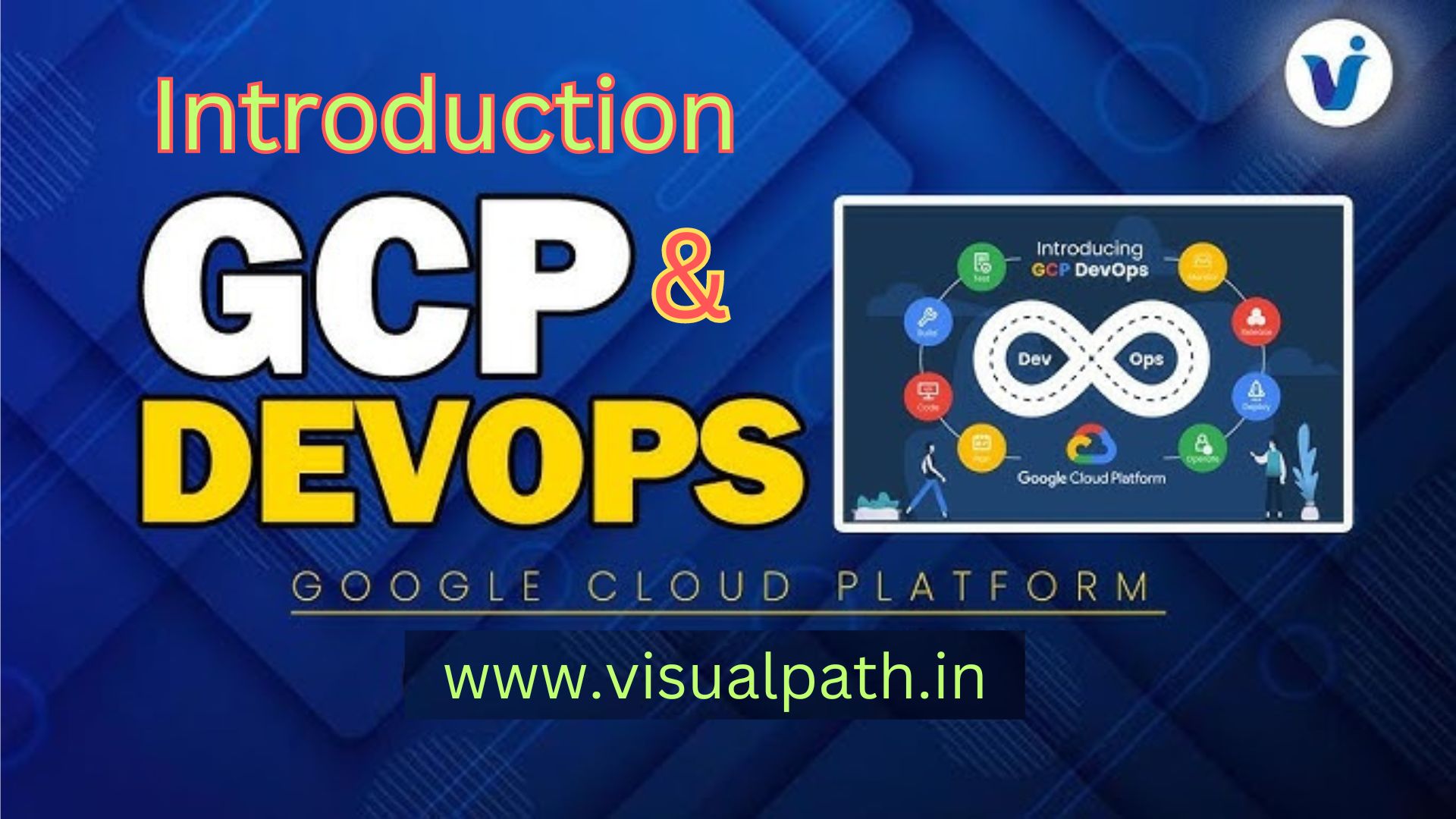
    8. Introduction to GCP and DevOps

      Introduction to GCP and DevOps

      What is GCP?

      Google Cloud Platform (GCP) is a suite of cloud computing services provided by Google. It offers a wide range of tools and services that enable businesses to build, deploy, and manage applications at scale. GCP provides infrastructure as a service (IaaS), platform as a service (PaaS), and software as a service (SaaS) solutions, making it a versatile platform for various cloud-based operations. Some of the key services include Compute Engine for virtual machines, Kubernetes Engine for container orchestration, BigQuery for data analytics, and Cloud Storage for scalable storage solutions. GCP DevOps Online Training 

      What is DevOps?

      DevOps is a cultural and technical approach that integrates software development (Dev) and IT operations (Ops) to improve collaboration, automate workflows, and accelerate the software delivery process. DevOps practices focus on automating repetitive tasks, enhancing communication between teams, and continuously improving software through iterative development and feedback loops. The ultimate goal is to deliver software faster, more reliably, and with higher quality. GCP DevOps Training

      The Synergy Between GCP and DevOps

      GCP is an ideal platform for implementing DevOps practices due to its comprehensive set of tools and services that support continuous integration, continuous delivery (CI/CD), and infrastructure as code (IaC). GCP DevOps Training in Ameerpet

      1. Continuous Integration and Continuous Deployment (CI/CD):
        1. GCP offers Cloud Build, a fully managed CI/CD service that automates the process of building, testing, and deploying applications. With Cloud Build, teams can integrate code changes more frequently and deploy updates rapidly, reducing the time to market. GCP DevOps Training in Hyderabad
      2. Infrastructure as Code (IaC):
        1. GCP integrates seamlessly with Terraform, allowing teams to manage and provision infrastructure through code. This approach ensures that infrastructure is versioned, repeatable, and consistent across environments.  GCP DevOps Training institute in Ameerpet
      3. Scalability and Flexibility:
        1. GCP’s global infrastructure and powerful tools like Kubernetes Engine allow businesses to scale applications efficiently, meeting the demands of dynamic workloads.

      Conclusion

      The combination of GCP and DevOps practices empowers organizations to innovate faster, improve collaboration, and deliver high-quality software more efficiently. By leveraging GCP’s robust cloud services and integrating DevOps methodologies, businesses can stay competitive in a rapidly evolving technological landscape.  Google Cloud Platform Training Hyderabad

      Visualpath is the Leading and Best Software Online Training Institute in Hyderabad. Avail complete GCP DevOps Online Training Worldwide. You will get the best course at an affordable cost.

      WhatsApp: https://www.whatsapp.com/catalog/919989971070

      Visit   https://visualpath.in/devops-with-gcp-online-training.html

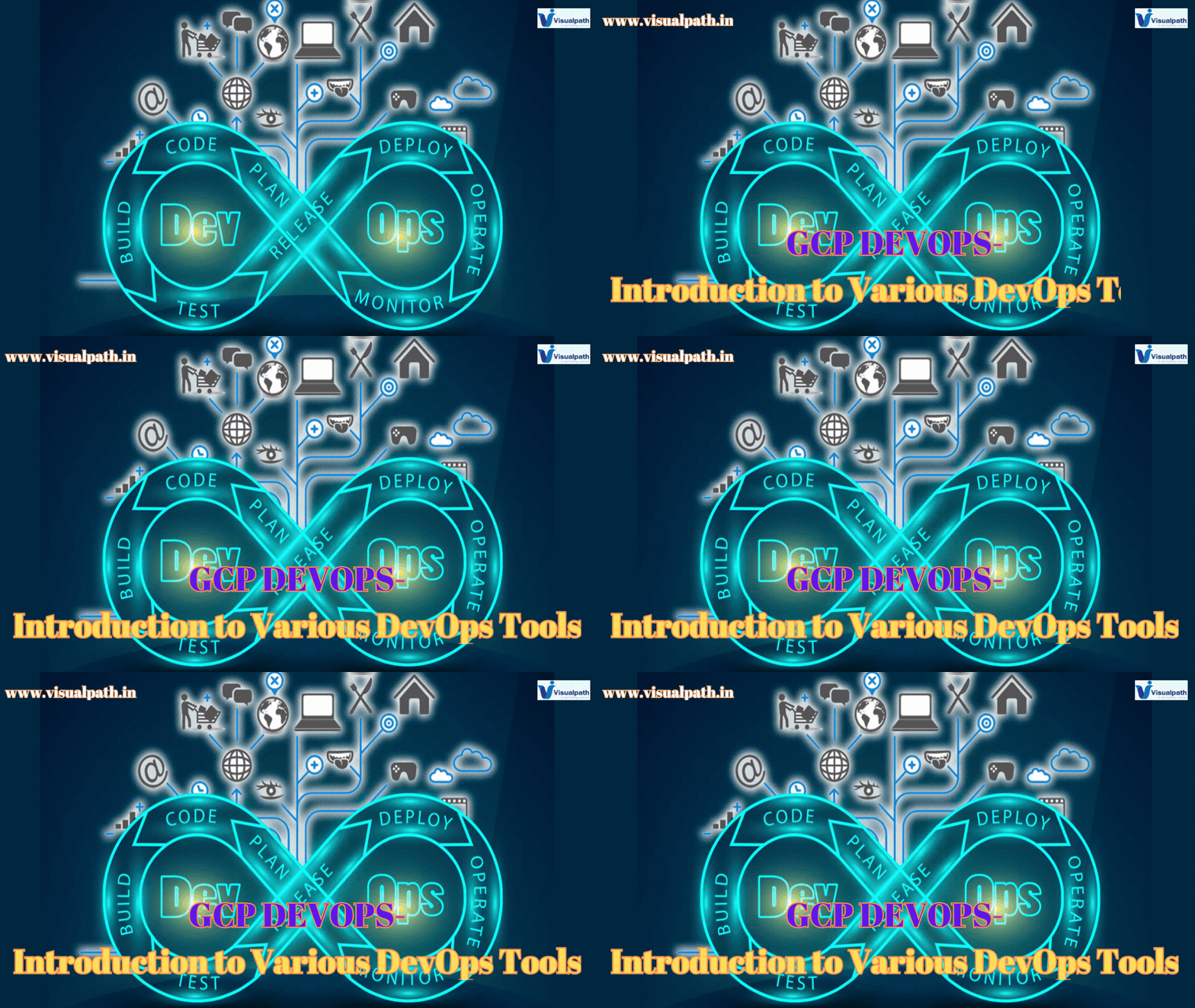
    9. GCP DEVOPS-Introduction to Various DevOps Tools

      GCP DEVOPS-Introduction to Various DevOps Tools

      What is DevOps?

      DevOps is a cultural and technical movement that integrates software development (Dev) and IT operations (Ops) to improve collaboration, speed up the development cycle, and ensure higher software quality. Central to the DevOps methodology is the use of various tools that automate and streamline processes, from code development and testing to deployment and monitoring. GCP DevOps Online Training 

      Key DevOps Tools and Their Roles

      1. Version Control Systems (VCS):
        1. Git: Git is the most widely used VCS in DevOps. It enables teams to track changes in code, collaborate efficiently, and maintain multiple versions of the software. GitHub, GitLab, and Bitbucket are popular platforms built around Git that provide additional features such as issue tracking and pull requests. GCP DevOps Training
      2. Continuous Integration/Continuous Deployment (CI/CD) Tools:
        1. Jenkins: Jenkins is an open-source automation server that facilitates CI/CD by automating the building, testing, and deployment of applications. It supports a wide range of plugins, making it versatile for different use cases.
        1. CircleCI and Travis CI: These are cloud-based CI/CD tools that integrate with version control systems to automate the testing and deployment of code changes. GCP DevOps Training in Hyderabad
      3. Configuration Management:
        1. Ansible: Ansible automates software provisioning, configuration management, and application deployment, enabling consistency across environments. GCP DevOps Training institute in Ameerpet
        1. Puppet and Chef: These tools manage infrastructure as code, ensuring that environments are configured consistently, which reduces the risk of configuration drift.
      4. Containerization and Orchestration:
        1. Docker: Docker is a platform that allows developers to package applications and their dependencies into containers, ensuring consistency across development, testing, and production environments.
        1. Kubernetes: Kubernetes is an orchestration tool that automates the deployment, scaling, and management of containerized applications, making it easier to handle complex, multi-container environments. Google Cloud Platform Training Hyderabad
      5. Monitoring and Logging:
        1. Prometheus: Prometheus is an open-source monitoring tool that collects and stores metrics from various services, providing real-time insights into system performance.
        1. ELK Stack (Elasticsearch, Logstash, Kibana): This stack is used for log management and analysis, enabling teams to monitor, search, and visualize log data. GCP DevOps Training in Ameerpet

      Conclusion

      DevOps tools are integral to the success of a DevOps strategy, as they automate and streamline various aspects of the software development lifecycle. By using these tools, businesses can improve collaboration, reduce manual errors, accelerate delivery, and enhance the overall quality of their software. Whether you’re just starting with DevOps or looking to optimize your existing processes, selecting the right tools is crucial to achieving the full benefits of DevOps practices. DevOps On Google Cloud Platform Online Training

       Visualpath is the Leading and Best Software Online Training Institute in Hyderabad. Avail complete GCP DevOps Online Training Worldwide. You will get the best course at an affordable cost.

      WhatsApp: https://www.whatsapp.com/catalog/919989971070

      Visit   https://visualpath.in/devops-with-gcp-online-training.html

    10. Google Cloud Migration in GCP DevOps

      Google Cloud Migration in GCP DevOps

      Introduction:

      Migrating to the Google Cloud Platform (GCP) involves transferring applications, data, and workloads from on-premises or other cloud environments to GCP. Leveraging GCP DevOps practices can significantly streamline this process, ensuring a smooth transition and maximizing the benefits of cloud infrastructure. Here’s an overview of key strategies and tools for effective Google Cloud migration within a DevOps framework. GCP DevOps Online Training 

      1. Planning and Assessment

      The first step in a successful cloud migration is thorough planning and assessment. This involves evaluating the current IT landscape, identifying dependencies, and understanding the workload requirements. GCP provides tools like Google Cloud Migrate for Compute Engine, which helps in assessing existing workloads, estimating costs, and planning the migration strategy. This phase also includes setting clear goals, timelines, and defining the success criteria for the migration. GCP DevOps Training

      2. Infrastructure as Code (IaC)

      Infrastructure as Code (IaC) is a crucial practice in DevOps that facilitates automated and consistent infrastructure deployment. Tools like Terraform and Google Cloud Deployment Manager enable teams to define their infrastructure using configuration files. This approach ensures that the cloud environment can be easily replicated, scaled, and managed. IaC helps in maintaining consistency across different stages of the migration and reduces the risk of configuration drift.  GCP DevOps Training in Hyderabad

      3. Automated CI/CD Pipelines

      Continuous Integration and Continuous Deployment (CI/CD) are core components of DevOps that automate the build, test, and deployment processes. Utilizing GCP tools like Google Cloud Build and Cloud Source Repositories allows teams to automate these workflows, ensuring that changes are continuously tested and deployed with minimal manual intervention. Automated pipelines help in catching issues early, facilitating quick rollbacks, and accelerating the overall migration process. GCP DevOps Training institute in Ameerpet

      4. Data Migration

      Data migration is a critical aspect of moving to GCP. Google Cloud Storage Transfer Service and BigQuery Data Transfer Service are essential tools for transferring large volumes of data efficiently. These services ensure data integrity and security during the migration. It’s important to plan data migration carefully to minimize downtime and ensure a seamless transition.

      5. Application Modernization

      Migrating to GCP provides an opportunity to modernize applications. This includes refactoring monolithic applications into microservices, containerizing workloads, and leveraging managed services like Google Kubernetes Engine (GKE). Modernizing applications can improve scalability, performance, and manageability. GCP DevOps practices facilitate continuous integration and deployment of these modernized applications, ensuring they remain up-to-date and secure. DevOps On Google Cloud Platform Online Training

      6. Monitoring and Optimization

      Post-migration, continuous monitoring and optimization are vital to ensure the performance and cost-efficiency of the migrated workloads. Google Cloud Monitoring and Google Cloud Logging provide insights into the performance and health of applications and infrastructure. These tools enable teams to set up alerts, track performance metrics, and identify areas for optimization. Regular monitoring helps in maintain high availability and reliability of services.

      7. Security and Compliance

      Security is a top priority in cloud migration. GCP offers a range of security tools, including Identity and Access Management (IAM), Cloud Security Scanner, and Vulnerability Scanner. These tools help enforce security policies, manage access controls, and detect vulnerabilities. Ensuring compliance with industry standards and best practices is crucial to maintaining a secure cloud environment. GCP DevOps Training in Ameerpet

      Conclusion

      Google Cloud migration within a GCP DevOps framework involves careful planning, automation, continuous integration, and robust security practices. By leveraging GCP’s comprehensive suite of tools and following DevOps principles, organizations can achieve a seamless transition to the cloud, optimize their workloads, and enhance operational efficiency. This approach not only minimizes risks associated with migration but also maximizes the benefits of GCP’s scalable and flexible infrastructure.

      Visualpath is the Leading and Best Software Online Training Institute in Hyderabad. Avail complete GCP DevOps Online Training Worldwide. You will get the best course at an affordable cost.

      Call on – +91-9989971070

      WhatsApp: https://www.whatsapp.com/catalog/917032290546/

      Visit   https://visualpath.in/devops-with-gcp-online-training.html