Tag: GCP Data Engineering Training

  • What Is the Role of Dataflow in GCP Data Engineering?

    What Is the Role of Dataflow in GCP Data Engineering?

    GCP Data Engineer Processing and analysing massive volumes of data in real time has become essential for businesses to stay competitive. Google Cloud Platform (GCP) offers a suite of powerful tools for data engineering, and Dataflow stands out as one of the most versatile and scalable services for stream and batch data processing. Designed to handle complex ETL pipelines, real-time analytics, and large-scale data transformation, Dataflow enables developers and data engineers to build reliable and high-performance data processing solutions. This article explores the role of Dataflow in GCP Data Engineering, its key features, use cases, and advantages for modern data pipelines.

    1. Overview of GCP Data Engineering

    Data engineering on GCP revolves around building scalable data pipelines to ingest, transform, store, and analyze data. GCP provides services such as BigQuery, Cloud Storage, Pub/Sub, Cloud Composer, and Dataflow to support the full data lifecycle. Among these, Dataflow is instrumental in processing data efficiently in both real-time and batch modes, allowing businesses to derive insights faster and with greater accuracy.

    2. What is Google Cloud Dataflow?

    Google Cloud Dataflow is a fully managed, serverless data processing service that supports both streaming and batch processing. It is based on the open-source Apache Beam model, which allows users to write a single pipeline that can run on multiple execution engines. Dataflow automatically manages resources, parallel execution, scaling, and fault tolerance, making it ideal for developers looking to minimize infrastructure management while maximizing performance.

    3. Key Features of Dataflow

    • Unified Programming Model: Dataflow supports Apache Beam, enabling developers to write both stream and batch processing jobs in a unified model.
    • Auto-scaling and Load Balancing: Dataflow automatically adjusts the resources allocated to a job based on the workload, ensuring optimal performance and cost-efficiency.
    • Built-in Monitoring and Logging: Integrated with Cloud Monitoring and Logging, Dataflow allows real-time insights into pipeline performance and health.
    • Seamless Integration with Other GCP Services: Easily connect with Pub/Sub for real-time ingestion, BigQuery for analytics, and Cloud Storage for data lakes.
    • No Ops Management: Since it’s serverless, there’s no need to manage infrastructure, which accelerates development and deployment. GCP Cloud Data Engineer Training

    4. Use Cases of Dataflow in Data Engineering

    • Real-time Analytics: Process event data from sensors, web logs, or application streams using Pub/Sub and Dataflow for immediate insights.
    • ETL Pipelines: Dataflow is ideal for Extract, Transform, Load (ETL) processes that move and clean data before storing it in Big Query or a data lake.
    • Data Enrichment: Enrich incoming data streams with metadata or lookup values in real time, ensuring contextual relevance.
    • Data Migration: Efficiently transform and transfer large datasets between systems during cloud migration efforts.
    • Machine Learning Pipelines: Preprocess and filter data for training ML models, ensuring high-quality input for model development.

    5. Benefits of Using Dataflow

    • Scalability: Easily handle terabytes or petabytes of data without worrying about provisioning.
    • Cost Efficiency: Pay only for the resources used, with fine-grained control over job duration and processing.
    • Developer Productivity: Use familiar programming languages (Java, Python) and write once, run anywhere with Apache Beam.
    • Resilience and Reliability: Automatic retries, checkpointing, and failover mechanisms enhance pipeline reliability.

    Conclusion

    Google Cloud Dataflow plays a crucial role in modern GCP data engineering by enabling scalable, efficient, and real-time data processing. Whether you’re building streaming analytics platforms or performing massive ETL operations, Dataflow’s serverless nature, auto-scaling, and rich integrations make it a go-to tool for data engineers. By reducing the operational overhead and offering a unified model for batch and streaming, Dataflow accelerates the development of intelligent, responsive, and data-driven applications. As organizations continue to shift toward real-time decision-making, Dataflow stands at the forefront of cloud-native data engineering solutions.

    Trending Courses: Cyber Security, Salesforce Marketing Cloud, Gen AI for DevOps

    Visualpath is the Leading and Best Software Online Training Institute in Hyderabad

    For More Information about Best GCP Data Engineering

    Contact Call/WhatsApp: +91-7032290546

    Visit: https://www.visualpath.in/gcp-data-engineer-online-training.html
  • What Tools Are Used in GCP Data Engineering?

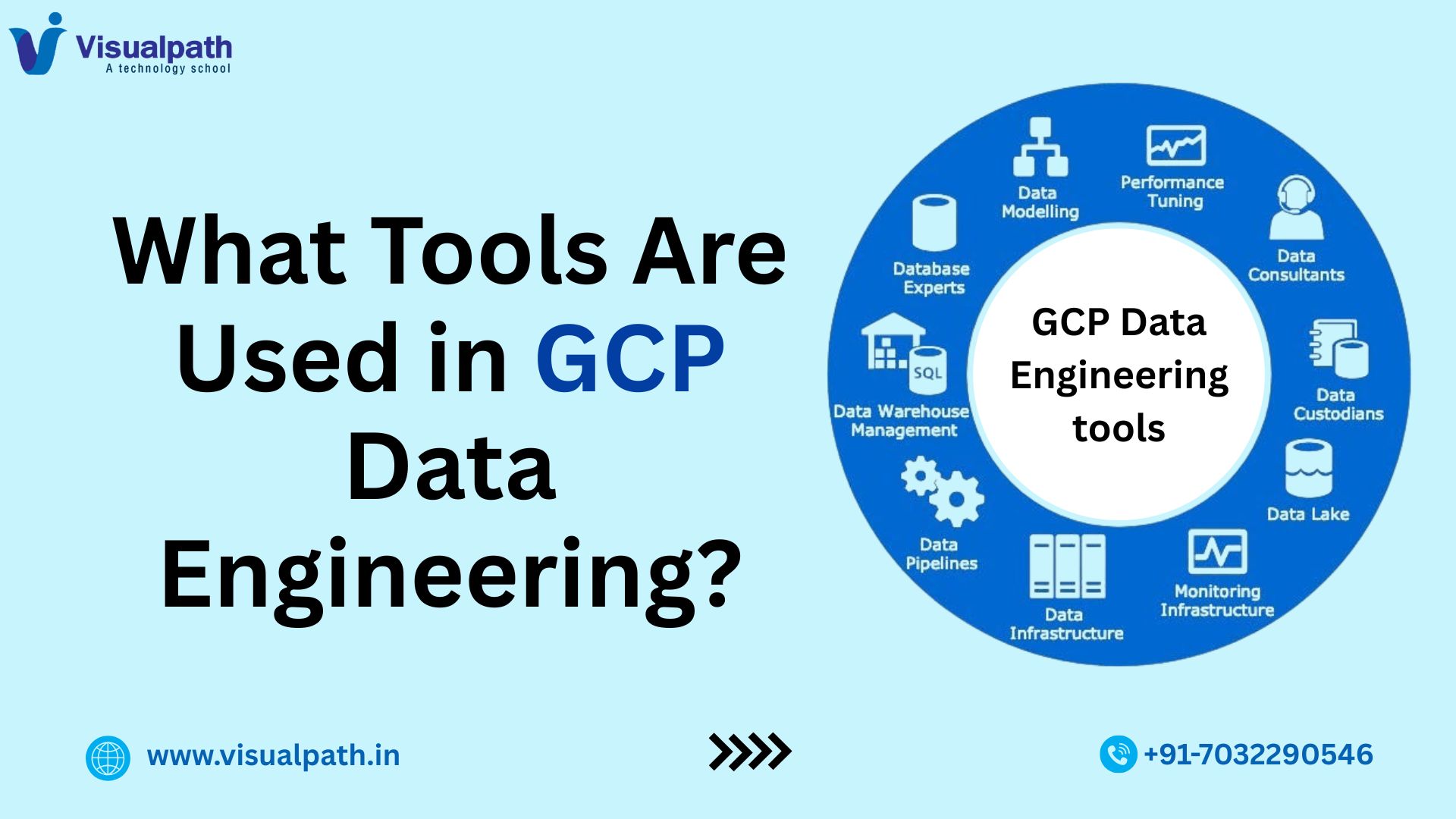
    What Tools Are Used in GCP Data Engineering?

    Google Cloud Platform (GCP) offer a robust ecosystem for data engineers to build, process, and analyze large-scale datasets efficiently. GCP Data Engineering focuses on designing, constructing, and managing scalable data processing systems. But what tools make this possible?

    Below, we explore the key tools and services used in what tools are Used in GCP Data Engineering and how they contribute to creating modern data pipelines.

    1. BigQuery – Serverless Data Warehouse

    BigQuery is the cornerstone of GCP’s analytics services. It’s a fully managed, serverless, highly scalable, and cost-effective multi-cloud data warehouse designed for business agility.

    • Use Case: Ideal for running fast SQL queries on petabyte-scale datasets.
    • Key Features: Real-time analytics, built-in machine learning (BigQuery ML), and seamless integration with other GCP services.

    BigQuery enables data engineers to avoid infrastructure management while focusing on writing queries and getting insights quickly.

    2. Cloud Dataflow – Stream and Batch Processing

    An entirely managed solution for running Apache Beam pipelines is Cloud Dataflow. It supports both batch and stream data processing and is especially useful for handling large data transformations in real time.

    • Use Case: Ideal for building ETL (Extract, Transform, Load) pipelines.
    • Key Features: Autoscaling, dynamic work rebalancing, and no-ops execution.

    Data engineers use Dataflow to ingest data from multiple sources, clean it, and load it into storage or analytics platforms like BigQuery.

    3. Cloud Pub/Sub – Real-Time Messaging

    A global messaging and event ingestion service called Cloud Pub/Sub is used to gather and disseminate data in real time.

    • Use Case: Event-driven systems, real-time analytics, and log ingestion.
    • Key Features: High throughput, low latency, and durable message storage.

    It allows seamless integration between data sources and processing systems, acting as a backbone for streaming architectures. Google Data Engineer Certification

    4. Cloud Composer – Workflow Orchestration

    Cloud Composer is a fully managed workflow orchestration tool based on Apache Airflow.

    • Use Case: Managing and scheduling complex workflows and data pipelines.
    • Key Features: Integration with GCP services, version control, and easy monitoring.

    Cloud Composer helps data engineers automate tasks like data ingestion, transformation, and reporting by coordinating across services.

    5. Dataproc – Managed Spark and Hadoop

    Cloud Dataproc offers a fast, easy-to-use, fully managed cloud service for running Apache Spark, Apache Hadoop, and other open-source big data tools.

    • Use Case: Machine learning, data lakes, and massive batch processing.
    • Key Features: Rapid cluster provisioning, customizable environments, and low-cost operation. GCP Data Engineer Training

    Dataproc is particularly beneficial when migrating existing Hadoop/Spark jobs to GCP with minimal rework.

    6. Cloud Storage  Scalable Data Lake

    Google Cloud Storage is used to store large unstructured data, making it a foundation for data lakes.

    • Use Case: Storing raw, intermediate, or archived datasets.
    • Key Features: High durability, multiple storage classes, and integration with GCP analytics services.

    Data engineers typically use Cloud Storage to stage files before ingestion or retain historical datasets.

    7. Looker and Data Studio – Data Visualization

    Visualization is crucial for interpreting data. Looker and Data Studio are GCP’s business intelligence tools.

    • Use Case: Creating dashboards and reports for decision-makers.

    Key Features: Real-time data connections, easily shareable images, and customisable visualizations

    They allow non-technical users to explore data insights built on the backend by engineers.

    Conclusion

    GCP offers a rich toolkit for Data Engineering, from ingestion and processing to analysis and visualization. Tools like BigQuery, Dataflow, Pub/Sub, and Composer form the backbone of modern cloud-native data pipelines. Whether you’re dealing with batch or stream data, GCP provides scalable, secure, and integrated solutions that streamline the engineering process and allow organizations to derive insights faster and more reliably.

    By mastering these tools, data engineers can unlock the full potential of GCP and deliver value to their organizations through efficient, real-time, and cost-effective data operations.

    Trending Courses: Cyber Security, Salesforce Marketing Cloud, Gen AI for DevOps

  • What Tools Power GCP Data Engineering Workflows?

    What Tools Power GCP Data Engineering Workflows?

    Cloud-based data engineering has become essential for building scalable, flexible, and real-time data systems. But which tools really power GCP data engineering, and how do they work together in real-world pipelines?

    In this article, we’ll explore the core tools that form the backbone of what tools power GCP data engineering Workflow and how they enable teams to manage, transform, and analyze data at scale.

    1. Cloud Storage: The Foundation of Data Ingestion

    Every data pipeline starts with data ingestion. GCP’s Cloud Storage acts as the primary landing zone for raw data—whether it comes from logs, applications, APIs, or external systems. It supports both batch and streaming ingestion, allowing engineers to store large volumes of unstructured or semi-structured data at low cost.

    Cloud Storage integrates seamlessly with other GCP tools, making it the ideal starting point for most workflows.

    2. Cloud Pub/Sub: Real-Time Event Ingestion

    For real-time applications, Cloud Pub/Sub is a powerful messaging service that ingests event data from sources like IoT devices, apps, or user activity logs. It allows decoupling between producers and consumers, enabling highly scalable, real-time data pipelines.

    Pub/Sub is often used in combination with Dataflow to process and route streaming data for analytics, machine learning, or storage.

    3. Dataflow: Stream and Batch Processing Engine

    Apache Beam-based Cloud Dataflow is one of the most critical tools in GCP . It allows engineers to write a single pipeline that handles both batch and stream data processing. Because Dataflow is fully managed, GCP takes care of scaling, provisioning, and optimization.

    Dataflow can clean, enrich, transform, or aggregate data and then write the results to destinations such as BigQuery, Cloud Storage, or even machine learning models.

    4. BigQuery: The Analytics Workhorse

    GCP’s serverless, petabyte-scale data warehouse, BigQuery, is made for quick SQL searches with large datasets. Data engineers use BigQuery to store, analyze, and report on structured and semi-structured data. It supports standard SQL and integrates with various BI tools like Looker and Data Studio. Google Data Engineer Certification

    Its built-in machine learning (BigQuery ML) and geospatial capabilities make it much more than just a warehouse—it’s an analytics powerhouse.

    5. Cloud Composer: Orchestration with Airflow

    GCP’s managed version of Apache Airflow, Cloud Composer, lets you plan, coordinate, and keep an eye on intricate processes It’s the glue that ties together multiple steps in a data pipeline such as triggering a Dataflow job after a Pub/Sub event or loading data into BigQuery after transformation.

    By using Composer, engineers can ensure dependencies are met, and failures are handled gracefully in a well-documented DAG (Directed Acyclic Graph).

    6. Dataproc: Managed Hadoop and Spark

    When teams need custom or legacy big data processing using open-source tools like Apache Spark or Hadoop, Cloud Dataproc is the go-to choice. It is completely controlled and works well with BigQuery and Cloud Storage. Dataproc allows fine-grained control over infrastructure, which can be essential for certain use cases like large-scale ETL or ML training.

    7. Data Catalog and Data Governance Tools

    Managing metadata, lineage, and access is vital. Alongside it, Cloud DLP (Data Loss Prevention) helps with identifying and protecting sensitive information, supporting privacy and compliance needs.

    Conclusion: A Unified Ecosystem

    GCP’s data engineering toolkit is designed for flexibility, scalability, and ease of use. From real-time streaming to batch processing, storage, orchestration, and analytics, Google Cloud provides a comprehensive ecosystem for data engineers.

    By combining tools like Pub/Sub, Dataflow, BigQuery, and Cloud Composer, teams can build end-to-end pipelines that are resilient, efficient, and production-ready—empowering organizations to unlock the full value of their data.

    Trending Courses: Cyber Security, Salesforce Marketing Cloud, Gen AI for DevOps

    Visualpath is the Leading and Best Software Online Training Institute in Hyderabad

    For More Information about Best GCP Data Engineering

    Contact Call/WhatsApp: +91-7032290546

    Visit: https://www.visualpath.in/gcp-data-engineer-online-training.html

  • What Are the Key Features of GCP Data Engineer?

    What Are the Key Features of GCP Data Engineer?

    Google Cloud Data Engineer organizations are constantly seeking scalable, reliable, and efficient ways to collect, store, process, and analyze massive volumes of data. What Are the Key Features of GCP Data Engineer has emerged as one of the leading cloud solutions, offering a rich ecosystem of tools tailored for data engineering. But what exactly are the key features that make GCP Data Engineering stand out?

    This article explores the essential features of a GCP Data Engineer role and the tools they typically work with to deliver high-performance data solutions.

    1. Scalable Data Processing with Dataflow

    One of the core tools in a GCP Data Engineer’s toolkit is Apache Beam-based Dataflow, which supports both batch and stream data processing. This fully managed service allows data engineers to build complex pipelines using Python or Java. The ability to autoscale and handle backpressure makes it ideal for real-time data use cases such as fraud detection or live analytics.

    Key benefits include:

    • Unified programming model (batch and stream)
    • Autoscaling and dynamic work rebalancing
    • Integration with Pub/Sub, BigQuery, and Cloud Storage

    2. Event-Driven Architecture with Pub/Sub

    Modern data systems require real-time data ingestion. A messaging solution called Cloud Pub/Sub is utilized to efficiently ingest event data. It supports the creation of asynchronous, decoupled pipelines which are critical for microservices and distributed systems.

    Engineers use Pub/Sub for:

    • Ingesting streaming logs, IoT data, or user activity
    • Building real-time dashboards
    • Triggering downstream Dataflow or Cloud Functions processes

    3. Workflow Orchestration with Cloud Composer

    Data pipelines often involve multiple steps data ingestion, transformation, and loading. Cloud Composer, built on Apache Airflow, is GCP’s workflow orchestration tool that automates pipeline execution and monitoring.

    Key capabilities:

    • Cross-platform workflow automation
    • Native GCP service integration
    • Customizable DAGs for complex workflows
    • Monitoring and alerting with Cloud Logging

    4. Data Transformation and Integration Tools

    • GCP offers a number of tools for data integration and transformation, including Google Data Engineer Certification
    • Dataprep by Trifacta for visual, code-free data wrangling
    • Cloud Data Fusion for ETL/ELT pipeline development

    These tools support drag-and-drop interfaces, pre-built connectors, and extensive logging to streamline transformation workflows.

    5. Security and Compliance Built-In

    Security is a top priority for GCP. Data engineers benefit from features like:

    • VPC Service Controls for perimeter-based security
    • Data encryption at rest and in transit
    • Audit logging for tracking data access and changes

    These built-in security features simplify compliance with regulations like GDPR, HIPAA, and PCI-DSS. Google Cloud Data Engineer Training

    6. Monitoring and Observability

    Maintaining healthy pipelines requires visibility. GCP offers powerful monitoring tools like:

    • Cloud Monitoring and Cloud Logging for real-time insights
    • Error Reporting and Cloud Trace for troubleshooting
    • Pipeline dashboards in Dataflow and Composer
    • Data engineers can proactively identify and fix problems with the help of these technologies.

    Conclusion

    GCP Data Engineering is built around scalable, fully managed services that empower engineers to focus on building robust data pipelines rather than managing infrastructure. From real-time streaming with Pub/Sub and Dataflow to warehousing in BigQuery and orchestration with Cloud Composer, GCP offers a comprehensive toolkit for modern data engineering.

    Whether you’re a startup handling gigabytes or an enterprise managing petabytes, GCP provides the performance, flexibility, and security required to build data solutions at scale.

    Trending Courses: Cyber Security, Salesforce Marketing Cloud, Gen AI for DevOps

  • What is Big Query and how is it used in GCP?

    What is Big Query and how is it used in GCP?

    GCP Data Engineer organizations require powerful and scalable tools to analyze massive datasets quickly and cost-effectively. Google Cloud Platform (GCP) offers a suite of tools to address this need, with Big Query standing out as its flagship data warehouse solution. As a fully-managed, serverless, and highly scalable enterprise data warehouse, BigQuery enables businesses to gain real-time insights from vast amounts of data with the ease of using standard SQL.

    Whether you’re a data engineer, analyst, or scientist, understanding how Big Query fits into the broader GCP ecosystem is essential for designing modern data pipelines and analytics platforms.

    Understanding BigQuery: The Basics

    BigQuery is a cloud-native, fully-managed data warehouse developed by Google. It allows users to execute SQL queries over large datasets with extremely high speed and efficiency, thanks to Google’s Dremel technology and columnar storage. Google Data Engineer Certification

    One of BigQuery’s biggest advantages is that it is serverless—you don’t need to manage infrastructure, allocate resources, or worry about scaling. Key features include:

    • Standard SQL support
    • Real-time analytics
    • Automatic scalability
    • Pay-per-query pricing
    • Integration with GCP tools like Dataflow, Pub/Sub, and Cloud Storag

    BigQuery Architecture

    At a high level, BigQuery consists of:

    • Storage Layer: Stores structured data in a columnar format, separate from compute.
    • Query Engine: Processes queries using Dremel, enabling fast execution.
    • Metadata Management: Tracks tables, schemas, and partitions for efficient querying.
    • Security and Access Control: Uses IAM (Identity and Access Management) for role-based access.

    How BigQuery Is Used in GCP

    BigQuery plays a central role in the data engineering ecosystem of GCP. Below are some common use cases and integrations:

    1. Data Warehousing and BI

    BigQuery is often used as a central data warehouse where data from multiple sources—applications, logs, marketing tools, IoT devices—is stored and analyzed. It integrates seamlessly with BI tools like Looker, Tableau, and Google Data Studio for visualization and reporting.

    2. Real-Time Analytics

    When paired with Cloud Pub/Sub and Cloud Dataflow, BigQuery can power real-time dashboards and streaming analytics. For example, sensor data or user activity logs can be streamed into BigQuery within seconds. GCP Cloud Data Engineer Training

    3. Machine Learning

    BigQuery ML enables users to create and execute machine learning models directly within BigQuery using SQL. This lowers the barrier to entry for non-programmers who want to perform tasks like regression, classification, and time-series forecasting.

    4. ELT Pipelines

    BigQuery works exceptionally well for ELT (Extract, Load, Transform) workflows. Data is ingested into BigQuery in raw form from sources like Cloud Storage, Dataproc, or Data Fusion, and transformations are applied using SQL.

    Conclusion

    BigQuery has emerged as a cornerstone of modern cloud data architecture. Its serverless model, scalability, speed, and ease of use make it an invaluable tool for data engineers, analysts, and decision-makers who want to derive insights without the hassle of managing infrastructure.

    By seamlessly integrating with other GCP services such as Dataflow, Pub/Sub, and AI tools, BigQuery enables robust and flexible data workflows—from ingestion to visualization. Whether you’re building dashboards, streaming pipelines, or predictive models, BigQuery offers the performance and reliability needed to work efficiently at scale.

    Trending Courses: Cyber Security, Salesforce Marketing Cloud, Gen AI for DevOps

  • Building ETL Pipelines on GCP: A Starter Guide

    Building ETL Pipelines on GCP: A Starter Guide

    Google Cloud Platform (GCP) offers a powerful ecosystem of tools that makes building scalable and reliable ETL pipelines accessible, even for beginners. Whether you’re handling batch or streaming data, GCP provides a flexible and secure environment to manage data workflows end-to-end. This guide offers a beginner-friendly roadmap to understand and build ETL pipelines using GCP’s services such as CloudStorage, Dataflow, BigQuery, and more.

    1. Understanding ETL and Why It Matters

    ETL refers to the process of:

    • Extracting data from multiple sources,
    • Transforming it into a usable format,

    A well-designed ETL pipeline ensures data quality, enhances performance, and allows for scalable data analysis. With cloud-native solutions like GCP, you can automate, monitor, and scale these pipelines with minimal operational overhead. Google Data Engineer Certification

    2. Key GCP Services for ETL

    Here are the main GCP tools commonly used in ETL workflows:

    • Cloud Storage: Acts as the landing zone for raw data in various formats (CSV, JSON, Parquet, etc.).
    • Cloud Pub/Sub: Ideal for real-time data ingestion and messaging between services.
    • Cloud Dataflow: A serverless stream and batch processing tool that lets you build complex data transformation logic using Apache Beam.
    • BigQuery: A fully-managed data warehouse designed for fast SQL analytics on large datasets.
    • Cloud Composer: Based on Apache Airflow, this is used for orchestrating complex ETL workflows across GCP services.

    Each tool is designed to integrate seamlessly with others, creating a unified data pipeline ecosystem.

    3. Steps to Build a Basic ETL Pipeline on GCP

    Let’s break down a typical pipeline into actionable steps:

    Step 1: Data Ingestion

    Start by storing raw data in Cloud Storage or ingest streaming data using Cloud Pub/Sub.

    Step 2: Data Transformation

    Use Cloud Dataflow to clean, filter, enrich, or join data sets. Apache Beam SDKs (Java or Python) are used to define the transformations.

    Step 3: Load to BigQuery

    Once transformed, load the cleaned data into BigQuery for querying and analysis. Data can be loaded using Dataflow sinks or BigQuery’s load jobs.

    Step 4: Orchestration

    Manage dependencies and schedule recurring workflows using Cloud Composer. It can also monitor tasks and send alerts on failure. GCP Cloud Data Engineer Training

    4. Best Practices for ETL on GCP

    • Design for scalability: Use Dataflow for both batch and streaming to handle data spikes efficiently.
    • Ensure security: Utilize Identity and Access Management (IAM) roles and encryption for data protection.
    • Monitor performance: Use Cloud Monitoring and Cloud Logging to track job status and optimize pipeline performance.
    • Automate testing: Incorporate validation checks and data quality tests in transformation logic.
    • Cost optimization: Monitor usage and take advantage of BigQuery’s partitioning and clustering features to minimize query costs.

    Conclusion

    Building ETL pipelines on GCP doesn’t have to be daunting. With tools like Dataflow, BigQuery, and Cloud Composer, even beginners can implement robust and scalable data pipelines. By following a clear architectural approach and embracing best practices, you can ensure that your ETL processes are efficient, secure, and ready for scale. Whether you’re working with structured data or real-time streams, GCP provides all the building blocks you need to turn raw data into actionable insights. Start small, iterate fast, and soon you’ll be managing enterprise-grade ETL pipelines in the cloud.

    Trending Courses: Salesforce Marketing Cloud, Cyber Security, Gen AI for DevOps

  • GCP Data Engineering: Key Tools and Concepts

    GCP Data Engineering: Key Tools and Concepts

    GCP Data engineers are becoming more and more important as data continues to influence strategic choices in a variety of businesses. Data engineers can effectively gather, process, transform, and manage large datasets with the help of Google Cloud Platform’s (GCP) robust toolkit. Whether you’re building ETL pipelines, managing data lakes, or operationalizing machine learning workflows, GCP provides the infrastructure and services needed to build scalable, cost-effective, and reliable data solutions. This article explores the key tools and concepts within GCP’s data engineering ecosystem that every aspiring or experienced data engineer should understand.

    1. Cloud Storage: The Foundation of Data Lakes

    Any data engineering process starts with data storage.GCP’s Cloud Storage is an extremely robust, scalable, and reasonably priced object storage solution that can store both organized and unstructured data. It serves as the landing zone for raw data ingested from various sources and is commonly used as a staging area in data pipelines. Cloud Storage integrates seamlessly with other GCP services, making it a central hub in the data architecture.

    2. BigQuery: Serverless Data Warehousing     

    GCP’s fully-managed serverless data warehouse, BigQuery, is made to execute quick SQL queries on big datasets.It supports ANSI SQL, offers built-in machine learning capabilities (BigQuery ML), and allows for near real-time analytics. Because BigQuery keeps computation and storage separate, businesses may scale their resources separately. Its pay-per-query model and data federation capabilities make it versatile for analytics-driven use cases.

    3. Dataflow: Real-Time and Batch Data Processing

    Dataflow, based on Apache Beam, is a fully-managed service for processing both streaming and batch data. It simplifies the development of complex pipelines and ensures autoscaling and dynamic resource management. With the Beam SDK, data engineers can create a pipeline once and have it operate anywhere, whether on-premises or on GCP Data Engineering. Use cases, including log processing, event-driven architectures, and real-time fraud detection, are perfect for dataflow. GCP Cloud Data Engineer Training

     4. Pub/Sub: Messaging and Event Ingestion

    A messaging service called Cloud Pub/Sub was created to absorb and provide real-time event data.It supports asynchronous communication between services, making it ideal for decoupled, event-driven systems. Pub/Sub plays a key role in ingesting streaming data into GCP pipelines and works well with services like Dataflow, BigQuery, and Cloud Functions for seamless integration and processing.

    5. Dataproc: Managed Spark and Hadoop

    For teams familiar with open-source big data tools like Apache Spark, Hadoop, and Hive, Dataproc offers a managed, cost-effective alternative that reduces operational overhead. Dataproc clusters can be spun up quickly and scaled down automatically, supporting transient workloads and reducing costs. It’s well-suited for traditional ETL, machine learning preprocessing, and large-scale data transformations. GCP Data Engineer Course

    6. Cloud Composer: Workflow Orchestration

    Cloud Composer, built on Apache Airflow, helps manage and schedule complex workflows across GCP services. It enables data engineers to define dependencies, automate job executions, and handle retries and failures programmatically. Cloud Composer is essential for orchestrating pipelines that involve multiple GCP Data Engineering services and ensuring smooth data flow across systems.

    7. Data Governance and Security

    Data governance, lineage, and security are non-negotiable in a modern data ecosystem. GCP offers robust tools like Data Catalog (for metadata management), Cloud DLP (for data loss prevention), and IAM (for fine-grained access control). These tools help ensure that data is not only accessible but also secure and compliant with regulatory standards.

    Conclusion

    Google Data Engineer Certification empowers data engineers with a rich, integrated set of tools designed to manage the entire data lifecycle—from ingestion and processing to analysis and governance. Whether you’re dealing with real-time event streams or petabytes of batch data, GCP provides the flexibility, scalability, and innovation needed to build modern data architectures. Mastering these key tools and concepts is essential for any data engineer looking to thrive in a cloud-first, data-driven world. With GCP, the possibilities are as vast as the data you can harness.

    Trending Courses: Salesforce Marketing Cloud, Cyber Security, Gen AI for DevOps

  • How to Optimize Data Processing in Google Cloud Platform?

    How to Optimize Data Processing in Google Cloud Platform?

    Introduction to Google Cloud Platform (GCP)

    Google Cloud Platform (GCP) offers a robust ecosystem for data engineering, enabling businesses to process large volumes of data efficiently. However, optimizing data processing in GCP requires leveraging the right tools, best practices, and cost-effective strategies. This article explores key methods for enhancing performance, reducing costs, and improving efficiency in GCP data engineering workflows.

    Key Strategies for Optimizing Data Processing in GCP

    1. Choosing the Right Storage Solution

    Efficient data processing starts with selecting the appropriate storage solution. GCP provides various storage options such as: GCP Data Engineer Online Training

    • BigQuery – Ideal for analytical queries on massive datasets.
    • Cloud Storage – Best for unstructured data and archival purposes.
    • Cloud Spanner – Suitable for global, scalable, and transactional databases.
    • Cloud SQL & Firestore – Perfect for structured data and real-time applications. Choosing the right storage solution helps reduce latency and optimize performance.

    2. Leveraging BigQuery Optimization Techniques

    BigQuery is GCP powerful data warehouse, and optimizing its usage can significantly improve query performance. Consider these techniques:

    • Partitioning and Clustering: Organize tables effectively to reduce scanned data volume.
    • **Avoiding SELECT *: Query only necessary columns to minimize resource consumption.
    • Materialized Views: Use precomputed views for frequently accessed data.
    • Query Caching: Take advantage of automatic caching to speed up repeated queries.

    3. Utilizing Dataflow for Scalable Processing

    Apache Beam-powered Dataflow allows real-time and batch data processing at scale. To optimize its performance: Google Data Engineer Certification

    • Use Autoscaling: Automatically adjusts worker nodes based on workload.
    • Optimize Windowing and Triggers: Process streaming data efficiently.
    • Use Shuffle Optimization: Reduces data movement for better processing speed.

    4. Implementing Efficient Data Pipeline Design

    When designing data pipelines in GCP, follow these best practices:

    • Use Cloud Composer (Apache Airflow): Automate and schedule workflows.
    • Optimize DAG (Directed Acyclic Graph) Execution: Reduce dependencies and parallelize tasks.
    • Enable Data Deduplication: Prevent redundant processing by implementing deduplication strategies.

    5. Enhancing Performance with Cloud Dataproc

    Cloud Dataproc, GCP’s managed Spark and Hadoop service, benefits from:

    • Autoscaling Clusters: Dynamically adjusting resources based on demand.
    • Preemptible VMs: Cost-effective processing with temporary instances.
    • Efficient Data Shuffling: Minimize data movement between nodes. GCP Cloud Data Engineer Training

    6. Cost Optimization Techniques

    Managing costs is crucial in GCP. Follow these tips to control expenses:

    • Use Committed Use Discounts (CUDs): Get discounted pricing for long-term commitments.
    • Enable Cost Monitoring: Track spending with GCP’s built-in billing tools.
    • Optimize Storage Lifecycle Policies: Move infrequently accessed data to cost-effective tiers.

    Conclusion

    Optimizing Data Processing in GCP involves selecting the right storage solutions, optimizing query execution, leveraging scalable tools like Dataflow and Dataproc, and implementing cost-saving measures. By applying these best practices, organizations can maximize performance while keeping costs under control. Whether you’re a beginner or an experienced data engineer, continuous monitoring and optimization are key to leveraging GCP efficiently. Start implementing these strategies today to improve your data processing workflows!

    Trending Courses: Salesforce Marketing Cloud, Cyber Security, Gen AI for DevOps

  • GCP Data Engineer complete training for Beginners

    GCP Data Engineer complete training for Beginners

    Google Cloud Platform (GCP) is one of the leading cloud computing services that offers a comprehensive suite of tools for data engineering. Data processing system design, construction, operationalization, security, and monitoring fall within the purview of a GCP data engineer. This guide will provide an overview of GCP data engineering, its key components, and essential skills needed to become proficient in this field.

    Key Components of GCP Data Engineering

    1. Google Cloud Storage (GCS)

    GCS is a scalable object storage service used to store structured and unstructured data. It supports multiple storage classes, including Standard, Nearline, Coldline, and Archive, to optimize costs based on access frequency.

    2. BigQuery

    BigQuery is a fully managed data warehouse that allows for fast SQL queries on large datasets. It eliminates the need for infrastructure management and provides high availability and scalability. GCP Data Engineer Training

    3. Cloud Pub/Sub

    This is a messaging service that enables real-time data streaming and event-driven architectures. It is used to ingest and distribute event data efficiently.

    4. Dataflow

    Dataflow is a fully managed stream and batch data processing service that uses Apache Beam. It is commonly used for ETL (Extract, Transform, Load) pipelines.

    5. Cloud Dataproc

    Cloud Dataproc is a managed service for running Apache Spark and Hadoop clusters. It enables users to process large datasets using open-source frameworks.

    6. Cloud Composer

    Built on top of Apache Airflow, Cloud Composer is a managed workflow orchestration service. It helps automate, schedule, and monitor data pipelines.

    7. Cloud SQL and Cloud Spanner

    Cloud SQL is a managed relational database service for MySQL, PostgreSQL, and SQL Server, while Cloud Spanner is a globally distributed database designed for high availability and scalability.

    8. Data Catalog

    This service helps organizations discover, manage, and understand their data assets by providing metadata management and data governance. Google Cloud Data Engineer training

    Data Engineering Workflow in GCP

    A typical data engineering workflow in GCP involves the following steps:

    1. Data Ingestion – Using tools like Cloud Storage, Pub/Sub, or Transfer Appliance to collect data from various sources.
    2. Data Processing – Leveraging services like Dataflow, Dataproc, or BigQuery to clean and transform data.
    3. Data Storage – Storing processed data in BigQuery, Cloud SQL, or Cloud Spanner.
    4. Data Analysis & Visualization – Using Looker, Data Studio, or third-party BI tools to generate insights.
    5. Data Orchestration – Managing workflows with Cloud Composer.

    Essential Skills for GCP Data Engineers

    To become proficient in GCP data engineering, one should focus on the following skills:

    • SQL Proficiency: Understanding SQL queries for data analysis in BigQuery.
    • Python and Java: Commonly used for writing data processing scripts in Apache Beam and Spark.
    • Cloud Architecture: Understanding GCP’s infrastructure and services.
    • ETL Pipelines: Designing and optimizing data workflows using Dataflow and Dataproc.
    • Security and Governance: Implementing IAM (Identity and Access Management) policies, encryption, and compliance best practices.
    • Monitoring and Optimization: Using Stackdriver and Cloud Monitoring to track system performance and troubleshoot issues. GCP Cloud Data Engineer Training

    Best Practices for GCP Data Engineering

    1. Optimize BigQuery Queries – Use partitioning and clustering for efficient data retrieval.
    2. Leverage Autoscaling – Use autoscaling features in Dataproc and Dataflow to optimize costs.
    3. Ensure Data Security – Implement IAM roles, encryption, and VPC Service Controls.
    4. Automate Workflows – Use Cloud Composer for orchestration to reduce manual intervention.
    5. Monitor Costs – Regularly analyze resource usage to prevent unexpected billing spikes.

    Conclusion

    GCP offers a robust and scalable data engineering ecosystem that caters to both small and enterprise-level data solutions. Learning the fundamentals of storage, processing, and analysis services will help beginners transition into skilled GCP Data Engineers. By mastering key tools such as BigQuery, Dataflow, and Cloud Composer, along with strong SQL and Python skills, aspiring data engineers can build efficient and cost-effective data pipelines. As organizations continue to generate vast amounts of data, expertise in GCP data engineering remains in high demand, making it a valuable career path for those interested in cloud-based data management.

    Visualpath is the Leading and Best Software Online Training Institute in Hyderabad.

    For More Information about Best  GCP Data Engineering Training

    Contact Call/WhatsApp: +91-7032290546

    Visit: https://www.visualpath.in/gcp-data-engineer-online-training.html
  • GCP Data Engineer Course for Beginners | 2025

    GCP Data Engineer Course for Beginners | 2025

    GCP Data Engineer Overview

    The GCP Data Engineer Course is a comprehensive program designed to equip professionals with the skills to build, manage, and optimize data solutions on the Google Cloud Platform (GCP). With the rise of cloud technologies, the demand for certified data engineers who can handle vast amounts of data effectively is higher than ever. Whether you’re a beginner or an experienced professional, understanding GCP’s capabilities is crucial to staying competitive in today’s data-driven market.

    GCP Data Engineer Course for Beginners

    The GCP Data Engineer Course provides an excellent starting point for those new to data engineering. Beginners learn foundational concepts like data processing, storage, and analysis, all tailored to GCP’s ecosystem. From understanding how Google BigQuery works to mastering data pipelines with Google Cloud Dataflow, this course lays the groundwork for a successful career in data engineering.

    Furthermore, enrolling in GCP Cloud Data Engineer Training allows you to practice hands-on labs and real-world scenarios. These practical exercises ensure that you understand theoretical concepts and gain the confidence to implement them in professional environments. By the end of this course, beginners are well-prepared to tackle more advanced topics in data engineering.

    Advanced Skills with GCP Cloud Data Engineer Training

    The next step in mastering GCP data engineering involves delving into advanced tools and techniques. GCP Cloud Data Engineer Training is tailored for professionals who wish to enhance their expertise in managing large-scale data solutions. Key topics covered include building robust data pipelines, optimizing performance in BigQuery, and leveraging Google Kubernetes Engine (GKE) for data orchestration.

    One of the highlights of this training is its focus on preparing candidates for the GCP Data Engineer Certification exam. This globally recognized certification validates your ability to design and maintain data processing systems and to analyze and process data using GCP services effectively. Achieving this certification not only boosts your career prospects but also demonstrates your proficiency in GCP’s powerful data engineering capabilities.

    Why Pursue a GCP Data Engineer Certification?

    Earning a GCP Data Engineer Certification can significantly impact your professional growth. This certification proves your expertise in building and managing data solutions in one of the most widely used cloud platforms. Whether you are looking for a career shift or aiming for a promotion, this certification is a valuable asset.

    Moreover, the GCP Cloud Data Engineer Training provides in-depth preparation for the certification exam. It focuses on critical skills such as designing scalable systems, securing data, and integrating various GCP services to solve real-world data problems. By earning this certification, you demonstrate your readiness to tackle complex data engineering tasks, making you a sought-after professional in the industry.

    Conclusion:

    The GCP Data Engineer Course is the ideal pathway for anyone looking to excel in the field of data engineering. From beginners to seasoned professionals, this course covers essential concepts and provides practical experience with GCP’s data tools. The accompanying GCP Cloud Data Engineer Training ensures that you are well-prepared for the industry-leading GCP Data Engineer Certification, enabling you to stand out in the competitive job market.

    By investing in your skills with GCP, you position yourself at the forefront of modern data engineering, ready to harness the power of the cloud to drive innovation and success. Whether you’re managing data pipelines, analyzing massive datasets, or optimizing cloud solutions, GCP equips you with the tools to excel in any data-driven role.

    Visualpath is the Best Software Online Training Institute in Hyderabad. Avail complete GCP Data Engineering worldwide. You will get the best course at an affordable cost.

    Attend Free Demo

    Call on – +91-9989971070.

    WhatsApp: https://www.whatsapp.com/catalog/919989971070/

    Visit  https://www.visualpath.in/online-gcp-data-engineer-training-in-hyderabad.html

    Visit our new course: https://www.visualpath.in/online-best-cyber-security-courses.html

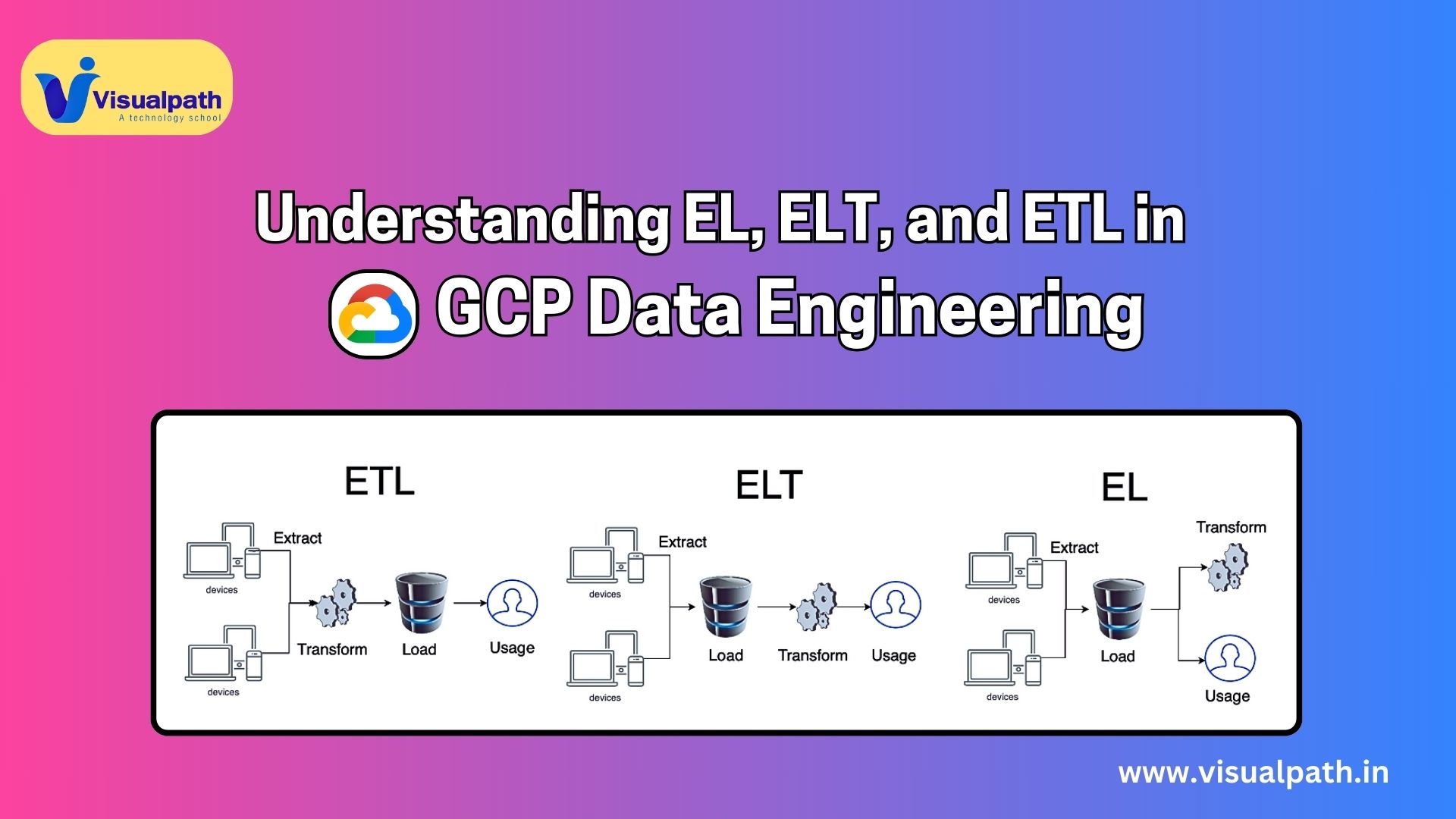
  • Understanding EL, ELT, and ETL in GCP Data Engineering

    Understanding EL, ELT, and ETL in GCP Data Engineering

    In the realm of data engineering, particularly when working on Google Cloud Platform (GCP), the terms EL, ELT, and ETL refer to key processes that facilitate the flow and transformation of data from various sources to a destination, usually a data warehouse or data lake. For a GCP Data Engineer, it’s important to understand the differences between these processes and how to implement them efficiently using GCP services. GCP Data Engineering Training

    1. Extract, Load (EL)

    In EL (Extract, Load), data is first extracted from various sources and then directly loaded into a target system, typically a data lake like Google Cloud Storage (GCS) or BigQuery in GCP. No transformations occur during this process. EL is commonly used when:

    • The priority is to quickly ingest raw data.
    • Data needs to be stored for later processing.
    • There is a need for data backup, archiving, or unprocessed analytics.

    GCP Services for EL:

    • Cloud Dataflow: A fully managed streaming analytics service used to extract data from sources like Apache Kafka, Pub/Sub, and then load it directly into BigQuery.
    • Cloud Storage: Allows storing raw extracted data that can be later accessed and processed. GCP Data Engineer Training in Hyderabad

    Key Benefits of EL in GCP:

    • Faster initial data ingestion as transformations are deferred.
    • Suits scenarios with high data volumes and real-time ingestion needs.

    2. Extract, Transform, Load (ETL)

    ETL is the traditional data pipeline model where data is extracted, transformed into a desired format, and then loaded into the destination system. ETL is suitable when the data requires preprocessing, cleaning, or enrichment before analysis or storage.

    In the ETL process, the data transformation happens outside of the target system, often in intermediate storage or memory. This is particularly useful when dealing with large datasets that need thorough cleaning or when businesses want to standardize data before loading it into systems like BigQuery for analytics.

    GCP Services for ETL:

    • Cloud Dataflow: A powerful tool for both batch and real-time data processing, allowing engineers to extract data, apply transformations (e.g., filtering, aggregation), and load it into BigQuery or Cloud Storage.
    • Cloud Dataprep: A visually-driven data preparation tool that allows data engineers to clean, structure, and transform raw data without writing code.

    Key Benefits of ETL in GCP:

    • Enables extensive pre-processing and transformation of data before storage, ensuring the quality of data for analysis.
    • Helps businesses load only refined and structured data into their systems, improving the efficiency of analytics workflows.

    3. Extract, Load, Transform (ELT)

    ELT is a modern approach where data is first extracted and loaded into a storage system like BigQuery, and the transformation happens afterwards within the storage system itself. Unlike ETL, where transformations occur before loading, ELT leverages the computational power of modern data warehouses to perform transformations on loaded data.

    ELT is typically used in scenarios where the target system (e.g., BigQuery) has powerful data processing capabilities. This approach is often more flexible for handling large-scale data transformations as it delays them until after the data is loaded. Google Cloud Data Engineer Training

    GCP Services for ELT:

    • BigQuery: GCP’s fully managed, serverless data warehouse, ideal for ELT workflows. Data can be loaded in raw format, and SQL-based transformations can be applied as needed.
    • Cloud Composer (Apache Airflow): Orchestrates the workflow of ELT pipelines, managing extraction, loading, and the transformation process in a scheduled or event-driven manner.

    Key Benefits of ELT in GCP:

    • Greater scalability for large datasets, as transformations leverage the computational power of BigQuery.
    • Increased flexibility, allowing iterative and on-demand transformations without reloading data.

    Choosing the Right Process in GCP

    For a GCP Data Engineer, selecting between EL, ETL, and ELT depends on the specific use case:

    • EL: Best for raw data storage or when transformation can wait.
    • ETL: Ideal for structured, preprocessed data required for specific business use cases.
    • ELT: Optimal when dealing with large volumes of data and leveraging the power of modern data warehouses like BigQuery for flexible, on-demand transformations.

    By mastering these processes and understanding their differences, GCP data engineers can build efficient and scalable data pipelines that fit their organization’s needs. Google Cloud Data Engineer Online Training

    Visualpath is the Best Software Online Training Institute in Hyderabad. Avail complete GCP Data Engineering worldwide. You will get the best course at an affordable cost.

    WhatsApp: https://www.whatsapp.com/catalog/919989971070

    Visit  https://visualpath.in/gcp-data-engineering-online-traning.html

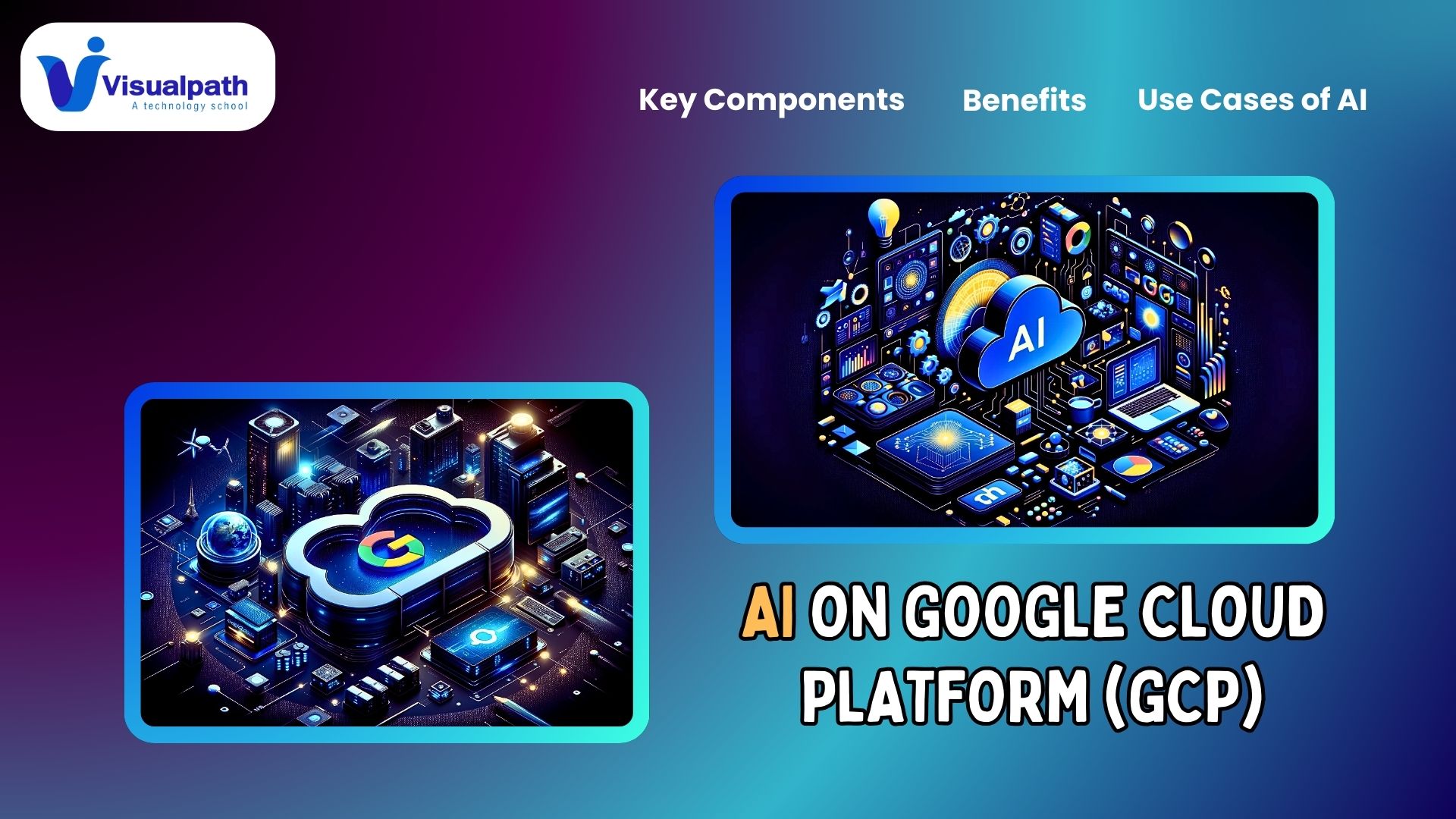
  • What is AI on Google Cloud Platform GCP? | Key Components, Benefits

    What is AI on Google Cloud Platform GCP? | Key Components, Benefits

    AI on Google Cloud Platform (GCP)

    Artificial Intelligence (AI) on Google Cloud Platform (GCP) refers to a suite of tools and services designed to help businesses and developers build, deploy, and scale AI-powered applications. GCP offers comprehensive AI and machine learning (ML) solutions that cater to various industries, from healthcare and finance to retail and manufacturing. The platform enables businesses to leverage AI to automate processes, gain insights from data, and enhance customer experiences. GCP Data Engineering Training

    Key Components of AI on GCP

    1. Google Cloud AI Platform
      The AI Platform is a fully-managed service that allows developers and data scientists to build, deploy, and scale machine learning models. It provides infrastructure and tools for every stage of the machine learning lifecycle, from data preparation and training to deployment and management. The AI Platform supports popular frameworks like TensorFlow, PyTorch, and Scikit-learn, allowing flexibility and ease of use.
    2. Pre-trained AI Models
      Google Cloud offers a wide range of pre-trained AI models through its AI Hub and AI APIs, allowing businesses to integrate AI without the need for extensive machine learning expertise. These models include image recognition (Vision AI), natural language processing (Natural Language API), and speech-to-text and text-to-speech capabilities (Speech AI). Pre-trained models can be customized with the customer’s data, offering tailored AI solutions. GCP Data Engineer Training in Hyderabad
    3. AutoML
      AutoML is a powerful tool on GCP that allows users to build custom machine-learning models with minimal coding and ML expertise. It automates the process of model training and tuning, enabling businesses to create models for image recognition, natural language, translation, and structured data. AutoML democratizes AI by making it accessible to a wider audience, including non-developers.
    4. BigQuery ML
      BigQuery ML brings machine learning directly to your data, allowing users to build and deploy machine learning models using SQL queries within BigQuery. It eliminates the need to move large datasets across systems for analysis, resulting in faster and more cost-effective machine learning workflows. Businesses can use BigQuery ML to predict customer behavior, optimize processes, and uncover insights from massive datasets.

    Use Cases of AI on GCP

    1. Healthcare
      AI on GCP has been instrumental in transforming the healthcare industry. GCP’s machine learning capabilities are being used to analyze medical data, detect diseases, and predict patient outcomes. For instance, medical image analysis using Vision AI helps in detecting abnormalities like tumours, while natural language processing can sift through vast medical records for better patient care.
    2. Retail
      In the retail sector, AI on GCP enhances the customer experience by providing personalized recommendations, optimizing supply chains, and improving demand forecasting. Retailers can use GCP’s AI tools to analyze customer behaviour, build recommendation engines, and implement AI chatbots for customer support.
    3. Manufacturing
      AI-driven solutions on GCP are helping manufacturers increase efficiency and reduce downtime by predicting equipment failures before they happen. With predictive maintenance models powered by AutoML and BigQuery ML, businesses can lower operational costs, streamline production, and improve overall equipment effectiveness. Google Cloud Data Engineer Training
    4. Finance
      In the financial industry, AI on GCP is used for fraud detection, risk management, and customer service automation. By analyzing historical financial data, AI models can predict fraudulent activities and provide early warnings, enhancing security and compliance.

    Benefits of AI on GCP

    1. Scalability
      GCP’s AI services are highly scalable, allowing businesses to expand their AI operations as needed. Whether handling small projects or massive datasets, GCP’s infrastructure is built to support growth.
    2. Ease of Use
      With tools like AutoML and pre-trained models, GCP makes AIaccessible to developers and non-technical users alike. This ease of use accelerates AI adoption across different business functions.
    3. Cost-Effectiveness
      GCP offers a pay-as-you-go pricing model, making AI solutions affordable for businesses of all sizes. The flexibility to choose services based on specific needs ensures that businesses only pay for what they use.

    Conclusion:

    AI on Google Cloud Platform empowers businesses to innovate and stay competitive by integrating intelligent systems into their operations. From building custom machine learning models to leveraging pre-trained AI solutions, GCP provides a flexible and scalable platform for AI development across industries. As AI continues to evolve, GCP’s robust infrastructure and tools position businesses to harness the power of AI for transformative results. Google Cloud Data Engineer Online Training

    Visualpath is the Best Software Online Training Institute in Hyderabad. Avail complete GCP Data Engineering worldwide. You will get the best course at an affordable cost.

    Attend Free Demo

    Call on – +91-9989971070

    WhatsApp: https://www.whatsapp.com/catalog/919989971070

    Visit  https://visualpath.in/gcp-data-engineering-online-traning.html

  • Virtual Machines & Networks in the Google Cloud Platform: A Comprehensive Guide

    Virtual Machines & Networks in the Google Cloud Platform: A Comprehensive Guide

    Introduction:

    Google Cloud Platform (GCP) offers a powerful suite of tools to build and manage cloud infrastructure, with Virtual Machines (VMs) and Networking being two of its core components. This guide provides an overview of effectively using these features, focusing on creating scalable and secure environments for your applications. GCP Data Engineering Training

    Virtual Machines in GCP

    What Are Virtual Machines?

    Virtual Machines (VMs) are virtualised computing resources that emulate physical computers. In GCP, VMs are provided through Google Compute Engine (GCE), allowing users to run workloads on Google’s infrastructure. VMs offer flexibility and scalability, making them suitable for various use cases, from simple applications to complex, distributed systems.

    Key Features of GCP VMs

    • Custom Machine Types: GCP allows you to create VMs with custom configurations, tailoring CPU, memory, and storage to your specific needs.
    • Preemptible VMs: These are cost-effective, short-lived VMs ideal for batch jobs and fault-tolerant workloads. They are significantly cheaper but can be terminated by GCP with minimal notice.
    • Sustained Use Discounts: GCP automatically provides discounts based on the usage of VMs over a billing period, making it cost-efficient.
    • Instance Groups: These are collections of VMs that you can manage as a single entity, enabling auto-scaling and load balancing across multiple instances. GCP Data Engineer Training in Hyderabad

    Creating a Virtual Machine

    1. Choose the Right Machine Type: Depending on your workload, select the appropriate machine type. For example, use high-memory instances for memory-intensive applications.
    2. Select an Operating System: GCP supports various OS options, including Windows, Linux, and custom images.
    3. Configure Disks: Attach persistent disks for durable storage, or use local SSDs for high-speed, temporary storage.
    4. Networking: Ensure your VM is configured with the correct network settings, including IP addressing, firewall rules, and VPC (Virtual Private Cloud) configuration.
    5. Deploy and Manage: After creation, manage your VMs through the GCP Console or via command-line tools like gcloud.

    Networking in GCP

    Overview of GCP Networking

    Networking in GCP is built around the concept of a Virtual Private Cloud (VPC), a virtualized network that provides full control over your network configuration. VPCs allow you to define IP ranges, subnets, routing, and firewall rules, ensuring your resources are securely and efficiently connected.

    Key Networking Components

    • VPC Networks: A global resource that spans all regions, allowing you to create subnets and control IP allocation.
    • Subnets: Subdivisions of a VPC network that define IP ranges for resources within a specific region.
    • Firewalls: Rules that allow or deny traffic to and from VMs based on specified criteria such as IP range, protocol, and port.
    • Load Balancing: Distributes traffic across multiple instances, improving availability and reliability.
    • Cloud VPN: Securely connects your on-premises network to your GCP VPC via an IPsec VPN tunnel.
    • Cloud Interconnect: Provides a dedicated connection between your on-premises network and GCP, offering higher bandwidth and lower latency than VPN. Google Cloud Data Engineer Training

    Setting Up a VPC Network

    1. Create a VPC: Start by creating a VPC, choosing whether it should be auto or custom mode. Auto mode automatically creates subnets in each region, while custom mode gives you full control over subnet configuration.
    2. Configure Subnets: Define the IP ranges and regions for your subnets. Ensure you allocate enough IP addresses to accommodate your resources.
    3. Set Up Firewalls: Implement firewall rules to control traffic to and from your VMs. Use these rules to protect your network from unauthorized access.
    4. Establish Connectivity: Depending on your needs, you can set up VPNs or Interconnects to link your VPC to other networks, such as on-premises environments.

    Best Practices for VMs and Networking in GCP

    1. Optimize VM Costs: Use preemptible VMs for non-critical workloads and take advantage of sustained use discounts.
    2. Implement Security Best Practices: Regularly update your OS and applications, and apply strict firewall rules to minimize security risks.
    3. Design for Scalability: Use instance groups and load balancers to handle varying levels of demand.
    4. Monitor and Manage: Utilize GCP’s monitoring tools to keep an eye on your VM performance and network traffic, making adjustments as needed.

    Conclusion:

    Google Cloud Platform provides robust tools for deploying and managing Virtual Machines and Networks, enabling you to build scalable, secure, and cost-efficient cloud infrastructure. By following best practices and leveraging GCP’s features, you can optimize your cloud environment for a wide range of applications. Google Cloud Data Engineer Online Training

    Visualpath is the Best Software Online Training Institute in Hyderabad. Avail complete GCP Data Engineering worldwide. You will get the best course at an affordable cost.

    WhatsApp: https://www.whatsapp.com/catalog/919989971070

    Visit  https://visualpath.in/gcp-data-engineering-online-traning.html

  • GCP Data Engineering (GCP): From Basic Concepts to Advanced Techniques

    GCP Data Engineering (GCP): From Basic Concepts to Advanced Techniques

    Google Cloud Platform (GCP) offers a comprehensive suite of tools for data engineering, enabling businesses to build, manage, and optimize their data pipelines. Whether you’re just starting with GCP or looking to master advanced data engineering techniques, this guide provides a detailed overview of the essential concepts and practices. GCP Data Engineering Training

    Basic Concepts:

    1. Introduction to GCP Data Engineering GCP Data Engineering involves the design and management of data pipelines that collect, process, and analyze data. GCP provides a range of services to support data engineering tasks, from data ingestion and storage to processing and analytics. Understanding the foundational components of GCP is crucial for building effective data pipelines.

    2. Core Services

    • BigQuery: A fully managed, serverless data warehouse that enables fast SQL queries on large datasets. BigQuery is essential for storing and analyzing structured data.
    • Cloud Storage: A scalable object storage service used for storing unstructured data, such as logs, images, and backups. It is often the first step in a data pipeline. GCP Data Engineer Training in Hyderabad
    • Pub/Sub: A messaging service for real-time data streaming and event-driven architectures. It allows you to ingest and distribute data at scale.
    • Dataflow: A fully managed service for processing both batch and stream data. Dataflow is built on Apache Beam and is used for ETL (Extract, Transform, Load) operations.

    3. Data Ingestion Data ingestion is the process of importing data from various sources into your GCP environment. This can be done through batch uploads to Cloud Storage or real-time streaming with Pub/Sub. Understanding how to ingest data efficiently is key to building reliable data pipelines.

    4. Data Transformation and Processing Once data is ingested, it needs to be transformed and processed before analysis. Dataflow is the primary tool for this task in GCP. It allows you to write data processing pipelines that can handle both real-time streaming and batch processing. Basic transformations include filtering, aggregating, and joining datasets.

    5. Data Storage and Warehousing Storing processed data in a way that facilitates easy access and analysis is crucial. BigQuery is the go-to service for data warehousing in GCP. It allows you to store vast amounts of data and run SQL queries with low latency. Understanding how to structure your data in BigQuery, including partitioning and clustering, is essential for efficient querying.

    Advanced Techniques

    1. Advanced Dataflow Pipelines As you advance in GCP Data Engineering, mastering complex Dataflow pipelines becomes crucial. This involves using features like windowing, triggers, and side inputs for more sophisticated data processing. Windowing, for instance, allows you to group data based on time intervals, enabling time-series analysis or real-time monitoring.

    2. Orchestration with Cloud Composer Cloud Composer, built on Apache Airflow, is GCP’s service for workflow orchestration. It allows you to schedule and manage complex data pipelines, ensuring that tasks are executed in the correct order and handling dependencies between different GCP services. Advanced users can create Directed Acyclic Graphs (DAGs) to automate multi-step data processes.

    3. Data Quality and Governance Ensuring data quality is critical in any data engineering project. GCP provides tools like Data Catalog for metadata management and Dataflow templates for data validation. Advanced techniques involve implementing data validation checks within your pipelines and using a Data Catalog to enforce data governance policies, ensuring data consistency and compliance with regulations. Google Cloud Data Engineer Training

    4. Optimization Techniques Optimizing the performance of your data pipelines is essential as data volumes grow. In BigQuery, techniques such as partitioning and clustering tables can significantly reduce query times and costs. In Dataflow, you can optimize resource allocation by configuring autoscaling and fine-tuning the parallelism of your pipelines.

    5. Machine Learning Integration Integrating machine learning (ML) into your data pipelines allows you to create more intelligent data processing workflows. GCP’s AI Platform and BigQuery ML enable you to train, deploy, and run ML models directly within your data pipelines. Advanced users can build predictive models that are automatically updated with new data, enabling real-time analytics and decision-making.

    6. Security and Compliance Data security is paramount, especially when dealing with sensitive information. GCP provides robust security features, including Identity and Access Management (IAM) for controlling access to resources, encryption at rest and in transit, and audit logging. Advanced users can implement VPC Service Controls to define security perimeters, ensuring that data remains within specified boundaries and is protected from unauthorized access.

    Conclusion:

    GCP Data Engineering offers a powerful and flexible platform for building scalable, efficient data pipelines. By mastering both the basic concepts and advanced techniques, you can leverage GCP’s services to transform raw data into valuable insights. Whether you’re handling real-time data streams or large-scale data warehousing, GCP provides the tools and capabilities needed to succeed in modern data engineering. Google Cloud Data Engineer Online Training

    Visualpath is the Best Software Online Training Institute in Hyderabad. Avail complete GCP Data Engineering worldwide. You will get the best course at an affordable cost.

    WhatsApp: https://www.whatsapp.com/catalog/919989971070

    Visit  https://visualpath.in/gcp-data-engineering-online-traning.html

  • Understanding Google Cloud Platform Vs Google Cloud Console

    Understanding Google Cloud Platform Vs Google Cloud Console

    Introduction

    Google Cloud Platform (GCP) and Google Cloud Console are two integral components of Google’s cloud ecosystem, each serving distinct roles. While GCP provides the infrastructure and services for cloud computing, Google Cloud Console is the web-based interface that allows users to interact with these services. GCP Data Engineering Training

    Google Cloud Platform (GCP)

    1. Overview: Google Cloud Platform is a suite of cloud computing services offered by Google. It provides a wide range of infrastructure, platforms, and software services, allowing businesses and developers to build, deploy, and scale applications, websites, and services.

    2. Core Services:

    • Compute Virtual machines (VMs), Kubernetes engine, and serverless computing.
    • Storage: Cloud Storage, Cloud SQL, and Cloud Spanner.
    • Big Data and Machine Learning: BigQuery, Cloud Dataflow, and AI Platform.
    • Networking: Virtual Private Cloud (VPC), Cloud Load Balancing, and Cloud CDN. GCP Data Engineer Training in Hyderabad
    • Identity and Security: Identity and Access Management (IAM), Cloud Security Command Center, and encryption services.

    3. Use Cases:

    • Web Hosting: Hosting websites and web applications with global scalability.
    • Data Analytics: Analyzing large datasets using BigQuery and Dataflow.
    • Machine Learning: Building and deploying machine learning models with AI Platform.
    • Application Development: Creating cloud-native applications using App Engine and Kubernetes.

    4. Benefits:

    • Scalability: Seamlessly scale applications from a few users to millions.
    • Performance: Leverage Google’s global network and infrastructure for high performance.
    • Security: Robust security measures including data encryption, compliance, and identity management.
    • Cost-Efficiency: Pay-as-you-go pricing model with cost management tools.

    Google Cloud Console

    1. Overview: Google Cloud Console is the web-based graphical user interface (GUI) for managing GCP resources and services. It provides an interactive way to access, monitor, and control GCP services without needing to use the command line.

    2. Key Features:

    • Dashboard: Overview of projects, billing, and resource usage.
    • Resource Management: Create, configure, and manage GCP resources such as virtual machines, databases, and networks.
    • Monitoring and Logging: Integrated tools for monitoring application performance and viewing logs.
    • Security and Permissions: Manage IAM roles and permissions to secure resources. Google Cloud Data Engineer Training
    • Billing and Cost Management: Track spending, set budgets, and receive alerts for cost management.

    3. User Experience:

    • Intuitive Interface: User-friendly interface with visual aids and wizards to simplify resource management.
    • Quick Access: Easily navigate between services and quickly access frequently used tools.
    • Interactive Tools: Graphical tools for building, deploying, and scaling applications without coding.
    • Customizable Dashboards: Personalized dashboards for monitoring key metrics and performance indicators.

    4. Integration with Other Tools:

    • Cloud Shell: Integrated command-line interface for running commands directly from the console.
    • Cloud SDK: Command-line tools for managing resources programmatically.
    • Third-Party Tools: Integration with popular development and operations tools for seamless workflows.

    Key Differences

    1. Functionality:

    • GCP: Provides the backend infrastructure and services necessary for cloud computing.
    • Cloud Console: Acts as the frontend interface for managing and interacting with GCP services.

    2. Usage:

    • GCP: Used by applications and developers to leverage Google’s cloud services for building and deploying solutions.
    • Cloud Console: Used by administrators, developers, and operations teams to manage, monitor, and optimize GCP resources.

    3. Accessibility:

    • GCP: Accessed programmatically through APIs, SDKs, and command-line tools.
    • Cloud Console: Accessed through a web browser, offering a graphical interface for resource management. Google Cloud Data Engineer Online Training

    Conclusion

    Google Cloud Platform and Google Cloud Console complement each other to provide a comprehensive cloud computing experience. GCP offers the powerful backend services needed for modern applications, while Cloud Console provides an intuitive interface to manage and optimize these services. Together, they enable businesses and developers to harness the full potential of cloud computing with ease and efficiency.

    Visualpath is the Best Software Online Training Institute in Hyderabad. Avail complete GCP Data Engineering worldwide. You will get the best course at an affordable cost.

    WhatsApp: https://www.whatsapp.com/catalog/919989971070

    Visit  https://visualpath.in/gcp-data-engineering-online-traning.html