Tag: DevOps Institute in Hyderabad

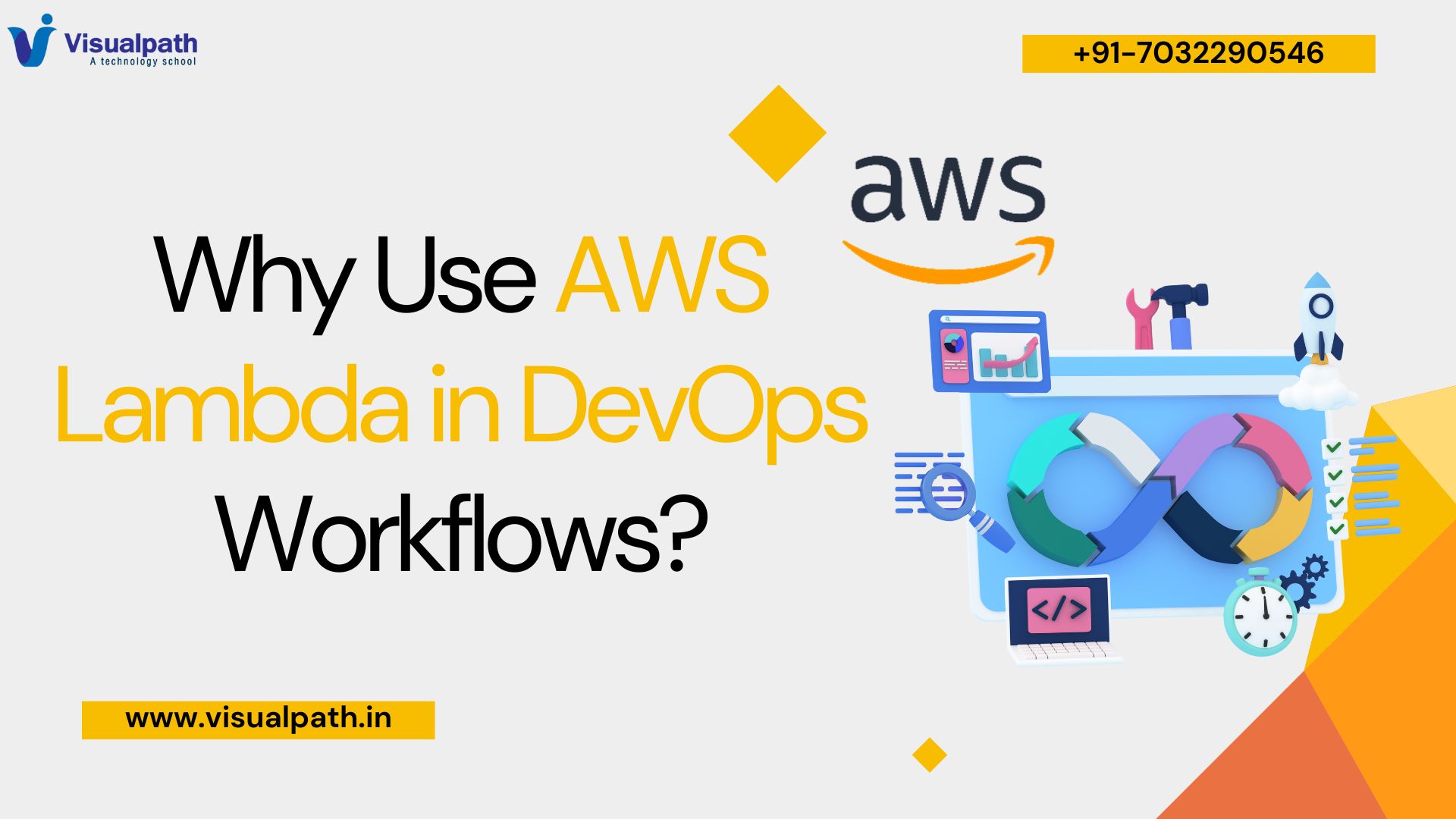
  • Why Use AWS Lambda in DevOps Workflows?

    Why Use AWS Lambda in DevOps Workflows?

    DevOps environments, automation, scalability, and cost-efficiency are vital for success. One powerful solution that satisfies these goals is AWS Lambda, a serverless compute service that enables you to run code without needing to provision or manage servers. Lambda’s ability to respond to events, automatically scale, and charge only for actual usage makes it an ideal addition to DevOps workflows. But what specifically makes AWS Lambda in DevOps Workflows? a great fit for DevOps practices? Let’s explore how it enhances automation, monitoring, infrastructure management, and CI/CD pipelines.  DevOps Online Training

    1. Serverless Automation and Cost Efficiency

    One of the primary reasons to use AWS Lambda in DevOps is its serverless nature. This means you don’t need to manage or maintain servers; instead, Lambda runs code in response to events and scales automatically.

    • Reduced Infrastructure Overhead: No need for EC2 provisioning or container management.
    • Pay-as-You-Go Model: You’re only billed for the compute time your code uses.
    • Ideal for Micro Tasks: Run scripts, clean up logs, or trigger notifications without launching full instances.

    Lambda is a cost-effective way to offload small, repetitive tasks from your main DevOps toolchain.

    2. Simplifying CI/CD Pipelines

    Lambda integrates seamlessly into Continuous Integration and Continuous Deployment (CI/CD) processes.

    • Custom Deployment Hooks: Use Lambda to trigger validations or post-deployment actions.
    • Automation Triggers: When a build finishes or a new commit is pushed, run Lambda functions.
    • Pipeline Integration: Easily integrate with AWS CodePipeline, CodeBuild, and CodeDeploy.

    This flexibility helps teams automate the entire software delivery process, reducing manual effort and errors.

    3. Real-Time Monitoring and Alerts

    Monitoring is critical in any DevOps workflow, and AWS Lambda helps deliver real-time insights with minimal setup.

    • Log Monitoring: Parse CloudWatch logs and push alerts based on specific patterns.
    • Health Checks: Perform on-demand health checks and trigger alerts on failure. DevOps Online Course
    • Integration with SNS and Slack: Send real-time notifications to alerting platforms.

    Lambda functions can act on triggers from AWS CloudWatch, enabling instant responses to issues.

    4. Infrastructure as Code (IaC) Support

    DevOps teams using Infrastructure as Code can harness Lambda to automate parts of the infrastructure lifecycle.

    • Dynamic Resource Management: Automatically create or delete AWS resources during deployment.
    • Custom Resource Handlers in CloudFormation: Use Lambda functions to define and manage non-standard resources.
    • Seamless Integration with Terraform: Extend and trigger Lambda from Terraform modules.

    This improves agility and guarantees that your infrastructure is still manageable and reproducible.

    5. Event-Driven Architecture Benefits

    DevOps workflows often rely on event-driven automation—and this is where AWS Lambda shines. Online DevOps Training

    • Respond to S3 Events: Trigger workflows when files are uploaded or deleted.
    • React to API Calls: Use API Gateway to initiate Lambda functions on HTTP requests.
    • CloudWatch Events: Schedule cron-like jobs or respond to AWS service events automatically.

    Event-driven execution makes workflows more efficient, flexible, and modular.

    Conclusion

    AWS Lambda offers a robust, scalable, and cost-effective way to enhance DevOps workflows. Whether you’re automating build pipelines, managing infrastructure, monitoring applications, or responding to system events, Lambda provides a serverless solution that simplifies operations and increases agility. Its tight integration with the AWS ecosystem and support for multiple programming languages makes it a versatile choice for modern DevOps teams.

    By embedding AWS Lambda into your DevOps strategy, you’re not just reducing overhead—you’re unlocking a new level of automation, responsiveness, and innovation. If your goal is to build faster, smarter, and more reliable systems, AWS Lambda is a tool worth mastering.

    Trending Courses: Cyber Security, Salesforce Marketing Cloud, Gen AI for DevOps

  • DevOps and Cloud: A Powerful IT Combination

    DevOps and Cloud: A Powerful IT Combination

    DevOps and Cloud are revolutionizing the IT industry by enabling faster deployments, improved collaboration, and scalable infrastructure. When integrated effectively, they create a powerful ecosystem that streamlines development and operations for any organization. As businesses aim for agility and continuous innovation, many professionals are enrolling in DevOps Training to gain the skills needed to navigate this modern landscape.

    How DevOps and Cloud Work Together

    DevOps is a set of practices that bridges the gap between development and IT operations. It focuses on continuous integration, continuous delivery (CI/CD), automation, and feedback loops. Cloud computing, on the other hand, provides on-demand resources and infrastructure scalability, which are essential for deploying applications quickly and reliably.

    Platforms like AWS, Azure, and GoogleCloud offer native tools for automation, monitoring, and CI/CD, which align perfectly with DevOps practices. For example, using AWS CodePipeline or Azure DevOps allows teams to automate software releases from code commit to production deployment.

    This powerful combination reduces manual overhead and enables faster recovery from failures, ultimately enhancing user satisfaction.

    Benefits of Combining DevOps with Cloud

    1. Faster Time-to-Market: Cloud infrastructure allows on-demand resource provisioning, while DevOps automation accelerates the deployment cycle. Together, they minimize downtime and increase productivity.
    2. Improved Collaboration: Cloud tools promote centralized version control and team collaboration, key components in DevOps culture.
    3. Scalability and Flexibility: Cloud-native environments can scale resources up or down based on load, which supports DevOps’ goal of continuous delivery and deployment.
    4. Cost Efficiency: Cloud resources can be optimized based on usage. Combined with DevOps practices like automated testing and monitoring, organizations save costs on infrastructure and bug fixes.
    5. Enhanced Security: With tools like Infrastructure as Code (IaC) and automated compliance checks, DevOps and Cloud help maintain strong security postures throughout the deployment pipeline.

    These benefits are the reason why many IT professionals are turning to DevOps Online Training. Learning how to leverage both technologies prepares them to handle real-world projects with confidence and skill.

    Real-World Use Cases

    Tech giants and startups alike are reaping the rewards of DevOps and Cloud integration. Netflix, for instance, uses cloud infrastructure combined with DevOps automation to deliver high-quality video content across the globe. Similarly, Capital One has transitioned to enhance its mobile banking applications, resulting in faster feature updates and improved customer experience.

    Choosing the Right Learning Path

    If you’re considering entering the DevOps field, it’s essential to choose a structured and up-to-date DevOps Online Course. These courses typically cover containerization (Docker, Kubernetes), CI/CD pipelines, cloud platforms (AWS, Azure, GCP), and tools like Jenkins, Ansible, and Terraform. With hands-on labs and real-time project experience, learners build a strong foundation that is aligned with industry requirements.

    Conclusion

    The integration of DevOps and Cloud is more than just a trend—it’s a transformative approach to building, testing, and deploying software faster and smarter. This combination empowers businesses to stay competitive in a digital-first world. As organizations continue to adopt cloud-native strategies, mastering DevOps becomes an indispensable skill. Whether you’re a developer, system admin, or IT professional, gaining expertise in this area can open doors to exciting career opportunities and innovation.

    Trending Courses: MLOps, GCP DevOps, and Azure DevOps

  • The Future of Cloud Automation with AWS DevOps

    The Future of Cloud Automation with AWS DevOps

    Cloud automation is revolutionizing the way businesses build, deploy, and manage software in modern IT environments. As companies increasingly adopt cloud-native solutions, automation becomes critical for improving speed, consistency, and scalability. AWS DevOps sits at the forefront of this transformation, offering a suite of tools and services to streamline infrastructure management and software delivery. With the demand for automation expertise rising, many professionals are turning to DevOps Training to build the necessary skills to thrive in this space.

    The Role of AWS DevOps in Cloud Automation

    AWS DevOps provides a powerful combination of cloud infrastructure and DevOps practices to help organizations automate manual, time-consuming tasks. Whether it’s deploying an application, managing infrastructure, or monitoring systems, AWS tools like CodePipeline, CodeBuild, CloudFormation, and Elastic Beanstalk enable end-to-end automation.

    Using these tools, developers and operations teams can build robust CI/CD pipelines that automate code integration, testing, deployment, and infrastructure provisioning. This automation results in faster release cycles, higher application reliability, and more efficient use of resources.

    AWS also supports Infrastructure as Code (IaC) through tools like AWS CloudFormation and AWS CDK (Cloud Development Kit), which allows engineers to define and manage cloud resources using code. This facilitates dynamic infrastructure management and scaling while also guaranteeing consistency across environments.

    For IT professionals aiming to learn these automation techniques in real-world scenarios, enrolling in DevOps Online Training provides practical, hands-on experience with AWS DevOps tools and cloud automation strategies.

    Benefits of Cloud Automation Using AWS DevOps

    Organizations leveraging cloud automation with AWS DevOps gain a variety of operational and strategic advantages, including:

    • Speed and Agility: Automated CI/CD pipelines enable faster and more frequent deployments.
    • Operational Efficiency: Automated processes reduce manual tasks and the risk of human error.
    • Scalability: AWS Auto Scaling and Load Balancers allow infrastructure to grow with demand.
    • Cost Control: Automated policies can shut down unused resources to optimize costs.
    • Improved Security: Automated security scanning and policy enforcement help ensure compliance.

    By integrating development and operations through automation, teams can respond more effectively to market changes, user feedback, and system incidents.

    Emerging Trends in Cloud Automation

    As the need for automation grows, several emerging trends are reshaping how AWS DevOps is applied:

    • Serverless Automation: Services like AWS Lambda enable event-driven automation, allowing teams to run code without provisioning servers.
    • AI-Powered Automation: AI and machine learning tools are increasingly used to analyze logs, predict failures, and automatically apply fixes.
    • GitOps Practices: By managing infrastructure and application updates through Git repositories, organizations achieve better version control and rollback capabilities.
    • Cross-Platform Automation: Integrations with third-party tools and APIs expand automation capabilities beyond AWS.

    Professionals looking to adopt these modern practices often explore structured learning through a DevOps Online Course, which offers guided instruction on implementing cloud automation effectively using AWS services.

    Conclusion

    The development of AWS DevOps is closely linked to the future of cloud automation. As organizations continue to seek faster, more efficient, and more secure ways to deliver software, automation will be a foundational pillar in their cloud strategy. AWS DevOps provides a comprehensive platform to enable this shift, combining powerful tools with flexible services that support automation across the development lifecycle. Businesses and professionals alike may maintain their competitiveness in an increasingly digital environment by adopting these technologies.

    Trending Courses: MLOps, GCP DevOps, and Azure DevOps

  • What’s the Best Way to Use Git and Jenkins on AWS DevOps?

    What’s the Best Way to Use Git and Jenkins on AWS DevOps?

    Use Git and Jenkins to streamline your AWS DevOps workflows. By leveraging these powerful tools together, teams can automate code commits, testing, and deployments, resulting in rapid and reliable software delivery. Integrating Git as the version control system and Jenkins as the continuous integration/continuous delivery (CI/CD) engine within AWS DevOps not only accelerates release cycles but also enforces consistency and traceability across development pipelines. If you’re exploring avenues for professional growth, consider enrolling in a top-tier DevOps Training program to master these integrations and best practices.

    Understanding the Role of Git and Jenkins in AWS DevOps

    Git, a distributed version control system, enables developers to track changes, branch code, and collaborate efficiently. Jenkins is an open-source automation server that coordinates the phases of development, testing, and deployment. When paired with AWS DevOps services—such as AWS CodeCommit, CodeBuild, CodeDeploy, and CodePipeline—Git and Jenkins form the backbone of a robust CI/CD pipeline.

    Within AWS, Jenkins can run on an EC2 instance or within a container on Amazon Elastic Container Service (ECS). Either GitHub, Bitbucket, or AWS CodeCommit are home to Git repositories. The integration point between Git and Jenkins is typically a webhook: whenever code is pushed to a branch, the webhook triggers a Jenkins job that pulls the latest changes, executes automated tests, and then deploys successful builds to AWS environments, such as Elastic Beanstalk, ECS, or Lambda. This seamless automation fosters rapid feedback loops and elevates code quality through frequent testing.

    Setting Up Git and Jenkins on AWS: Best Practices

    Provisioning Resources
    Set up an EC2 instance just for Jenkins to start. Use an Amazon Machine Image (AMI) optimized for Jenkins, or install Jenkins on a Linux AMI manually. Assign appropriate IAM roles to grant Jenkins access to AWS resources—such as S3 buckets for artifact storage and IAM roles for secure deployments. For Git repositories, choose AWS CodeCommit if you prefer a fully managed AWS-hosted Git solution, or stick with an external provider like GitHub if your organization already relies on it.

    Securing Connections
    Ensure secure communication between Git and Jenkins by configuring SSH keys or personal access tokens. Create the Jenkins user’s SSH keys or HTTPS credentials in AWS CodeCommit. In GitHub, generate a deploy key or use a GitHub App with restricted scopes. Likewise, secure your Jenkins instance with SSL/TLS certificates—either self-signed for internal use or from a trusted certificate authority for production. Implementing proper security measures early on prevents unauthorized access and safeguards sensitive code and credentials.

    Configuring Jenkins Jobs
    Create Jenkins pipelines using either the classic freestyle jobs or, preferably, Jenkins Pipeline as Code (Jenkinsfile). A Jenkinsfile stored in the root of your Git repository defines stages such as “Checkout,” “Build,” “Test,” and “Deploy.” For example, the “Checkout” stage pulls the latest code; “Build” compiles or packages artifacts; “Test” runs unit, integration, and security scans; and “Deploy” pushes the application to AWS. Using pipeline code versioned alongside your application guarantees that CI/CD configurations evolve with the codebase. To automate triggers, configure webhooks in Git to invoke the Jenkins job on push or pull request events.

      Leveraging AWS DevOps Services and Automation

      By integrating Git and Jenkins with AWS DevOps services, you can offload specific steps to fully managed AWS tools. For instance, you can use AWS CodeBuild for distributed builds and parallel testing, reducing Jenkins’s workload. AWS CodeDeploy, on the other hand, may plan rolling or blue/green deployments with no downtime. If you prefer staying within the Jenkins ecosystem, use the AWS CLI or AWS SDK within pipeline stages to perform deployments and monitor resources. Embedding AWS CloudFormation or Terraform scripts in your pipeline further enforces infrastructure-as-code principles. At this stage, exploring a structured DevOps Online Training resource can deepen your understanding of cloud-native CI/CD patterns and AWS best practices.

      Optimizing Pipelines for Scalability and Reliability

      Distributed Builds
      As your team grows, offloading resource-intensive builds to AWS CodeBuild—triggered from Jenkins—reduces bottlenecks on the Jenkins master. CodeBuild’s auto-scaling build environments spin up containers to handle concurrent jobs, then tear them down, ensuring cost-efficiency.

      Automated Testing and Quality Gates
      Incorporate static code analysis tools (e.g., SonarQube) and security scanners (e.g., OWASP ZAP) within Jenkins stages. Configure quality gates so that a build only advances if it meets code coverage thresholds and vulnerability benchmarks. This practice enhances reliability and prevents defect leaks into production.

      Infrastructure as Code (IaC)
      Use AWS CloudFormation or Terraform configuration files to specify your AWS resources, including networking, computing, and storage. Store these IaC files alongside application code in Git. In your Jenkins pipeline, include a stage that validates and deploys infrastructure changes automatically. Using IaC ensures consistent environments across development, testing, and production, and offers rollback capabilities if deployments fail.

        Monitoring, Logging, and Feedback Loops

        Post-deployment, maintain observability using Amazon CloudWatch, AWS X-Ray, and ELK stack integrations. Jenkins can be set up to notify email or collaboration platforms like Slack about builds and deployments. Implement automated rollback steps within the pipeline by detecting health check failures or threshold breaches. By incorporating these mechanisms, resilience is strengthened and a feedback loop that informs cycles of continuous improvement is established.

        Incorporating Advanced Techniques with a DevOps Online Course

        For teams aiming to adopt cutting-edge practices—such as canary deployments, blue/green deployments, or GitOps—consider enrolling in a comprehensive DevOps Online Course. Such courses cover advanced topics like Kubernetes integration, serverless architectures, and microservices-based CI/CD. Equipping yourself with these skills ensures that your Git and Jenkins integration evolves alongside emerging industry standards.

        Conclusion

        Integrating Git and Jenkins within AWS DevOps delivers a robust, automated pipeline that drives software delivery velocity and quality. By following best practices—such as securing connections, leveraging managed services, and adopting infrastructure as code—teams can achieve scalable, resilient CI/CD workflows. Continuous learning through structured training and courses empowers organizations to stay ahead in an ever-evolving DevOps landscape.

        Trending Courses: MLOps, GCP DevOps, and Azure DevOps

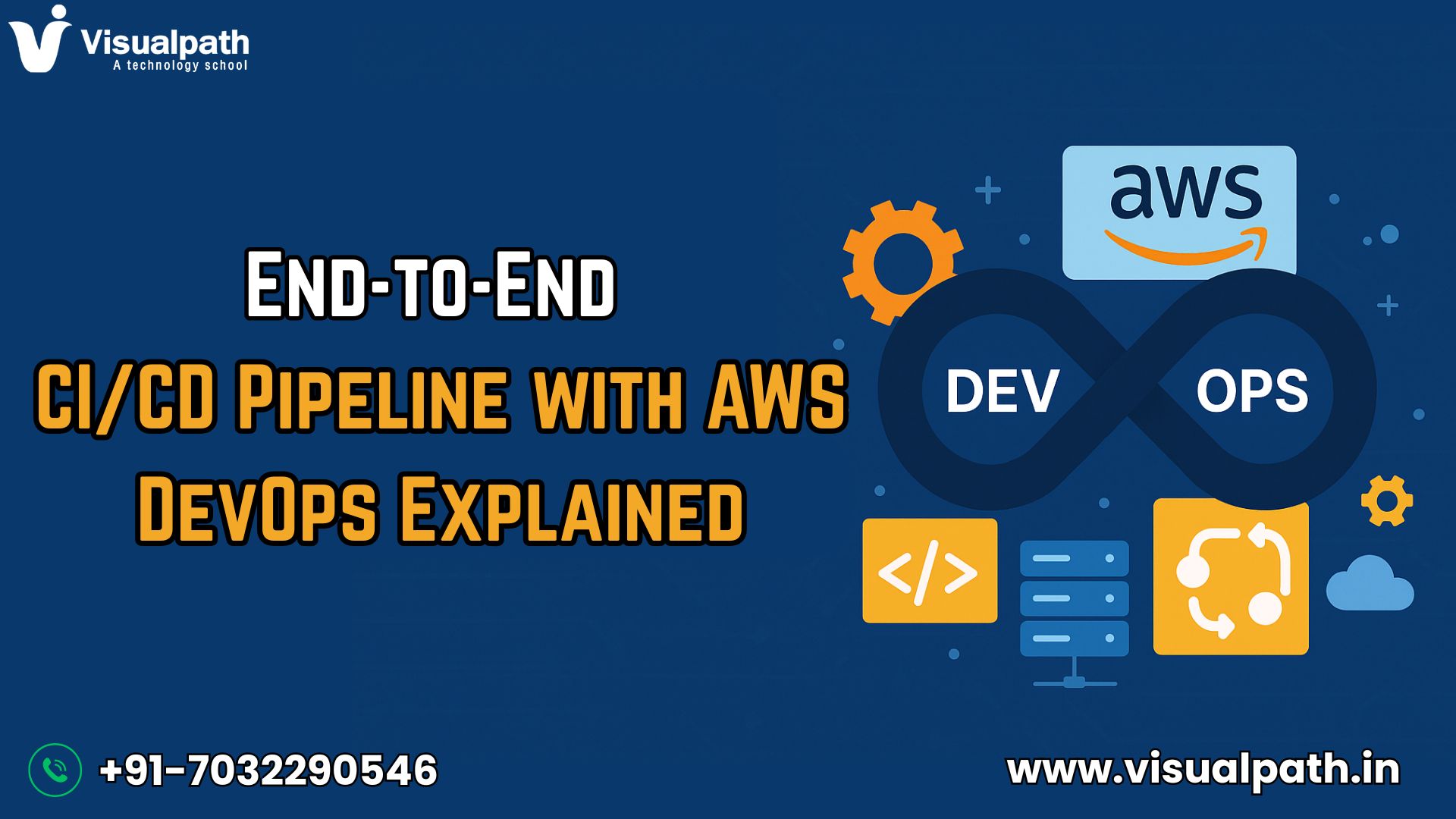
      1. End-to-End CI/CD Pipeline with AWS DevOps Explained

        End-to-End CI/CD Pipeline with AWS DevOps Explained

        CI/CD Pipeline with AWS DevOps is a game-changer for organizations aiming to streamline software delivery, enhance collaboration, and accelerate time to market. Continuous Integration and Continuous Deployment (CI/CD) allow development teams to automate the building, testing, and deployment of applications on the AWS cloud. By leveraging AWS DevOps tools, businesses can minimize manual effort, reduce errors, and achieve faster, more reliable releases.

        For those looking to build real-world skills, DevOps Training is the best way to understand the fundamental concepts of CI/CD and how to implement them using AWS services like CodePipeline, CodeBuild, CodeDeploy, and more.

        What Is a CI/CD Pipeline?

        A CI/CD pipeline automates the software delivery process, ensuring that code changes are continuously integrated, tested, and deployed to production environments. In the AWS ecosystem, developers can integrate services that monitor source control (like GitHub), automate test execution, and deploy updates to infrastructure and applications. This reduces downtime, improves quality, and supports agile development practices.

        With DevOps methodologies in place, a CI/CD pipeline ensures:

        • Faster feedback on code changes
        • Consistent and repeatable builds
        • Reliable deployments across environments

        Key AWS Tools for CI/CD

        Here are the key AWS tools that enable a complete CI/CD pipeline:

        • AWS CodeCommit: A fully managed, secure, and scalable Git-based source control service.
        • AWS CodeBuild: A build service that compiles your source code, runs tests, and creates deployment-ready artifacts.
        • AWS CodeDeploy: Automates application deployments to Amazon EC2 instances, AWS Lambda, and on-premises servers.
        • AWS CodePipeline: A continuous integration and delivery service that automates the build, test, and deployment phases of your release process.

        Together, these services allow you to create highly automated pipelines that reduce human intervention, lower the risk of errors, and ensure consistent results.

        CI/CD Pipeline Stages in AWS

        Let’s break down a CI/CD pipeline using AWS DevOps tools:

        1. Source Stage: Triggers the pipeline when a code change is pushed to a repository in CodeCommit or GitHub.
        2. Build Stage: Uses CodeBuild to compile the application and run unit tests.
        3. Test Stage: Additional testing like integration or load testing can be added here.
        4. Deploy Stage: CodeDeploy handles automated deployment to staging or production environments.
        5. Approval and Monitoring: Add manual approvals before production deployment and use AWS CloudWatch to monitor performance and logs.

        Each stage ensures that only tested, reliable code reaches the production environment, thereby enhancing the quality of releases.

        Enrolling in a DevOps Online Training program can help developers and IT professionals understand how to use these tools effectively and implement best practices in real-world projects.

        Benefits of AWS DevOps CI/CD Pipeline

        • Speed: Faster development and deployment cycles
        • Scalability: Easily handle workloads of any size using cloud-native tools
        • Security: Use IAM roles and policies to enforce fine-grained access control and ensure secure interactions between AWS services.
        • Reliability: Automated testing and rollback options ensure safer releases
        • Cost Efficiency: Pay-as-you-go pricing with minimal infrastructure overhead

        For organizations shifting to cloud-based development, AWS DevOps offers a robust solution for managing CI/CD pipelines across teams and geographies.

        Getting Started with CI/CD on AWS

        You can start by setting up a simple pipeline using CodePipeline and gradually integrate other services like CodeBuild and CodeDeploy. AWS provides templates, documentation, and prebuilt integrations to make the process seamless.

        Whether you’re aiming to become a DevOps engineer or leading a team to streamline delivery workflows, a DevOps Online Course provides the structured learning and hands-on experience essential for success. expertise in AWS DevOps.


        Conclusion

        Mastering CI/CD pipelines with AWS DevOps not only simplifies the software delivery process but also helps organizations innovate faster with fewer errors. From source control to deployment, AWS provides the tools needed to automate and scale development. With the right skills and training, professionals can harness the full potential of AWS DevOps to build high-performing, resilient applications.

        Trending Courses: MLOps, GCP DevOps, and Azure DevOps

      2. AI-Powered DevOps: The Future Is Now

        AI-Powered DevOps: The Future Is Now

        AI-Powered DevOps is rapidly transforming the way organizations manage software delivery and infrastructure operations. If you’re pursuing DevOps Training, it’s essential to understand how artificial intelligence is reshaping this field in 2025 and beyond. Gone are the days when DevOps solely relied on manual monitoring and scripting—today, intelligent automation and predictive insights are driving the next evolution in IT operations.

        What Is AI-Powered DevOps?

        AI-powered DevOps, often known as AIOps (Artificial Intelligence for IT Operations), refers to the integration of AI and machine learning into DevOps workflows. It enables systems to automatically process vast amounts of data, detect anomalies, predict issues, and even resolve them in real time. This intelligent layer adds adaptability, speed, and resilience to DevOps processes.

        Why AI Matters in DevOps

        Traditional DevOps has always focused on improving collaboration and automating manual tasks. But with increasing complexity in cloud-native systems, AI brings a whole new level of efficiency through:

        • Predictive Analytics: Foresee system failures and fix them before they escalate.
        • Anomaly Detection: Identify unusual behaviors across logs and metrics in real time.
        • Intelligent Automation: Dynamically adjust pipelines and infrastructure without human input.
        • Root Cause Analysis: Speed up diagnosis by analyzing historical data and system behavior.

        By using AI, teams can manage infrastructure and deployments more effectively and respond faster to unexpected events.

        Key Benefits of AI-Powered DevOps

        1. Faster Problem Resolution: AI identifies and sometimes fixes issues instantly, reducing downtime.
        2. Greater Reliability: Predictive monitoring keeps systems stable and efficient.
        3. Lower Manual Workload: Repetitive tasks are handled by AI, freeing teams to innovate.
        4. Scalability: AI helps DevOps teams manage large-scale, distributed systems with ease.
        5. Enhanced Security: AI detects unusual patterns and potential threats in the pipeline.

        Real-World Use Cases

        Whether you’re learning through DevOps Online Training or already working in the field, these real-world use cases highlight the relevance of AI-powered DevOps:

        • Smarter CI/CD Pipelines: AI optimizes test runs, predicts code breakages, and improves deployment success rates.
        • Efficient Infrastructure Management: Machine learning models auto-scale resources and streamline container orchestration tools like Kubernetes.
        • Intelligent Monitoring: Tools like Dynatrace, Splunk, and Datadog use AI to filter noise, surface critical incidents, and provide actionable insights.

        Challenges to Consider

        Implementing AI in DevOps isn’t without its challenges:

        • Data Quality Issues: Inaccurate or incomplete data can mislead AI systems.
        • Skill Gaps: A blend of DevOps, AI, and data skills is required—making talent hard to find.
        • Overwhelming Tool Choices: Selecting the right AI tools from a crowded marketplace can be daunting.
        • Automation Hesitancy: Teams may resist giving control to AI without full trust in its decisions.

        Still, with proper training and a gradual implementation strategy, these obstacles can be overcome. Professionals pursuing DevOps Online Training in Hyderabad are increasingly learning how to leverage these AI capabilities for better performance and job readiness.

        The Road Ahead

        AI-powered DevOps is still evolving, but its potential is already undeniable. As AI tools grow more intelligent and accessible, their impact across the software development lifecycle will deepen—from planning and testing to deployment and operations.

        Organizations that embrace this shift early stand to benefit from enhanced agility, reduced costs, and faster delivery. Now is the time to start exploring how AI can elevate your DevOps workflows, boost productivity, and drive continuous improvement in your infrastructure and applications.

        Trending Courses: MLOps, GCP DevOps, and Azure DevOps

      3. AWS DevOps and AI: Transforming Software Development

        AWS DevOps and AI: Transforming Software Development

        AWS DevOps and AI have emerged as powerful technologies that, when combined, create a seamless and highly efficient development lifecycle. DevOps automates and streamlines workflows, while AI adds intelligence and predictive capabilities, resulting in faster deployments, improved quality, and enhanced operational efficiency.

        The Role of DevOps in Software Development

        DevOps bridges the gap between software development and IT operations, ensuring continuous integration, continuous delivery (CI/CD), and automation. Traditional software development approaches often lead to delays, inefficiencies, and bottlenecks. DevOps solves these challenges by:

        • Automating Workflows – Reducing manual intervention and accelerating software delivery. DevOps Training
        • Continuous Integration and Continuous Deployment (CI/CD) – Ensuring seamless updates and bug fixes.
        • Collaboration and Communication – Breaking silos between developers, testers, and operations teams.
        • Infrastructure as Code (IaC) – Managing infrastructure efficiently using automation tools.

        By incorporating AI into DevOps, organizations can further optimize these processes and unlock new possibilities in software development.

        How AI Enhances DevOps

        Artificial Intelligence (AI) introduces intelligent automation, predictive analytics, and data-driven decision-making, improving the overall efficiency of DevOps. Some key benefits of integrating AI into DevOps include:

        1. Intelligent Automation

        AI automates repetitive tasks like code testing, security scans, and deployment verification. This reduces errors and frees up developers to focus on innovation. AI-powered automation tools ensure that software updates are deployed with minimal downtime. DevOps Online Training

        2. Predictive Analytics for Issue Resolution

        AI can analyze past failures and predict potential issues before they occur. By leveraging machine learning algorithms, teams can proactively fix bugs, optimize performance, and prevent system failures.

        3. AI-Driven Monitoring and Security

        Traditional monitoring tools provide real-time insights, but AI takes it a step further by detecting anomalies, identifying security threats, and mitigating risks automatically. This ensures system reliability and robust cybersecurity.

        4. Enhanced CI/CD Pipelines

        AI optimizes CI/CD pipelines by automating decision-making processes. It can analyze previous deployment patterns and suggest improvements for better software delivery speed and efficiency.

        5. Intelligent Chatbots and Virtual Assistants

        AI-powered chatbots assist DevOps teams by answering queries, providing real-time updates, and automating troubleshooting processes. This enhances communication and operational efficiency.

        Use Cases of DevOps and AI in Software Development

        Many organizations are leveraging DevOps and AI to transform their software development processes:

        • Netflix uses AI-driven DevOps to automate testing, optimize content delivery, and improve user experience.
        • Amazon employs AI-powered monitoring to ensure smooth cloud operations and detect potential failures.
        • Google integrates AI into its DevOps strategy to enhance security and manage large-scale infrastructure.

        Conclusion

        The combination of DevOps and AI is revolutionizing software development by introducing automation, intelligence, and efficiency. AI-powered DevOps enables faster releases, minimizes downtime, improves security, and enhances overall software quality. As organizations continue to embrace digital transformation, leveraging AI in DevOps will be a key driver for innovation and competitive advantage. DevOps Online Training

        Visualpath is the Leading and Best Software Online Training Institute in Hyderabad. Avail complete DevOps Training Worldwide. You will get the best course at an affordable cost.

        Attend Free Demo

        Call on – +91-9989971070.

        Visit https://www.visualpath.in/online-aws-devops-training.html

        Visit Blog:  https://awsdevsecopsonlinetraining.blogspot.com/

      4. What Are the Key Features of AWS DevOps?

        What Are the Key Features of AWS DevOps?

        AWS DevOps is a powerful set of tools and practices that streamline software development and operations in cloud environments. By enabling automation, collaboration, and scalability, DevOps helps organizations deliver applications faster and more reliably. Let’s dive into the key features of AWS DevOps that make it an essential solution for modern software development.


        1. Continuous Integration and Continuous Delivery (CI/CD)

        DevOps supports seamless CI/CD workflows, enabling teams to integrate code changes and deploy updates efficiently. Tools like AWS Code Pipeline, AWS Code Build, and AWS Code Deploy automate build, test, and deployment processes. These tools reduce manual intervention, minimize errors, and ensure faster delivery of high-quality applications. AWS DevOps Training


        2. Infrastructure as Code (IaC)

        Infrastructure as Code is a cornerstone of DevOps. With tools like AWS CloudFormation and AWS CDK (Cloud Development Kit), teams can define and provision cloud resources using code. This approach ensures consistency, repeatability, and version control for infrastructure setups, making it easy to manage complex environments.


        3. Scalability and Flexibility

        DevOps provides auto-scaling capabilities, allowing applications to handle fluctuating workloads efficiently. Services like Amazon EC2 Auto Scaling and AWS Elastic Beanstalk automatically adjust resource allocation based on demand, ensuring optimal performance and cost-effectiveness. DevOps Online Training


        4. Monitoring and Logging

        Robust monitoring and logging are critical for maintaining application health. DevOps includes tools like Amazon CloudWatch and AWS X-Ray, which provide real-time insights into system performance and application behavior. These tools help detect and resolve issues proactively, reducing downtime and improving user experience.


        5. Enhanced Collaboration

        AWS DevOps fosters better collaboration between development and operations teams. Tools like AWS Code Commit, a fully managed source control service, enable teams to work together on code repositories. By integrating workflows and promoting communication, DevOps eliminates silos and enhances productivity.


        6. Security and Compliance

        Security is a top priority in AWS DevOps. With features like AWS Identity and Access Management (IAM), teams can manage user access and permissions effectively. Additionally, services like AWS Config and AWS CloudTrail help maintain compliance by tracking changes and ensuring that security policies are enforced.


        7. Automation

        Automation is at the core of AWS DevOps. By automating repetitive tasks such as testing, deployment, and monitoring, teams can focus on innovation and problem-solving. Tools like AWS Lambda enable serverless computing, automating workflows without the need for dedicated infrastructure.


        8. Integration with Third-Party Tools

        AWS DevOps integrates seamlessly with popular third-party tools like Jenkins, GitHub, and Bitbucket. This flexibility allows teams to leverage their existing tools while enhancing workflows with AWS’s robust DevOps features.


        Conclusion

        AWS DevOps empowers organizations to build, deploy, and manage applications more efficiently. Its key features, including CI/CD, IaC, scalability, monitoring, and automation, make it a vital solution for modern software development. By adopting AWS DevOps, teams can enhance collaboration, improve reliability, and accelerate delivery. DevOps Course

        Visualpath is the Leading and Best Software Online Training Institute in Hyderabad. Avail complete DevOps Training Worldwide. You will get the best course at an affordable cost.

        Attend Free Demo

        Call on – +91-9989971070.

        WhatsApp: https://www.whatsapp.com/catalog/919989971070/

        Visit https://www.visualpath.in/online-aws-devops-training.html

        Visit Blog:  https://awsdevsecopsonlinetraining.blogspot.com/

      5. How Do I Become a AWS DevOps Expert in 2025?

        How Do I Become a AWS DevOps Expert in 2025?

        DevOps remains a cornerstone methodology that bridges development and operations teams. With the rise of cloud-native technologies, automation, and DevSecOps, becoming an AWS DevOps expert is both a rewarding and in-demand career choice. Here’s a comprehensive guide to help you achieve expertise in this dynamic field. AWS DevOps Training


        Understand the Core Principles of DevOps    

        To excel in DevOps, you must start with a deep understanding of its fundamental principles, which form the backbone of its practices:

        • Collaboration: Break down silos between development, operations, and other teams to ensure seamless communication.
        • Automation: Streamline processes by automating repetitive tasks such as testing, deployment, and monitoring. DevOps Online Training
        • Continuous Integration/Continuous Delivery (CI/CD): Accelerate software delivery while maintaining high quality through frequent integrations and automated deployments.
        • Monitoring and Feedback: Use tools to monitor systems and incorporate feedback for continuous improvement.

        These principles not only enhance software delivery but also align teams with the goal of achieving operational efficiency.


        Acquire Advanced Technical Skills

        Technical expertise is the backbone of any DevOps professional. Here are the most critical technical skills to develop:

        1. Version Control: Gain proficiency with Git, GitHub, and other version control systems for effective collaboration and code management.
        2. CI/CD Pipelines: Master tools like Jenkins, GitLab CI/CD, and CircleCI to automate build, test, and deployment processes.
        3. Containerization and Orchestration: Become skilled in Docker and Kubernetes, including advanced Kubernetes features like Helm charts and Operators.
        4. Cloud Platforms: Develop expertise in deploying and managing applications on platforms such as AWS, Azure, or Google Cloud.
        5. Infrastructure as Code (IaC): Learn tools like Terraform, Ansible, and Pulumi to automate infrastructure provisioning.
        6. Monitoring and Observability: Use advanced tools like Prometheus, Grafana, Datadog, and ELK Stack to monitor application performance and detect issues proactively.
        7. Security Integration: Familiarize yourself with DevSecOps practices, including using tools like Snyk, Aqua Security, and HashiCorp Vault.

        These technical skills will enable you to build and manage scalable, secure, and efficient systems.


        Develop Essential Soft Skills

        Beyond technical proficiency, soft skills play a critical role in an AWS DevOps expert’s success. These include:

        • Communication: Clearly convey ideas and collaborate effectively across teams.
        • Problem-Solving: Analyze challenges and implement innovative solutions.
        • Adaptability: Stay flexible and open to adopting new tools, trends, and practices. DevOps Online Training
        • Leadership: Inspire and guide teams to adopt DevOps methodologies, fostering a culture of collaboration and innovation.

        Soft skills enhance your ability to work in complex environments and make you a well-rounded professional.


        Gain Hands-On Experience

        Practical experience is where you turn knowledge into expertise. Here’s how to build it:

        • Contribute to Open Source Projects: Join communities to work on real-world problems and collaborate with other professionals.
        • Build Personal Projects: Create and manage your own applications, CI/CD pipelines, and cloud environments.
        • Participate in Hackathons: Test your skills and learn new techniques by engaging in DevOps challenges.
        • Internships and Entry-Level Roles: Start your career with positions like DevOps Engineer, Cloud Engineer, or Site Reliability Engineer to gain industry exposure.

        Hands-on experience is invaluable in solidifying your skills and understanding of DevOps practices.


        Stay Updated with Trends

        The DevOps ecosystem evolves rapidly, and staying ahead of trends is essential. Focus on these emerging areas:

        • AI-Powered DevOps: Explore how AI and machine learning are transforming DevOps processes with predictive analytics and intelligent automation.
        • DevSecOps: Learn to incorporate automated security testing into your workflows.
        • New Tools and Platforms: Experiment with innovative tools like HashiCorp Waypoint, Dagger, and Crossplane.
        • Multi-Cloud and Hybrid Environments: Develop expertise in managing workloads across diverse cloud platforms.

        Conclusion

        Becoming a DevOps expert in 2025 requires a combination of deep technical knowledge, hands-on experience, and strong interpersonal skills. By mastering DevOps principles, building advanced technical expertise, and continuously adapting to new technologies, you can position yourself as a valuable asset in the IT industry. Start your journey today, embrace the DevOps culture, and lead the way in the future of software delivery. DevOps Course

        Visualpath is the Leading and Best Software Online Training Institute in Hyderabad. Avail complete DevOps Training Worldwide. You will get the best course at an affordable cost.

        Attend Free Demo

        Call on – +91-9989971070.

        WhatsApp: https://www.whatsapp.com/catalog/919989971070/

        Visit   https://www.visualpath.in/devops-online-training.html

        Visit Blog:  https://awsdevsecopsonlinetraining.blogspot.com/

      6. DevOps Online Training: From Basics to Mastery

        DevOps Online Training: From Basics to Mastery

        Why Choose DevOps Online Training?

        DevOps Online Training provides a flexible and comprehensive way to master the principles and practices of DevOps. Here are some compelling reasons to enroll:

        1. Flexibility and Convenience
          With DevOps Online Training, you can learn at your own pace, balancing your professional and personal commitments without compromising on quality.
        2. Comprehensive Learning
          From foundational knowledge covered in a DevOps Course to advanced skills offered in AWS DevOps Training, this format equips you with everything needed to excel in modern IT environments.
        3. High Demand for DevOps Skills
          Companies worldwide are adopting DevOps to enhance productivity and reduce time-to-market. Professionals skilled in tools like Docker, Kubernetes, Jenkins, and AWS are in high demand.

        What You’ll Learn in DevOps Online Training

        1. Foundational Concepts

        Understand the principles of DevOps culture and practices.

        Explore Continuous Integration and Continuous Deployment (CI/CD) pipelines.

        • Core Tools and Technologies

        Master containerization with Docker and orchestration using Kubernetes.

        Learn automation tools like Jenkins and Infrastructure as Code (IaC) using Terraform.

        Dive into AWS DevOps Training to gain expertise in managing cloud infrastructure.

        • Monitoring and Feedback Loops

        Implement monitoring tools like Prometheus and Grafana for real-time insights.

        Understand how feedback loops drive continuous improvement.

        • Advanced Topics

        Explore security integration with DevSecOps principles.

        Learn to design scalable, resilient systems for enterprise applications.


        Key Benefits of DevOps Online Training

        • Streamlined Workflows
          Learn to eliminate inefficiencies and automate repetitive tasks using CI/CD pipelines.
        • Enhanced Career Prospects
          With certifications from a DevOps Course or specialization through AWS DevOps Training, you become a highly valuable professional in the job market.
        • Cost-Effective Learning
          Online training eliminates travel costs and allows you to study from the comfort of your home.
        • Global Relevance
          The skills acquired through DevOps Online Training are applicable across industries and geographies, making you a versatile IT expert.

        Who Should Enroll in DevOps Online Training?

        • IT Professionals: Developers, system administrators, and IT managers looking to upskill.
        • Beginners: Individuals new to DevOps who want to understand the basics and gradually advance.
        • Cloud Enthusiasts: Professionals interested in mastering AWS DevOps Training for cloud-native applications.

        Conclusion

        DevOps Online Training is the perfect starting point for anyone looking to thrive in the fast-paced world of software development and IT operations. Whether you are a beginner seeking a foundational DevOps Course or an experienced professional aiming to specialize in AWS DevOps Training, this training provides the knowledge and skills needed to succeed.

        Take the leap today and transform your career by enrolling in DevOps Online Training. Master the art of collaboration, automation, and scalability, and become a driving force in modern IT ecosystems!

        Visualpath is the leading software online training institute in Hyderabad. Avail complete AWS DevOps Training Worldwide. You will get the best course at an affordable cost.

        WhatsApp: https://www.whatsapp.com/catalog/919989971070/

        Visit   https://www.visualpath.in/online-aws-devops-training.html

      7. AWS DevOps Training: Key Tools and Techniques for Success

        AWS DevOps Training: Key Tools and Techniques for Success

        AWS DevOps Training is essential for any aspiring DevOps professional seeking to gain proficiency in cloud infrastructure management and automation. AWS, being one of the leading cloud platforms, provides a range of tools and services that help streamline the development, deployment, and maintenance of applications. Through structured DevOps Online Training and hands-on experience in a DevOps Course, participants can master the skills and techniques necessary to excel in AWS DevOps, from managing cloud resources to automating complex workflows.

        Key AWS DevOps Tools for Success

        One of the main objectives of AWS DevOps Training is to introduce learners to the tools and services that make AWS such a powerful platform for DevOps. Tools like AWS CodePipeline and AWS CodeBuild are crucial components in establishing a Continuous Integration and Continuous Deployment (CI/CD) pipeline. AWS CodePipeline automates the release processes, enabling teams to deliver features and updates faster and with greater efficiency. Similarly, AWS CodeBuild offers scalable build environments, allowing teams to compile and test code without managing physical infrastructure.

        For effective infrastructure management, AWS CloudFormation and AWS Elastic Beanstalk are two other invaluable tools covered in AWS DevOps courses. AWS CloudFormation lets users define and provision cloud resources using a template, which is an essential skill for any DevOps practitioner. With AWS Elastic Beanstalk, learners can deploy and manage applications without needing to handle the underlying infrastructure. Both tools simplify complex tasks, enabling DevOps professionals to focus on optimizing applications rather than managing resources manually.

        Furthermore, an AWSDevOpsTraining program often covers tools like AWS X-Ray and Amazon CloudWatch, which are instrumental in monitoring application performance. AWS X-Ray allows you to trace requests made to applications and identify bottlenecks, while Amazon CloudWatch provides real-time monitoring, metrics, and logs to assess the health and performance of AWS resources. These tools are essential for maintaining reliability and stability in production environments, making them integral to any comprehensive DevOps Online Training program.

        Core Techniques for Effective DevOps on AWS

        While tools are essential, mastering DevOps techniques is equally critical for success. A DevOps Course emphasizes the principles of continuous integration, continuous delivery, and infrastructure as code. In AWS DevOps Training, participants learn how to build a CI/CD pipeline from scratch, creating an automated workflow that reduces the chances of human error, improves code quality, and ensures rapid delivery of new features and bug fixes.

        Another crucial technique taught in AWSDevOps Training is infrastructure as code (IaC), a method that allows for automated management and provisioning of cloud resources. AWS CloudFormation is commonly used for IaC, helping DevOps engineers to automate infrastructure changes. This method improves consistency, as it enables teams to version-control their infrastructure and roll back changes as needed.

        Conclusion

        In conclusion, AWS DevOps Training equips professionals with the tools and techniques needed to succeed in today’s competitive cloud landscape. From core tools like AWS CodePipeline and AWS CloudFormation to critical techniques such as CI/CD and infrastructure as code, AWS DevOps training offers a well-rounded approach to cloud-based DevOps. For those seeking to advance their careers, enrolling in a comprehensive DevOps Course or DevOps Online Training can pave the way for greater opportunities in cloud automation and infrastructure management.

        Visualpath is the leading software online training institute in Hyderabad. Avail complete AWS DevOps Training Worldwide. You will get the best course at an affordable cost.

        Attend Free Demo

        Call on – +91-9989971070.

        WhatsApp: https://www.whatsapp.com/catalog/919989971070/

        Visit   https://www.visualpath.in/online-aws-devops-training.html

      8. MLOps Course 101: Key Skills for AI Success

        MLOps Course 101: Key Skills for AI Success

        The MLOps Course is a powerful resource for anyone aiming to build expertise in managing and optimizing machine learning (ML) projects effectively. Designed to bridge the gap between development and operations, this course equips professionals with the skills they need to streamline ML workflows, from data preparation to model deployment. Whether you’re looking for an MLOps Course in Hyderabad or prefer flexible options like MLOps Online Training, this course offers the essential knowledge and tools for AI success.

        Understanding MLOps and Its Importance

        MLOps, or Machine Learning Operations, combines principles from DevOps and ML to address the challenges of deploying machine learning models into production. Unlike traditional ML projects, which often involve isolated steps for development and deployment, MLOps emphasizes collaboration and continuous integration, making the process smoother and more efficient. The MLOps Course dives into the core principles of MLOps, highlighting the automation of data pipelines, version control, model training, and monitoring to help you manage and scale ML operations seamlessly.

        Key Skills You’ll Gain from the MLOps Course

        1. Automating Machine Learning Pipelines: This skill is crucial for handling large datasets and complex workflows efficiently. With automation, you’ll reduce manual intervention and speed up the entire ML lifecycle.
        2. Data Versioning and Management: Data versioning is essential for tracking changes in datasets, which ensures reproducibility and reliability. The course provides best practices for handling data version control in ML projects.
        3. Model Deployment and Monitoring: Successfully deploying a model is only half the battle; continuous monitoring ensures that it maintains accuracy over time. This course teaches you strategies for model validation and performance tracking, which are crucial for maintaining high-performing models in production.
        4. Collaboration Across Teams: MLOps fosters collaboration between data scientists, ML engineers, and DevOps teams, breaking down silos and enabling more productive workflows. You’ll learn techniques to facilitate effective communication and teamwork.
        5. Scalability and Performance Optimization: The MLOps Course also covers skills in scaling ML models to handle increased data loads and user demand, which is essential as your AI solutions grow.

        Whether you are looking for an MLOps Course in Hyderabad to gain hands-on, local experience or prefer the flexibility of MLOps Online Training, this course provides comprehensive insights into every stage of the ML workflow.

        Why Choose MLOps Course in Hyderabad or MLOps Online Training?

        Choosing an MLOps Course in Hyderabad gives learners the opportunity to access in-person training, often with live projects and local industry insights that are invaluable for real-world applications. On the other hand, MLOps Online Training allows you to learn at your own pace and balance study with other commitments, making it ideal for working professionals. Both formats deliver high-quality training, ensuring that you acquire the skills needed to excel in the field.

        Conclusion

        The MLOps Course is an essential stepping stone for those aiming to succeed in the fast-paced world of machine learning and AI. With a robust foundation in MLOps, you’ll gain the ability to automate processes, manage data, and deploy models seamlessly. Whether through an MLOps Course in Hyderabad or MLOps Online Training, investing in MLOps education opens the door to career opportunities and equips you with the critical skills to achieve AI success.

        VISUALPATH is the Best Software Online Training Institute in Ameerpet, Hyderabad. Enroll in our institute to complete Machine Learning Operations Training. You will get the best course at an affordable cost.

        Attend Free Demo

        Call on – +91-9989971070.

                   WhatsApp: https://www.whatsapp.com/catalog/917032290546/

        Visit: https://www.visualpath.in/online-mlops-training.html

        Visit our new course: https://www.visualpath.in/online-best-cyber-security-courses.html

      9. AWS DevOps Training: Mastering CI/CD Pipelines in the Cloud

        AWS DevOps Training: Mastering CI/CD Pipelines in the Cloud

        AWS DevOps Training is crucial for professionals looking to enhance their skills in cloud automation, continuous integration (CI), and continuous delivery (CD) pipelines. The growing demand for faster development cycles and reliable software delivery has made DevOps an essential approach in the IT industry. Whether you’re a beginner or looking to refine your expertise, this DevOps Course will guide you through the complexities of managing CI/CD pipelines, cloud deployments, and automation tools. For those based in India, the Best AWS DevOps Training in Hyderabad offers hands-on experience and in-depth knowledge that can boost your career to the next level.

        Why CI/CD Pipelines are Essential in DevOps

        In today’s fast-paced software development landscape, CI/CD pipelines serve as the backbone of agile methodologies. Continuous integration allows teams to integrate code changes frequently, reducing integration issues and speeding up the release process. Continuous delivery, on the other hand, automates the deployment process, ensuring that your applications are always in a deployable state. AWS DevOps Training focuses heavily on mastering these pipelines, providing students with the skills to implement automated testing, manage cloud infrastructure, and deploy code to production environments seamlessly.

        By enrolling in a specialized DevOps Course, such as the Best AWS DevOps Training in Hyderabad, you’ll gain hands-on experience with popular CI/CD tools like Jenkins, AWS Code Pipeline, and Docker. These tools streamline the entire software delivery process, from development to deployment, ensuring faster and more reliable releases.

        What You Will Learn in an AWS DevOps Training

        In an AWS DevOps Training Course, you will dive into various topics that are crucial for mastering cloud operations and automation. The course typically covers:

        1. Introduction to DevOps and Cloud Infrastructure: Learn the basics of AWS, cloud computing, and how DevOps fits into cloud-based solutions. This will serve as the foundation for advanced topics like CI/CD pipelines.
        2. Setting Up CI/CD Pipelines: You’ll explore how to set up continuous integration pipelines using AWS Code Pipeline, CodeBuild, and Jenkins. This includes configuring automated testing and monitoring to ensure code quality throughout the development process.
        3. Infrastructure as Code (IaC): Learn to manage your cloud infrastructure using tools like AWS Cloud Formation and Terraform. These tools help automate the provisioning and management of cloud resources, making it easier to scale and adapt to changes.
        4. Security and Compliance in DevOps: Security is a critical component of any AWS DevOps Training. You’ll learn how to integrate security measures into your CI/CD pipelines, ensuring that your applications meet compliance standards.

        By taking the Best AWS DevOps Training in Hyderabad, you’ll receive real-world exposure to these tools and practices, enabling you to work on complex cloud projects with confidence.

        Why Hyderabad is a Top Destination for AWS DevOps Training

        Hyderabad has emerged as a major hub for cloud computing and DevOps training, offering some of the Best AWS DevOps Training programs in India. The city is home to several renowned IT companies and training institutes that provide expert-led courses designed to meet the growing demand for skilled DevOps engineers. The Best AWS DevOps Training in Hyderabad offers tailored content to help students gain industry-relevant skills, preparing them for real-world challenges in cloud computing and automation.

        These training programs not only provide theoretical knowledge but also include practical sessions that allow students to work on live projects. This hands-on approach ensures that participants are job-ready and equipped with the skills needed to succeed in today’s competitive job market.

        Conclusion

        AWS DevOps Training is an essential investment for any IT professional looking to master CI/CD pipelines and cloud automation. The Best AWS DevOps Training in Hyderabad offers an excellent opportunity to gain practical experience in cloud infrastructure, automation, and DevOps best practices. By enrolling in this comprehensive DevOps Course, you’ll not only build a strong foundation in cloud technologies but also develop the advanced skills necessary to succeed in the fast-evolving world of cloud computing.

        Whether you’re just starting your DevOps journey or looking to refine your skills, this training will provide you with the knowledge and tools to excel in managing CI/CD pipelines and delivering software at scale.

        Visualpath is the leading software online training institute in Hyderabad. Avail complete AWS DevOps Training Worldwide. You will get the best course at an affordable cost.

        Attend Free Demo

        Call on – +91-9989971070.

        WhatsApp: https://www.whatsapp.com/catalog/919989971070/

        Visit   https://www.visualpath.in/online-aws-devops-training.html