Tag: DBT Online Training

  • Where Does DBT Data Build Tool Fit in the Modern Data Stack?

    Where Does DBT Data Build Tool Fit in the Modern Data Stack?

    Data Build Tool Training is becoming an essential skill for data professionals looking to make the most out of the modern data stack. As data management systems evolve, DBT (Data Build Tool) has emerged as a game-changer, transforming how organizations handle data preparation, cleaning, and transformation. This tool is central to streamlining workflows, ensuring that data is organized, actionable, and ready for analysis. DBT Training is, therefore, in high demand, as it equips data professionals with the know-how to leverage this powerful tool and seamlessly integrate it into modern data architectures.

    The Modern Data Stack: An Overview

    The modern data stack includes a range of tools and technologies that work together to ingest, store, transform, and analyze data effectively. The layers of this stack typically include data ingestion (the process of collecting data from various sources), data storage (usually in a data warehouse or data lake), data transformation (making data analysis-ready), and finally, data visualization or reporting. Data Build Tool Training provides a deep dive into DBT’s specific role within the transformation layer, where it prepares raw data for analytics, ensuring the data is clean, consistent, and ready to support critical business decisions.

    Unlike traditional ETL (Extract, Transform, Load) processes, the modern data stack often leverages ELT (Extract, Load, Transform), wherein data is first loaded into a warehouse and then transformed as needed. DBT Training aligns perfectly with this approach, as DBT is built to work with data already in a warehouse, such as Snowflake, Big Query, or Redshift. This compatibility has made DBT Training particularly relevant for professionals working in cloud-based environments.

    Why DBT is Essential in the Transformation Layer

    A unique aspect of DBT is its SQL-centric approach to data transformation, which makes it accessible to both data analysts and engineers. By enabling transformations in SQL, DBT empowers analysts to shape and transform data without needing extensive programming knowledge. Data Build Tool Training emphasizes SQL skills, allowing data professionals to build, test, and document models directly within the data warehouse. This shift democratizes data transformation, providing more control and visibility to teams and fostering collaboration across functions.

    Another crucial component of DBT Training is learning how DBT simplifies complex workflows by organizing SQL transformations into modular, reusable blocks. This structured approach is invaluable for teams managing large data volumes or intricate data models, as it enables them to build upon each other’s work. Moreover, DBT’s version control and testing capabilities support data quality, making it easy to track changes, audit transformations, and ensure consistency across datasets. DBT Training equips data professionals with these best practices, making them valuable assets in any data-driven organization.

    Key Benefits of Mastering DBT in the Modern Data Stack

    As data becomes increasingly integral to business success, Data Build Tool Training can give professionals a competitive edge in data roles. By understanding DBT’s capabilities, data professionals can unlock several benefits:

    Enhanced Data Quality: DBT Training covers essential features like data testing, which helps ensure that data transformations produce accurate results. This testing capability is particularly valuable in the modern data stack, where errors in data models can lead to misinformed decisions.

    Scalability and Efficiency: Through DBT Training, data professionals learn modular transformation techniques that allow teams to scale data models efficiently. DBT’s use of reusable code modules minimizes redundancy and enables teams to adapt to growing data volumes without compromising on performance.

    Improved Collaboration: DBT’s SQL-based interface allows data analysts to work collaboratively with engineers, sharing insights and improvements directly in the data warehouse. DBT Training prepares professionals to use version control effectively, making it easier for multiple team members to contribute to and review transformations. This collaborative environment is crucial in the modern data stack, where diverse skill sets must align.

    Transparency and Documentation: With DBT, every transformation step is documented, which improves transparency and makes the data lineage easy to track. Data Build Tool Training teaches professionals to leverage this feature, providing organizations with a clear view of how data changes over time. This transparency is essential for compliance, auditing, and maintaining trust in data integrity.

    How DBT Compares to Other Data Transformation Tools

    The popularity of DBT Training is largely due to DBT’s ability to fill a niche in the data transformation layer of the stack. While there are other tools that handle data processing, DBT stands out for its focus on SQL-based transformations directly within the data warehouse. Traditional ETL tools often require significant custom coding or programming knowledge, whereas DBT allows data analysts with SQL skills to participate in the transformation process, bringing a level of simplicity and accessibility to the transformation layer.

    Another factor driving the demand for DBT Training is the tool’s cloud-native design. Unlike older ETL tools that were built for on-premises data warehouses, DBT is designed to work with cloud-native systems, making it well-suited for organizations migrating to or fully operating in the cloud. This adaptability means that professionals trained in DBT are well-prepared to work in modern, cloud-based environments, which have become standard across industries.

    The Future of DBT and the Modern Data Stack

    As data environments continue to evolve, the need for tools like DBT is expected to grow. The demand for Data Build Tool Training is rising as businesses realize the strategic advantages of adopting DBT. In addition to simplifying transformations, DBT fosters a data-centric culture by bringing data modelling closer to business analysts and decision-makers.

    DBT’s roadmap includes enhanced features for even greater flexibility and collaboration, which makes DBT Training even more relevant for professionals who want to stay ahead in the field. For instance, the integration of features like data lineage and governance within DBT is likely to further enhance its role within the modern data stack. Organizations that invest in DBT Training for their teams can gain a significant advantage, as skilled DBT users can optimize data workflows, increase data accuracy, and ultimately drive better business outcomes.

    Conclusion

    In today’s data-driven world, the role of DBT within the modern data stack is both critical and strategic. Data Build Tool Training empowers professionals to take full advantage of DBT’s capabilities, from data transformation and testing to documentation and version control. With DBT Training, data professionals gain the skills needed to align data workflows with business goals, ensuring that data is both reliable and actionable. As the data landscape grows in complexity, mastering DBT is a powerful way to enhance one’s role in the field, making Data Build Tool Training not just a learning opportunity, but a long-term career investment.

    Visualpath is the Leading and Best Institute for learning in Hyderabad. We provide Data Build Tool DBT Training. You will get the best course at an affordable cost.

    Attend Free Demo

    Call on – +91-9989971070

    What’s App: https://www.whatsapp.com/catalog/919989971070/

    Visit: https://www.visualpath.in/online-data-build-tool-training.html
  • How to Use DBT (Data Build Tool) for Effective Data Quality Management

    How to Use DBT (Data Build Tool) for Effective Data Quality Management

    Data Build Tool Training is increasingly essential for data engineers and analysts striving to ensure data quality within their organizations. The need for reliable, accurate data across all functions has made it crucial to use tools that enhance data integrity while streamlining the ETL (Extract, Transform, Load) processes. The Data Build Tool (DBT) offers a robust solution to this challenge, providing a framework that empowers data teams to transform raw data in their warehouses and make it useful for downstream analytics. This article dives into how you can leverage DBT Training to set up a data quality management strategy that supports a clean, consistent, and actionable data pipeline.

    With DBT Training, teams can better understand the mechanics behind DBT’s transformation capabilities and its impact on data quality. The framework offers a code-centric approach that enables users to create modular, reusable SQL queries for transforming data in a scalable way. It integrates seamlessly with modern data warehouses and supports modular, test-driven development, making it ideal for organizations aiming to establish a solid data quality management process. Let’s walk through how you can implement effective data quality management in DBT and why Data Build Tool Training is key to mastering this process.

    1. Understanding DBT’s Role in Data Quality Management

    Data quality management involves ensuring that data is accurate, complete, consistent, and relevant to its intended purpose. DBT addresses this need by enabling SQL-based data transformations that can be customized and validated. Through DBT Training, data teams learn to create models that clean, aggregate, and prepare data for analytics while enforcing data quality rules. DBT’s structured approach supports modular data transformations, which not only improve data reliability but also simplify tracking and debugging when data quality issues arise.

    2. Using DBT for Data Testing and Validation

    One of the most powerful features that Data Build Tool Training emphasizes is DBT’s ability to implement data tests. DBT allows users to define and apply tests directly within transformation scripts to validate data quality at every stage. For instance, you can check for duplicates, validate foreign key relationships, and ensure that numerical values are within expected ranges. Through DBT Training, users can learn to write these tests as part of their SQL transformations, embedding quality checks in the ETL process itself. This approach ensures data quality across various dimensions, such as accuracy and consistency, from the moment data enters the pipeline.

    3. Implementing Modular Data Transformations

    DBT enables a modular approach to data transformations, which enhances both scalability and data quality. By structuring SQL code into models, users can build transformation logic that is reusable, organized, and easy to maintain. Data Build Tool Training helps data teams understand how to create models that can be easily updated and tested, ensuring data quality standards are maintained throughout the pipeline. Each model in DBT represents a stage of transformation, allowing for isolated testing and validation. This modular approach makes it easier to identify and resolve any data quality issues at specific transformation steps without disrupting the entire pipeline.

    4. Leveraging Version Control and Documentation

    Maintaining data quality also involves having proper documentation and version control. DBT integrates with Git for version control, allowing users to track changes to data transformation logic and ensuring consistency in transformations over time. Through DBT Training, teams learn to document models, transformations, and tests directly within the tool, creating an accessible reference for all team members. This documentation enables a shared understanding of data transformation processes, making it easier to manage and monitor data quality across projects and over time.

    5. Advanced Testing with DBT Macros and Packages

    For more complex data quality requirements, DBT offers macros and packages that allow for custom transformations and tests. With DBT Training, teams can learn to create reusable SQL functions (macros) that standardize data quality checks across multiple models. For instance, macros can be used to validate time series data, apply consistency checks, or even enforce data thresholds based on business rules. Additionally, DBT’s package ecosystem allows users to import pre-built testing and transformation packages, streamlining the development of high-quality data pipelines.

    6. Setting Up Automated Data Quality Workflows

    A key advantage of using DBT for data quality management is the ability to automate workflows. Through Data Build Tool Training, data teams can learn to schedule and orchestrate DBT runs using tools like Airflow or Prefect. By automating data transformation processes, teams can ensure that data quality checks run consistently and reliably, minimizing manual intervention. Scheduled DBT jobs can automatically detect and alert teams about data quality issues, reducing the time needed to identify and address potential problems in the data pipeline.

    7. Monitoring Data Quality with DBT

    Monitoring is a continuous process in data quality management, and DBT makes it possible to monitor the success and performance of transformations in real time. With DBT Training, teams learn to use the tool’s logging and reporting features to track model runs, capture error rates, and evaluate transformation durations. Regular monitoring helps data teams understand the health of their data pipeline, anticipate data quality issues, and make adjustments to maintain high-quality standards.

    8. Building a Data Quality Culture with DBT

    Finally, successful data quality management is rooted in a strong organizational culture. DBT Training not only provides technical skills but also fosters a mindset of accountability and continuous improvement. By training all relevant team members in DBT’s data quality features, organizations can create a unified approach to data quality. This culture encourages regular data reviews, promotes transparency, and ensures that every team member is equipped to uphold data quality standards.

    Conclusion

    Incorporating DBT into your data quality management strategy can significantly enhance the accuracy, consistency, and reliability of your data pipeline. Through Data Build Tool Training and DBT Training, data teams can leverage DBT’s powerful transformation and testing features to address a variety of data quality issues, ensuring that data is well-prepared for analytics and decision-making. By embedding data quality checks in every transformation, documenting processes, and using modular, test-driven development, organizations can establish a sustainable data quality management system.

    Visualpath is the Leading and Best Institute for learning in Hyderabad. We provide Data Build Tool (DBT) Training. You will get the best course at an affordable cost.

    Attend Free Demo

    Call on – +91-9989971070

    What’s App: https://www.whatsapp.com/catalog/919989971070/

    Visit: https://www.visualpath.in/online-data-build-tool-training.html
  • What Sets DBT Apart from Other Data Transformation Tools?

    What Sets DBT Apart from Other Data Transformation Tools?

    In recent years, DBT Training has gained popularity among data professionals looking to enhance their data transformation skills. Known as the Data Build Tool, or Data Build Tool Training, this tool enables data engineers and analysts to transform raw data into an organized, usable form, providing immense value across data-driven businesses. But what truly sets DBT apart from other data transformation tools on the market? To answer this question, we’ll explore the unique features of DBT, its impact on analytics engineering, and how it differs from traditional transformation tools.

    The SQL-Centric Approach of DBT

    One distinguishing factor of DBT Training is its SQL-centric approach, making it an excellent fit for analytics teams with SQL experience. While many data transformation tools require a deep understanding of programming languages such as Python or Scala, DBT relies solely on SQL to transform data. This makes it highly accessible to a broader range of users, including those whose primary skill set includes SQL rather than complex scripting. As such, Data Build Tool Training enables professionals to harness SQL to conduct complex transformations without the steep learning curve associated with coding-heavy tools. This SQL-centricity positions DBT as a unique player in the transformation landscape, empowering SQL-native data teams to create models, run tests, and even document their data pipelines effectively.

    DBT also leverages the database itself as the execution engine, reducing dependency on specialized processing frameworks like Apache Spark. By taking advantage of SQL and using the database for processing, DBT Training supports more straightforward and resource-efficient transformations, optimizing the database’s natural strengths and achieving greater efficiency. For data teams with SQL experience, Data Build Tool Training equips them with the ability to execute sophisticated transformations while maintaining a relatively lightweight stack.

    A Focus on the Analytics Engineering Workflow

    DBT isn’t just a transformation tool it’s designed for the entire analytics engineering workflow. Where other tools might focus exclusively on data preparation, DBT Training provides an end-to-end framework that emphasizes not just transformation, but also testing, version control, and documentation. This holistic approach is a significant advantage, as data engineering and analytics professionals are not merely transforming data but are working within complex workflows that require reliable, reproducible, and easily interpretable results. With Data Build Tool Training, professionals can utilize DBT to model their data, ensuring it is clean, consistent, and well-documented, which ultimately improves the quality and usability of the datasets they produce.

    Moreover, DBT’s robust testing capabilities set it apart from other tools. Testing is integrated directly into the transformation process, allowing users to catch errors early and prevent data quality issues from moving downstream. This enables teams to implement best practices in data quality management as part of their regular workflow, rather than as an afterthought. The extensive testing features embedded in DBT Training ensure that data models are reliable and that changes can be confidently deployed without introducing errors.

    Integration with Modern Data Stack and CI/CD Compatibility

    Another significant factor that distinguishes DBT Training from other transformation tools is its compatibility with the modern data stack and support for continuous integration and continuous deployment (CI/CD). DBT integrates seamlessly with popular cloud data warehouses like Snowflake, Google Big Query, and Amazon Redshift, enabling it to work within the preferred platforms of many data-driven organizations. Unlike traditional tools that may require significant configuration or rely on specific infrastructure, DBT allows data teams to leverage cloud data warehouses as processing engines, enhancing scalability and flexibility. As a result, Data Build Tool Training provides the expertise to handle large volumes of data while supporting efficient processing and storage, which is essential in today’s cloud-first environments.

    With its support for CI/CD practices, DBT enables automated testing, deployment, and version control, making it a great fit for agile development and modern engineering workflows. This aspect of DBT Training is essential for teams that rely on rapid iterations and automated processes to ensure their data pipelines are consistently reliable. With CI/CD, DBT helps teams catch issues early in the development lifecycle and ensures changes can be smoothly and swiftly deployed, which is invaluable in fast-paced data environments.

    Strong Community Support and Open-Source Nature

    One final aspect that makes DBT Training unique is the strength of its community and open-source foundation. DBT is an open-source tool, which means its development is not only guided by its core creators but also by the feedback, contributions, and needs of its user community. This collaborative environment makes Data Build Tool Training especially dynamic and keeps it constantly evolving to meet the latest industry demands. For example, new functionalities are regularly added in response to community feedback, helping DBT remain at the forefront of analytics engineering solutions.

    The community around DBT also plays a significant role in knowledge sharing, with extensive documentation, forums, and best-practice guidelines readily available. This wealth of resources makes DBT Training highly effective for professionals, as they can rely on these resources for troubleshooting and skill development. Additionally, the strong user community has fostered a culture of innovation, making DBT a tool that stays relevant and useful as data transformation needs evolve.

    Conclusion

    In summary, DBT has emerged as a vital tool for data transformation due to its unique SQL-centric approach, focus on analytics engineering workflows, compatibility with the modern data stack, and strong community support. DBT Training equips data professionals with the skills to transform raw data into reliable, valuable insights, using a tool that’s highly accessible to SQL users and designed for the dynamic requirements of modern data teams. Unlike traditional data transformation tools that may require specialized skills or complex infrastructure, Data Build Tool Training empowers data teams to streamline their workflows, enhance data quality, and achieve efficient, scalable transformation solutions. As data continues to play a critical role in decision-making, training in tools like DBT is becoming indispensable, offering a competitive advantage for organizations and individuals alike.

    Visualpath is the Leading and Best Institute for learning in Hyderabad. We provide Data Build Tool Training. You will get the best course at an affordable cost.

    Attend Free Demo

    Call on – +91-9989971070

    What’s App: https://www.whatsapp.com/catalog/919989971070/

    Visit:  https://www.visualpath.in/online-data-build-tool-training.html
    Visit our new course: https://www.visualpath.in/online-best-cyber-security-courses.html

  • Guide to Integrating DBT (Data Build Tool) with Other Data Tools

    Guide to Integrating DBT (Data Build Tool) with Other Data Tools

    Introduction

    Data Build Tool (DBT) has become a cornerstone for data transformation within modern data pipelines. Its SQL-based approach to data modeling, testing, and documentation makes it a powerful tool for data analysts and engineers. However, to fully leverage DBT’s capabilities, it is essential to integrate it with other data tools in the ecosystem. This article serves as a guide on how to integrate DBT with various data tools, enabling seamless workflows and optimized data processes. DBT Course in Hyderabad

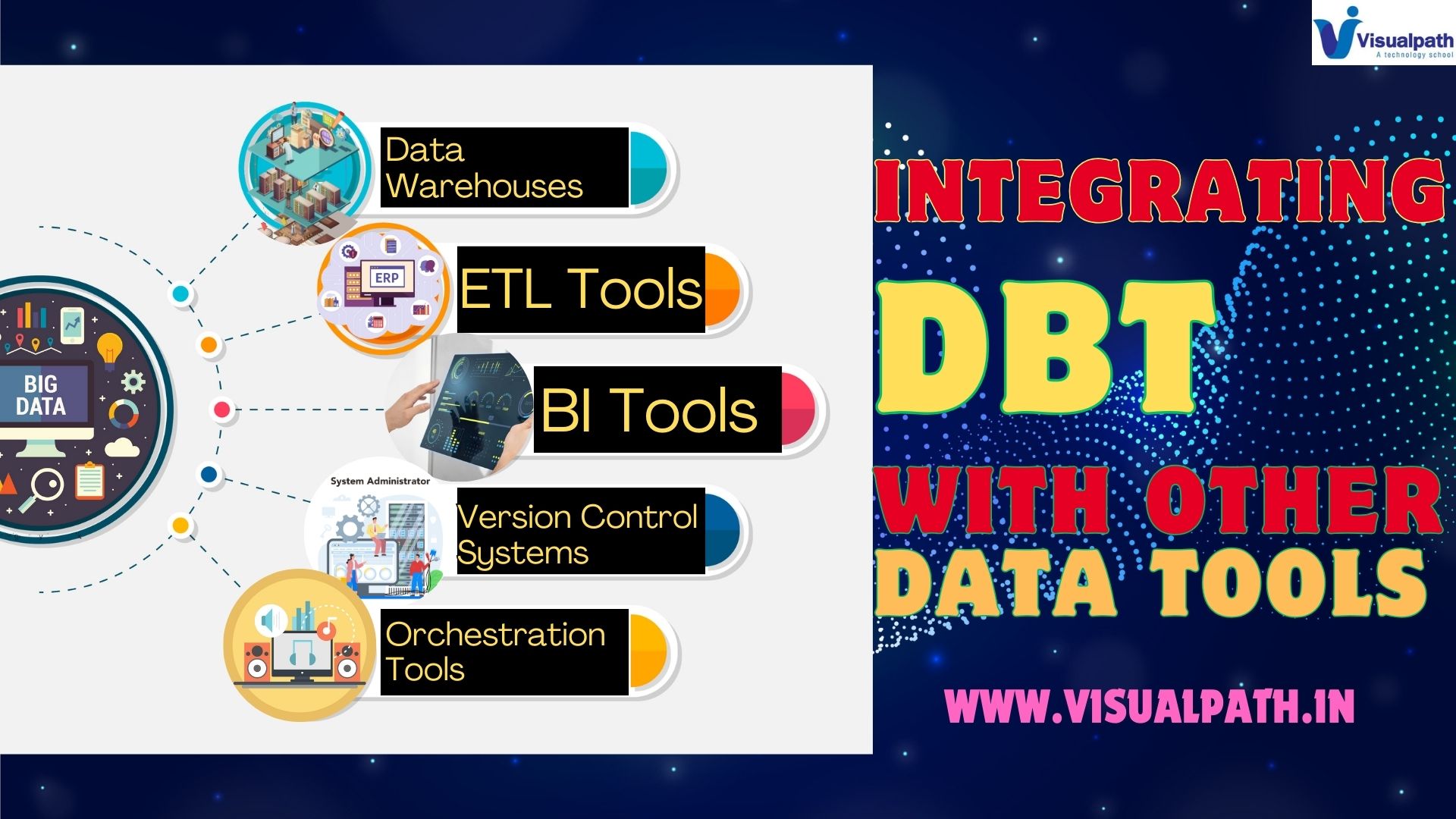
    1. DBT and Data Warehouses

    Integration with Snowflake, BigQuery, and Redshift:

    • DBT connects effortlessly with leading cloud data warehouses like Snowflake, Google BigQuery, and Amazon Redshift.
    • By configuring connection settings, users can execute SQL models directly in the data warehouse, ensuring high performance and scalability.

    Best Practices:

    • Always utilize separate environments for development and production in your data warehouse to minimize risks and ensure data integrity. Data Build Tool Integration

    2. DBT and ETL Tools

    Pairing with Fivetran and Stitch:

    • ETL tools like Fivetran and Stitch handle data extraction and loading, making them ideal partners for DBT. DBT with Fivetran ETL
    • Once data is loaded into the warehouse, DBT takes over for transformation, offering a clear division of tasks.

    Automation Strategy:

    • Use scheduling tools like Airflow or DBT Cloud’s built-in scheduler to automate the transformation process after data loading, ensuring timely and up-to-date transformations.

    3. DBT and BI Tools

    Integration with Looker and Tableau:

    • DBT can streamline the data modeling layer, making it easier to create consistent and reusable data models.
    • Exposing these models to BI tools like Looker and Tableau ensures that analysts are using the same, well-defined data sets. Data Build Tool Training

    Best Practices:

    • Document your models within DBT and maintain version control to avoid discrepancies when reports are generated in BI tools.

    4. DBT and Version Control Systems

    Using Git with DBT:

    • Version control is crucial for collaborative projects. DBT integrates seamlessly with Git, enabling teams to track changes, perform code reviews, and revert to previous states if necessary. DBT Online Training

    Workflow Tip:

    • Implement a branching strategy where each new feature or fix is developed in an isolated branch, ensuring stable main branches and easier collaboration.

    5. DBT and Orchestration Tools

    Integrating with Apache Airflow:

    • DBT works well with Airflow for orchestrating complex data pipelines. By triggering DBT runs as tasks within Airflow DAGs, users can integrate data extraction, loading, and transformation into a single workflow.

    Implementation Tip:

    • Use Airflow’s dependency management features to ensure that DBT runs only when upstream tasks have successfully completed, preventing errors and ensuring data consistency.

    6. DBT and Monitoring Tools

    Incorporating DataDog and PagerDuty:

    • For production-level DBT deployments, integrating with monitoring tools like DataDog and alerting systems like PagerDuty helps track pipeline health and detect anomalies. DataDog DBT Monitoring

    Best Practices:

    • Set up alerts for long-running models or failed tests, enabling proactive monitoring and quick resolution of issues.

    Conclusion

    Integrating DBT with other data tools enhances its capabilities and allows for the creation of robust, end-to-end data pipelines. By connecting with data warehouses, ETL tools, BI platforms, and monitoring systems, DBT transforms into a powerhouse for data management and analytics. Following best practices for each integration ensures a smooth and efficient workflow, enabling data teams to focus on insights rather than operational challenges.

    Visualpath is the Leading and Best Institute for learning in Hyderabad. We provide Data Build Tool (dbt) Online Training. You will get the best course at an affordable cost.

    What’s app: https://www.whatsapp.com/catalog/919989971070/

    Visit: https://visualpath.in/dbt-online-training-course-in-hyderabad.html

  • How to Master DBT (Data Build Tool) for Advanced Data Transformations

    How to Master DBT (Data Build Tool) for Advanced Data Transformations

    Introduction

    Data Build Tool (DBT) has become a crucial asset for modern data teams, empowering users to transform raw data into valuable insights. As data complexity increases, mastering DBT for advanced data transformations is essential for data engineers and analysts alike. This guide will explore how to level up your DBT skills, emphasizing the key features and strategies that will allow you to efficiently handle complex data transformation tasks. DBT Online Training

    1. Understanding the DBT Workflow

    DBT follows a simple but powerful workflow that transforms raw data into structured, clean datasets ready for analysis.

    Extract-Load-Transform (ELT) Architecture:

    • DBT operates under the ELT framework, making it easier to manage data transformations directly within your database.
    • This is a significant upgrade from traditional ETL workflows, as DBT allows users to handle massive data transformations without needing external storage or specialized ETL tools.

    Version Control and Collaboration:

    2. Building Advanced Data Models with DBT

    Advanced DBT users will frequently rely on data models to create reusable, flexible transformations.

    Modular SQL:

    • DBT allows you to break down complex SQL queries into reusable parts, making your transformations easier to manage and maintain.
    • This modular approach is particularly useful for large datasets with frequent updates, as it allows you to tweak portions of your queries without impacting the entire workflow.

    Custom Macros:

    • One of DBT’s more advanced features, macros enable users to build functions that can be reused across models. DBT Macros for Data Modeling
    • By mastering Jinja a templating language that integrates with SQL you can create more dynamic and flexible queries. This reduces repetitive tasks and simplifies complex operations.

    3. Using DBT for Testing and Documentation

    Effective data transformation is about more than just writing queries. It’s about ensuring that the data is reliable and that future users understand what’s happening under the hood.

    Testing Data Quality:

    • DBT’s built-in testing features are essential for advanced users, allowing them to write tests that ensure the validity of their transformed data.
    • By writing tests for unique constraints, relationships, and non-null checks, you guarantee data integrity throughout the pipeline.

    Automated Documentation:

    • As your DBT project grows, so does the need for comprehensive documentation. DBT Training in Hyderabad
    • DBT automatically generates detailed documentation of your models, tests, and sources, making it easy to track changes and collaborate with other team members.
    • Mastering the art of documentation in DBT is a crucial step in becoming proficient at handling advanced data transformations.

    4. Scaling DBT for Complex Transformations

    As your DBT projects become more advanced, scaling becomes critical.

    Parallelism and Incremental Models:

    DBT allows you to run multiple models in parallel, dramatically speeding up the transformation process. ELT Pipeline optimization

    Incremental models, on the other hand, enable you to only process new or updated data, making your workflows more efficient and scalable for large datasets.

    Orchestrating DBT Runs:

    • For large data pipelines, orchestrating DBT jobs using tools like Airflow or Prefect can be a game changer.
    • By scheduling and monitoring DBT runs, you ensure that transformations are executed in the right order and on time, even across multiple teams and departments.

    Conclusion

    Mastering DBT for advanced data transformations requires a solid understanding of its workflow, modular architecture, and testing capabilities. By leveraging DBT’s advanced features such as custom macros, automated documentation, and parallel processing, you can efficiently scale your data transformation efforts. Whether you’re a data engineer or an analyst, honing these skills will make you a powerful asset in managing modern data pipelines.

    Visualpath is the Leading and Best Institute for learning in Hyderabad. We provide Data Build Tool (DBT) Online Course.You will get the best course at an affordable cost.

    What’s app: https://www.whatsapp.com/catalog/919989971070/

    Visit: https://visualpath.in/dbt-online-training-course-in-hyderabad.html

  • Where to Start with DBT: Tips for New Users

    Where to Start with DBT: Tips for New Users

    Introduction

    Starting with Data Build Tool (DBT) can be both exciting and overwhelming for new users. DBT has rapidly become a go-to solution for data transformation in modern data stacks, offering powerful tools to transform raw data into actionable insights. Whether you’re a data analyst or an engineer, knowing where to begin is key to making the most of DBT. This article provides a step-by-step guide to help you get started with DBT, offering essential tips that will set you on the right path. DBT Online Training

    Understand the Basics of DBT

    • Before diving in, it’s crucial to understand what DBT is and how it fits into your data stack.
    • DBT allows you to transform data within your warehouse using simple SQL queries.
    • It operates on the principle of “transforming data where it lives,” meaning it doesn’t move data but enhances it where it is stored.
    • Familiarize yourself with DBT’s core concepts, such as models, seeds, and snapshots, to build a strong foundation.

    Set Up Your DBT Environment

    • The next step is setting up your DBT environment.
    • Start by installing DBT Core, the command-line tool, or consider using DBT Cloud for a more user-friendly experience.
    • DBT integrates with popular data warehouses like Snowflake, Big Query, and Redshift, so ensure you have access to one of these platforms.
    • Once installed, initialize a new project using the dbt init (A tool to create dbt projects for consulting) command, and you’re ready to go.

    Organize Your DBT Project Structure

    • A well-organized project structure is essential for maintaining scalability and ease of use.
    • DBT projects are typically divided into folders like models, seeds, snapshots, and macros. Data Build Tool (dbt) Online Training
    • Start by creating a logical hierarchy within the models folder, breaking down your transformations by business domain or functional area.
    • This structure will help you manage complexity as your project grows.

    Start Writing Your First Models

    • With your environment and project structure in place, it’s time to write your first DBT model.
    • A model in DBT is essentially a SQL file that transforms raw data into a desired state. Start simple—transform a single table or create a view.
    • As you become more comfortable, you can create more complex models, combining multiple sources and applying sophisticated transformations.

    Leverage Version Control

    • One of DBT’s strengths is its integration with version control systems like Git. From the outset, use Git to manage your DBT projects.
    • This practice not only ensures you have a backup of your work but also allows for collaboration with other team members. DBT for Data Analysts
    • Commit your changes regularly and make use of branches to manage different versions of your models.

    Use Documentation and Testing Features

    • DBT’s built-in documentation and testing features are invaluable for maintaining data quality. SQL Data Modelling Tips
    • Make it a habit to document your models using YAML files, and implement tests to validate the correctness of your transformations.
    • This practice will help you catch errors early and ensure your data is reliable.

    Conclusion

    Starting with DBT doesn’t have to be daunting. By understanding the basics, setting up your environment, organizing your project, writing your first models, leveraging version control, and using documentation and testing features, you’ll be well on your way to mastering DBT. As you continue to explore DBT’s capabilities, these foundational tips will ensure you’re building a robust and scalable data transformation process. Happy transforming!

    Visualpath is the Leading and Best Institute for learning in Hyderabad. We provide Data Build Tool Training Online Course you will get the best course at an affordable cost.

    What’s app: https://www.whatsapp.com/catalog/919989971070/

    Visit: https://visualpath.in/dbt-online-training-course-in-hyderabad.html

  • What is DBT (Data Build Tool) in Data Engineering?

    What is DBT (Data Build Tool) in Data Engineering?

    Introduction

    DBT Training in Hyderabad, DBT has rapidly become a cornerstone in modern data engineering practices. It simplifies the process of transforming raw data into actionable insights by providing an intuitive, SQL-based framework. As organizations continue to generate vast amounts of data, DBT enables data teams to efficiently manage and transform this data, ensuring that it is both accurate and accessible. DBT Online Training

    Key Features of DBT

    SQL-Centric Framework

    • Ease of Use: DBT allows data analysts and engineers to write transformations using SQL, a language they are already familiar with. This reduces the learning curve and increases productivity.
    • Modularity: SQL queries can be organized into reusable, modular scripts, making it easier to manage and maintain transformations.

    Version Control and Collaboration

    • Git Integration: DBT integrates seamlessly with Git, enabling version control for all data transformations. This allows teams to collaborate effectively, track changes, and ensure that transformations are reproducible.
    • Documentation: Automatically generates documentation for your data models, providing a clear understanding of data lineage and transformations.

    Data Quality and Testing

    • Automated Testing: DBT supports automated testing of data transformations. This ensures that data is accurate and meets specified quality standards before it reaches end-users. DBT Training in Ameerpet
    • Assertions and Validations: Users can define data quality checks and validation rules, catching errors early in the data pipeline.

    Scalability and Performance

    • Incremental Models: DBT supports incremental models, allowing only new or changed data to be processed. This improves performance and reduces the load on data warehouses.
    • Optimization: Transforms data in a way that leverages the processing power of modern data warehouses, such as Snowflake, Big Query, and Redshift, resulting in faster query execution.

    Extensibility

    • Custom Macros: DBT allows the creation of custom macros to extend its functionality, enabling users to tailor the tool to their specific needs.
    • Community and Plugins: A vibrant community and a rich ecosystem of plugins and integrations enhance DBT’s capabilities and provide support.

    Use Cases of DBT

    Data Warehousing

    • Transformations: Simplifies the process of transforming raw data into structured formats suitable for analysis.
    • ETL Processes: Streamlines ETL (Extract, Transform, Load) processes, making them more efficient and manageable.

    Business Intelligence (BI)

    • Data Preparation: Prepares data for BI tools like Looker, Tableau, and Power BI, ensuring that reports and dashboards are based on accurate and well-structured data.
    • Reporting: Automates the creation of reports, reducing the manual effort required and ensuring consistency.

    Conclusion

    DBT has revolutionized data engineering by providing a powerful, SQL-based framework for transforming data. Its focus on version control, data quality, and performance makes it an indispensable tool for data teams. By adopting DBT, organizations can ensure that their data pipelines are efficient, reliable, and scalable, ultimately driving better decision-making and business outcomes.

    Visualpath is the Leading and Best Institute for learning in Hyderabad. We provide DBT Online Training in Hyderabad you will get the best course at an affordable cost.

    What’s App: https://www.whatsapp.com/catalog/919989971070/

    Visit: https://visualpath.in/dbt-online-training-course-in-hyderabad.html

  • The Power of Data Build Tool (DBT)

    The Power of Data Build Tool (DBT)

    Introduction

    Data Build Tool (DBT) in today’s data-driven world, the ability to efficiently manage and transform data is crucial for businesses. Data Build Tool (DBT) has emerged as a powerful solution for data transformation, offering a modern approach to data engineering and analytics. Designed to work seamlessly with data warehouses, DBT enables data analysts and engineers to transform raw data into meaningful insights, streamlining the data transformation process and enhancing data quality. DBT (Data Build Tool) Course Hyderabad 

    Transforming Data with Ease

    • DBT simplifies the data transformation process by using SQL to define transformations.
    • Unlike traditional ETL (Extract, Transform, Load) tools that require complex coding, DBT focuses on using SQL, a language familiar to most data professionals.
    • This SQL-centric approach makes it accessible and easy to use, reducing the learning curve and allowing teams to quickly adopt and implement DBT in their workflows.

    Collaboration and Version Control

    • One of the standout features of DBT is its emphasis on collaboration and version control. DBT Online Training
    • By integrating with Git, DBT allows teams to version control their transformation code, ensuring that changes are tracked and documented.
    • This integration facilitates collaborative development, enabling multiple team members to work on data transformations simultaneously without conflicts.
    • The version control capability also ensures that previous versions of the code are always accessible, making it easy to roll back changes if needed.

    Automated Testing and Documentation

    • Maintaining data quality is a top priority for any organization. DBT addresses this by providing automated testing capabilities.
    • Users can define tests to validate data transformations, ensuring that the output is accurate and reliable.
    • These tests run automatically during the transformation process, catching errors early and preventing faulty data from reaching production systems.
    • Additionally, DBT automatically generates documentation for Data transformations. This documentation includes detailed information about the transformations, dependencies, and lineage, providing a clear understanding of how data flows through the system.
    • This transparency enhances data governance and helps teams understand and trust their data.

    Scalability and Performance

    • DBT is designed to scale with your data needs. It leverages the power of modern data warehouses like Snowflake, Big Query, and Redshift, executing transformations directly within these platforms.
    • By pushing computation to the data warehouse, DBT ensures that transformations are performed efficiently, even with large datasets.
    • This approach optimizes performance and reduces the load on local systems.

    The Data Build Tool (DBT) is revolutionizing the way organizations handle data transformation. Its simplicity, emphasis on collaboration, automated testing, and scalability make it an invaluable tool for data professionals. By leveraging DBT, businesses can transform their raw data into valuable insights with greater efficiency and accuracy. As data continues to grow in importance, DBT stands out as a key enabler of data-driven decision-making and innovation.

    Visualpath is the Leading and Best Institute for learning in Hyderabad. We provide DBT (Data Build Tool) Course you will get the best course at an affordable cost.

    What’s App: https://www.whatsapp.com/catalog/919989971070/

    Visit:  https://visualpath.in/dbt-online-training-course-in-hyderabad.html

  • What is DBT (Data Build Tool)? A Comprehensive Guide

    What is DBT (Data Build Tool)? A Comprehensive Guide

    Introduction

    DBT (Data Build Tool) is a powerful transformation tool for data analysts and engineers, enabling users to transform data in their warehouses more efficiently. It has gained popularity among modern data teams due to its simplicity and effectiveness. By leveraging DBT, teams can streamline their data transformation processes and ensure data quality across their projects.DBT Training in Hyderabad 

    Key Features of DBT:

    • SQL-Based Transformations: DBT uses SQL for data transformations, making it accessible to many data professionals.
    • Version Control: DBT integrates seamlessly with version control systems like Git, ensuring traceability and collaboration.
    • Modularity: Enables the creation of modular SQL code, promoting reusability and readability.
    • Data Testing: Built-in testing framework allows users to test data transformations and ensure data quality.

    How DBT Works:

    • Data Models: Define your data transformations using SQL in the form of models.
    • Execution: DBT compiles these models into raw SQL queries and executes them against your data warehouse.

    Documentation: Automatically generates documentation from your SQL code, making it easier to understand and share. DBT (Data Build Tool) Course Hyderabad 

    Advantages of Using DBT:

    • Simplicity: Easy to learn and use, especially for those already familiar with SQL.
    • Scalability: Efficiently handles large datasets and complex transformations.
    • Transparency: Clear, auditable code makes it easy to track changes and debug issues.
    • Integration: Works well with popular data warehouses like Snowflake, Big Query, and Redshift.

    DBT Use Cases:

    • ETL Processes: Streamlines Extract, Transform, Load (ETL) workflows by focusing on the “Transform” part.
    • Data Warehousing: Ideal for building and managing data warehouses.
    • Data Analytics: Enhances data analytics projects by ensuring clean and well-transformed data.
    • Business Intelligence: Improves BI reporting by providing accurate and reliable data.

    Getting Started with DBT:

    • Installation: Easy to install using pip (Python’s package installer).
    • Initial Setup: Configure your DBT project with a profile and connection to your data warehouse.

    Creating Models: Start by writing SQL models and running them with simple DBT commands. DBT Training Institute in Hyderabad 

    Best Practices for DBT:

    • Modular Code: Break down transformations into small, reusable models.
    • Documentation: Regularly update documentation for clarity and knowledge sharing.
    • Testing: Implement robust data tests to catch issues early.
    • Version Control: Use version control for better collaboration and tracking changes.

    Conclusion

    In conclusion, DBT revolutionizes data transformation workflows, making them more efficient and manageable. Its SQL-based approach and robust features make it a go-to tool for modern data teams. Embrace DBT to unlock the full potential of your data and drive better business outcomes.

    Visualpath is the Leading and Best Institute for learning in Hyderabad. We provide DBT Online Training you will get the best course at an affordable cost.

    Call on – +91-9989971070

    What’s App: https://www.whatsapp.com/catalog/919989971070/

    Visit:  https://visualpath.in/dbt-online-training-course-in-hyderabad.html