Tag: Data Build Tool Training in Hyderabad

  • What Are the Benefits of Learning DBT for Data Analysts?

    What Are the Benefits of Learning DBT for Data Analysts?

    Data analysts today are increasingly turning to modern tools that can streamline workflows and improve data processing. One such tool that has been gaining significant traction in recent years is DBT (Data Build Tool). Known for its simplicity and effectiveness, DBT is revolutionising how data professionals approach data transformation tasks. But what are the specific benefits of learning DBT for data analysts? In this article, we’ll explore how DBT can enhance your data analysis capabilities, making it a crucial tool in the modern data ecosystem.

    1. Simplifies Data Transformation         

    The primary function of DBT is to manage data transformation. Data analysts often deal with large datasets that require cleaning, filtering, and transforming into a usable format for analysis. Traditionally, this required writing complex SQL queries or relying on ETL tools that might be cumbersome. DBT simplifies this process by providing a framework to write clear, version-controlled SQL queries that transform raw data into analytics-ready models.

    For data analysts, this means that the entire transformation process is made more accessible and less error-prone. Instead of getting bogged down in convoluted workflows, analysts can focus on writing clean, reusable SQL code and ensuring that the data pipeline is running smoothly.

    2. Improves Collaboration with Data Engineers

    Data analytics is rarely done in isolation. Collaboration between data analysts and data engineers is critical, especially in larger teams or complex data environments. DBT promotes collaboration by allowing data analysts to work directly with the data models without needing deep knowledge of the entire data infrastructure. Data Build Tool Training

    With DBT, data analysts can work with the data models that have been transformed and processed into the required structure. They can then build on top of these models to generate reports, dashboards, and analyses. DBT’s version control system ensures that analysts and engineers can collaborate without worrying about conflicts in code or data models. This collaboration results in a more efficient workflow and faster turnaround times.

    3. Ensures Data Quality and Consistency

    For any data-driven decision-making process, consistency and accuracy are essential. Data analysts need to trust the data they are working with, and DBT plays a crucial role in ensuring that. DBT enables analysts to set up tests within their transformation models to check for data quality issues such as missing values, duplicates, or incorrect formats.

    These tests are automatically run as part of the data transformation pipeline, ensuring that any issues are caught early. This proactive approach helps data analysts work with reliable datasets and reduces the risk of analysis errors. The result is more trustworthy insights and better decision-making.

    4. Supports Automation of Repetitive Tasks

    Data analysts often deal with repetitive tasks such as data cleaning, filtering, and joining tables. Manually performing these tasks every time a new dataset is received can be time-consuming and inefficient. DBT automates these tasks by allowing analysts to define transformations once and run them automatically regularly. DBT Online Training

    With DBT, analysts can create reusable data models that are updated with minimal manual intervention. For example, if new data is added to a data warehouse, DBT can automatically run transformations on this data, ensuring that the dataset is always up-to-date and ready for analysis. This automation saves time and reduces the chances of human error, allowing analysts to focus on more critical analytical tasks.

    5. Enhances Scalability for Growing Data Projects

    As businesses grow, so does the amount of data they generate. Data analysts need tools that can scale with increasing data volumes without compromising performance or accuracy. DBT is designed to handle scalability with ease. Its modular approach to data transformations allows analysts to add new models, tables, and tests as data projects expand.

    DBT also integrates seamlessly with cloud-based data warehouses like Google BigQuery, Snowflake, and Redshift, making it easy to scale data transformations as your data infrastructure grows. This scalability ensures that as your data projects expand, you can continue using the same tools without facing performance bottlenecks or needing to switch platforms.

    6. Facilitates Clear Documentation and Version Control

    Documentation is often a pain point for data analysts, especially in large teams. It’s important to track the logic behind each transformation and model to ensure consistency and reproducibility. DBT makes this task easier by automatically generating clear and accessible documentation for all the transformations and models within a project. DBT Classes Online

    Additionally, DBT’s built-in version control system allows analysts to track changes over time. If an issue arises, analysts can easily revert to a previous version or examine the change history to identify what went wrong. This transparency and version control are essential for maintaining a well-organised and efficient data workflow.

    Conclusion

    DBT is a powerful tool that offers numerous benefits for data analysts, from simplifying complex data transformation processes to improving collaboration with data engineers. Its focus on automation, data quality, and scalability makes it an invaluable asset for data teams of all sizes. Learning DBT not only enhances your technical skill set but also streamlines your workflows, allowing you to deliver higher-quality insights with greater efficiency. For data analysts looking to stay ahead in the fast-evolving data landscape, mastering DBT is a step in the right direction.

    Trending Courses: Microsoft Fabric, Gcp Ai, Salesforce Data Cloud

  • How to Get Started with Data Build Tool for Beginners?

    How to Get Started with Data Build Tool for Beginners?

    Data Build Tool (DBT) has emerged as a transformative solution for data professionals seeking to streamline the process of transforming raw data into actionable insights. By focusing on the transformation phase of data processing, DBT empowers users to create modular, testable, and maintainable data workflows using simple SQL queries. This guide introduces beginners to the fundamentals of DBT, providing a clear pathway to harness its capabilities effectively. Data Build Tool Training

    What Is DBT?  

    DBT is an open-source command-line tool that enables data analysts and engineers to transform data within a data warehouse. Unlike traditional ETL (Extract, Transform, Load) processes, DBT operates on the ELT (Extract, Load, Transform) principle, where data is first loaded into the warehouse and then transformed using SQL. This approach allows for more efficient and scalable data workflows.

    Key features of DBT include:

    • Modular SQL Models: Users can define transformations as SQL files, promoting reusability and clarity.
    • Version Control Integration: DBT integrates seamlessly with version control systems, facilitating collaborative development.
    • Automated Testing: Built-in testing capabilities ensure data quality and integrity.
    • Documentation Generation: DBT automatically generates documentation for data models, enhancing transparency and understanding.

    Why Should Beginners Use DBT?

    For those new to data transformation, DBT offers several advantages:

    • Simplicity: With a strong foundation in SQL, users can quickly adapt to DBT without the need for extensive programming knowledge.
    • Efficiency: DBT automates repetitive tasks, reducing manual effort and the potential for errors.
    • Collaboration: Its integration with version control systems fosters teamwork and version tracking.
    • Scalability: DBT’s modular approach makes it suitable for projects of varying sizes and complexities.

    Getting Started with DBT

    Embarking on your DBT journey involves several key steps:

    1. Familiarise Yourself with SQL

    Since DBT relies heavily on SQL for defining transformations, a solid understanding of SQL is essential. Focus on concepts such as SELECT statements, JOIN operations, aggregations, and filtering. DBT Online Training

    2. Set Up Your Environment

    Begin by installing DBT on your local machine. The installation process is straightforward and can be completed using package managers like pip. Once installed, configure DBT to connect to your data warehouse by setting up a profiles.yml file with the necessary connection details.

    3. Create a New DBT Project

    Initialize a new DBT project using the command-line interface. This will generate the necessary directory structure, including folders for models, tests, and configurations.

    4. Define Your First Model

    Within the models directory, create a new SQL file that defines a transformation. For example, you might write a query to clean and aggregate sales data. DBT will treat this SQL file as a model and execute it to create a corresponding table or view in the data warehouse. DBT Classes Online

    5. Run Your Models

    Execute your DBT models using the dbt run command. DBT will process the SQL files in the correct order, applying the transformations to the data warehouse.

    6. Implement Testing and Documentation

    Enhance your models by adding tests to validate data quality and generating documentation to describe the data models. DBT provides built-in functionalities to support these practices.

    Best Practices for DBT Projects

    To maximize the effectiveness of DBT, consider the following best practices:

    • Organize Models Logically: Structure your models in a way that reflects the business logic and data flow.
    • Use Version Control: Integrate your DBT project with a version control system to track changes and collaborate with team members.
    • Write Clear Documentation: Provide comprehensive descriptions for each model to ensure clarity for current and future users.
    • Automate Testing: Implement tests to catch data issues early and maintain high data quality standards.

    Conclusion

    Data Build Tool offers a powerful yet accessible platform for transforming data within a warehouse. By leveraging SQL and adhering to best practices, beginners can effectively utilize DBT to build robust and maintainable data workflows. As you gain experience, you can explore advanced features such as macros, hooks, and custom materializations to further enhance your data transformation processes.

    Trending Courses: Microsoft Fabric, Gcp Ai, Salesforce Data Cloud

  • Data Build Tool (DBT) Key Features You Need to Know, SQL based

    Data Build Tool (DBT) Key Features You Need to Know, SQL based

    Data Build Tool (DBT) has emerged as a game-changer. DBT is an open-source tool that enables data analysts and engineers to transform data in their warehouse more effectively. With its unique blend of simplicity and power, DBT is now widely used in modern data stacks across startups and enterprises alike. But what exactly makes it stand out? Let’s dive into the key features of DBT that make it so valuable, especially for students and professionals aiming to build strong data skills.

    1. SQL-First Approach  

    One of DBT’s most attractive features is that it’s entirely SQL-based. Unlike traditional ETL tools that require learning complex scripting languages, DBT allows users to transform data using just SQL. This lowers the learning curve significantly for students and analysts who are already familiar with SQL, making it accessible and practical for real-world use.

    2. Modular Data Modeling

    DBT encourages building modular models, meaning you can break down complex transformations into smaller, reusable components. Each model is a SQL file that represents a select statement. These models are stored in a directory structure, making the project organised, easy to navigate, and scalable. This approach is very similar to software development, which is why DBT is often referred to as the “T” (Transform) in the modern ELT pipeline.

    3. Version Control with Git

    DBT projects can be version controlled using Git, allowing teams to collaborate, track changes, and roll back when needed. This is crucial for maintaining clean, reliable, and auditable transformation logic. Students learning DBT also gain experience with Git workflows, which are standard in most tech and data roles.

    4. Automated Testing for Data Quality

    Maintaining data quality is one of the most critical tasks in any data project. DBT comes with built-in testing features that let you define assertions on your data. You can check for uniqueness, null values, relationships between tables, and more. These tests help catch data issues early, ensuring that your transformations produce trustworthy results. Data Build Tool Training

    5. Data Lineage and Documentation

    DBT automatically generates documentation for your models, tests, and sources. It also provides a visual representation of your data lineage, showing how data flows between models. This helps users understand dependencies and the overall structure of the data project, which is extremely valuable when working in teams or onboarding new users.

    6. Incremental Loads

    Processing massive datasets can be time-consuming and costly. DBT supports incremental models, which only update new or modified data instead of reprocessing the entire dataset. This makes your data pipelines faster and more efficient, especially important for large-scale production environments. DBT Online Training

    7. Seamless Integration with Cloud Data Warehouses

    DBT integrates with leading cloud data platforms like Snowflake, BigQuery, Redshift, and Databricks. It runs your SQL transformations directly in these warehouses, leveraging their scalability and performance. This allows teams to build robust pipelines without managing separate infrastructure.

    8. Active Open-Source Community

    DBT is open-source and supported by a vibrant community of data professionals. There are tons of tutorials, plugins, Slack groups, and community events where users can learn, share, and collaborate. For students and beginners, this means there’s always help and inspiration just a few clicks away.

    Conclusion

    DBT has redefined how we think about data transformation by merging the best practices of software engineering with the needs of modern analytics. With its SQL-first approach, built-in testing, version control, and powerful integrations, DBT empowers data teams to build reliable, scalable, and maintainable data pipelines. For students entering the world of data, learning DBT offers not just technical skills, but also exposure to professional workflows and real-world practices that are in high demand.

    Trending Courses: Microsoft Fabric, Gcp Ai, Unqork Training

  • What Are the Benefits of Data Build Tool (DBT) Cloud?

    What Are the Benefits of Data Build Tool (DBT) Cloud?

    Data Build Tool (dbt) has revolutionized the way modern data teams manage transformation workflows. While the open-source version of dbt offers powerful functionality for data modeling and transformation, dbt Cloud takes it a step further by providing a managed environment with collaboration, automation, and performance enhancements. In this post, we’ll explore the key benefits of using dbt Cloud and how it supports scalable, reliable data workflows.

    1. Managed Environment with Zero Setup Hassles

    One of the primary advantages of dbt Cloud is that it provides a fully managed infrastructure. Users don’t have to worry about installing, configuring, or maintaining dbt locally or on servers. This saves valuable time for data teams and reduces the need for DevOps involvement. The web-based IDE offers a streamlined experience with everything configured out of the box, so analysts and engineers can focus directly on modeling data. Data Build Tool (DBT) Training

    2. Job Scheduling and Automation                   

    dbt Cloud allows teams to schedule and automate dbt runs directly within the platform. You can define jobs that run your models at specific times or trigger them after upstream processes complete. This helps ensure that data pipelines are always up to date, and it eliminates the need to integrate external scheduling tools like Airflow or cron jobs. Notifications and logging are built in, providing visibility into job performance and failures.

    3. Version Control Integration (Git)

    dbt Cloud seamlessly integrates with GitHub, GitLab, and Bitbucket, enabling a version-controlled workflow. Every change made in the dbt Cloud IDE can be tied to a Git commit, pull request, and review process. This encourages best practices like code reviews, documentation, and testing before deploying changes to production—bringing software engineering discipline into analytics work.

    4. Collaboration and Team Features

    For teams, dbt Cloud provides robust collaboration features, including user management, environment configuration, and access control. You can assign roles and permissions, manage development and production environments, and collaborate efficiently across different branches. The shared IDE environment reduces context switching and helps onboard new team members faster.  DBT Online Training

    5. Advanced Observability and Logging

    dbt Cloud offers detailed logs, lineage graphs, and run histories, making it easier to monitor and debug transformations. Users can trace the impact of changes across models and datasets, making root cause analysis more efficient. With visual documentation and data lineage, teams can better understand dependencies and reduce the risk of breaking downstream systems.

    6. Integrated Testing and CI/CD Workflows

    With dbt Cloud’s support for Continuous Integration and continuous deployment (CI/CD), teams can set up checks to automatically run tests on each pull request. This ensures data quality and reduces the chances of deploying broken code to production. Integrations with Git providers and alerting systems make this workflow seamless and reliable. DBTTraining

    7. Enterprise-Grade Support and SLAs

    For organizations operating at scale, dbt Cloud offers enterprise features such as single sign-on (SSO), dedicated support, SLAs, and audit logs. These are critical for compliance and operational readiness in larger data teams. Companies that rely on dbt for business-critical workflows benefit from the peace of mind that comes with professional support.

    Conclusion

    While the open-source version of dbt is powerful, dbt Cloud significantly enhances the user experience through automation, collaboration, and observability. It simplifies the development workflow, enforces best practices, and supports teams with the tools they need to build reliable, scalable data models. For teams looking to take their analytics engineering practice to the next level, dbt Cloud is a compelling solution that turns dbt into a fully managed, production-ready platform.

    Trending Courses: Microsoft Fabric, Gcp Ai, Unqork Training

  • What Is dbt and Why Should You Use It? – SQL

    What Is dbt and Why Should You Use It? – SQL

    The Data Build Tool (DBT) has rapidly become a favourite among modern data teams. At its core, dbt is a transformation tool that enables data analysts and engineers to transform raw data into clean, actionable datasets using SQL. What sets dbt apart is its simplicity, scalability, and its ability to integrate seamlessly into modern data stacks.

    As organizations shift from traditional ETL (Extract, Transform, Load) processes to ELT (Extract, Load, Transform), dbt has taken center stage. In the ELT model, raw data is first loaded into a data warehouse, and the transformation happens afterward — which is where dbt shines.

    So, What Exactly Is dbt?

    dbt is an open-source command-line tool (with a cloud version available) that enables you to:

    • Write modular SQL code for data transformation
    • Test data models with built-in data quality checks
    • Version control data models using Git
    • Document your transformations for better transparency
    • Build data pipelines that are easy to understand and maintain

    Unlike other ETL tools that require proprietary scripting languages or complex UI configurations, dbt relies solely on SQL. If you can write SQL, you can use dbt. This approach empowers data analysts — not just engineers — to take ownership of the transformation layer.

    Why Should You Use dbt?

    Here are a few reasons why dbt has become essential in modern analytics engineering: DBT Online Training

    1. Modular and Reusable Code

    dbt promotes code modularity. Instead of writing one large SQL script, you create smaller, manageable SQL models that build on top of each other. This makes your transformations more organized, easier to debug, and reusable.

    2. Version Control with Git

    Since dbt projects are just code (SQL + YAML), they can be easily integrated into Git. This means your data transformations can be versioned, reviewed, and deployed like software — a huge win for collaboration and governance. DBT Classes Online

    3. Built-in Testing and Validation

    With dbt, you can define tests (e.g., “this column should never be null” or “values must be unique”) to automatically validate data quality. This minimizes the chances of broken dashboards and bad business decisions due to bad data.

    4. Automated Documentation

    dbt auto-generates interactive documentation of your data models, including lineage graphs that show how data flows across models. This helps teams quickly understand the structure of your data pipeline.

    5. Scalability and Integration

    dbt works well with all major cloud data warehouses like Snowflake, BigQuery, Redshift, and Databricks. Whether you’re a startup or an enterprise, dbt can scale with you. DBT Training

    The Rise of Analytics Engineering

    dbt has played a pivotal role in the rise of analytics engineering — a discipline that bridges the gap between data engineering and data analysis. Analytics engineers use dbt to build robust data models that serve as a single source of truth for dashboards, machine learning, and business intelligence tools.

    Instead of waiting on engineers to build complex pipelines, analysts can now take the lead in shaping the data that fuels decision-making. This speeds up delivery, encourages ownership, and improves collaboration across teams.

    Conclusion

    The Data Build Tool (DBT) is more than just another tool in the data ecosystem — it’s a mindset shift. By empowering data professionals to treat data transformation like software development, dbt has democratized data modelling and brought agility, reliability, and transparency to the analytics process.

    Trending Courses: Microsoft Fabric, Gcp Ai, Unqork Training

  • What is DBT (Data Build Tool) and How Does It Work? | SQL

    What is DBT (Data Build Tool) and How Does It Work? | SQL

    Data Build Tool (DBT) is a powerful open-source tool that helps data teams transform and model data effectively within their data warehouse. Unlike traditional ETL (Extract, Transform, Load) tools, DBT focuses on the transformation layer, allowing analysts and engineers to write modular SQL queries to structure raw data efficiently. With the growing demand for streamlined data transformation, many professionals are enrolling in Data Build Tool Training to master its capabilities.

    What is DBT?

    DBT is a command-line tool that enables data teams to transform raw data into meaningful insights. It works within modern cloud-based data warehouses like Snowflake, BigQuery, Redshift, and Databricks. By using DBT, businesses can automate and manage data transformation workflows, ensuring data quality and consistency.

    How Does DBT Work?

    DBT operates by executing SQL-based transformation models within a data warehouse. Here’s a step-by-step breakdown of how DBT works:

    1. Connects to a Data Warehouse – DBT integrates with cloud-based databases where raw data is stored.
    2. Executes SQL Transformations – Users write SQL queries to clean, aggregate, and structure data.
    3. Creates Reusable Models – DBT allows teams to create modular, reusable SQL models for efficient data management.
    4. Automates Data Testing – With built-in testing, DBT ensures data accuracy and consistency.
    5. Generates Documentation – DBT automatically creates data lineage and documentation for better visibility.

    Key Features of DBT

    DBT offers various features that make it a preferred choice for data transformation:

    • SQL-First Approach – Allows users to write transformations using SQL.
    • Version Control – DBT integrates with Git for collaborative workflows.
    • Automated Testing – Ensures data integrity with built-in testing features.
    • Incremental Models – Optimizes processing by updating only changed data.
    • Data Documentation – Generates metadata and lineage for easy reference.

    Why Use DBT for Data Transformation?

    Many companies are shifting to DBT due to its simplicity and efficiency. Here’s why DBT is an excellent choice:

    • Scalability – DBT handles large datasets seamlessly.
    • Time Efficiency – Reduces manual effort with automation.
    • Collaboration – Teams can work together using version-controlled SQL models.
    • Cloud Compatibility – Works with modern cloud-based warehouses.

    Getting Started with DBT

    To start using DBT, follow these steps:

    1. Install DBT – Set up DBT on your system using pip or homebrew.
    2. Configure a Profile – Connect DBT to your data warehouse.
    3. Create SQL Models – Write transformation queries in SQL.
    4. Run DBT Commands – Use dbt run, dbt test, and dbt docs to execute tasks.
    5. Deploy and Monitor – Automate workflows and monitor data changes.

    Importance of DBT Training

    Learning DBT can be highly beneficial for data professionals. Enrolling in DBT Online Training helps individuals understand the tool’s advanced functionalities, improve their SQL skills, and build efficient data pipelines. Data Build Tool Training provides hands-on experience with live projects, ensuring practical learning.

    Conclusion

    DBT has revolutionized the way data teams transform and manage data. Its SQL-first approach, automation capabilities, and scalability make it a must-have tool for modern data professionals. Whether you’re a data analyst, engineer, or BI professional, investing in DBT Training can enhance your career and help you stay ahead in the evolving data landscape.

    Trending Courses: Microsoft Fabric, Gcp Ai, Unqork Training

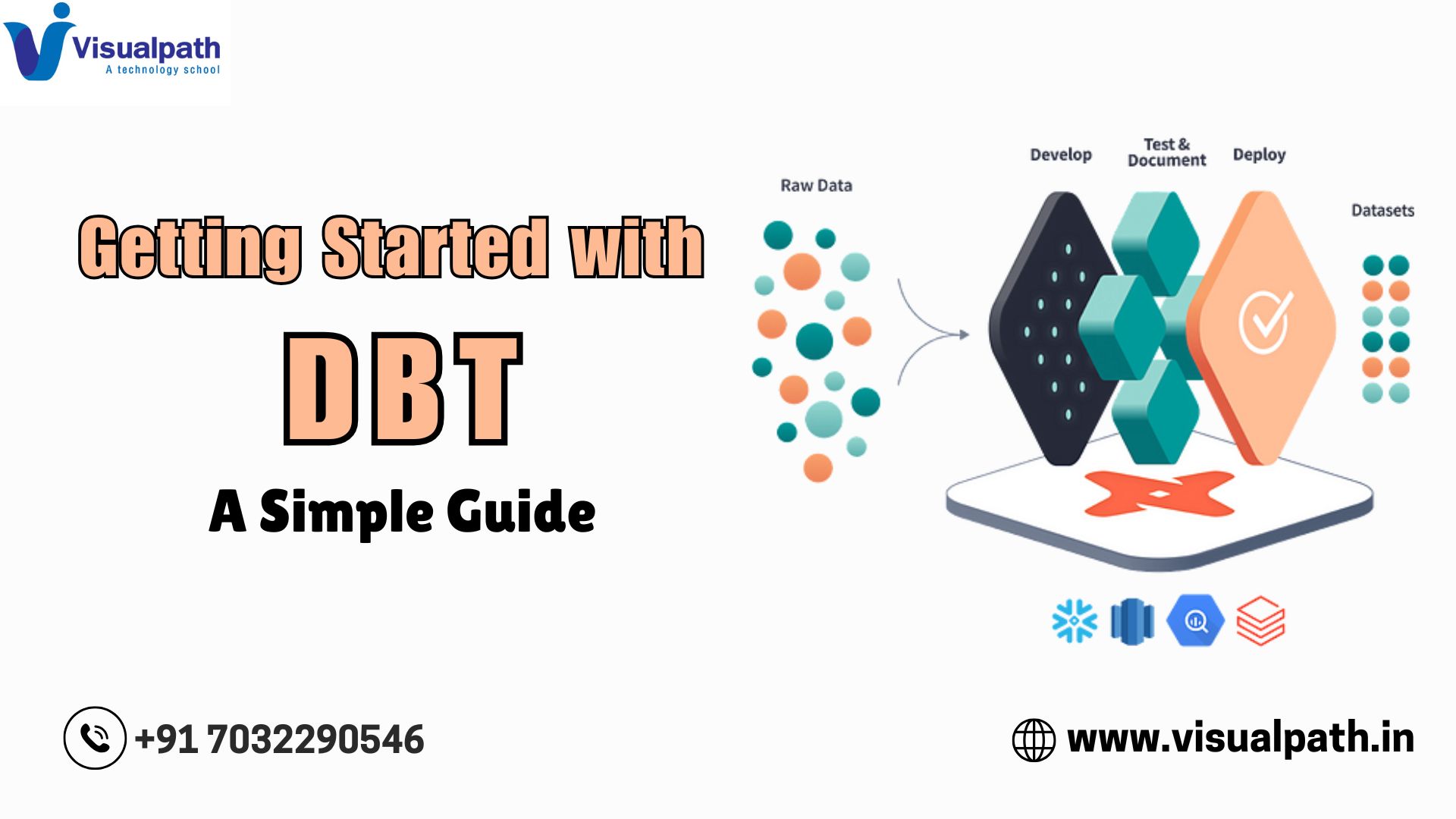
  • Getting Started with Data Build Tool (DBT): A Simple Guide

    Getting Started with Data Build Tool (DBT): A Simple Guide

    Data Build Tool (DBT) has rapidly become a game-changer in the field of data transformation and analytics. Whether you’re a data analyst, data engineer, or a business intelligence professional, understanding DBT can significantly enhance your ability to manage and transform data. In this guide, we’ll take a comprehensive look at how to get started with DBT, including its core features, benefits, and essential training resources.

    What is DBT?           

    DBT stands for Data Build Tool, a powerful open-source data transformation tool designed to work within the data warehouse. Unlike traditional ETL (Extract, Transform, Load) processes, DBT focuses exclusively on the “Transform” stage, assuming that data has already been extracted and loaded into a warehouse. It uses SQL to model, clean, and transform raw data, making it analysis-ready.

    Why Use DBT?

    Organizations of all sizes are increasingly adopting DBT due to its simplicity, flexibility, and efficiency. Here are a few reasons why DBT has gained popularity:

    • Efficient Data Transformation: DBT handles data transformation tasks efficiently, reducing manual effort.
    • Version Control: Its integration with version control tools like Git enables seamless collaboration.
    • Testing and Documentation: DBT has built-in testing and documentation features, ensuring data accuracy.
    • Scalability: It is scalable and can adapt to growing data needs.

    Getting Started with DBT

    To get started with DBT, you need to follow these fundamental steps:

    1. Install DBT: DBT can be installed using package managers like pip for Python users. Follow the official DBT documentation for a step-by-step installation guide.
    2. Set Up a Data Warehouse: DBT supports several popular data warehouses, including Snowflake, BigQuery, and Redshift. Ensure you have the necessary access credentials.
    3. Create a DBT Project: After installation, you can create a new DBT project using the command line. Organize your project’s directory for better efficiency.
    4. Define Models: Write SQL-based models to define your data transformations. Use DBT’s Jinja syntax to make these models dynamic and adaptable.
    5. Run DBT: Use the dbt run command to execute your models and transform data within your warehouse.
    6. Testing and Debugging: Leverage DBT’s testing capabilities to validate data integrity and troubleshoot errors.

    Best Practices for DBT

    To make the most of Data Build Tool Training and DBT as a whole, consider the following best practices:

    • Maintain Documentation: Always document your models to enhance collaboration and understanding.
    • Test Regularly: Incorporate testing into your workflow to ensure data quality.
    • Version Control: Use Git for version control to track changes and maintain project integrity.
    • DBT Training: Explore DBT Online Training courses to deepen your understanding and practical skills.

    Benefits of DBT Training

    Enrolling in DBT Training or DBT Online Training provides structured learning to master DBT’s potential. You’ll learn:

    • Advanced data modeling techniques
    • Writing effective SQL-based transformations
    • Implementing complex testing scenarios
    • Leveraging DBT’s documentation capabilities

    Conclusion

    Data Build Tool has transformed the way organizations handle data transformations, making processes more streamlined and efficient. Whether you’re new to DBT or looking to expand your knowledge through DBT Training or DBT Online Training, understanding the fundamentals covered in this guide is a crucial first step. Start today, and unlock the full potential of DBT in your data projects.

    Trending Courses: Microsoft Fabric, Gcp Ai, Unqork Training

  • Getting Started With DBT (Data Build Tool): Tips And Best Practices

    Getting Started With DBT (Data Build Tool): Tips And Best Practices

    dbt (Data Build Tool) has rapidly become a go-to solution for data teams seeking to streamline their data transformation processes. With its ability to organize, test, and document data models, dbt empowers data analysts and engineers to work more effectively and efficiently. Whether you’re just beginning with dbt or looking to sharpen your skills, this article provides valuable tips and best practices to get the most out of this powerful tool. DBT (Data Build Tool Training)

    Understanding DBT

    At its core, dbt is an open-source command-line tool that helps transform raw data into analytics-ready data sets. It operates on top of existing data warehouses like Snowflake, BigQuery, and Redshift, enabling users to build modular, maintainable SQL-based data transformation workflows. Unlike traditional ETL tools, dbt focuses solely on the ‘T’ (transformation) aspect, simplifying the workflow while promoting collaboration. DBT Online Training

    Why Use dbt?

    • Simplicity: dbt uses simple SQL to define transformations, making it accessible to analysts who already know SQL.
    • Version Control: With Git integration, version control and collaboration become straightforward.
    • Testing and Validation: dbt’s testing features help ensure data accuracy and consistency.
    • Documentation: Automatic documentation generation enables transparency and better team collaboration.

    Getting Started with dbt

    To start using dbt, you need the following prerequisites:

    • A data warehouse (like Snowflake, BigQuery, or Redshift) with necessary credentials. DBT Certification Training Online
    • Basic knowledge of SQL and command-line tools.
    • A GitHub repository for version control.

    Installation and Setup

    1. Install dbt: You can install dbt via pip (pip install dbt-core). Specific adapters like dbt-snowflake or dbt-bigquery should also be installed based on your data warehouse.
    2. Create a New Project: Use the command dbt init <project_name> to set up a new dbt project.
    3. Configure Connection: Update the profiles.yml file with your warehouse credentials to establish a connection.
    4. Model Creation: Organize your transformations in SQL files under the /models directory. Use dbt’s ref() function for dependency management.

    Best Practices for dbt Projects

    • Modularization: Break down complex SQL scripts into smaller, reusable components. DBT Training Courses
    • Naming Conventions: Use consistent and descriptive names for models to maintain clarity.
    • Testing: Implement tests for data validity and integrity using schema.yml files.
    • Documentation: Write meaningful descriptions in the YAML files to document your models.
    • Version Control: Regularly commit and review changes through Git to maintain a clean and trackable project.
    • Deployment: Use CI/CD pipelines for automated deployment and testing.

    Conclusion

    dbt offers a powerful, accessible way to streamline and enhance data transformation workflows. By following best practices like modularization, consistent testing, and proper documentation, teams can maximize the efficiency and accuracy of their data pipelines. As you continue to work with dbt, you’ll find that its flexibility and community support can make a significant impact on your data team’s productivity. Whether you’re just getting started or looking to optimize existing processes, embracing dbt can be a transformative step toward better data practices.

    Trending Courses: Microsoft Fabric, Gcp Ai, Unqork Training

  • What Are the Main Components of the Data Build Tool (DBT)?

    What Are the Main Components of the Data Build Tool (DBT)?

    The Data Build Tool (DBT)has revolutionized the way data teams manage and transform their data. By empowering analysts and engineers to own the transformation process, DBT enables better collaboration and more efficient workflows in modern data stacks. At the heart of DBT are several key components that enable robust data transformations, testing, and documentation. In this article, we will explore these core components and their roles in the DBT ecosystem. DBT Training Courses

    1. DBT Models

    Models are the foundational building blocks of dbt. A model is simply a SQL file that defines a transformation. dbt compiles these models into SQL queries and executes them against your data warehouse, creating materialized views or tables. Models can be configured to refresh incrementally or be rebuilt entirely, depending on the business need.

    Key features of dbt models include: DBT Training

    • Dependencies: dbt automatically understands the relationships between models by parsing the SQL code, which helps to create a directed acyclic graph (DAG).
    • Materializations: Models can be materialized as tables, views, incremental tables, or ephemeral models, offering flexibility for different use cases.

    2. Jinja Templating and Macros

    Jinja is a templating language integrated into dbt, enabling users to write dynamic and reusable SQL. With Jinja, you can use variables, loops, and conditionals to make your SQL more efficient and maintainable.

    Macros are reusable SQL snippets written in Jinja. They help standardize code and reduce duplication by allowing you to create functions that can be called across multiple models.

    3. DBT Tests

    Testing is a crucial aspect of any data pipeline, and dbt offers built-in capabilities to ensure data quality. dbt tests can be categorized into two types:

    • Generic Tests: Predefined tests, such as checking for uniqueness, not null constraints, or referential integrity.
    • Custom Tests: User-defined tests written in SQL to validate specific business logic.

    Tests are applied directly to models or columns, and dbt provides clear error messages when a test fails, helping teams quickly identify and resolve data quality issues.

    4. DBT Documentation

    Documentation is an integral part of dbt, ensuring that teams have clear visibility into their data transformations. dbt allows you to document models, columns, and tests within your project. It generates interactive documentation that includes: DBT Online Training

    • Model lineage via the DAG.
    • Descriptions of models and their columns.
    • Test coverage and metadata.

    The dbt docs generate command creates a static site, which can be hosted or shared with stakeholders for better collaboration.

    5. Snapshots

    Snapshots are a powerful feature in dbt that allows you to capture and track changes in your data over time. This is particularly useful for auditing and historical analysis. By defining a snapshot, dbt creates a time-series view of your data, enabling you to answer questions like how a record has evolved.

    6. DBT Command Line Interface (CLI)

    The CLI is the core interface for interacting with dbt projects. It allows users to:

    • Run models and tests.
    • Generate documentation.
    • Execute specific commands, such as dbt run, dbt test, and dbt compile.

    The CLI is lightweight and highly customizable, making it ideal for integration into CI/CD pipelines.

    7. DBT Cloud

    While dbt Core is open-source and primarily CLI-based, dbt Cloud offers a managed solution with additional features. It includes: DBT Classes Online

    • A user-friendly interface for scheduling and monitoring runs.
    • Integrated collaboration tools for teams.
    • Automated deployment pipelines.
    • Job orchestration and notifications.

    dbt Cloud enhances the overall experience, especially for larger teams or organizations looking for a more polished solution.


    Conclusion

    The Data Build Tool is a game-changer for modern data teams, and its components work seamlessly together to enable robust data transformation workflows. From models and Jinja templating to testing, snapshots, and documentation, dbt provides everything needed to build a reliable and maintainable data transformation layer. Whether you use dbt Core or dbt Cloud, understanding these components is crucial for leveraging the full potential of dbt in your data projects. By mastering these elements, data teams can ensure better collaboration, data quality, and overall efficiency in their workflows.

    Visualpath is the Best Software Online Training Institute in Hyderabad. Avail complete Data Build Tool worldwide. You will get the best course at an affordable cost.

    Visit: https://www.visualpath.in/online-data-build-tool-training.html

    WhatsApp: https://www.whatsapp.com/catalog/919989971070/

    Visit Blog: https://databuildtool1.blogspot.com/

  • What is DBT, and Why is it Used in Data Engineering?

    What is DBT, and Why is it Used in Data Engineering?

    DBT, short for Data Build Tool, is an open-source command-line tool that allows data analysts and engineers to transform data in their warehouses using SQL. Unlike traditional ETL (Extract, Transform, Load) processes, which manage data transformations separately, DBT focuses solely on the Transform step and operates directly within the data warehouse.

    DBT enables users to define models (SQL queries) that describe how raw data should be cleaned, joined, or transformed into analytics-ready datasets. It executes these models efficiently, tracks dependencies between them, and manages the transformation process within the data warehouse. DBT Training

    Key Features of DBT

    1. SQL-Centric: DBT is built around SQL, making it accessible to data professionals who already have SQL expertise. No need for learning complex programming languages.
    2. Version Control: DBT integrates seamlessly with version control systems like Git, allowing teams to collaborate effectively while maintaining an organized history of changes.
    3. Testing and Validation: DBT provides built-in testing capabilities, enabling users to validate their data models with ease. Custom tests can also be defined to ensure data accuracy.
    4. Documentation: With dbt, users can automatically generate documentation for their data models, providing transparency and fostering collaboration across teams.
    5. Modularity: DBT encourages the use of modular SQL code, allowing users to break down complex transformations into manageable components that can be reused. DBT Classes Online

    Why is DBT Used in Data Engineering?

    DBT has become a critical tool in data engineering for several reasons:

    1. Simplifies Data Transformation

    Traditionally, the Transform step in ETL processes required specialized tools or complex scripts. DBT simplifies this by empowering data teams to write SQL-based transformations that run directly within their data warehouses. This eliminates the need for external tools and reduces complexity.

    2. Works with Modern Data Warehouses

    DBT is designed to integrate seamlessly with modern cloud-based data warehouses such as Snowflake, BigQuery, Redshift, and Databricks. By operating directly in the warehouse, it leverages the power and scalability of these platforms, ensuring fast and efficient transformations. DBT Certification Training Online

    3. Encourages Collaboration and Transparency

    With its integration with Git, dbt promotes collaboration among teams. Multiple team members can work on the same project, track changes, and ensure version control. The autogenerated documentation further enhances transparency by providing a clear view of the data pipeline.

    4. Supports CI/CD Pipelines

    DBT enables teams to adopt Continuous Integration/Continuous Deployment (CI/CD) workflows for data transformations. This ensures that changes to models are tested and validated before being deployed, reducing the risk of errors in production.

    5. Focus on Analytics Engineering

    DBT shifts the focus from traditional ETL to ELT (Extract, Load, Transform). With raw data already loaded into the warehouse, dbt allows teams to spend more time analyzing data rather than managing complex pipelines.

    Real-World Use Cases

    • Data Cleaning and Enrichment: DBT is used to clean raw data, apply business logic, and create enriched datasets for analysis.
    • Building Data Models: Companies rely on dbt to create reusable, analytics-ready models that power dashboards and reports. DBT Online Training
    • Tracking Data Lineage: With its ability to visualize dependencies, dbt helps track the flow of data, ensuring transparency and accountability.

    Conclusion

    DBT has revolutionized the way data teams approach data transformations. By empowering analysts and engineers to use SQL for transformations, promoting collaboration, and leveraging the scalability of modern data warehouses, dbt has become a cornerstone of modern data engineering. Whether you are cleaning data, building data models, or ensuring data quality, dbt offers a robust and efficient solution that aligns with the needs of today’s data-driven organizations.

    Visualpath is the Best Software Online Training Institute in Hyderabad. Avail complete Data Build Tool worldwide. You will get the best course at an affordable cost.

    Visit: https://www.visualpath.in/online-data-build-tool-training.html

    WhatsApp: https://www.whatsapp.com/catalog/919989971070/

    Visit Blog: https://databuildtool1.blogspot.com/

  • Best Practices for Managing a DBT Project Repository

    Best Practices for Managing a DBT Project Repository

    Managing a DBT (Data Build Tool) project repository effectively is essential for ensuring scalability, maintainability, and collaboration within your data engineering team. A well-structured DBT repository not only simplifies workflows but also minimizes errors, making it easier for teams to build and maintain data pipelines. Below are some best practices to follow for managing a  DBT project repository. DBT Online Training

    1. Structure Your Repository Effectively

    A clean and logical repository structure ensures that your team can easily navigate and understand the project. Follow these guidelines:

    • Organize models into folders: Use the model’s directory to categorize models by domain, functional area, or team, e.g., models/finance, models/marketing.
    • Separate staging and core models: Create subdirectories for staging (models/staging) and core transformations (models/core) to clearly distinguish raw data transformations from business logic.
    • Follow naming conventions: Use consistent, descriptive, and lowercase names for folders and files, such as dim_customers.sql for dimension tables and fact_orders.sql for fact tables. 

    2. Adopt Version Control Practices

    Using a version control system like Git is crucial for managing changes and enabling collaboration. DBT Classes Online

    • Branching strategy: Use a branching model like GitFlow or trunk-based development. Create feature branches for new changes and merge them into the main branch only after review.
    • Commit messages: Write clear and descriptive commit messages, e.g., “Add staging model for customer orders.”
    • Pull requests: Use pull requests to review code before merging. This ensures quality and allows for team collaboration.

    3. Document Your Project

    Documentation is key to helping your team and stakeholders understand the project’s purpose and structure.

    • Model documentation: Use dbt’s schema.yml files to document models, columns, and tests. Include descriptions of tables, fields, and their purpose.
    • Project README: Write a comprehensive README.md file that explains the project’s objectives, directory structure, and setup instructions.
    • Auto-generate docs: Use dbt docs generated to create an interactive documentation site, and host it on platforms like dbt Cloud or internal servers.

    4. Implement Testing and Quality Assurance

    Testing ensures that your data models are reliable and meet business requirements. DBT Training

    • Use built-in tests: Leverage dbt’s built-in tests for uniqueness, not-null, and referential integrity.
    • Write custom tests: Create custom SQL-based tests for more complex validation logic.
    • Continuous Integration (CI): Integrate dbt tests into a CI pipeline to automatically validate changes before merging.

    5. Leverage Modularity and Reusability

    Avoid redundancy by reusing code wherever possible.

    • Use Jinja macros: Write reusable Jinja macros for common transformations or calculations.
    • Refactor shared logic: Break down complex models into smaller, modular SQL files that can be reused across the project.
    • Parameterize models: Use variables to create flexible and reusable models.

    6. Maintain Data Governance

    Ensuring compliance and data security is a critical part of managing a dbt project. DBT Certification Training Online

    • Access control: Limit access to production datasets by following the principle of least privilege.
    • Version-controlled credentials: Avoid hardcoding sensitive information in your repository. Use environment variables and a secure profiles.yml file for database credentials.
    • Auditing: Keep a log of model changes and reviews for traceability.

    7. Optimize for Performance

    Performance optimization ensures that your dbt models run efficiently

    • Use incremental models: For large datasets, use DBT’s incremental materializations to process only new or updated data.
    • Avoid unnecessary transformations: Write SQL that is optimized for your database engine, avoiding overly complex queries.
    • Profile and debug: Use dbt’s –profile option to monitor query performance and identify bottlenecks.

    8. Foster Collaboration and Training

    Finally, ensure that your team is aligned and well-trained on dbt practices.

    • Code reviews: Encourage regular code reviews to share knowledge and ensure high-quality code.
    • Training sessions: Conduct training sessions to onboard new team members and keep everyone updated on best practices.
    • Knowledge sharing: Use internal documentation or wikis to share tips, tricks, and troubleshooting guides.

    Conclusion

    A well-managed DBT repository is the foundation of a successful data engineering project. By structuring your repository effectively, implementing robust version control, fostering collaboration, and prioritizing testing and performance, you can create a scalable and maintainable data pipeline. By following these best practices, your team will be better equipped to deliver accurate, reliable, and actionable insights from your data. Start implementing these practices today to unlock the full potential of your dbt projects.

    Visualpath is the Best Software Online Training Institute in Hyderabad. Avail complete Data Build Tool worldwide. You will get the best course at an affordable cost.

    Visit: https://www.visualpath.in/online-data-build-tool-training.html

    WhatsApp: https://www.whatsapp.com/catalog/919989971070/

    Visit Blog: https://databuildtool1.blogspot.com/

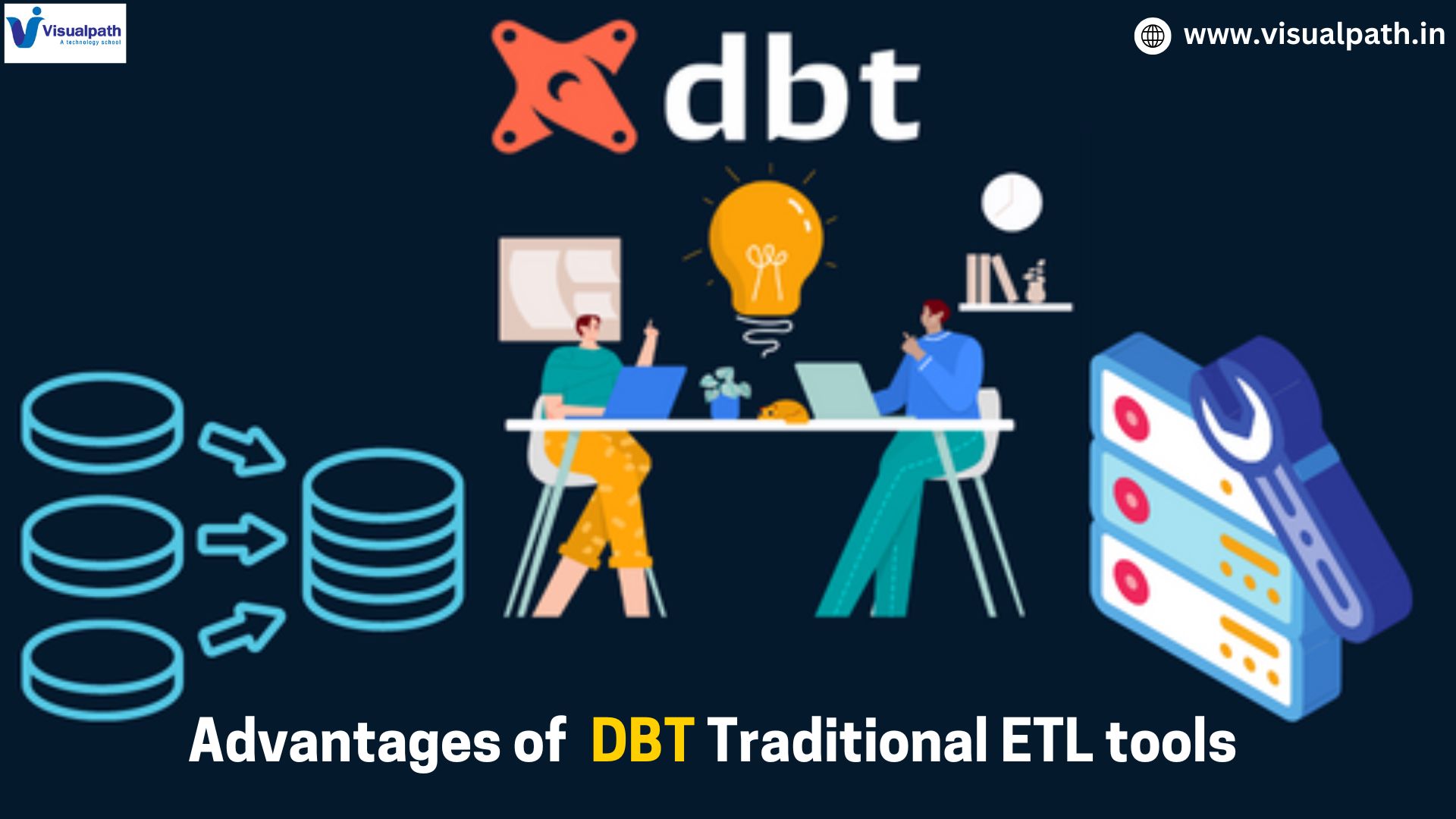
  • What is Advantages of Using dbt(Data Build Tool)

    What is Advantages of Using dbt(Data Build Tool)

    Data Build Tool (DBT) is revolutionizing how data professionals manage data transformations. If you are looking to enhance your skills and master DBT, enrolling in DBT Classes Online can set you on the path to success. But why should you consider DBT over traditional ETL tools? Let’s explore the unique advantages of DBT and why it’s become a favorite in modern data engineering.

    Understanding DBT and its Role in Modern Data Engineering

    Traditional Extract, Transform, Load (ETL) tools focus on moving data from source systems to destination systems while performing transformations along the way. These tools often require complex setups, proprietary languages, and a high degree of manual effort. DBT, on the other hand, focuses solely on the “T” or the transformation step in the ELT (Extract, Load, Transform) pipeline, using SQL as its primary language.

    By leveraging the power of cloud-based data warehouses like Snowflake, Big Query, and Amazon Redshift, DBT transforms raw data into meaningful, structured datasets, ready for analysis. Its simplicity, flexibility, and scalability make it an essential tool for modern data teams. Organizations and professionals looking to stay ahead in their data careers are turning to DBT Certification Online Training to gain expertise in this innovative platform.

     Advantages of DBT Over Traditional ETL Tools

    1. SQL-Centric Approach

    DBT simplifies data transformations by using SQL, a language that is familiar to most data professionals. Unlike traditional ETL tools that may require learning proprietary scripting languages or frameworks, DBT’s SQL-centric approach allows data engineers and analysts to start working immediately. With proper DBT Classes Online, even beginners can become proficient in leveraging DBT’s capabilities.

    2. Decoupled Architecture

    Traditional ETL tools often bundle data extraction, transformation, and loading into a single process, making them rigid and difficult to scale. DBT decouples transformations from the rest of the pipeline, enabling seamless integration with modern ELT workflows. This architecture allows organizations to load raw data into data warehouses first, then transform it using DBT.

    3. Version Control and Collaboration

    DBT integrates easily with Git, enabling version control for SQL models and facilitating collaboration among data teams. With DBT, multiple team members can work on the same project without conflicts, ensuring transparency and consistency in transformations. Many  

    4. Reusable and Modular Code

    DBT encourages writing reusable and modular SQL code. Features like macros and Jinja templates allow users to create dynamic, parameterized queries that can be reused across multiple models. This drastically reduces the time and effort required to maintain transformations. For those seeking practical experience, DBT Training programs often focus on creating modular code to improve efficiency.

    5. Automated Testing and Data Quality

    One of the standout features of DBT is its built-in testing framework. Users can easily define tests to validate data integrity, check for duplicates, or enforce schema constraints. This ensures high-quality data without the need for external tools. Comprehensive DBT Certification Training Online often includes hands-on projects where learners implement data testing strategies in real-world scenarios.

    6. Documentation and Lineage

    DBT automatically generates documentation for your SQL models, including data lineage graphs. This makes it easier to understand the flow of data and the relationships between models. These features simplify debugging and auditing processes, a significant improvement over traditional ETL tools that often lack comprehensive documentation.

    7. Cloud-Native and Scalable

    DBT is designed to leverage the power of modern, cloud-based data warehouses. Unlike traditional ETL tools, which may struggle with scalability, DBT’s architecture allows it to scale effortlessly with the underlying data warehouse. Whether you’re working with terabytes or petabytes of data, DBT can handle it efficiently. DBT Classes Online frequently emphasize cloud-native workflows, preparing professionals for real-world challenges.

    8. Cost-effective and Open-Source

    DBT’s open-source nature makes it a cost-effective alternative to many traditional ETL tools that come with expensive licensing fees. Organizations can save on costs while enjoying a robust and flexible tool for data transformations. Institutes offering Data Build Tool Training in Hyderabad Institute often highlight DBT’s cost advantages in their training modules.

    9. Community and Ecosystem

    DBT has a thriving community of users and contributors who share best practices, troubleshoot issues, and build plugins. This ecosystem ensures that DBT continues to evolve and improve, making it a future-proof investment for data professionals. Access to this community is often highlighted in DBT Certification Training Online programs, enabling learners to stay connected with industry trends.

    10. Faster Time to Insights

    With its simplicity, modular design, and automation features, DBT significantly reduces the time it takes to transform raw data into actionable insights. This agility is crucial for businesses that need to make data-driven decisions quickly. programs emphasize these benefits, helping learners deliver value to their organizations faster.

    Conclusion

    DBT has redefined the way organizations approach data transformations by offering simplicity, flexibility, and scalability that traditional ETL tools often lack. Its SQL-first approach, integration with modern cloud-based warehouses, and robust features like automated testing, documentation, and version control make it an indispensable tool for data professionals.

    Whether you’re a beginner or an experienced data engineer, enrolling in DBT Course Online programs offered by a reputed can help you master this innovative tool and advance your career. By embracing DBT, organizations and professionals alike can achieve faster, more efficient, and cost-effective data transformations, unlocking the full potential of their data.

    Visualpath is the Best Software Online Training Institute in Hyderabad. Avail complete   Data Build Tool worldwide. You will get the best course at an affordable cost.

    WhatsApp: https://www.whatsapp.com/catalog/919989971070/

    Visit: https://www.visualpath.in/online-data-build-tool-training.html

  • Data Build Tool Training: Transforming Data with DBT vs. ETL

    Data Build Tool Training: Transforming Data with DBT vs. ETL

    Data Build Tool Training has become indispensable as businesses modernize their data workflows. With the advent of DBT (Data Build Tool), traditional ETL (Extract, Transform, Load) processes are facing challenges in keeping up with the needs of cloud-native, agile environments. DBT Online Training equips data professionals with the skills to use DBT’s SQL-based framework for efficient data transformation directly within data warehouses. This shift from ETL to DBT is not just a technological change but a revolution in data management practices.

    The increasing popularity of DBT reflects its efficiency, scalability, and cost-effectiveness. Through Data Build Tool Training, professionals can understand how DBT streamlines data workflows, enabling faster, more accurate insights. This article explores the differences between DBT and ETL, their use cases, and why DBT is becoming the preferred choice for modern data teams.

    Understanding ETL: The Traditional Data Transformation Process

    ETL has long been the standard method for managing data transformation. It extracts data from diverse sources, transforms it in a dedicated staging environment, and then loads the processed data into the target system. This approach worked well when data pipelines were less complex and latency was not a critical issue.

    However, as data volumes grew and businesses demanded real-time insights, ETL began to show its limitations. The staging environment adds significant processing time, while the infrastructure required to maintain ETL workflows can be costly. Additionally, ETL systems are often rigid and difficult to modify, making them less suited for the dynamic needs of modern organizations.

    With the rise of cloud-native data warehouses, businesses are turning to tools like DBT that align better with these evolving requirements. Professionals who enroll in DBT Classes Online gain practical experience in modernizing data pipelines to meet today’s challenges.

    What Makes DBT Different?

    DBT introduces an ELT (Extract, Load, Transform) paradigm, where raw data is loaded directly into a data warehouse, and transformations occur within the warehouse itself. This approach leverages the computational power of cloud-native systems like Snowflake, Big Query, and Redshift.

    Unlike ETL, which relies on external staging environments, DBT simplifies workflows by focusing on in-warehouse transformations. It uses SQL for all operations, making it accessible to data analysts and engineers alike. Additionally, DBT emphasizes modularity, enabling teams to create reusable components and collaborate effectively. DBT Training Courses provide in-depth guidance on mastering these features, ensuring learners are ready to implement them in real-world scenarios.

    DBT vs. ETL: A Detailed Comparison

    Workflow Efficiency

    ETL processes involve multiple steps outside the data warehouse, increasing complexity and potential points of failure. In contrast, DBT eliminates the need for external staging environments, streamlining workflows and reducing latency.

    Cost Implications

    ETL systems often require expensive infrastructure for processing and storage. DBT minimizes costs by using the existing computational resources of data warehouses. This makes it an ideal solution for businesses looking to optimize their budgets while maintaining high performance.

    Flexibility and Scalability

    ETL tools are often proprietary and rigid, making it difficult to adapt to new requirements. DBT’s open-source nature and modular design provide unparalleled flexibility, allowing it to scale seamlessly with the needs of any organization.

    Accessibility

    DBT’s SQL-based approach lowers the barrier to entry, enabling broader teams to participate in data transformation tasks. With Best Online DBT Courses, even those new to SQL can quickly grasp DBT’s functionalities and contribute to data projects.

    By enrolling in DBT Certification Training Online, professionals can gain a deeper understanding of these differences and how to leverage DBT’s advantages effectively.

    Why Businesses Are Choosing DBT

    DBT’s in-warehouse transformation capabilities make it particularly attractive to organizations striving for efficiency and speed. Its ability to deliver analytics-ready data in real time enables faster decision-making, a critical advantage in industries like retail and finance.

    DBT also supports automation and testing, ensuring data quality without additional manual effort. This not only improves accuracy but also reduces operational overhead. Businesses that adopt DBT benefit from its cost-effective and scalable architecture, which aligns perfectly with modern cloud-based systems. Professionals trained through DBT Classes Online can help organizations unlock these benefits, driving innovation and efficiency

    Use Cases for DBT across Industries

    DBT’s versatility makes it applicable across a range of industries, from retail and finance to healthcare and technology.

    In the retail sector, DBT supports real-time analytics for sales trends, inventory management, and customer behaviour, helping businesses make data-driven decisions faster. Finance teams use DBT to streamline reporting workflows, improve data accuracy, and ensure compliance with regulatory requirements.

    Healthcare providers leverage DBT to manage patient data, optimize operational efficiency, and enhance decision-making. In the technology sector, DBT is instrumental in scaling data infrastructure and enabling advanced analytics. These applications demonstrate DBT’s broad appeal, making it a critical skill for data professionals. By enrolling in DBT Online Training, learners can explore these use cases and understand how to implement DBT effectively.

    Learning DBT: Training and Certification Opportunities

    To fully utilize DBT, professionals need proper training and certification. DBT Classes Online provide an accessible starting point, offering hands-on experience with DBT’s tools and workflows. These classes are ideal for beginners looking to build foundational skills.

    For those seeking a deeper understanding, DBT Training Courses cover advanced features, project management techniques, and best practices for scaling DBT implementations. These courses ensure learners are prepared to tackle real-world challenges.

    Certification programs, such as DBT Certification Training Online, validate expertise and demonstrate proficiency to employers. Certified professionals are better positioned to secure roles in data-driven organizations and advance their careers.

    By choosing the Best Online DBT Courses, learners can combine expert instruction with practical applications, ensuring they gain industry-relevant skills.

    Conclusion

    The rise of DBT represents a paradigm shift in data transformation processes. By transitioning from ETL to DBT, organizations can achieve greater efficiency, scalability, and cost savings. DBT’s SQL-driven, in-warehouse transformation approach addresses the limitations of traditional ETL, making it a vital tool for modern data teams.

    Through Data Build Tool Training and DBT Online Training, professionals can master the skills needed to implement DBT successfully. These programs offer comprehensive insights into DBT’s features, workflows, and applications, ensuring learners are well-prepared to meet industry demands.

    Whether you are a data analyst, engineer, or decision-maker, learning DBT is an investment in the future. With resources like DBT Training Courses, Best Online DBT Courses, and DBT Certification Training Online, you can gain the knowledge and credentials to thrive in today’s data-driven world.

    DBT is not just a replacement for ETL—it is a revolution in how data is managed, analyzed, and leveraged for business success. By embracing DBT, professionals and organizations alike can stay ahead in an ever-evolving technological landscape.

    Visualpath is the Leading and Best Institute for learning in Hyderabad. We provide DBT Certification Training Online. You will get the best course at an affordable cost.

    What’s App: https://www.whatsapp.com/catalog/919989971070/

    Visit: https://www.visualpath.in/online-data-build-tool-training.html

  • Data Build Tool Training: Top 10 DBT Features You Need to Know About

    Data Build Tool Training: Top 10 DBT Features You Need to Know About

    Data Build Tool Training has become a key focus for data professionals seeking to optimize their data transformation processes. DBT (Data Build Tool) stands out for its ability to streamline data workflows, ensure data reliability, and simplify collaboration across teams. With the growing complexity of modern data ecosystems, mastering DBT can significantly enhance efficiency and boost data quality. For those looking to deepen their expertise, Best Online DBT Courses provide a structured pathway to learn and apply DBT’s unique features effectively.

    This article explores the top 10 features of DBT that make it indispensable in the world of data transformation. Whether you’re starting your journey with Data Build Tool Training or refining your existing skills, understanding these features will help you leverage DBT for maximum impact. Let’s dive into the details.

    1. Version Control Integration

    One of DBT’s standout features is its seamless integration with version control systems like Git. This functionality enables users to track every change made to data models, ensuring complete transparency and accountability. With version control, teams can collaborate effectively, revert changes when needed, and maintain a history of model modifications.

    Incorporating Git into DBT projects also promotes structured workflows, where team members can contribute without overwriting each other’s work. Best Online DBT Courses provide hands-on tutorials to help you master Git integration, from setting up repositories to managing branches and resolving conflicts, ensuring your team operates at peak efficiency.

    2. SQL-Based Transformations

    Unlike many data tools that require learning new programming languages, DBT uses SQL for all data transformations. This makes it an accessible choice for data professionals who are already proficient in SQL. By working with SQL, DBT allows users to write transformations, perform complex calculations, and organize data into models without the need for additional coding skills.

    Through Data Build Tool Training, you can enhance your understanding of how to structure modular and reusable queries. These courses also teach best practices for writing efficient SQL code, which can lead to faster data processing and better project outcomes.

    3. Automated Documentation

    DBT’s ability to generate automated documentation is a game-changer for data teams. This feature ensures that stakeholders always have access to clear, up-to-date information about data models, including relationships, sources, and transformations. The documentation is interactive and can be shared with non-technical stakeholders, fostering better collaboration and decision-making.

    By enrolling in Best Online DBT Courses, you’ll learn how to use DBT’s documentation capabilities effectively. From creating model descriptions to setting up metadata tags, these courses provide you with the skills needed to keep your data projects transparent and well-documented.

    4. Robust Data Testing

    Ensuring data quality is critical, and DBT’s data testing capabilities make it easier than ever to validate your data. With built-in testing frameworks, you can create custom tests to check for null values, duplicates, and consistency across datasets. This proactive approach minimizes errors and ensures that your data is reliable for analysis.

    Data Build Tool Training includes practical exercises to help you design and implement robust data tests. You’ll learn to write test cases, automate testing processes, and monitor results, which are essential skills for maintaining high-quality data pipelines.

    5. Modular Development Approach

    DBT supports a modular approach to development, allowing you to break down complex data transformations into smaller, reusable components. This feature makes it easier to debug issues, update specific sections of your pipeline, and collaborate with teammates. Modular development also encourages better code organization and scalability.

    With Best Online DBT Courses, you can explore the benefits of modular development through real-world projects. These courses teach you how to create reusable models, build dependencies, and optimize workflows for better performance.

    6. Cloud Platform Compatibility

    DBT is compatible with major cloud data platforms such as Snowflake, BigQuery, Redshift, and Databricks. This compatibility makes it an ideal choice for organizations that have adopted cloud-based infrastructure. DBT simplifies the integration process and leverages the scalability of cloud platforms to handle large datasets efficiently.

    Through Data Build Tool Training, you’ll gain insights into how to configure DBT for different cloud environments, optimize queries for cloud performance, and reduce operational costs. This knowledge is invaluable for professionals working in cloud-based data ecosystems.

    7. Incremental Models

    A standout feature of DBT is its support for incremental models, which process only new or updated data rather than reprocessing entire datasets. This feature significantly reduces processing time and resource consumption, making it ideal for handling large data volumes.

    Mastering incremental models through Best Online DBT Courses can help you build efficient and scalable pipelines. These courses guide you on setting up incremental strategies, optimizing model configurations, and monitoring performance metrics to ensure smooth data operations.

    8. Advanced Customization with Jinja

    DBT supports Jinja templating, enabling developers to create dynamic and reusable SQL scripts. With Jinja, you can add conditional logic, loops, and variables to your transformations, making the tool highly versatile. This feature allows for advanced customization, empowering users to handle complex data requirements effortlessly.

    Data Build Tool Training covers Jinja templating in detail, teaching you how to create templates that enhance the functionality of your data workflows. You’ll learn to write dynamic queries, automate repetitive tasks, and improve overall productivity.

    9. Lineage and Dependency Graphs

    DBT automatically generates lineage and dependency graphs, providing a visual representation of your data pipeline. These graphs help you understand how data flows between models, identify dependencies, and detect potential bottlenecks. This visualization is invaluable for optimizing workflows and ensuring the integrity of your data pipeline.

    By enrolling in Best Online DBT Courses, you’ll gain practical experience in using these visual tools. These courses teach you how to interpret lineage graphs, troubleshoot issues, and refine your pipeline structure for better efficiency.

    10. Open-Source Flexibility

    As an open-source tool, DBT benefits from a thriving community of developers and users who contribute plugins, libraries, and best practices. This open-source flexibility ensures that DBT remains up-to-date with the latest innovations in the data industry. It also allows users to customize the tool to meet their specific needs.

    Data Build Tool Training equips you with the skills to navigate and leverage DBT’s open-source ecosystem. You’ll learn how to contribute to community projects, implement third-party plugins, and adopt best practices for maximizing the tool’s potential.

    Conclusion

    DBT (Data Build Tool) is a versatile and powerful solution for modern data transformation needs. Its extensive feature set—from SQL-based transformations and automated documentation to incremental models and dependency graphs—makes it a go-to tool for data professionals. By mastering these features, you can streamline your workflows, improve data quality, and drive more impactful insights for your organization.

    Whether you’re starting with Data Build Tool Training or looking to advance your skills, understanding these top 10 features will help you unlock the full potential of DBT. Additionally, enrolling in Best Online DBT Courses can provide the hands-on experience and guidance needed to excel in today’s data-driven world.

    Take the first step in your DBT journey today and position yourself as a leader in the data transformation space. With the right training and knowledge, you’ll be well-equipped to tackle even the most complex data challenges.

    Visualpath is the Leading and Best Institute for learning in Hyderabad. We provide Data Build Tool Training. You will get the best course at an affordable cost.

    Attend Free Demo

    Call on – +91-9989971070

    Blog: https://visualpathblogs.com/

    What’s App: https://www.whatsapp.com/catalog/919989971070/

    Visit: https://www.visualpath.in/online-data-build-tool-training.html

  • Data Build Tool Training: Tips for Streamlining Your Data Transformation Process

    Data Build Tool Training: Tips for Streamlining Your Data Transformation Process

    Data Build Tool Training is becoming essential for data professionals focused on streamlining their data transformation processes. As businesses increasingly rely on data insights for strategic decisions, the efficient transformation of raw data into structured formats ready for analysis is crucial. DBT, or the Data Build Tool, has become a preferred tool for this task, enabling data teams to manage, automate, and optimize transformations within cloud data warehouses. Through structured Data Build Tool Training, data professionals—including analysts, data engineers, and data scientists—can leverage DBT to create scalable, organized, and error-resistant workflows. In this article, we will explore detailed DBT tips to help enhance your data transformation processes for faster, more efficient operations.

    Whether you are new to DBT or have had prior exposure, adopting these strategies can provide a significant performance boost to your data workflows. Well-structured DBT Training programs generally cover critical aspects such as model structuring, incremental transformations, testing and quality assurance, and resource optimization. By applying these best practices, your data team can minimize errors, reduce data processing time, and ensure accuracy, enabling more robust analytics and insights. Here are some of the most effective DBT tips for maximizing your data transformation process.

    Organize Your Models with a Clear Structure

    A well-organized model structure is key to maintaining a clean, scalable codebase. As data transformation projects grow in complexity, so does the code base, and organizing models based on their roles or stages in the transformation process can make your workflow more manageable. DBT projects typically benefit from a logical folder hierarchy, where models are grouped based on functions such as “staging,” “intermediate,” and “final” transformations. This approach ensures that data flows through each transformation stage seamlessly, reducing errors and making it easier to debug and update models as needed.

    In Data Build Tool Training, participants learn best practices for model structuring that allow data to flow in a logical and reliable sequence. For instance, staging models act as an initial cleaning layer, while intermediate models handle complex joins and aggregations, and final models create outputs suitable for analysis. By implementing this structure, your team can spend less time searching through code and more time focused on developing and optimizing transformations. An organized structure also makes it simpler for new team members to on board and understand the DBT setup.

    Leverage Incremental Models for Efficiency

    One of the biggest advantages of DBT is its ability to manage transformations efficiently, especially for large datasets. Processing a large dataset from scratch every time can be time-consuming and resource-intensive. Incremental models in DBT allow transformations to run only on new or updated data rather than the entire dataset, reducing processing time significantly. Data Build Tool Training offers hands-on experience in setting up incremental models, which are vital for any team dealing with high volumes of data. Learning to configure and use incremental models effectively ensures that your data workflows remain fast and cost-effective.

    Using incremental models also reduces the strain on cloud data warehouses, leading to better performance and potentially lower costs. By updating only the rows that have changed since the last transformation, DBT can handle frequent transformations on dynamic data with ease. In large-scale data environments where time is of the essence, this approach can drastically improve productivity. Additionally, DBT provides tools to audit and monitor incremental models, helping teams verify that transformations are running as expected without processing unnecessary data.

    Implement Testing and Version Control

    Data accuracy is non-negotiable in analytics, and testing is crucial to maintain it. DBT offers a robust framework for testing data throughout the transformation process. These tests help identify potential issues in schema consistency, null values, data duplication, and other common data quality concerns. Incorporating automated tests directly into your DBT workflow reduces the chance of errors making it into final analyses, which can be costly if left unaddressed.

    DBT Training typically covers testing strategies that align with your transformation objectives. For instance, schema tests can check that specific columns contain only the expected data types, while unique key tests ensure that primary keys are maintained correctly. Running these tests routinely as part of a CI/CD (Continuous Integration/Continuous Deployment) pipeline can catch errors early and keep your data reliable. Additionally, using version control systems like Git enables teams to track changes to models, tests, and configurations, offering a way to revert to previous versions if issues arise. Effective version control and testing not only safeguard data integrity but also simplify collaborative workflows, where multiple users might contribute to the same DBT project.

    Optimize Resource Allocation

    Resource management is a critical factor in DBT performance, particularly when working with cloud-based data warehouses where computational resources can affect both cost and speed. DBT allows you to configure resource usage based on specific transformation needs, optimizing cost and performance. For example, complex aggregations or joins might require higher computational power, while simpler transformations can use minimal resources, reducing overall expenses.

    Through Data Build Tool Training, data professionals gain insight into managing these configurations for optimal resource allocation. Cloud platforms like Snowflake, Big Query, and Redshift allow custom configurations for DBT projects, and understanding how to leverage these settings can reduce bottlenecks and improve transformation times. A DBT setup tailored to workload demands can help your team maintain a fast, responsive transformation process without exceeding budget constraints. This capability is especially important for organizations with fluctuating data loads, where resource requirements may vary over time.

    Build Reusable Macros and Modular Code

    DBT supports macros, which are reusable snippets of code that can be applied across multiple transformations. This capability is particularly useful for complex operations or calculations that need to be repeated in different models. By creating macros, you can minimize redundancy and ensure consistency across transformations. Modular code also simplifies debugging and maintenance, as changes made to a macro automatically propagate across models that reference it.

    In DBT Training, professionals are encouraged to build and implement modular code, which leads to a more maintainable and scalable codebase. Macros, for example, can streamline transformations by reducing repetitive coding. They also enhance code readability, as macros can encapsulate intricate logic into a single reference point. This approach saves time, reduces the potential for errors, and enhances the overall efficiency of the transformation process.

    Conclusion

    Mastering DBT for data transformation can be transformative for your data team’s productivity and the accuracy of your insights. Investing in Data Build Tool Training and DBT Training equips you with the skills to implement DBT’s best practices, such as organizing models, using incremental updates, conducting rigorous testing, and optimizing resource allocation. By following these tips and strategies, you can build a more efficient, scalable, and reliable data transformation pipeline that accelerates your team’s ability to generate valuable insights. The journey toward data transformation excellence begins with a solid understanding of DBT, and incorporating these practices will set your team on the path to more streamlined, effective operations.

    Visualpath is the Leading and Best Institute for learning in Hyderabad. We provide Data Build Tool DBT Training. You will get the best course at an affordable cost.

    Attend Free Demo

    Call on – +91-9989971070

    What’s App: https://www.whatsapp.com/catalog/919989971070/

    Visit: https://www.visualpath.in/online-data-build-tool-training.html