
Tag: Azure DevOps Certification Training

  • Top Azure DevOps Tools Every Developer Should Know

    Top Azure DevOps Tools Every Developer Should Know

    Azure DevOps has become an essential platform for streamlining development, collaboration, and deployment processes. Microsoft’s Azure DevOps provides a suite of tools that help developers manage the entire software development lifecycle (SDLC) efficiently. Whether you’re a beginner or an experienced developer, understanding the key tools within Azure DevOps can significantly improve your productivity and workflow.

    1. Azure Repos – Version Control System

    Azure Repos is a powerful version control system that enables teams to manage source code efficiently. It offers both Git and Team Foundation Version Control (TFVC), allowing developers to track changes, collaborate seamlessly, and maintain code quality. Features like branch policies, pull requests, and code reviews make it an excellent tool for ensuring high-quality software development. Azure DevOps Training Online

    2. Azure Pipelines – CI/CD Automation

    Azure Pipelines is one of the most crucial tools in Azure DevOps, designed to automate the build, test, and deployment process. It supports Continuous Integration (CI) and Continuous Deployment (CD), allowing developers to deliver code faster with fewer errors. Azure Pipelines integrates with multiple platforms, repositories (GitHub, Bitbucket, etc.), and cloud environments, making it a versatile tool for modern development.

    3. Azure Boards – Agile Project Management

    Managing software projects effectively is crucial for success, and Azure Boards provides a comprehensive solution. It includes Kanban boards, sprint planning tools, backlogs, and work item tracking, enabling teams to implement Agile and Scrum methodologies efficiently. With real-time tracking and reporting, Azure Boards helps teams stay aligned and improve productivity. Azure DevOps Course

    4. Azure Test Plans – Quality Assurance and Testing

    Testing is a vital part of software development, and Azure Test Plans provides a complete testing solution. It supports manual, exploratory, and automated testing, ensuring the reliability and performance of applications. Developers and QA teams can collaborate to identify issues early in the development cycle, reducing the risk of bugs in production.

    5. Azure Artifacts – Package Management

    Azure Artifacts simplifies dependency management by providing a secure and scalable package repository. It supports NuGet, npm, Maven, and Python packages, making it easy for teams to store and share dependencies across projects. This tool ensures that all projects use the correct versions of dependencies, preventing compatibility issues.

    6. Azure Monitor – Performance Tracking

    Azure Monitor helps developers track and analyze application performance in real-time. It provides logs, metrics, and alerts, allowing teams to identify performance bottlenecks, diagnose issues, and optimize application efficiency. By integrating Azure Monitor with other Azure DevOps tools, developers can ensure better system reliability and faster issue resolution. Microsoft Azure DevOps Training

    Conclusion

    Azure DevOps offers a robust set of tools that empower developers to streamline development workflows, enhance collaboration, and deliver high-quality software efficiently. From version control with Azure Repos to automated CI/CD with Azure Pipelines and project management with Azure Boards, these tools help organizations optimize their software development lifecycle. By leveraging these DevOps tools, developers can boost productivity and create more reliable applications.

    Visualpath is the Leading and Best Software Online Training Institute in Hyderabad.

    For More Information about Azure DevOps Training in India

    Contact Call/WhatsApp: +91-7032290546

    Visit: https://www.visualpath.in/online-azure-devops-Training.html

  • What Are the Steps to Set Up Azure DevOps Pipelines for Deployment?

    What Are the Steps to Set Up Azure DevOps Pipelines for Deployment?

    Setting up an Azure DevOps pipeline is an essential part of automating the build, test, and deployment process for applications. This automation ensures fast, consistent, and high-quality software delivery. Below are the key steps to set up Azure DevOps Pipelines for deployment.

    1. Create a New Project

    This project serves as the central hub where your code, pipelines, and deployment environments will be managed. Once the project is created, you’ll be able to link it to your source code repository, either within Azure Repos or an external service like GitHub. Azure DevOps Course

    2. Connect to Your Code Repository

    Next, connect your project to the source code repository where your application’s code resides. Azure DevOps supports integration with various version control systems such as GitHub, GitLab, or Azure Repos. By linking your repository, you enable the pipeline to detect changes in the code and trigger builds automatically whenever updates are made.

    3. Configure the Build Pipeline

    The build pipeline is responsible for compiling your code, running tests, and generating build artifacts. To configure it:

    • Choose the repository: Select the repository containing your application code.
    • Define build tasks: Tasks include restoring dependencies, compiling the code, running unit tests, and packaging the app into deployable artifacts (e.g., .zip or .tar files). Microsoft Azure DevOps Training
    • Set build triggers: Configure the pipeline to trigger automatically on changes to the repository or when a pull request is created.

    After setting up the build pipeline, you can run it to verify that the code builds successfully and creates the required artifacts.

    4. Set Up the Release Pipeline

    The release pipeline handles deploying the build artifacts to different environments such as development, staging, and production. To configure the release pipeline:

    • Define environments: Create stages for each environment in the pipeline, such as “Development,” “Staging,” and “Production.”
    • Add deployment tasks: Tasks for deployment may include copying the build artifact to servers, configuring databases, or deploying to cloud services.
    • Configure approval gates: You can require manual approval before the pipeline progresses to the next environment, especially for production deployments. Azure DevSecOps Training
    • Set deployment triggers: Configure automatic triggers to deploy when a successful build artifact is created, or deploy manually as needed.

    5. Manage Variables and Secrets

    In deployment pipelines, some values will vary between environments (such as database URLs or API keys). Azure DevOps allows you to manage these using environment-specific variables. For sensitive information like passwords or API keys, you can securely store them using the “Library” feature to ensure they are not exposed in logs or code.

    6. Monitor and Troubleshoot

    Once your pipeline is up and running, it’s important to monitor its performance and troubleshoot any failures. Azure DevOps provides detailed logs for each pipeline task, making it easy to pinpoint where issues occur. If a build or deployment fails, the logs provide helpful error messages to resolve the problem. You can also set up notifications to alert you when the pipeline encounters issues.

    Conclusion

    Setting up an Azure DevOps pipeline is a straightforward yet powerful way to automate your software build and deployment process. By following these steps—creating a project, connecting a repository, configuring build and release pipelines, and managing variables and secrets—you ensure that your application is built and deployed reliably across environments. This automation improves the efficiency of your development cycle, reduces errors, and accelerates software delivery. Azure DevSecOps Training

    Visualpath is the leading software online training institute in Hyderabad. Avail complete Microsoft Azure DevOps Training Worldwide. You will get the best course at an affordable cost.

    Attend Free Demo

    Call on – +91-9989971070.

    WhatsApp: https://www.whatsapp.com/catalog/919989971070/

    Visit   https://www.visualpath.in/online-azure-devops-Training.html
    Visit Blog: https://azuredevsecopstraining.blogspot.com/

  • Why Azure DevOps Training Is Essential for Building a DevSecOps Culture

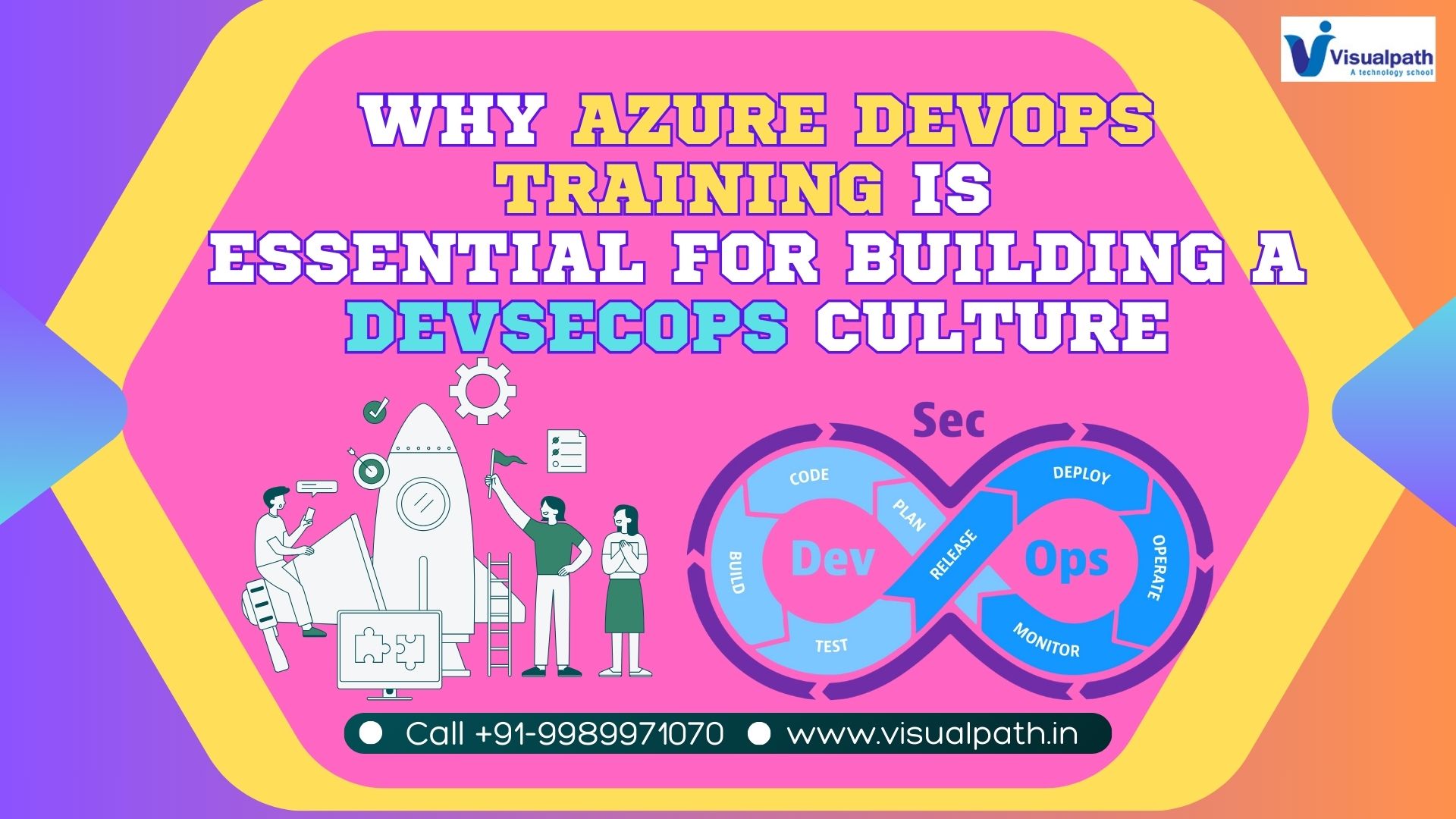
    Why Azure DevOps Training Is Essential for Building a DevSecOps Culture

    Azure DevOps Course– In today’s fast-paced digital landscape, where organizations are increasingly adopting agile methodologies and cloud-native technologies, the integration of security into DevOps processes—also known as DevSecOps—has become a critical need. Developing a robust DevSecOps culture requires a skilled workforce, and this is where the Azure DevOps course comes into play. With comprehensive training options like Azure DevOps Training in Hyderabad, Azure DevOps Certification Training, and Azure DevSecOps Online Training, professionals can gain the expertise to seamlessly integrate security practices into every stage of the DevOps lifecycle.

    The Role of Azure DevOps in DevSecOps

    Azure DevOps is a powerful platform that combines development and operations tools into a single integrated ecosystem. By leveraging features like CI/CD pipelines, automated testing, and monitoring, Azure DevOps enables teams to enhance their development processes. Incorporating security into these workflows—DevSecOps—requires specialized training.

    For instance, with Azure DevSecOps Training in Hyderabad, professionals can learn how to identify vulnerabilities, implement automated security checks, and ensure compliance within their DevOps pipelines. This training empowers teams to adopt a security-first mindset, which is vital for protecting sensitive data and mitigating risks in complex IT environments.

    The significance of Azure DevOps Certification Training lies in its ability to upskill professionals on advanced concepts such as Infrastructure as Code (IaC), secure coding practices, and automated vulnerability management. These skills are indispensable for organizations striving to build a mature DevSecOps culture.

    Why Training Matters for Building DevSecOps Culture

    Transitioning to a DevSecOps model involves more than just adopting new tools—it requires a cultural shift. This shift emphasizes collaboration between development, operations, and security teams, fostering a shared responsibility for application security.

    Training programs like Azure DevOps Online Training Hyderabad play a crucial role in this transformation. These courses not only focus on technical skills but also teach best practices for collaboration, communication, and cross-functional teamwork. Additionally, Azure DevSecOps Online Training offers flexibility for professionals to learn at their own pace, ensuring that even working individuals can benefit from these programs.

    In cities like Hyderabad, where the IT sector is booming, Azure DevSecOps Training in Hyderabad is in high demand. The training equips participants with the ability to address real-world challenges, such as automating security in CI/CD pipelines and maintaining compliance in multi-cloud environments. This hands-on knowledge is essential for fostering a proactive security culture within organizations.

    Benefits of Azure DevOps Certification

    Obtaining an Azure DevOps certification not only validates your skills but also enhances your career prospects. Professionals who complete Azure DevOps Certification Training are better positioned to lead DevSecOps initiatives within their organizations.

    Key benefits include:

    • Mastering tools and techniques for secure application development.
    • Gaining expertise in deploying scalable and secure infrastructure using Azure.
    • Learning to automate compliance and vulnerability assessments.

    Moreover, certification ensures that you are updated with the latest industry standards and practices, making you a valuable asset to any organization.

    Conclusion

    Building a DevSecOps culture is not just a technological challenge but a strategic necessity for modern organizations. With security breaches becoming more sophisticated, integrating security into the DevOps lifecycle is imperative. Training programs like Azure DevOps Training in Hyderabad, Azure DevOps Online Training Hyderabad, and Azure DevSecOps Training in Hyderabad provide professionals with the skills and knowledge to excel in this domain.

    Whether you are an aspiring DevOps professional or an experienced IT practitioner, investing in an Azure DevOps course can help you stay ahead of the curve. Equip yourself with the expertise to lead the transformation toward a secure, efficient, and collaborative DevSecOps environment. Let Azure DevOps be the cornerstone of your success in 2024 and beyond.

    Visualpath is the Best Software Online Training Institute in Hyderabad. Avail complete Microsoft Azure DevOps Training worldwide. You will get the best course at an affordable cost.

    WhatsApp: https://www.whatsapp.com/catalog/919989971070

    Visit   https://www.visualpath.in/online-azure-devops-Training.html
  • Why Azure DevOps Training Is Essential for Building a DevSecOps Culture

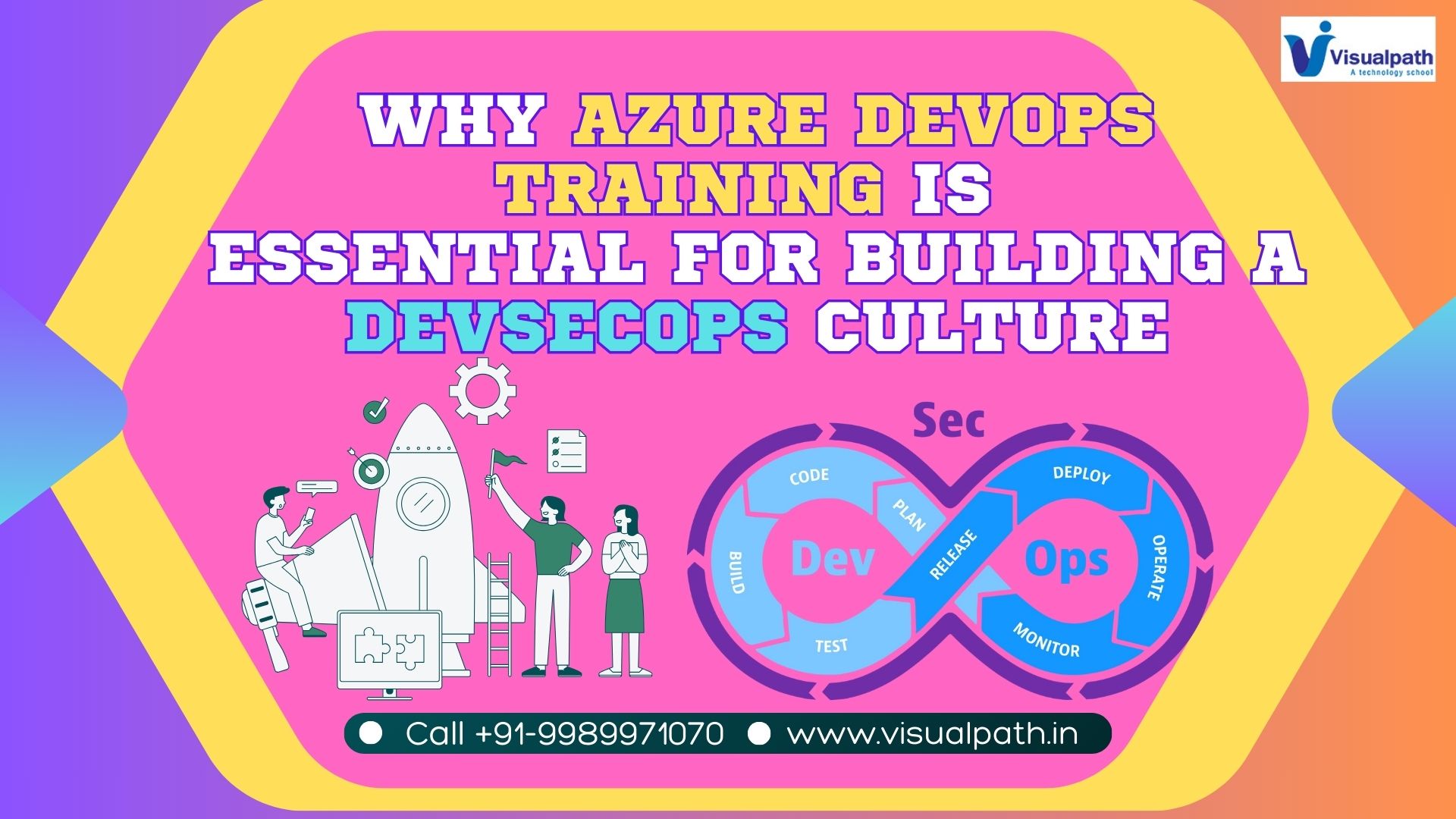
    Why Azure DevOps Training Is Essential for Building a DevSecOps Culture

    Azure DevOps Course– In today’s fast-paced digital landscape, where organizations are increasingly adopting agile methodologies and cloud-native technologies, the integration of security into DevOps processes—also known as DevSecOps—has become a critical need. Developing a robust DevSecOps culture requires a skilled workforce, and this is where the Azure DevOps course comes into play. With comprehensive training options like Azure DevOps Training in Hyderabad, Azure DevOps Certification Training, and Azure DevSecOps Online Training, professionals can gain the expertise to seamlessly integrate security practices into every stage of the DevOps lifecycle.

    The Role of Azure DevOps in DevSecOps

    Azure DevOps is a powerful platform that combines development and operations tools into a single integrated ecosystem. By leveraging features like CI/CD pipelines, automated testing, and monitoring, Azure DevOps enables teams to enhance their development processes. Incorporating security into these workflows—DevSecOps—requires specialized training.

    For instance, with Azure DevSecOps Training in Hyderabad, professionals can learn how to identify vulnerabilities, implement automated security checks, and ensure compliance within their DevOps pipelines. This training empowers teams to adopt a security-first mindset, which is vital for protecting sensitive data and mitigating risks in complex IT environments.

    The significance of Azure DevOps Certification Training lies in its ability to upskill professionals on advanced concepts such as Infrastructure as Code (IaC), secure coding practices, and automated vulnerability management. These skills are indispensable for organizations striving to build a mature DevSecOps culture.

    Why Training Matters for Building DevSecOps Culture

    Transitioning to a DevSecOps model involves more than just adopting new tools—it requires a cultural shift. This shift emphasizes collaboration between development, operations, and security teams, fostering a shared responsibility for application security.

    Training programs like Azure DevOps Online Training Hyderabad play a crucial role in this transformation. These courses not only focus on technical skills but also teach best practices for collaboration, communication, and cross-functional teamwork. Additionally, Azure DevSecOps Online Training offers flexibility for professionals to learn at their own pace, ensuring that even working individuals can benefit from these programs.

    In cities like Hyderabad, where the IT sector is booming, Azure DevSecOps Training in Hyderabad is in high demand. The training equips participants with the ability to address real-world challenges, such as automating security in CI/CD pipelines and maintaining compliance in multi-cloud environments. This hands-on knowledge is essential for fostering a proactive security culture within organizations.

    Benefits of Azure DevOps Certification

    Obtaining an Azure DevOps certification not only validates your skills but also enhances your career prospects. Professionals who complete Azure DevOps Certification Training are better positioned to lead DevSecOps initiatives within their organizations.

    Key benefits include:

    • Mastering tools and techniques for secure application development.
    • Gaining expertise in deploying scalable and secure infrastructure using Azure.
    • Learning to automate compliance and vulnerability assessments.

    Moreover, certification ensures that you are updated with the latest industry standards and practices, making you a valuable asset to any organization.

    Conclusion

    Building a DevSecOps culture is not just a technological challenge but a strategic necessity for modern organizations. With security breaches becoming more sophisticated, integrating security into the DevOps lifecycle is imperative. Training programs like Azure DevOps Training in Hyderabad, Azure DevOps Online Training Hyderabad, and Azure DevSecOps Training in Hyderabad provide professionals with the skills and knowledge to excel in this domain.

    Whether you are an aspiring DevOps professional or an experienced IT practitioner, investing in an Azure DevOps course can help you stay ahead of the curve. Equip yourself with the expertise to lead the transformation toward a secure, efficient, and collaborative DevSecOps environment. Let Azure DevOps be the cornerstone of your success in 2024 and beyond.

    Visualpath is the Best Software Online Training Institute in Hyderabad. Avail complete Microsoft Azure DevOps Training worldwide. You will get the best course at an affordable cost.

    WhatsApp: https://www.whatsapp.com/catalog/919989971070

    Visit   https://www.visualpath.in/online-azure-devops-Training.html

  • Azure DevSecOps Training: Exploring the Role of Automation in Secure Development

    Azure DevSecOps Training: Exploring the Role of Automation in Secure Development

    Azure DevSecOps Training: Exploring the Role of Automation in Secure Development

    Azure DevSecOps-In today’s fast-paced software development landscape, DevSecOps has emerged as a critical approach for integrating security into the DevOps pipeline. Leveraging automation in Azure DevSecOps not only ensures secure application development but also accelerates deployment and reduces human errors. Automation tools, when coupled with a robust Azure DevOps course, empower developers and organizations to achieve seamless integration of security practices.

    Understanding Azure DevSecOps and Automation

    Azure DevSecOps integrates development, security, and operations to enhance application reliability and protect against vulnerabilities. Automation plays a key role in achieving these objectives by eliminating repetitive tasks and standardizing security checks. For individuals or teams starting their journey, enrolling in Azure DevOps Training in Hyderabad is a great way to understand the fundamentals and advanced techniques involved in Azure DevSecOps.

    Automation in Azure DevSecOps spans several stages, including:

    • Infrastructure as Code (IaC): Automating infrastructure provisioning and configuration.
    • Continuous Integration/Continuous Deployment (CI/CD): Streamlining code integration, testing, and deployment pipelines.
    • Security Scanning: Automating vulnerability detection and compliance monitoring throughout the development lifecycle.

    By incorporating these automated solutions, developers can focus on innovation while ensuring that security remains uncompromised.

    Benefits of Automation in Azure DevSecOps

    Automation offers several advantages in an Azure DevSecOps environment, including:

    1. Enhanced Security: Automated tools continuously scan for vulnerabilities, ensuring that security risks are identified and mitigated early in the development process.
    2. Faster Deployment: With automated pipelines, code can be deployed more quickly, reducing time-to-market.
    3. Consistency: Automation minimizes human errors, providing consistent and reliable results.
    4. Scalability: Automated systems can handle large-scale operations without the need for additional manual effort.

    Professionals looking to specialize in these skills can benefit from Azure DevSecOps Online Training, which covers tools and techniques for implementing automation effectively.

    Tools Supporting Automation in Azure DevSecOps

    Microsoft Azure offers a comprehensive suite of tools that enable automation in DevSecOps workflows:

    • Azure Pipelines: Facilitates automated CI/CD processes with integrated security checks.
    • Azure Policy: Automates compliance by ensuring that all deployed resources adhere to defined policies.
    • Azure Security Center: Provides real-time security recommendations and threat detection.
    • GitHub Advanced Security: Integrates seamlessly with Azure DevOps for code scanning and dependency analysis.

    By mastering these tools through an Azure DevOps course, developers can create secure, efficient workflows that align with organizational objectives.

    Implementing Automation Best Practices in Azure DevSecOps

    To maximize the benefits of automation, organizations must adopt best practices:

    1. Shift Left Security: Introduce security early in the development process to detect vulnerabilities before they become costly.
    2. Regular Updates: Continuously update automation tools to keep up with the latest threats.
    3. Collaboration: Foster collaboration between development, security, and operations teams to streamline processes.
    4. Comprehensive Training: Encourage team members to pursue Azure DevOps Training in Hyderabad to stay updated on industry trends and best practices.

    Conclusion

    Automation in Azure DevSecOps is revolutionizing the way organizations approach software development. By reducing manual efforts, enhancing security, and ensuring faster deployment, automation enables businesses to stay competitive in today’s dynamic market. Whether you’re a developer or a security professional, pursuing an Azure DevOps Certification Training equips you with the knowledge and skills to implement automation effectively.

    For those aspiring to take their careers to the next level, an Azure DevOps course provides the perfect blend of theoretical understanding and hands-on experience, paving the way for a successful journey in secure software development.

    Visualpath is the Best Software Online Training Institute in Hyderabad. Avail complete Microsoft Azure DevOps Training worldwide. You will get the best course at an affordable cost.

    Attend Free Demo

    Call on – +91-9989971070

    Visit:  https://visualpathblogs.com/

    WhatsApp: https://www.whatsapp.com/catalog/919989971070

    Visit   https://www.visualpath.in/online-azure-devops-Training.html

  • Azure DevSecOps Training- Best Practices for Managing Secrets in Azure DevSecOps

    Azure DevSecOps Training- Best Practices for Managing Secrets in Azure DevSecOps

    Azure DevSecOps- Managing secrets is a critical aspect of any development pipeline, especially when it comes to secure, efficient practices within the DevSecOps framework. In an Azure DevOps course, the security of sensitive data like passwords, API keys, and certificates is a major topic, as it ensures that only authorized components and individuals have access to crucial information. Azure DevOps provides powerful tools and techniques to manage these secrets securely, making it essential for developers and organizations to adopt best practices for protecting their data. This is particularly important for professionals undergoing Azure DevOps Training in Hyderabad or considering Azure DevOps Certification Training to gain practical, industry-relevant skills.

    Importance of Secrets Management in DevSecOps

    In Azure DevSecOps, secrets management refers to the process of storing, retrieving, and securing sensitive information used in applications and services within the DevOps lifecycle. This is crucial, as secrets leakage can lead to significant security breaches, allowing unauthorized access to databases, servers, and APIs. Secrets management is one of the fundamental practices taught in Azure DevSecOps Training, where developers learn how to minimize vulnerabilities and ensure continuous, secure deployments. With the right practices, developers can automate the process of securing secrets, reducing the risk of accidental exposure and fostering compliance.

    Azure DevOps has several built-in tools for managing secrets, with Azure Key Vault being one of the most notable. Key Vault is designed to centralize secret storage and control access across the entire DevSecOps pipeline. By using Azure Key Vault, teams can easily manage sensitive data like access tokens, certificates, and application passwords. Additionally, access to these secrets can be controlled and monitored, providing a robust solution to ensure that only authenticated and authorized entities can access critical information. As demand for Azure DevOps Certification Training grows, these capabilities are essential for professionals aiming to implement secure DevSecOps practices in any organization.

    Best Practices for Secrets Management in Azure DevSecOps

    1. Use Azure Key Vault for Centralized Secret Storage

    One of the best ways to manage secrets in Azure DevSecOps is by utilizing Azure Key Vault, a secure tool for storing and accessing secrets across applications and pipelines. Storing secrets in a centralized repository like Azure Key Vault ensures that they are encrypted, controlled, and regularly monitored. In an Azure DevOps Training in Hyderabad program, trainees learn to use Azure Key Vault to streamline secret management, allowing for secure collaboration across teams while minimizing the risk of sensitive data exposure. Azure Key Vault also supports role-based access control (RBAC), so access to secrets can be tightly restricted and regularly reviewed.

    2. Automate Secret Rotation and Expiration

    Regularly rotating secrets is crucial to mitigate security risks. In an Azure DevOps pipeline, automated secret rotation ensures that old secrets are retired, minimizing the likelihood of unauthorized access from outdated credentials. Secret rotation policies should be enforced, and expiration dates for secrets should be set in Azure Key Vault. Developers enrolled in Azure DevSecOps Training will learn how to configure automated rotation, making this an essential skill in an Azure DevOps Certification Training curriculum. Automation reduces human error, simplifies compliance, and protects against potential security breaches by ensuring that outdated secrets are no longer valid.

    3. Implement Access Control and Auditing

    Ensuring that secrets are only accessible by authorized individuals or components is a cornerstone of secure DevSecOps practices. Role-based access control (RBAC) and auditing capabilities within Azure DevOps provide a secure way to manage permissions, granting access only to necessary team members. In an Azure DevOps course, trainees are taught to configure RBAC in Azure Key Vault to minimize access to secrets, thus enhancing security by following the principle of least privilege. Moreover, Azure DevOps includes logging and auditing features that track access attempts, alerting administrators to any unauthorized attempts to retrieve sensitive data. Regular auditing is essential for maintaining compliance and identifying potential security issues.

    4. Avoid Hardcoding Secrets in Code

    Hardcoding secrets directly in application code is a significant security risk. Secrets should be stored in a secure environment like Azure Key Vault rather than being embedded in the codebase. This approach, emphasized in Azure DevOps Training in Hyderabad courses, ensures that secrets are not exposed in source control or during application deployment. Instead, developers are encouraged to utilize environment variables or configuration files that can pull secrets from Azure Key Vault dynamically, making sure sensitive information remains protected.

    5. Encrypt Secrets in Transit and at Rest

    Protecting secrets during storage and transmission is vital. Azure Key Vault provides encryption both in transit and at rest, adding an extra layer of security. This ensures that even if the data is intercepted, it cannot be easily decrypted. In Azure DevOps Certification Training, participants learn to enforce encryption protocols for sensitive data, guaranteeing confidentiality throughout the DevSecOps lifecycle. Encryption, combined with secure access controls, forms the backbone of a secure secret management strategy.

    Conclusion

    Managing secrets effectively within the DevSecOps framework is essential for maintaining the security and integrity of development pipelines. Through best practices like centralized storage in Azure Key Vault, automated secret rotation, access control, and encryption, developers can safeguard sensitive information and minimize the risk of unauthorized access. In today’s digital landscape, security is a top priority, and training in Azure DevSecOps Training equips professionals with the skills to integrate these best practices into their workflows.

    Visualpath is the Best Software Online Training Institute in Hyderabad. Avail complete Microsoft Azure DevOps Training worldwide. You will get the best course at an affordable cost.

    WhatsApp: https://www.whatsapp.com/catalog/919989971070

    Visit https://www.visualpath.in/online-azure-devops-Training.html

  • Azure DevOps vs. Traditional Development: Key Differences

    Azure DevOps vs. Traditional Development: Key Differences

    Azure DevOps– The software development landscape has seen remarkable transformations over recent years, with methodologies like DevOps reshaping how teams approach projects. For those looking to enter the field, understanding the differences between Azure DevOps and traditional development is critical. This comparison is especially relevant to anyone considering an Azure DevOps course to stay ahead in a competitive environment. With tools and platforms available through Azure DevOps Training in Hyderabad, you can gain hands-on experience with methods that optimize productivity, efficiency, and collaboration. Here’s a breakdown of how Azure DevOps compares to traditional development approaches.

    Azure DevOps vs. Traditional Development Methodologies

    In traditional development models, such as Waterfall, the approach is often linear. Each phase—requirements, design, development, testing, and deployment—is completed before moving to the next. While predictable, this model often delays product releases and reduces team agility. On the other hand, DevOps emphasizes continuous integration and continuous deployment (CI/CD), making it a highly iterative and collaborative approach.

    Azure DevOps provides a streamlined solution to incorporate CI/CD practices seamlessly. Through Azure DevOps Certification Training, individuals learn how to use Azure tools to automate testing, monitoring, and deployment, reducing manual interventions and minimizing the risk of errors. By leveraging DevOps tools in Azure, teams avoid the bottlenecks common in traditional development. This process enhances flexibility, making it possible to release smaller updates more frequently, thus accommodating fast-evolving user requirements.

    Key Tools in Azure DevOps

    Azure DevOps offers a suite of integrated tools designed for modern software development, including Azure Repos, Azure Pipelines, Azure Boards, and Azure Test Plans. Each of these components plays a role in advancing agile and DevOps practices, allowing teams to adopt an iterative and automated approach.

    • Azure Repos: This version control system manages code repositories, enabling real-time collaboration and version tracking. In traditional development, version control might involve manual logging and sharing files, leading to version inconsistencies and delays.
    • Azure Pipelines: Central to CI/CD, Azure Pipelines automate code integration, testing, and deployment. Traditional models rely on staged deployments, where developers and operations teams handle releases separately. With Azure Pipelines, continuous delivery is automated, enabling faster and smoother transitions from development to deployment.
    • Azure Boards: Azure Boards is a project management tool integrated with Azure DevOps, which enhances communication and tracking across teams. Tasks, user stories, and issues are tracked here, making it easier to implement agile practices.
    • Azure Test Plans: Testing often consumes significant time in traditional development, as teams need to manually test before releasing a product. Azure Test Plans automate testing, reducing errors and ensuring consistency across releases.

    By enrolling in Azure DevOps Training in Hyderabad, you can develop a strong understanding of these tools, their capabilities, and how they enhance DevOps practices. Moreover, an Azure DevOps Certification Training course equips you with industry-relevant skills that make you more valuable to modern development teams.

    Benefits of Adopting Azure DevOps

    1. Faster Development Cycles: Traditional development models can have long release cycles, especially if issues arise. Azure DevOps shortens development cycles by allowing teams to work concurrently on different project aspects and automate deployment through pipelines.
    2. Enhanced Collaboration: DevOps promotes collaboration between development and operations teams. Unlike traditional models where these teams work separately, Azure DevOps encourages a cohesive approach, improving efficiency and reducing handoff delays.
    3. Reduced Risk of Errors: With automated testing, CI/CD pipelines, and consistent monitoring, Azure DevOps reduces the likelihood of errors. In traditional approaches, testing is conducted at the end, often causing project delays if issues arise.
    4. Scalability and Flexibility: Azure DevOps is designed to accommodate projects of all sizes, making it ideal for scaling applications. It supports integrations with multiple platforms, allowing teams to adapt to changing demands.

    Skills to Gain from Azure DevOps Training

    For beginners, getting started with Azure DevOps might seem challenging, given the array of tools and practices involved. Fortunately, an Azure DevOps course covers all aspects of the platform, including key concepts, tools, and best practices. Azure DevOps Certification Training also provides insights into real-world applications, helping participants to build hands-on skills that can be immediately applied in job roles.

    A comprehensive Azure DevOps Training in Hyderabad can equip you with skills in areas such as:

    • Configuring CI/CD pipelines
    • Implementing version control
    • Managing Agile projects with Azure Boards
    • Automated testing with Azure Test Plans
    • Utilizing dashboards for performance monitoring and reporting

    These skills enable developers to manage code releases efficiently, reduce development times, and ensure consistency across various project stages. The demand for DevOps professionals continues to grow, as more organizations shift from traditional models to agile methodologies, making this training a valuable investment for long-term career growth.

    Conclusion

    Azure DevOps offers significant advantages over traditional development methods by fostering agility, collaboration, and automation. With the tools and features available through Azure, teams can quickly adapt to new demands, improve productivity, and reduce error rates. For beginners and experienced professionals alike, mastering DevOps through an Azure DevOps course is essential for staying relevant in today’s fast-paced tech environment. By enrolling in Azure DevOps Certification Training or Azure DevOps Training in Hyderabad, you’ll be well-positioned to contribute effectively to modern development teams, elevating your career prospects and technical skills in a highly competitive field.

    Visualpath is the Best Software Online Training Institute in Hyderabad. Avail complete Microsoft Azure DevOps Training worldwide. You will get the best course at an affordable cost.

    WhatsApp: https://www.whatsapp.com/catalog/919989971070

    Visit   https://www.visualpath.in/online-azure-devops-Training.html

  • Essential Tools in an Azure DevOps Course for Securing Your Development Workflow

    Essential Tools in an Azure DevOps Course for Securing Your Development Workflow

    As security becomes an integral part of software development, learning about Azure DevSecOps tools has never been more valuable. Starting with an Azure DevOps course provides a strong foundation for implementing effective DevSecOps strategies, emphasizing both the development and security aspects in an integrated workflow. For those seeking comprehensive knowledge, especially those in Hyderabad, Azure DevOps Training in Hyderabad and Azure DevOps Certification Training can be instrumental in gaining practical skills and a thorough understanding of Azure’s top DevSecOps tools.

    Understanding DevSecOps and Why It Matters

    DevSecOps integrates security as a core part of the DevOps process, enabling development and operations teams to address security concerns continuously rather than as a last step. By embedding security within each stage of development, teams can mitigate vulnerabilities and risks, improving the overall quality of applications deployed on Azure. This shift-left approach to security is highly beneficial, and with Azure’s wide range of tools, DevSecOps implementation becomes more efficient.

    Key Azure DevSecOps Tools for Secure Development Workflows

    Azure offers several tools to help integrate security into the DevOps process. Here, we’ll cover some of the most popular ones used in the industry today.

    1. Azure Security Center

    Azure Security Center is an integrated security management tool that provides threat protection across Azure resources. It offers real-time monitoring, security recommendations, and advanced threat protection. For DevSecOps, this tool ensures compliance with best security practices, assessing configurations and alerting the team of potential vulnerabilities in the code or infrastructure. Security Center plays a crucial role in the Azure DevOps ecosystem and is highly recommended for continuous monitoring.

    2. Azure Policy

    Azure Policy allows teams to enforce organizational standards and assess compliance in real-time. It ensures that resources comply with corporate or regulatory policies, alerting the team of violations and allowing remediation before the application goes live. Azure Policy can prevent unauthorized changes to the environment, making it an essential tool for DevSecOps implementation, particularly for users pursuing Azure DevOps Certification Training to better understand compliance management.

    3. Azure Blueprints

    This tool simplifies the deployment and management of security controls. Azure Blueprints allows organizations to automate the setup of compliant environments. With Blueprints, teams can define reusable blueprints that combine governance, policies, role-based access control, and templates for resources, creating a secure starting point for DevOps projects.

    4. Azure Key Vault

    Sensitive data like passwords, keys, and certificates can be securely stored and accessed using Azure Key Vault. By centralizing sensitive data storage, Key Vault minimizes the risk of exposure, allowing only authorized users to access critical information. In DevSecOps workflows, it integrates with automation scripts and CI/CD pipelines to fetch secrets securely without manual intervention.

    5. Azure Monitor and Application Insights

    Azure Monitor and Application Insights enable real-time monitoring and logging, crucial for identifying security threats and operational issues. They help developers by providing insights into application performance and usage patterns, which aids in proactive threat detection. Combined, these tools can quickly detect anomalies, unauthorized access attempts, and other potential security risks, making them invaluable for DevSecOps teams.

    6. Azure DevTest Labs

    DevTest Labs is a tool for quickly creating environments in Azure while controlling costs. It supports the deployment of compliant and secure virtual machines in DevSecOps pipelines, ideal for pre-production environments where security can be tested rigorously. For those going through an Azure DevOps course, DevTest Labs provides hands-on experience with deploying secure test environments.

    7. Azure Repos and GitHub Integration

    Version control is fundamental to DevOps, and Azure Repos along with GitHub integration offer secure and reliable repositories for source code. With GitHub’s advanced security features like Dependabot alerts and secret scanning, organizations can prevent vulnerabilities in code from reaching production. Azure Repos also enables a secure way to track code changes, essential for collaboration in a DevSecOps setup.

    8. Azure Pipelines and CI/CD Integration

    Azure Pipelines integrates continuous integration and continuous delivery (CI/CD) workflows, automating testing, deployment, and monitoring. The integration of security checks in CI/CD pipelines allows teams to scan code and identify security risks before deployment. This tool, central to Azure DevOps Training in Hyderabad, ensures secure and efficient application delivery and aligns with DevSecOps goals.

    Building a Career with DevSecOps Skills

    With the rise of cloud-based applications, the demand for DevSecOps professionals is on the rise. By enrolling in an Azure DevOps course, students gain expertise in these essential tools, learning to secure, monitor, and manage Azure applications. Especially in markets like Hyderabad, Azure DevOps Certification Training can be a career-defining step, setting individuals apart as skilled DevSecOps professionals who can safeguard cloud environments efficiently.

    Conclusion

    The integration of security into DevOps workflows is no longer optional. As organizations move to Azure for their development and deployment needs, utilizing Azure’s powerful DevSecOps tools has become essential to maintaining a secure development lifecycle. Tools like Azure Security Center, Azure Policy, Key Vault, and Azure Pipelines, among others, play a pivotal role in identifying and addressing security threats at every stage of application development.

    Visualpath is the Best Software Online Training Institute in Hyderabad. Avail complete Microsoft Azure DevOps Training worldwide. You will get the best course at an affordable cost.

    WhatsApp: https://www.whatsapp.com/catalog/919989971070

    Visit   https://www.visualpath.in/online-azure-devops-Training.html
  • Top Security Tools for DevSecOps in the Azure Ecosystem through Azure DevOps Course

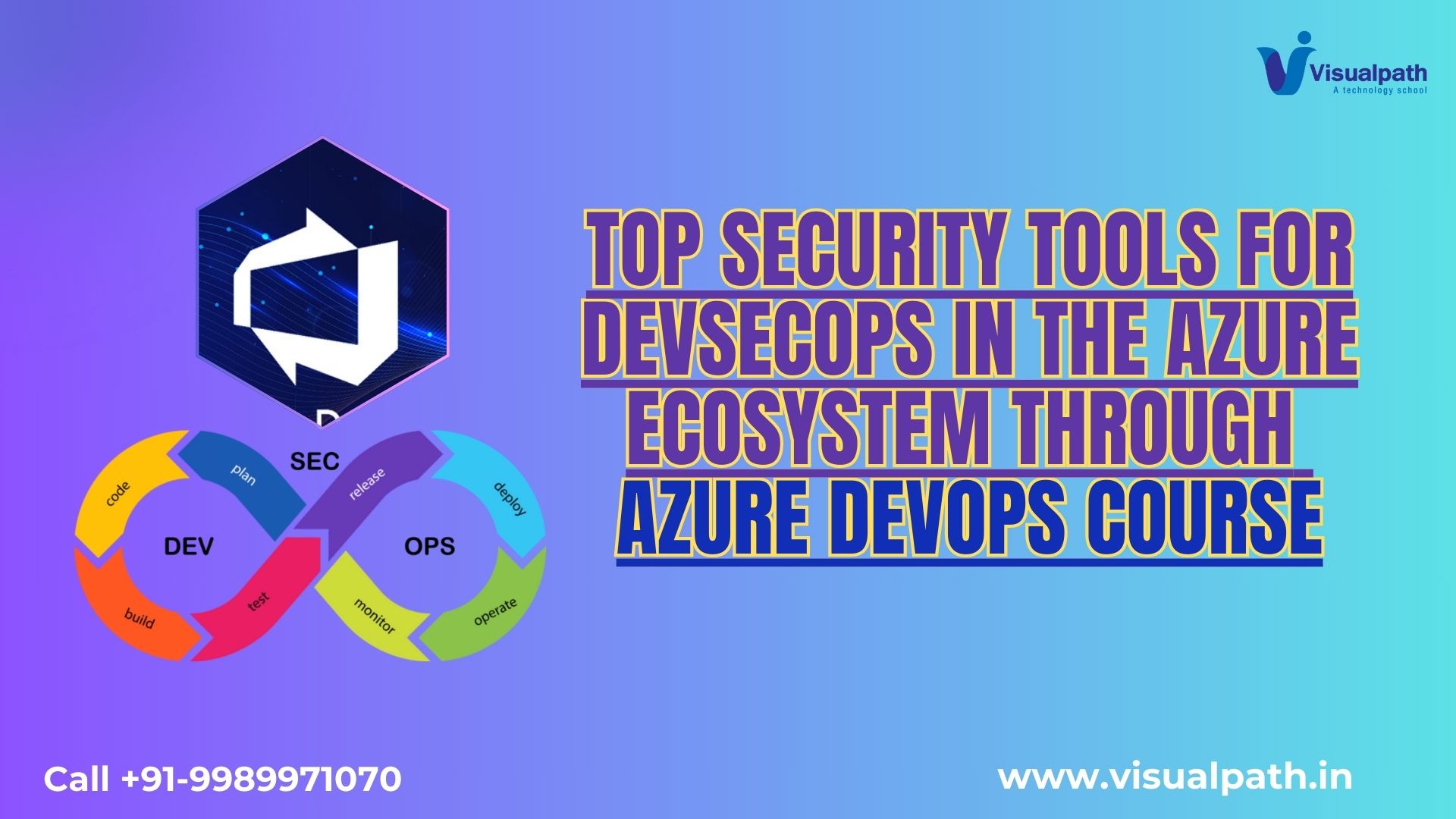
    Top Security Tools for DevSecOps in the Azure Ecosystem through Azure DevOps Course

    In the fast-evolving world of cloud computing and software development, ensuring robust security practices has become paramount. DevSecOps, a methodology that integrates security practices into the DevOps lifecycle, is crucial for maintaining secure and reliable applications. For businesses leveraging Azure DevOps, implementing the right security tools is essential. This article will explore some of the top security tools for DevSecOps in the Azure ecosystem and how they help ensure secure development workflows.

    The Azure DevOps course not only trains professionals in development and operations but also equips them with the knowledge to integrate security measures into the process. For those interested in improving their knowledge, Azure DevOps Training in Hyderabad and Azure DevOps Certification Training offer excellent resources to help professionals gain hands-on experience with these tools.

    1. Azure Security Center

    Azure Security Center is one of the core tools in the Azure ecosystem for managing DevSecOps. It provides real-time visibility into the security status of your resources and automatically identifies potential vulnerabilities. By continuously assessing your environment, it helps ensure that security configurations are up to date and aligned with best practices. Azure Security Center supports threat detection by integrating with Azure Defender, offering advanced threat protection for workloads in Azure, on-premises, and in hybrid cloud environments.

    With the help of Azure DevOps Training in Hyderabad, developers and security professionals can learn how to set up and configure Azure Security Center effectively. This can ensure continuous monitoring and threat detection in their CI/CD pipelines.

    2. Azure Policy

    Azure Policy is another powerful tool for maintaining security across your development and operations. It enforces standards and assesses compliance across your environments. This policy-driven approach ensures that all resources in your Azure environment are compliant with your organization’s security and governance policies. Azure Policy can automatically audit existing resources and deny non-compliant resources from being deployed, reducing the risk of security breaches.

    For those undergoing Azure DevOps Certification Training, learning how to effectively configure and enforce policies will help ensure that security is built into the development pipeline from the very beginning. It ensures that resources are secure and compliant even as developers build and deploy applications.

    3. Azure Key Vault

    Securing sensitive data, such as passwords, encryption keys, and certificates, is vital in any cloud environment. Azure Key Vault helps you securely store and manage access to this data, ensuring that your secrets are safeguarded. It integrates with Azure DevOps pipelines to enable automated processes without exposing sensitive information, enhancing security in the DevSecOps workflow.

    Professionals who complete an Azure DevOps course can easily learn how to leverage Azure Key Vault to secure application secrets and automate secret management in their DevOps pipelines. By using Azure Key Vault, you can maintain high-level security standards across development, testing, and production environments.

    4. Azure Defender

    Azure Defender, integrated with Azure Security Center, provides unified advanced threat protection across your workloads. It helps protect critical workloads, such as virtual machines, databases, containers, and more, by detecting and responding to threats in real-time. Azure Defender also uses machine learning and AI to provide proactive security, making it an essential tool for DevSecOps teams to ensure their applications are secure throughout the development lifecycle.

    In the context of Azure DevOps Training in Hyderabad, learning how to integrate Azure Defender into your workflows can significantly enhance your ability to protect workloads from both internal and external threats. Understanding threat detection and response capabilities is essential for any DevSecOps professional working in the Azure ecosystem.

    5. Azure DevOps Pipelines with Integrated Security Scanning

    Azure DevOps Pipelines allow teams to automate their CI/CD processes, ensuring that code is built, tested, and deployed in a continuous manner. When integrated with security tools, such as static code analysis and vulnerability scanning, Azure Pipelines help identify and remediate security issues early in the development process. Tools like WhiteSource and SonarQube can be integrated directly into Azure Pipelines, ensuring that security tests are run alongside functional tests in the CI/CD pipeline.

    For professionals taking Azure DevOps Certification Training, understanding how to set up secure CI/CD pipelines is crucial for implementing secure development workflows. This ensures that security is not an afterthought but an integral part of the development process.

    Conclusion

    In the age of rapid software development, ensuring that security is built into every stage of the development lifecycle is crucial. DevSecOps practices allow organizations to integrate security into their DevOps workflows, and Azure provides a variety of tools to help teams achieve this goal. From Azure Security Center to Azure DevOps Pipelines with integrated security scanning, these tools ensure that your cloud applications are developed and deployed securely.

    Professionals looking to advance their careers in DevOps and security can benefit greatly from Azure DevOps Training in Hyderabad and Azure DevOps Certification Training. By mastering the tools and techniques discussed in this article, they can ensure that security remains at the forefront of their development processes, enabling them to build secure, reliable applications in the cloud.

    Investing in the right training will equip you with the knowledge to make the most of Azure’s DevSecOps capabilities and secure your place in the evolving tech landscape.

    Visualpath is the Best Software Online Training Institute in Hyderabad. Avail complete Microsoft Azure DevOps Training worldwide. You will get the best course at an affordable cost.

    WhatsApp: https://www.whatsapp.com/catalog/919989971070

    Visit   https://www.visualpath.in/online-azure-devops-Training.html