Tag: Azure AI-102 Online Training

  • Difference Between Azure Synapse Analytics and Azure AI

    Difference Between Azure Synapse Analytics and Azure AI

    Introduction:

    Microsoft Azure offers a wide range of cloud services that cater to different needs in data processing, analytics, and artificial intelligence (AI). Two of the most powerful services in this suite are Azure Synapse Analytics and Azure AI. While both are integral to modern data-driven businesses, they serve different purposes and are designed for distinct aspects of data handling and analysis. Understanding the differences between these two services is crucial for leveraging their capabilities effectively. Azure AI-102 Training in Hyderabad

    What is Azure Synapse Analytics?

    Azure Synapse Analytics is a comprehensive data analytics service designed to integrate big data and data warehousing. It provides a unified platform that brings together data integration, enterprise data warehousing, and big data analytics. Azure Synapse allows users to query data using both server less and dedicated resources—offering flexibility and efficiency. It’s designed to handle vast amounts of data, making it ideal for complex data processing and real-time analytics. AI-102 Certification Training

    Key Features of Azure Synapse Analytics

    1. Unified Analytics Experience:
      • Azure Synapse combines big data and data warehousing into a single service. It allows users to manage, analyse, and visualize data from various sources in a unified workspace.
    2. Synapse SQL:
      • Synapse SQL provides both on-demand (server less) and provisioned (dedicated) resources for querying data. This flexibility enables users to choose the best method depending on their needs, whether it’s for quick ad-hoc queries or long-running analytical processes.
    3. Integrated Spark Engine:
      • Azure Synapse includes an integrated Apache Spark engine for big data processing, which allows users to perform data exploration and machine learning tasks at scale. AI-102 Microsoft Azure AI Training
    4. Data Integration:
      • With Synapse Pipelines, users can orchestrate and automate data movement and transformation across various sources. This integration supports seamless ETL (Extract, Transform, Load) processes within the same environment.
    5. Security and Compliance:
      • Azure Synapse provides built-in security features, including data encryption, access controls, and compliance certifications, ensuring that data is managed securely and in accordance with industry regulations.
    6. Analytics at Scale:
      • Designed for massive datasets, Azure Synapse can scale to handle petabytes of data, making it suitable for enterprises with large-scale data needs.
    7. Real-time Analytics:
      • Azure Synapse supports real-time analytics on streaming data, allowing businesses to gain insights from data as it arrives, which is crucial for time-sensitive decision-making. Azure AI-102 Course in Hyderabad

    What is Azure AI?

    Azure AI is a collection of artificial intelligence services and tools that enable developers to build and deploy AI solutions. It encompasses a wide range of capabilities, including machine learning, natural language processing, computer vision, and conversational AI. Azure AI is designed to make AI accessible to everyone, whether they are experienced data scientists or developers new to AI, by providing pre-built models and no-code/low-code tools.

    Key Features of Azure AI

    1. Azure Cognitive Services:
      • A suite of pre-built APIs that allow developers to integrate AI capabilities like vision, speech, language understanding, and decision-making into their applications without needing deep AI expertise. Azure AI-102 Online Training
    2. Azure Machine Learning:
      • A platform for building, training, and deploying machine learning models. It offers tools for automated machine learning (AutoML), deep learning, and MLOps, making it easier to operationalize AI.
    3. Computer Vision:
      • Azure AI includes computer vision services that allow users to analyse images and videos, perform object detection, optical character recognition (OCR), and more.
    4. Natural Language Processing (NLP):
      • Tools like Text Analytics, Language Understanding (LUIS), and Translator are part of Azure AI, enabling applications to process and understand human language.
    5. Bot Service:
      • Azure AI provides a bot framework for building conversational AI, allowing developers to create and deploy intelligent chatbots for various use cases. Azure AI Engineer Training
    6. Speech Services:
      • Azure AI offers services for speech-to-text, text-to-speech, and real-time translation, enabling voice-based applications and enhancing accessibility.
    7. Custom Vision and Custom AI:
      • For more specific use cases, Azure AI allows users to build and deploy custom models that cater to unique business needs, such as custom image classification and anomaly detection.

    Comparing Azure Synapse Analytics and Azure AI

    While both Azure Synapse Analytics and Azure AI are powerful tools within the Azure ecosystem, they are designed for different purposes and use cases:

    1. Purpose:
      • Azure Synapse Analytics is primarily focused on data integration, warehousing, and large-scale analytics. It is designed to handle big data workloads and allows organizations to analyse massive datasets efficiently.
      • Azure AI is centred around building and deploying artificial intelligence solutions. It provides tools and services for machine learning, cognitive services, and AI-driven applications. Azure AI Engineer Online Training
    2. Target Users:
      • Azure Synapse Analytics is typically used by data engineers, data scientists, and business analysts who need to process and analyse large volumes of data, often for business intelligence and reporting purposes.
      • Azure AI is aimed at developers, AI engineers, and data scientists who want to integrate AI capabilities into applications or build sophisticated machine learning models.
    3. Core Capabilities:
      • Azure Synapse Analytics offers data warehousing, big data processing, and real-time analytics. Its core strength lies in managing and analysing data at scale.
      • Azure AI provides AI services such as machine learning, computer vision, NLP, and conversational AI. Its focus is on enabling AI-driven insights and automation. Microsoft Azure AI Engineer Training
    4. Integration:
      • Azure Synapse Analytics integrates well with other Azure data services like Azure Data Lake, Azure Data Factory, and Power BI, providing a comprehensive data management and analytics solution.
      • Azure AI integrates with other AI and machine learning tools, such as Azure Machine Learning, and can be combined with Azure Synapse for advanced analytics that incorporate AI.
    5. Scalability:
      • Azure Synapse Analytics is built to scale out massively, handling petabytes of data and supporting real-time analytics across vast datasets.
      • Azure AI scales in terms of deploying machine learning models and AI services across applications, enabling widespread AI adoption across various platforms.
    6. Real-Time Capabilities:
      • Azure Synapse Analytics excels in processing and analysing streaming data in real-time, making it ideal for scenarios that require immediate data insights.
      • Azure AI can also process real-time data, especially in scenarios involving real-time speech recognition, text analysis, or image processing. AI-102 Certification Training

    When to Use Each Service

    • Use Azure Synapse Analytics when your primary goal is to manage and analyse large datasets, perform complex queries across big data, or integrate various data sources into a unified analytics platform. It’s particularly useful for business intelligence, reporting, and large-scale data processing.
    • Use Azure AI when you need to build AI-driven applications, automate processes with machine learning, or integrate cognitive services like image recognition, speech processing, or natural language understanding into your solutions. Azure AI is ideal for creating intelligent applications that require advanced AI capabilities. Azure AI Engineer Training

    Conclusion

    Azure Synapse Analytics and Azure AI are complementary services that serve distinct purposes within the Azure ecosystem. While Azure Synapse Analytics is focused on big data analytics and data integration, Azure AI is geared towards enabling AI and machine learning capabilities. By understanding their differences and strengths, businesses can leverage both services to build robust, data-driven, and AI-powered solutions. Whether you are looking to analyse vast amounts of data or infuse AI into your applications, Azure has the tools to help you achieve your goals.

    Visualpath is the Best Software Online Training Institute in Hyderabad. Avail complete Azure AI Engineer Associate (AI-102) worldwide. You will get the best course at an affordable cost.

    WhatsApp: https://www.whatsapp.com/catalog/917032290546/

    Visit: https://visualpath.in/microsoft-azure-ai-102-online-training.html
  • Ethics and Fairness in Microsoft Azure AI

    Ethics and Fairness in Microsoft Azure AI

    Introduction:

    Artificial intelligence (AI) has emerged as a transformative force, reshaping industries, enhancing efficiencies, and enabling unprecedented innovations. However, as AI systems increasingly permeate our daily lives, there is a growing recognition of the need to address ethical considerations and fairness in their design and deployment. Microsoft Azure AI, as a leading provider of AI services, has placed a strong emphasis on these principles, aiming to build trustworthy and responsible AI systems. This article explores the ethical frameworks and fairness measures adopted by Microsoft Azure AI, highlighting the importance of these aspects in the broader AI landscape. AI-102 Certification Training

    1. The Importance of Ethics in AI

    AI systems, while powerful, can inadvertently perpetuate biases, reinforce inequalities, and infringe on privacy. These risks arise from various factors, including biased training data, opaque decision-making processes, and unintended consequences of AI applications. As AI technologies become more integrated into critical sectors such as healthcare, finance, and law enforcement, the ethical implications of their use become more pronounced.

    Microsoft recognizes these challenges and has committed to developing AI systems that respect human rights and uphold ethical standards. The company has articulated a set of guiding principles for ethical AI, including fairness, reliability and safety, privacy and security, inclusiveness, transparency, and accountability. These principles serve as a foundation for Microsoft’s approach to AI development and deployment. AI-102 Microsoft Azure AI Training

    2. Fairness in AI: Addressing Bias

    Fairness is a central ethical concern in AI, particularly because AI systems often reflect and amplify existing societal biases. These biases can manifest in various ways, from discriminatory hiring algorithms to biased facial recognition systems. Ensuring fairness involves identifying and mitigating these biases, both in the training data and the AI models themselves.

    Microsoft Azure AI has implemented several strategies to promote fairness in its AI services. One key approach is the use of diverse and representative datasets during the training phase. By including data from a wide range of demographic groups, Azure AI aims to reduce the risk of bias in its models. Additionally, Microsoft provides tools and frameworks for fairness assessment, enabling developers to evaluate and address potential biases in their AI systems. Azure AI-102 Online Training

    The company also emphasizes the importance of transparency in AI decision-making. Transparent AI systems allow users and stakeholders to understand how decisions are made, fostering trust and accountability. Microsoft Azure AI offers model interpretability tools, such as the “Fair learn” toolkit, which helps developers understand the impact of their models on different demographic groups and adjust them to enhance fairness.

    3. Privacy and Security: Protecting User Data

    The ethical use of AI extends to the protection of user data. AI systems often require large amounts of data to function effectively, raising concerns about privacy and data security. Microsoft Azure AI is committed to safeguarding user data through robust privacy policies and security measures. Azure AI Engineer Training

    Azure’s AI services are designed with privacy by default, ensuring that data is anonymized and protected throughout the AI lifecycle. The platform adheres to international privacy regulations, such as the General Data Protection Regulation (GDPR), and provides tools for data governance and compliance. These measures not only protect user data but also enhance the trustworthiness of AI systems.

    4. Inclusiveness and Accessibility

    AI has the potential to empower people and improve accessibility, but it can also exclude marginalized groups if not designed with inclusivity in mind. Microsoft Azure AI strives to create inclusive AI systems that cater to diverse user needs and abilities. This includes developing AI services that are accessible to people with disabilities, such as speech-to-text services for the hearing impaired or computer vision tools for the visually impaired. Azure AI Engineer Online Training

    Microsoft also invests in community engagement and collaboration to ensure that diverse perspectives are considered in AI development. By involving a broad range of stakeholders, including ethicists, social scientists, and representatives from marginalized communities, Microsoft aims to create AI solutions that benefit everyone.

    5. Transparency and Accountability

    Transparency and accountability are crucial for building trust in AI systems. Users and stakeholders need to understand how AI systems operate and who is responsible for their outcomes. Microsoft Azure AI promotes transparency by providing clear documentation and disclosures about how its AI services work, the data they use, and the potential limitations and risks. Microsoft Azure AI Engineer Training

    To enhance accountability, Microsoft has established internal governance structures, such as the AI Ethics and Effects in Engineering and Research (AETHER) Committee, which oversees the ethical aspects of AI development. The company also engages in external partnerships and collaborations to advance responsible AI practices across the industry.

    Conclusion

    Ethics and fairness are foundational elements of Microsoft Azure AI‘s approach to artificial intelligence. By prioritizing these principles, Microsoft seeks to build AI systems that are not only technologically advanced but also socially responsible. As AI continues to evolve and become more integrated into various aspects of society, the emphasis on ethics and fairness will be crucial in ensuring that these technologies serve the common good and respect human values. Microsoft’s commitment to these principles sets a positive example for the industry, highlighting the importance of responsible innovation in the AI landscape.

    Visualpath is the Best Software Online Training Institute in Hyderabad. Avail complete Azure AI Engineer Associate (AI-102) worldwide. You will get the best course at an affordable cost.

    WhatsApp: https://www.whatsapp.com/catalog/917032290546/

    Visit: https://visualpath.in/microsoft-azure-ai-102-online-training.html

  • Developing Ethical AI Solutions in Microsoft Azure AI?

    Developing Ethical AI Solutions in Microsoft Azure AI?

    Introduction:

    Artificial intelligence (AI) continues to transform various sectors, the ethical development and deployment of AI solutions become increasingly crucial. Microsoft Azure AI offers a comprehensive suite of tools that facilitate the creation of powerful AI applications while adhering to ethical principles. This article explores the best practices for developing ethical AI solutions using Microsoft Azure AI, focusing on key aspects such as transparency, fairness, accountability, and privacy. AI-102 Certification Training

    Understanding Ethical AI

    Ethical AI refers to the design, development, and deployment of AI systems that align with moral and ethical principles, ensuring they benefit society while minimizing potential harms. Ethical AI involves multiple dimensions:

    1. Transparency: AI systems should be understandable and explainable to users and stakeholders.
    2. Fairness: AI should provide unbiased outcomes and not perpetuate or exacerbate existing inequalities.
    3. Accountability: Developers and organizations should be responsible for the outcomes of AI systems.
    4. Privacy: AI systems must respect and protect user data and privacy.

    Best Practices for Developing Ethical AI Solutions

    1. Incorporate Ethical Considerations from the Start

    Integrating ethical principles into the AI development lifecycle from the outset is crucial. This includes identifying potential ethical issues, engaging stakeholders, and defining clear ethical guidelines for the project. Microsoft Azure AI provides resources such as the Responsible AI Principles, which can guide developers in this process. Azure AI-102 Training in Hyderabad

    1. Ensure Data Transparency and Explain ability

    Transparent AI systems allow users to understand how decisions are made. Microsoft Azure AI’s Interpret and Fair learn are valuable tools for enhancing model interpretability and fairness. By using these tools, developers can create models that provide clear explanations for their decisions, helping to build trust with users.

    1. Promote Fairness and Mitigate Bias

    AI systems can unintentionally perpetuate biases present in training data. To combat this, developers should use tools like Fair learn, which is integrated with Azure Machine Learning. Fair learn helps in identifying and mitigating biases in machine learning models, ensuring fair and equitable outcomes for all users.

    1. Ensure Accountability

    Accountability involves tracking and documenting the development and deployment processes of AI systems. Azure DevOps and GitHub integration with Azure Machine Learning facilitate robust version control and documentation. This ensures that all changes are tracked, and the development process is transparent, making it easier to audit and address any issues that arise. Azure AI-102 Online Training

    1. Prioritize Privacy and Data Protection

    Privacy is a fundamental aspect of ethical AI. Microsoft Azure provides robust security and compliance features to protect user data. Azure AI services comply with major regulatory standards such as GDPR and HIPAA, ensuring that user data is handled responsibly. Implementing differential privacy techniques can further enhance data protection by adding noise to data, thereby preserving privacy while still enabling useful insights.

    1. Engage Stakeholders and Foster Inclusive Development

    Engaging a diverse group of stakeholders throughout the AI development process is essential for ensuring that the system meets the needs of all users. This includes involving ethicists, domain experts, and end-users to provide diverse perspectives and insights. Tools like Azure AI’s Custom Vision and Form Recognizer can be tailored to specific user needs, ensuring that the solutions are inclusive and accessible.

    1. Continuous Monitoring and Improvement

    Ethical AI is not a one-time achievement but an ongoing commitment. Continuous monitoring and updating of AI systems are necessary to address new ethical challenges that may arise. Azure Machine Learning’s monitoring capabilities enable developers to track model performance and ensure that ethical standards are maintained over time. Azure AI Engineer Online Training

    1. Educate and Train Teams

    Ensuring that all team members are aware of ethical AI principles and best practices is crucial. Microsoft offers various resources and training programs, such as the AI Business School, which can help teams understand the ethical implications of AI and how to address them effectively.

    Case Study: Ethical AI in Healthcare

    Consider a healthcare application using Azure AI to predict patient outcomes. Ethical considerations are paramount in this context. By using Azure Machine Learning and Fair learn, developers can ensure that the model is free from biases related to race, gender, or socioeconomic status. Interpret can provide explanations for predictions, helping healthcare professionals make informed decisions. Azure’s compliance with HIPAA ensures that patient data is protected, maintaining privacy and trust.

    Conclusion

    Developing ethical AI solutions is essential for building trust and ensuring that AI benefits society as a whole. Microsoft Azure AI provides a robust framework and tools to support ethical AI development, focusing on transparency, fairness, accountability, and privacy. By incorporating these best practices, developers can create AI solutions that are not only powerful but also ethical and responsible. Microsoft Azure AI Engineer Training

    Ethical AI is an evolving field, and continuous learning and adaptation are necessary to keep pace with new challenges and advancements. Leveraging Azure AI’s resources and maintaining a commitment to ethical principles will enable developers to navigate this complex landscape successfully.

    Visualpath is the Best Software Online Training Institute in Hyderabad. Avail complete Azure AI Engineer Associate (AI-102) worldwide. You will get the best course at an affordable cost.

    Call on – +91-9989971070

    WhatsApp: https://www.whatsapp.com/catalog/917032290546/

    Visit: https://visualpath.in/microsoft-azure-ai-102-online-training.html
  • Enhancing Computer Vision Applications with Azure AI

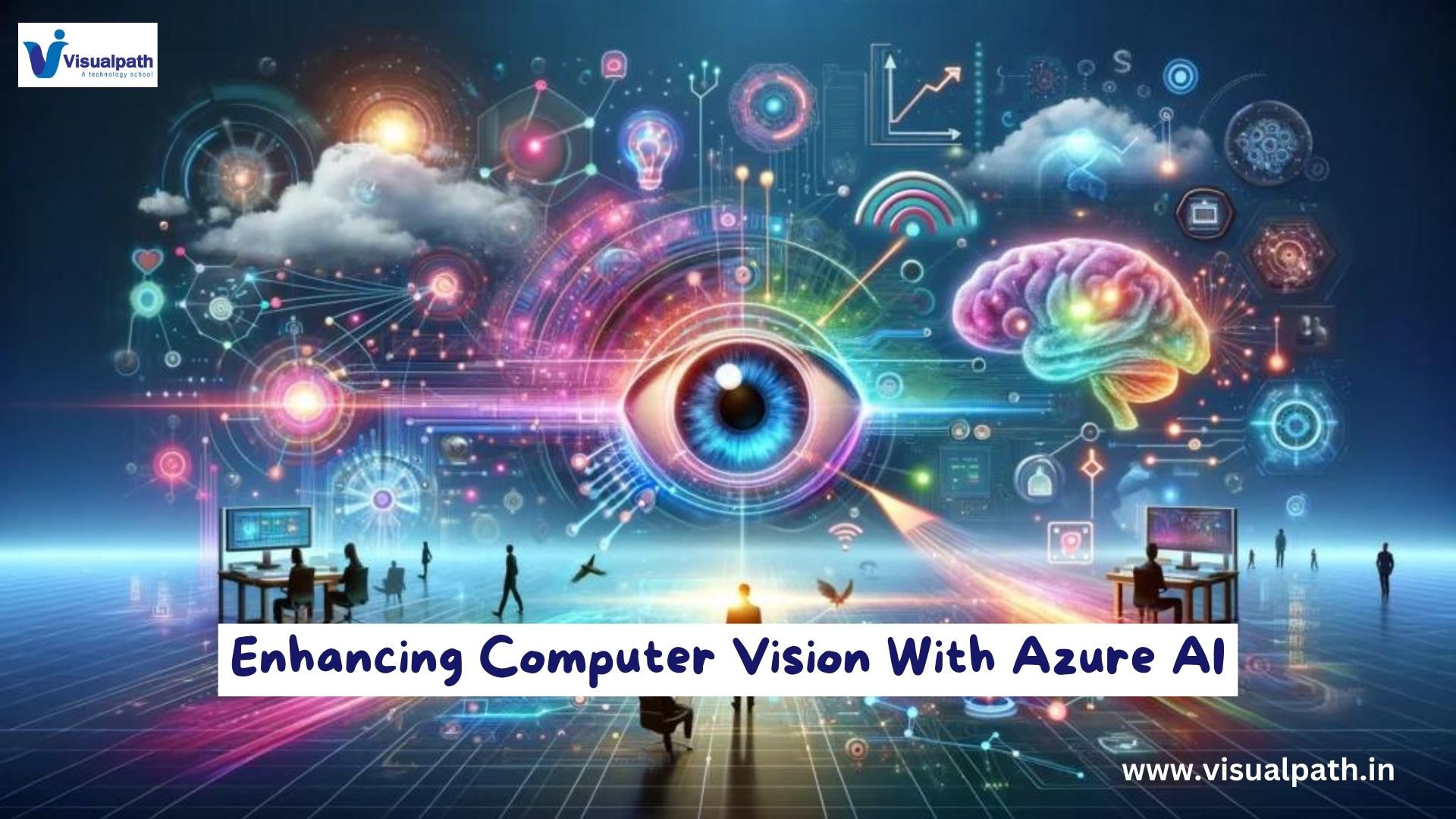
    Enhancing Computer Vision Applications with Azure AI

    Introduction:

    Microsoft Azure AI computer vision has emerged as a pivotal field, transforming how machines perceive and interpret visual information. Microsoft Azure AI stands at the forefront of this revolution, providing a robust platform for enhancing computer vision applications without the need for extensive coding. This article explores the capabilities, advantages, and practical applications of Azure AI in the realm of computer vision. Azure AI-102 Training in Hyderabad

    Understanding Computer Vision and Azure AI

    Computer vision is a branch of artificial intelligence (AI) that enables machines to interpret and make decisions based on visual inputs. It encompasses various tasks such as image recognition, object detection, and image segmentation. Microsoft Azure AI provides a suite of cognitive services that simplify the development and deployment of computer vision solutions. These services leverage pre-built models and APIs, allowing developers and businesses to harness the power of AI with minimal coding effort. AI-102 Microsoft Azure AI Training

    Key Azure AI Services for Computer Vision

    1. Azure Computer Vision API: The Azure Computer Vision API offers powerful tools for analysing images and extracting rich information. It can identify objects, people, text, and even describe the contents of an image. This service is particularly useful for applications in retail, healthcare, and security, where accurate image analysis is crucial.
    2. Custom Vision: Custom Vision allows users to build, deploy, and improve custom image classifiers. With an easy-to-use interface, users can upload images, tag them, and train a custom model tailored to their specific needs. This service is ideal for scenarios where generic models may not perform well, such as identifying specific products or defects in a manufacturing process.
    3. Face API: The Face API provides advanced face detection and recognition capabilities. It can detect and analyse human faces in images, providing attributes such as age, gender, and emotion. This API is widely used in security applications, personalized user experiences, and social media platforms.
    4. Form Recognizer: Form Recognizer extracts text, key-value pairs, and tables from documents, making it invaluable for automating data entry and processing. It supports a variety of document types, including invoices, receipts, and business cards, streamlining operations in finance, logistics, and customer service. Azure AI-102 Online Training

    Advantages of Using Azure AI for Computer Vision

    1. Ease of Use: One of the primary advantages of Azure AI services is their user-friendly nature. These services come with intuitive interfaces and comprehensive documentation, enabling users with minimal coding experience to build and deploy computer vision applications. The drag-and-drop functionality and pre-built models significantly reduce development time.
    2. Scalability and Reliability: Azure AI leverages Microsoft’s robust cloud infrastructure, ensuring high availability and scalability. This allows businesses to deploy computer vision applications on a global scale, accommodating varying workloads without compromising performance.
    3. Integration Capabilities: Azure AI seamlessly integrates with other Azure services and third-party applications. This interoperability facilitates the creation of end-to-end solutions, where computer vision can be combined with other AI services, data analytics, and IoT devices to deliver comprehensive and innovative applications.
    4. Cost-Effectiveness: Azure AI follows a pay-as-you-go pricing model, making it cost-effective for businesses of all sizes. Users can start small, experiment with different services, and scale as their needs grow, ensuring optimal resource utilization and budget management.

    Practical Applications of Azure AI in Computer Vision

    1. Retail: In the retail sector, Azure AI can enhance customer experiences by enabling visual search and personalized recommendations. For instance, customers can upload images of products they like, and the system can identify similar items available in the store. Additionally, computer vision can be used for inventory management, detecting low stock levels and automating reordering processes.
    2. Healthcare: Azure AI’s computer vision capabilities can revolutionize healthcare by assisting in medical imaging and diagnostics. AI models can analyse X-rays, MRIs, and CT scans to detect anomalies and provide preliminary diagnoses, aiding radiologists and improving patient outcomes.
    3. Security and Surveillance: In security applications, Azure AI can enhance video surveillance systems by detecting and alerting suspicious activities in real-time. Face recognition technology can be employed for access control, ensuring only authorized personnel enter restricted areas.
    4. Manufacturing: In manufacturing, computer vision can be used for quality control by inspecting products for defects during production. This ensures high standards and reduces the likelihood of faulty products reaching consumers, ultimately saving costs and maintaining brand reputation. Microsoft Azure AI Engineer Training

    Conclusion

    Microsoft Azure AI offers a comprehensive suite of services that significantly enhance computer vision applications without the need for extensive coding. By leveraging the capabilities of Azure Computer Vision API, Custom Vision, Face API, and Form Recognizer, businesses can build intelligent, scalable, and cost-effective solutions across various industries. As the field of computer vision continues to evolve, Azure AI remains a powerful ally, enabling innovation and driving the future of visual intelligence.

    Visualpath is the Best Software Online Training Institute in Hyderabad. Avail complete Azure AI Engineer Associate (AI-102) worldwide. You will get the best course at an affordable cost.

    Call on – +91-9989971070

    WhatsApp: https://www.whatsapp.com/catalog/917032290546/

    Visit: https://visualpath.in/microsoft-azure-ai-102-online-training.html