Tag: ade training

  • Key Differences Between ETL and ELT Processes in Azure

    Key Differences Between ETL and ELT Processes in Azure

    Azure data engineering offers two common approaches for processing data: ETL (Extract, Transform, Load) and ELT (Extract, Load, Transform). These methods are essential for moving and processing data from source systems into data warehouses or data lakes for analysis. While both serve similar purposes, they differ in their workflows, tools, and technologies, particularly when implemented within Azure’s cloud ecosystem. This article will explore the key distinctions between ETL and ELT in the context of Azure data services, helping organizations make informed decisions about their data processing strategies. Azure Data Engineer Training


    1. Process Flow: Extraction, Transformation, and Loading

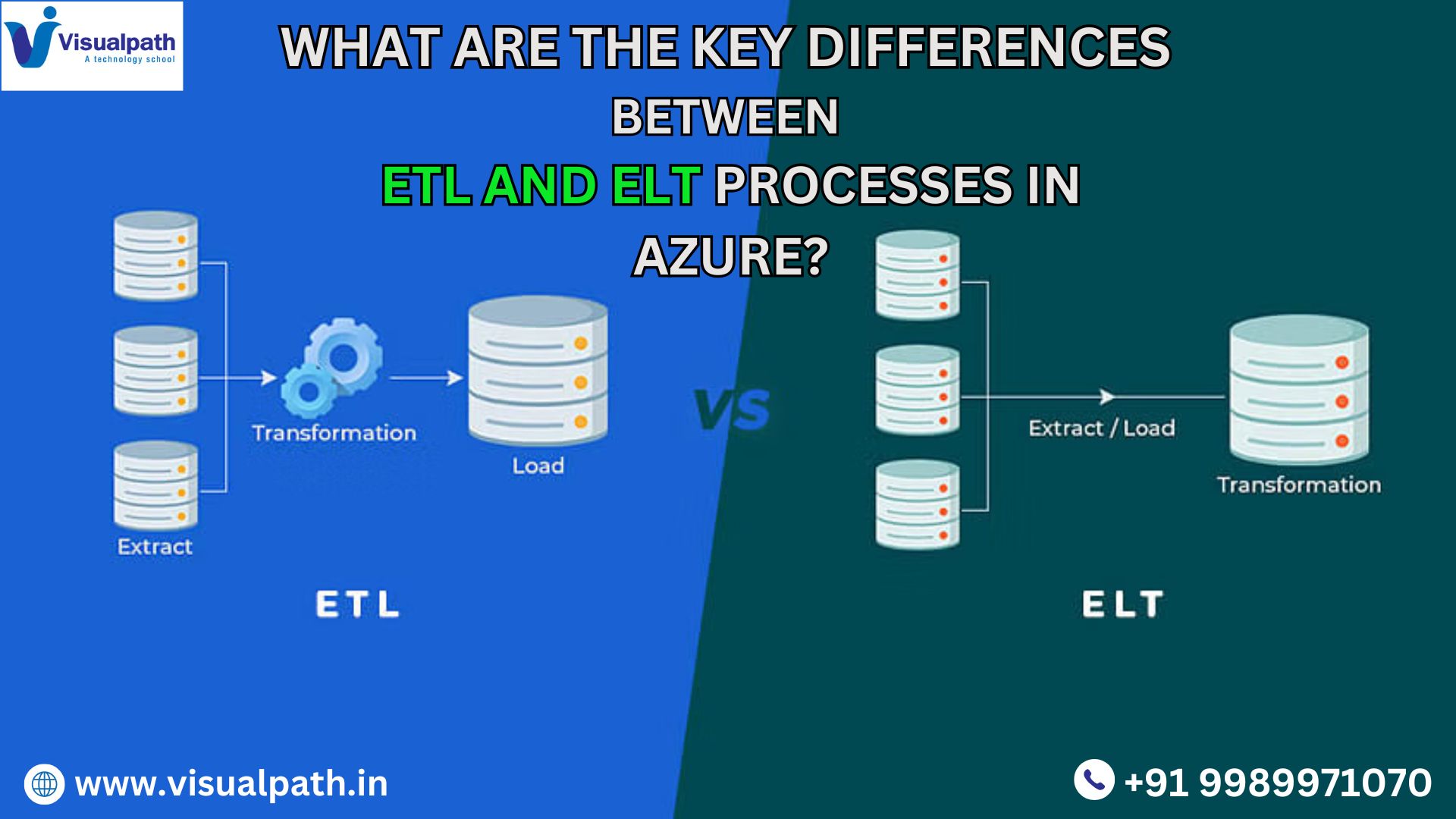
    The most fundamental difference between ETL and ELT is the sequence in which data is processed: Microsoft Azure Data Engineer

    • ETL (Extract, Transform, Load):
      • In the ETL process, data is first extracted from source systems, transformed into the desired format or structure, and then loaded into the data warehouse or data lake.
      • The transformation step occurs before loading the data into the destination, ensuring that the data is cleaned, enriched, and formatted properly during the data pipeline.
    • ELT (Extract, Load, Transform):
      • ELT, on the other hand, follows a different sequence: data is extracted from the source, loaded into the destination system (e.g., a cloud data warehouse), and then transformed directly within the destination system.
      • The transformation happens after the data has already been stored, utilizing the computational power of the cloud infrastructure to process and modify the data.

    2. Tools and Technologies in Azure

    Both ETL and ELT processes require specific tools to handle data extraction, transformation, and loading. Azure provides robust tools for both approaches, but the choice of tool depends on the processing flow:

    • ETL in Azure:
      • Azure Data Factory is the primary service used for building and managing ETL pipelines. It offers a wide range of connectors for various data sources and destinations and allows for data transformations to be executed in the pipeline itself using Data Flow or Mapping Data Flows.
      • Azure Databricks, a Spark-based service, can also be integrated for more complex transformations during the ETL process, where heavy lifting is required for batch or streaming data processing.
    • ELT in Azure:
      • For the ELT process, Azure Synapse Analytics (formerly SQL Data Warehouse) is a leading service, leveraging the power of cloud-scale data warehouses to perform in-place transformations.
      • Azure Data Lake and Azure Blob Storage are used for storing raw data in ELT pipelines, with Azure Synapse Pipelines or Azure Data Factory responsible for orchestrating the load and transformation tasks.
      • Azure SQL Database and Azure Data Explorer are also used in ELT scenarios where data is loaded into the database first, followed by transformations using T-SQL or Azure’s native query processing capabilities.

    3. Performance and Scalability

    The key advantage of ELT over ETL lies in its performance and scalability, particularly when dealing with large volumes of data: Azure Data Engineering Certification

    • ETL Performance:
      • ETL can be more resource-intensive because the transformation logic is executed before the data is loaded into the warehouse. This can lead to bottlenecks during the transformation step, especially if the data is complex or requires significant computation.
      • With Azure Data Factory, transformation logic is executed during the pipeline execution, and if there are large datasets, the process may be slower and require more manual optimization.
    • ELT Performance:
      • ELT leverages the scalable and high-performance computing power of Azure’s cloud services like Azure Synapse Analytics and Azure Data Lake. After the data is loaded into the cloud storage or data warehouse, the transformations are run in parallel using the cloud infrastructure, allowing for faster and more efficient processing.
      • As data sizes grow, ELT tends to perform better since the processing occurs within the cloud infrastructure, reducing the need for complex pre-processing and allowing the system to scale with the data.

    4. Data Transformation Complexity

    • ETL Transformations:
      • ETL processes are better suited for complex transformations that require extensive pre-processing of data before it can be loaded into a warehouse. In scenarios where data must be cleaned, enriched, and aggregated, ETL provides a structured and controlled approach to transformations.
    • ELT Transformations:
      • ELT is more suited to scenarios where the data is already clean or requires simpler transformations that can be efficiently performed using the native capabilities of cloud platforms. Azure’s Synapse Analytics and SQL Database offer powerful querying and processing engines that can handle data transformations once the data is loaded, but this may not be ideal for very complex transformations.

    5. Data Storage and Flexibility

    • ETL Storage:
      • ETL typically involves transforming the data before storage in a structured format, like a relational database or data warehouse, which makes it ideal for scenarios where data must be pre-processed or aggregated before analysis.
    • ELT Storage:
      • ELT offers greater flexibility, especially for handling raw, unstructured data in Azure Data Lake or Blob Storage. After data is loaded, transformation and analysis can take place in a more dynamic environment, enabling more agile data processing.

    6. Cost Implications

    • ETL Costs: Azure Data Engineer Course
      • ETL processes tend to incur higher costs due to the additional processing power required to transform the data before loading it into the destination. Since transformations are done earlier in the pipeline, more resources (compute and memory) are required to handle these operations.
    • ELT Costs:
      • ELT typically incurs lower costs, as the heavy lifting of transformation is handled by Azure’s scalable cloud infrastructure, reducing the need for external computation resources during data ingestion. The elasticity of cloud computing allows for more cost-efficient data processing.

    Conclusion

    In summary, the choice between ETL and ELT in Azure largely depends on the nature of your data processing needs. ETL is preferred for more complex transformations, while ELT provides better scalability, performance, and cost-efficiency when working with large datasets. Both approaches have their place in modern data workflows, and Azure’s cloud-native tools provide the flexibility to implement either process based on your specific requirements. By understanding the key differences between these processes, organizations can make informed decisions on how to best leverage Azure’s ecosystem for their data processing and analytics needs.

    Visualpath is the Best Software Online Training Institute in Hyderabad. Avail complete    Azure Data Engineering worldwide. You will get the best course at an affordable cost.

    Visit:  https://www.visualpath.in/online-azure-data-engineer-course.html

    WhatsApp: https://www.whatsapp.com/catalog/919989971070/

    Visit Blog: https://azuredataengineering2.blogspot.com/

  • What is Azure Databricks and How is It Used in Data Engineering?

    What is Azure Databricks and How is It Used in Data Engineering?

    Azure Databricks is a fast, easy, and collaborative Apache Spark-based analytics platform optimized for the Microsoft Azure cloud environment. It integrates seamlessly with various Azure services like Azure Storage, Azure Synapse Analytics, and Azure Data Lake. Azure Databricks provides a unified environment for big data processing, machine learning, and data engineering tasks, making it an ideal platform for data engineers to streamline workflows and improve productivity. Azure Data EngineeringTraining

     Key Features of Azure Databricks

    1. Unified Analytics Platform

    Azure Databricks combines data engineering, data science, and machine learning into one platform, enabling engineers to manage and process data more efficiently. It allows engineers to collaborate on big data projects in real-time, thanks to its interactive workspace and integration with popular tools like Jupyter Notebooks.

    1. Apache Spark Optimization

    Built on Apache Spark, Azure Databricks is designed for high-performance distributed computing. Spark’s capabilities for processing large datasets and running complex algorithms make it a powerful tool for big data engineering. Azure Databricks optimizes Spark for cloud usage, enhancing performance and providing greater flexibility to handle various data engineering workloads.

    1. Scalable and Cost-Effective

    Azure Databricks supports dynamic scaling, meaning it automatically adjusts resources based on the size of the workload. This makes it cost-effective since users only pay for what they use. Azure Databricks clusters can scale up or down based on workload demand, ensuring that data engineering tasks are completed promptly without over-provisioning resources.

     How Azure Databricks is Used in Data Engineering

    1. ETL (Extract, Transform, Load) Processes

    One of the most common uses of Azure Databricks in data engineering is for ETL operations. With Azure Databricks, data engineers can efficiently extract data from multiple sources, transform it using powerful data processing features, and load it into data storage systems like Azure Data Lake or Azure SQL Database. Using Apache Spark, data engineers can perform complex transformations on large datasets without compromising performance.

    Azure Databricks provides various tools to facilitate ETL, including:

    1. Spark SQL for querying and transforming data.
    2. DataFrames and Datasets for working with structured data.
    3. Integration with Azure Data Factory for orchestrating data pipelines.
    1. Batch and Stream Processing

    Azure Databricks is versatile in both batch processing and stream processing. In batch processing, large volumes of data are processed in intervals, while stream processing handles continuous data flows in real-time. Data engineers use Azure Databricks for real-time analytics and decision-making, thanks to its ability to ingest, process, and analyze streaming data from sources like IoT devices, logs, and social media feeds.

    The platform supports structured streaming, a feature of Apache Spark that enables real-time processing. This makes it a popular choice for use cases like fraud detection, anomaly detection, and monitoring systems in data engineering.

    1. Data Lake and Data Warehousing Integration

    Azure Databricks easily integrates with Azure Data Lake and Azure Synapse Analytics, providing a robust solution for big data storage and processing. Data engineers use this integration to perform complex transformations on data stored in Data Lakes and then load the processed data into Azure Synapse Analytics or other data warehousing solutions for deeper analysis.

    The seamless integration with Delta Lake further enhances data consistency and reliability by providing ACID transactions, schema enforcement, and version control. These features are critical for data engineers who need to maintain high-quality data throughout the data pipeline.

    1. Machine Learning and Advanced Analytics

    Azure Databricks is widely used in data engineering to create machine learning pipelines. The platform provides MLflow, an open-source platform for managing the machine learning lifecycle, which helps data engineers and data scientists collaborate on creating, training, and deploying models.

    Through its integration with other Azure AI services, Azure Databricks allows data engineers to build machine learning models and integrate them with business processes for predictive analytics, improving decision-making capabilities and efficiency.

     Why Azure Databricks is Essential for Data Engineering

    1. Collaboration Across Teams

    Azure Databricks provides a unified workspace where teams of data engineers, data scientists, and analysts can collaborate. This collaborative environment reduces silos and accelerates project timelines, as everyone works on the same platform with access to the same tools and resources.

    1. Support for Big Data Frameworks

    Azure Databricks supports several big data frameworks, including Apache Hadoop and Apache Kafka, allowing data engineers to process, store, and analyze large datasets across distributed systems. The platform’s ability to handle structured and unstructured data efficiently is crucial for data engineering workflows.

    1. Streamlined Data Pipelines

    By leveraging Azure Databricks’ capabilities for building and automating data pipelines, data engineers can ensure smooth data flow across various stages of the data processing pipeline. Whether the pipeline is processing batch data, streaming data, or performing machine learning tasks, Azure Databricks provides the necessary tools to optimize and automate the entire process.

     Conclusion

    Azure Databricks is a powerful platform for data engineering tasks, offering a unified analytics environment to manage big data workloads efficiently. By leveraging its integration with Apache Spark, Azure Data Lake, Synapse Analytics, and machine learning tools, data engineers can streamline ETL processes, perform real-time analytics, and enhance collaboration across teams.

    With its scalable, cost-effective infrastructure and real-time data processing capabilities, Azure Databricks is an indispensable tool for any modern data engineering workflow, making it a critical choice for businesses looking to leverage big data technologies. Whether it’s for data transformation, batch processing, machine learning, or creating robust data pipelines, Azure Databricks equips data engineers with the tools needed to deliver value quickly and effectively.

    Visualpath is the Best Software Online Training Institute in Hyderabad. Avail complete    Azure Data Engineering worldwide. You will get the best course at an affordable cost.

    WhatsApp: https://www.whatsapp.com/catalog/919989971070/

    Visit:  https://www.visualpath.in/online-azure-data-engineer-course.html

  • Azure Data Engineering? Advantages and Features of Azure Application

    Azure Data Engineering? Advantages and Features of Azure Application

    Introduction

    Azure Data Engineer Online Training involves building scalable data solutions, pipelines, and architectures that enable businesses to process, analyze, and store massive datasets. One of the most important tools for monitoring the health and performance of these solutions is Azure Application Insights. This service provides comprehensive insights into application performance, making it an invaluable asset for data engineers managing Azure ecosystems. Microsoft Azure Data Engineer Training

    Advantages of Azure Application Insights

    Azure Application Insights is designed to help data engineers and developers optimize their applications. Here are the key advantages:

    • Comprehensive Monitoring: Azure Application Insights provides real-time monitoring of your Azure applications, helping to identify performance bottlenecks and potential failures. With its proactive alerting features, engineers can detect and respond to issues before they affect end users.
    • End-to-End Visibility: Application Insights tracks data flow and dependencies across various services, offering a holistic view of how applications are performing across the entire Azure environment. This helps engineers understand the root cause of issues in complex, distributed systems.
    • Improved Application Performance: By identifying slow-running processes and resource-intensive operations, Application Insights aids in improving application performance. It highlights areas for optimization, allowing teams to refine code or adjust infrastructure accordingly.

    Features of Azure Application Insights

    Azure Application Insights comes packed with a range of powerful features that make it essential for Azure Data Engineers:

    • Customizable Dashboards: Engineers can create personalized dashboards to display metrics, logs, and performance data. These dashboards can be tailored to monitor specific services or entire applications, offering real-time data in a single view.
    • Distributed Tracing: Distributed tracing allows engineers to follow the journey of a request across multiple services and components. This feature is especially useful in complex microservices architectures, enabling quick identification of where errors or slowdowns occur.
    • Automated Alerts: Azure Application Insights can automatically trigger alerts based on pre-defined conditions. These alerts can be customized for thresholds such as high memory usage, slow response times, or failure rates, ensuring timely intervention.
    • Integration with Azure Monitor: Application Insights integrates seamlessly with Azure Monitor, providing a unified monitoring solution. Engineers can collect data, set up metrics, and analyze logs all within the same interface, making it easier to manage complex systems.
    • Powerful Analytics Tools: Using Azure’s Kusto Query Language (KQL), data engineers can run advanced queries on collected telemetry data. This enables in-depth analysis of performance trends, error rates, and user behavior patterns. MS Azure Data Engineer Online Training

    Conclusion

    Azure Application Insights is a critical tool for Azure Data Engineering, offering powerful monitoring, diagnostics, and analytics capabilities. It ensures that applications and data solutions run efficiently and reliably while providing deep insights into system performance. Whether through customizable dashboards, distributed tracing, or automated alerts, Azure Application Insights equips data engineers with the tools necessary to maintain robust data pipelines and applications.

    Visualpath is the Leading and Best Software Online Training Institute in Hyderabad. Avail complete MS Azure Data Engineer Online Training Worldwide You will get the best course at an affordable cost.

    WhatsApp: https://www.whatsapp.com/catalog/919989971070

    Visit: https://visualpath.in/azure-data-engineer-online-training.html

  • Azure Data Factory? What is Big Data, key features, and Advantages

    Azure Data Factory? What is Big Data, key features, and Advantages

    Introduction to Azure Data Factory

    Azure Data Engineer Training In the realm of modern data management, Azure Data Factory (ADF) stands out as a robust platform offered by Microsoft Azure. It serves as an integrated service that enables data engineers to build, schedule, and orchestrate data workflows across various sources and destinations seamlessly.  Azure Data Engineer Course in Hyderabad

    What is Big Data?

    Big Data refers to vast volumes of structured, semi-structured, and unstructured data that inundates businesses daily. It encompasses data from various sources, including social media, IoT devices, and enterprise applications. Managing and deriving insights from Big Data is crucial for organizations aiming to remain competitive and innovative in today’s data-driven landscape.

    Key Features of Azure Data Factory

    • Integration with Azure Services: ADF integrates seamlessly with other Azure services like Azure SQL Database, Azure Blob Storage, and Azure Data Lake Storage, facilitating efficient data movement and transformation.
    • Data Orchestration: It enables the orchestration of complex data workflows through visual pipelines, allowing users to schedule, monitor, and manage data processes with ease.
    • Data Transformation: ADF provides robust data transformation capabilities using Azure Databricks, HDInsight, or Data Lake Analytics, enabling data cleansing, transformation, and enrichment.
    • Security and Compliance: Built-in security features such as encryption, role-based access control (RBAC), and compliance certifications (e.g., GDPR, HIPAA) ensure data protection and regulatory adherence.
    • Monitoring and Management: Comprehensive monitoring dashboards and integration with Azure Monitor provide real-time insights into pipeline performance and operational metrics.

    Advantages of Azure Data Factory

    • Scalability: ADF scales automatically to handle varying data volumes and processing demands, ensuring consistent performance and reliability.
    • Cost Efficiency: Pay-as-you-go pricing model allows organizations to optimize costs by paying only for the resources consumed during data integration and processing.
    • Ease of Use: Its visual interface and low-code/no-code development environment enable rapid pipeline creation and maintenance, reducing development time and complexity.
    • Hybrid Data Integration: ADF supports hybrid data integration scenarios, facilitating seamless movement of data between on-premises and cloud environments without significant overhead.  Azure Data Engineering Certification Course
    • Ecosystem Integration: Integration with Azure’s extensive ecosystem of services enhances ADF’s capabilities for data warehousing, analytics, and machine learning.

    Conclusion

    Azure Data Factory empowers organizations to leverage Big Data effectively by providing scalable, efficient, and secure data integration and orchestration capabilities. With its robust features and seamless integration with Azure services, ADF remains a cornerstone for enterprises looking to harness the full potential of their data assets in today’s digital age.

    Visualpath is the Leading and Best Software Online Training Institute in Hyderabad. Avail complete Azure Data Engineer Online Training Worldwide You will get the best course at an affordable cost.

    WhatsApp: https://www.whatsapp.com/catalog/919989971070

    Visit: https://visualpath.in/azure-data-engineer-online-training.html