

What are Analytical Models in SAP Datasphere?
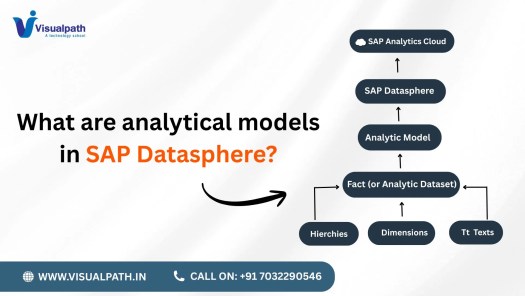
- What are Analytical Models in SAP Datasphere?
- Introduction
- Understanding Analytical Models in SAP Datasphere
- Why Analytical Models Matter in Modern Analytics
- Core Components of Analytical Models
- How Analytical Models Are Created
- Analytical Models vs Basic Views
- Performance Optimization Through Analytical Models
- Security and Governance in Analytical Models
- Real-World Use Cases
- Best Practices for Designing Analytical Models
- FAQs: Analytical Models in SAP Datasphere
- Conclusion
Introduction
SAP Datasphere is designed to help organizations move beyond raw data and turn information into meaningful business insight. At the heart of this capability lie analytical models—the structures that transform integrated data into analytics-ready assets for reporting, dashboards, and decision-making. Rather than forcing data into rigid warehouse layers, SAP Datasphere allows business context to remain intact while enabling analytics at scale.
As enterprises adopt modern cloud data strategies, understanding analytical models becomes essential for anyone learning through a SAP Datasphere Course, as these models directly influence performance, usability, and business value.
Understanding Analytical Models in SAP Datasphere
Analytical models in SAP Datasphere are semantically enriched data objects created specifically for analytical consumption. Unlike basic tables or views, they combine data structure, business meaning, calculations, and relationships into a single layer. Consequently, they remove the need for repeated data preparation at the reporting level.
Moreover, analytical models allow organizations to align technical data modeling with business expectations. Instead of forcing analysts to manually interpret data, these models already contain predefined measures, dimensions, and logic. As a result, reports remain consistent across teams and departments.
Why Analytical Models Matter in Modern Analytics
Traditional reporting often relies on complex SQL queries or predefined cubes that are difficult to modify. Analytical models solve this challenge by:
- Preserving business semantics directly in the data layer
- Reducing dependency on IT for report changes
- Improving consistency across reports and dashboards
- Enabling faster decision-making
By embedding logic at the model level, organizations ensure that key metrics such as revenue, margin, or growth are calculated uniformly across all analytics use cases.
Core Components of Analytical Models
Analytical models in SAP Datasphere are built using several key components that work together seamlessly:
1. Measures
Measures represent numerical values such as revenue, cost, or quantity. Furthermore, these measures can include calculated logic, enabling advanced analytics without additional processing.
2. Dimensions
Dimensions provide descriptive context such as product, customer, or time. Therefore, users can slice and filter data intuitively during analysis.
3. Associations
Associations define relationships between datasets without physically joining them. This improves performance and keeps models flexible.
4. Calculated Fields
Calculated fields enable business logic such as conditional rules or derived metrics. Therefore, complex calculations do not need to be recreated in every report.
How Analytical Models Are Created
Analytical models are typically created in the Data Builder layer of SAP Datasphere. The process involves selecting a fact dataset, adding relevant dimensions, defining measures, and applying business logic.
For learners enrolled in SAP Datasphere Online Training, this hands-on modeling experience is crucial because it reflects real-world analytics scenarios. Instead of focusing only on data ingestion, learners understand how business users actually consume data.
Analytical Models vs Basic Views
While graphical or SQL views are useful for data preparation, analytical models go a step further. Views focus on structuring data, whereas analytical models focus on insight consumption.
Key differences include:
- Views are technical; analytical models are business-friendly
- Views require interpretation; analytical models are analytics-ready
- Analytical models support hierarchies and semantic annotations
This distinction is critical when building scalable analytics solutions.
Performance Optimization Through Analytical Models
Analytical models are optimized for performance by design. SAP Datasphere leverages in-memory processing, smart associations, and push-down calculations to minimize data movement.
Instead of loading massive datasets into reporting tools, calculations are executed closer to the data source. This leads to faster query response times and reduced system load.
Security and Governance in Analytical Models
Security is not an afterthought. Analytical models integrate seamlessly with SAP Datasphere’s authorization framework. Row-level security, role-based access, and data access controls ensure that users only see data they are permitted to view.
This governance capability is particularly valuable for enterprises operating across multiple business units or regions.
Real-World Use Cases
Analytical models are used across industries for scenarios such as:
- Financial performance analysis
- Sales and demand forecasting
- Supply chain optimization
- Customer behavior analysis
In many organizations offering SAP Datasphere Training In Ameerpet, real-time business case studies often focus on how analytical models enable self-service analytics without compromising data integrity.
Best Practices for Designing Analytical Models
To maximize value, follow these best practices:
- Keep models business-centric, not technical
- Avoid unnecessary complexity in calculations
- Reuse shared dimensions across models
- Validate metrics with business stakeholders
- Document logic clearly for future reference
As a result, analytical models become trusted assets rather than temporary solutions.
FAQs: Analytical Models in SAP Datasphere
Conclusion
Analytical models in SAP Datasphere play a vital role in transforming raw data into actionable insight. By combining business semantics, performance optimization, and governance, they enable organizations to move beyond static reporting. Ultimately, well-designed analytical models help teams make faster, smarter, and more confident decisions in today’s data-driven business environment.
TRENDING COURSES: AWS Data Engineering, GCP Data Engineering, Oracle Integration Cloud.
Visualpath is the Leading and Best Software Online Training Institute in Hyderabad.
For More Information about Best SAP Datasphere
Contact Call/WhatsApp: +91-7032290546
Visit: https://www.visualpath.in/sap-datasphere-training-online.html


