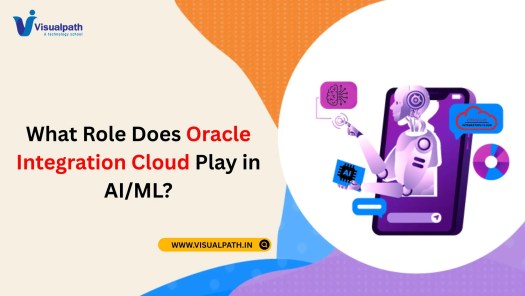
What Role Does Oracle Integration Cloud Play in AI/ML?
Oracle Integration Cloud (OIC) has emerged as a cornerstone in modern enterprise ecosystems, bridging traditional applications with cloud-based solutions. As organizations increasingly adopt AI and ML technologies, the need for seamless integration between data sources, applications, and intelligent algorithms has never been more critical. By enabling automated workflows and streamlined data pipelines, Oracle Integration Cloud plays a pivotal role in driving AI and ML initiatives.
For professionals aiming to leverage these capabilities, OIC Training Online provides essential guidance to understand the platform, integrate AI/ML services, and streamline enterprise workflows effectively. This training equips learners with practical knowledge on connecting applications, building intelligent workflows, and harnessing Oracle’s AI/ML-ready environment.
Introduction to Oracle Integration Cloud
Oracle Integration Cloud is a comprehensive integration platform as a service (iPaaS) that connects applications, automates business processes, and accelerates data flow between systems. With the growing demand for AI and ML in enterprise decision-making, having a centralized integration platform is vital.
How OIC Supports AI and ML Workflows
AI and ML projects rely heavily on clean, consistent, and accessible data. Oracle Integration Cloud facilitates this by:
- Connecting multiple data sources: OIC enables seamless integration between ERP systems, databases, SaaS applications, and cloud storage, ensuring AI/ML models have access to high-quality data.
- Automating data pipelines: Through pre-built adapters and connectors, OIC automates data transfer, transformation, and cleansing.
- Orchestrating intelligent workflows: Organizations can design workflows that trigger AI/ML models in real-time, enhancing decision-making speed.
- Ensuring governance and security: OIC provides built-in monitoring, compliance, and security features, which are critical when handling sensitive AI/ML datasets.
Professionals often consider Oracle Integration Cloud Training. This specialized training dives deeper into the platform’s capabilities, teaching users how to integrate AI/ML services, leverage pre-built adapters, and design predictive analytics workflows.
Key Features Enabling Intelligent Integrations
Several key features make OIC indispensable for AI and ML initiatives:
- Pre-Built Adapters: Connect to SaaS, on-premises, and cloud applications with minimal coding.
- Visual Application Builder: Design workflows using drag-and-drop tools, ideal for orchestrating AI/ML pipelines.
- Process Automation: Automate repetitive tasks and trigger AI models automatically.
- Data Mapping and Transformation: Transform and normalize datasets for machine learning models.
- Integration Insight and Analytics: Monitor workflows, detect anomalies, and optimize AI-driven processes.
These features collectively reduce the complexity of integrating AI and ML into enterprise systems, allowing faster deployment and more reliable results.
Benefits of Using OIC in AI/ML Projects
Organizations leveraging Oracle Integration Cloud for AI/ML gain several advantages:
- Faster Time-to-Insight: Automation and real-time integration speed up model deployment and analysis.
- Cost Efficiency: Reduces manual integration efforts and IT overhead.
- Scalability: Easily scale AI/ML workflows across multiple applications and environments.
- Improved Accuracy: Ensures consistent, high-quality data feeds for AI models.
- Enhanced Collaboration: Business and IT teams can collaborate through a unified integration platform.
Real-World Use Cases
Oracle Integration Cloud is applied across industries to maximize AI/ML potential:
- Financial Services: Automates risk assessment using AI models integrated with ERP and CRM systems.
- Healthcare: Streams patient data for predictive analytics and AI-driven diagnostics.
- Retail: Integrates e-commerce platforms with ML-based recommendation engines.
- Manufacturing: Supports predictive maintenance by connecting IoT data with AI models.
These real-world examples showcase OIC’s ability to make AI/ML adoption more efficient and enterprise-ready.
OIC Training and Skill Development
For professionals aiming to maximize AI/ML integration capabilities, hands-on learning is crucial. Exploring advanced OIC applications, many learners seek OIC Training In Hyderabad to gain localized, instructor-led guidance. These training programs cover:
- Workflow orchestration with AI/ML triggers
- Integration of Oracle AI services
- Advanced monitoring and troubleshooting
- Best practices for enterprise-grade deployment
Such training empowers IT teams to fully leverage OIC for AI-driven business transformation.
FAQs
Conclusion: Unlocking AI/ML Potential with OIC
In today’s data-driven world, the success of AI and ML initiatives depends not just on algorithms but on seamless connectivity between applications, data sources, and workflows. Oracle Integration Cloud acts as a bridge, enabling organizations to harness intelligence efficiently, automate processes, and make faster, more informed decisions. By simplifying complex integrations and providing robust monitoring and governance, it empowers businesses to unlock the full potential of AI-driven insights. Whether it’s accelerating digital transformation, improving operational efficiency, or supporting innovative solutions, a well-integrated cloud ecosystem ensures that organizations stay competitive and future-ready.
TRENDING COURSES: AWS Data Engineering, GCP Data Engineer, SAP PaPM.