Why is BigQuery Preferred for Large-Scale Analytics?

-
Why is BigQuery Preferred for Large-Scale Analytics?
- Introduction
- High-Speed Performance for Massive Datasets
- Serverless Architecture Reduces Operational Overhead
- Security and Compliance
- Cost Efficiency
- Ease of Use and Accessibility
- Integration with the Google Cloud Ecosystem
- Advanced Analytics Capabilities
- Frequently Asked Questions (FAQs)
- Conclusion
Introduction
GCP Data Engineer professionals often face the challenge of managing enormous volumes of data while ensuring fast and accurate analytics. In today’s data-driven world, organizations are dealing with petabytes of structured and semi-structured information. BigQuery stands out as a solution that addresses these challenges efficiently. Its serverless, fully managed design allows enterprises to focus on deriving insights rather than managing infrastructure. Professionals looking to enhance their expertise are increasingly enrolling in GCP Data Engineer Training to gain hands-on experience with BigQuery’s advanced features and real-world applications.
High-Speed Performance for Massive Datasets
BigQuery’s architecture is built for speed and scalability. Unlike traditional on-premises warehouses that require constant maintenance, manual scaling, and hardware provisioning, BigQuery automatically distributes workloads across thousands of nodes. Columnar storage and a distributed execution engine ensure queries, even on multi-terabyte datasets, are executed within seconds. This performance boost is critical for businesses that rely on timely insights to make strategic decisions, such as financial forecasting, customer analytics, or supply chain optimization.
Serverless Architecture Reduces Operational Overhead
Another reason BigQuery is preferred is its serverless nature, which removes the operational burden from teams. Users don’t have to manage servers, clusters, or infrastructure upgrades. This not only reduces operational costs but also allows analytics teams to scale their workloads seamlessly. Whether handling one query or thousands simultaneously, BigQuery maintains consistent performance, enabling organizations to run interactive dashboards, generate reports, and power business intelligence systems without bottlenecks.
Security and Compliance
Security and compliance are also a significant advantage. BigQuery integrates identity and access management, column-level security, encryption at rest and in transit, and audit logging. Enterprises in regulated industries such as healthcare, finance, and telecommunications can rely on these robust controls while still accessing the speed and flexibility of a cloud-native solution.
Cost Efficiency
At around 350 words, it’s important to note BigQuery’s cost efficiency. Organizations pay only for the storage and queries they use, avoiding the high costs associated with idle compute resources in traditional data warehouses. Flat-rate and on-demand pricing options give businesses the flexibility to align budgets with workloads. This cost-effectiveness has encouraged many data professionals to pursue GCP Data Engineer Training to master cloud-based analytics and design optimized, budget-conscious pipelines.
Ease of Use and Accessibility
BigQuery also excels in accessibility. Using standard SQL, analysts and engineers can easily write queries without learning proprietary languages. Advanced features such as partitioning, clustering, materialized views, and time-travel queries provide additional flexibility, performance optimization, and operational ease.
Integration with the Google Cloud Ecosystem
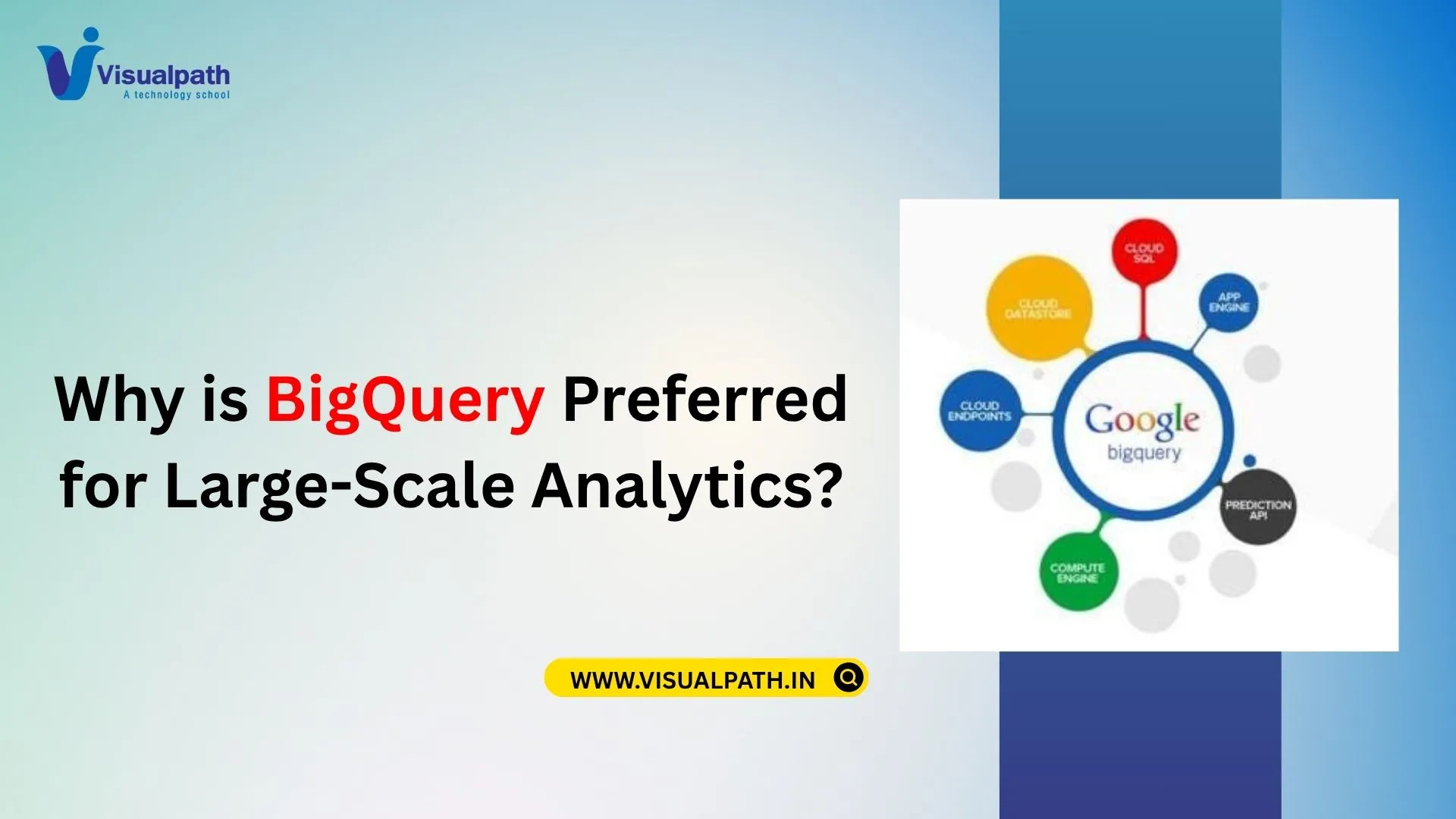
Furthermore, the platform’s integration with the Google Cloud ecosystem—including Dataflow, Pub/Sub, Dataproc, Vertex AI, and Looker—enables end-to-end data processing and analytics from ingestion to visualization.
Advanced Analytics Capabilities
Another notable feature is BigQuery ML, which allows teams to train and deploy machine learning models directly inside the data warehouse. This eliminates the need for external ML environments and complex data pipelines, making predictive analytics accessible to SQL users. Similarly, BigQuery GIS allows organizations to perform geospatial analytics at scale, a critical capability for industries such as logistics, urban planning, and retail.
Scalability for Enterprise Growth
It is clear that BigQuery is more than a data warehouse; it is a full analytics ecosystem. Its combination of scalability, speed, ease of use, integration capabilities, and advanced analytics makes it the ideal choice for enterprises that want to leverage data for strategic advantage. Companies increasingly depend on BigQuery to transform raw data into actionable insights, enabling faster decision-making and better business outcomes.
Frequently Asked Questions (FAQs)
Conclusion
BigQuery has redefined cloud analytics by offering a high-performance, fully managed platform capable of handling massive datasets with ease. Its seamless integration, advanced analytical capabilities, and scalability empower organizations to derive meaningful insights faster and more efficiently than traditional warehouses. For businesses seeking a reliable, future-ready analytics solution, BigQuery delivers both speed and flexibility, making it a cornerstone of modern data strategies.
TRENDING COURSES: Oracle Integration Cloud, AWS Data Engineering, SAP Datasphere
Visualpath is the Leading and Best Software Online Training Institute in Hyderabad.
For More Information about Best GCP Data Engineering
Contact Call/WhatsApp: +91-7032290546
Visit: https://www.visualpath.in/gcp-data-engineer-online-training.html