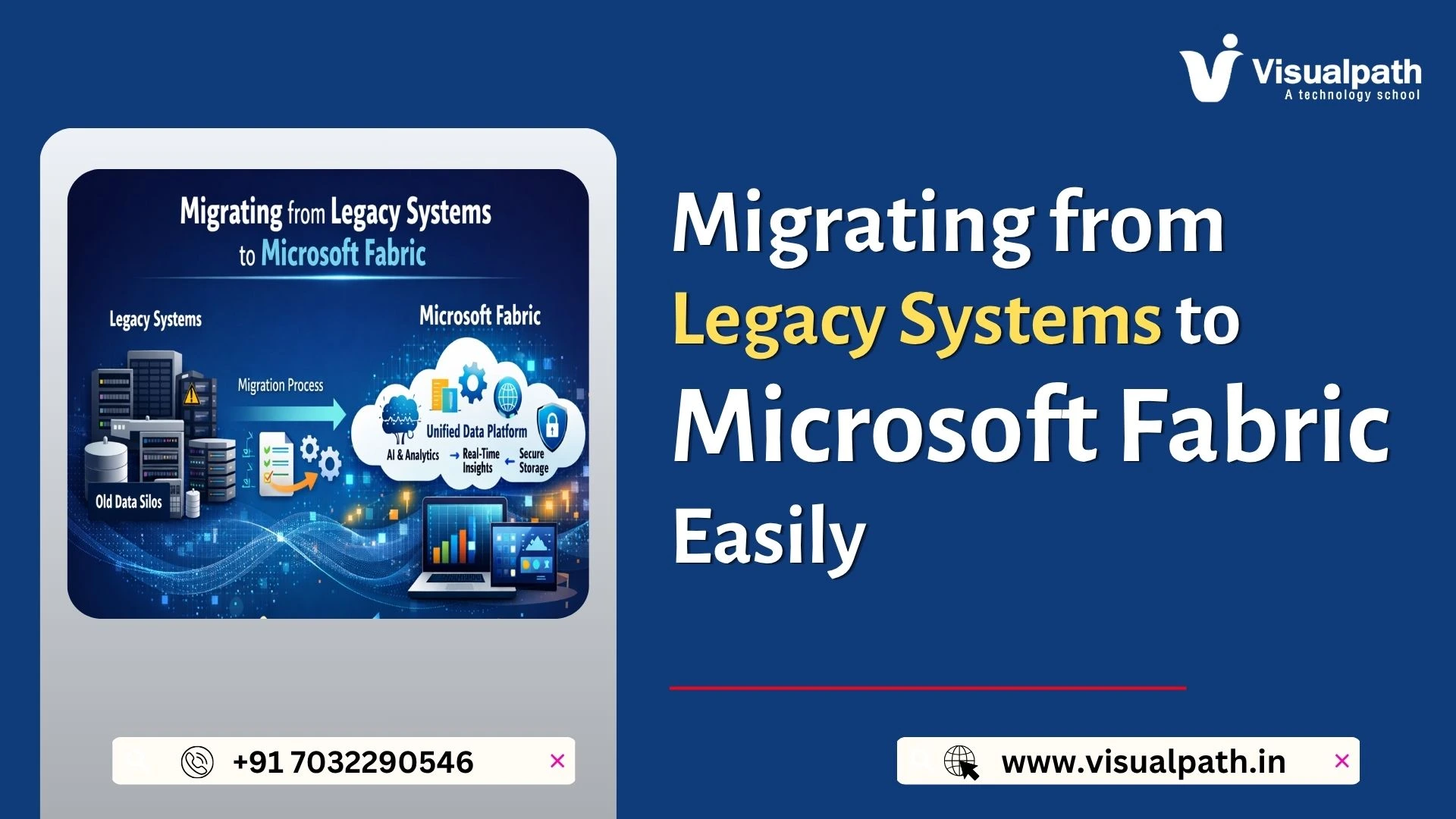
Migrating from Legacy Systems to Microsoft Fabric Easily

Introduction
Many companies still use old systems to store and process data. These legacy systems are slow, expensive, and hard to maintain. They also struggle to handle modern data needs like real-time analytics and AI. This is where Microsoft Fabric comes in. It is a modern, all-in-one data platform that helps businesses manage, analyze, and visualize data easily. By migrating to Microsoft Fabric, organizations can improve performance, reduce costs, and unlock powerful insights. Enrolling in a Microsoft Fabric Online Training Course helps professionals understand this transition step by step.
What is Microsoft Fabric?
Microsoft Fabric is a unified data platform. It combines data engineering, data integration, data science, and business intelligence into one system.
Key Features:
- Data integration with pipelines
- Real-time analytics
- Built-in AI capabilities
- Seamless integration with Power BI
- OneLake centralized storage
It removes the need for multiple tools and simplifies data management.
Why Migrate from Legacy Systems?
Legacy systems often create more problems than value in today’s data-driven world.
Common Issues:
- Slow performance
- High maintenance cost
- Limited scalability
- Data silos
- Security risks
Why Migration is Important:
Migrating to Microsoft Fabric helps businesses:
- Handle large data efficiently
- Enable real-time decision-making
- Improve data security
- Reduce infrastructure complexity
Professionals looking to upgrade their skills can explore a Microsoft Fabric Course in Ameerpet to gain practical exposure.
Key Challenges in Legacy Migration
Migration is not always simple. Organizations face several challenges:
1. Data Complexity
Old systems store data in different formats. Converting them is difficult.
2. Downtime Risks
Migration can affect business operations if not planned properly.
3. Skill Gaps
Teams may not know modern tools like Microsoft Fabric.
4. Data Security Concerns
Sensitive data must be protected during migration.
Proper planning and training can help overcome these challenges.
Step-by-Step Migration to Microsoft Fabric
Here is a simple step-by-step process to migrate from legacy systems:
1st Step: Assess Current Systems
- Identify existing data sources
- Understand data structure
- Analyze dependencies
2nd Step: Define Migration Strategy
- Choose full or phased migration
- Set timelines and goals
3rd Step: Data Cleaning and Preparation
- Remove duplicate data
- Standardize formats
- Ensure data quality
4th Step: Choose Migration Tools
Use Microsoft tools to move data safely.
5th Step: Data Migration
- Transfer data to OneLake
- Validate data accuracy
6th Step: Testing
- Check performance
- Validate reports and dashboards
7th Step: Deployment
- Go live with Microsoft Fabric
- Monitor system performance
Learning these steps through a Microsoft Fabric Online Training Course helps beginners gain hands-on experience.
Tools and Technologies Used
During migration, several tools are commonly used:
- Azure Data Factory
- Dataflows Gen2
- Power BI
- OneLake
- SQL Database
- Apache Spark
These tools work together within Microsoft Fabric to simplify the process.
Real-World Use Cases
1. Retail Industry
A retail company migrated from legacy systems to Microsoft Fabric.
Result:
- Real-time inventory tracking
- Better customer insights
2. Healthcare Sector
Hospitals used Fabric to manage patient data.
Result:
- Faster data access
- Improved patient care
3. Financial Services
Banks replaced old systems with Fabric.
Result:
- Fraud detection using AI
- Better compliance
Benefits of Microsoft Fabric
1. Unified Platform
All data services in one place.
2. Cost Efficiency
Reduces infrastructure and maintenance costs.
3. Scalability
Handles large volumes of data easily.
4. Real-Time Insights
Supports faster decision-making.
5. AI Integration
Enables predictive analytics and automation.
6. Improved Security
Built-in enterprise-grade security features.
Professionals enrolling in Microsoft Fabric Training in Bangalore can learn these benefits with real-world projects.
Career Scope
Microsoft Fabric is in high demand as companies move to modern data platforms.
Job Roles:
- Data Engineer
- Data Analyst
- BI Developer
- Cloud Data Architect
With the right Microsoft Fabric Online Training Course, professionals can quickly enter this growing field. Institutes like Visualpath offer structured courses to help learners progress step by step.
FAQs
Conclusion
Migrating from legacy systems to Microsoft Fabric is no longer optional. It is a necessity for businesses that want to stay competitive in the digital age. This transition improves performance, reduces costs, and unlocks powerful data insights. While migration may seem complex, the right strategy and tools make it manageable.
If you want to build a successful career in this field, now is the perfect time to start. Enroll in a Microsoft Fabric Online Training Course from a trusted institute like Visualpath and gain real-world skills that employers are looking for. Take the first step today and future-proof your career in data and analytics.
Visualpath stands out as the best online software training institute in Hyderabad.
For More Information about the Microsoft Fabric online Training
Contact Call/WhatsApp: +91-7032290546
Visit: https://visualpath.in/online-microsoft-fabric-training.html